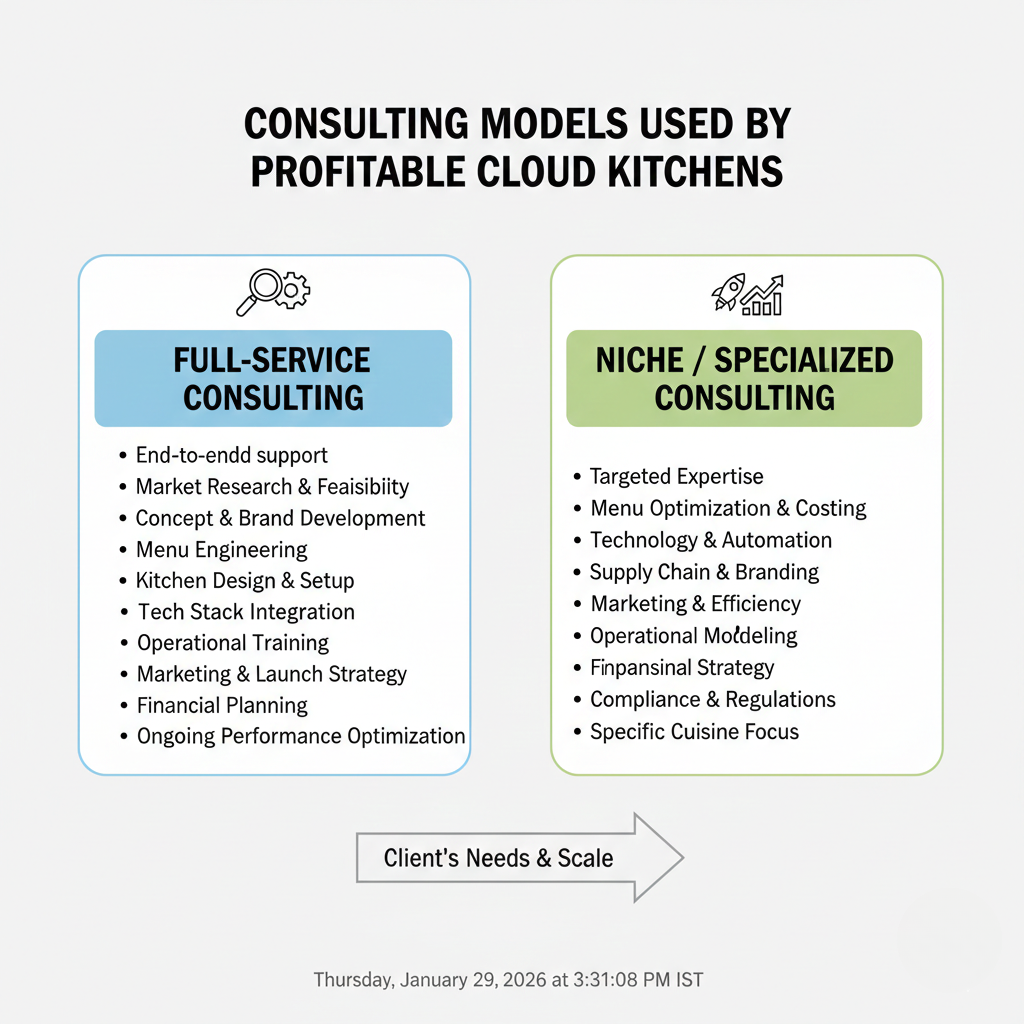
cloud kitchen Consulting Models Used by Profitable Cloud Kitchens Profitable cloud kitchens rarely rely on random advice or one-time audits. They adopt consulting models that focus on execution, accountability, and systems. As India’s cloud kitchen market matures, founders are moving away from generic consulting toward structured engagement models that protect margins and enable controlled scale. This guide explains the consulting models used by profitable cloud kitchens, how each model works, when it makes sense, and why outcome-driven operators choose specific consulting structures over others.
Read This Before Choosing a Consulting Model
This article is part of GrowKitchen’s consulting, operations, and profitability clarity series. If you are still understanding how cloud kitchens work at the unit level, start with Cloud Kitchen Business in India before evaluating different consulting engagement models.
Any consulting model only works when compliance basics are in place. Ensure alignment with FSSAI, structured staff certification via FoSTaC, and transparent financial reporting through the GST Network.
Why Consulting Model Choice Matters More Than the Consultant
Many founders believe results depend on hiring the “right consultant.” In reality, outcomes depend more on the consulting model than the individual.
A poor consulting model produces advice without accountability. A strong consulting model forces execution, discipline, and measurement.
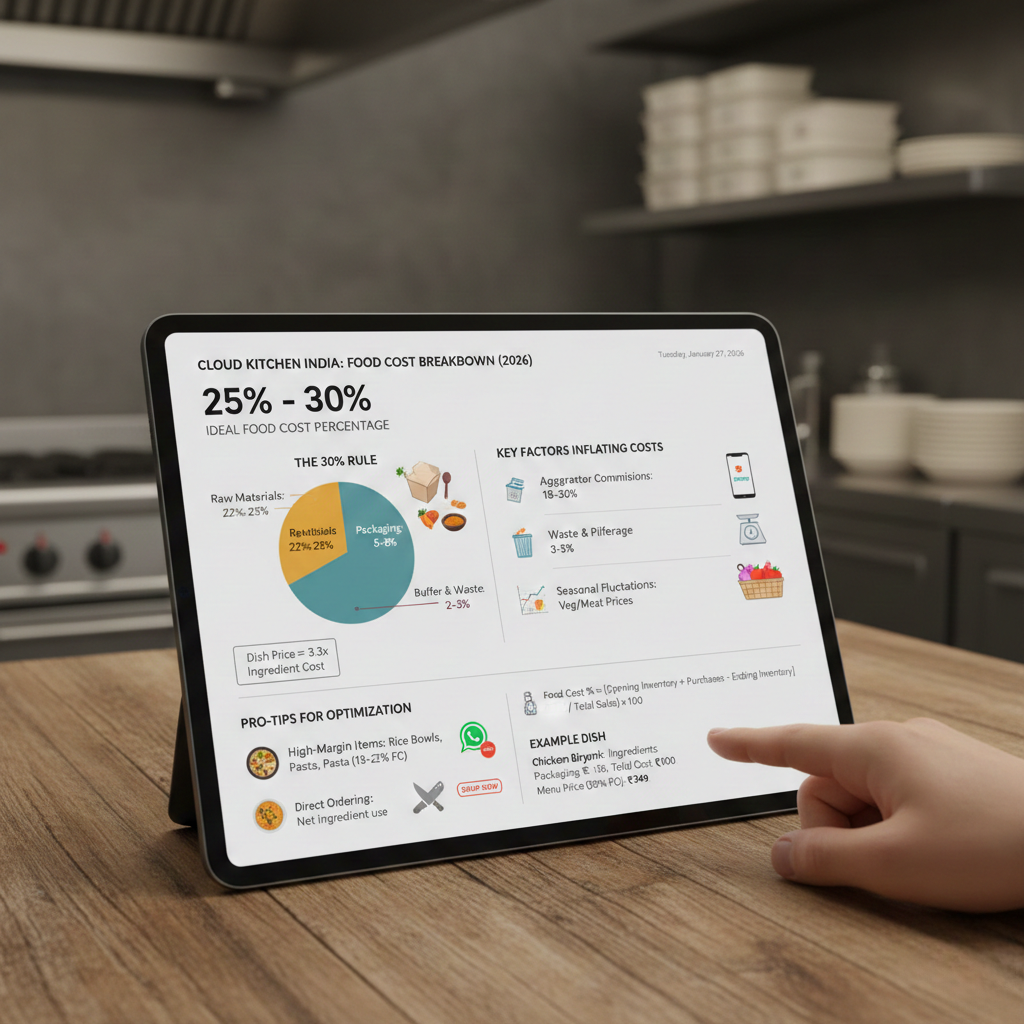
Model #1: Advisory-Only Consulting
Advisory consulting is the most common and least effective model for operationally struggling cloud kitchens.
- Strategy decks and high-level recommendations
- Limited engagement duration
- No ownership of execution
This model works only for:
- Early-stage concept validation
- Brand positioning or menu ideation
It fails when used for profitability or scale stabilization.
Model #2: Audit-Based Consulting
Audit-based consulting focuses on diagnosing problems without staying involved in implementation.
- Kitchen audits and reports
- Gap identification
- One-time recommendations
Profitable kitchens use audits only as a starting point never as a standalone solution.
Many audit-only engagements fail for reasons explained in Why Food Consultants Fail to Deliver Results.

Model #3: Project-Based Implementation Consulting
This model is commonly used by profitable kitchens during stabilization or pre-scale phases.
- Defined scope (unit economics, SOPs, dashboards)
- Fixed timelines (60–120 days)
- Hands-on implementation support
Project-based consulting focuses on outcomes, not documentation volume.
Model #4: Operator-Led Consulting (Preferred Model)
Operator-led consulting is the dominant model used by profitable multi-location cloud kitchens.
- Consultants function as temporary operators
- Daily involvement in execution
- Direct accountability for margins and refunds
This model blurs the line between consulting and operations, ensuring systems actually work on the ground.
The operator-vs-consultant difference is explained in Difference Between Kitchen Operators and Food Consultants.
Model #5: Retainer-Based Performance Consulting
Retainer consulting is used by kitchens that have stabilized basics and want ongoing control.
- Monthly oversight and reviews
- Continuous improvement cycles
- Support during expansion
This model works best when paired with strong internal execution teams.
Model #6: Hybrid Consulting + Internal Team Model
Profitable kitchens often combine consulting with in-house operators.
- Consultant builds systems
- Internal team executes daily
- Consultant monitors outcomes
This model balances cost with control and is popular during multi-city expansion.
Why Profitable Cloud Kitchens Avoid Generic Consulting
High-performing kitchens avoid models that:
- Lack execution accountability
- Focus only on strategy
- Ignore unit economics
Instead, they choose models that enforce systems before scale.
Final Thoughts: Consulting Models Decide Outcomes
Consulting success is not about the consultant’s résumé.
It is about the engagement model, execution ownership, and system enforcement.
GrowKitchen works through operator-led and implementation-first models designed for founders who want predictable, scalable profitability.
FAQs: Cloud Kitchen Consulting Models
Which consulting model works best for cloud kitchens?
Operator-led and project-based implementation models.
Are advisory consultants useless?
No, but they are unsuitable for fixing execution problems.
When should I move to a retainer model?
After unit economics and SOPs are stabilized.
Can one consultant offer multiple models?
Yes, but the engagement structure must be clear.