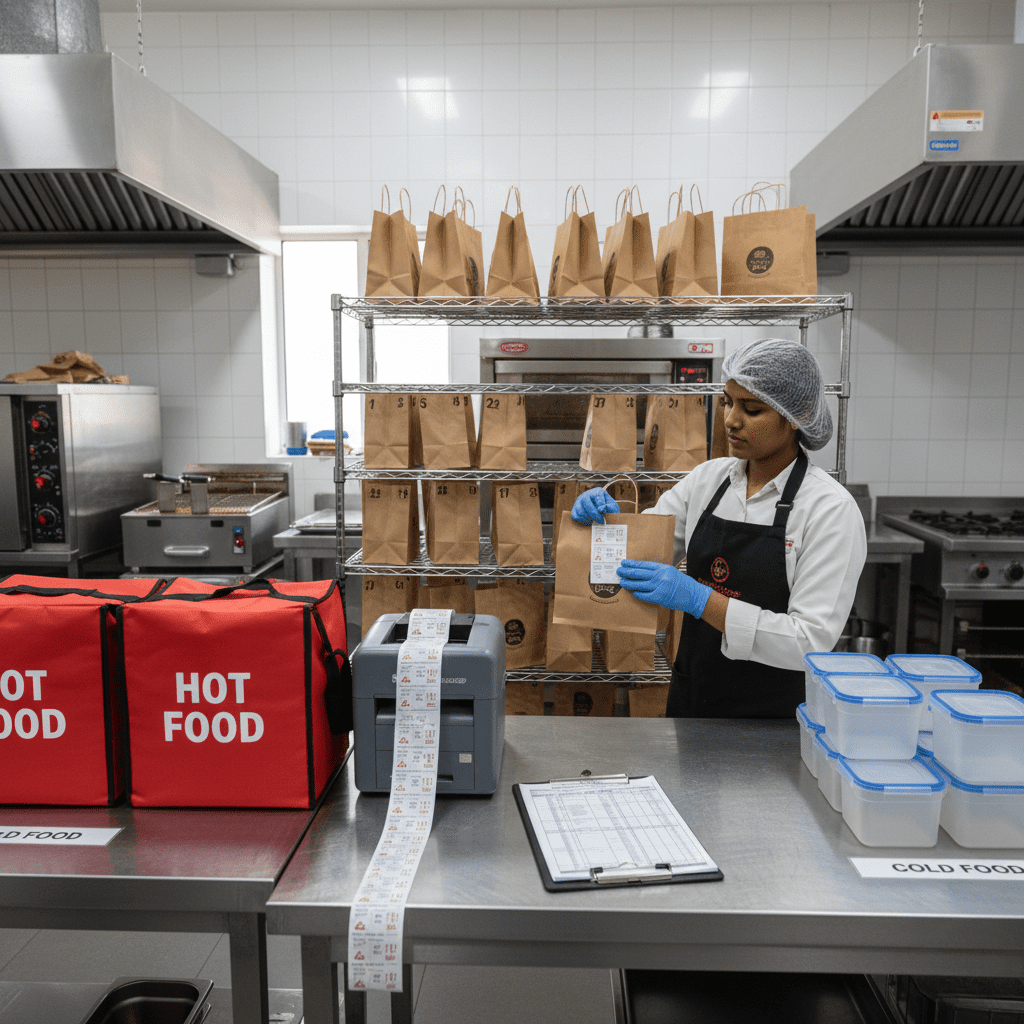
Cloud Kitchen Guide · India

Cloud Kitchen Advantages & Disadvantages

Cloud kitchens look simple: no dine-in, lower rent, and faster scale. But the real game is commissions, ratings, refund leakage, and ops discipline. Use this page to decide correctly before you invest.

Lower Capex Start lean, validate demand
Faster Launch Go live in weeks, not months
System Wins SOPs protect ratings & margin
Real advantages (not marketing hype)
Hidden disadvantages that kill margins
Decision checklist: start or avoid
Menu engineering + AOV ladders Dispatch SOP + rating protection Unit economics + cost control
Cloud Kitchen Advantages Disadvantages
Cloud kitchens win when packing, prep rhythm, and aggregator positioning are systemized.
Pro tip: If you can’t measure refunds + ratings + contribution margin weekly, the model breaks.
Basics

What is a Cloud Kitchen?

A cloud kitchen (ghost kitchen / dark kitchen) is a delivery-only food business. Orders come from Swiggy, Zomato, or your own website. You don’t spend on ambience or dine-in staff-you spend on menu, packaging, prep speed, and dispatch accuracy.

Delivery-first Food must travel well
Ops-driven SOPs protect quality
Ranking-based Visibility depends on metrics

No dine-in overhead

Lower rent, fewer front staff, and faster setup compared to restaurants.

Delivery-first operations

Food must survive 25-45 minutes. Packaging + portion control become critical.

System business

SOPs, inventory, costing, and aggregator ranking decide profitability.
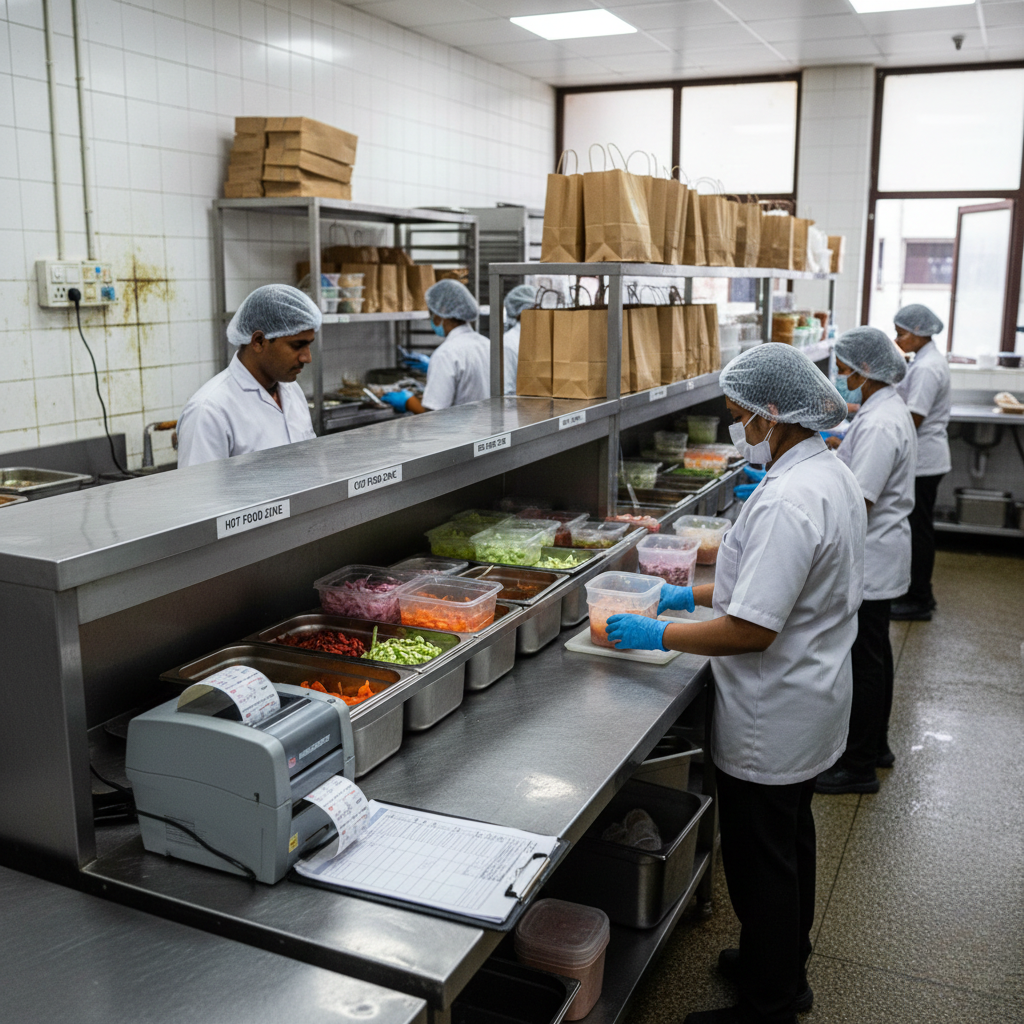
Commercial kitchen prep and plating
A cloud kitchen is a delivery-first system-not a dine-in brand.
Operator lens: Cloud kitchen success is 70% execution (SOPs) + 30% marketing.
Pros

Advantages of Cloud Kitchens

Cloud kitchens are powerful when you build them like a system. These advantages are real-but only if your menu, SOPs, and dispatch flow are tight.

Lower CapexLean launch
Faster ScaleRepeatable SOPs
More DataOptimize weekly

Lower initial investment

No dine-in interiors. Start lean, validate demand, then scale with confidence.

Lower fixed costs

Lower rent + fewer front staff keeps monthly burn under control.

Faster scale

Once SOPs work in one area, you can replicate into multiple locations.

Data-driven decisions

Use data to optimize AOV, repeat rate, pricing, and discount strategy.

Multi-brand leverage

Run multiple brands from one kitchen and improve asset utilization.

Operations-first wins

Strong margins come from discipline: prep rhythm, packing accuracy, and controls.

Reality check: Advantages become profits only when your contribution margin is tracked weekly.
Cons

Disadvantages of Cloud Kitchens (Reality Check)

Cloud kitchens fail when founders underestimate aggregator dependence and overestimate “easy profitability”. These disadvantages are manageable-if you plan for them from day one.

Commission PressureMargin gets squeezed
Ratings RiskVisibility depends on it
Ops DisciplineNo SOP = leakage

Aggregator dependence

Commissions, ranking systems, and ads can influence daily orders more than you expect.

Competition & price wars

Low entry barrier triggers discounting fast. Weak unit economics gets crushed.

Packaging & delivery risk

Spills, soggy food, missing items = refunds + rating drops + reduced visibility.

Weak physical brand recall

Customers scroll you, not visit you. Retention hooks and repeat strategy are mandatory.

Daily ops discipline

No SOP = portion drift, food cost leaks, late dispatch, and inconsistency.

Ratings are fragile

Below 4.2, visibility drops. Protect ratings with checks, training, and audits.

Operator note: The “cons” become manageable when you build SOPs + audits + cost controls.
Profit

Is a Cloud Kitchen Profitable in India?

Yes-but only if you run it like a control business, not a “hope business”. Profitable cloud kitchens protect margins through pricing, menu engineering, packaging SOPs, and dispatch checks.
Gross Margin60-70% (category dependent)
Contribution15-25% target
Rating Shield4.2+ & low refunds
Target: 60-70% gross margin (category dependent)
Goal: 15-25% contribution margin
Protect: 4.2+ rating + low refunds
Fix leaks: portion drift, discounts, payouts, packaging failures
Menu engineering + AOV ladder Portion control + RM discipline Dispatch checks + rating protection
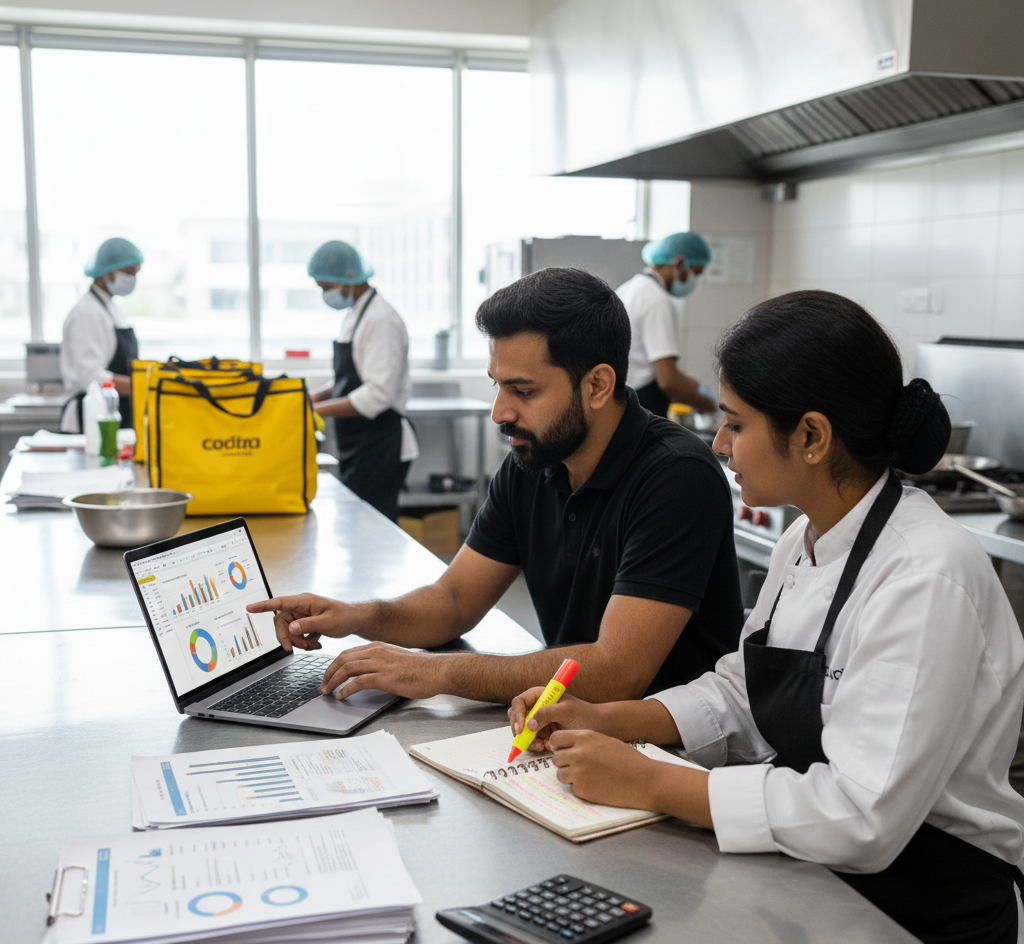
Analytics dashboard for business metrics
Profit is not a feeling. It’s a weekly system: margin, refunds, ratings, and repeat.
Operator note: If you don’t track contribution margin weekly, discounts will eat your business silently.
Decision

Should You Start a Cloud Kitchen?

Cloud kitchens are not shortcuts. They are systems businesses. If you want predictable growth, you need the right menu, SOPs, and unit economics plan-before you launch.

Start if:

  • You want a delivery-first business with lower capex
  • You can follow SOPs daily (prep, packing, dispatch)
  • You track margins, refunds, and ratings weekly
  • You want to scale to multiple areas/cities

Avoid if:

  • You want dine-in glamour and walk-in brand recall
  • You expect passive income without daily control
  • You dislike data and strict execution
  • You don’t want aggregator dependency

Limited onboarding slots per cycle to protect execution quality.
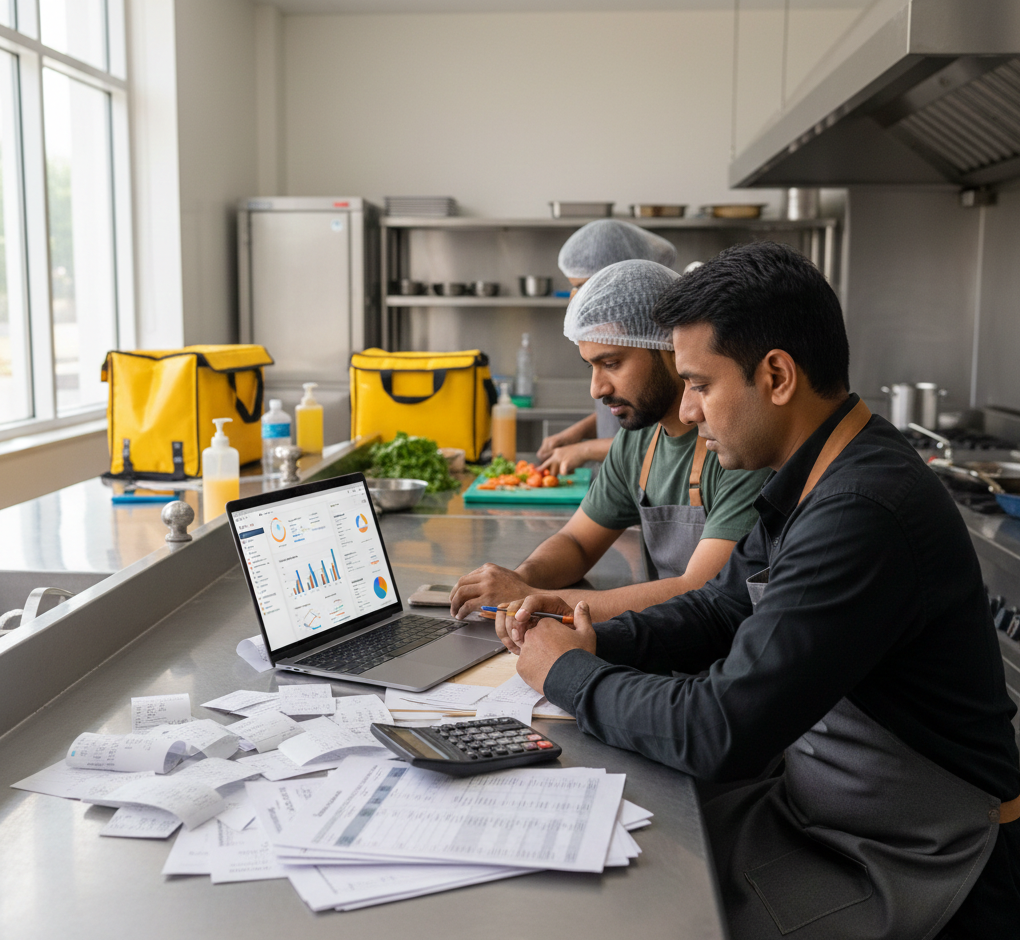
Business strategy planning
Make the decision with clarity: margins, systems, and execution-not hype.

Want this built with a playbook?

GrowKitchen helps founders launch with menu engineering, pricing, packaging SOPs, dispatch flow, and aggregator positioning-so the model is built to survive and scale.

Explore CKaaS →

Get a Custom Cloud Kitchen Plan for Your Brand

Not sure how to start or scale your cloud kitchen in India? Share a few details about your brand and we’ll send you a personalised setup and growth roadmap.

  • City-wise kitchen and location suggestions
  • Approximate investment & profit estimates
  • Menu and positioning recommendations
  • Whether CKaaS or own kitchen suits you better

Fill the form and our team will get in touch within one working day.