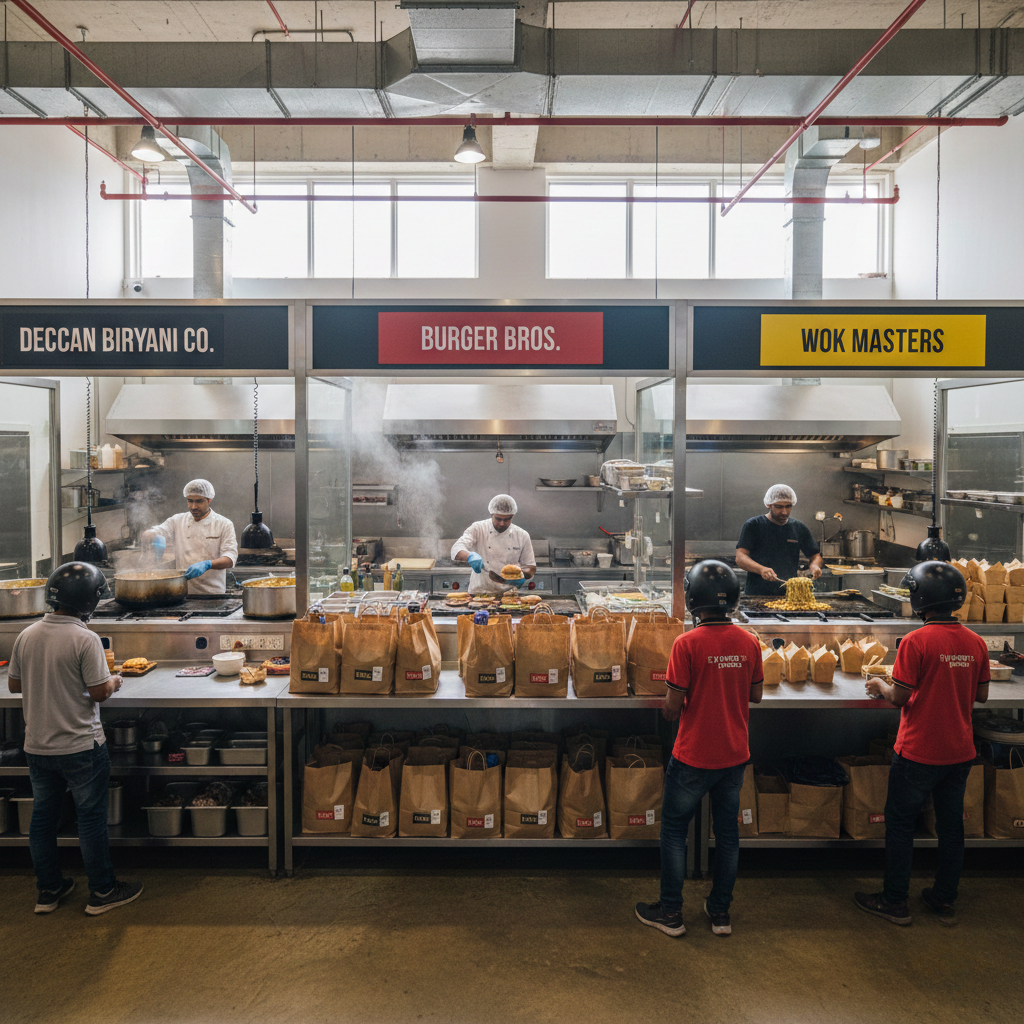

One of the biggest advantages of the cloud kitchen model is the ability to operate multiple food brands from a single kitchen. In India, many of the most profitable cloud kitchens are not single-brand businesses-they are multi-brand cloud kitchens that maximize revenue using the same infrastructure. Cloud Kitchen Business Model in India
This practical guide explains how one kitchen can successfully run multiple brands, when it makes sense, and how to avoid common operational mistakes.
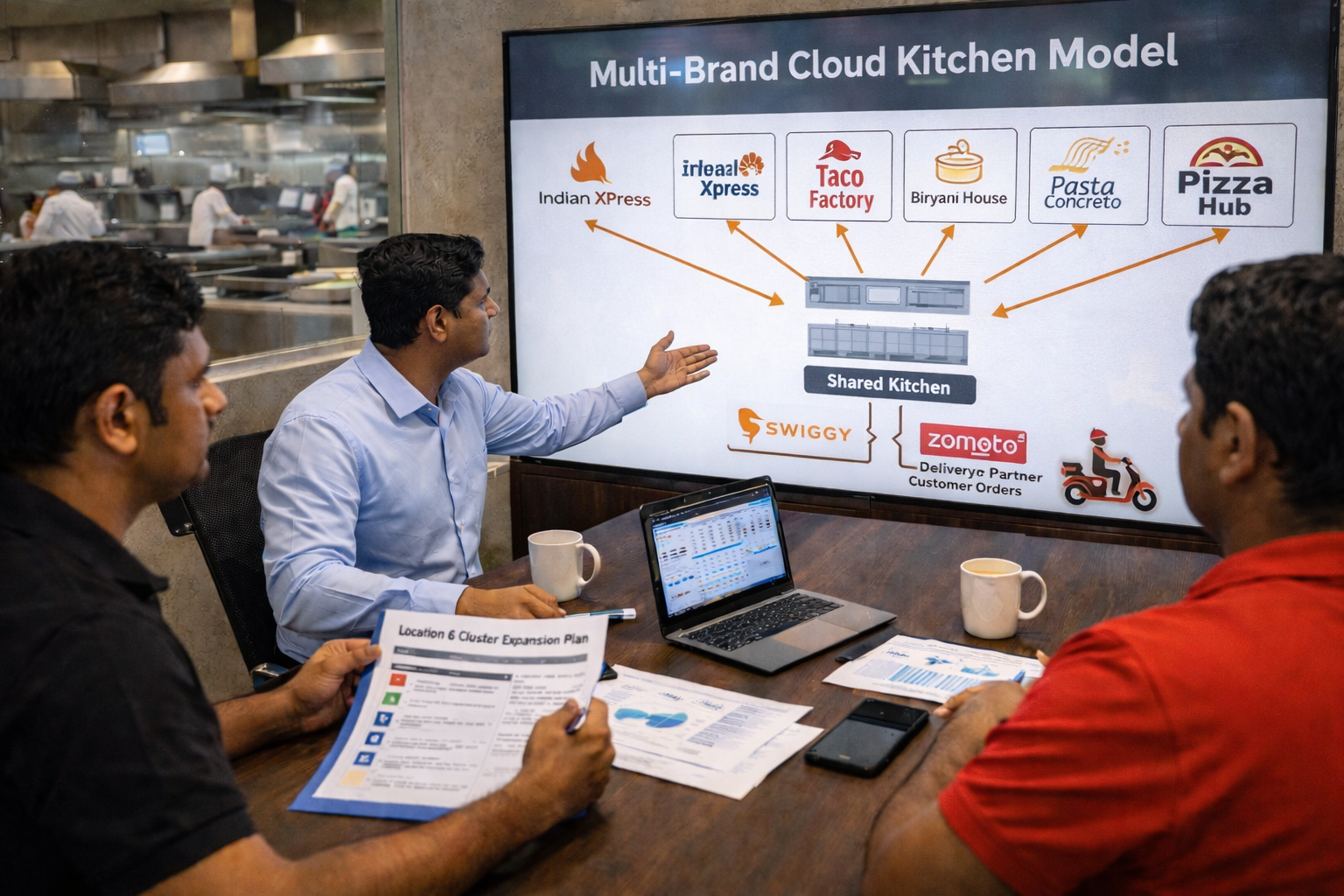
What Is a Multi-Brand Cloud Kitchen?
A multi-brand cloud kitchen is a setup where a single kitchen infrastructure operates two or more food brands simultaneously. Each brand has its own menu, pricing, positioning, and presence on food delivery platforms, but they share the same kitchen, staff, and resources.
For example, one kitchen may run:
- A biryani brand
- A burger and fries brand
- A healthy bowls or salad brand
All orders are prepared in the same kitchen but marketed as separate brands.
Why Run Multiple Brands from One Kitchen?
The primary reason is better utilization of fixed costs. Rent, equipment, licenses, and manpower remain almost the same, while revenue potential increases.
- Higher revenue per square foot
- Better staff and equipment utilization
- Diversified customer demand
- Lower business risk
This model is especially effective in high-rent markets like Mumbai, Bengaluru, and Delhi NCR.
When Should You Add a Second or Third Brand?
Adding multiple brands too early can create confusion and losses. The right time is when your first brand is stable.
Ideal indicators include:
- Consistent daily order volumes
- Stable food cost and margins
- Smooth kitchen operations
- Idle kitchen capacity during certain hours
Once these conditions are met, introducing a new brand becomes a low-risk growth lever.
How to Choose the Right Brands
Not all brands work well together. Successful multi-brand kitchens choose complementary concepts.
- Different cuisines (e.g., Indian + Continental)
- Different meal occasions (lunch, dinner, late night)
- Shared ingredients to reduce inventory complexity
- Distinct customer segments
Avoid brands that compete directly with each other for the same audience.
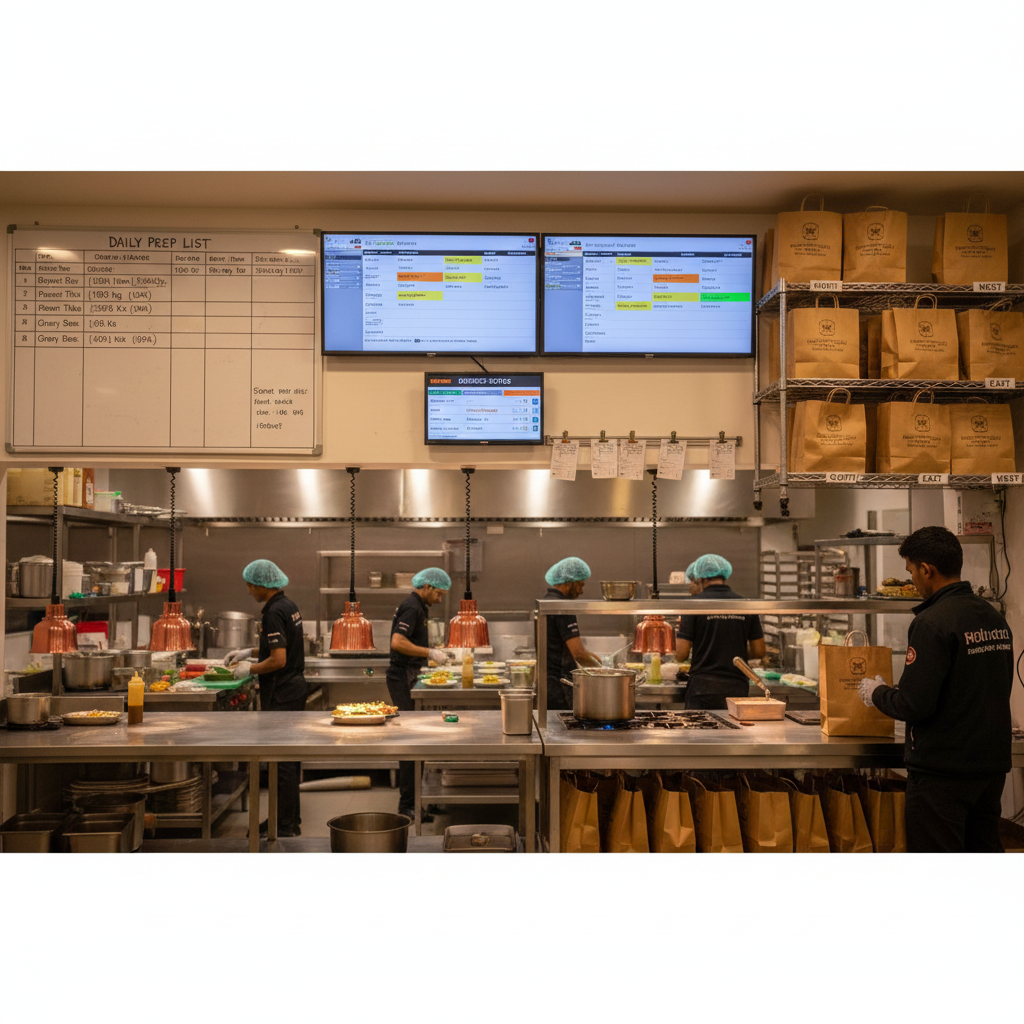
Kitchen Operations for Multi-Brand Setup
Operations become more complex when multiple brands are involved. Clear systems are essential.
- Separate menus and recipes for each brand
- Color-coded packaging and labeling
- Defined prep and cooking workflows
- Brand-wise inventory tracking
Strong SOPs ensure that one brand’s operations do not affect another’s quality or speed.
Inventory & Cost Management
Inventory planning is critical in multi-brand kitchens. Poor planning can quickly increase wastage.
- Use common raw materials across brands
- Track consumption brand-wise
- Set minimum and maximum stock levels
- Apply FIFO (First-In-First-Out)
Shared procurement often improves bargaining power with suppliers.
Managing Multiple Brands on Delivery Platforms
Each brand should be listed separately on Swiggy and Zomato with its own identity.
- Unique brand names and logos
- Optimized menus and pricing
- Brand-specific ratings and reviews
- Different promotional strategies
According to industry insights shared by Restaurant India, multi-brand listings often generate higher combined visibility than a single brand.
Profitability of Multi-Brand Cloud Kitchens
When executed correctly, multi-brand kitchens are significantly more profitable.
- Higher total revenue from same fixed costs
- Improved net margins
- Faster break-even
- Lower risk compared to opening new locations
However, poor execution can lead to operational overload and declining customer experience.
Common Mistakes to Avoid
- Launching too many brands at once
- Overcomplicated menus
- No brand-wise performance tracking
- Lack of SOPs and staff training
Start small, test performance, and scale gradually.
Licenses & Compliance
Running multiple brands does not usually require separate licenses, as long as operations occur from the same kitchen.
However, compliance with food safety norms is mandatory. Refer to guidelines on the FSSAI official website.
Frequently Asked Questions (FAQ)
Can one cloud kitchen run multiple brands legally?
Yes, one kitchen can legally run multiple brands under the same FSSAI license if operations are from the same premises.
How many brands can one kitchen handle?
Most kitchens perform best with 2–4 brands. Beyond that, complexity increases significantly.
Does multi-brand reduce profitability risk?
Yes, it diversifies demand and improves utilization of fixed costs when managed properly.
Do I need separate staff for each brand?
No, staff can be shared if SOPs and workflows are clearly defined.
People Also Read
- Cloud Kitchen Business Model in India Explained
- Cloud Kitchen Operations Management in India
- Cloud Kitchen SOPs: Complete Framework
- How to Scale Cloud Kitchens Fast