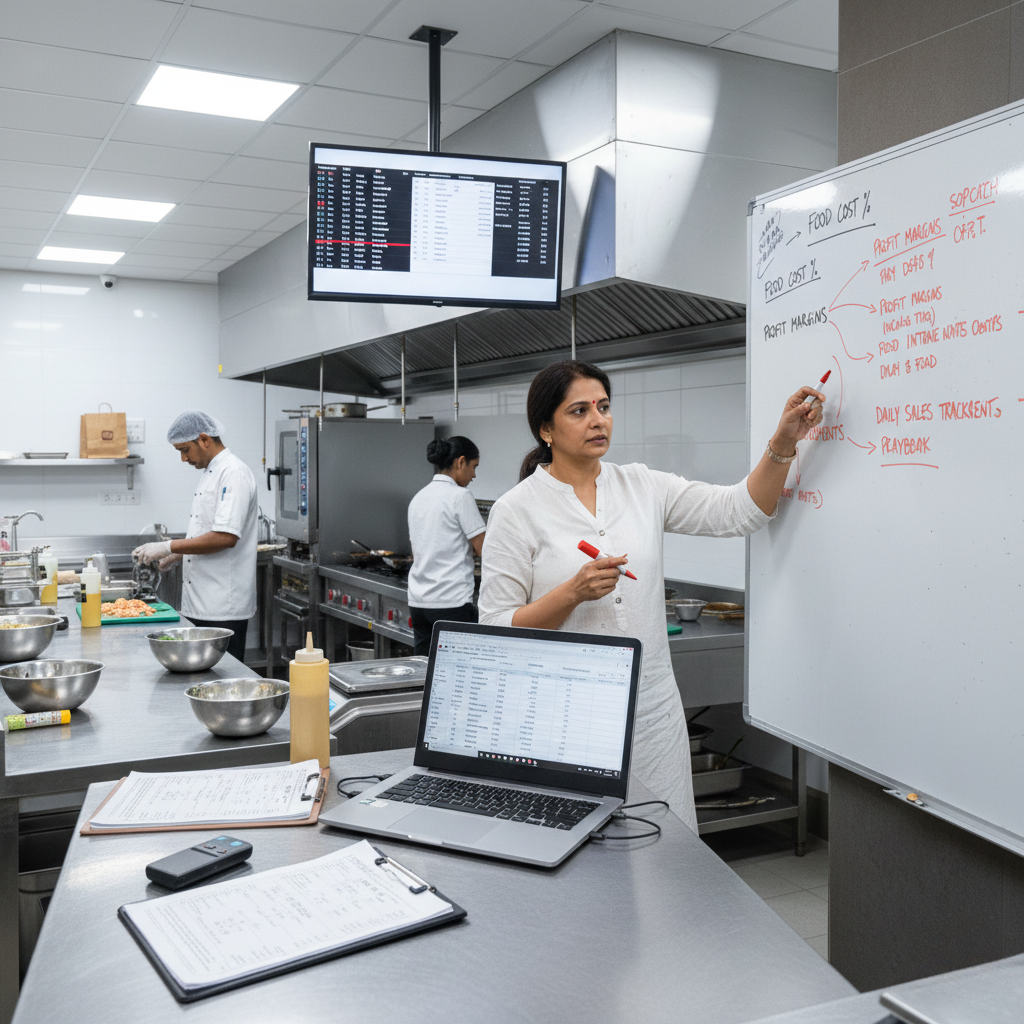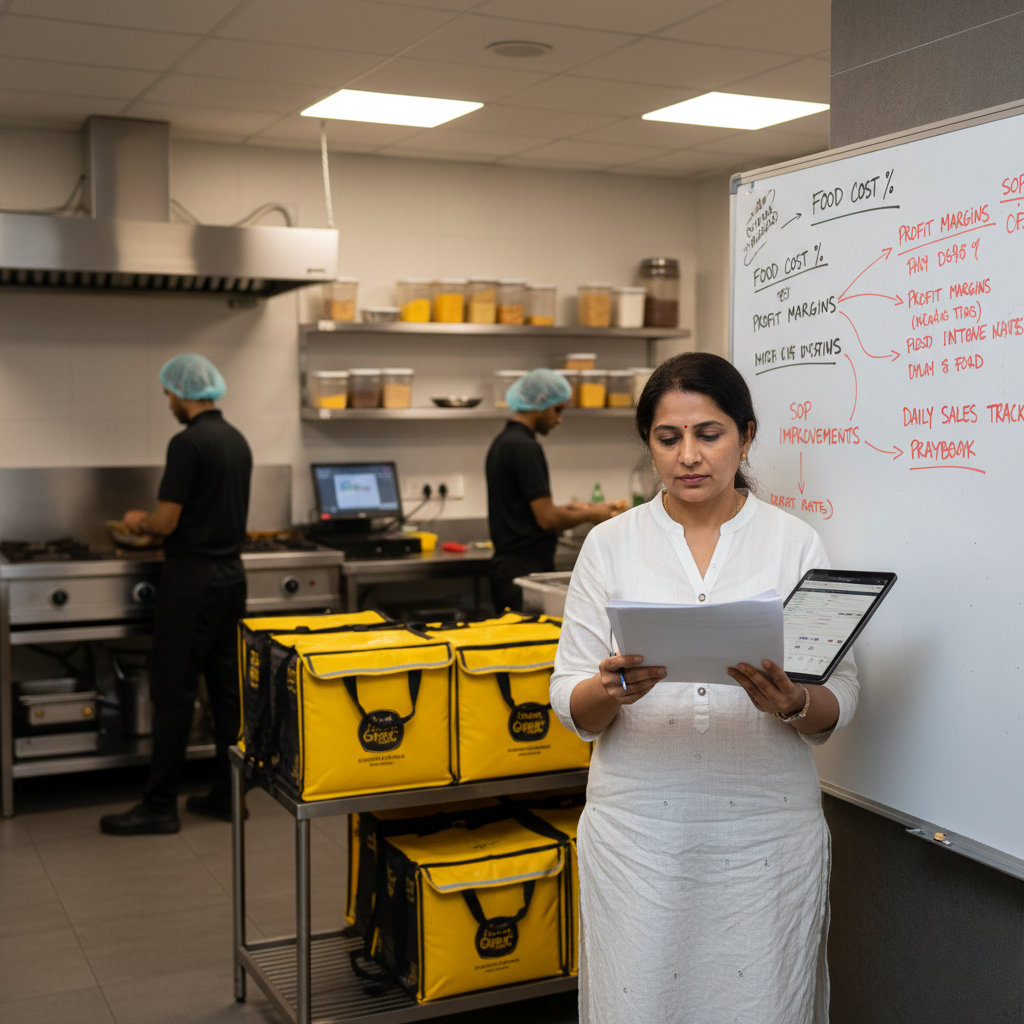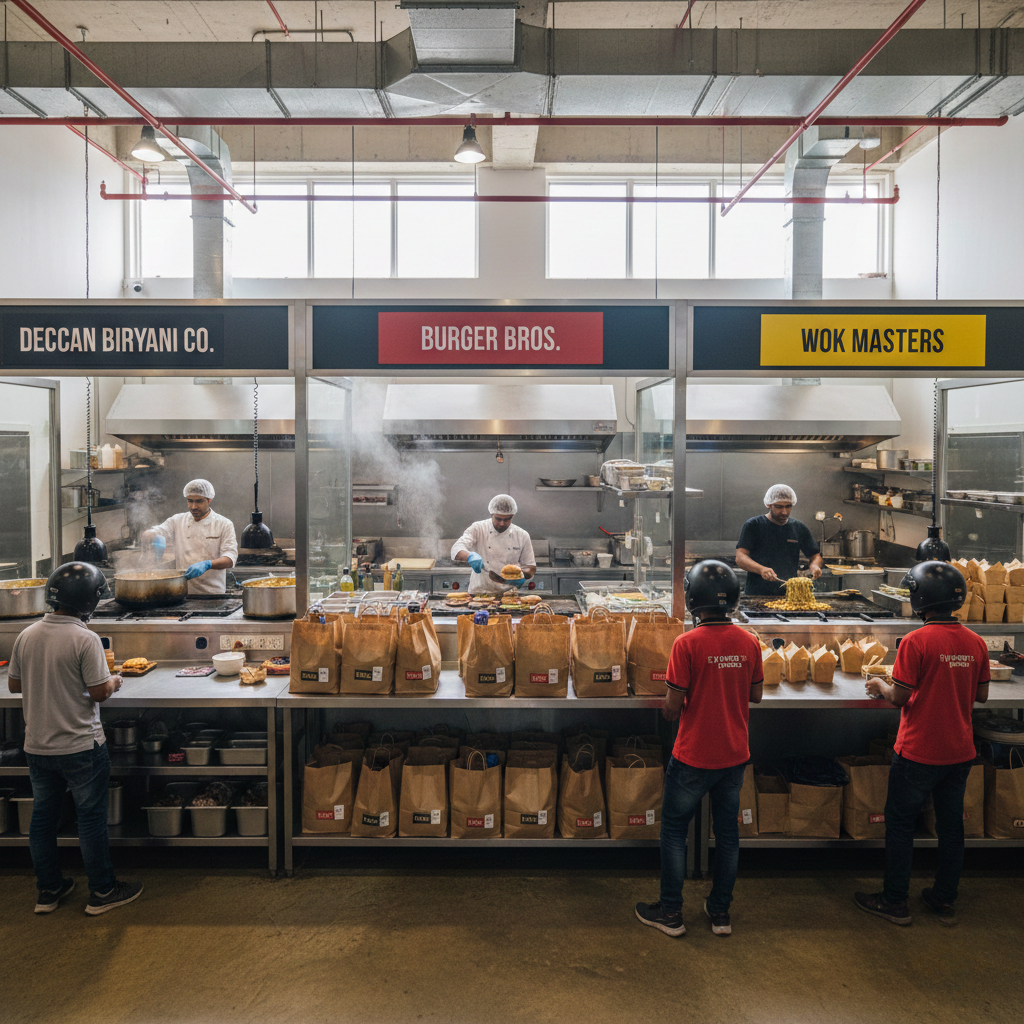

What is the best aggregator strategy for cloud kitchen in India? Listing on Swiggy or Zomato alone does not guarantee success. Most cloud kitchens struggle not because aggregators are bad, but because founders treat aggregators as marketing platforms instead of distribution systems. This guide explains how to build a winning aggregator strategy for cloud kitchens from onboarding logic and menu positioning to commission control, ad discipline, platform-specific strengths, and how to scale profitably without dependency.
Start Here Before Building an Aggregator Strategy
This article is part of GrowKitchen’s aggregator and growth framework. If you are still understanding how cloud kitchens work, start with: Cloud kitchen as a service
Aggregator strategy must align with your cost structure, staffing model, and scalability vision: Cloud Kitchen Profit Margin in India.
What Is an Aggregator Strategy for Cloud Kitchens?
An aggregator strategy defines how your cloud kitchen uses platforms like Swiggy and Zomato to acquire orders, control margins, and build long-term brand demand. It is not about discounts or ads alone.
A strong strategy answers:
- Which platform should I prioritize?
- What menu should I push on aggregators?
- How much commission can I afford?
- When should I use ads and when should I stop?
- How do I avoid becoming platform-dependent?
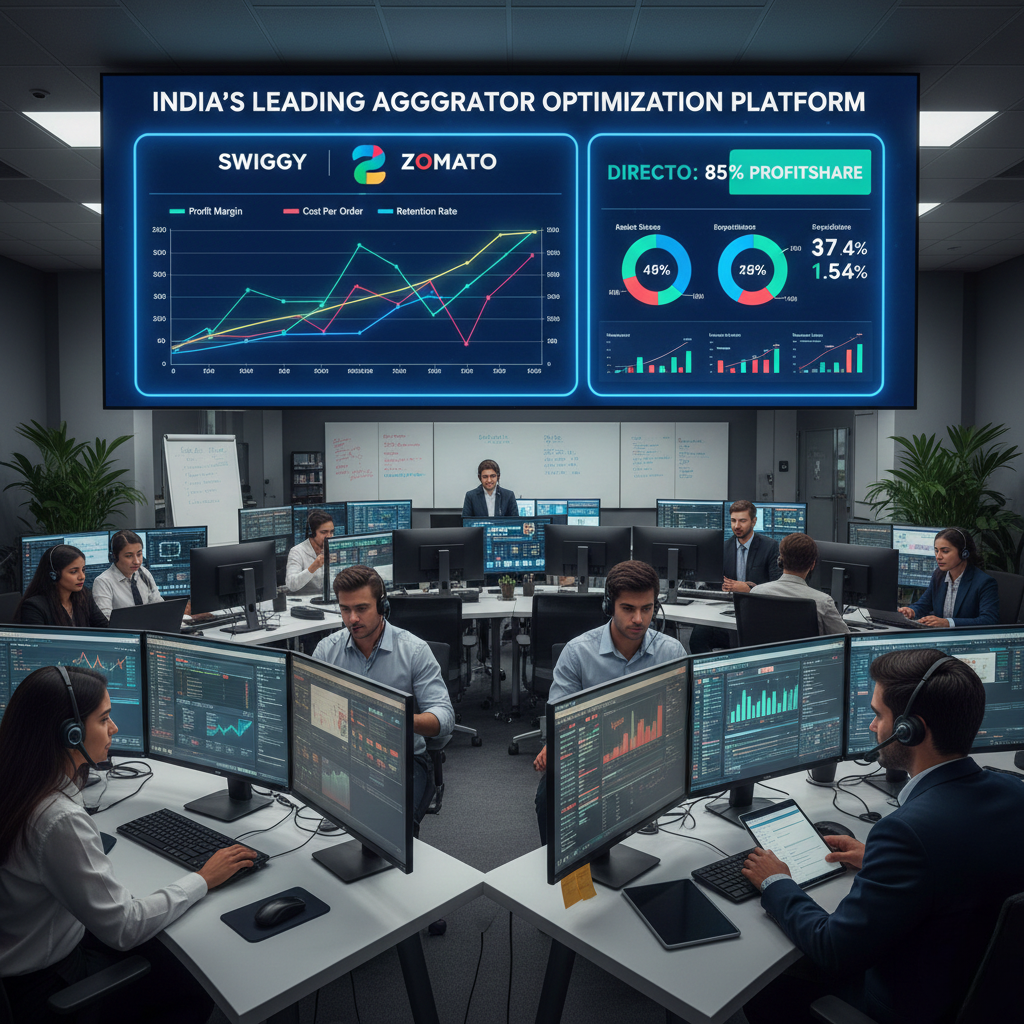
Understanding the Role of Aggregators in a Cloud Kitchen
Swiggy and Zomato provide three things:
- Customer demand
- Logistics infrastructure
- Discovery visibility
They do not guarantee profitability. Profitability depends on how your menu, pricing, and operations are designed around aggregator economics.
Treat aggregators as paid distribution channels, similar to marketplaces like Amazon.
Swiggy vs Zomato: Strategic Differences
While both platforms appear similar, their demand behavior and backend incentives differ.
- Swiggy: higher order velocity, aggressive discounts, stronger logistics
- Zomato: stronger brand recall, better reviews impact, loyal user base
Instead of choosing one, smart kitchens use both but with different objectives.
Detailed comparison: Swiggy vs Zomato for Cloud Kitchens.

Commission Control Is the Core Strategy
The biggest mistake cloud kitchens make is accepting default commission slabs without negotiation.
Strategic levers to control commission:
- Volume-based negotiation
- Selective ad participation
- High AOV combo creation
- Reducing dependency on deep discounts
Practical guide: How to Reduce Swiggy Commission.
When to Use Aggregator Ads (and When Not To)
Ads should be used for visibility, not to mask poor fundamentals.
Use ads when:
- Launching a new outlet
- Testing new menu positioning
- Entering a new delivery zone
Avoid ads when:
- Your food cost is uncontrolled
- Your ratings are below 4.0
- Your kitchen is understaffed
Ratings, Reviews & Order Velocity
Aggregator algorithms reward:
- Consistent order flow
- High ratings
- Low cancellation rates
- Fast prep time
Your operations directly impact visibility. This is why staffing, SOPs, and prep discipline matter: Cloud Kitchen SOP Checklist.
Avoiding Aggregator Dependency
The end goal of aggregator strategy is not lifetime dependence.
Smart kitchens gradually:
- Increase repeat customers
- Build brand recall
- Push subscriptions or direct orders
Aggregators should fuel early growth, not dictate your survival.
Aggregator Strategy While Scaling to Multiple Locations
When scaling, replicating the same aggregator mistakes multiplies losses.
Best practices:
- Standardize menu and pricing
- Launch lean at every new location
- Stabilize operations before ads
Scaling reference:
How to Scale Cloud
Kitchens
See this – linkedIn
Final Take: Best Aggregator Strategy for Cloud Kitchens
The best aggregator strategy is not about fighting Swiggy or Zomato. It is about designing your business to win within their ecosystem.
Kitchens that survive and scale treat aggregators as tools not masters.
FAQs: Aggregator Strategy for Cloud Kitchens
Should I list only on Swiggy or Zomato?
No. Use both platforms strategically with different objectives.
Are aggregator ads mandatory?
No. Ads should be tactical, not permanent.
Can a cloud kitchen survive without aggregators?
Early-stage kitchens usually need aggregators. Long-term success requires reduced dependency.
- Swiggy vs Zomato for Cloud Kitchens
- How to Reduce Swiggy Commission
- Cloud Kitchen Profit Margin
- Why Cloud Kitchens Fail in India