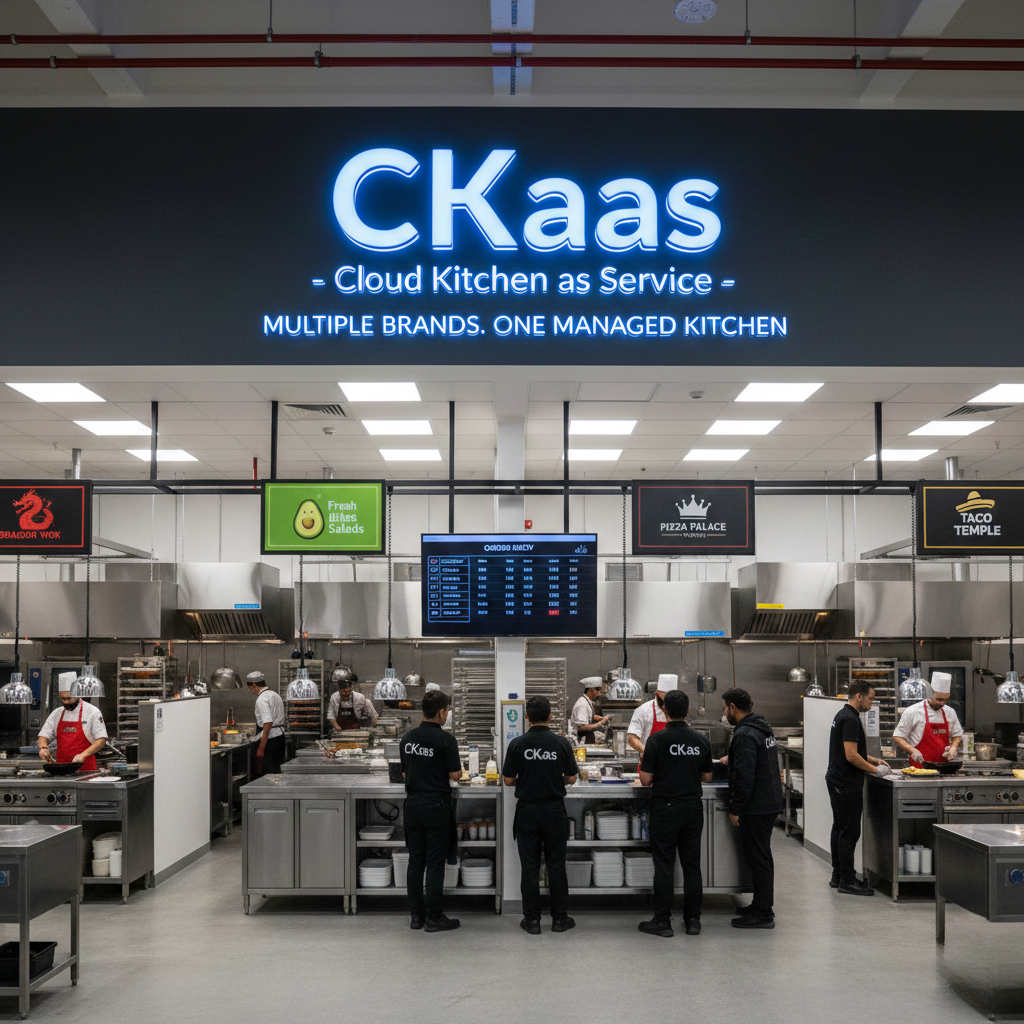
The food delivery industry in India has grown rapidly over the last few years, but behind the surface-level growth lies a harsh reality. While many brands are launching cloud kitchens, very few are actually building profitable and scalable businesses. The gap is not in demand, but in execution, systems, and cost control.
This is where Cloud Kitchen as a Service India has emerged as a powerful model. Cloud Kitchen as a Service India is designed to eliminate the inefficiencies of traditional setups and replace them with structured, system-driven operations. Instead of building everything from scratch, Cloud Kitchen as a Service India allows brands to plug into an existing ecosystem that is already optimized for delivery, margins, and scalability.
If you are new to this space, it is important to first understand the fundamentals of the model. You can explore our detailed explanation here: What is a Cloud Kitchen?
Understanding Cloud Kitchen as a Service India
At its core, Cloud Kitchen as a Service India is not just about renting a kitchen space. It is about accessing a complete operational system that has already been tested and optimized. This includes infrastructure, menu design, SOPs, aggregator setup, and performance tracking.
In a traditional setup, a founder spends months figuring out location, staff, vendors, and menu strategy. Most of these decisions are made through trial and error, which increases both cost and risk. Cloud Kitchen as a Service India removes this uncertainty by offering a ready-to-execute framework where every component is designed to work together.
This shift is significant because it changes the way food businesses are built. Instead of focusing on setup, founders can focus on growth, branding, and customer experience from day one with Cloud Kitchen as a Service India.
Why Most Cloud Kitchens Fail Without a System
The biggest misconception in the industry is that cloud kitchens are easy to run. While the entry barrier is lower compared to dine-in restaurants, the operational complexity is often underestimated. Without proper systems, small inefficiencies quickly compound into major losses.
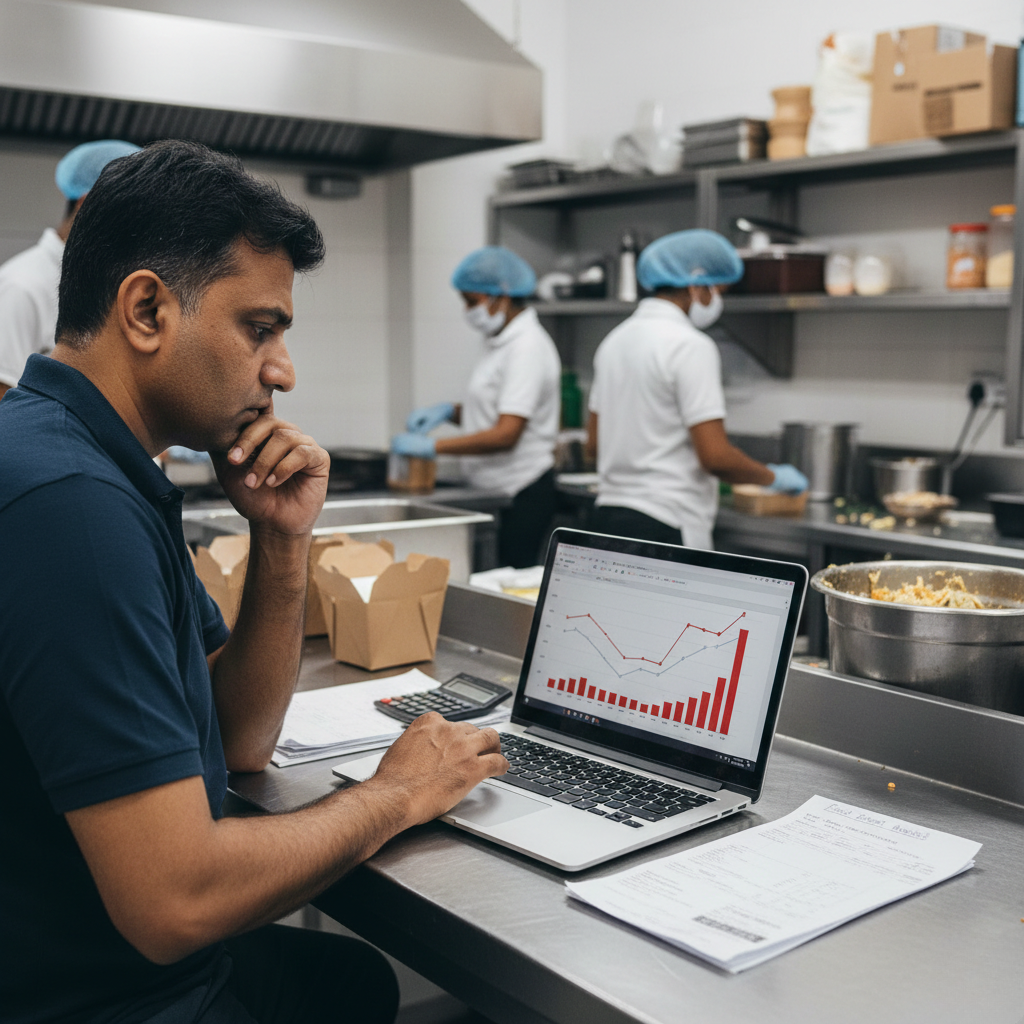
One of the most common issues is poor unit economics. Many kitchens fail to calculate the true cost of each order, including aggregator commissions, packaging, and wastage. This results in situations where orders increase, but profitability does not.
Another major challenge is menu complexity. Large menus may seem attractive, but they create operational friction. Inventory becomes harder to manage, preparation time increases, and consistency drops. Over time, this leads to lower ratings and higher refunds.
You can explore a deeper breakdown of these issues here: Cloud Kitchen Mistakes to Avoid
What most failing kitchens have in common is not lack of demand, but lack of structure. This is exactly what Cloud Kitchen as a Service India is designed to solve.
How Cloud Kitchen as a Service India Brings Structure and Predictability
The biggest advantage of Cloud Kitchen as a Service India is that it introduces predictability into a highly unpredictable business. Every element of the operation is standardized, from ingredient usage to dispatch timing.
Menu engineering plays a critical role in this system. Instead of offering dozens of random dishes, Cloud Kitchen as a Service India focuses on a curated menu that is optimized for margins and repeat orders. Each dish is designed with a clear understanding of food cost, preparation time, and customer demand.
If you want to understand how structured menus improve performance, you can read: How to Upgrade Your Restaurant Menu
Along with menu design, SOPs ensure that every order is executed consistently. From preparation to packaging, each step follows a defined process. This reduces errors, improves ratings, and builds customer trust over time.
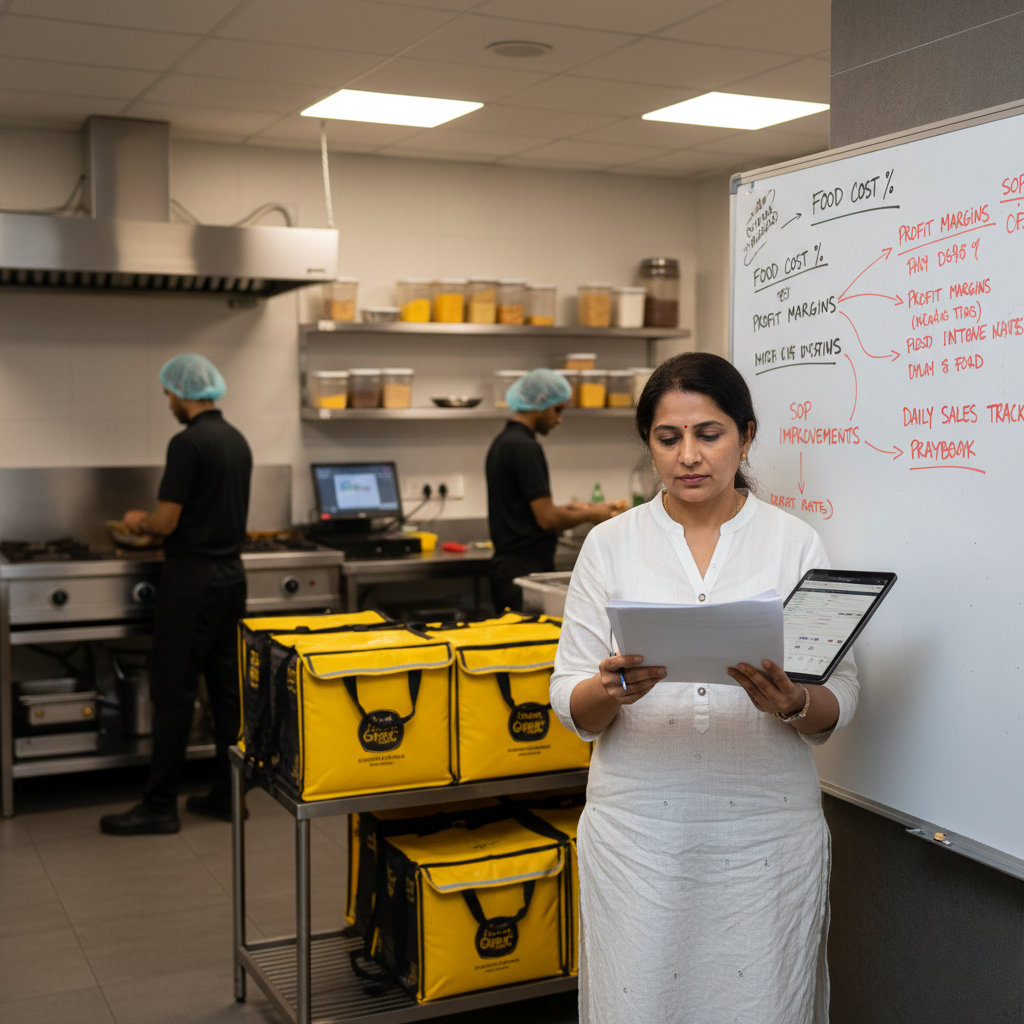
For example, dispatch plays a critical role in customer experience. Even a well-prepared dish can result in a poor review if it is delayed or packed incorrectly. This is why dispatch SOPs are a core part of Cloud Kitchen as a Service India systems. You can explore this in detail here: Dispatch SOPs for Swiggy & Zomato
The Role of Data in a Cloud Kitchen as a Service India Model
One of the biggest differences between a traditional kitchen and a CKaaS-driven kitchen is the use of data. Decisions are not based on assumptions, but on measurable metrics.
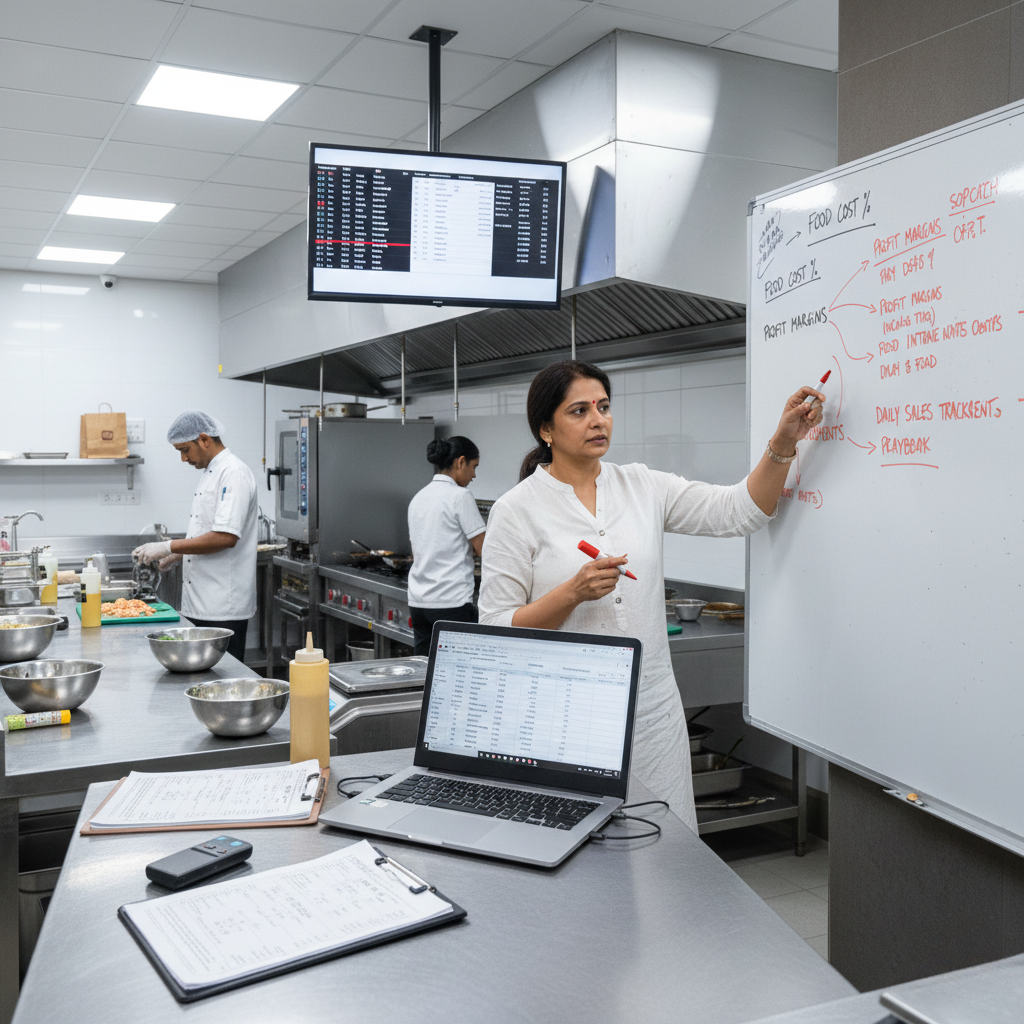
Daily tracking of orders, average order value, food cost, and customer feedback allows operators to identify problems early. Instead of reacting to losses after they happen, Cloud Kitchen as a Service India systems enable proactive decision-making.
Over time, this data-driven approach creates a strong foundation for scaling. When you know what works, Cloud Kitchen as a Service India makes it easier to replicate success across multiple locations without starting from scratch.
Cost Advantage of Cloud Kitchen as a Service India
One of the biggest barriers in the food business has always been capital investment. Setting up a traditional restaurant requires significant expenditure on interiors, rent, and staffing. This not only increases risk but also delays breakeven.
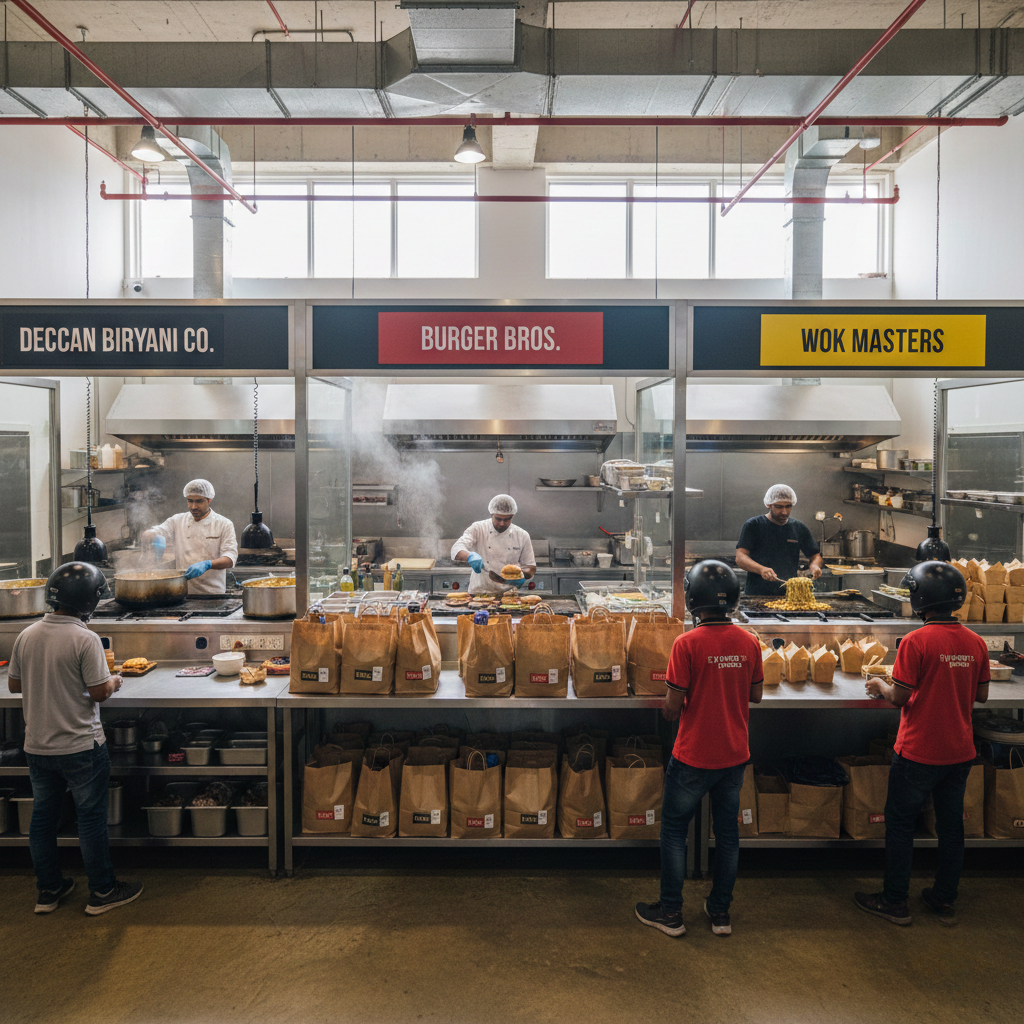
Cloud Kitchen as a Service India significantly reduces this burden by offering shared infrastructure and optimized operations. Instead of investing ₹20–60 lakhs, founders can start with a much lower investment while still accessing professional-grade systems.
If you want a detailed breakdown of costs, you can refer to: Cloud Kitchen Setup Costs in India
This lower entry barrier makes Cloud Kitchen as a Service India an attractive option not only for new entrepreneurs but also for existing brands looking to expand into new markets.
Who Should Consider the Cloud Kitchen as a Service India Model?
Cloud Kitchen as a Service India is particularly useful for individuals and businesses that want to scale without taking on unnecessary risk. For new founders, it provides a structured starting point that reduces the chances of failure. For existing restaurant owners, it offers a way to expand into delivery without disrupting dine-in operations.
It is also highly relevant for D2C food brands that want to test new cities or product lines. Instead of investing heavily in each location, they can use Cloud Kitchen as a Service India to validate demand and optimize their offering before scaling further.
If your goal is long-term growth, you can also explore: How to Scale a Food Business
Location and Market Strategy in Cloud Kitchen as a Service India
While Cloud Kitchen as a Service India provides a strong operational foundation, location strategy still plays a critical role. Understanding delivery demand, competition, and customer behavior is essential for success.
High-density areas with strong ordering patterns tend to perform better, but they also come with higher competition. The key is to identify locations where demand is strong but operational efficiency can still be maintained.
For example, if you are targeting Mumbai, you can explore: Best Cloud Kitchen Locations in Mumbai
A well-chosen location combined with a strong Cloud Kitchen as a Service India system creates a powerful advantage in the market.
The Future of Cloud Kitchen as a Service India
The future of the food industry is increasingly moving towards delivery-first models. As customer behavior continues to evolve, convenience and speed are becoming more important than traditional dining experiences.
According to industry data from Statista, the online food delivery market in India is expected to grow significantly in the coming years. This growth will create new opportunities, but it will also increase competition.
In such an environment, systems and efficiency will become the defining factors of success. Cloud Kitchen as a Service India is well-positioned to meet this demand by offering scalable, data-driven solutions that can adapt to changing market conditions.
Final Thoughts on Cloud Kitchen as a Service India
Building a successful food business is no longer just about good food. It requires strong systems, disciplined execution, and a clear understanding of unit economics.
Cloud Kitchen as a Service India provides a structured path for achieving these goals. By reducing uncertainty and introducing standardized processes, it allows founders to focus on growth rather than firefighting daily operational issues.
The real question is not whether the cloud kitchen model works. It clearly does. The real question is whether you have the right Cloud Kitchen as a Service India system to make it profitable.
Start Your Cloud Kitchen as a Service India Journey with GrowKitchen
At GrowKitchen, we help food brands launch and scale using a proven Cloud Kitchen as a Service India framework designed for the Indian market. From menu engineering to operational systems, every component is built with profitability in mind.
If you are serious about building a scalable food business, you can explore our services here: Cloud Kitchen Consulting Services in India