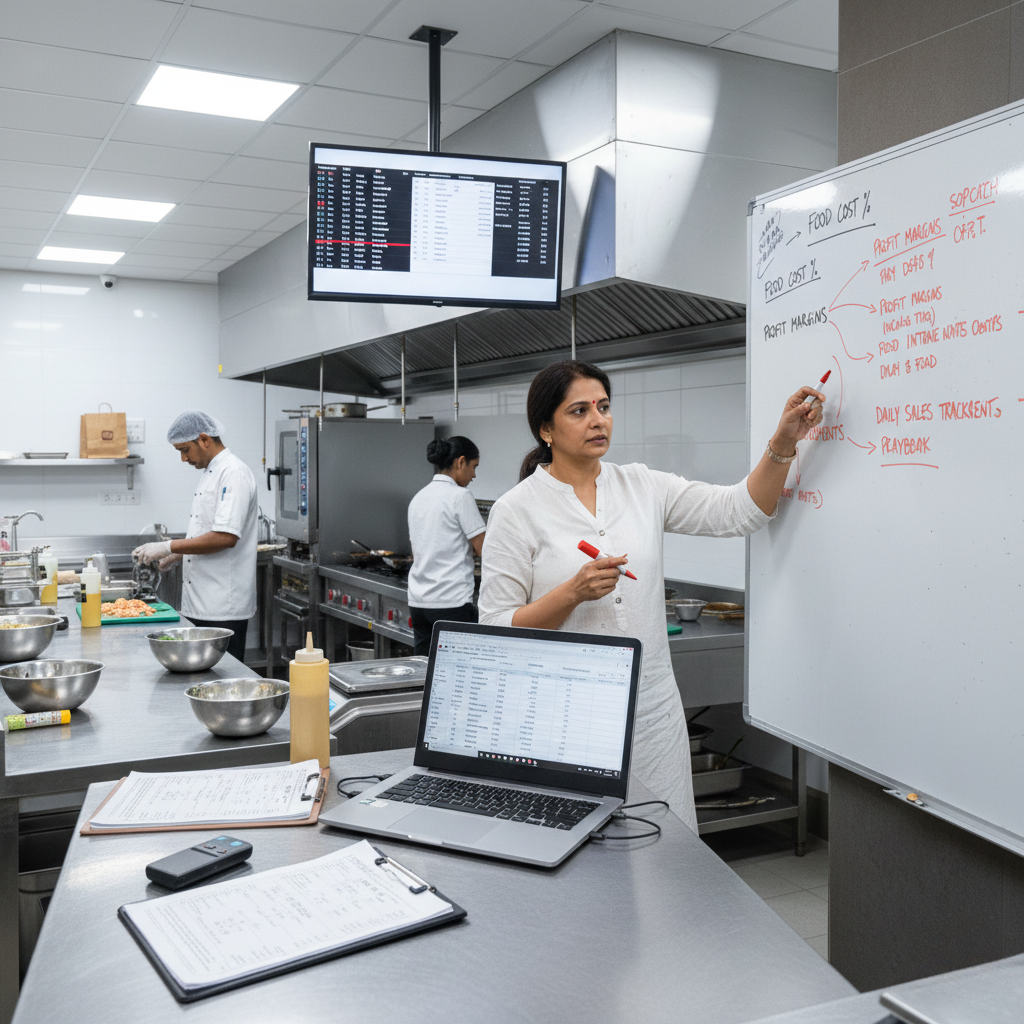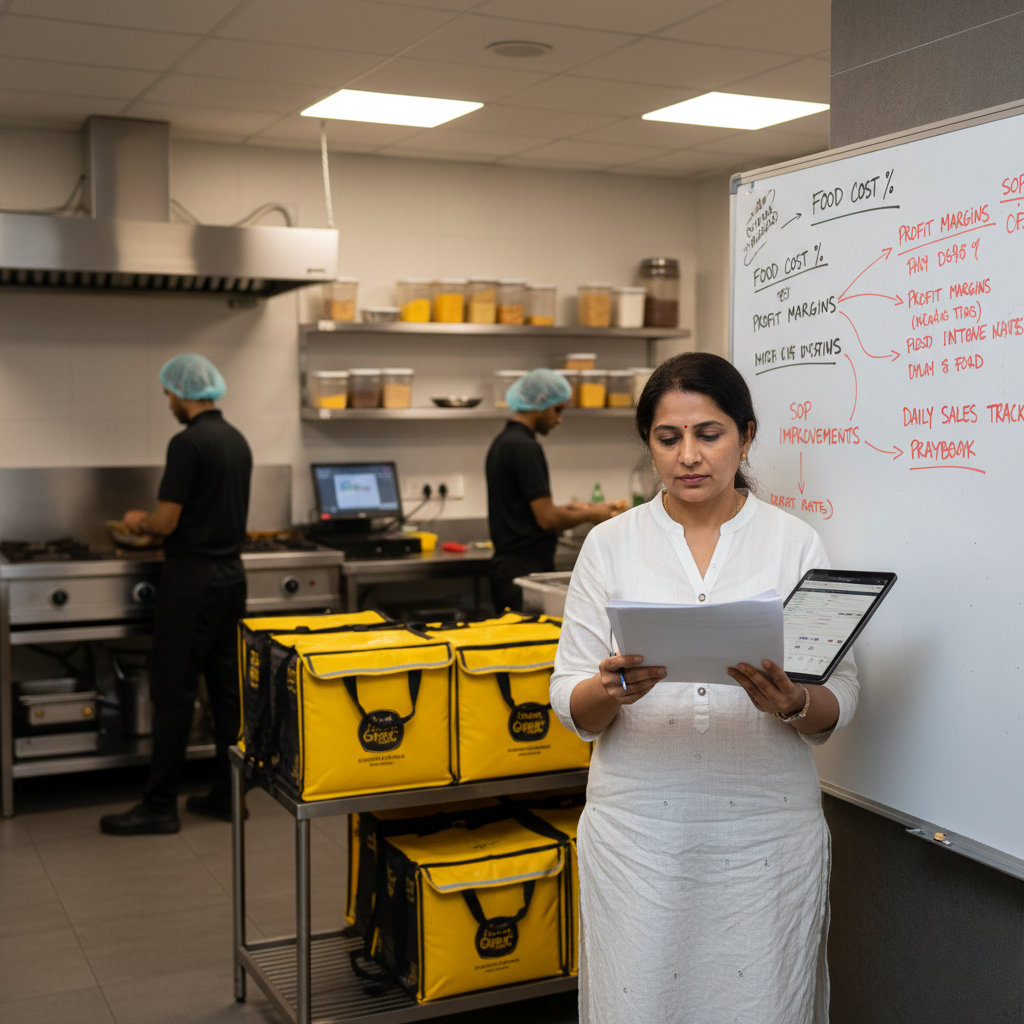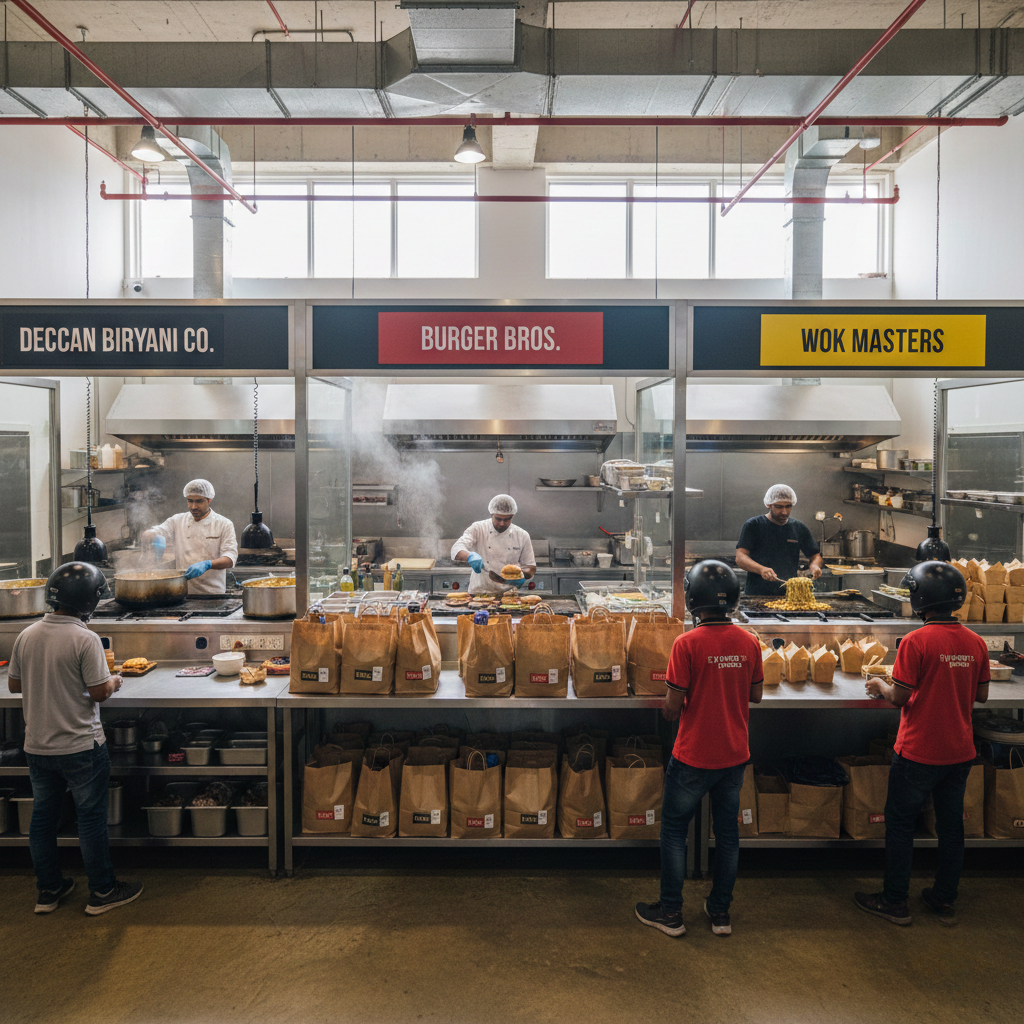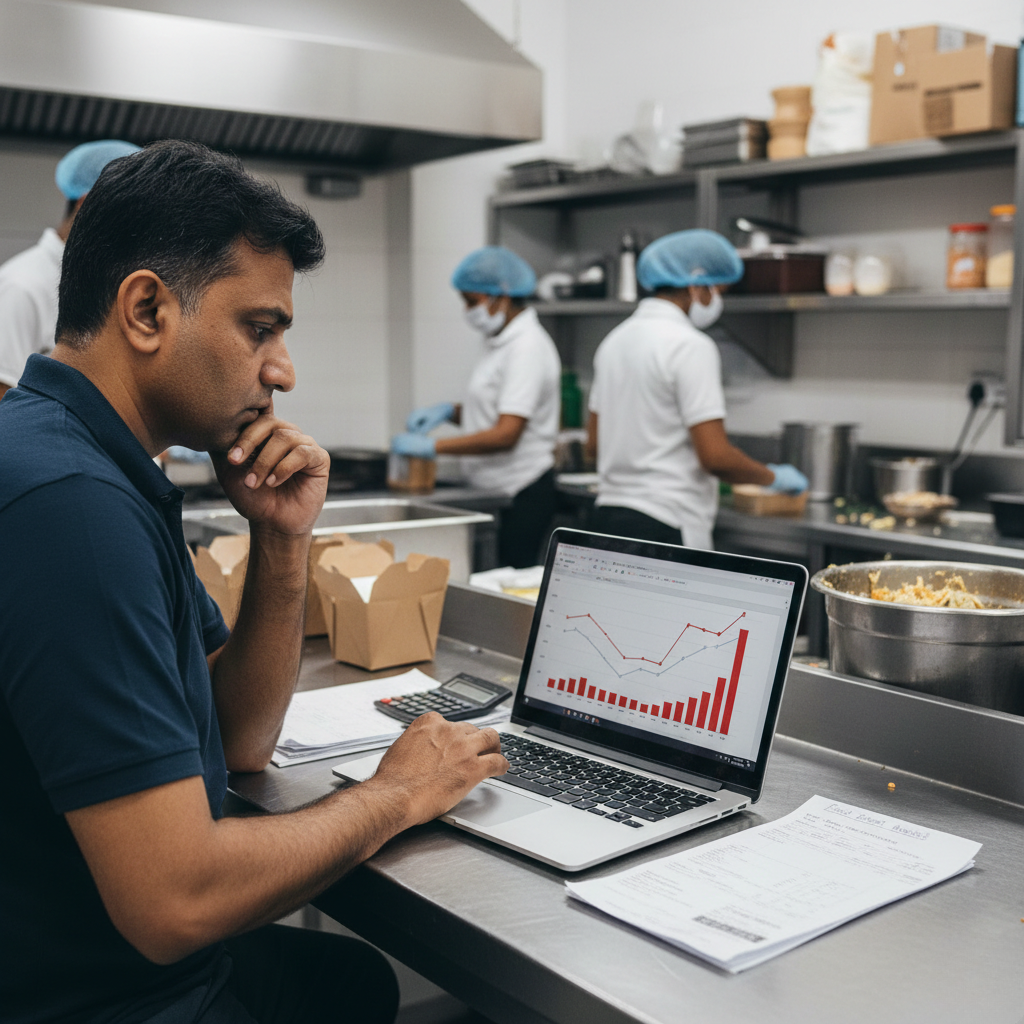
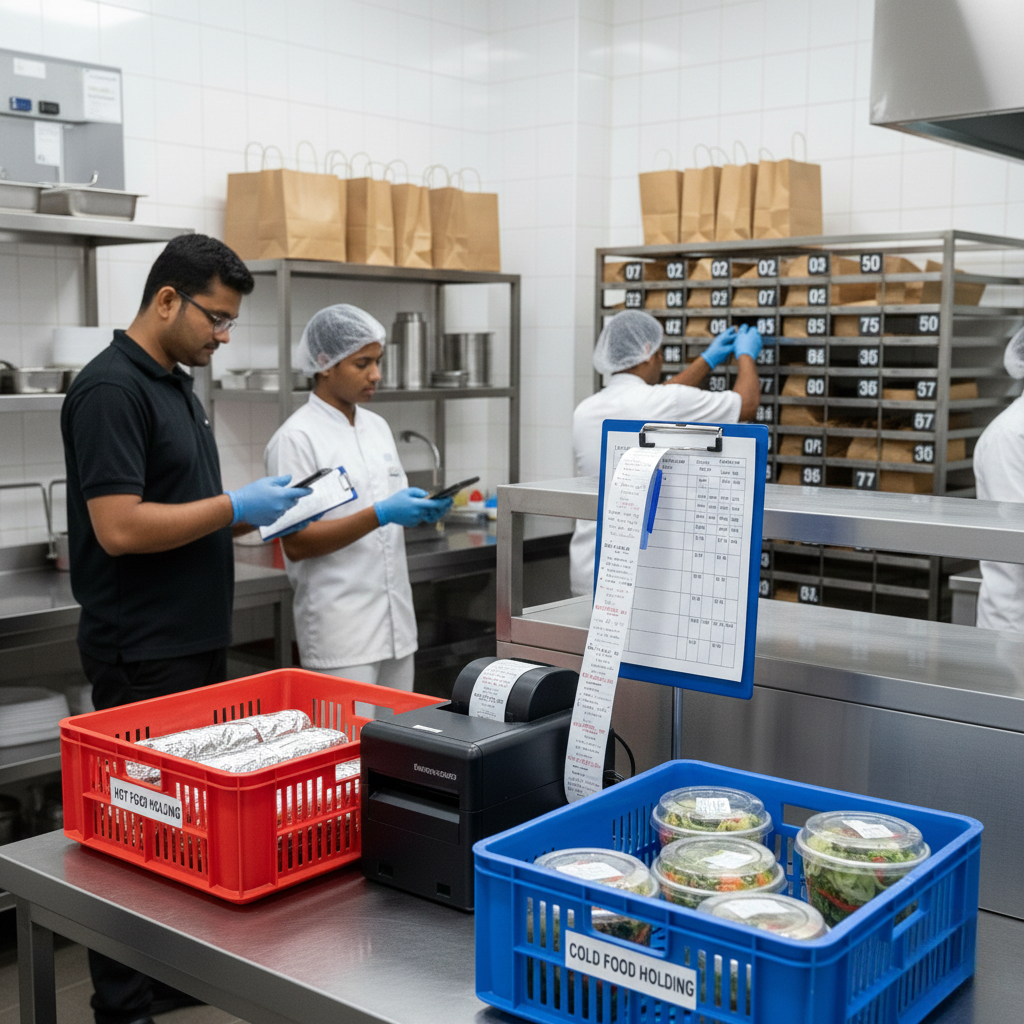
As your cloud kitchen grows, understanding your costing framework is key to maximizing profitability. This guide provides a detailed breakdown of the costs involved in scaling your cloud kitchen and how to manage them effectively. Scaling Cloud Kitchens in India
Maximize Profits as You Scale: A Detailed Costing Framework for Cloud Kitchen Consultant
Scaling a cloud kitchen isn’t just about increasing the number of orders. The key to sustainable growth lies in managing costs effectively. As your kitchen expands, you’ll encounter new expenses, from raw materials to delivery costs, all of which need to be optimized for greater profitability.
In this blog, we will walk you through a detailed costing framework that covers every aspect of your cloud kitchen’s operation, from food costs and overheads to packaging, platform commissions, and labor costs. Understanding these costs will enable you to make informed decisions that drive profitability as you scale.
Ready to start managing your cloud kitchen’s finances for growth? For more on profitability, check out our guide on Cloud Kitchen Profitability Consultant in India to take control of your costs.
Step 1: Understanding Your Fixed and Variable Costs
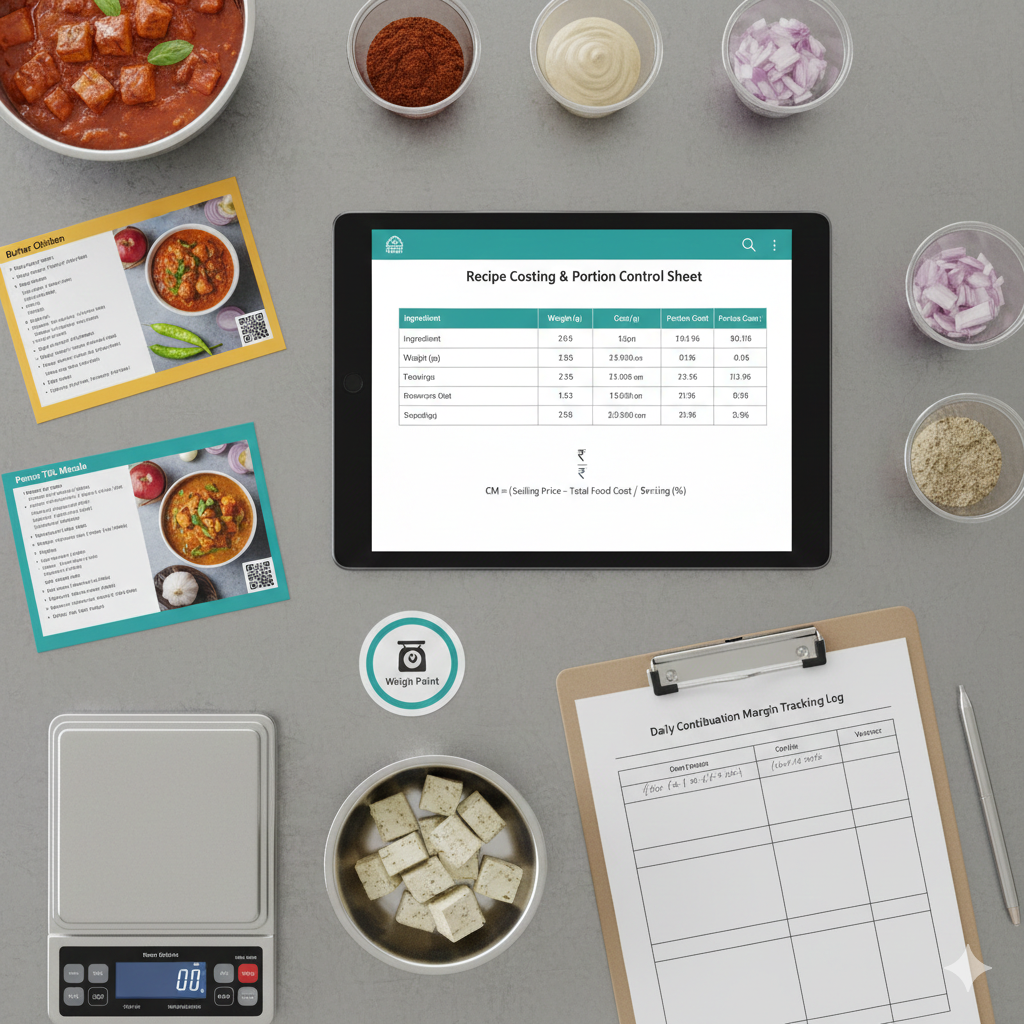
The first step in any costing framework is to differentiate between fixed and variable costs. Fixed costs remain constant regardless of the volume of orders, while variable costs fluctuate based on order volume.
As a cloud kitchen operator, it’s crucial to understand these two categories to better predict profitability. Fixed costs include rent, utilities, and salaried staff, whereas variable costs include food ingredients, packaging, delivery charges, and hourly wages.
By managing fixed costs efficiently, you can ensure a consistent bottom line even as order volume increases. Managing variable costs, on the other hand, will help you scale more efficiently without eroding profit margins.
For more insights into fixed and variable costs, read our article on Cloud Kitchen Food Cost Control Case Study.
Step 2: Implementing the Contribution Margin Model
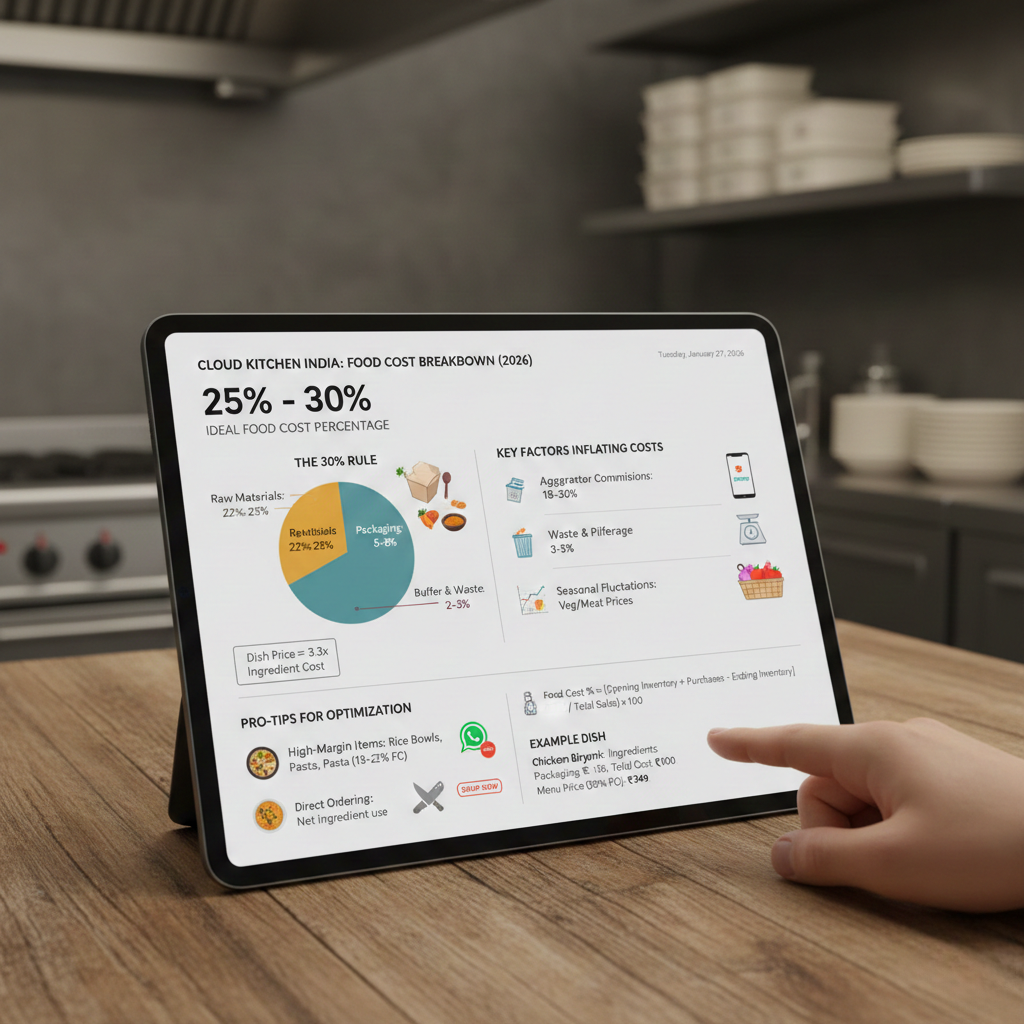
The contribution margin is a vital metric for cloud kitchens. It refers to the difference between sales and variable costs, showing how much revenue is available to cover fixed costs and generate profit.
To maximize profits as you scale, you must track your contribution margin closely. The higher the contribution margin, the more profit you can make from each order, and the better your kitchen can handle fixed costs and growth.
To calculate the contribution margin, use the following formula:
Contribution Margin = Order Value – Variable Costs (Food Cost + Packaging + Platform Commission + Delivery Charges)
Ensuring that your contribution margin is consistently positive will provide the foundation for profitable scaling.
For a deeper dive into contribution margin and its importance, check out our article on Aggregator Commission Impact in India.
Step 3: Controlling Food Costs and Managing Waste
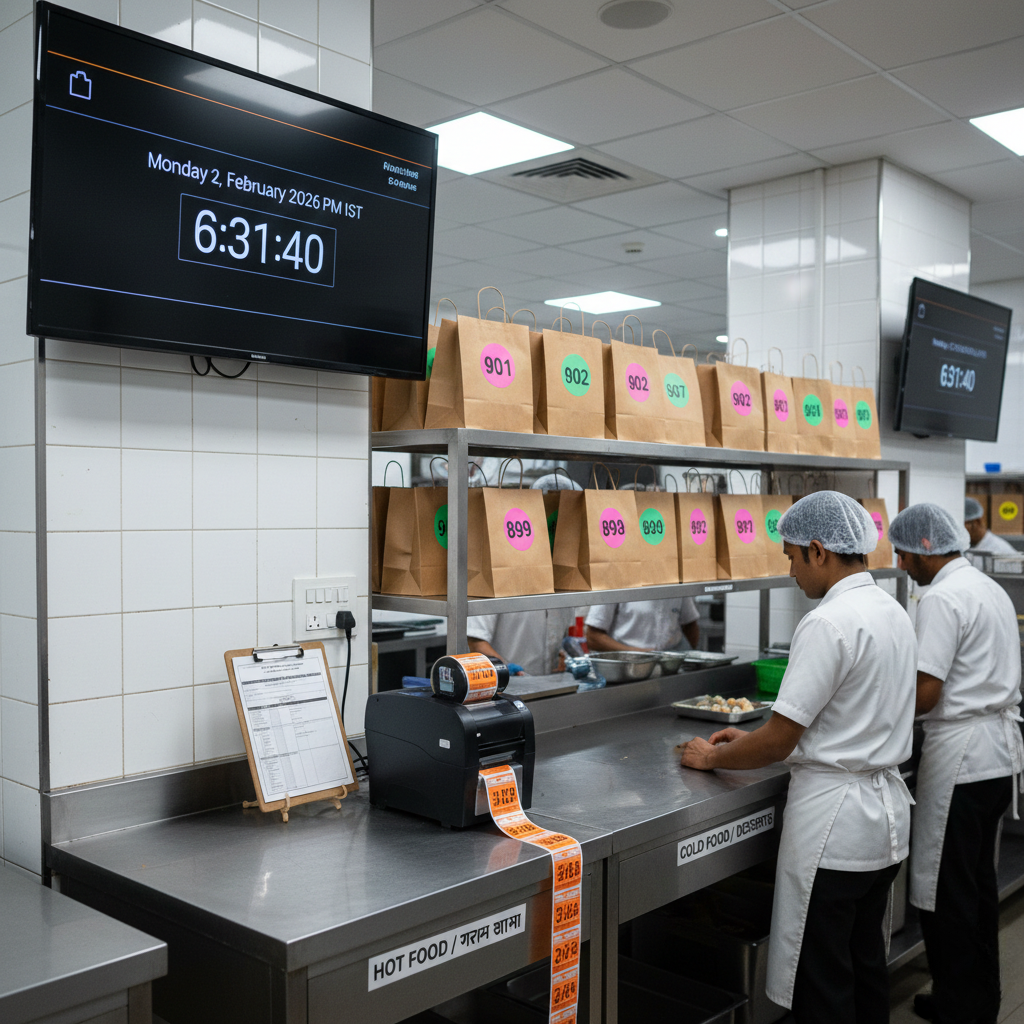
One of the largest costs for any cloud kitchen is food cost. As you scale, food cost management becomes critical to maintaining profitability. This involves sourcing ingredients efficiently, minimizing waste, and controlling portion sizes.
Cloud kitchen consultants can help you optimize food costs by establishing standardized portions, tracking ingredient usage, and negotiating better pricing with suppliers. Additionally, using inventory management systems can help reduce waste and ensure that ingredients are used before they spoil.
For tips on controlling food costs, check out our article on Cloud Kitchen Strategy and Operations.
Step 4: Using Technology to Optimize Operations and Improve Margins
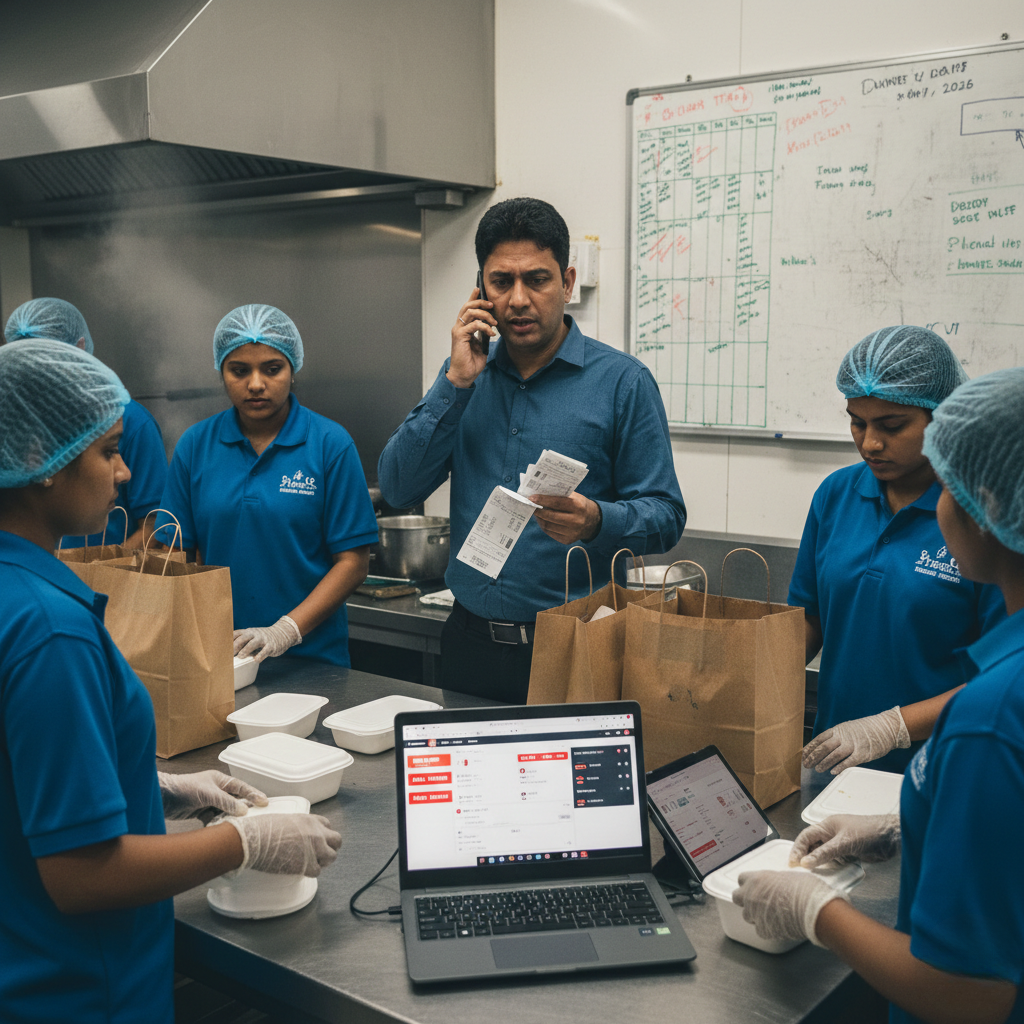
Technology plays a critical role in scaling a cloud kitchen while maintaining profitability. From Kitchen Management Systems (KMS) to data-driven inventory management tools, the right technology stack can automate many processes, reduce human error, and provide real-time data on operations.
A cloud kitchen consultant will help you choose the right technology solutions to streamline operations, optimize food preparation and delivery, and monitor key metrics like contribution margin, food waste, and delivery efficiency.
For more on technology and scaling, read our article on Cloud Kitchen Strategy and Operations.
Step 5: Developing a Scalable Expansion Strategy
Expanding a cloud kitchen involves much more than opening new locations. It requires careful planning, market research, and logistical coordination to ensure that your operations can handle the increased demand while maintaining quality.
A cloud kitchen consultant will help you assess new markets, evaluate the feasibility of opening new kitchens, and ensure that your supply chain and staffing are prepared to meet the demands of expansion.
For expansion strategy insights, read our article on Cloud Kitchen Expansion Strategy in India.
Final Takeaways: Maximizing Profits with Expert Consultation
Scaling a cloud kitchen while maximizing profits requires more than just operational know-how—it demands the right strategies, tools, and expert guidance. By partnering with a cloud kitchen consultant, you can optimize your operations, improve margins, and expand your business with confidence.
- Standardize operations to improve consistency across all locations.
- Optimize your unit economics to maintain profitability as you scale.
- Leverage technology to streamline workflows and reduce costs.
- Develop a scalable expansion strategy to grow without compromising quality.
Book a consultation with GrowKitchen today and start implementing the strategies you need to scale your cloud kitchen efficiently and profitably.