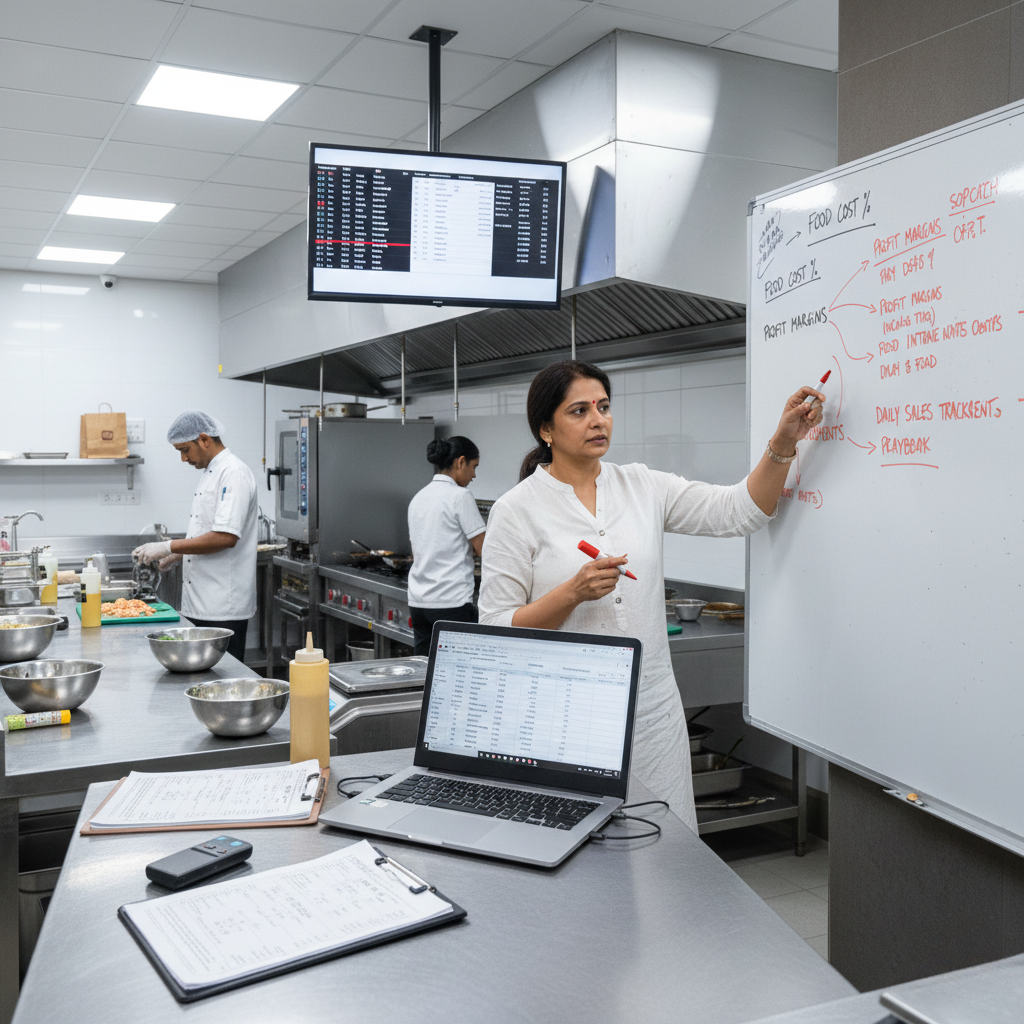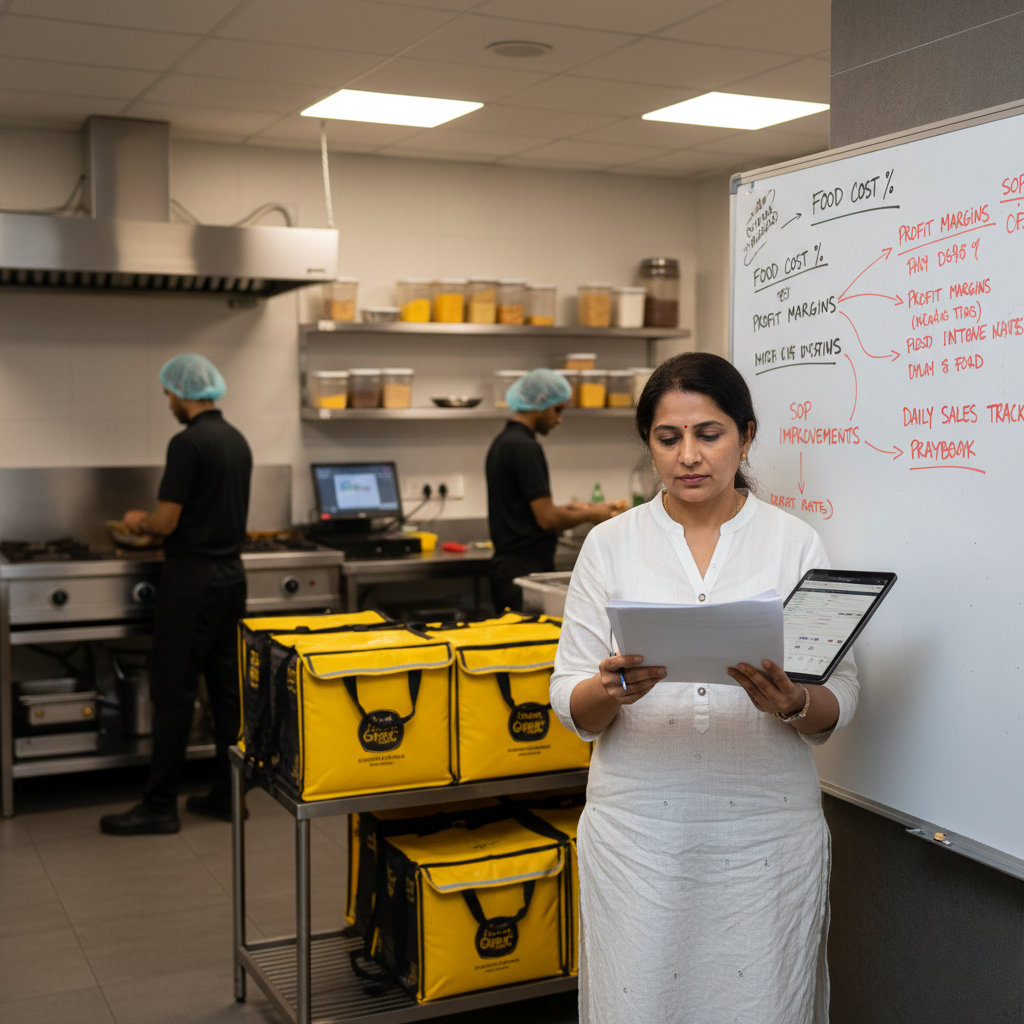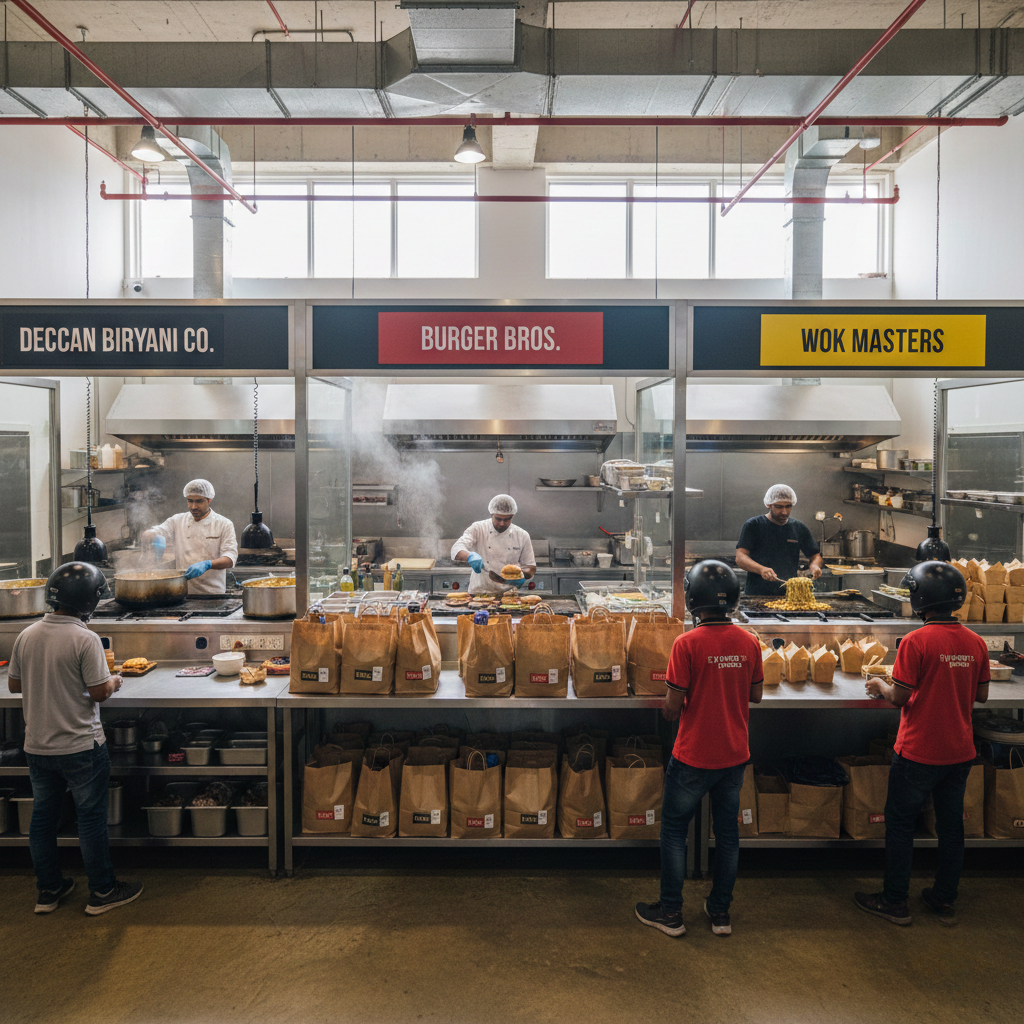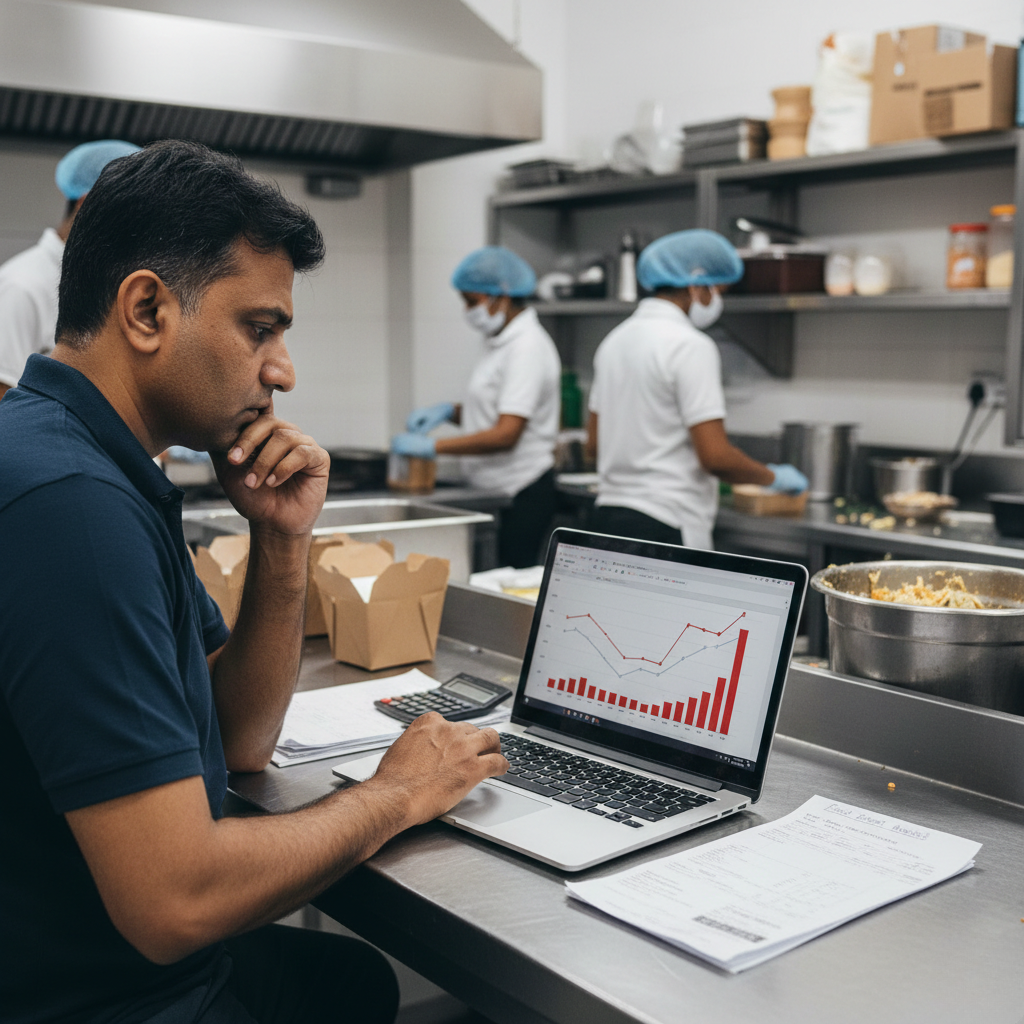
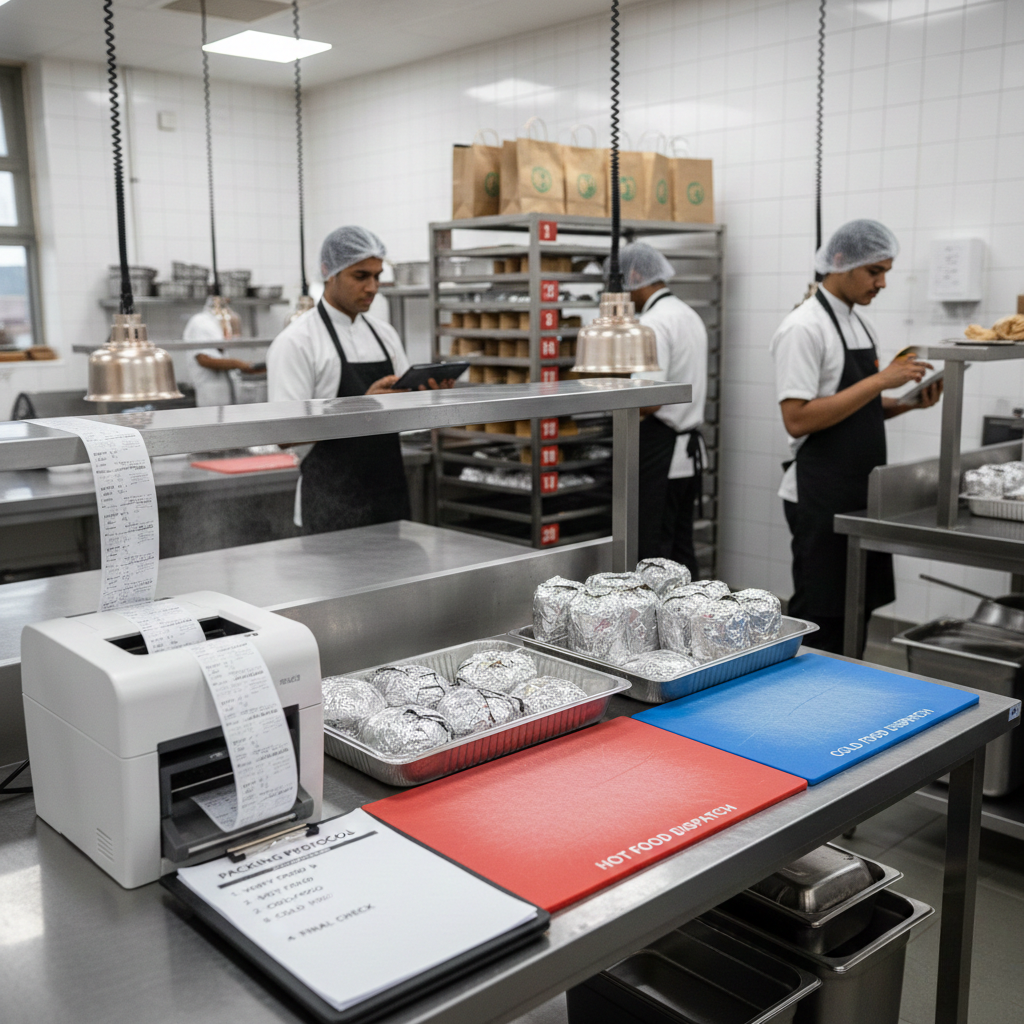
Scaling your cloud kitchen requires more than just operational strategies. It requires a combination of managing food costs, optimizing workflows, and making data-driven decisions. This guide walks you through every step of scaling your cloud kitchen in India, from building strong foundations to expanding successfully with reliable systems and technology.
How to Scale Your Cloud Kitchen: A Step-by-Step Guide
Running a cloud kitchen offers flexibility, but scaling it effectively requires robust systems and a clear roadmap for growth. This guide will provide the critical steps for scaling your kitchen from a small operation to a multi-location business.
The key to scaling your cloud kitchen lies in having the right processes and systems in place. This includes understanding unit economics, managing food costs, and maintaining consistency in food quality and service across multiple locations.
To get started, check out Cloud Kitchen Profitability Consultant in India to understand the key financial aspects you need to address for scaling.
Step 1: Standardizing Operations
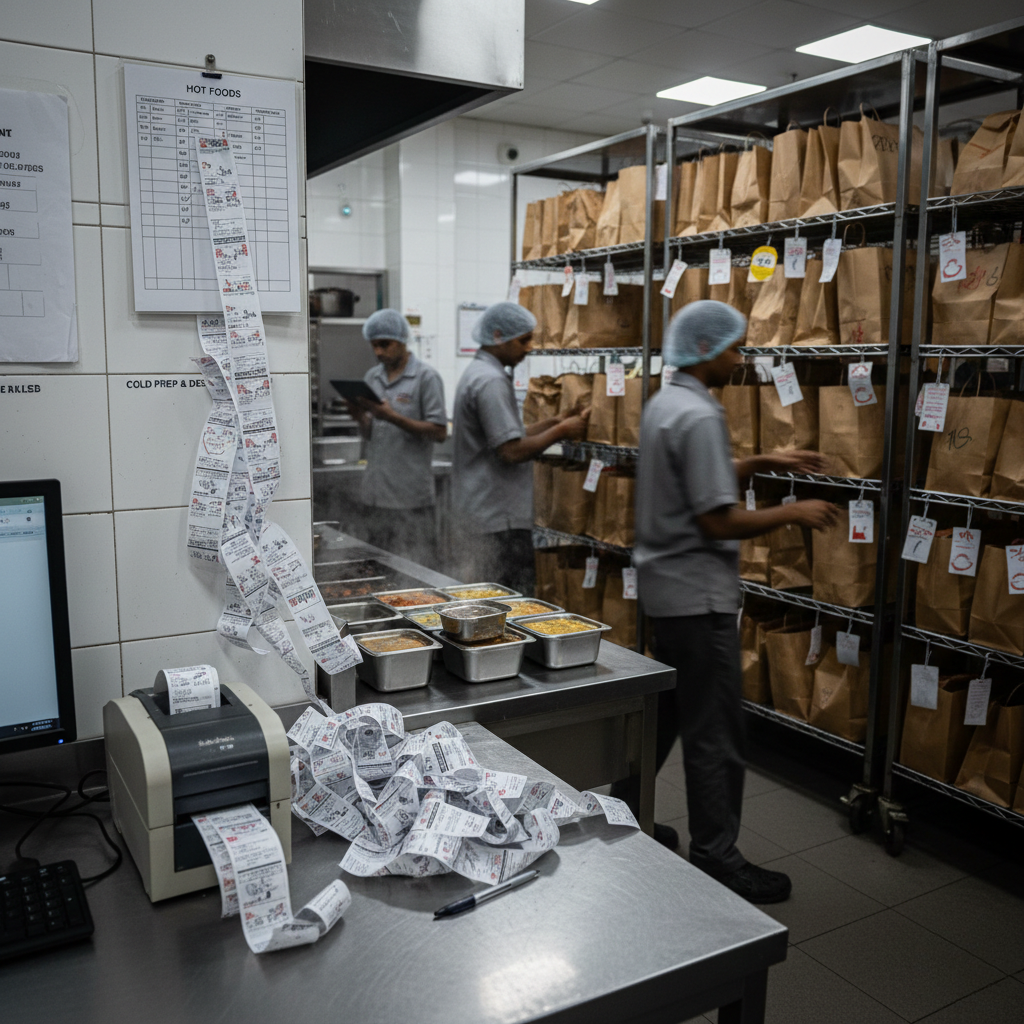
The first step in scaling any cloud kitchen is to standardize operations. Without consistency, your food quality and customer experience will vary, impacting your ability to scale. Implementing Standard Operating Procedures (SOPs) is essential in maintaining consistency and reducing the risk of errors.
SOPs ensure that every task in the kitchen, from food preparation to packing and delivery, is performed the same way every time, regardless of the staff on duty. This removes inconsistency and reduces errors.
For further insights, refer to our detailed case study on Cloud Kitchen Without SOPs vs After SOP Implementation.
Step 2: Optimize Your Unit Economics
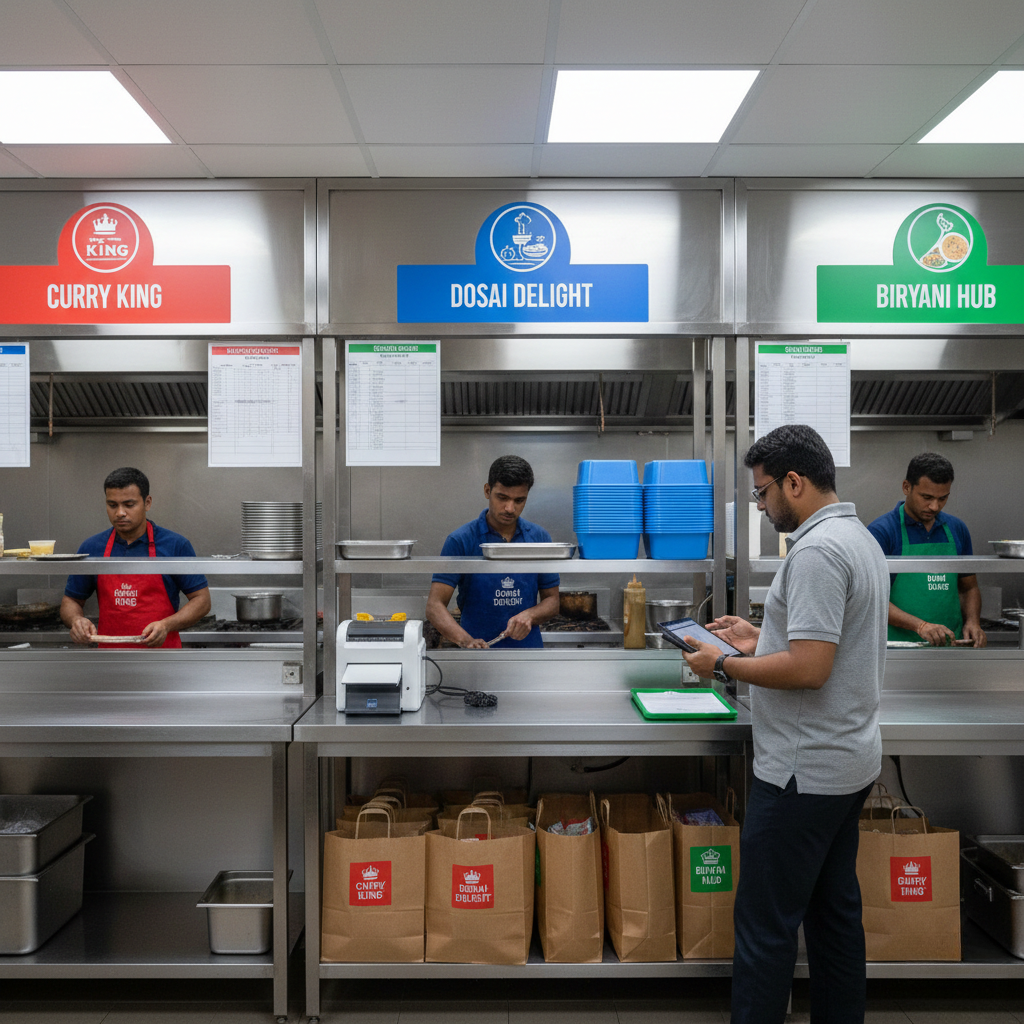
When scaling a cloud kitchen, it’s crucial to optimize unit economics. This includes understanding and tracking contribution margins, which will allow you to assess whether scaling is sustainable in the long term. Contribution margin is the amount left after subtracting all variable costs, including food cost, packaging, and platform commissions.
To better understand unit economics, ask yourself these key questions weekly:
- What is my food cost % on top SKUs?
- What is my refund rate?
- What is my cancellation rate?
- What is my late dispatch count?
- What is my contribution margin after fees?
For a deeper look at how these factors affect your kitchen’s performance, refer to Aggregator Commission Impact in India and Refunds and Cancellations Impact on Cloud Kitchen Profitability.
Step 3: Scaling with CKaaS (Cloud Kitchen as a Service)
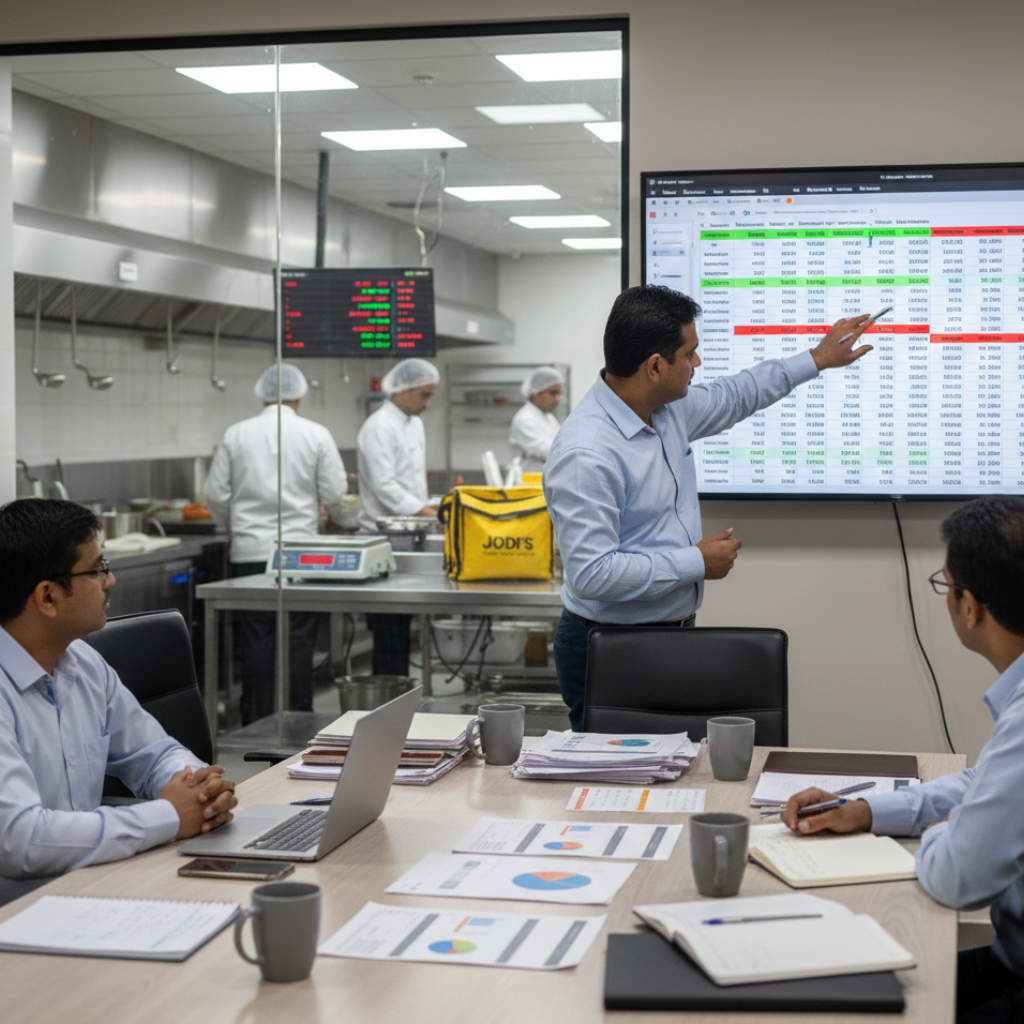
Cloud Kitchen as a Service (CKaaS) can be an efficient way to scale your cloud kitchen without needing to invest heavily in new infrastructure. CKaaS allows you to leverage third-party kitchen facilities and operational support while focusing on brand building and expanding your customer base.
However, CKaaS is not a magic solution. It works best for founders who have clear processes and unit economics in place. The real benefit of CKaaS is in its ability to free you from daily operational burdens by providing standardized execution across multiple kitchens.
If you’re considering CKaaS, check out our Scaling Cloud Kitchen with CKaaS guide for more details on how to implement it successfully.
Step 4: Who CKaaS Is For: The Right Founder Profiles
CKaaS is ideal for founders who have strong unit economics and want to scale efficiently without the burden of managing kitchen infrastructure. Below are the key founder profiles that benefit most from CKaaS:
- Brand-first founders: These founders want speed and flexibility to scale their brand without locking capital into kitchens.
- Multi-brand operators: CKaaS works for operators running multiple brands who want to streamline kitchen operations without creating separate infrastructure for each brand.
- Founders with strong unit economics: These founders understand their food cost, contribution margins, and operational efficiency, and need a scalable solution to expand.
For more detailed profiles, read Common Operational Mistakes in Cloud Kitchens and How Process Discipline Improves EBITDA.
Step 5: Expand Strategically
Once your operations are standardized and optimized, it’s time to scale. Expanding your cloud kitchen network strategically is key to long-term success. Focus on markets with high demand for food delivery and minimal competition, ensuring that each new location complements your overall brand strategy.
For more on how to expand your cloud kitchen efficiently, check out our Expansion Strategy for Cloud Kitchens.
Final Takeaways: The Keys to Scaling Your Cloud Kitchen
Scaling a cloud kitchen is not just about opening new locations. It’s about creating repeatable, efficient processes that allow you to maintain food quality, profitability, and customer satisfaction as you grow. Follow these steps to ensure your cloud kitchen expands successfully while maintaining operational excellence.
- Standardize operations across all kitchens for consistency.
- Optimize food cost and track unit economics to maintain profitability.
- Leverage CKaaS for efficient scaling without heavy investment in infrastructure.
- Expand strategically to high-demand markets with minimal competition.
- Ensure quality and service consistency across locations through SOPs and regular performance reviews.
By focusing on these fundamental aspects, you’ll be well on your way to building a scalable, profitable cloud kitchen business.
Follow GrowKitchen on Facebook, LinkedIn, insights from Rahul Tendulkar, and ecosystem discussions via GreenSaladin.