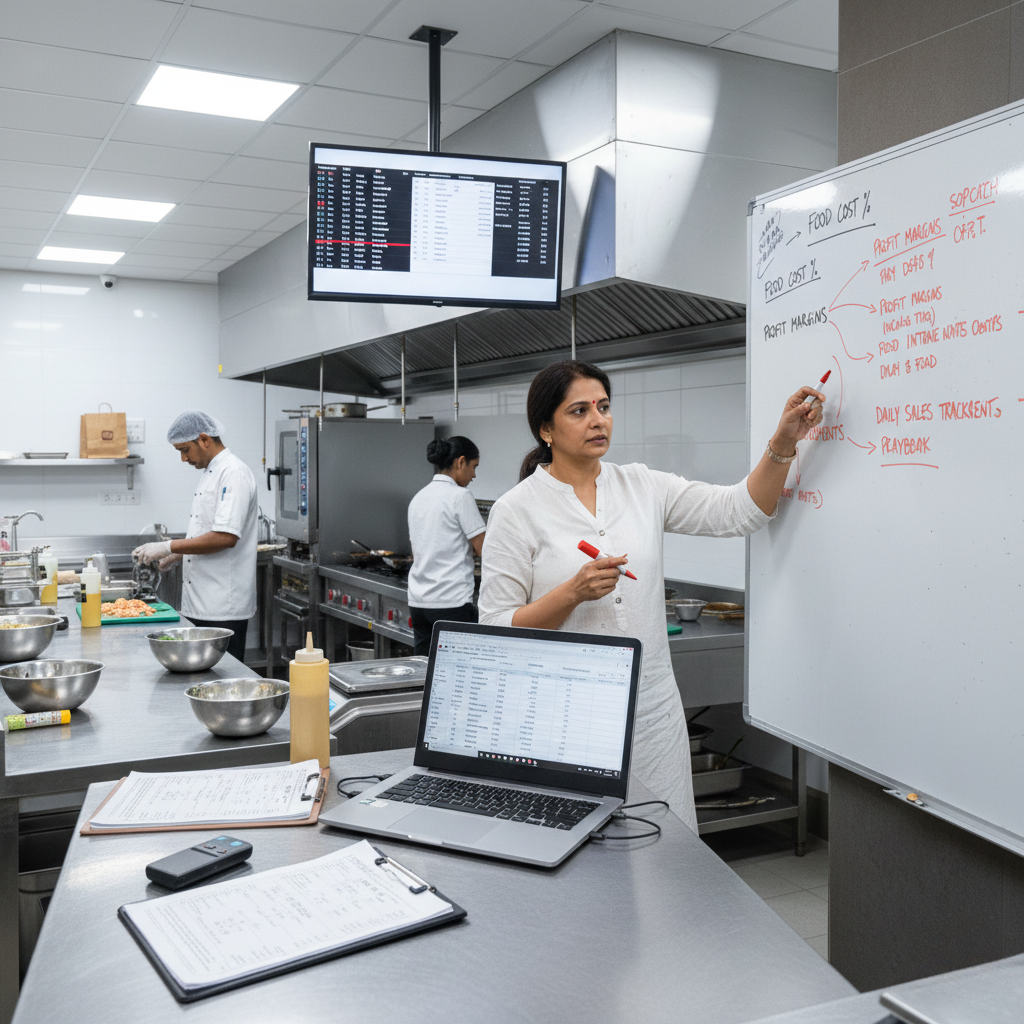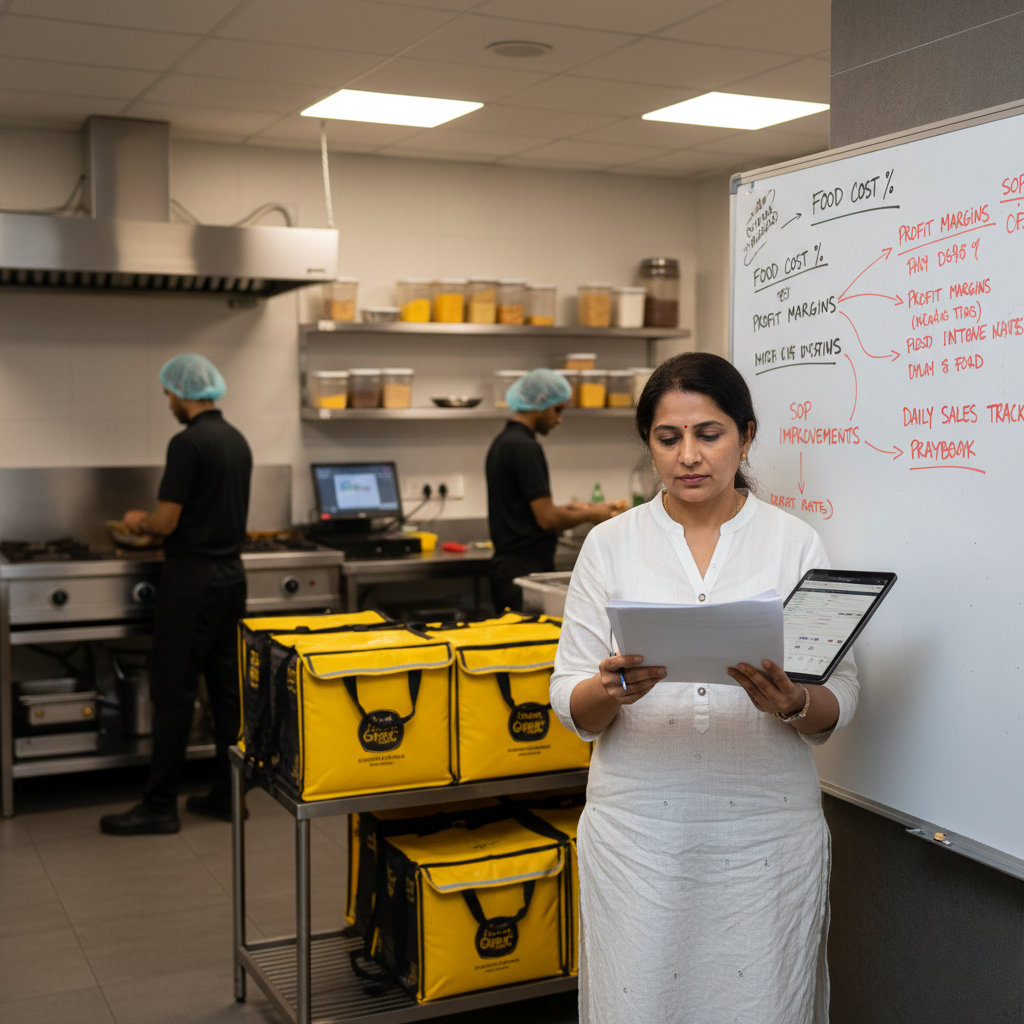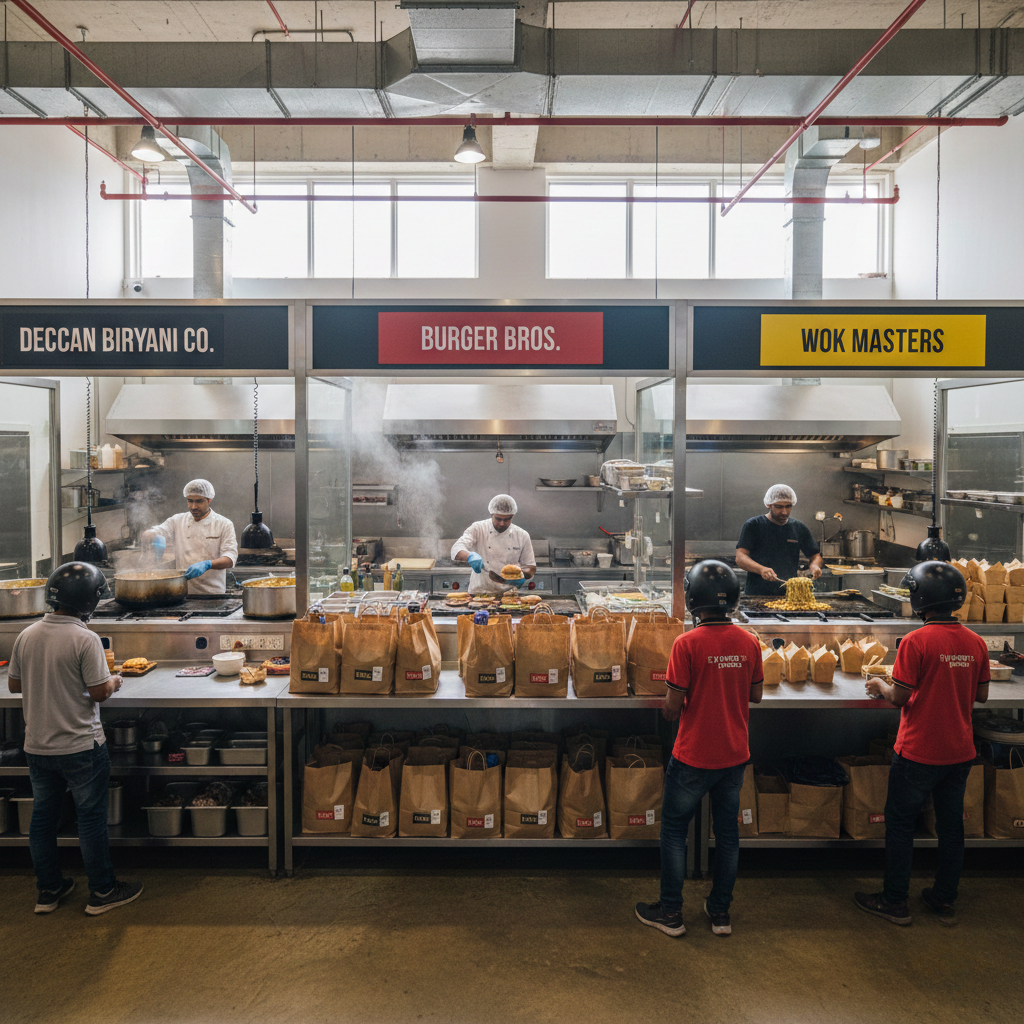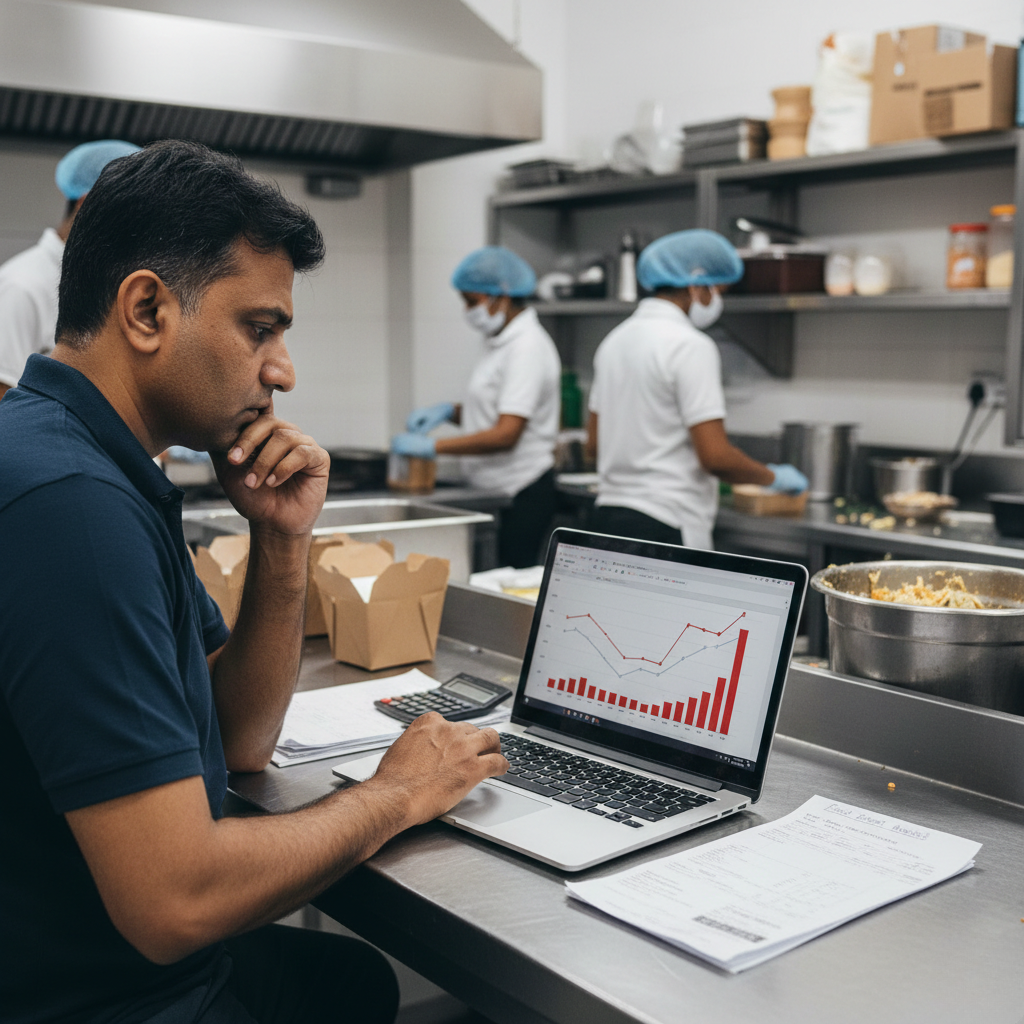
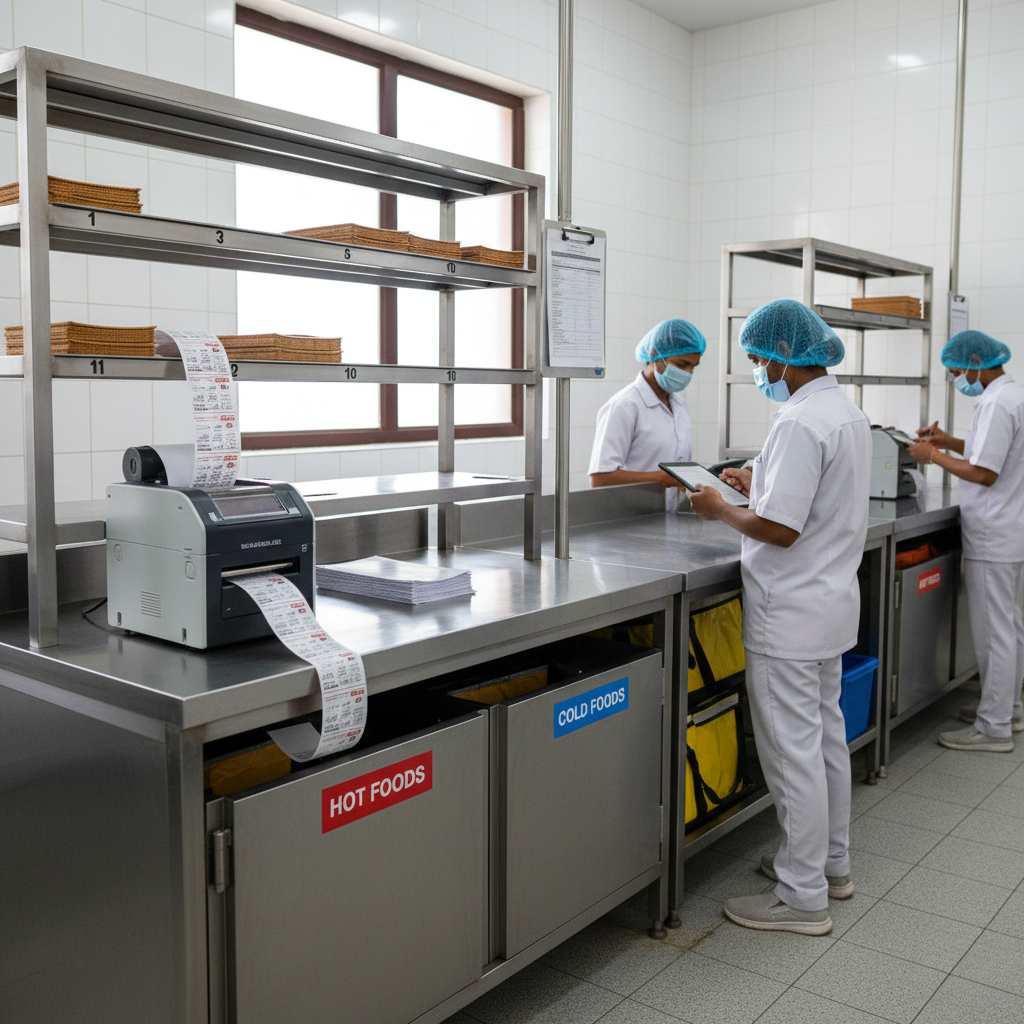
How CKaaS Prevents Expansion-Stage Failures is not a “launch more outlets” hustle or a “copy paste SOPs once” promise. It is a failure-prevention system designed for the expansion stage: controlling variability across kitchens using measurable SOPs, role ownership, station gates, procurement discipline, dispatch control, unit economics clarity, and weekly feedback loops. Most cloud kitchen brands don’t fail at launch. They fail when expansion amplifies small leakages into big losses: portion drift becomes food cost inflation, packing mistakes become refund spikes, prep instability becomes cancellations, dispatch chaos becomes rating drops, and discount dependency becomes permanent. CKaaS prevents expansion-stage failure by turning founder-driven kitchens into system-driven networks where outcomes stay predictable even as volume, staff, and locations increase. This guide explains how CKaaS prevents expansion-stage failures in India using systems, not supervision.
How CKaaS Prevents Expansion-Stage Failures: Why Brands Don’t Break at Start, They Break at Scale
The expansion stage is where most delivery brands get humbled. Not because the food is bad. Not because demand disappears. But because expansion multiplies everything: staff count, shifts, vendors, stations, order volume, and the number of ways things can go wrong.
At one kitchen, founders can “manage with presence.” They fix mistakes live. They check bags. They call vendors. They step into the line during peak. That feels like control.
Then you add a second kitchen. Or you push offers. Or your listings start performing. Now mistakes happen in parallel. Founders can’t be everywhere. And the system is exposed: portions vary, prep readiness collapses, packing errors rise, dispatch gets delayed, refunds spike, ratings drop, and platforms reduce distribution.
CKaaS exists to replace founder-dependent execution with system-driven execution. If you want the profitability baseline first, start with Cloud Kitchen Profitability Consultant in India and map the repeat-failure layer using Common Operational Mistakes in Cloud Kitchens.
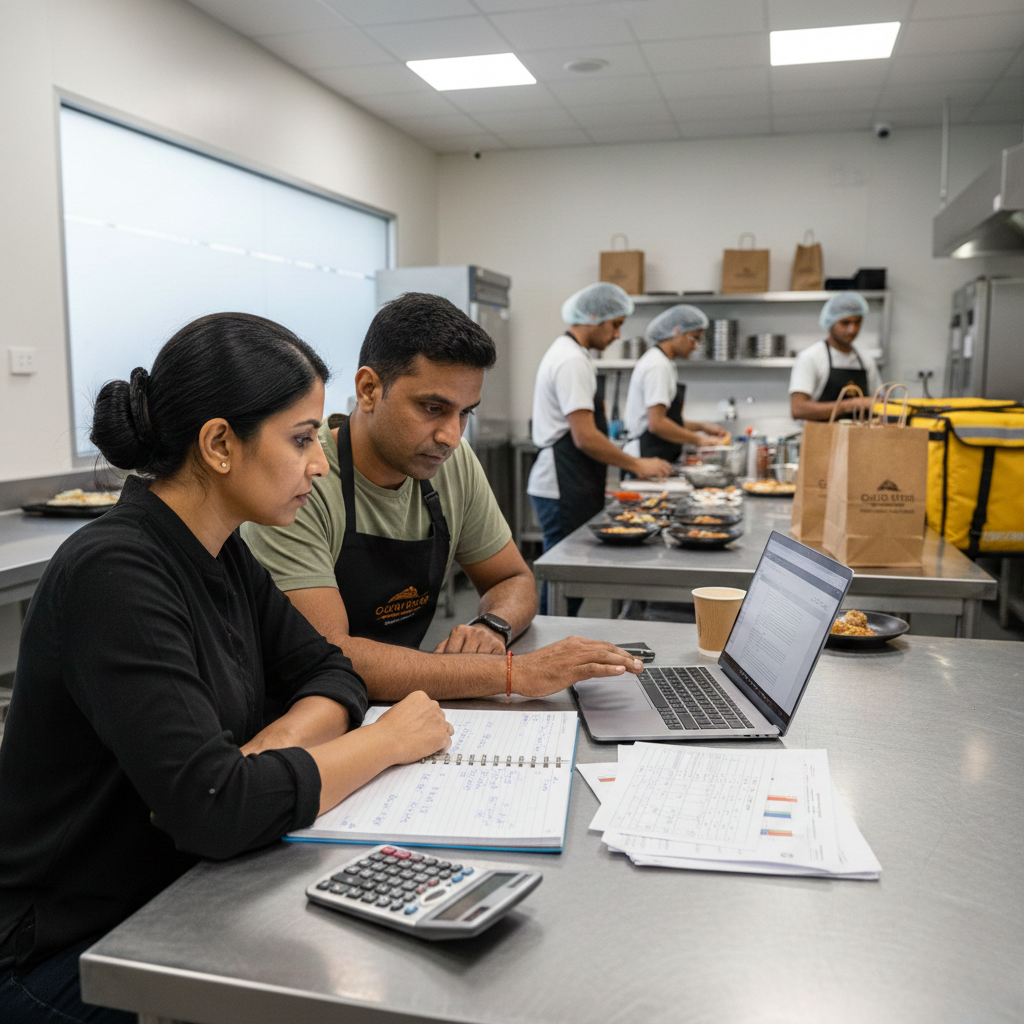
What “Expansion-Stage Failure” Looks Like (It Rarely Looks Like Shutdown at First)
Expansion-stage failure is not one dramatic collapse. It starts as small symptoms that founders ignore because revenue looks fine.
Refunds rise slightly. Ratings swing by shift. Packing mistakes increase during peak. Food cost quietly climbs. Cancellations happen because prep buffers are unstable. Staff churn increases because roles are unclear.
Then platforms reduce distribution because your outlet looks risky. Impressions drop. Visibility drops. So founders discount harder to recover demand. Discounts increase volume pressure. Errors increase again. This becomes a loop.
CKaaS prevents this loop by installing control systems before expansion, and enforcing them during expansion: measurable SOPs, role gates, prep planning discipline, packing and dispatch gates, procurement routines, and weekly feedback loops.
In short: CKaaS doesn’t “speed up expansion.” It makes expansion survivable by making failure harder.
The Unit Economics Lens: Expansion Fails When Contribution Margin Becomes Unpredictable
Most founders expand based on revenue momentum. But expansion is safe only when contribution margin stays predictable as volume increases. If margin becomes unstable, expansion converts revenue into faster losses.
Profit is still decided per order:
Order Value minus Aggregator commission & charges minus CKaaS fee / revenue share minus Packaging cost minus Food cost (COGS) minus Discount burn minus Refund/penalty leakage equals Contribution Margin.
Expansion breaks this equation through amplified leakage: portion drift increases food cost, packing errors increase refunds, prep instability increases cancellations, dispatch delays reduce ratings, and discount burn becomes a permanent crutch.
CKaaS prevents expansion-stage failure by buying down leakage so contribution margin stays stable. For payout and fee context, use Aggregator Commission Impact in India and map refund leakage via Refunds and Cancellations Impact on Cloud Kitchen Profitability.
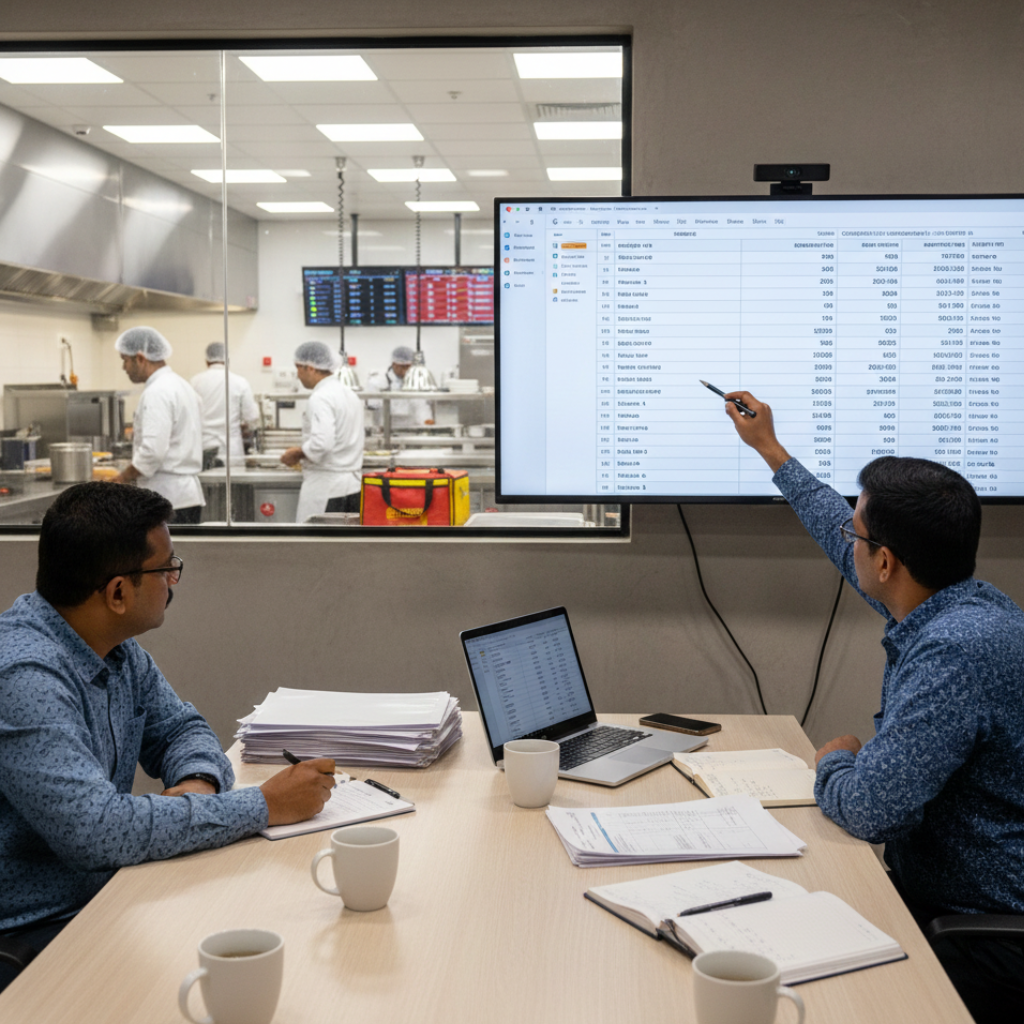
The 14 Failure-Prevention Systems CKaaS Installs Before and During Expansion
CKaaS prevents expansion-stage failures by reducing variability across kitchens. These are the core systems that make expansion stable, not fragile.
1) Expansion-ready menu engineering (replicable stations, not massive variety). Expansion-stage failures often start with menu overload. Too many SKUs increases training load, prep load, and packing errors. CKaaS stabilizes expansion by rationalizing the menu to bestsellers and repeatable stations.
2) Measurable SOPs (grams, ml, timings, holding rules). “Training talk” doesn’t scale. Expansion requires SOPs that can be audited across kitchens. Measurable SOPs reduce interpretation and prevent quality variance.
3) Portion tools and gram discipline to stop food cost inflation. Expansion multiplies portion drift. CKaaS installs ladles, scoops, fill lines, weighing routines, and portion charts to keep food cost stable.
4) RM specs + vendor discipline so taste and cost don’t drift by location. When each kitchen buys “what’s available,” the brand becomes inconsistent. CKaaS enforces RM specs and approved vendors to protect repeatability across kitchens.
5) Reorder triggers and procurement routines to prevent stock-out cancellations. Cancellations are expansion poison. They reduce platform trust. CKaaS installs minimum stock rules, reorder timing, and ordering discipline to protect availability.
6) Prep planning with par levels and batch buffers (peak-proofing). Expansion adds demand spikes you can’t manually predict daily. CKaaS uses par levels and batch planning so top items remain ready during peak.
7) Batch yield tracking to prevent waste and under-prep. Without yields, kitchens either over-prep (waste) or under-prep (delays/cancellations). CKaaS makes yields measurable so prep volumes are predictable.
8) Packing checklist as a refund prevention system. Expansion-stage refund spikes are usually packing failures: missing items, wrong items, missed add-ons, seal failures. A mandatory checklist catches errors before dispatch.
9) Dispatch gate + final scan to stop wrong-bag chaos at peak. Expansion increases rider volume and order volume. Without a dispatch gate, wrong handovers multiply. CKaaS installs dispatch discipline using Cloud Kitchen Dispatch SOP.
10) Packaging + sealing standards to protect delivery experience consistency. A brand can lose ratings even with good food if packaging is inconsistent. CKaaS standardizes containers, sealing method, label format, bag rules, and orientation to reduce complaints.
11) Role ownership and station gates (prep → cook → pack → dispatch). Expansion collapses when “everyone does everything.” CKaaS assigns clear owners for each gate. Framework: Role-Based Kitchen Operations Explained.
12) Training as a repeatable system (onboarding, shadow shifts, sign-offs). Expansion means constant hiring. Training cannot be informal. CKaaS installs onboarding checklists, SOP sign-offs, and retraining triggers tied to error patterns.
13) Weekly feedback loops to prevent repeat failures from becoming permanent. Expansion-stage failures become “culture” when not reviewed. CKaaS runs weekly reviews on refund reasons, rating comments, late dispatch, cancellations, and stock-outs. Then SOPs are updated and retraining happens. Discipline lens: How Process Discipline Improves EBITDA.
14) Controlled growth: stabilize reliability before pushing offers. Discounts amplify volume. Volume amplifies errors. CKaaS prevents expansion-stage collapse by scaling reliability first, then scaling demand. Growth lens: Marketing Spend vs ROI in Cloud Kitchens.
If you want the repeat-failure map most founders ignore during expansion, start with Common Operational Mistakes in Cloud Kitchens.
Swiggy/Zomato Reality: Expansion Fails When Reliability Signals Get Dirty
Platforms don’t reward “new kitchens.” They reward clean reliability signals: low late dispatch, low cancellations, low refunds, stable ratings, and consistent availability.
Expansion-stage failure often happens because reliability signals get dirty: dispatch delays rise during peak, cancellations happen due to stock-outs, refunds rise due to packing errors, and ratings drop due to inconsistency. Then distribution reduces.
External policy context: Swiggy Refund Policy and Zomato Online Ordering Terms.
The takeaway: expansion is safe only when reliability signals stay clean across kitchens. CKaaS prevents expansion-stage failure when it improves these signals, not just adds capacity.
Where Expansion Breaks First: Prep Readiness + Packing Accuracy + Dispatch Speed
Expansion doesn’t break because of one bad day. It breaks because the daily engines become unstable across kitchens: prep readiness (buffers + throughput), packing accuracy (completeness + presentation), and dispatch speed (handover discipline + ETA reliability).
When prep readiness is unstable, cancellations rise. When packing accuracy is weak, refunds rise. When dispatch speed drops, ratings fall. These three together create the expansion collapse loop.
Install dispatch predictability using Cloud Kitchen Dispatch SOP and map repeat failures using Common Operational Mistakes in Cloud Kitchens.
Why CKaaS Prevents Expansion Failures Better Than Founder-Led Firefighting
Founder-led scaling often depends on heroic effort. It works until it doesn’t. Because founders can’t supervise two kitchens during two peaks at the same time.
CKaaS prevents expansion-stage failure when role-based gates exist and are enforced daily:
Prep role:
owns par levels, batch planning, labeling, and buffer readiness to prevent stock-outs and peak panic.
Cook role:
owns portion tools, recipe compliance, holding rules, and station sequence to protect consistency.
Pack role:
owns checklist accuracy, add-on verification, sealing, and presentation standards to prevent refunds.
Dispatch role:
owns final scan, label match, rider handover speed, and bag stability checks to protect ETA trust.
Manager role:
owns weekly KPI review: refunds, cancellations, ratings, late dispatch, stock-outs and SOP upgrades.
Framework: Role-Based Kitchen Operations Explained.
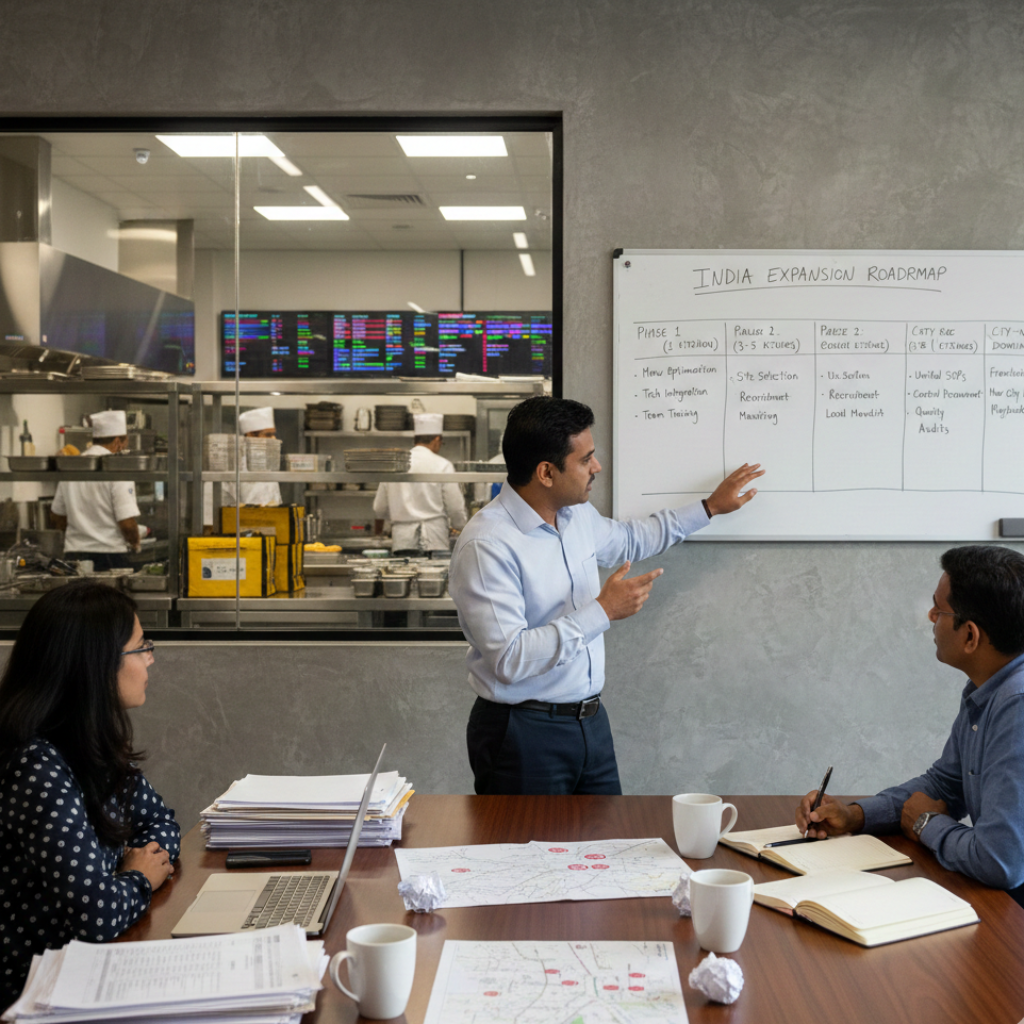
A Practical 7 to 30 Day Expansion-Failure Prevention Rollout (Before You Add the Next Kitchen)
Expansion becomes risky when you expand capacity before stabilizing the system. The safe path is a stabilization sequence: lock reliability first, then replicate.
Step 1 (Day 1–2): Freeze the top sellers and define “clean signals.” Track refund rate, late dispatch count, cancellations, rating trend, and food cost % daily. Expansion readiness is signal cleanliness, not motivation.
Step 2 (Day 1–3): Make SOPs measurable + install portion tools. Define grams/ml per portion, station sequence, holding rules, and packing standards for top SKUs.
Step 3 (Day 2–5): Install packing checklist + dispatch gate as mandatory. Train with sign-offs. Enforce dispatch discipline via Cloud Kitchen Dispatch SOP.
Step 4 (Day 3–7): Standardize packaging, labeling, sealing, and bag rules. Most early expansion rating drops come from packaging inconsistency and missing add-ons. Remove variability.
Step 5 (Week 2): Lock procurement specs and reorder routines. Standardize RM specs, approved vendors, reorder timing, and minimum stock triggers so kitchens don’t cancel at peak.
Step 6 (Week 2): Stabilize prep planning with par levels and yield tracking. Build buffers and measure batch yields so throughput is stable during spikes.
Step 7 (Week 3): Run weekly reviews and update SOPs. Review refund reasons, rating comments, late dispatch, cancellations, stock-outs. Fix top 2 repeat failures weekly. This loop prevents expansion-stage failures from becoming permanent.
Use the discipline lens: How Process Discipline Improves EBITDA. If you are scaling using spend, map ROI clearly: Marketing Spend vs ROI in Cloud Kitchens. If you’re comparing models before expanding, reference: CKaaS vs Running Your Own Cloud Kitchen: ROI Comparison.
External process references (useful for standardisation thinking): Standardized Work (Lean lexicon), ISO 22000 overview, and FSSAI Hygiene Requirements (Schedule 4 reference).
Final Takeaway: CKaaS Prevents Expansion Failures by Making Reliability Travel Faster Than Chaos
Expansion-stage failures are not “bad luck.” They are predictable outcomes of scaling variability: unclear roles, weak SOPs, unstable prep planning, packing errors, and dispatch chaos.
CKaaS prevents expansion-stage failure when it installs repeatable control: measurable SOPs, portion discipline, procurement routines, prep buffers, checklist-driven packing, gated dispatch, role ownership, and weekly review loops that stop repeat failures from becoming permanent.
When reliability signals stay clean, platforms reward distribution. When distribution stays strong, discount dependency reduces. When discount dependency reduces, contribution margin becomes predictable. That is how expansion becomes safe.
Operating frameworks from GrowKitchen, and operating partner brands like Fruut and GreenSalad are built to convert “expansion risk” into “repeatable multi-kitchen operations.”
FAQs: How CKaaS Prevents Expansion-Stage Failures
What is the most common expansion-stage failure for cloud kitchens?
Refund spikes and rating drops caused by packing errors, dispatch delays, and inconsistency across shifts and kitchens.
Why do brands start discounting more during expansion?
Because reliability signals get worse, distribution drops, and founders use discounts to recover visibility and orders.
Can CKaaS prevent failures if the brand expands too fast?
It can reduce risk, but only if systems are installed first. Speed without SOPs, gates, and weekly reviews will still amplify leakage.
What should be stabilized before launching the next kitchen?
Measurable SOPs for top sellers, portion tools, packing checklist, dispatch gate, procurement routines, and weekly KPI review loops.
- Cloud Kitchen Profitability Consultant in India
- Common Operational Mistakes in Cloud Kitchens
- Cloud Kitchen Dispatch SOP
- Role-Based Kitchen Operations Explained
- Refunds and Cancellations Impact on Cloud Kitchen Profitability
- Aggregator Commission Impact in India
- Marketing Spend vs ROI in Cloud Kitchens
- How Process Discipline Improves EBITDA
- CKaaS vs Running Your Own Cloud Kitchen: ROI Comparison
- Grow Kitchen on Twitter