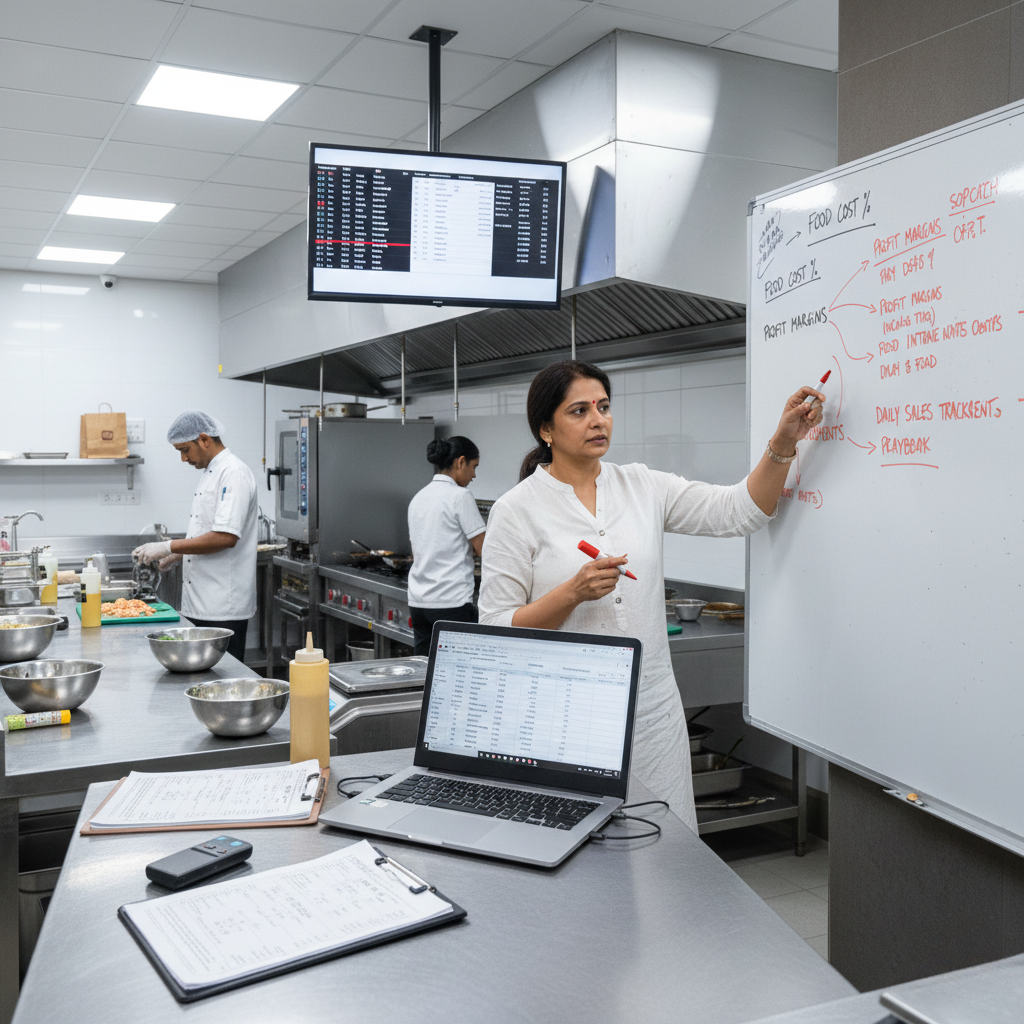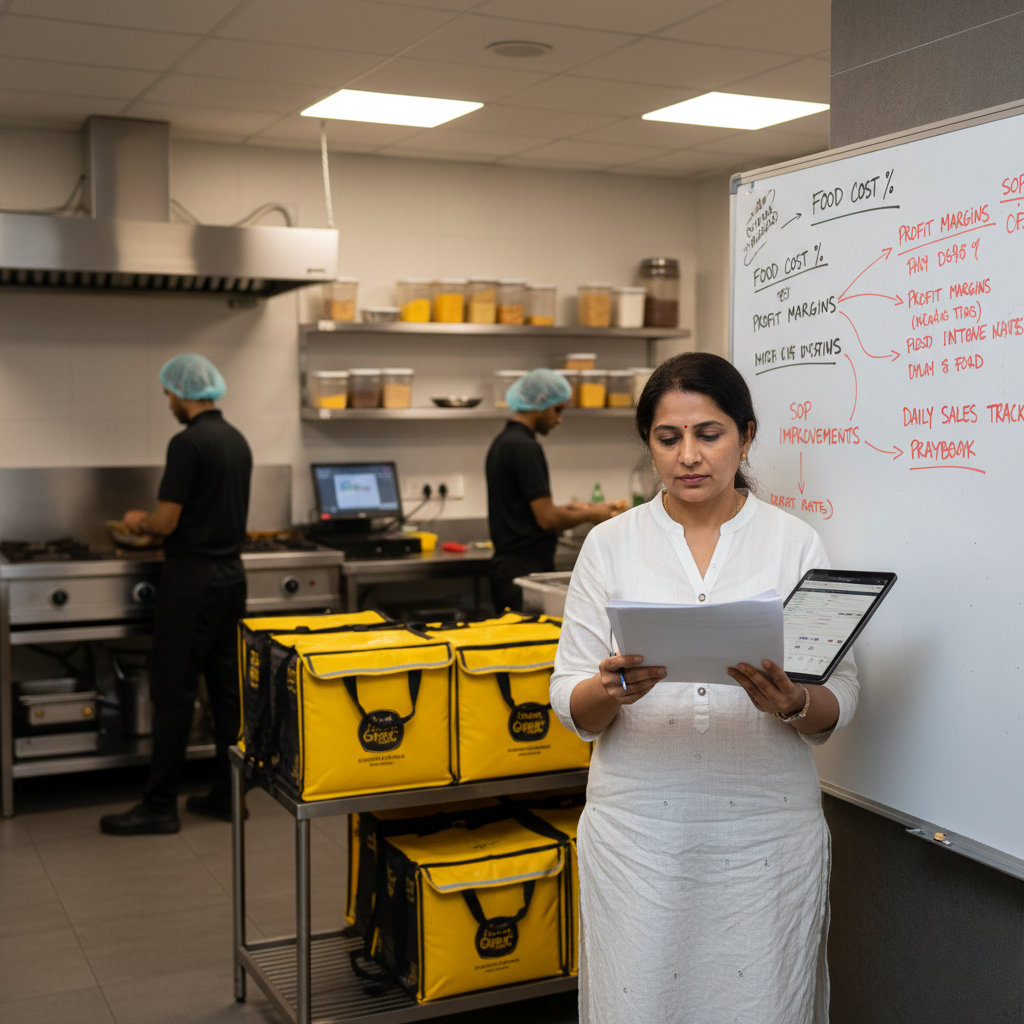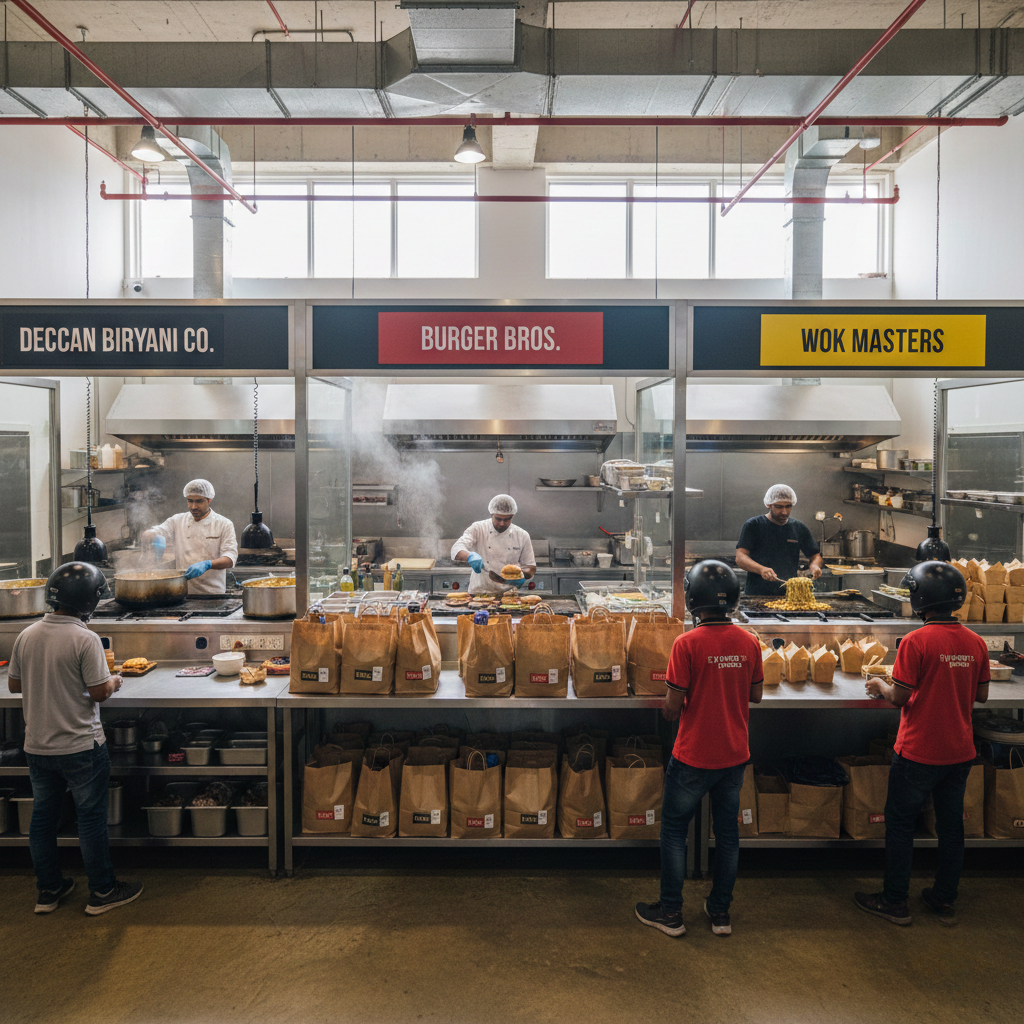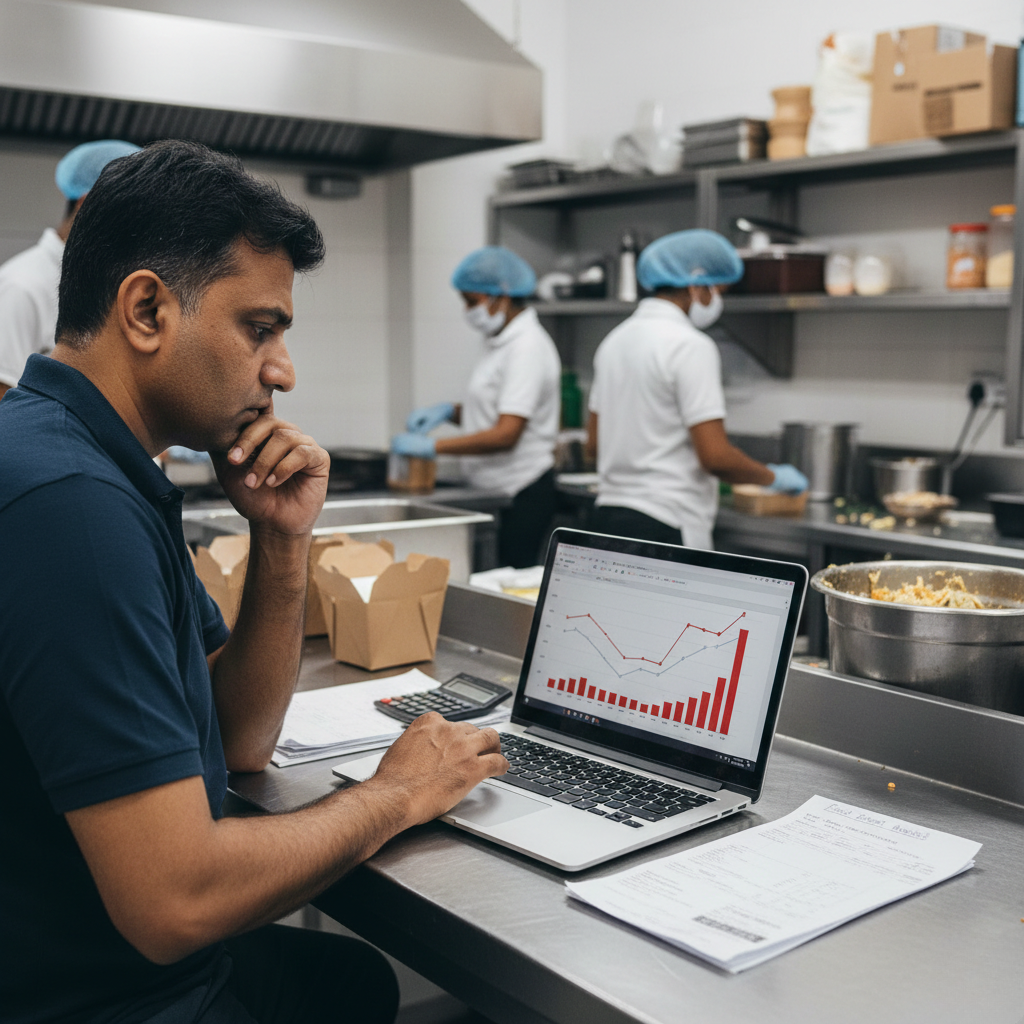
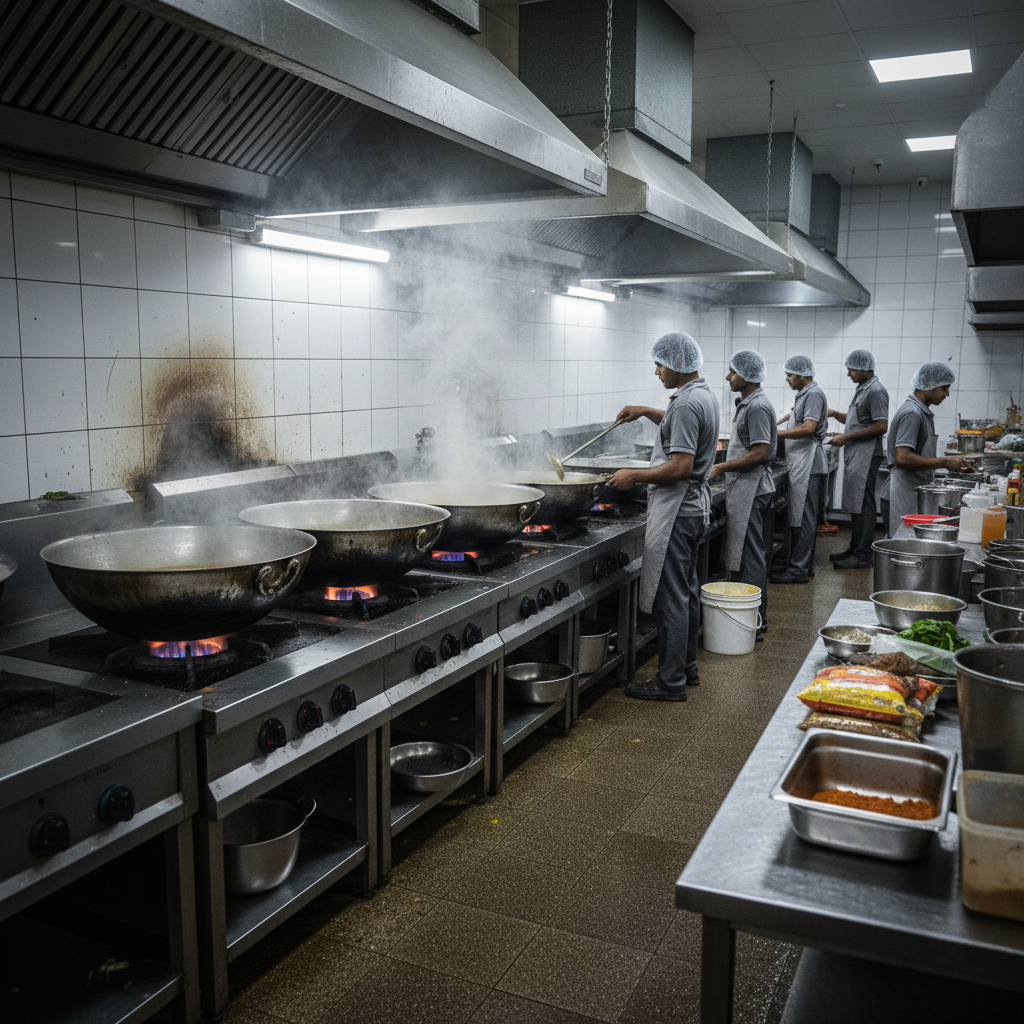
Why Operational Discipline in CKaaS is not a “hire better staff” idea or a “manage harder” tactic. It is the only mechanism that turns delivery kitchens into repeatable machines: SOP depth, role ownership, station gates, prep routines, packing checks, dispatch control, and weekly feedback loops that prevent the same mistakes from repeating. Most cloud kitchens don’t fail because demand is low. They fail because execution varies by shift, and variability creates leakage: food cost drift, refunds, cancellations, rating drops, and discount dependency. CKaaS works when it replaces founder firefighting with disciplined routines that make outcomes predictable at scale. This guide explains why operational discipline is the core of CKaaS in Indian cloud kitchens using systems, not supervision.
Why Operational Discipline Is the Core of CKaaS: The Difference Between “Busy” and “Reliable” Kitchens
Many founders think CKaaS is about infrastructure. A bigger kitchen. Better equipment. More staff. A managed outlet.
But infrastructure does not create reliability. And staff does not automatically create repeatability. What creates reliability is discipline: the same actions executed the same way, every shift, even during peak, even when the founder is absent.
That is why many kitchens look “active” but still bleed: the team is moving, orders are flowing, riders keep arriving, yet refunds repeat, ratings swing, food cost drifts, and profit feels unclear.
CKaaS exists to replace founder-dependent execution with system-driven execution. If you want the profitability baseline first, start with Cloud Kitchen Profitability Consultant in India and map recurring leaks using Common Operational Mistakes in Cloud Kitchens.
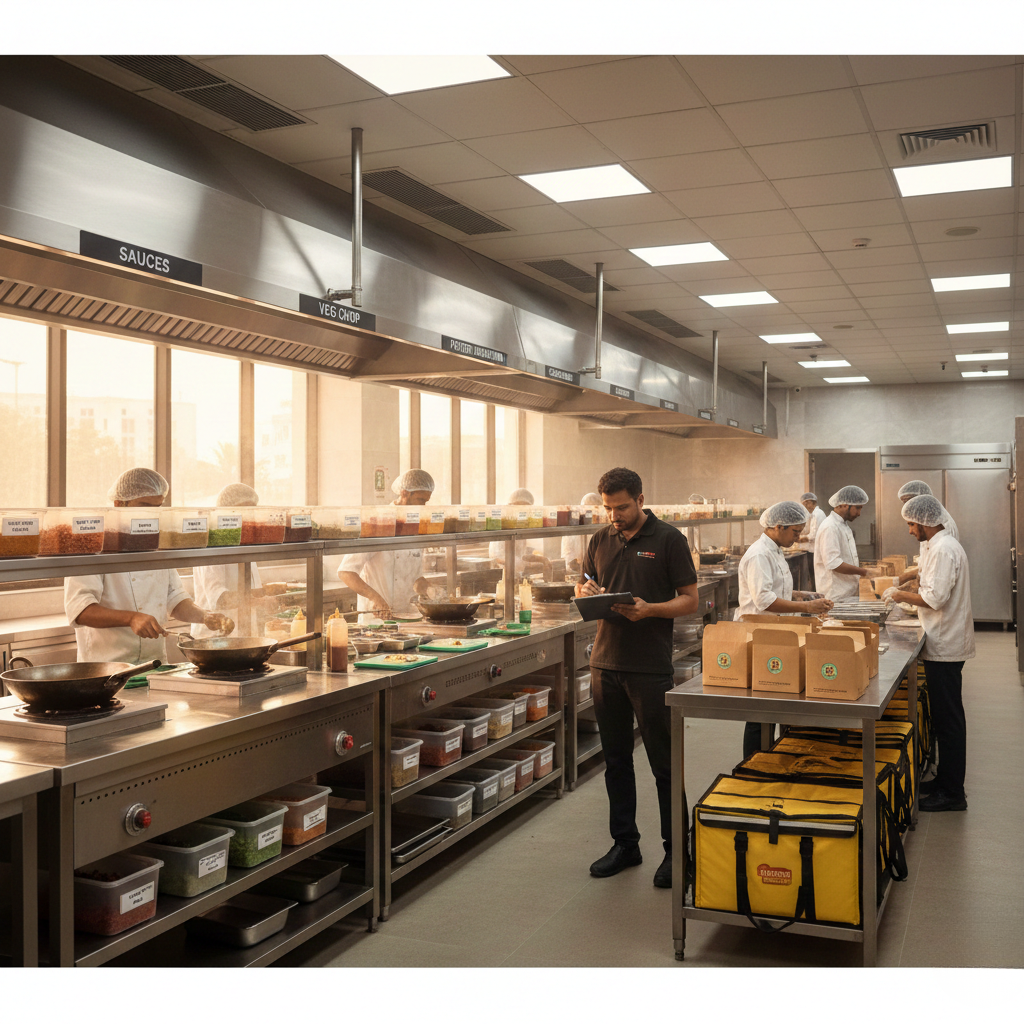
What Operational Discipline Actually Means (It’s Not “Strictness”)
In cloud kitchens, discipline is not shouting. Discipline is not micromanaging. Discipline is not being present 14 hours a day.
Discipline means your kitchen produces the same outcome repeatedly: the same portion, the same taste, the same pack quality, the same dispatch speed, and the same availability.
In other words, discipline is repeatability. And repeatability is the real product CKaaS sells.
Without discipline, CKaaS becomes “outsourced chaos.” The founder stops being present, but the kitchen still runs on informal habits. The same errors repeat, and now the founder is paying a fee to experience the same leakage.
With discipline, the kitchen becomes runnable: roles are clear, SOPs are measurable, gates exist, and performance is reviewed weekly. That is when CKaaS becomes leverage.
The Unit Economics Lens: Discipline Is the Only Way to Protect Contribution Margin
Delivery businesses are not judged by effort. They are judged by outcomes: refunds, cancellations, late dispatch, ratings, and availability. Every one of these outcomes links directly to your unit economics.
Profit is still decided per order:
Order Value minus Aggregator commission & charges minus CKaaS fee / revenue share minus Packaging cost minus Food cost (COGS) minus Discount burn minus Refund/penalty leakage equals Contribution Margin.
Notice what destroys contribution margin in real kitchens: food cost drift, refunds, cancellations, and discount dependency. These are not marketing problems. These are discipline problems.
If you want the cost layer clarity, use Aggregator Commission Impact in India and the leakage map via Refunds and Cancellations Impact on Cloud Kitchen Profitability.
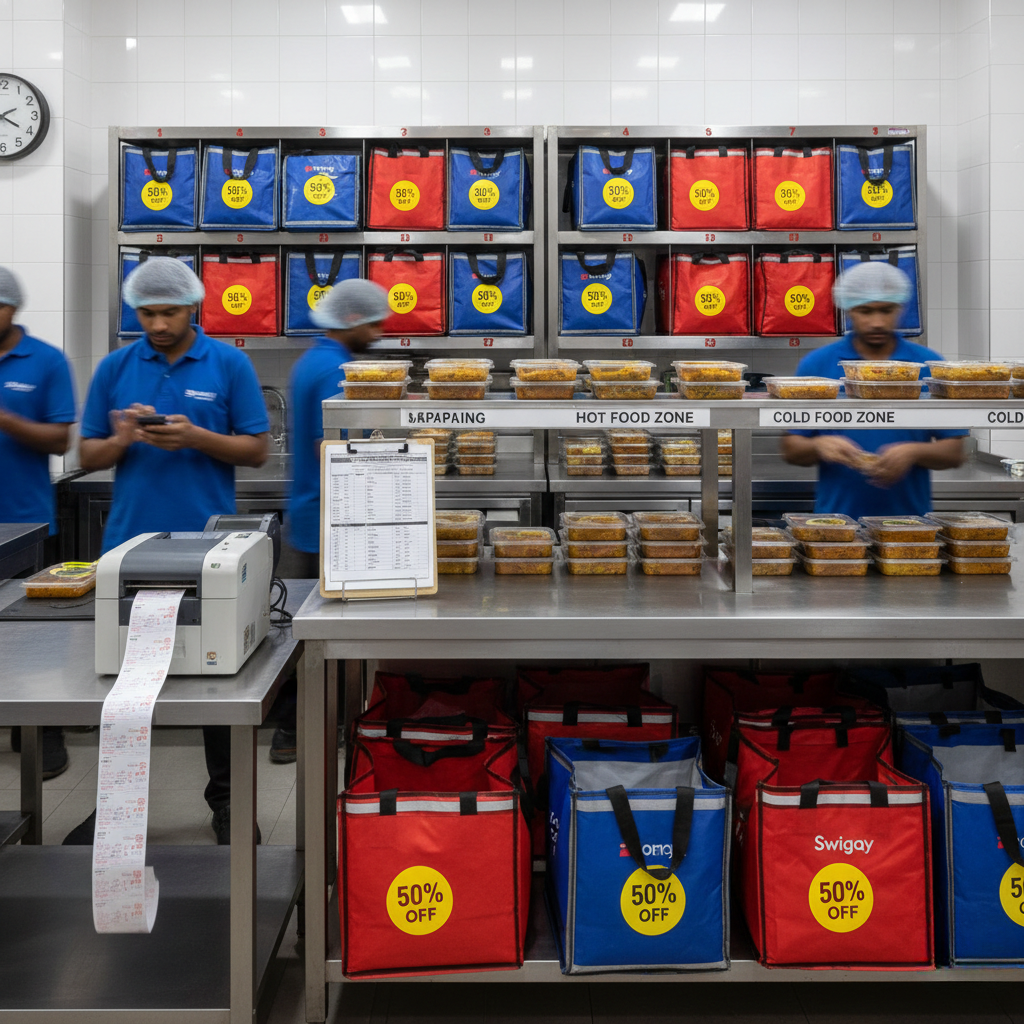
The 14 Discipline Systems That Make CKaaS Actually Work
Operational discipline is not one rule. It is a stack of systems that reduce variability. CKaaS succeeds only when this stack exists and is enforced daily.
1) SOPs that are measurable (not “training talk”). “Make it spicy” is not an SOP. A real SOP specifies grams, ml, timings, holding rules, and station sequence. If it can’t be measured, it can’t be audited.
2) Portion tools and gram discipline. Portion drift is the silent killer of margins. Ladles, scoops, weighing routines, fill lines, and portion charts turn “approximation” into control.
3) Menu discipline: fewer SKUs, higher repeatability. Every additional SKU increases error probability. CKaaS discipline includes SKU rationalization so stations stay stable under peak.
4) Procurement routines with RM specs (not “whatever is available”). Vendor variation creates taste variation and cost variation. RM specs lock the input so outcomes don’t change by purchase day.
5) Par levels and prep planning. Without buffers, peak becomes panic. Panic creates mistakes. Par levels protect availability and reduce cancellations.
6) Batch yields and waste control. Discipline means you measure yields: how much sauce a batch produces, how many portions it creates, and how much is wasted. Waste is not “kitchen reality.” It is usually unmeasured drift.
7) Station discipline and sequence (prep → cook → pack → dispatch). Kitchens fail at peak because the sequence breaks. CKaaS enforces station rules so handoffs stay clean and errors don’t leak forward.
8) Packing checklist as a non-negotiable gate. Most refunds come from missing items, wrong items, and missed add-ons. A checklist reduces refunds immediately because it catches errors before handover.
9) Dispatch gate + final scan. “Hand over quickly” is not dispatch discipline. Dispatch discipline is verifying label, item count, add-ons, sealing, and bag stability before rider pickup. Implement via Cloud Kitchen Dispatch SOP.
10) Labeling + sealing standards. Wrong bag handovers and leakage complaints are often packaging discipline failures. Standard label formats and sealing rules make mistakes visible.
11) Role ownership: every gate has an owner. “Everyone does everything” kills accountability. CKaaS discipline means owners are clear for prep, cook, pack, dispatch and review. Framework: Role-Based Kitchen Operations Explained.
12) Training as a system (not a one-time event). Discipline requires onboarding checklists, shadow shifts, sign-offs, and retraining triggers. Otherwise knowledge decays and mistakes return.
13) A weekly review loop that forces fixes. Refund reasons, rating comments, cancellations, late dispatch counts are operational data. CKaaS works when this data is reviewed weekly and SOPs are updated. Discipline lens: How Process Discipline Improves EBITDA.
14) Controlled growth: stability before volume. Discounts amplify volume and amplify instability. CKaaS discipline means stabilizing reliability first, then scaling. Growth logic: Marketing Spend vs ROI in Cloud Kitchens.
If you want to identify where most kitchens break, start with Common Operational Mistakes in Cloud Kitchens.
Swiggy/Zomato Reality: Platforms Reward Discipline With Distribution
Platforms do not evaluate “effort.” They evaluate risk. Refunds, cancellations, late dispatch, ratings, and availability issues reduce visibility. It does not matter whether you are independent or on CKaaS. Only outcomes matter.
When discipline is weak, platforms see risk and suppress distribution. When distribution falls, founders discount to survive. When discounts rise, margins collapse and team pressure increases.
External policy context: Swiggy Refund Policy and Zomato Online Ordering Terms.
The takeaway: operational discipline is not “internal hygiene.” It is a distribution strategy.
The 3 Engines Discipline Stabilizes: Prep + Packing + Dispatch
Kitchens become system-driven when three engines are stable: prep readiness (availability + speed), packing accuracy (completeness + presentation), and dispatch speed (temperature + ETA reliability).
When these engines are stable, peak becomes manageable. When they are unstable, peak becomes chaos. And chaos creates refunds, cancellations, and rating drops.
Install dispatch predictability using Cloud Kitchen Dispatch SOP and map repeat errors via Common Operational Mistakes in Cloud Kitchens.
Why CKaaS Without Discipline Becomes “Outsourced Chaos”
Founders often assume CKaaS means “less responsibility.” In reality, CKaaS means execution is transferred. If discipline is not installed, errors still happen. They just happen out of your sight until metrics crash.
Operational discipline in CKaaS works because roles + gates exist:
Prep role:
owns buffers, labeling, batch readiness and par levels to prevent peak panic and cancellations.
Cook role:
owns portion tools, recipe compliance, and holding rules to protect consistency.
Pack role:
owns checklist accuracy, add-on verification, sealing, and presentation standards.
Dispatch role:
owns final scan, label match, rider handover speed, and bag stability checks.
Manager role:
owns weekly review: refunds, cancellations, ratings, late dispatch, stock-outs and SOP upgrades.
Framework: Role-Based Kitchen Operations Explained.
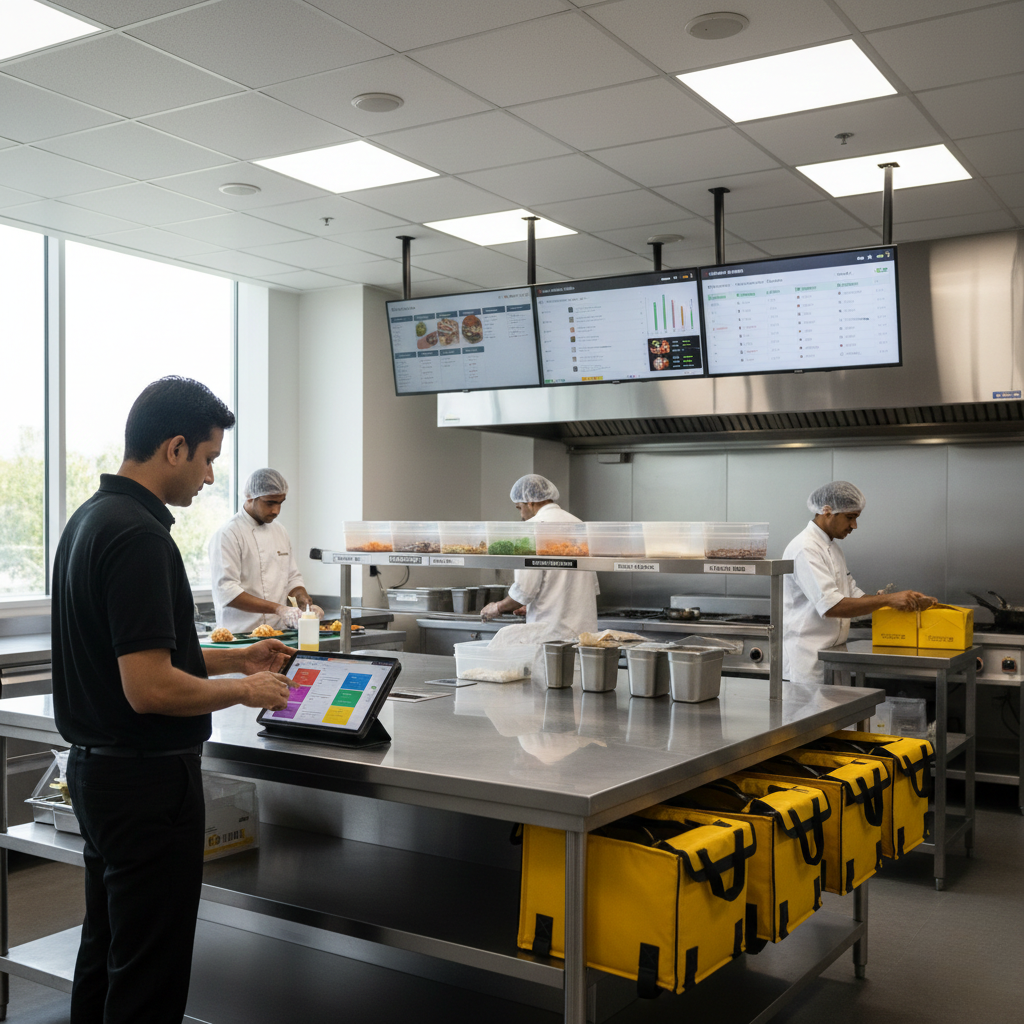
A Practical 7 to 30 Day Discipline Rollout (What CKaaS Should Implement First)
Discipline is not installed by motivation. It is installed by sequencing systems. Below is a practical rollout path used to convert chaotic kitchens into system-driven kitchens.
Step 1 (Day 1–2): Freeze the top sellers and define success metrics. Identify top SKUs and track refund rate, late dispatch count, cancellations, and food cost %.
Step 2 (Day 1–3): Write measurable SOPs and introduce portion tools. Recipe grams, portion tools, station sequence, holding rules. Discipline starts with measurability.
Step 3 (Day 2–5): Install packing checklist + dispatch gate. Make it mandatory and train with sign-offs. Implement dispatch discipline via Cloud Kitchen Dispatch SOP.
Step 4 (Day 3–7): Lock packaging, labeling, sealing standards. Standardize containers, label format, sealing points, bag rules. Prevent presentation-driven complaints.
Step 5 (Week 2): Build prep planning and par levels. Protect availability and reduce cancellations during peak.
Step 6 (Week 2): Assign role ownership and enforce gates daily. Prep, cook, pack, dispatch owners are assigned with daily checks.
Step 7 (Week 3): Start weekly review + SOP upgrades. Review top 3 errors, fix root causes, retrain. Discipline is sustained by loops.
Use the discipline lens: How Process Discipline Improves EBITDA. If you are scaling with spend, map the real ROI via Marketing Spend vs ROI in Cloud Kitchens.
External process references (useful for standardisation thinking): Standardized Work (Lean lexicon), ISO 22000 overview, and FSSAI Hygiene Requirements (Schedule 4 reference).
Final Takeaway: Operational Discipline Is the Product of CKaaS
CKaaS is not valuable because it gives you a kitchen. It is valuable because it gives you repeatability. Repeatability is created only through discipline: measurable SOPs, role ownership, station gates, prep routines, packing checklists, dispatch control, and weekly review loops that prevent repeat leakage.
When discipline exists, margins become predictable. When margins are predictable, growth becomes survivable. That is why operational discipline is not “internal process.” It is the core of CKaaS.
Operating frameworks from GrowKitchen, and operating partner brands like Fruut and GreenSalad are built to convert “founder-dependent kitchens” into “system-driven kitchen networks.”
FAQs: Why Operational Discipline Is the Core of CKaaS
What is operational discipline in a cloud kitchen?
It means the kitchen produces the same outcome every shift through SOPs, roles, gates, and review loops not founder presence.
Why do cloud kitchens fail without discipline?
Because variability creates leakage: portion drift, refunds, cancellations, late dispatch, rating drops and discount dependency.
Can CKaaS work without SOPs?
Not sustainably. Without SOP depth and gates, CKaaS becomes outsourced chaos and errors keep repeating.
What is the fastest discipline system to implement?
Packing checklist + dispatch gate. These reduce refunds immediately and improve reliability signals.
- Cloud Kitchen Profitability Consultant in India
- Common Operational Mistakes in Cloud Kitchens
- Cloud Kitchen Dispatch SOP
- Role-Based Kitchen Operations Explained
- Refunds and Cancellations Impact on Cloud Kitchen Profitability
- Aggregator Commission Impact in India
- Marketing Spend vs ROI in Cloud Kitchens
- How Process Discipline Improves EBITDA
- Grow Kitchen on Twitter