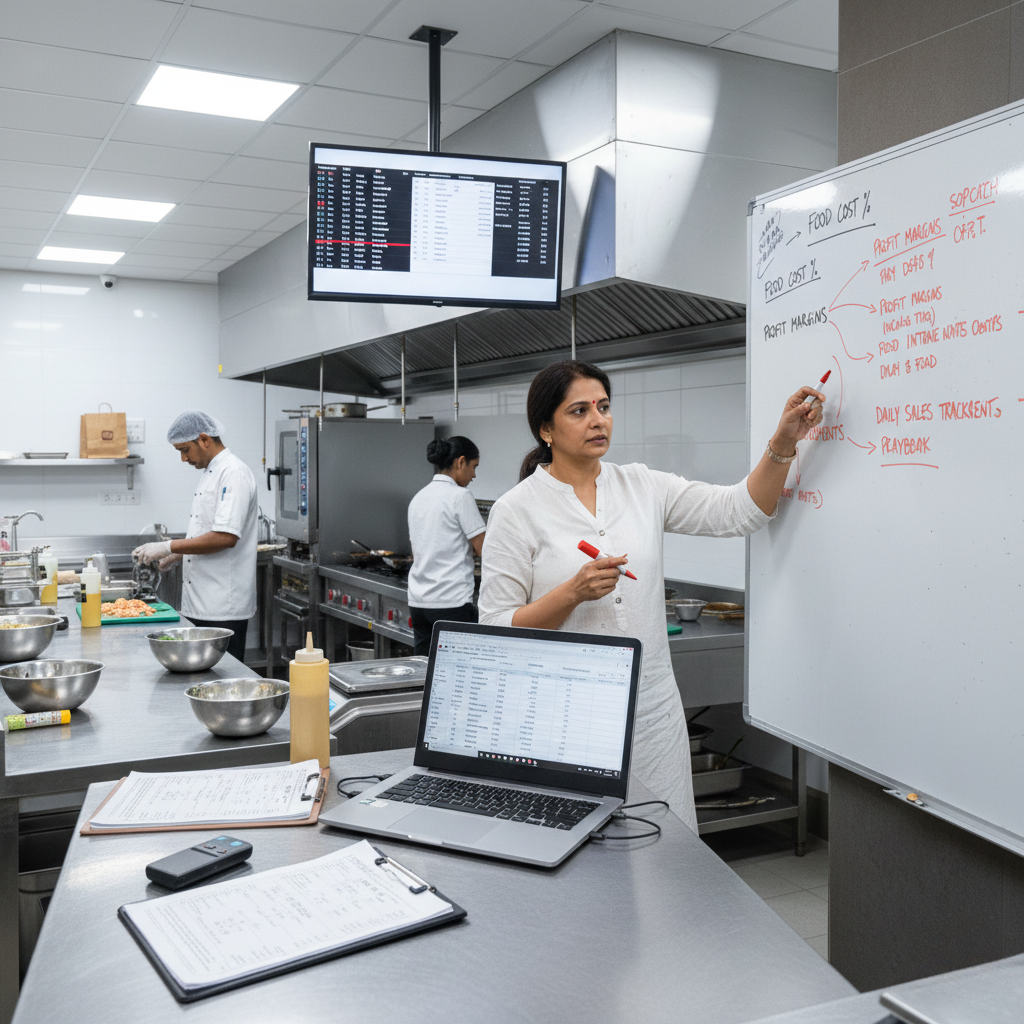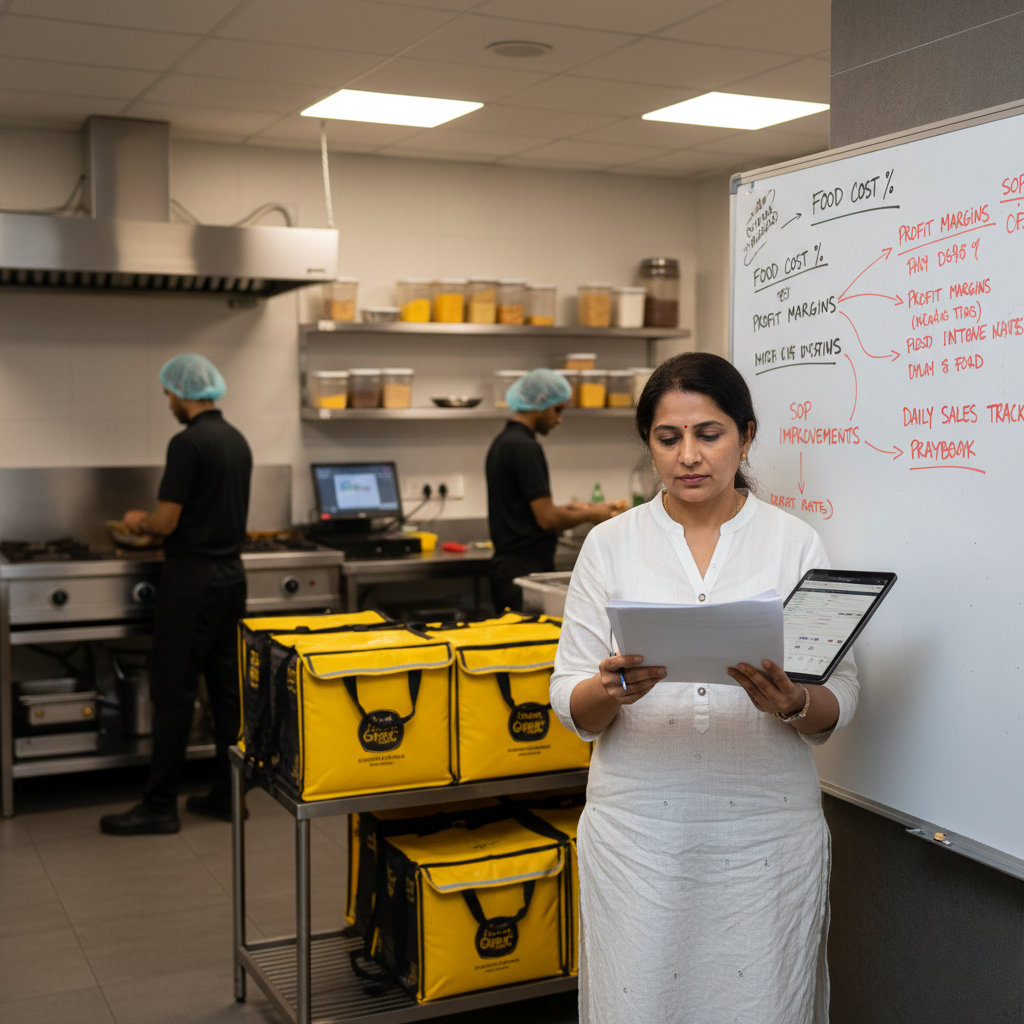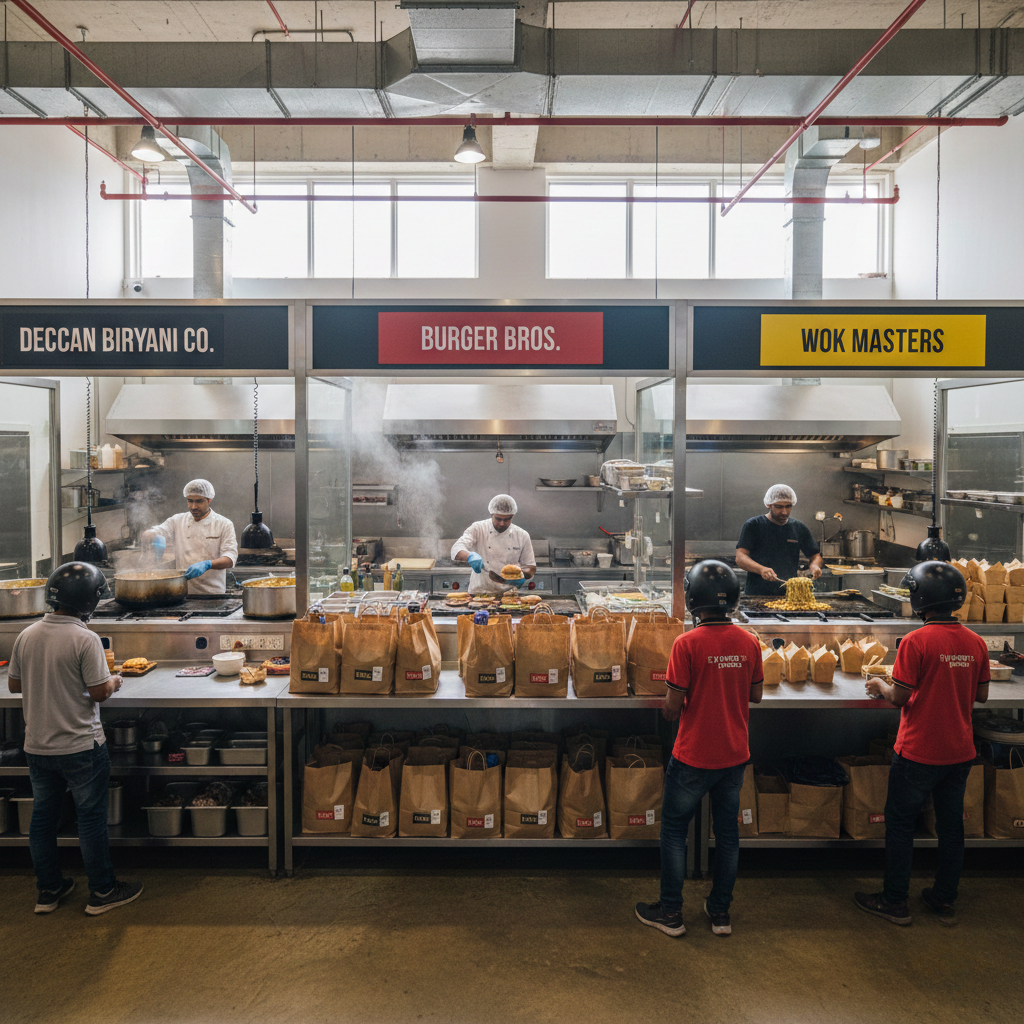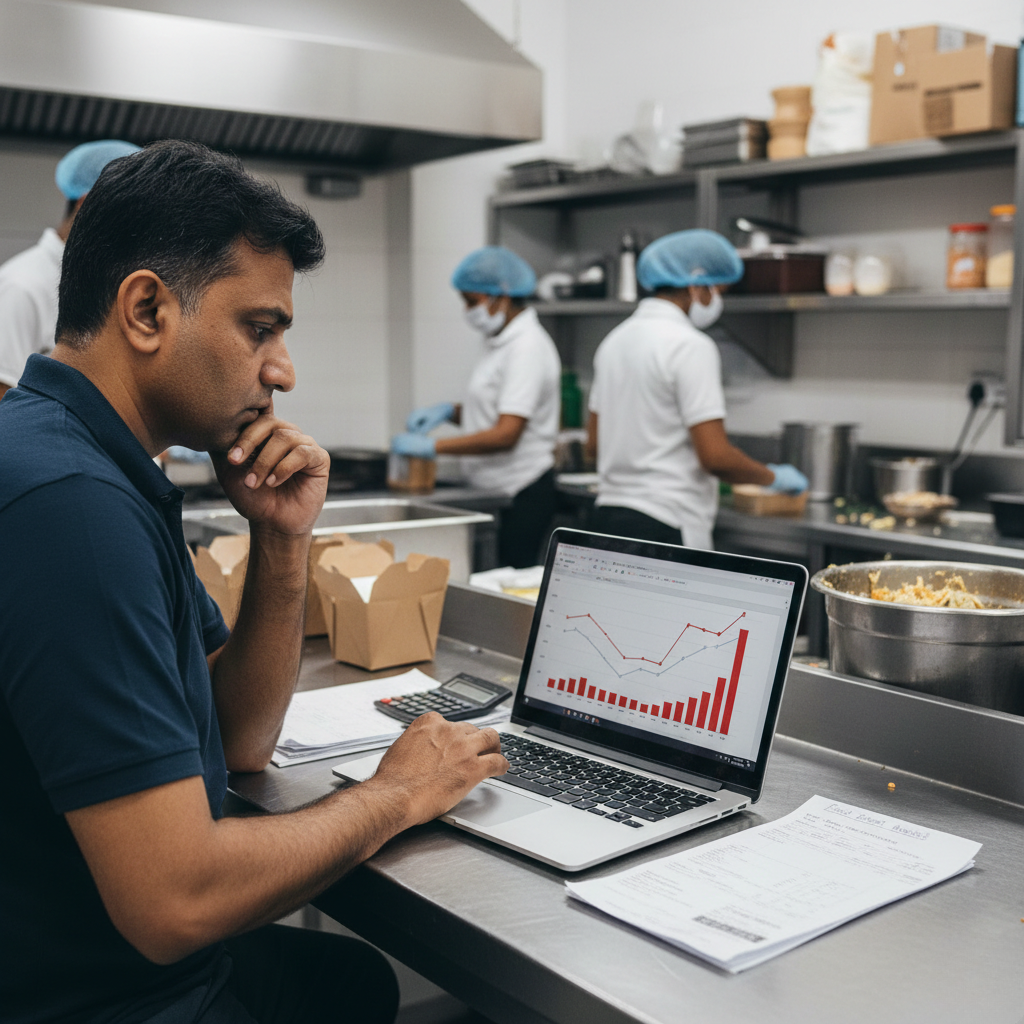
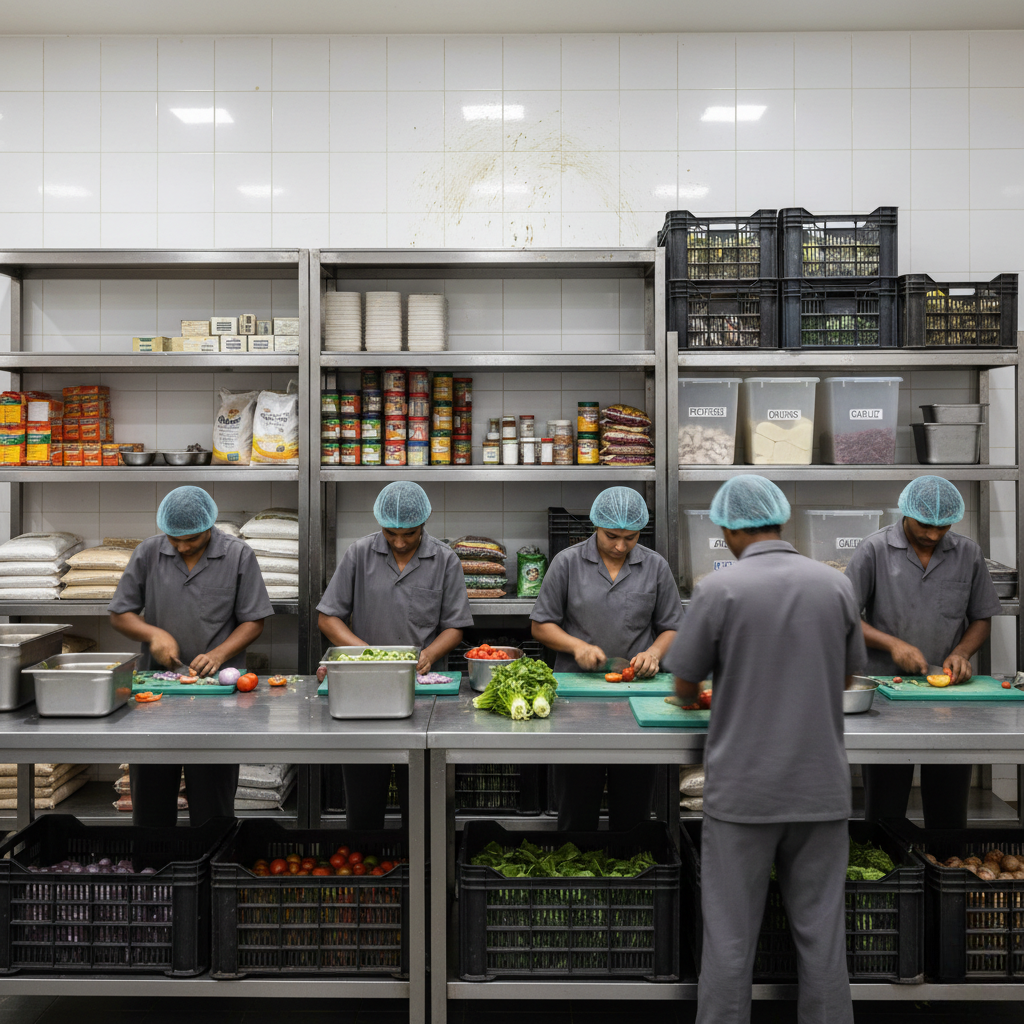
How CKaaS Reduces Refunds and Rating Drops is not a “reply faster to customers” fix or a “run more discounts” trick. It is a reliability engineering problem: packing accuracy, dispatch gates, portion discipline, prep readiness, labeling systems, and weekly feedback loops that stop the same mistakes from repeating. Most cloud kitchens don’t lose ratings because food is bad. They lose ratings because outcomes vary by shift: missing items, wrong items, leakage, cold food, late dispatch, stock-outs, and inconsistent portions. CKaaS works when it replaces founder firefighting with repeatable routines that make refunds harder to happen and ratings easier to protect. This guide explains exactly how CKaaS reduces refunds and rating drops in Indian cloud kitchens using systems, not supervision.
How CKaaS Reduces Refunds and Rating Drops: Why “Busy Kitchens” Still Get Punished by Platforms
Many founders treat refunds and ratings as “customer behaviour” problems. They assume customers are too demanding, riders mishandle food, or platforms are unfair. So they try to fix the symptoms: faster replies, freebies, apologetic messages, or deeper discounts.
But cloud kitchens rarely lose ratings because of one viral complaint. They lose ratings because the same small failures repeat daily: missing add-ons, wrong items, leakage, soggy texture, cold food, stock-outs and cancellations, and late dispatch during peak.
When these issues repeat, refunds increase, ratings fall, and distribution drops. Then founders discount to survive, which amplifies volume and amplifies mistakes. That is how “busy” kitchens become “busy but punished.”
CKaaS exists to replace founder-dependent execution with system-driven execution. If you want the profitability baseline lens first, start with Cloud Kitchen Profitability Consultant in India and map the repeat-error layer using Common Operational Mistakes in Cloud Kitchens.
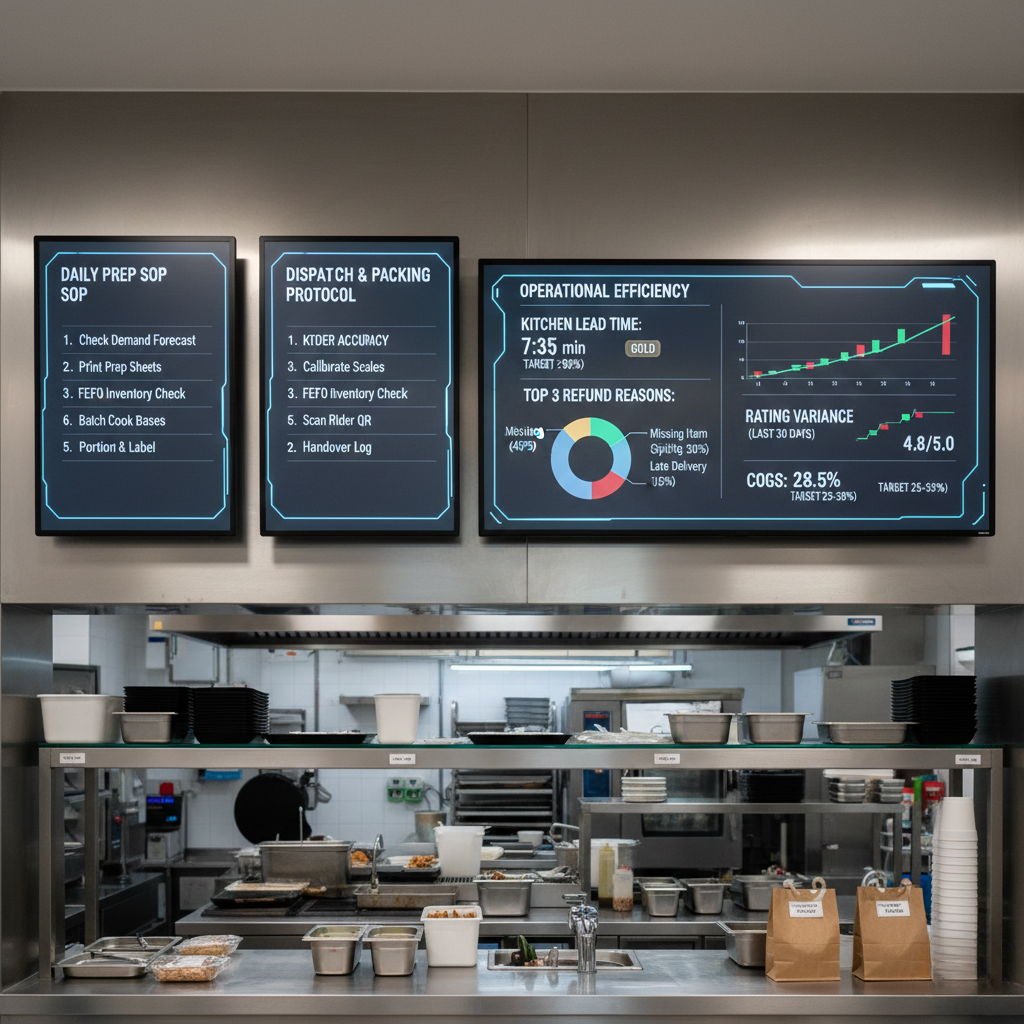
What Refunds and Rating Drops Actually Mean (They Are Signals of Broken Repeatability)
Refunds are not random. Rating drops are not “bad luck.” In delivery kitchens, both are signals that outcomes are not repeatable.
A 1-star rating often happens for one of five reasons: the customer received the wrong item, something was missing, packaging leaked or presentation looked messy, the food arrived cold or late, or the taste/portion felt inconsistent versus last time.
The important shift: refunds and ratings are not customer-service metrics. They are operations metrics. They tell you exactly where your kitchen reliability is breaking.
This is why CKaaS can materially reduce refunds: it installs gates that make common mistakes hard to repeat. But it only works when CKaaS is built around SOP depth, role ownership, and feedback loops, not just staffing.
If your kitchen works only because you personally check bags, call vendors, and fix staff mistakes, then the “system” is you. CKaaS becomes valuable when the system can replace you consistently.
The Unit Economics Lens: Refunds Don’t Just Reduce Profit They Reduce Distribution
Most founders underestimate refund damage because refunds look “small” individually. ₹120 here, ₹240 there. But refunds are not just money lost. They are also performance signals that can reduce visibility and force discounts.
Profit still gets decided at the order level:
Order Value minus Aggregator commission & charges minus CKaaS fee / revenue share minus Packaging cost minus Food cost (COGS) minus Discount burn minus Refund/penalty leakage equals Contribution Margin.
Refunds damage this equation twice: they hit the refund/penalty line directly, and they indirectly reduce distribution through trust signals (ratings, complaints, late dispatch). Reduced distribution leads to lower impressions. Lower impressions leads to discount dependency. Discount dependency collapses contribution margin.
If you want the direct profit lens on refunds, use Refunds and Cancellations Impact on Cloud Kitchen Profitability, and for platform fee context, read Aggregator Commission Impact in India.
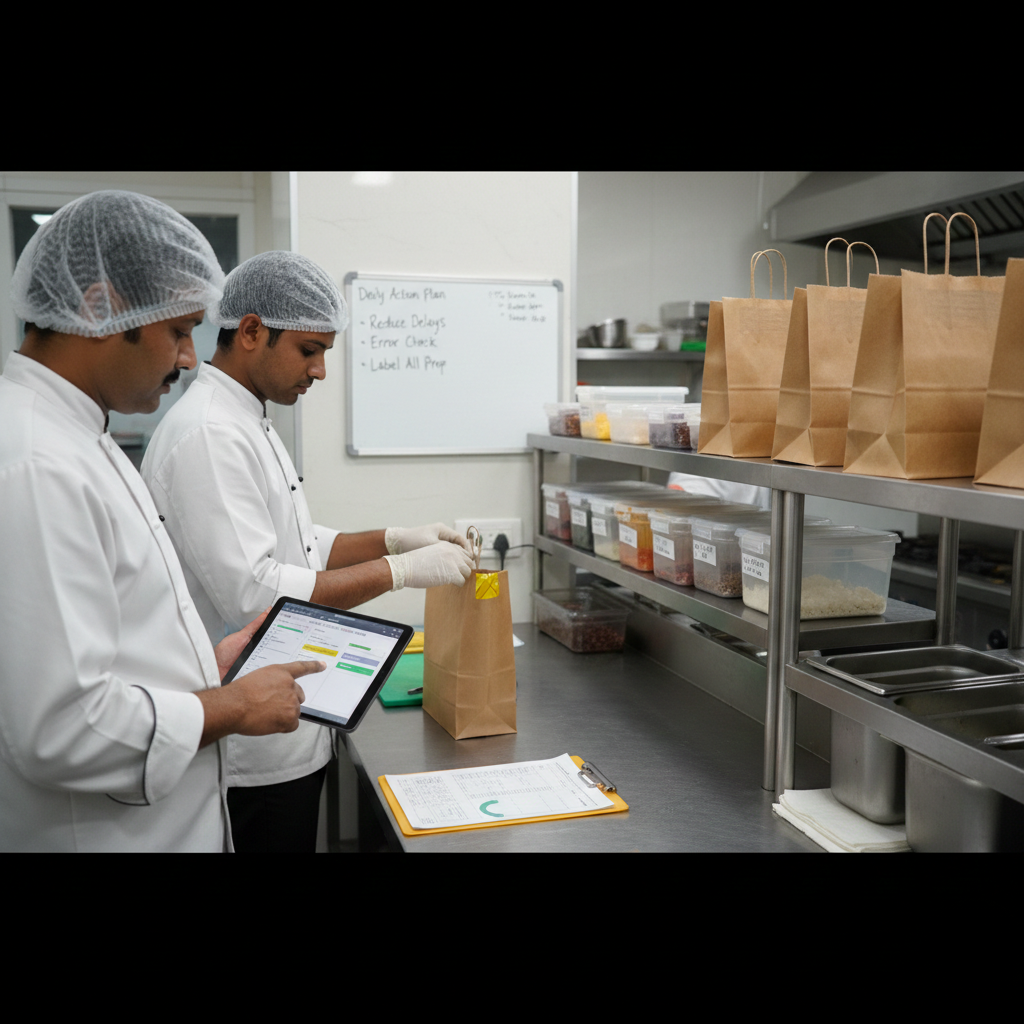
The 14 Systems CKaaS Uses to Reduce Refunds and Protect Ratings
CKaaS reduces refunds by reducing error probability. Not through motivation. Through gates. Below are the most important systems that stop common delivery failures from repeating.
1) A packing checklist that is mandatory, not optional. Most refunds come from missing items, wrong items, and missed add-ons. A checklist is not “extra process.” It is refund insurance. The checklist must include: item count, add-ons, sauces, cutlery, label match, seal check, and bag stability.
2) Dispatch gate + final scan before rider handover. Kitchens often treat dispatch as “hand it over quickly.” That is how mistakes escape. CKaaS installs a dispatch gate: verify order, verify add-ons, verify label, verify seal, then handover. Implement discipline using Cloud Kitchen Dispatch SOP.
3) Standard labeling format to prevent wrong-bag errors. Wrong bag handovers spike during peak. CKaaS standardizes label format: order ID, customer name, item count, add-on count, and “sealed” status. This makes mistakes visible before they leave.
4) Sealing standards that don’t depend on “who packed it.” Leakage and messy presentation create instant 1-star reactions. CKaaS standardizes container choice, lid fit, tape method, sealing points, and bag orientation. It removes “personal style” from packing.
5) Portion tools that protect consistency (taste + quantity). Customers notice inconsistency faster than founders do. One day the bowl is full, next day it looks light. One day the sauce is perfect, next day it’s dry. CKaaS installs measurable portion tools and recipe cards so output is repeatable.
6) Menu rationalization to reduce error probability. Too many SKUs and too many variants increase mistake frequency. CKaaS reduces refunds by simplifying menus around bestsellers and repeatable stations. Less confusion = fewer wrong items = fewer complaints.
7) Add-on architecture that is operationally safe. Many kitchens sell add-ons but don’t operationalize them. Add-ons must have a fixed storage location, a fixed packing step, and checklist verification. Otherwise add-ons become “refund generators.”
8) Prep planning and par levels to reduce stock-outs and cancellations. Stock-outs create cancellations. Cancellations create platform distrust. Platform distrust reduces distribution. CKaaS uses par levels and batch planning to keep top items available during peak.
9) Holding-time rules to prevent cold food and texture failure. Many rating drops happen because food reaches cold or soggy. CKaaS defines holding times, reheat rules, and packing timing so texture is protected as much as possible for delivery.
10) Station discipline to reduce “peak panic” mistakes. Errors spike when stations are unclear. CKaaS defines station responsibilities and sequence: prep-ready, cook-ready, pack-ready, dispatch-ready. Fewer handoffs = fewer misses.
11) Role ownership so critical steps are never “nobody’s job.” Refunds increase when responsibilities are blurry. CKaaS installs role gates: prep owner, cook owner, pack owner, dispatch owner, and manager owner for review loops. Learn the structure via Role-Based Kitchen Operations Explained.
12) Complaint and refund reason mapping (root-cause, not apology). Refund reasons are patterns: missing items, spillage, wrong item, delayed dispatch, bad taste, undercooked. CKaaS reduces refunds by mapping the top 3 weekly reasons and fixing the system behind them.
13) A weekly reliability review loop that forces SOP updates. Kitchens don’t improve by intention. They improve by review loops. Weekly review should track: refund rate, complaint categories, late dispatch count, cancellations due to stock-outs, and top rating comments. Then update SOPs and retrain.
14) Controlled growth: stop discounts from amplifying instability. Many founders run offers when ratings are falling. That increases orders and increases errors. CKaaS protects ratings by stabilizing reliability first, then scaling volume. If you’re spending for growth, map the real logic using Marketing Spend vs ROI in Cloud Kitchens.
If you want the “why these mistakes repeat” layer, start with Common Operational Mistakes in Cloud Kitchens and the discipline lens via How Process Discipline Improves EBITDA.
Swiggy/Zomato Reality: Ratings Are Trust Signals, and Refunds Are Risk Signals
Platforms do not see your intent. They see reliability signals: refunds, complaints, cancellations, late dispatch, and rating trends.
When risk signals rise, distribution reduces. When distribution reduces, founders discount to compensate. When discounting increases, margins collapse and staff pressure increases. That is how refund and rating issues become both a growth problem and a profitability problem.
External policy context: Swiggy Refund Policy and Zomato Online Ordering Terms.
The practical takeaway: don’t treat refunds as “customer service.” Treat them as “system errors.” Fixing system errors is how ratings stabilize and visibility returns.
Where Rating Drops Are Created Daily: Prep Readiness + Packing Accuracy + Dispatch Speed
If you want stable ratings, don’t chase “more orders.” Stabilize the engines that decide what the customer experiences: prep readiness (availability + speed), packing accuracy (completeness + presentation), and dispatch speed (temperature + ETA reliability).
Prep readiness prevents cancellations and delays. Packing accuracy prevents missing items and wrong items. Dispatch speed protects food quality, ETA, and platform trust signals.
Install dispatch predictability using Cloud Kitchen Dispatch SOP and reduce repeat failures using Common Operational Mistakes in Cloud Kitchens.
Why CKaaS Protects Ratings Better Than Founder Firefighting
Founder firefighting feels like control because you are constantly “fixing.” But firefighting has one flaw: it fixes the current order, not the system that created the error.
CKaaS reduces refunds and stabilizes ratings when it installs role-based gates:
Prep role:
maintains buffers, par levels, labeling, and batch readiness to prevent stock-outs and peak panic.
Cook role:
maintains portion tools, recipe compliance, and holding rules to protect consistency.
Pack role:
follows checklist discipline, sealing rules, add-on verification, and presentation standards.
Dispatch role:
runs final scan, label match, rider handover speed, and bag stability checks.
Manager role:
runs weekly review: refund reasons, cancellations, rating comments, late dispatch counts, and SOP upgrades.
If you want the operating framework, use Role-Based Kitchen Operations Explained.
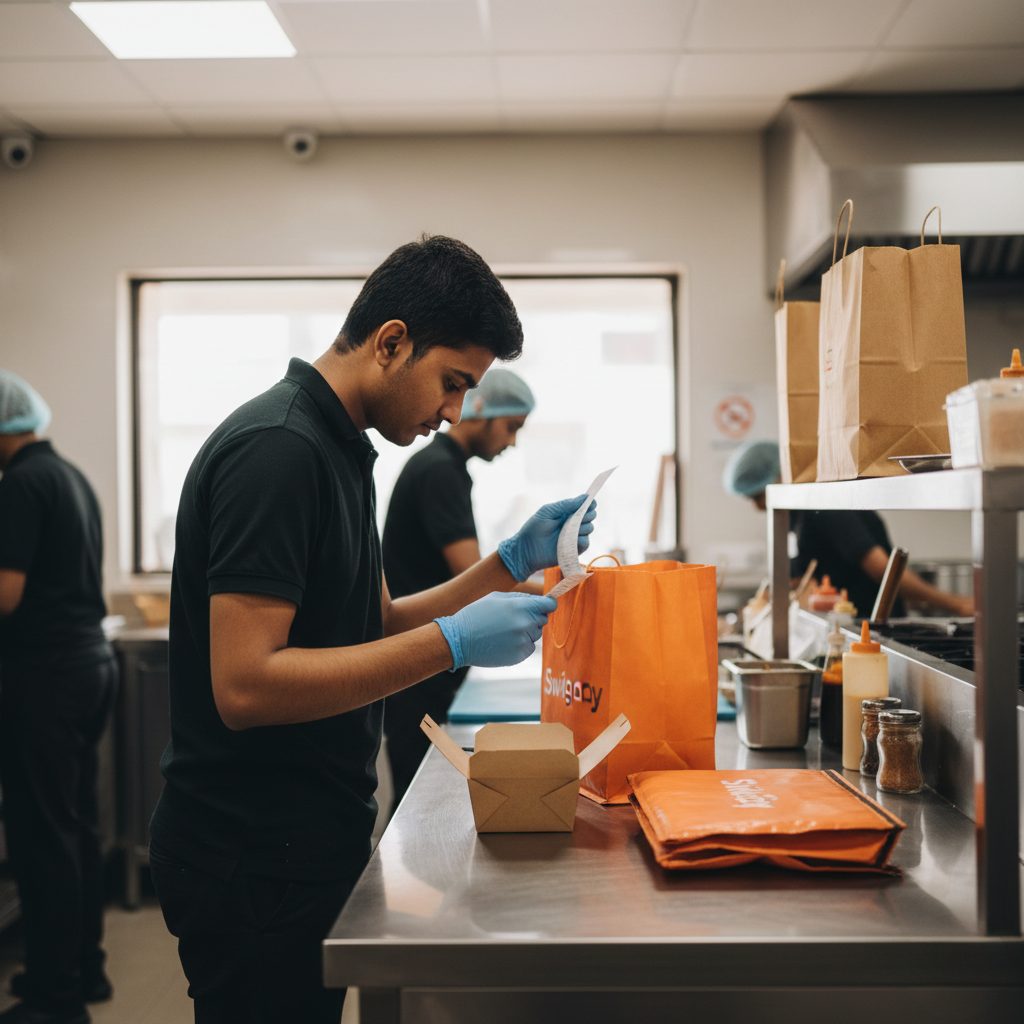
A Practical 7 to 30 Day Refund-Reduction Rollout (What CKaaS Should Implement First)
Refund reduction should not start with “better replies.” It should start with stopping repeat mistakes. Here is a practical rollout sequence used in system-led kitchen networks.
Step 1 (Day 1–2): Categorize refunds into 5 buckets. Missing item, wrong item, leakage/packaging, delay/cold food, taste/portion inconsistency. If you can’t categorize, you can’t fix.
Step 2 (Day 1–3): Install packing checklist + add-on verification. Make it mandatory. Train packers with sign-offs. This is the fastest refund reduction lever.
Step 3 (Day 2–5): Add dispatch gate + final scan. Verify label match, item count, add-ons, seal check, and bag stability. Implement via Cloud Kitchen Dispatch SOP.
Step 4 (Day 3–7): Lock packaging and sealing standards. Standardize containers, lid fit, sealing tape method, bag type, and “do not tilt” orientation. Packaging inconsistency is one of the biggest rating killers.
Step 5 (Week 2): Freeze and SOP the top 10 bestsellers. Define portion tools, fill lines, recipe grams, and holding rules. Consistency increases repeat ratings.
Step 6 (Week 2): Rebuild prep planning and par levels. Protect availability and reduce cancellations. Cancellations train platforms that your outlet is unreliable.
Step 7 (Week 3): Start weekly review + SOP updates. Track refund rate, complaint categories, rating comments, late dispatch, and cancellations. Fix top 2 repeating failures weekly. That loop is the system.
Use the discipline lens: How Process Discipline Improves EBITDA. If you’re scaling with spend, avoid volume-amplified errors using Marketing Spend vs ROI in Cloud Kitchens.
External process references (useful for standardisation thinking): Standardized Work (Lean lexicon), ISO 22000 overview, and FSSAI Hygiene Requirements (Schedule 4 reference).
Final Takeaway: CKaaS Reduces Refunds by Making Mistakes Hard to Repeat
Refunds and rating drops are not “inevitable.” They are outcomes of weak systems: unclear roles, missing gates, inconsistent packaging, unstable dispatch, and no feedback loop.
CKaaS reduces refunds and stabilizes ratings when it installs repeatable control: checklist-driven packing, gated dispatch, standardized labeling and sealing, measured portions, prep readiness routines, and weekly reviews that force SOP upgrades.
When refunds drop, trust rises. When trust rises, visibility improves. When visibility improves, discount pressure reduces. That is how ratings protection becomes margin protection.
Operating frameworks from GrowKitchen, and operating partner brands like Fruut and GreenSalad are built to convert “refund-prone kitchens” into “reliable kitchen systems.”
FAQs: How CKaaS Reduces Refunds and Rating Drops
What causes most refunds in cloud kitchens?
Missing items, wrong items, packaging leakage, and late dispatch. These are operational failures, not marketing issues.
What is the fastest operational fix to reduce refunds?
Packing checklist + add-on verification + dispatch gate. These reduce preventable mistakes immediately.
Can ratings recover after a drop?
Yes, if reliability improves consistently. Ratings stabilize when complaints reduce and outcomes become repeatable.
Why do some kitchens still get refunds even with good food?
Because refunds are often about completeness, packaging, and dispatch reliability not taste alone.
- Cloud Kitchen Profitability Consultant in India
- Common Operational Mistakes in Cloud Kitchens
- Cloud Kitchen Dispatch SOP
- Role-Based Kitchen Operations Explained
- Refunds and Cancellations Impact on Cloud Kitchen Profitability
- Aggregator Commission Impact in India
- Marketing Spend vs ROI in Cloud Kitchens
- How Process Discipline Improves EBITDA
- Grow Kitchen on Twitter