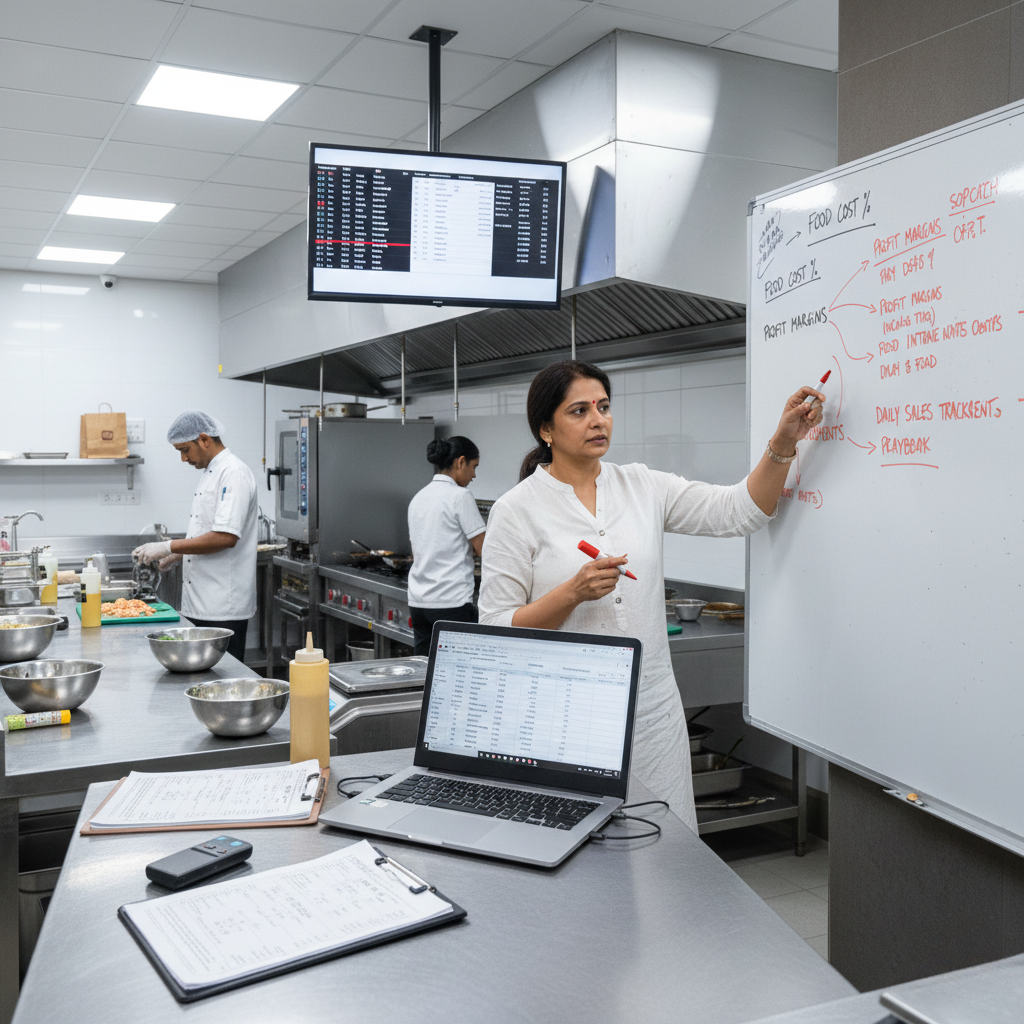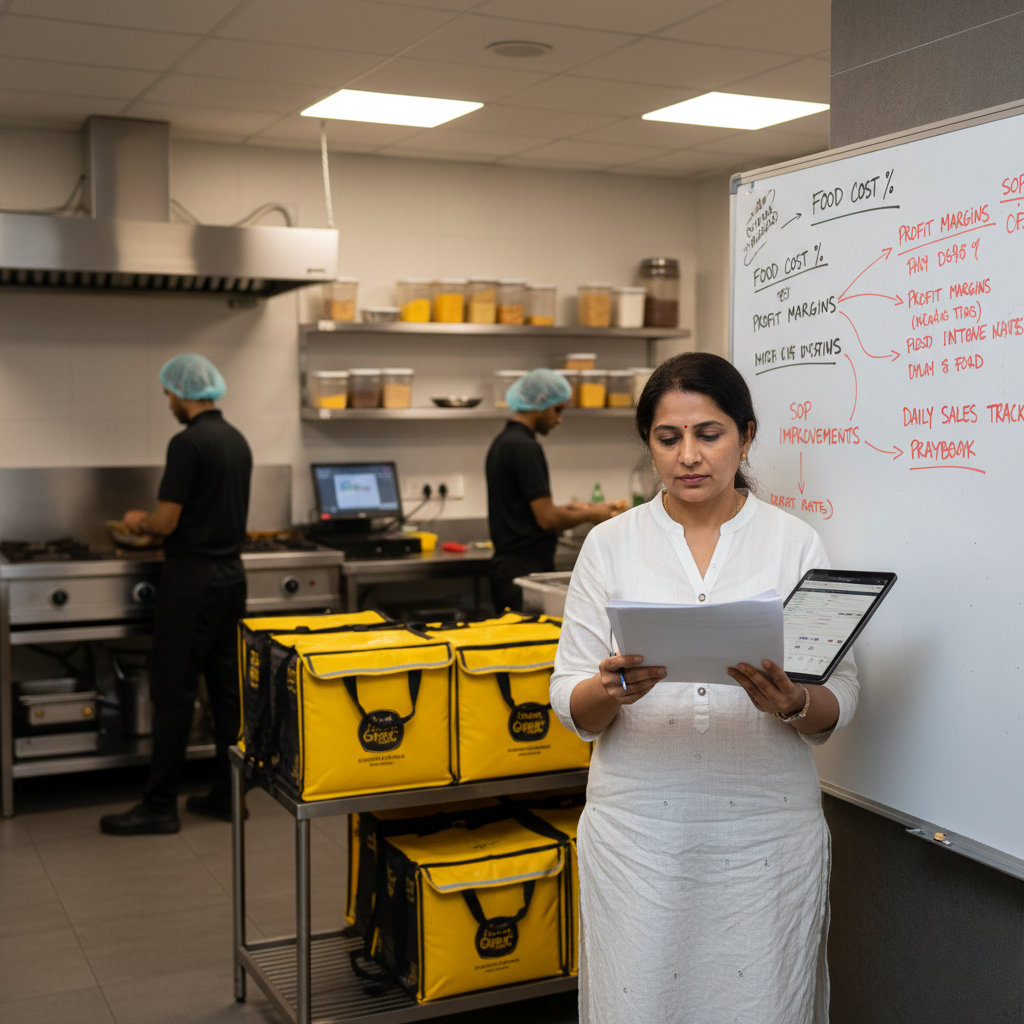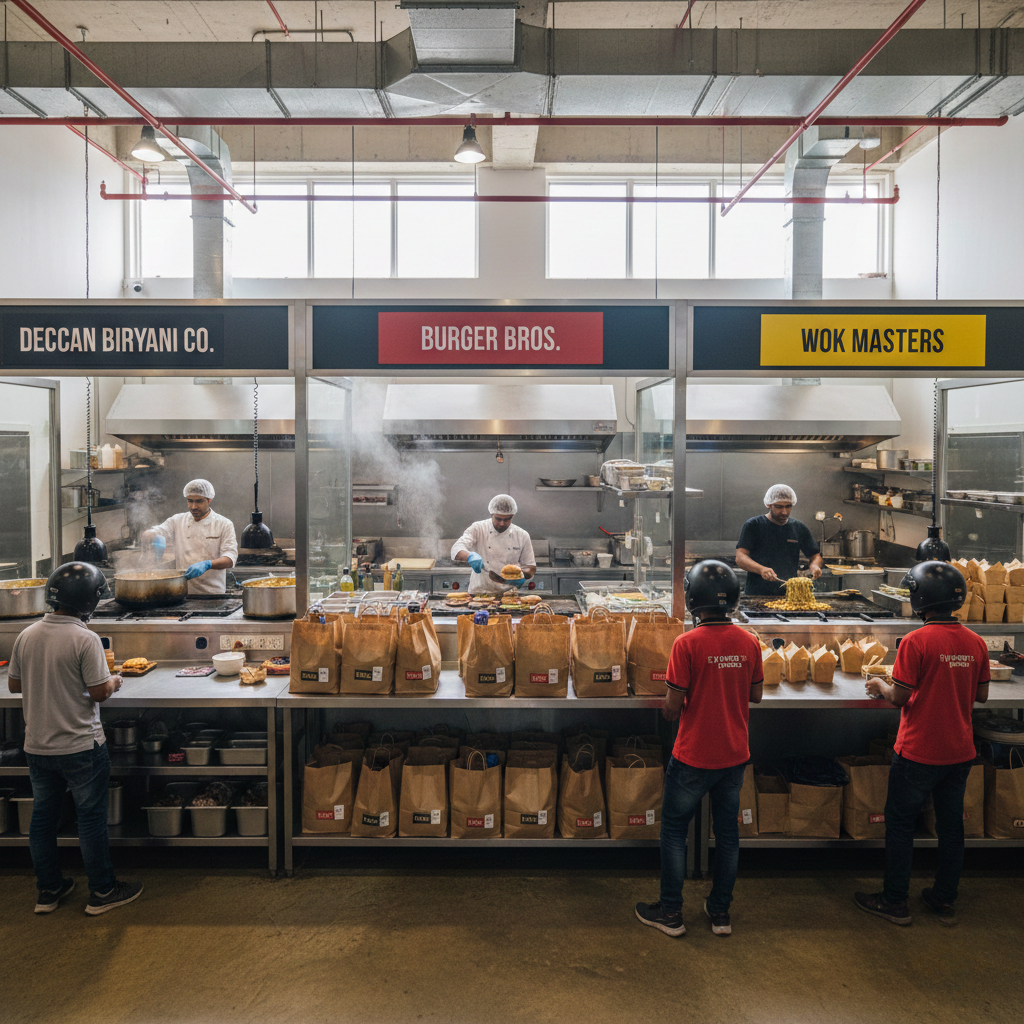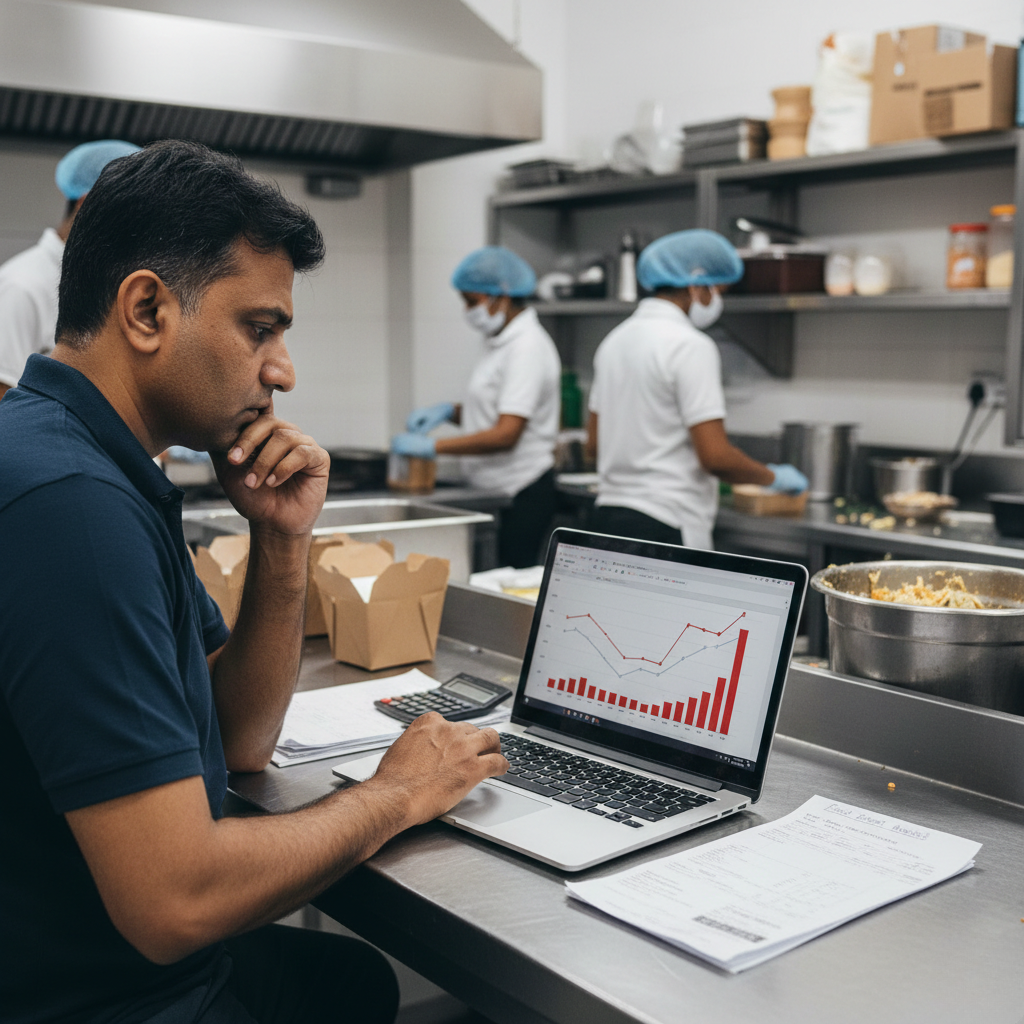
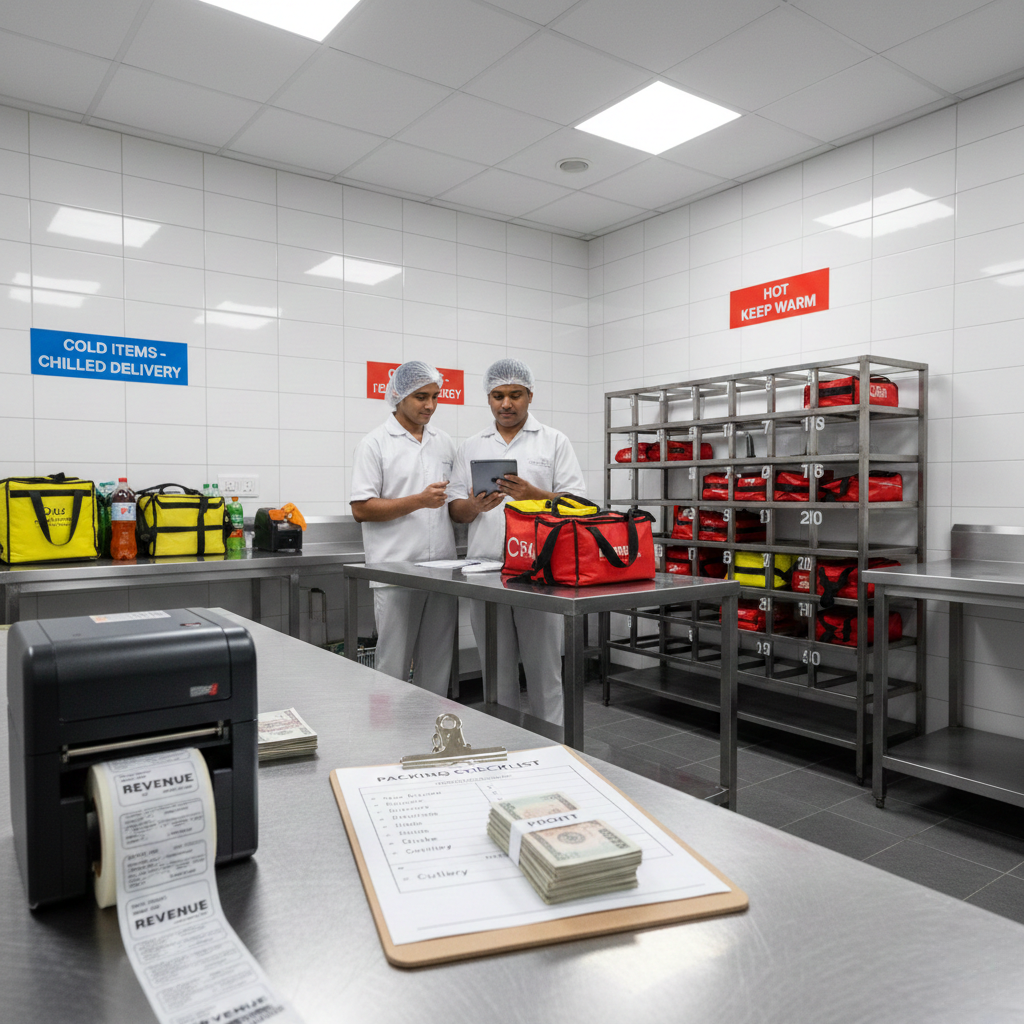
Profit vs Revenue in Cloud Kitchens: A CKaaS Perspective is not a “sell more” motivation talk or a “run ads harder” plan. It is a unit-economics + leakage + control problem. Many cloud kitchens hit ₹2L–₹10L monthly revenue and still feel broke because revenue is a dashboard number, while profit is a system outcome. Profit is protected by portion discipline, pricing logic, procurement routines, dispatch gates, refunds/cancellations control, and weekly feedback loops. CKaaS works when it turns revenue into repeatable contribution margin per order, not when it simply increases activity. This guide explains the real difference between revenue and profit in Indian cloud kitchens and how CKaaS builds profit structure using systems, not supervision.
Profit vs Revenue in Cloud Kitchens: Why High Sales Still Feel Like Low Money
A large number of cloud kitchen founders live in the “revenue trap.” Orders are coming in. Swiggy and Zomato dashboards look active. Monthly sales show growth. Yet the founder feels stressed, short on cash, and unsure where money is going.
That feeling is not imagination. Delivery kitchens can generate high revenue while quietly leaking profit through: commission and platform charges, discount burn, food cost drift, packaging inflation, stock-outs and cancellations, refunds and remakes, late dispatch penalties, and operational waste.
Revenue is what customers pay. Profit is what remains after systems protect margins. If systems are weak, revenue can increase while profit stays flat or gets worse.
CKaaS exists to replace founder-dependent firefighting with system-driven control. If you want the profitability foundation lens first, start with Cloud Kitchen Profitability Consultant in India and map leakage patterns using Common Operational Mistakes in Cloud Kitchens.
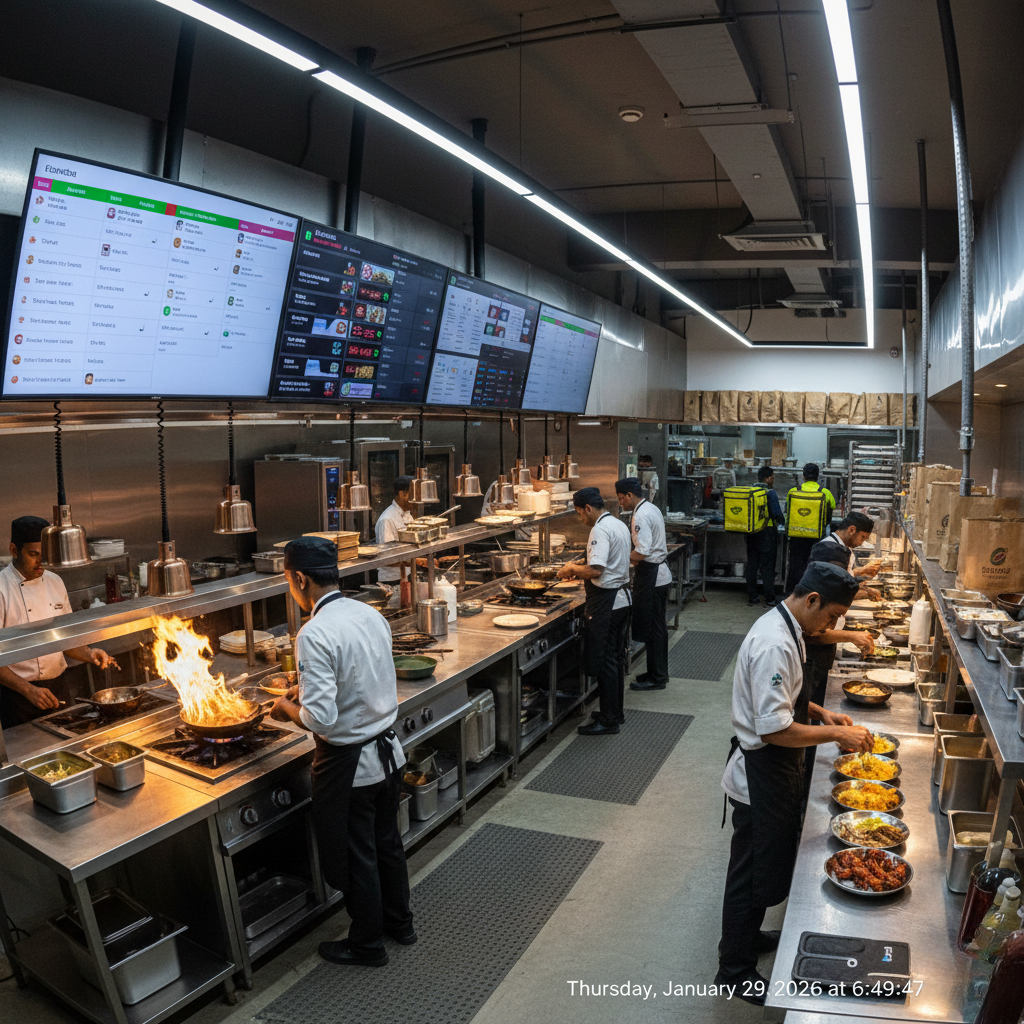
What Profit Actually Means in Delivery Kitchens (Not “Whatever Is Left in the Bank”)
Most founders define profit emotionally: “If I feel cash is left, I am profitable.” That definition fails in cloud kitchens because payouts are delayed, platform deductions are complex, and leakage is fragmented across dozens of small events.
In delivery businesses, profit must be defined as a repeatable math outcome. Not a mood. Not a feeling. Not a “good month.”
Here is the reality: a kitchen can do ₹5L revenue with poor contribution margins and still lose money after fixed costs. Another kitchen can do ₹2.5L revenue with controlled contribution margins and quietly build stable profit.
That is why CKaaS is often misunderstood. People assume CKaaS is a growth shortcut. But CKaaS is valuable primarily as a control system: it turns messy execution into repeatable outcomes.
The mindset shift is simple: stop chasing “more sales” as the first fix. Start building “profit structure” so every order contributes the right amount. Then growth becomes safe.
The Unit Economics Lens: Why Revenue Doesn’t Equal Profit in Cloud Kitchens
Cloud kitchen profitability is decided per order. If you do not know contribution margin per order, you do not know whether revenue growth is helping you or hurting you.
The correct lens is:
Order Value minus Aggregator commission & charges minus CKaaS fee / revenue share minus Packaging cost minus Food cost (COGS) minus Discount burn minus Refund/penalty leakage equals Contribution Margin.
Revenue grows when orders grow. Profit grows only when contribution margin remains stable or improves as orders grow. If contribution margin weakens as volume increases, growth becomes a stress multiplier.
Two common reasons revenue can rise while profit falls: (1) discount dependency increases to maintain visibility, and (2) execution errors rise at volume (wrong items, late dispatch, refunds).
If you want fee clarity and how commissions distort perceived “sales,” read Aggregator Commission Impact in India. To understand how refunds and cancellations destroy contribution margin, use Refunds and Cancellations Impact on Cloud Kitchen Profitability.
The 14 Reasons Revenue Grows Faster Than Profit in Cloud Kitchens (And How CKaaS Fixes Each One)
Most kitchens don’t lose profit because of one big failure. They lose profit because small leakages repeat daily. Below are the most common reasons revenue looks healthy while profits stay unclear, and the CKaaS control mechanism that fixes each issue.
1) Aggregator charges are underestimated. Many founders see “order value” and assume that is revenue kept. CKaaS builds payout clarity by tracking real realizations and charge patterns.
2) Discounts are treated as marketing, not margin burn. Discounts reduce contribution margin instantly. CKaaS works when discounting is used strategically, not as survival oxygen. Map this using Marketing Spend vs ROI in Cloud Kitchens.
3) Portion drift silently increases food cost. Extra grams per portion feel harmless. Over a month, they become a salary-sized leak. CKaaS installs portion tools, measurable recipes, and audits to stop drift.
4) Packaging is inconsistent and untracked. Packaging can become a creeping cost, especially with different staff and vendors. CKaaS standardizes packaging SKUs, sealing rules, and consumption discipline.
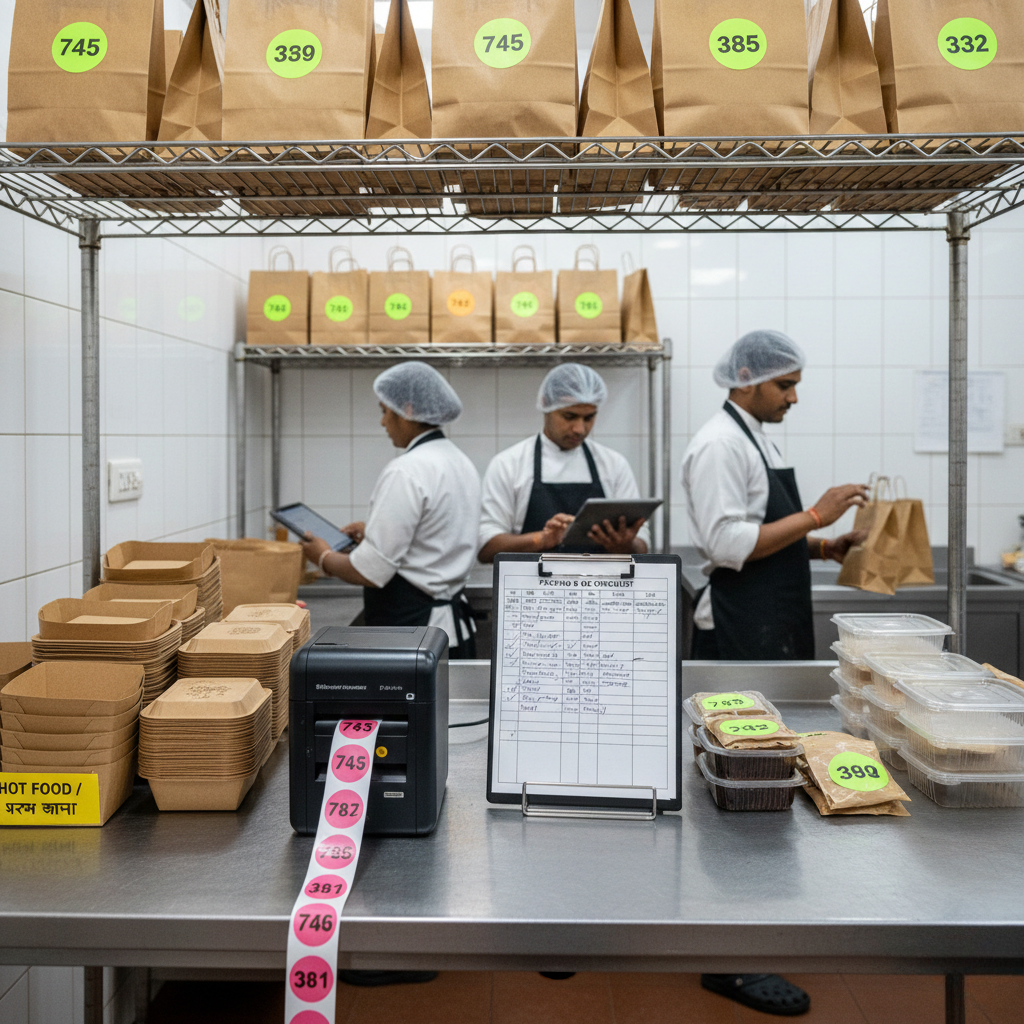
5) Wrong items and missing add-ons create refund leakage. A refund is not just a refund. It is a margin loss plus rating damage plus distribution loss. CKaaS reduces this via packing checklists and dispatch gates. Implement dispatch discipline using Cloud Kitchen Dispatch SOP.
6) Late dispatch reduces visibility, forcing discounts. Many founders don’t connect dispatch delays to future revenue dependence on discounts. CKaaS installs prep readiness routines and dispatch owners to protect ETA performance.
7) Stock-outs create cancellations and ranking damage. Cancellations reduce trust. Reduced trust reduces impressions. Reduced impressions increases discount pressure. CKaaS fixes this with par levels, reorder triggers, and procurement routines.
8) Vendor rates fluctuate and procurement becomes reactive. When teams buy “whatever is available,” food cost and quality drift together. CKaaS installs RM specs, approved alternatives, and purchase discipline.
9) Menu complexity increases error probability. More SKUs = more mistakes = more refunds = more discounting. CKaaS improves profitability by simplifying menus around repeatable stations and top sellers.
10) Pricing is copied from competitors. Your cost structure is unique. CKaaS forces pricing logic to include: commissions, packaging, COGS, and expected refund rate. If price can’t carry costs, revenue becomes vanity.
11) “Busy kitchen” is confused with “productive kitchen.” Kitchens can be busy due to chaos: rework, remakes, confusion, and miscommunication. CKaaS installs station discipline and role gates so work converts into output cleanly.
12) No role ownership means leakage has no owner. If everyone is responsible, nobody is responsible. CKaaS works when roles exist with gates: prep, cook, pack, dispatch, and review ownership. Framework: Role-Based Kitchen Operations Explained.
13) Refund reasons aren’t analyzed, so the same mistake repeats. Refunds are patterns. CKaaS stabilizes profits when refunds are reviewed weekly and SOPs are upgraded, not when founders apologize harder.
14) Profit tracking is monthly, while leakage is daily. If you discover leakage after 30 days, you already lost money. CKaaS encourages daily/weekly checks on food cost %, refund rate, late dispatch, and cancellations. Use the discipline lens: How Process Discipline Improves EBITDA.
If you want the full leak map for Indian kitchens, start with Common Operational Mistakes in Cloud Kitchens, and for platform payout clarity, reference Aggregator Commission Impact in India.
Swiggy/Zomato Reality: Platforms Reward Reliability, Not Revenue Screenshots
Aggregators do not rank you because you are doing high revenue. They rank you because you are low-risk: fast dispatch, fewer cancellations, fewer refunds, strong ratings, and consistent availability.
This is why profit vs revenue diverge: a kitchen can generate revenue using discounts, but if reliability is weak, the platform reduces distribution. Then the founder discounts again to survive. That cycle increases revenue volatility and destroys margins.
External policy context: Swiggy Refund Policy and Zomato Online Ordering Terms.
The practical takeaway: revenue is easy to increase. reliability is what makes revenue profitable.
Where Profit Is Won Daily: Prep Readiness + Packing Accuracy + Dispatch Speed
If you want profit vs revenue, don’t start with ads. Start with the three engines that decide daily outcomes: prep readiness, packing accuracy, and dispatch speed.
Prep readiness protects availability and prevents cancellations. Packing accuracy prevents refunds and remakes. Dispatch speed protects visibility, ratings, and conversion.
Install dispatch predictability using Cloud Kitchen Dispatch SOP, and reduce repeat errors by mapping operational failure points via Common Operational Mistakes in Cloud Kitchens.
A CKaaS Perspective: Profit Improves When Roles + Gates Replace Founder Presence
Founder-driven kitchens often feel controlled because the founder is the gate: tasting, portion checking, correcting packs, calling riders, and fixing mistakes in real-time.
That “control” collapses the moment the founder steps out. CKaaS creates profit stability by installing gates that work every shift: clear roles, clear checks, and clear accountability.
Prep role:
owns batch prep schedules, labeling, par levels, and buffer checks to prevent cancellations and waste.
Cook role:
owns recipe compliance and portion tools to stop food cost drift.
Pack role:
owns checklist-based packing, add-on verification, sealing, and clean presentation to prevent refunds.
Dispatch role:
owns final scan, correct bag handover, and rider coordination to protect ETA and ratings.
Manager role:
owns weekly review: food cost %, refunds, cancellations, late dispatch counts, and SOP upgrades.
For the full structure, use Role-Based Kitchen Operations Explained.
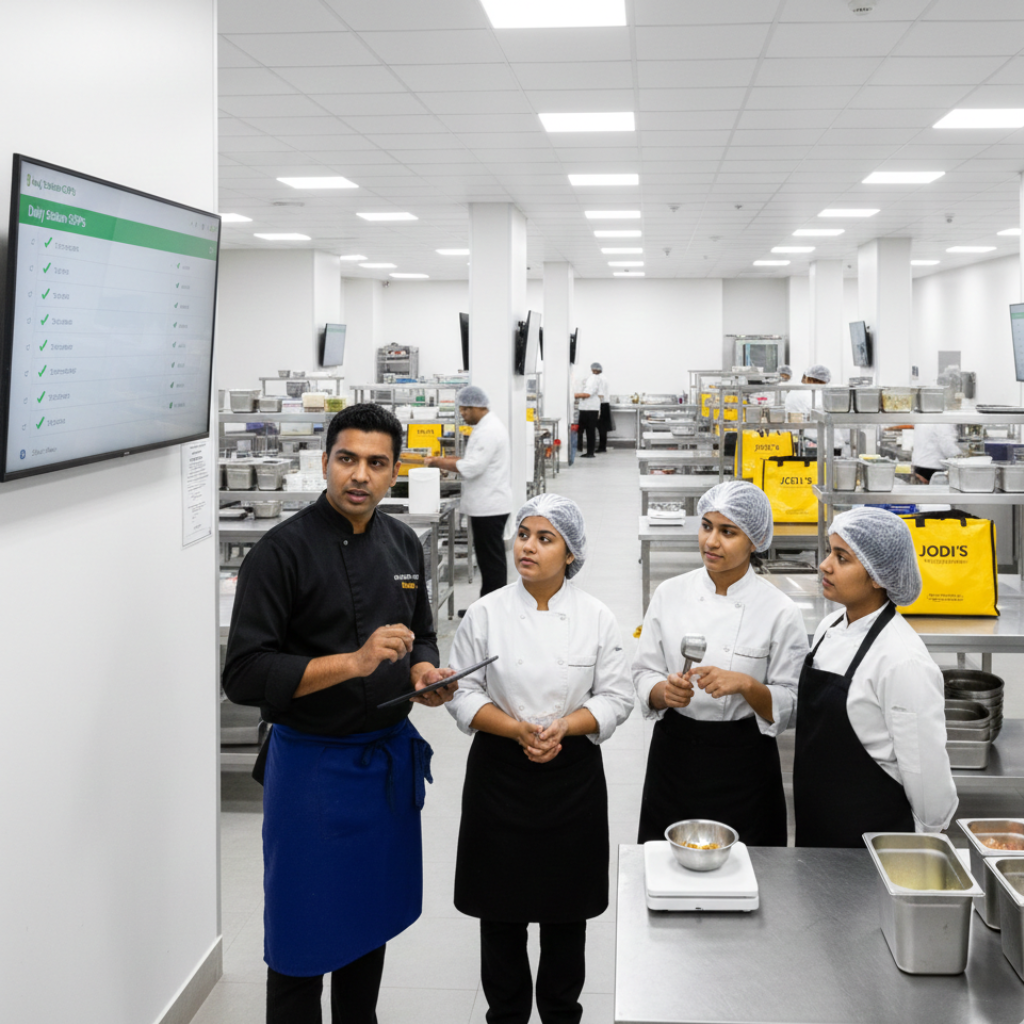
A Practical 7 to 30 Day Profit Structure Plan (Before You Chase More Revenue)
If you want to stop living in the revenue trap, your goal is not “more orders.” Your goal is “profit structure.” Here is a practical rollout sequence a strong CKaaS partner should implement first.
Step 1 (Day 1–2): Calculate contribution margin for top 10 SKUs. If your margins are unclear, growth is a gamble. Start with your bestsellers.
Step 2 (Day 1–3): Freeze the menu and simplify where needed. Remove low-selling SKUs, reduce near-duplicates, and protect execution quality. Complexity is a refund engine.
Step 3 (Day 2–5): Install packing checklist + dispatch scan. This reduces wrong items, missing add-ons, and refund leakage fast. Implement via Cloud Kitchen Dispatch SOP.
Step 4 (Day 3–7): Standardize portions for top sellers. Define grams/ml, portion tools, and sign-off training. Portion drift is the silent profit killer.
Step 5 (Week 2): Lock procurement specs and reorder routines. Approved vendors, RM specs, reorder triggers, and minimum stock discipline. Stop reactive buying.
Step 6 (Week 2): Track refunds, cancellations, and late dispatch daily. Don’t wait for “month end.” Leakage happens daily, so control must be weekly at minimum.
Step 7 (Week 3–4): Run weekly reviews and upgrade SOPs. Review refund reasons, cancellation causes, rating comments, food cost %, and dispatch delays. Update SOPs. Retrain. Repeat.
If you want the discipline lens that protects profit long-term, use How Process Discipline Improves EBITDA. If you are spending on growth, make sure revenue growth is actually profitable using Marketing Spend vs ROI in Cloud Kitchens.
External process references (useful for standardisation thinking): Standardized Work (Lean lexicon), ISO 22000 overview, and FSSAI Hygiene Requirements (Schedule 4 reference).
Final Takeaway: Revenue Is Easy to Inflate. Profit Is Hard to Protect Without Systems.
Cloud kitchens don’t become profitable by “doing more.” They become profitable by making leakage hard to repeat: measured portions, disciplined procurement, stable prep planning, checklist-based packing, gated dispatch, controlled refunds and cancellations, and weekly KPI review loops.
A CKaaS perspective is simple: revenue is not the finish line. Revenue is raw material. Systems convert revenue into profit.
Operating frameworks from GrowKitchen, and operating partner brands like Fruut and GreenSalad are built to convert “high activity kitchens” into “high control profit systems.”
FAQs: Profit vs Revenue in Cloud Kitchens
Why do cloud kitchens show high revenue but low profit?
Because margins are eaten by commissions, discounts, food cost drift, refunds, cancellations, and operational waste.
What is the simplest way to track real profit vs revenue in delivery kitchens?
Track contribution margin per SKU: realizations minus COGS, packaging, discounts, and refund leakage.
Does CKaaS automatically make a kitchen profitable?
No. CKaaS improves control and repeatability, but profitability still depends on pricing logic, menu discipline, and compliance.
What is the fastest operational fix that improves profit without increasing revenue?
Portion tools + packing checklist + dispatch gates. These reduce food cost drift and refund leakage quickly.
- Cloud Kitchen Profitability Consultant in India
- Common Operational Mistakes in Cloud Kitchens
- Aggregator Commission Impact in India
- Refunds and Cancellations Impact on Cloud Kitchen Profitability
- Cloud Kitchen Dispatch SOP
- Role-Based Kitchen Operations Explained
- Marketing Spend vs ROI in Cloud Kitchens
- How Process Discipline Improves EBITDA
- Grow Kitchen on Twitter