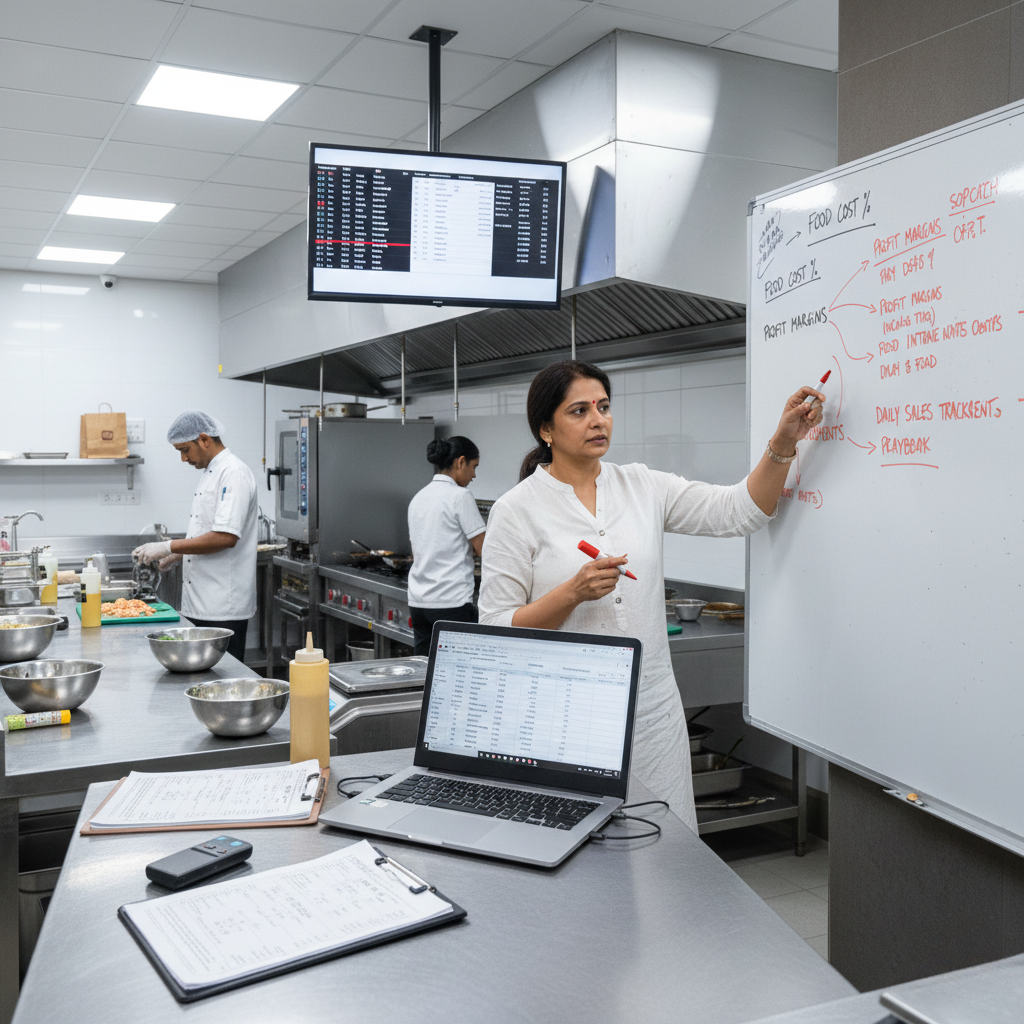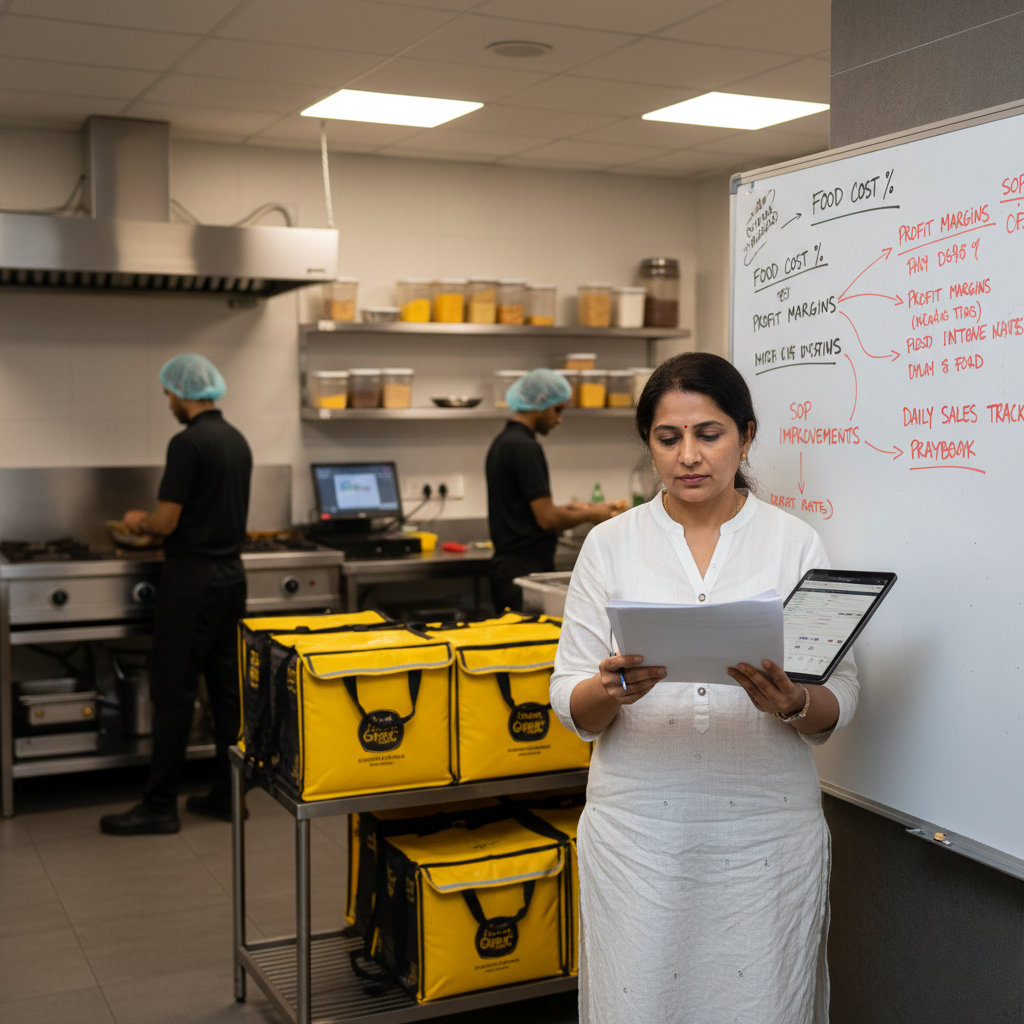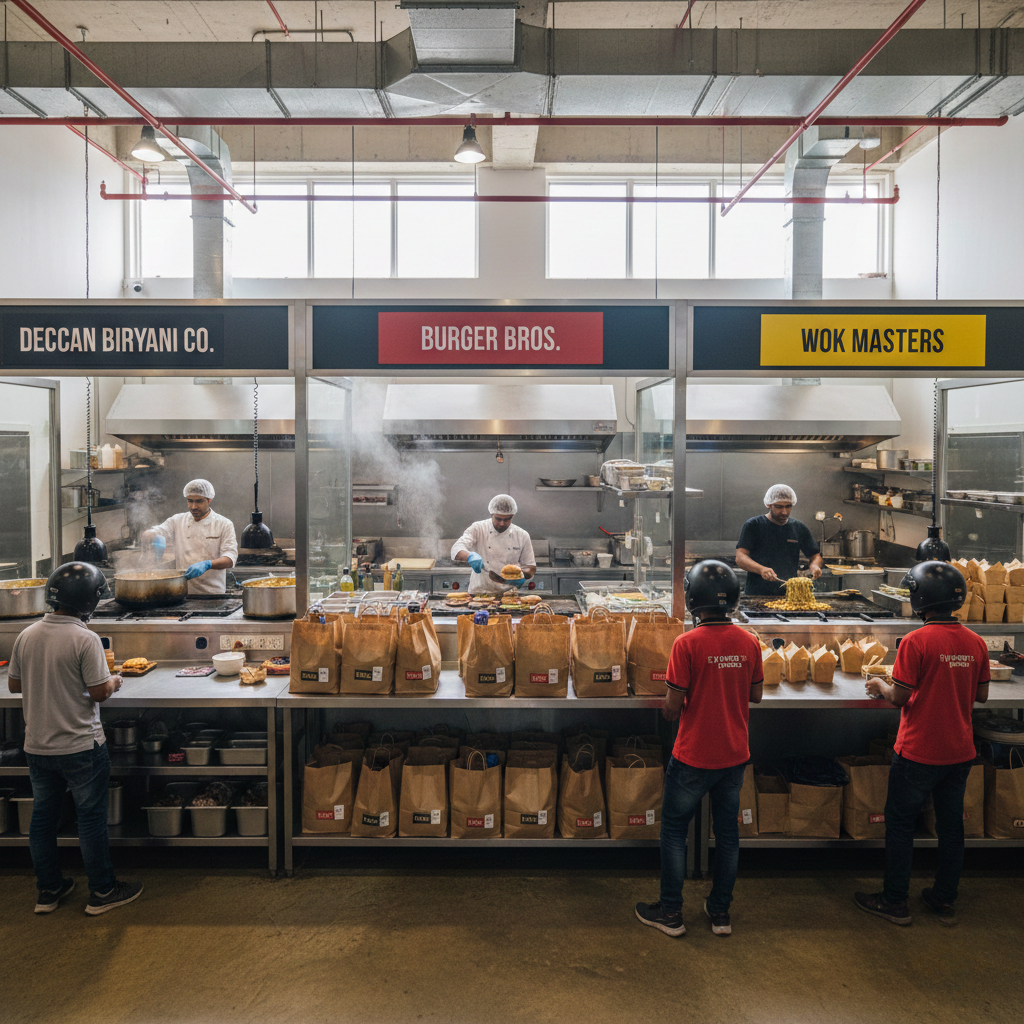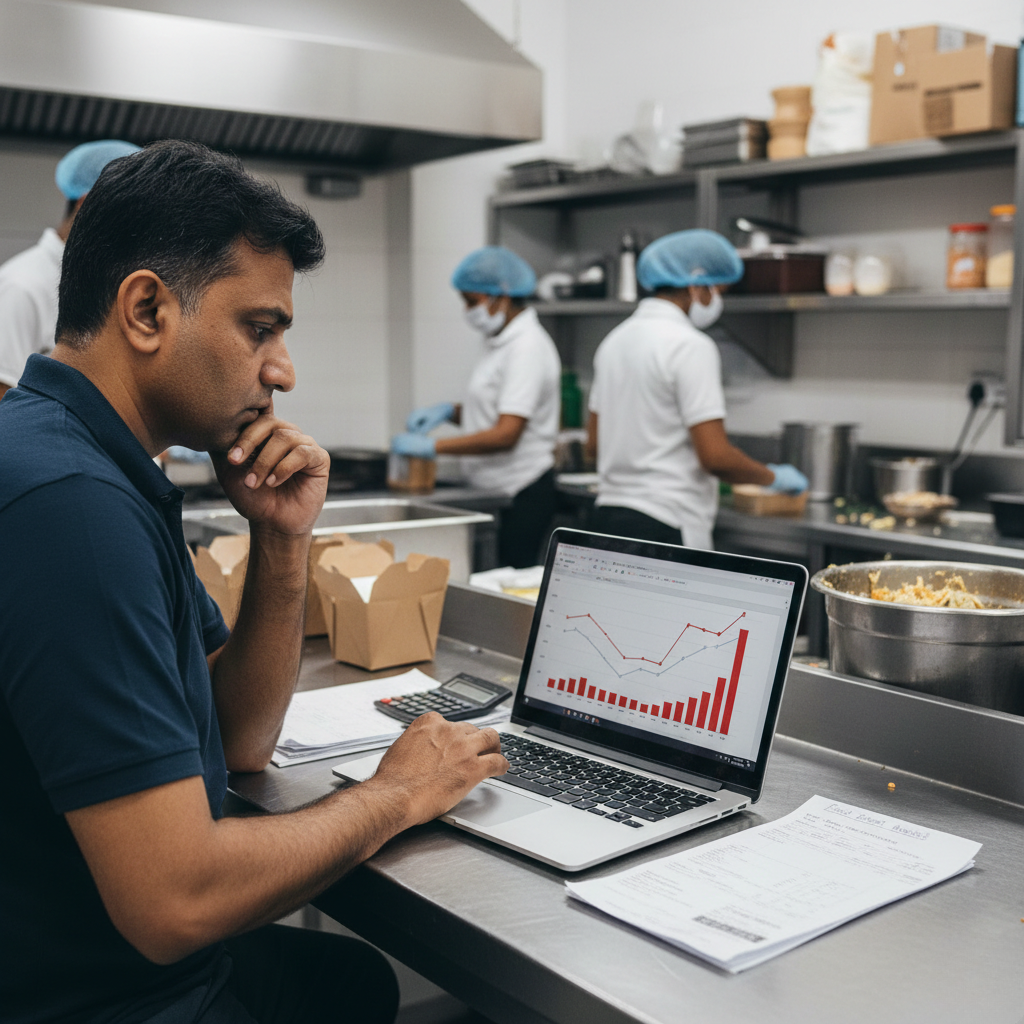
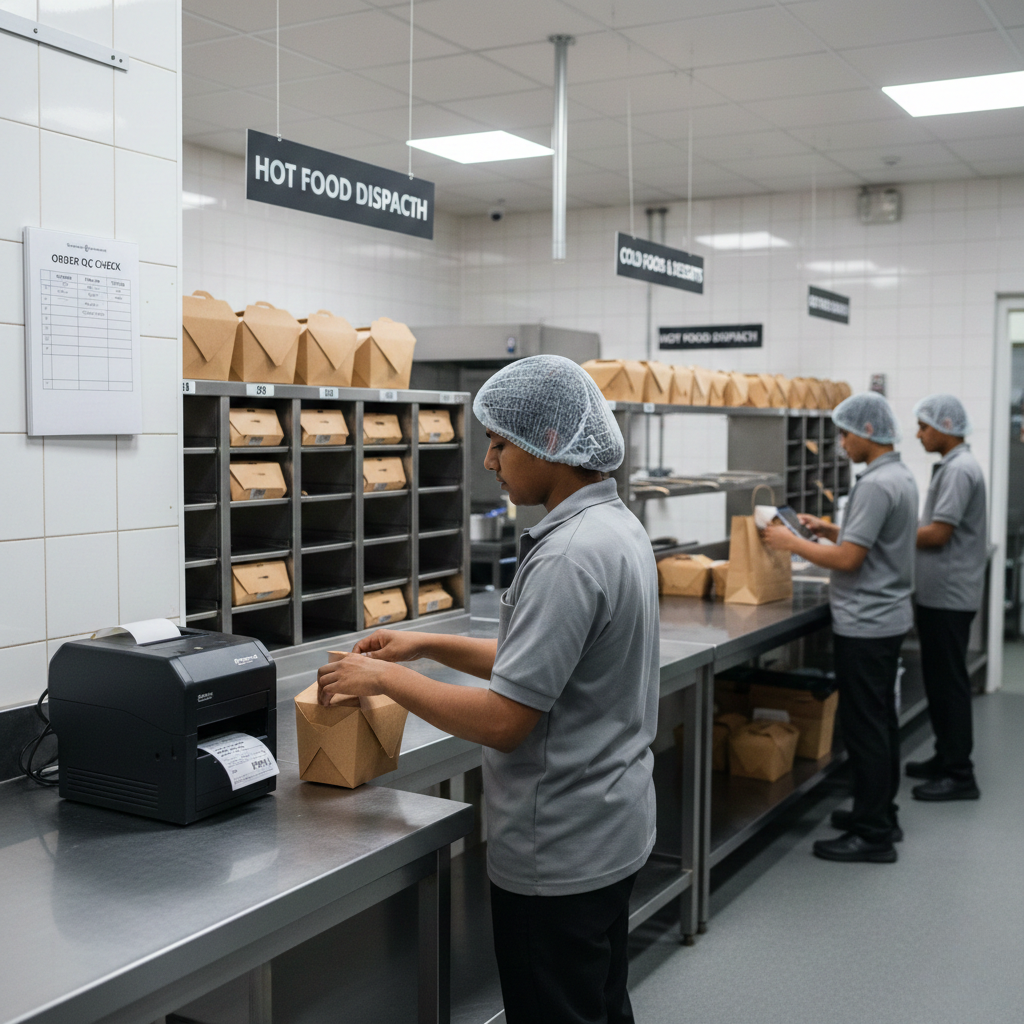
How CKaaS Controls Food Cost, Refunds, and Margins is not a “cut costs” hack or a “raise prices” trick. It is a control system problem: portion discipline, procurement routines, dispatch gates, packaging standards, and weekly feedback loops that prevent leakage from repeating. Most cloud kitchens don’t lose money because orders are low. They lose money because small leakages repeat daily: extra grams per portion, inconsistent vendor rates, stock-outs, wrong items, late dispatch, refunds, cancellations, and discount dependency. CKaaS works when it replaces founder firefighting with repeatable routines that protect contribution margin per order. This guide explains exactly how CKaaS controls food cost, refunds, and margins in Indian cloud kitchens using systems, not supervision.
How CKaaS Controls Food Cost, Refunds, and Margins: Why Most “Busy” Kitchens Still Bleed Cash
Many founders believe profitability is a “sales problem.” They see low profit and assume the fix is more orders. So they run discounts. They push ads. They add SKUs. They chase volume.
But cloud kitchens rarely bleed because of low orders. They bleed because of repeated leakage: portions drift by 10–20 grams, packaging gets inconsistent, vendor rates fluctuate, cancellations rise due to stock-outs, wrong items cause refunds, and late dispatch kills visibility.
When these leakages repeat daily, a kitchen can do ₹2L–₹6L monthly and still feel broke. That is not bad luck. That is weak control.
CKaaS exists to replace founder-dependent control with system-driven control. If you want the baseline profitability lens first, start with Cloud Kitchen Profitability Consultant in India and map recurring leakage using Common Operational Mistakes in Cloud Kitchens.
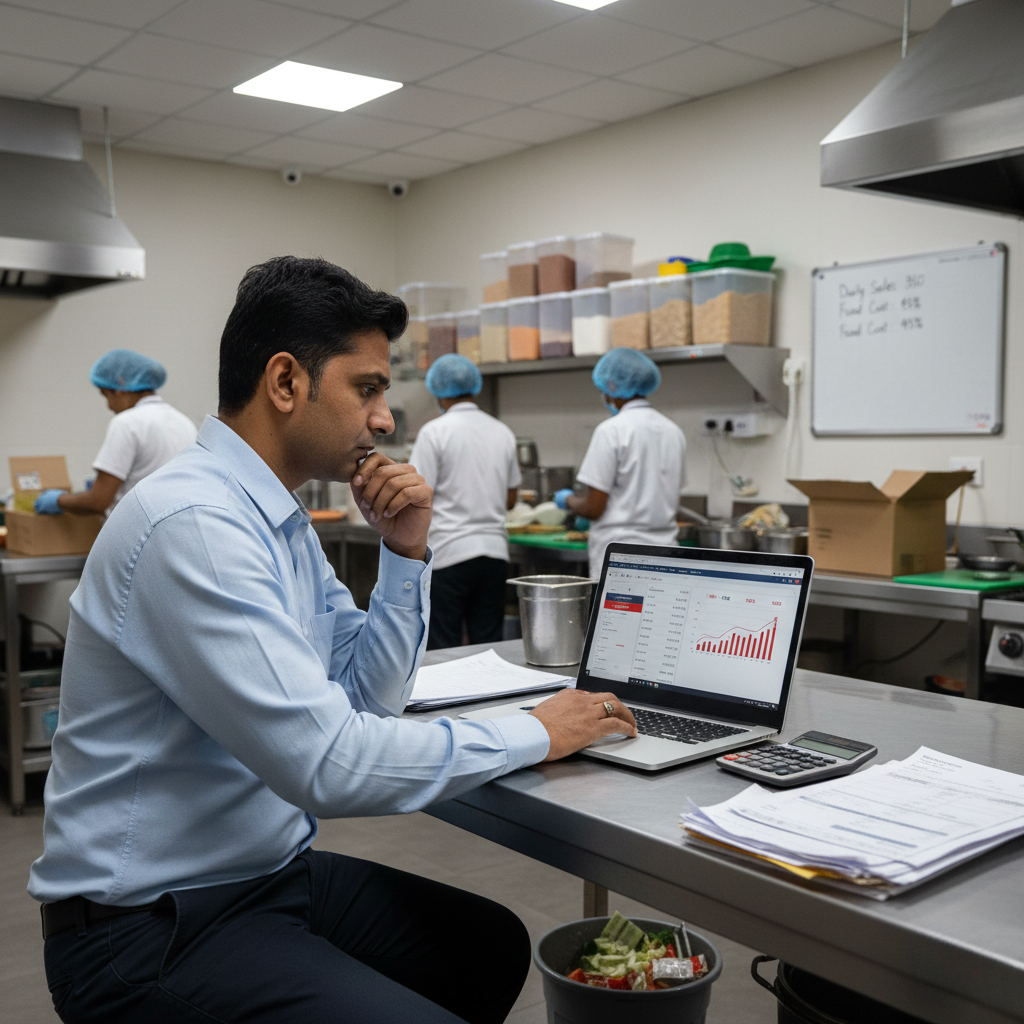
What “Control” Actually Means in Delivery Kitchens (Not Micromanagement)
In cloud kitchens, control is not shouting. Control is not “being strict.” Control is not staying in the kitchen all day.
Control means outcomes repeat even when the founder is not present: same portion, same taste, same pack, same dispatch speed, same availability, and predictable economics.
That’s why CKaaS can materially improve margins: it installs the routines that force repeatability. But only if the model is built on SOP depth and gates, not just staffing.
The key idea: CKaaS doesn’t magically reduce costs. It prevents leakage from repeating. And preventing repeated leakage is the fastest path to stable contribution margin.
The Unit Economics Lens: Where Food Cost and Refunds Actually Destroy Margin
You cannot control profit if you don’t know what creates it. Cloud kitchen profitability is decided at the order level.
Order Value minus Aggregator commission & charges minus CKaaS fee / revenue share minus Packaging cost minus Food cost (COGS) minus Discount burn minus Refund/penalty leakage equals Contribution Margin.
Food cost drift and refunds are two of the most dangerous line items because: they are fragmented, they look “small,” and they repeat.
A ₹18 extra portion drift across 50 orders/day is ₹900/day. That is ₹27,000/month in silent leakage. A few wrong items and refunds per day can destroy your best seller margins.
If you want platform fee clarity, read Aggregator Commission Impact in India and map refund patterns using Refunds and Cancellations Impact on Cloud Kitchen Profitability.
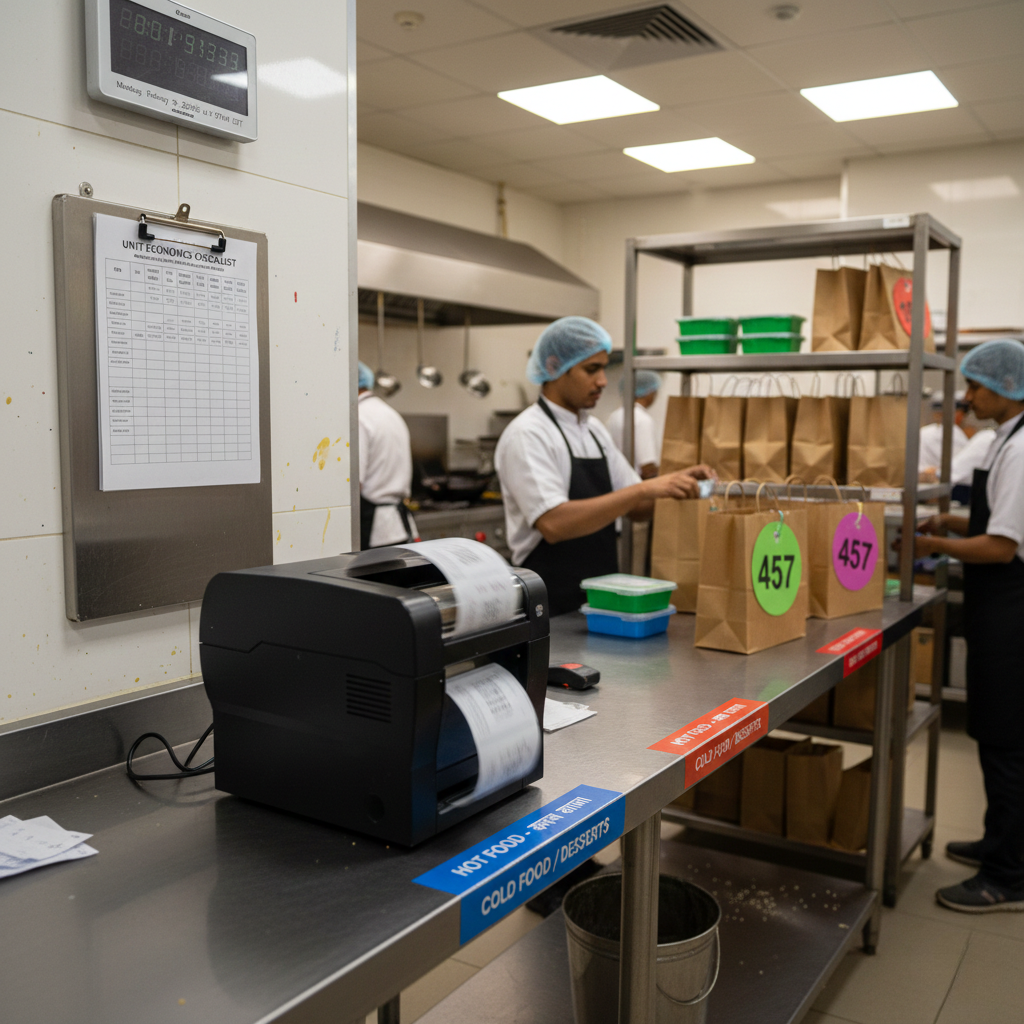
The 14 Systems CKaaS Uses to Control Food Cost, Refunds, and Margins
CKaaS controls profit by controlling repetition. Below are the most important control systems that reduce food cost drift, cut refund leakage, and stabilize margins.
1) Portion tools and gram discipline. Food cost drift rarely comes from “theft.” It comes from generous portions and inconsistent scoops. CKaaS installs portion tools (scoops, ladles, fill lines, weights) and makes them non-negotiable for top sellers.
2) Recipe cards that are measurable, not descriptive. “Add little sauce” is not a recipe. CKaaS recipes must specify grams, ml, and holding rules. Measurable recipes are teachable and auditable.
3) SKU rationalization to reduce error probability. Too many SKUs increases wrong items and missing add-ons. CKaaS profitability improves when menus are simplified around bestsellers and repeatable stations.
4) Approved RM specs and vendor discipline. Vendor variation creates taste variation and cost variation. CKaaS installs RM specs (brand, cut size, fat %, pack size) so procurement does not become “whatever is available.”
5) Daily ordering routines with reorder triggers. Stock-outs cause cancellations. Cancellations reduce distribution. Reduced distribution forces discounts. CKaaS installs reorder triggers to protect availability and margin.
6) Batch cooking and yield tracking. A small change in yield can shift food cost. CKaaS uses batch yields to reduce waste, control prep quantities, and protect throughput.
7) Prep planning with par levels. Prep planning reduces both late dispatch and waste. Not enough prep causes delays and cancellations. Too much prep causes wastage. Par levels keep it balanced.
8) Packing checklist discipline (refund prevention system). Most refunds come from missing items, wrong items, and poor packaging. A checklist is the cheapest refund insurance you can install.
9) Dispatch gates and final scan. Dispatch is where most leakage becomes visible: late delivery, wrong bag, missing add-ons, cold food. CKaaS installs dispatch gates using Cloud Kitchen Dispatch SOP.
10) Labeling and sealing standards. Sealing failures create leakage and complaint risk. Labeling failures create wrong bag handovers. CKaaS standardizes label formats, bag rules, and sealing steps.
11) Role ownership to prevent “nobody’s job” errors. Many kitchens lose money because critical steps have no owner. Prep, cook, pack, dispatch must have clear owners and gates. Framework: Role-Based Kitchen Operations Explained.
12) Refund reason mapping and weekly root-cause fixes. Refunds are not random. They are patterns. CKaaS success depends on weekly review and SOP updates based on refund reasons.
13) Menu pricing engineered around contribution margin, not competitor pricing. Many founders price based on what they see on Zomato/Swiggy. CKaaS installs pricing that protects margin after fees, packaging, and refunds.
14) Weekly KPI review loop: refund rate, late dispatch, food cost %, cancellations. Control requires measurement. If you don’t review weekly, you don’t improve. Use the discipline lens: How Process Discipline Improves EBITDA.
If you want to map the biggest repeat errors, start with Common Operational Mistakes in Cloud Kitchens and if you’re spending to grow, avoid volume-amplified leakage using Marketing Spend vs ROI in Cloud Kitchens.
Swiggy/Zomato Reality: Refunds and Cancellations Are Distribution Killers
Refunds don’t just hurt profit. They hurt distribution. Platforms learn that your outlet is risky: higher complaints, late dispatch, wrong items, cancellations. Then impressions reduce.
When impressions reduce, founders discount to survive. When discounts rise, margins collapse. This is why refund control is not “customer service.” It is a growth and margin control system.
External policy context: Swiggy Refund Policy and Zomato Online Ordering Terms.
To understand how refunds directly kill contribution margin, use Refunds and Cancellations Impact on Cloud Kitchen Profitability.
Where Margins Are Won or Lost Daily: Prep + Packing + Dispatch
If you want stable margins, don’t chase “more orders.” Stabilize the three engines that decide daily outcomes: prep readiness, packing accuracy, and dispatch speed.
Prep readiness prevents cancellations and delays. Packing accuracy prevents refunds. Dispatch speed protects visibility and ratings.
Install dispatch predictability using Cloud Kitchen Dispatch SOP and reduce repeat errors using Common Operational Mistakes in Cloud Kitchens.
Why CKaaS Controls Margins Better Than Founder Firefighting
Founder firefighting feels like control because you are busy. But it is not scalable. And it doesn’t prevent repetition.
CKaaS controls margins when it installs role-based gates:
Prep role:
controls batch yields, labeling, and buffer levels to reduce stock-outs and waste.
Cook role:
controls portion tools and recipe execution to stop food cost drift.
Pack role:
controls checklist accuracy and sealing to prevent refunds.
Dispatch role:
controls handover speed and final scan to protect ratings and visibility.
Manager role:
controls weekly KPI review and SOP upgrades to prevent repeated leakage.
If you want the operating framework, use Role-Based Kitchen Operations Explained.
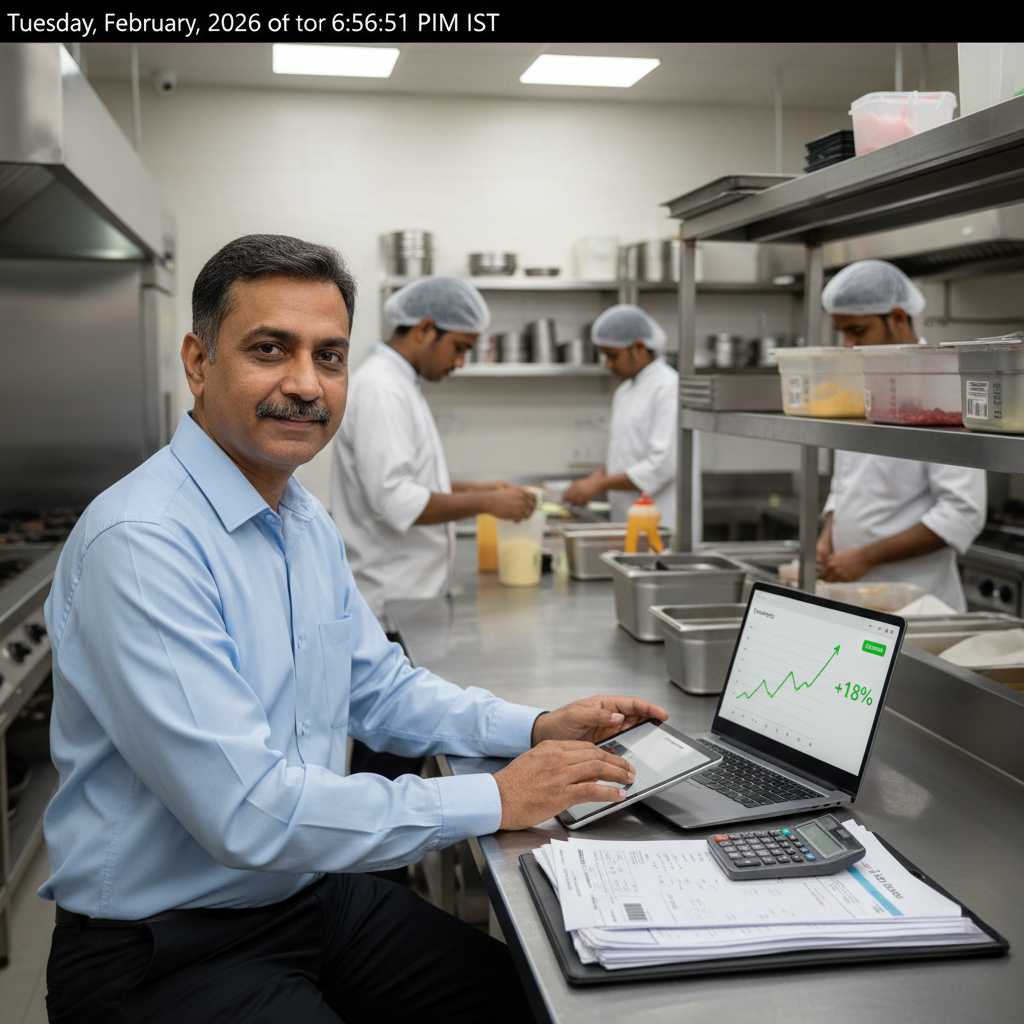
A Practical 7 to 30 Day Margin-Control Rollout (What CKaaS Should Implement First)
CKaaS margin control should not start with “expansion.” It should start with preventing daily leakage. Here is a practical rollout sequence used in system-led kitchen networks.
Step 1 (Day 1–2): Track food cost % and refund rate daily. If you don’t measure, you can’t control. Start with top SKUs.
Step 2 (Day 1–3): Standardize portions for top 10 SKUs. Introduce portion tools. Define grams per portion. Train staff with sign-offs.
Step 3 (Day 2–5): Install packing checklist + dispatch scan. This reduces wrong items and missing add-ons fast. Implement via Cloud Kitchen Dispatch SOP.
Step 4 (Day 3–7): Lock packaging and sealing standards. Standardize containers, sealing, labeling, and bag rules to reduce complaints and leakage.
Step 5 (Week 2): Fix procurement specs and reorder routines. Standardize RM specs, vendors, and reorder triggers to stop cost drift.
Step 6 (Week 2): Reduce menu complexity. Fewer SKUs = fewer errors = fewer refunds = better ratings = less discount pressure.
Step 7 (Week 3): Review refunds and cancellations weekly and update SOPs. The loop is the system. Without weekly review, leakage returns.
Use the discipline lens: How Process Discipline Improves EBITDA. If you’re spending for growth, map ROI properly: Marketing Spend vs ROI in Cloud Kitchens.
External process references (useful for standardisation thinking): Standardized Work (Lean lexicon), ISO 22000 overview, and FSSAI Hygiene Requirements (Schedule 4 reference).
Final Takeaway: CKaaS Controls Margins by Making Leakage Hard to Repeat
Food cost drift, refunds, and margin collapse are not “inevitable.” They are outcomes of weak systems. CKaaS controls profit when it installs repeatable gates: measured portions, disciplined procurement, stable prep planning, checklist-based packing, gated dispatch, and weekly review loops.
When leakage stops repeating, contribution margin becomes predictable. When contribution margin is predictable, scale becomes survivable.
Operating frameworks from GrowKitchen, and operating partner brands like Fruut and GreenSalad are built to convert “busy kitchens” into “profitable kitchen systems.”
FAQs: How CKaaS Controls Food Cost, Refunds, and Margins
What is the fastest way CKaaS improves margins?
Portion tools + packing checklist + dispatch gates. These reduce food cost drift and refunds quickly.
Can CKaaS reduce refunds even if volume is high?
Yes, because refunds are usually operational patterns: packing errors, late dispatch, missing add-ons, and sealing failures.
Does CKaaS guarantee profitability?
No. CKaaS improves control and repeatability, but profitability still depends on pricing, menu engineering, and execution compliance.
Why do some kitchens still bleed cash after moving to CKaaS?
Because they outsourced chaos without installing measurable SOPs, role gates, and weekly review loops.
- Cloud Kitchen Profitability Consultant in India
- Common Operational Mistakes in Cloud Kitchens
- Cloud Kitchen Dispatch SOP
- Role-Based Kitchen Operations Explained
- Refunds and Cancellations Impact on Cloud Kitchen Profitability
- Aggregator Commission Impact in India
- Marketing Spend vs ROI in Cloud Kitchens
- How Process Discipline Improves EBITDA
- Grow Kitchen on Twitter