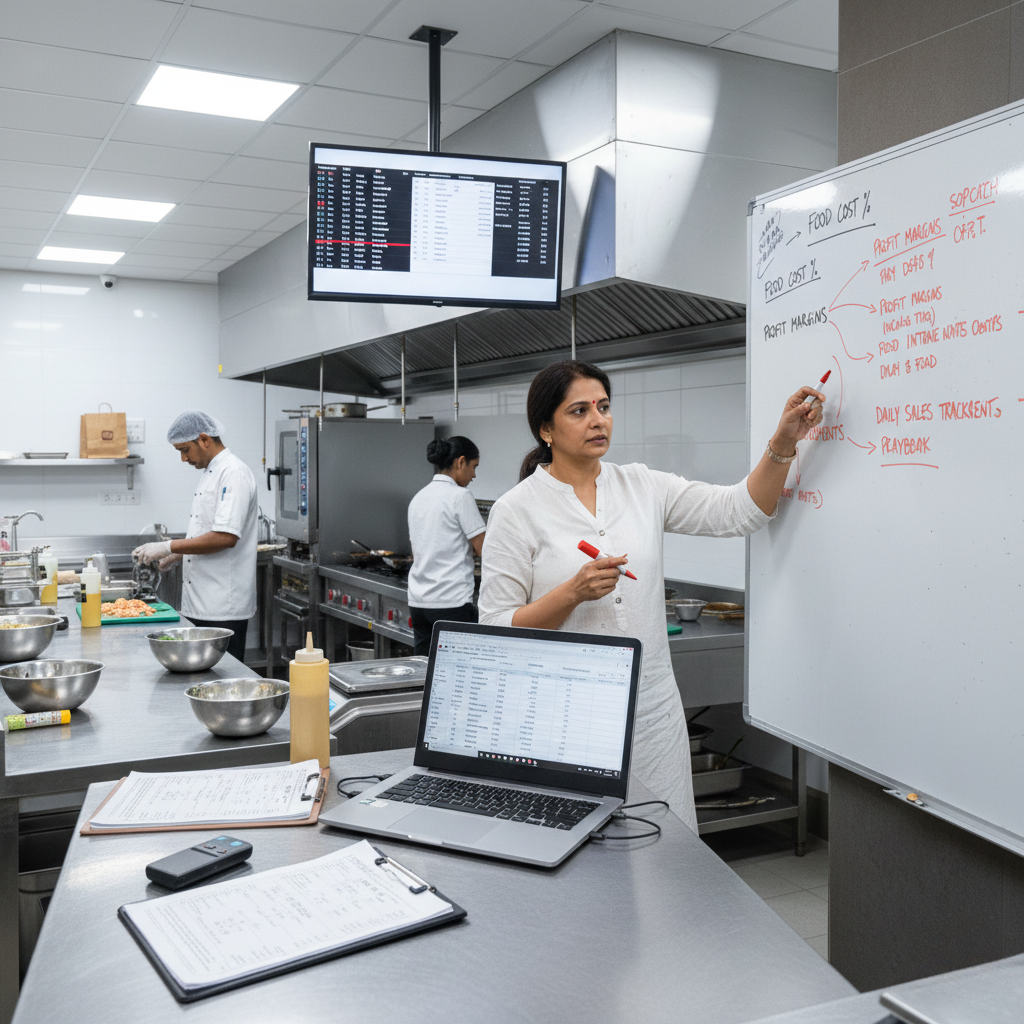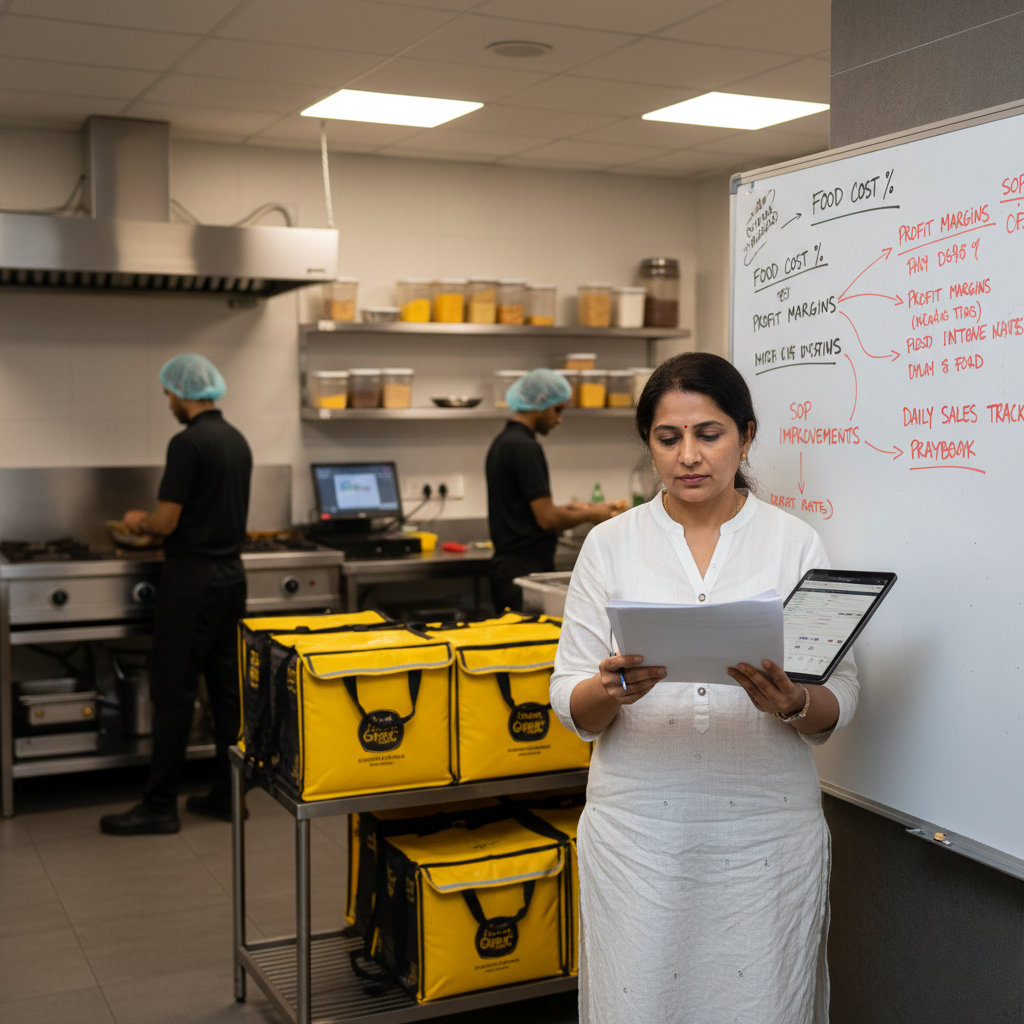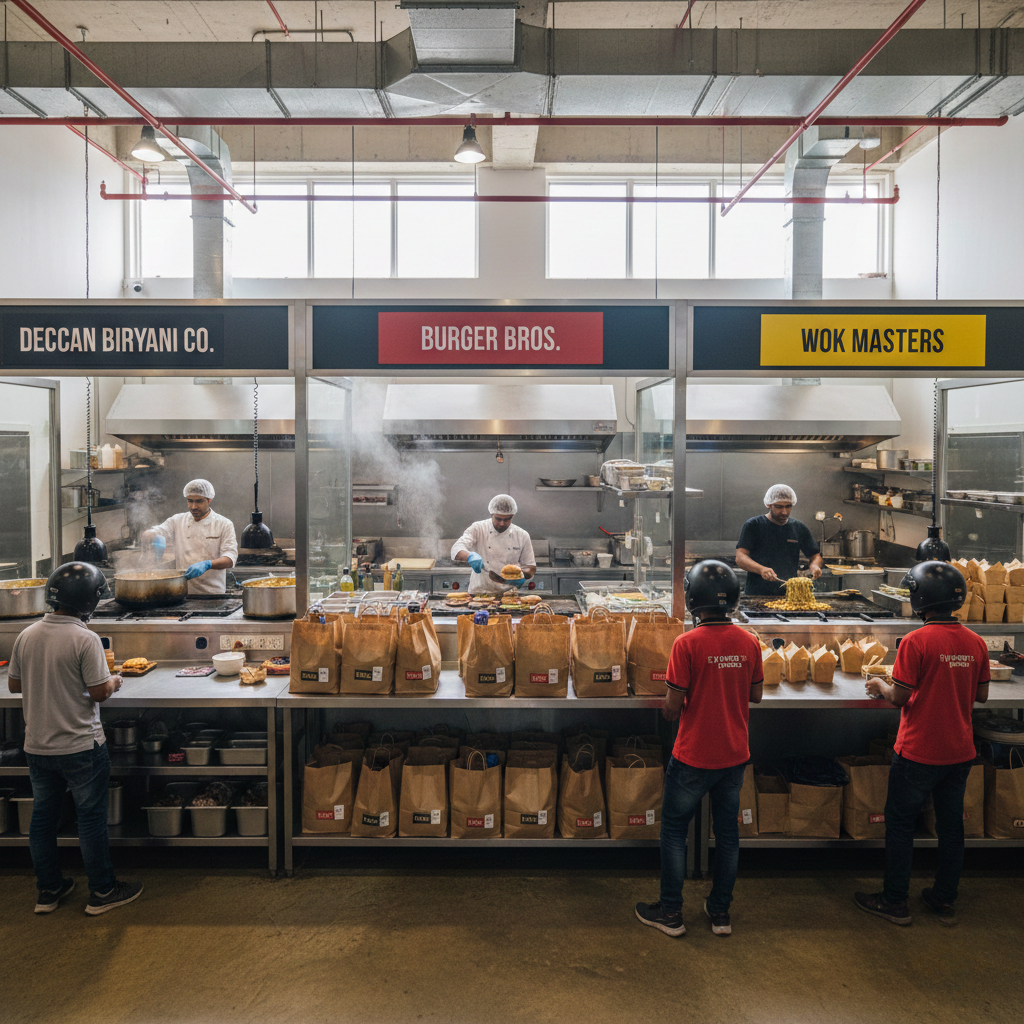
Who CKaaS is for-and who should avoid it is not a “budget” question or a “rent vs own” debate. It is a control-transfer + execution maturity + unit-economics + accountability question. CKaaS is a leverage model when founders use it to replace execution load with repeatable systems. But CKaaS becomes expensive confusion when founders outsource chaos, ignore unit economics, and expect operations to magically fix themselves. This guide explains who Cloud Kitchen as a Service is built for in India, who should avoid it, and how to decide using contribution margin clarity, SOP depth, dispatch gates, role ownership, and performance review cadence using systems, not hope.
Who CKaaS Is For-and Who Should Avoid It: The Decision That Either Buys Leverage or Buys You a Faster Loss
CKaaS sounds like a perfect solution when you are tired. You are managing staff. Fixing dispatch errors. Handling complaints. Chasing vendors. Trying to grow while barely keeping the kitchen stable.
That is exactly why many founders choose CKaaS for the wrong reason: not because their brand is ready for systems, but because they are exhausted by chaos.
The hard truth: CKaaS is not a “relief purchase.” It is an operating model. If you are not clear on your margins, standards, and responsibilities, CKaaS will not reduce your problems. It will relocate them and add a fee on top.
If you want the profitability foundation lens first, start with Cloud Kitchen Profitability Consultant in India and map recurring execution leaks using Common Operational Mistakes in Cloud Kitchens.
What CKaaS Really Requires (Even Though It Feels Like “Outsourcing”)
CKaaS is often pitched as “we run the kitchen, you run the brand.” That line is directionally true, but it hides the real requirement: CKaaS only works when you can define what “good execution” means.
If you cannot define portion standards, packing standards, dispatch standards, and profitability targets, you cannot judge performance. If you cannot judge performance, you cannot fix drift. And if you cannot fix drift, you are renting inconsistency.
So the real question becomes: do you want CKaaS to run your kitchen, or do you want CKaaS to make your kitchen runnable as a repeatable system?
That is why CKaaS is not for everyone. It is for founders who want leverage, not founders who want escape.
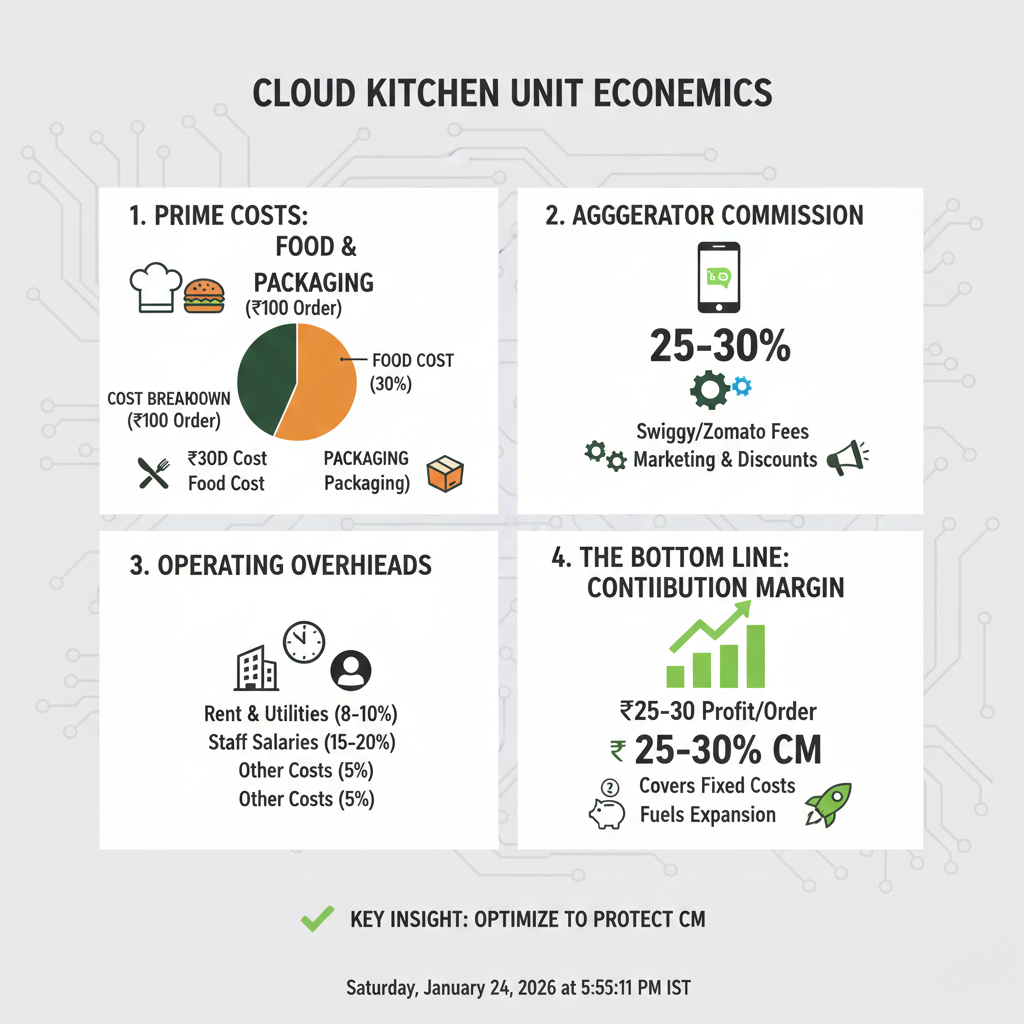
The Unit Economics Lens: CKaaS Is for Founders Who Can Track Contribution Margin
CKaaS decisions should be made with math, not emotion. Because CKaaS introduces a service layer (fee or revenue share), and that layer must be funded by per-order contribution margin.
Profit is still decided per order:
Order Value minus Aggregator commission & charges minus CKaaS fee / revenue share minus Packaging cost minus Food cost (COGS) minus Discount burn minus Refund/penalty leakage equals Contribution Margin.
CKaaS is for you only if you can answer these questions weekly: What is my food cost % on top SKUs? What is my refund rate? What is my cancellation rate? What is my late dispatch count? What is my contribution margin after fees?
If you want platform cost clarity, read Aggregator Commission Impact in India and refund leakage patterns via Refunds and Cancellations Impact on Cloud Kitchen Profitability.
Who CKaaS Is For: 9 Founder Profiles That Get Leverage (Not Confusion)
CKaaS works brilliantly for specific founder profiles. Not because they are “bigger.” Because they operate with clarity. Below are the profiles that typically win with CKaaS.
1) Brand-first founders who want speed without building kitchens. You know your positioning, pricing strategy, and customer promise. You want to launch fast, test, and iterate without capex lock-in.
2) Multi-brand operators who want execution leverage across categories. When you run multiple brands, the bottleneck becomes operations. CKaaS is for operators who want to scale brands without rebuilding teams and SOPs each time.
3) Founders with strong unit economics who keep losing profit to leakage. Your menu can be profitable. But refunds, late dispatch, stock-outs, and portion drift are killing you. CKaaS helps when it buys down leakage with gates and routines.
4) Founders who can simplify menus for repeatable delivery execution. CKaaS rewards execution simplicity: fewer SKUs, engineered bestsellers, stable batch prep. Complexity increases errors.
5) Founders who believe in SOPs and are willing to systemize. If you treat SOPs as “big company stuff,” CKaaS will frustrate you. If you treat SOPs as “repeatability insurance,” CKaaS becomes leverage.
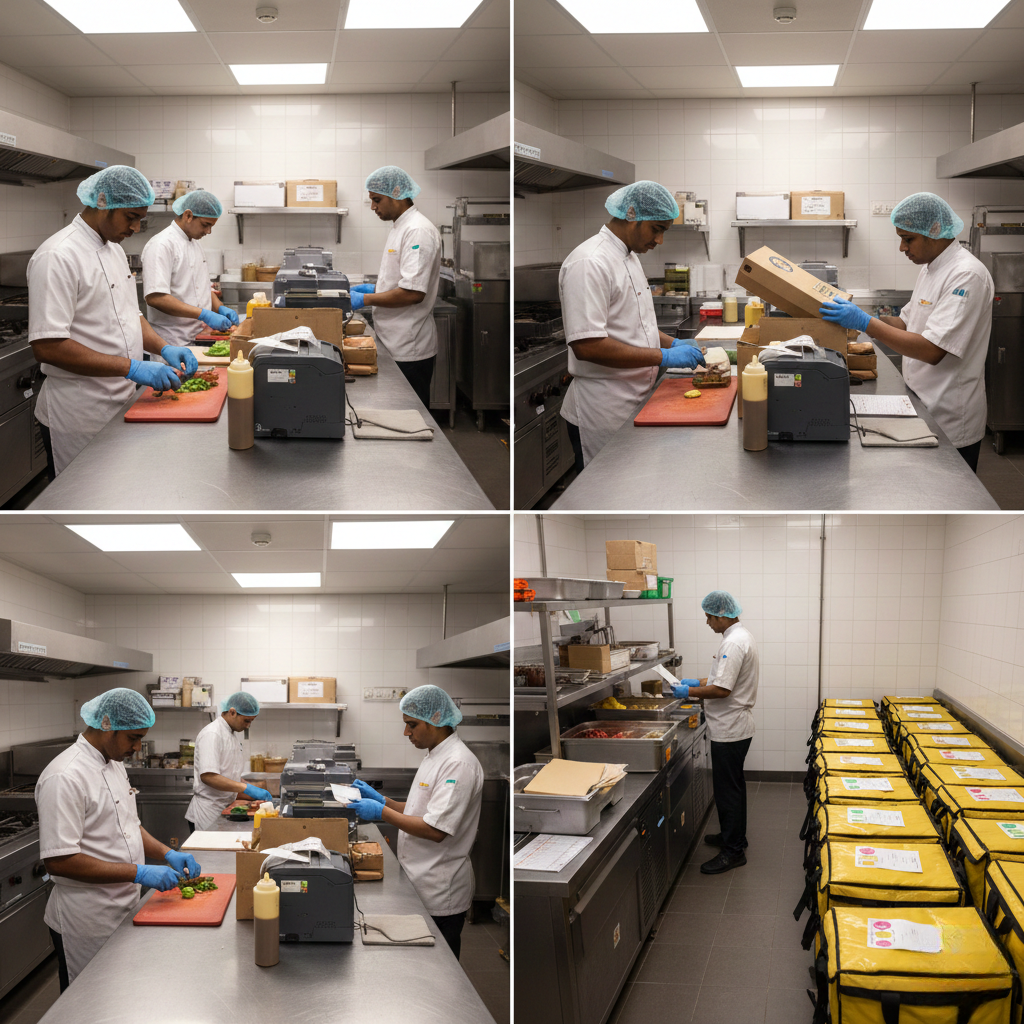
6) Founders who want consistent dispatch and packing discipline. If your biggest pain is missing items, wrong orders, and rider chaos, CKaaS works when it installs dispatch gates. Start with Cloud Kitchen Dispatch SOP.
7) Founders who can review weekly performance and push SOP upgrades. CKaaS is not “set and forget.” It needs feedback loops: refunds, cancellations, ratings, ETA, stock-outs. Founders who review weekly keep performance stable.
8) Founders who want role ownership, not “helpers.” CKaaS thrives on role clarity: prep, cook, pack, dispatch, manager. Use Role-Based Kitchen Operations Explained.
9) Founders building long-term optionality (multi-outlet, franchise, or own app). CKaaS is a system you can use to prove repeatability. Once repeatable, you can expand, franchise, or shift to owned kitchens later.
For the recurring leak map, use Common Operational Mistakes in Cloud Kitchens, and for the discipline lens, reference How Process Discipline Improves EBITDA.
Who Should Avoid CKaaS: 9 Profiles That Usually Lose Money Faster
CKaaS is not a rescue model. If you are already weak on fundamentals, adding a service layer often accelerates losses. Below are the profiles that should avoid CKaaS or delay it until basics are fixed.
1) Founders who don’t know their margins. If you cannot calculate contribution margin per SKU, you cannot judge whether CKaaS fees are sustainable. That is blind scaling.
2) Founders who rely on discounts to survive. Discounts mask leakage temporarily. CKaaS does not fix discount dependency. It forces you to face true unit economics. If you’re stuck here, start with Marketing Spend vs ROI in Cloud Kitchens.
3) Founders who want “zero involvement.” CKaaS is not passive income. If you don’t review performance, standards drift. Standards drift creates refunds, cancellations, and distribution loss.
4) Founders with highly complex menus and customization-heavy operations. Complexity increases errors. If you insist on too many variants, CKaaS teams cannot maintain consistent output without heavy process.
5) Founders who are not willing to document SOPs. If recipes and standards are “in the head,” CKaaS will execute inconsistently. The model cannot replace what isn’t defined.
6) Founders who don’t want role-based accountability. If you prefer “everyone does everything,” you will keep fighting inconsistency. CKaaS thrives on clear roles and gates.
7) Founders who treat hygiene and packing as “basic” not “brand.” Delivery brands are judged by what arrives. Packaging cleanliness, sealing, labeling, and handling matter. Reference FSSAI Hygiene Requirements and ISO 22000 overview.
8) Founders who blame platforms for everything. Platforms punish risk signals. Late dispatch and refunds reduce visibility regardless of model. External policy context: Swiggy Refund Policy and Zomato Online Ordering Terms.
9) Founders who are still validating product-market fit. If your menu, pricing, and demand are still uncertain, CKaaS can become premature structure. Validate your core first. Then systemize.
If you are unsure where your kitchen is leaking, start with Common Operational Mistakes in Cloud Kitchens.
The Common Ground: Both CKaaS Winners and Losers Are Judged on the Same 3 Engines
Whether you choose CKaaS or avoid it, kitchen outcomes are still driven by three operational engines: prep planning (availability), packing discipline (accuracy and presentation), and dispatch gates (speed and reliability).
If these engines are weak, CKaaS will not save you. It will highlight your weakness faster.
Install dispatch predictability using Cloud Kitchen Dispatch SOP and reduce repeat failures by mapping station-wise errors using Common Operational Mistakes in Cloud Kitchens.
The Real Decision Filter: Do You Want Leverage or Escape?
CKaaS is for founders who want leverage: predictable execution, scalable routines, and role-based output.
CKaaS is not for founders who want escape: no tracking, no SOPs, no reviews, and “someone else should handle everything.”
If you want the role structure that makes CKaaS work, read Role-Based Kitchen Operations Explained.
How to Decide Correctly: A Practical 7 to 30 Day CKaaS Fit Checklist
If you are considering CKaaS, don’t decide by hype. Decide by readiness. Below is a practical checklist to avoid expensive mismatches.
Step 1 (Day 1–2): Calculate contribution margin for top 10 SKUs. If the numbers don’t work on paper, they won’t work in a service model.
Step 2 (Day 1–3): Simplify menu for repeatability. Remove low sellers. Reduce variants. Stabilize bestsellers.
Step 3 (Day 2–5): Install packing checklist + dispatch scan. This reduces refunds and missing items quickly. Implement via Cloud Kitchen Dispatch SOP.
Step 4 (Day 3–7): Build prep planning with par levels. Protect availability during peak and reduce cancellations.
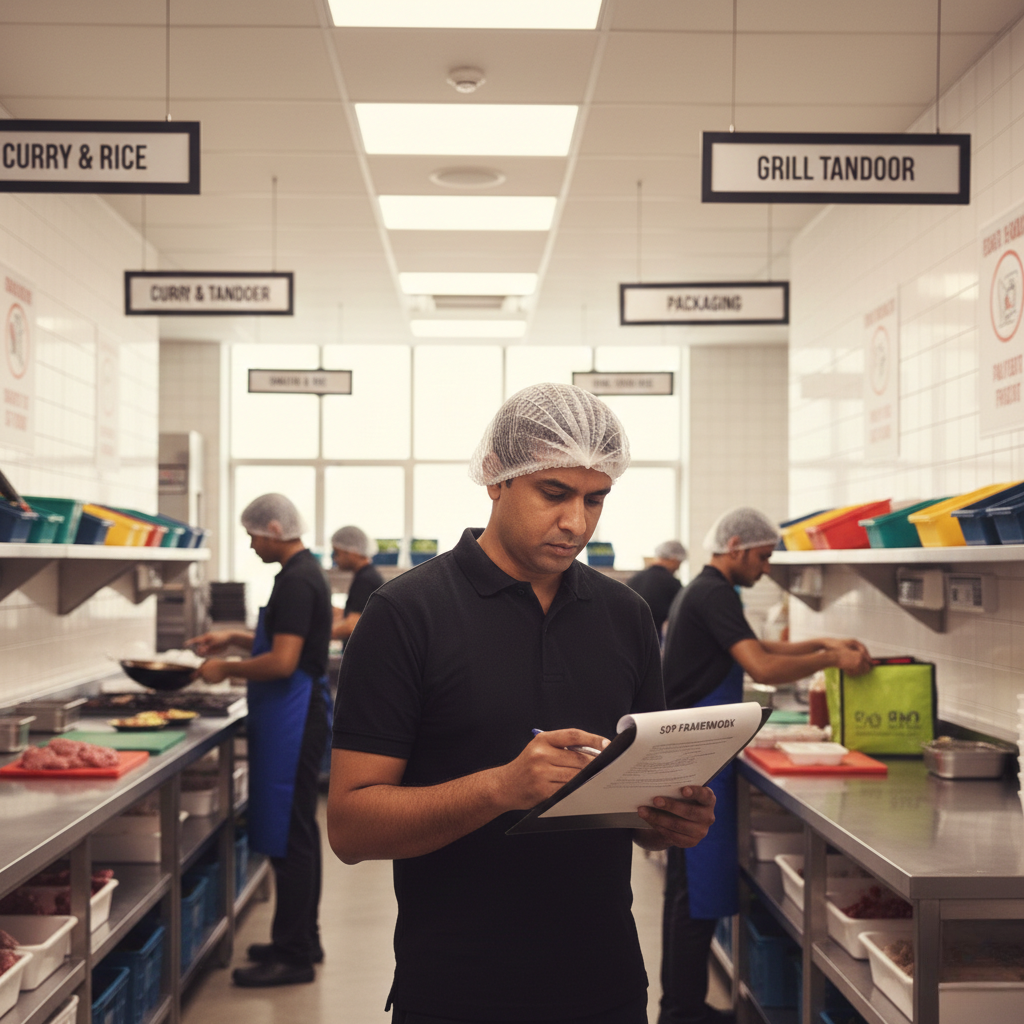
Step 5 (Week 2): Document SOPs for top sellers. Portions, cook time, packing rules, sealing rules, labeling format.
Step 6 (Week 2): Define roles and owners. Prep, cook, pack, dispatch, manager must have owners.
Step 7 (Week 3–4): Start weekly review discipline. Refund reasons, cancellations, rating comments, late dispatch, stock-outs. Update SOPs weekly.
If you want the discipline lens, use How Process Discipline Improves EBITDA and map spend discipline via Marketing Spend vs ROI in Cloud Kitchens.
External process references (useful for standardisation thinking): Standardized Work (Lean lexicon), ISO 22000 overview, and FSSAI Hygiene Requirements (Schedule 4 reference).
Final Takeaway: CKaaS Is for Builders of Systems, Not Escapers of Problems
CKaaS is powerful when you want leverage: repeatable execution, controlled margins, reliable dispatch, and scalable routines.
CKaaS becomes dangerous when you want escape: you outsource chaos, ignore unit economics, skip weekly reviews, and expect profit to appear automatically.
Operating frameworks from GrowKitchen, and operating partner brands like Fruut and GreenSalad help founders convert “founder-driven kitchens” into “system-driven kitchens.”
FAQs: Who CKaaS Is For-and Who Should Avoid It
Can a new founder start directly with CKaaS?
Yes, if the menu is simple, margins are clear, and SOP discipline is installed early. Otherwise, validate first.
What is the biggest sign I should avoid CKaaS?
If you don’t know your contribution margins and rely on discounts to survive, CKaaS fees can accelerate losses.
Does CKaaS reduce founder work?
It reduces daily execution work, but founders must still track KPIs, standards, pricing logic, and weekly reviews.
What makes CKaaS succeed most often?
Bestsellers SOPs + packing checklist + dispatch scan + weekly feedback loops. These prevent leakage and performance drift.
- Cloud Kitchen Profitability Consultant in India
- Common Operational Mistakes in Cloud Kitchens
- Cloud Kitchen Dispatch SOP
- Role-Based Kitchen Operations Explained
- Refunds and Cancellations Impact on Cloud Kitchen Profitability
- Aggregator Commission Impact in India
- Marketing Spend vs ROI in Cloud Kitchens
- How Process Discipline Improves EBITDA
- Grow Kitchen on Twitter