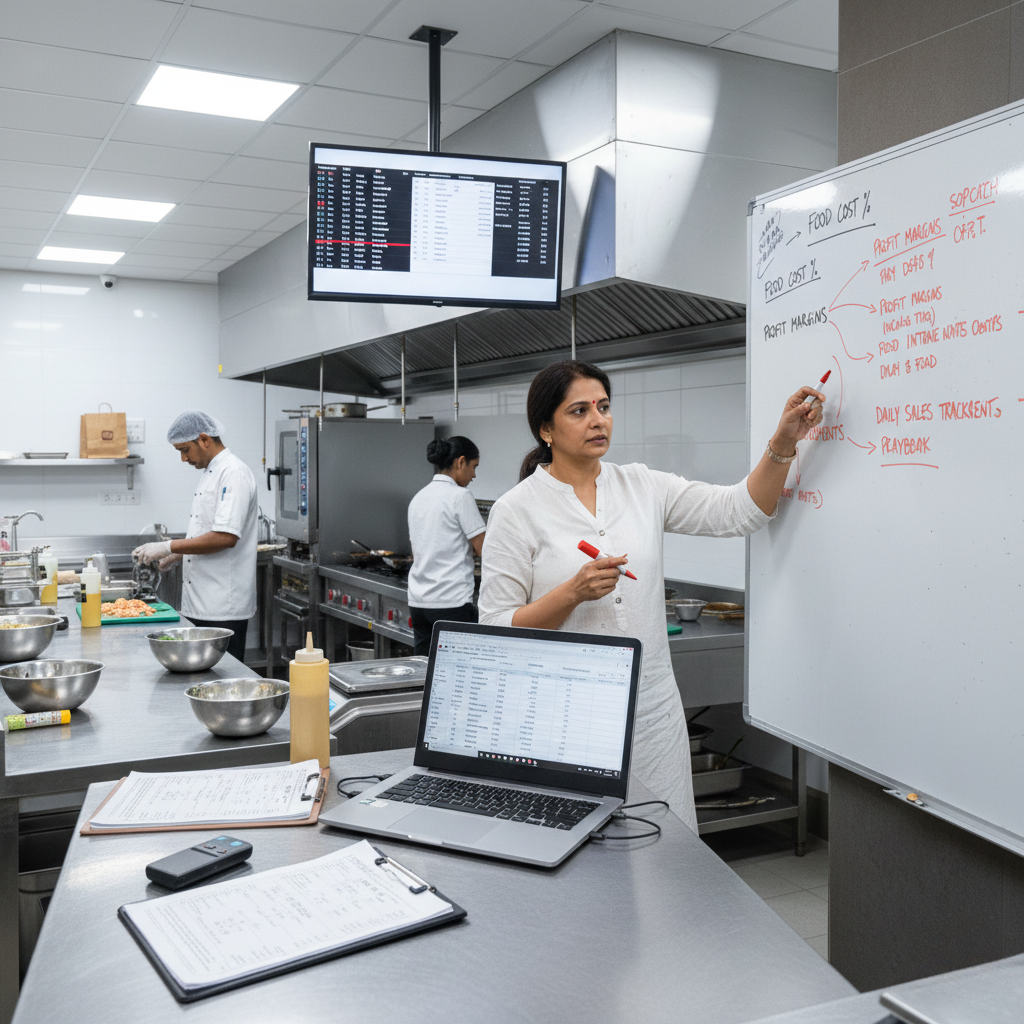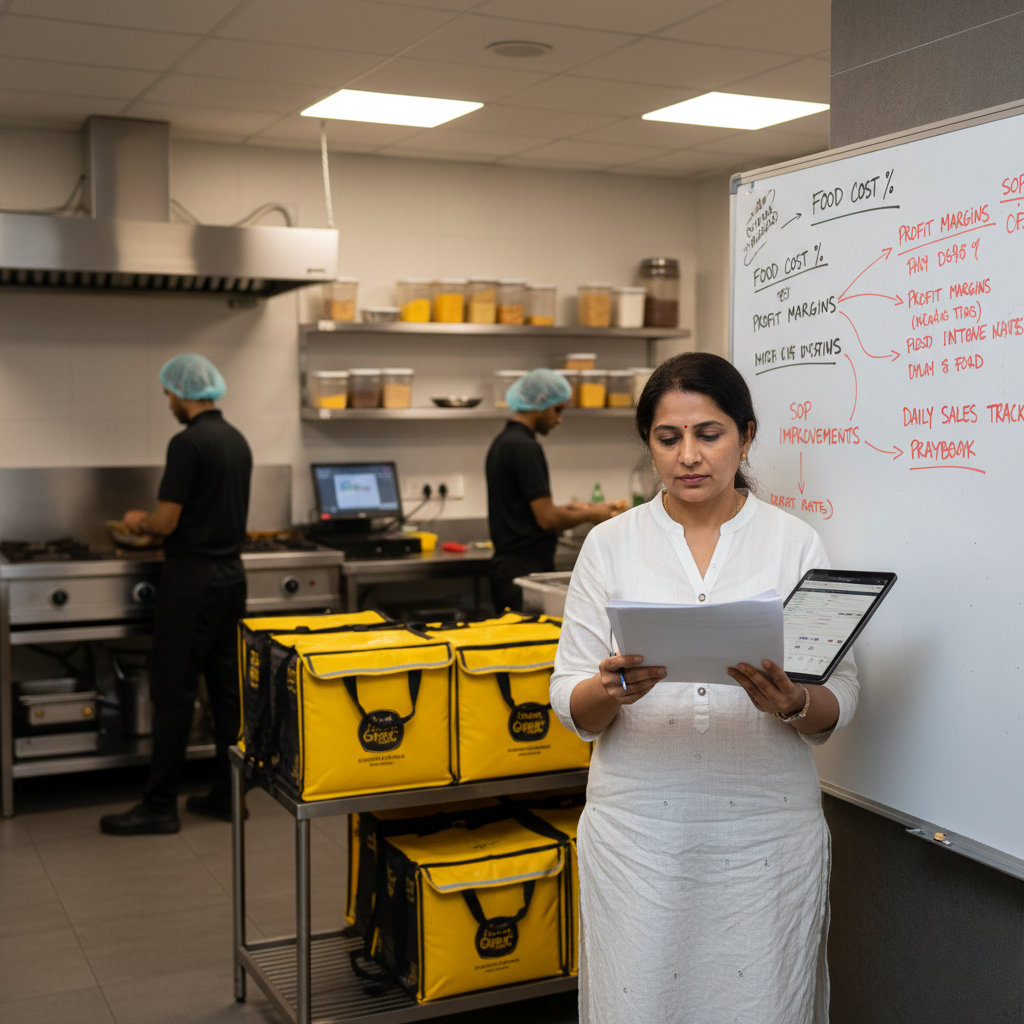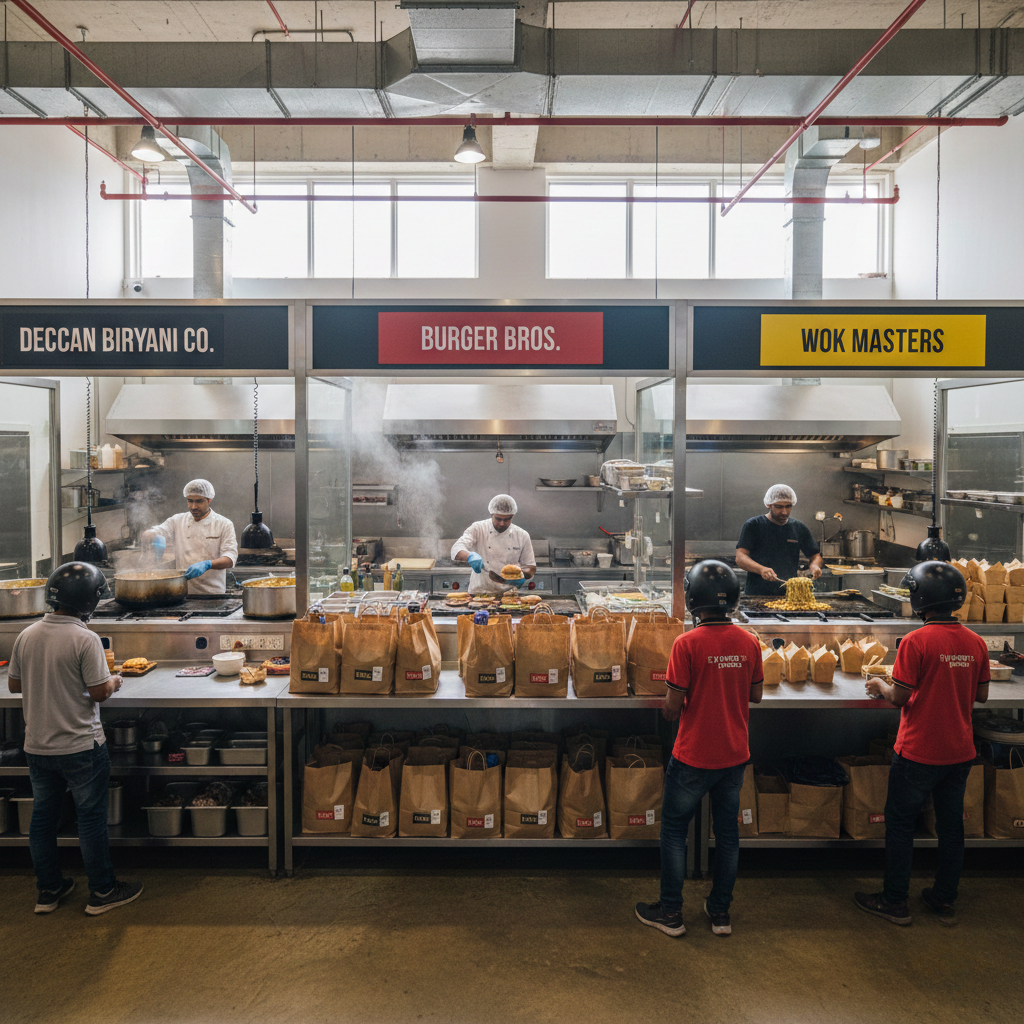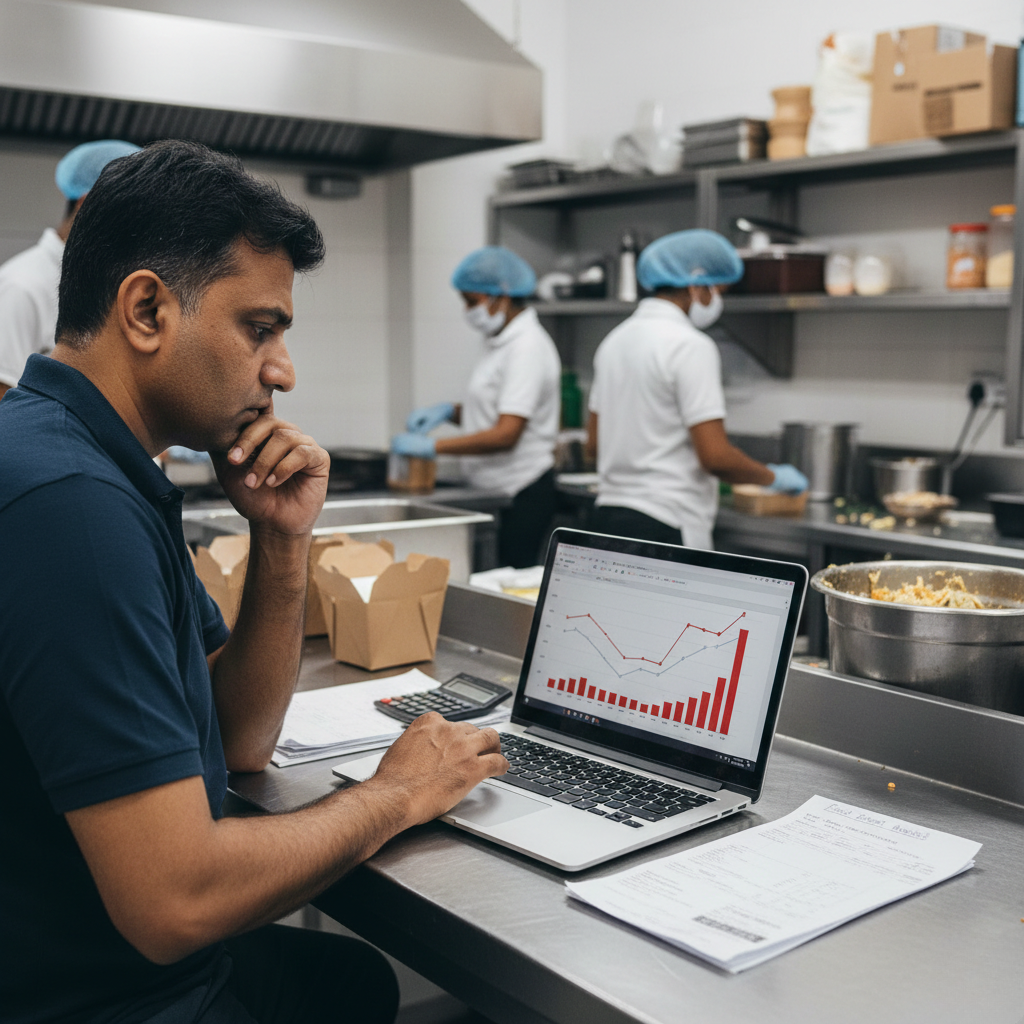
CKaaS Explained: From Chaos to System-Driven Kitchens is not a “rent a kitchen” story or a “someone else will run my outlet” promise. It is a control + repeatability + execution transfer system built for delivery-first brands. Most cloud kitchens don’t fail because food is bad. They fail because outcomes vary by person, shift, and pressure. CKaaS works when it converts founder effort into a stable operating machine: SOPs, role gates, station discipline, procurement routines, dispatch checks, margin visibility, and weekly feedback loops. This guide explains what Cloud Kitchen as a Service actually is in India, what it replaces, what it doesn’t, and how it turns chaotic kitchens into system-driven kitchen networks using systems, not supervision.
CKaaS Explained: Why Most “Working” Kitchens Are Actually Running on Chaos
Many founders believe their kitchen is “working” because orders are coming in. Dashboards look active. Riders keep arriving. The team is busy.
But activity is not stability. A kitchen can look busy and still bleed cash: portion drift, repeated refunds, stock-outs, discount dependency, late dispatch, and founder stress.
The harsh truth: most cloud kitchens are not operated. They are survived. The founder becomes the system: correcting staff, chasing vendors, checking packing, firefighting escalations, and guessing profits.
CKaaS exists for one purpose: to replace founder-dependent execution with system-driven execution. If you want the profitability foundation lens first, start with Cloud Kitchen Profitability Consultant in India and map recurring execution leaks using Common Operational Mistakes in Cloud Kitchens.
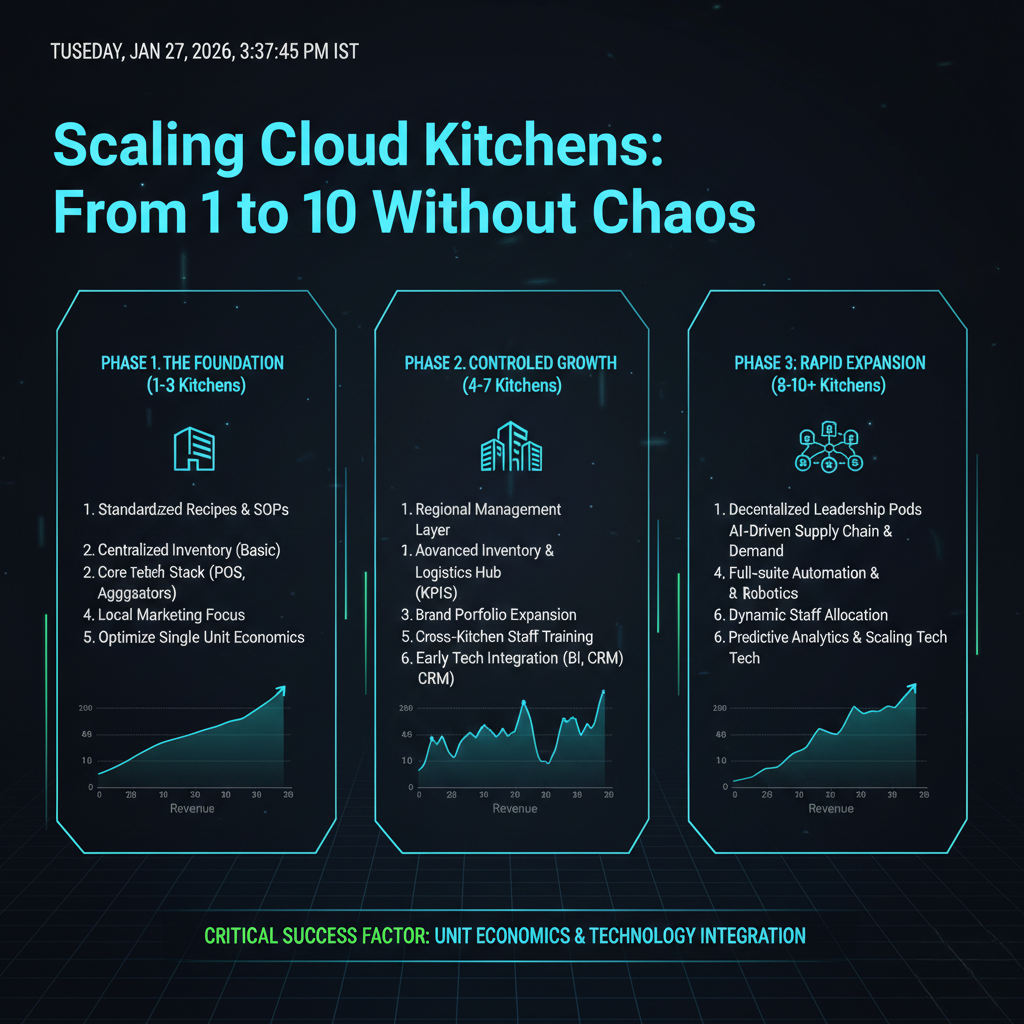
What CKaaS Actually Is (Not “Just Shared Infrastructure”)
Cloud Kitchen as a Service (CKaaS) is not simply renting a kitchen or sharing equipment. A true CKaaS model is an operating system delivered as a service: kitchen infrastructure, trained execution, SOP-based routines, procurement discipline, dispatch gates, and performance monitoring.
In simple terms: you bring the brand, menu strategy, and demand. CKaaS brings repeatable execution capacity.
That is why CKaaS is often misunderstood. Founders assume the model “reduces responsibility.” It doesn’t. It reduces operational load while increasing the need for clarity.
If your brand does not have defined standards, CKaaS cannot “guess” your standards. It will execute based on whatever clarity you provide. In that sense, CKaaS is a multiplier: it multiplies discipline or it multiplies chaos.
The Unit Economics Lens: CKaaS Only Works When It Buys Down Leakage
Many founders evaluate CKaaS by looking at monthly fees. That is the wrong lens. The correct lens is: does CKaaS improve per-order contribution margin by reducing leakage?
Profit is still decided per order:
Order Value minus Aggregator commission & charges minus CKaaS fee / revenue share minus Packaging cost minus Food cost (COGS) minus Discount burn minus Refund/penalty leakage equals Contribution Margin.
CKaaS is profitable when it reduces: food cost drift, refunds, cancellations, rework, waste, late dispatch, and staff inefficiency.
If CKaaS adds fees but does not reduce leakage, you lose faster. That is why many founders report “more orders but unclear profit.”
If you want platform cost clarity, read Aggregator Commission Impact in India and refund leakage patterns via Refunds and Cancellations Impact on Cloud Kitchen Profitability.
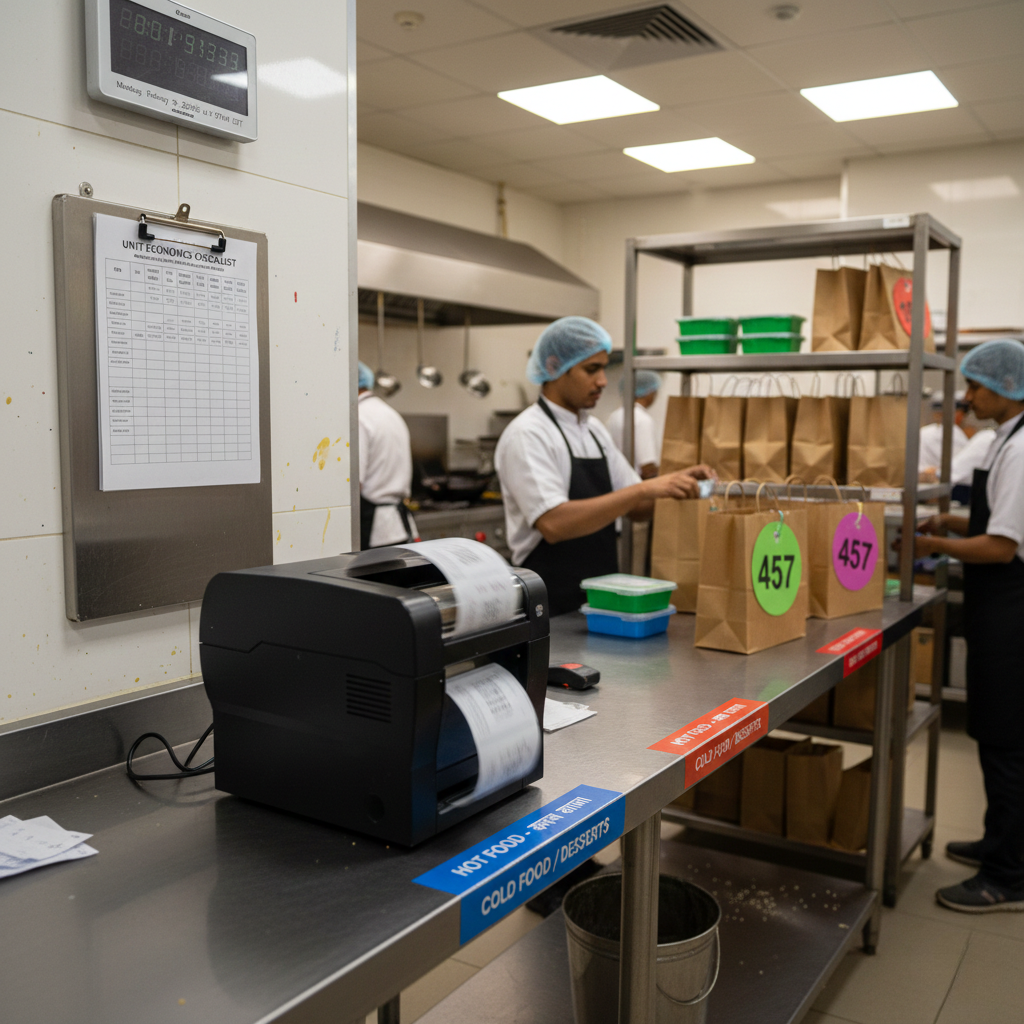
The 12 Layers CKaaS Replaces (From Founder Firefighting to System-Driven Execution)
CKaaS is valuable only when it replaces the right load. Not “work” in general. Specific operational load that causes repeated leakage. Below are the key layers CKaaS replaces when done correctly.
1) Founder as quality gate → SOP-based quality gates. Instead of “founder checks everything,” CKaaS installs packing checks, portion tools, and station audits so quality is repeatable.
2) Random prep → prep planning with par levels. System kitchens don’t “start cutting when orders come.” They build buffers for top items, batch yields, and peak readiness routines.
3) Informal portions → measured portion discipline. Portion drift is the silent killer of margins. CKaaS success depends on portion tools and recipe cards that are measurable and teachable.
4) Vendor chasing → procurement routines. Most founders lose hours daily chasing vendors and rates. CKaaS replaces this with RM specs, reorder timing, and purchase discipline.
5) “Everyone does everything” → role ownership. Prep, cook, pack, dispatch must have owners. Learn the structure via Role-Based Kitchen Operations Explained.
6) Packing chaos → packing checklist discipline. Wrong items and missing add-ons destroy ratings. A checklist is not “extra process.” It is error prevention.
7) Handover guessing → dispatch gates. Many kitchens “hand over to rider.” System kitchens dispatch using a gate: label check, add-on verification, sealing and final scan. Implement via Cloud Kitchen Dispatch SOP.
8) Unclear profitability → contribution margin visibility. CKaaS maturity means decisions are made with unit economics clarity, not vibes.
9) Reactive staffing → predictable staffing patterns. Staff churn is unavoidable. But output variability is avoidable if training and SOP discipline exist.
10) Repeating mistakes → weekly feedback loops. Refund reasons, rating comments, cancellations, stock-outs: this is performance data. CKaaS works when this is reviewed weekly and SOPs are updated.
11) Discount dependency → operational reliability. Discounts are often used to compensate for weak distribution. Reliability improves distribution and reduces discount pressure. Map growth logic via Marketing Spend vs ROI in Cloud Kitchens.
12) Founder firefighting → system supervision. Founders shift from daily firefighting to weekly review and decision-making. This is where scale becomes possible.
To understand where most kitchens leak without noticing, reference Common Operational Mistakes in Cloud Kitchens and the discipline mindset via How Process Discipline Improves EBITDA.
Swiggy/Zomato Reality: Platforms Reward Reliability, Not Your Business Model
Aggregators do not care whether you are: a franchise, a founder-led kitchen, or a CKaaS-managed kitchen. They evaluate the outlet on reliability signals: late dispatch, refunds, cancellations, ratings, and availability.
A CKaaS kitchen with weak dispatch gets suppressed. A franchise kitchen with weak dispatch gets suppressed. The platform only sees risk.
External policy context: Swiggy Refund Policy and Zomato Online Ordering Terms.
That is why CKaaS is not “outsourcing.” It is reliability engineering. If reliability improves, distribution improves. If not, the model does not matter.
From Chaos to Control: The 3 Engines That Turn Kitchens System-Driven
System-driven kitchens are not created by motivation. They are created by stabilizing three engines: prep planning, packing discipline, and dispatch gates.
When these engines are stable, the outlet feels calm even at peak. When they are unstable, the outlet feels chaotic even at low volume.
Implement dispatch predictability using Cloud Kitchen Dispatch SOP and reduce repeat failures by mapping station-wise errors using Common Operational Mistakes in Cloud Kitchens.
The Real CKaaS Shift: From “More Staff” to “Roles + Gates”
Most kitchens try to solve chaos by adding helpers. That rarely works. More people without gates increases confusion.
CKaaS becomes system-driven when roles are clear:
Prep role:
owns batch schedules, labeling, and par levels so peak readiness is predictable.
Cook role:
owns portion tools, holding-time rules, and consistency checks.
Pack role:
owns packing checklist, add-on verification, sealing rules, and presentation.
Dispatch role:
owns final scan, rider handover speed, and bag stability.
Manager role:
owns weekly review: refunds, cancellations, ratings, ETA, stock-outs and SOP upgrades.
If you want the full framework, use Role-Based Kitchen Operations Explained.
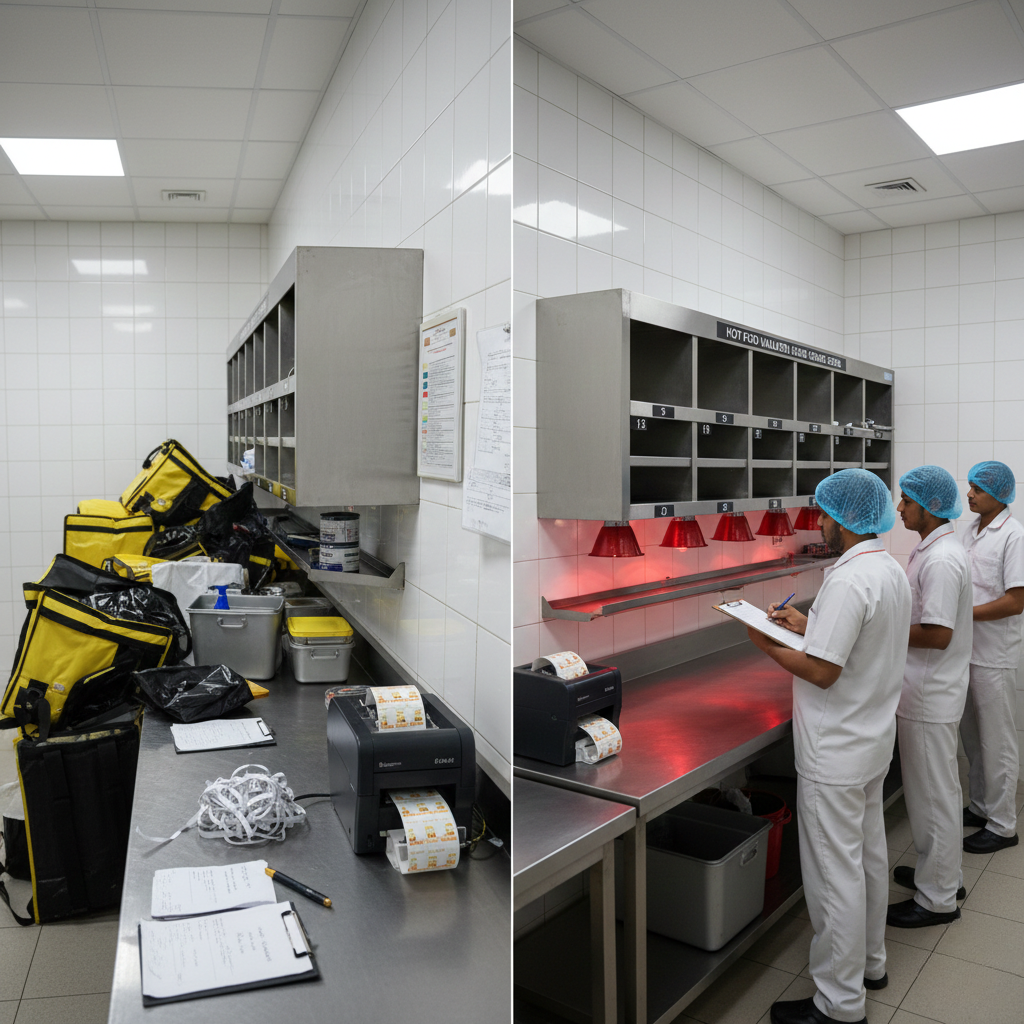
How CKaaS Becomes a Real System: A Practical 7 to 30 Day Stabilization Sequence
CKaaS is not installed by signing an agreement. It is installed by sequencing operational stability. Below is a practical rollout sequence used to convert chaotic kitchens into system-driven kitchens.
Step 1 (Day 1–2): Lock the top 20% menu. Identify your top sellers and freeze them. System kitchens stabilize bestsellers first before expanding.
Step 2 (Day 1–3): Create measurable SOPs for bestsellers. Portion tools, fill lines, station steps, plating/packing standards, sealing rules, labeling format. If it can’t be measured, it can’t be replicated.
Step 3 (Day 2–5): Install packing checklist + dispatch scan as non-negotiable. This single gate reduces wrong items, missing items, and add-on leakage. Implement via Cloud Kitchen Dispatch SOP.
Step 4 (Day 3–7): Build prep planning with par levels and batch yields. Define buffers for top SKUs and peak readiness checks. Reduce cancellations and late dispatch.
Step 5 (Week 2): Standardize procurement specs and reorder routines. Approved vendors, RM specs, reorder timing, and minimum stock discipline.
Step 6 (Week 2): Install role ownership. Prep, cook, pack, dispatch owners are assigned and trained with SOP sign-offs.
Step 7 (Week 3): Start weekly reviews and SOP upgrades. Review: refund reasons, cancellations, rating comments, late dispatch counts, and stock-outs. Update SOPs. Retrain. Repeat.
If you want the discipline lens, use How Process Discipline Improves EBITDA and map spend discipline via Marketing Spend vs ROI in Cloud Kitchens.
External process references (useful for standardisation thinking): Standardized Work (Lean lexicon), ISO 22000 overview, and FSSAI Hygiene Requirements (Schedule 4 reference).
Final Takeaway: CKaaS Is Not a Kitchen Model. It Is a Repeatability Model.
CKaaS is not valuable because it gives you a kitchen. It is valuable because it gives you repeatability: consistent portions, predictable prep, checklist-driven packing, gated dispatch, controlled refunds, stable availability, and weekly review loops that force SOP upgrades.
The shift is simple: you stop building kitchens that “work when you are there.” You start building kitchens that work because the system is there.
Operating frameworks from GrowKitchen, and operating partner brands like Fruut and GreenSalad are built to convert “founder-driven kitchens” into “system-driven kitchen networks.”
FAQs: CKaaS Explained
Is CKaaS the same as renting a cloud kitchen space?
No. Renting gives infrastructure. CKaaS provides an operating system: SOPs, roles, execution, and control routines.
Does CKaaS remove the founder from operations completely?
It removes daily firefighting, but founders still own standards, menu strategy, pricing logic, and performance review.
Why do some CKaaS partnerships fail?
Because the founder outsources chaos without installing control systems: SOPs, dispatch gates, and weekly review loops.
What is the fastest operational win after moving to CKaaS?
Packing checklist + dispatch scan + bestsellers SOPs. These reduce refunds and late dispatch quickly.
- Cloud Kitchen Profitability Consultant in India
- Common Operational Mistakes in Cloud Kitchens
- Cloud Kitchen Dispatch SOP
- Role-Based Kitchen Operations Explained
- Refunds and Cancellations Impact on Cloud Kitchen Profitability
- Aggregator Commission Impact in India
- Marketing Spend vs ROI in Cloud Kitchens
- How Process Discipline Improves EBITDA
- Grow Kitchen on Twitter