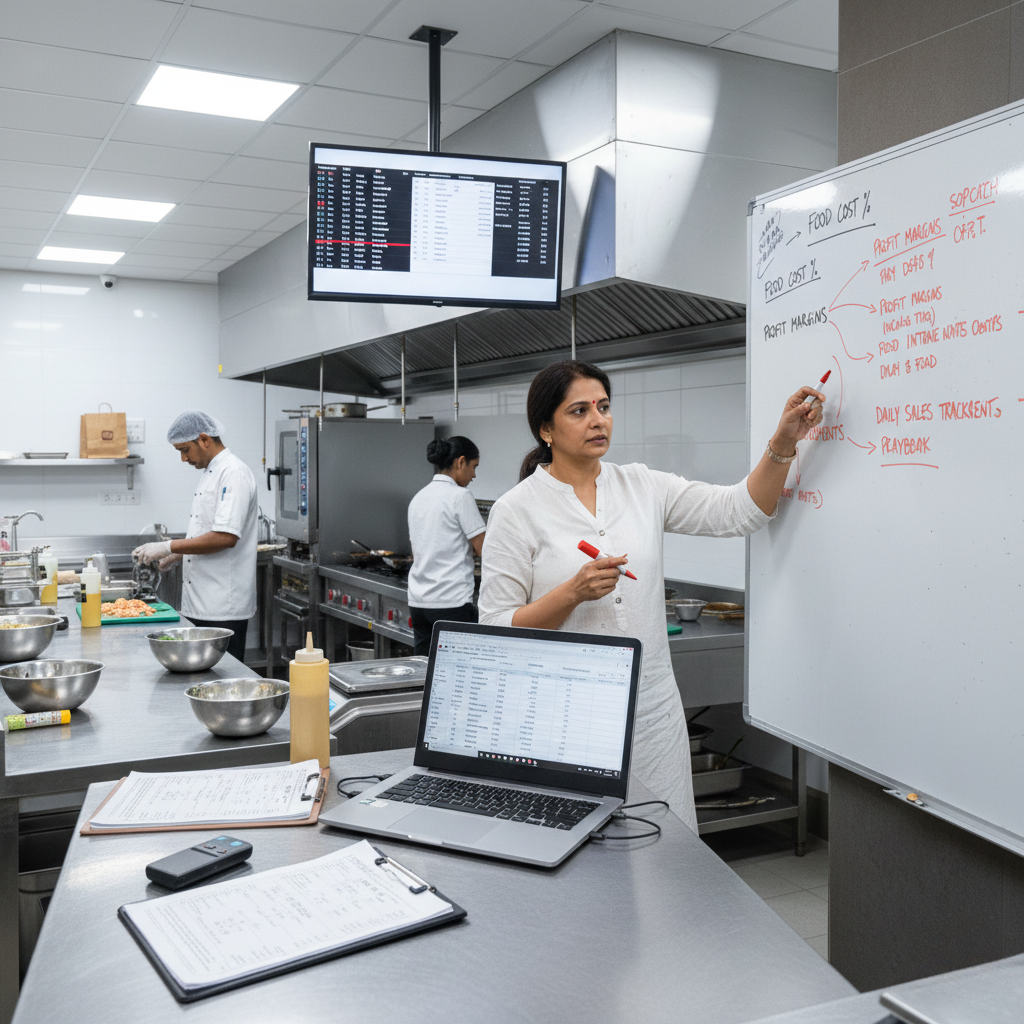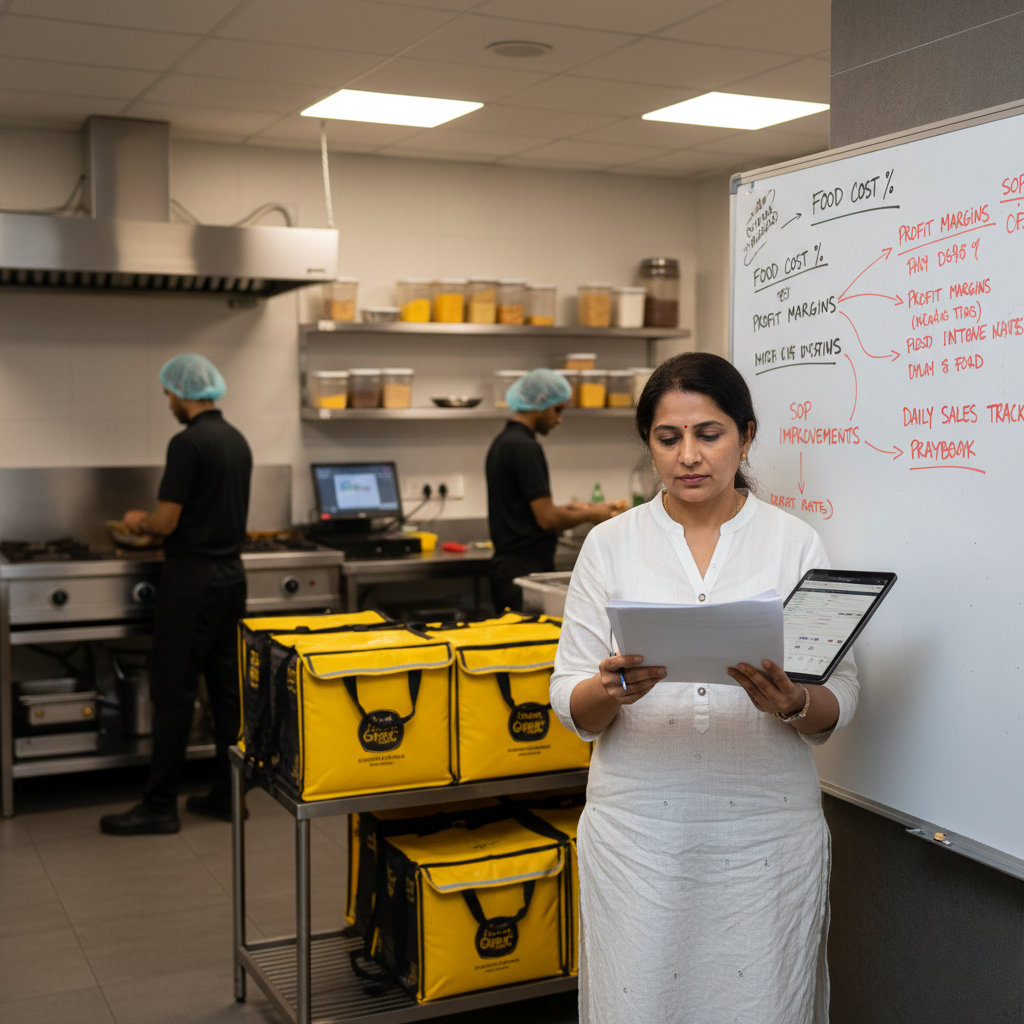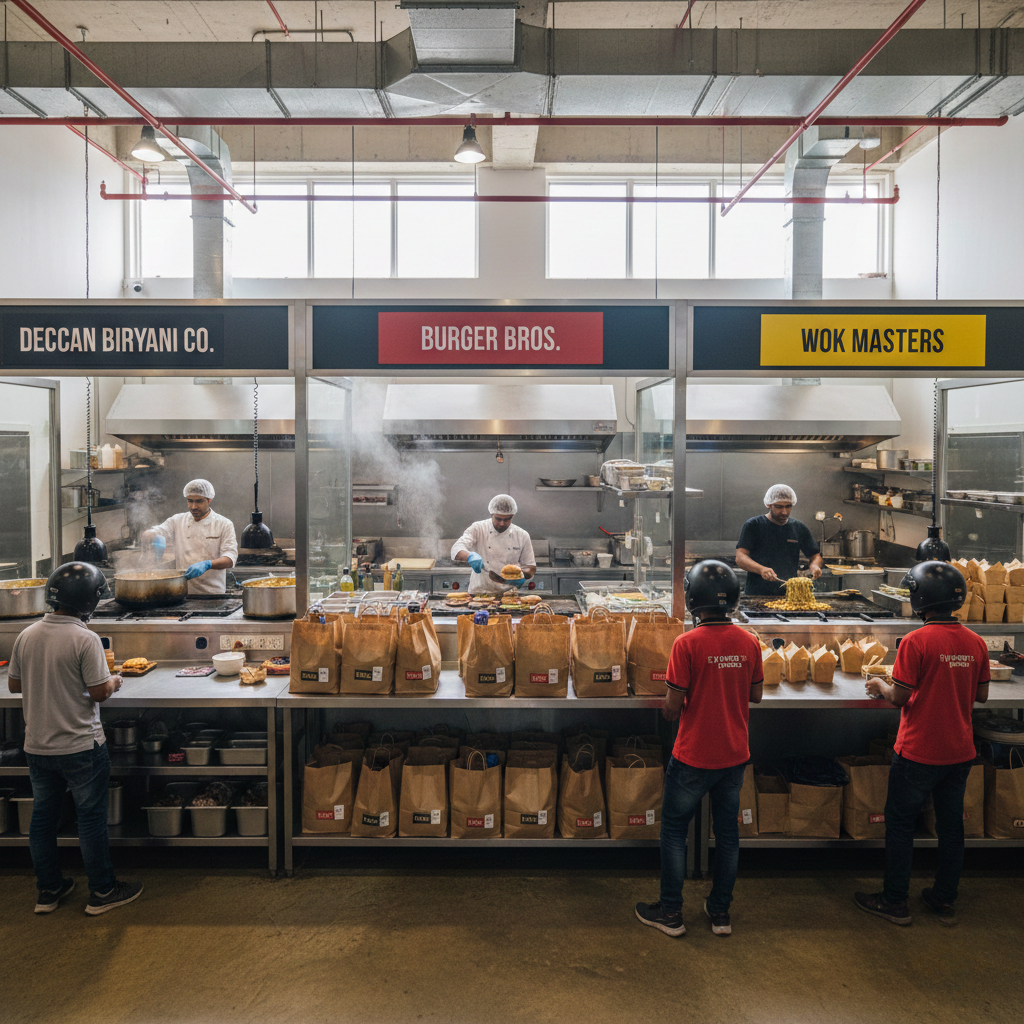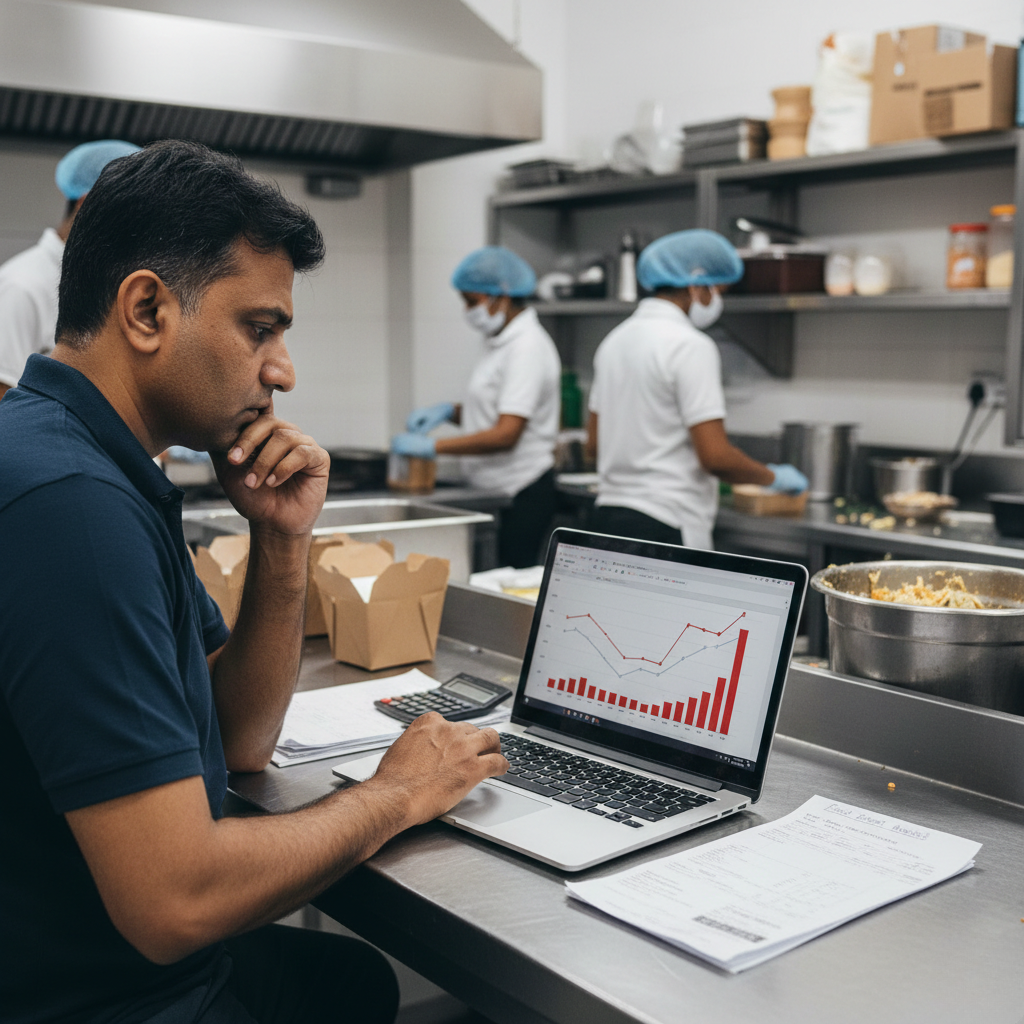
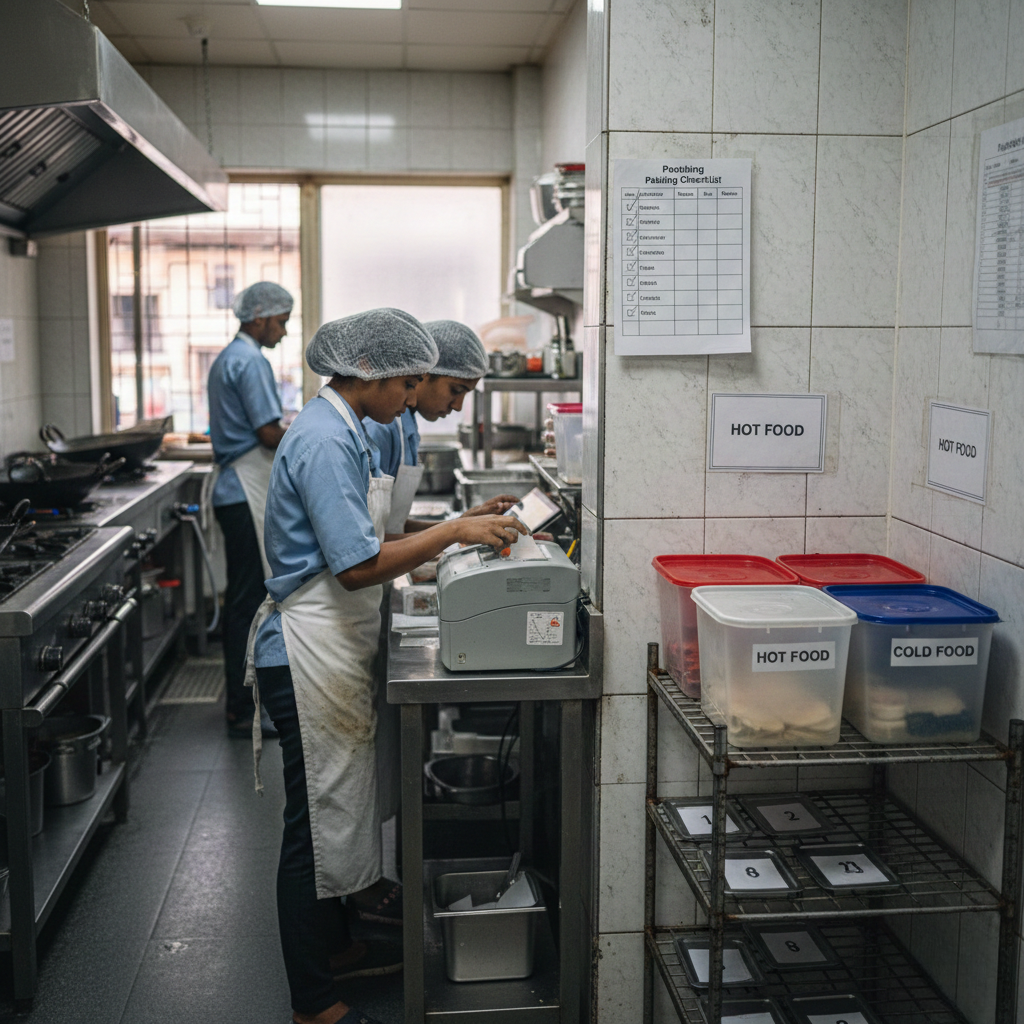
Is CKaaS suitable for small cloud kitchens? is not a “budget” question or a “I am too early for systems” question. It is a control-transfer + execution bandwidth + unit-economics + predictability problem. Small kitchens often survive on founder presence, informal checks, and daily firefighting. CKaaS can create real leverage when it replaces execution load with repeatable routines, but it becomes a trap when founders outsource chaos and expect profits to appear. This guide explains when Cloud Kitchen as a Service works for small cloud kitchens in India, when it doesn’t, and how to decide using contribution margin clarity, SOP depth, dispatch gates, role ownership, and scalability readiness using systems, not hope.
Is CKaaS Suitable for Small Cloud Kitchens? The Decision That Can Either Buy You Leverage or Multiply Your Leakage
Most small cloud kitchen founders consider CKaaS at a pressure point. Sales are inconsistent. Ratings fluctuate. Refunds feel random. Staff availability changes weekly. And the founder starts doing everything: purchasing, prep planning, packing checks, customer escalations, and payout tracking.
That is when CKaaS starts sounding like relief: “I will plug into a system.” “I will stop managing staff.” “I will scale without building kitchens.” “I will focus on the brand and marketing.”
The hard truth: CKaaS does not automatically create stability. It creates stability only when the kitchen output is engineered to be repeatable. Otherwise it simply moves the chaos into a new structure and charges you a fee for it.
If you want the profitability foundation lens first, start with Cloud Kitchen Profitability Consultant in India and map recurring execution leaks using Common Operational Mistakes in Cloud Kitchens.
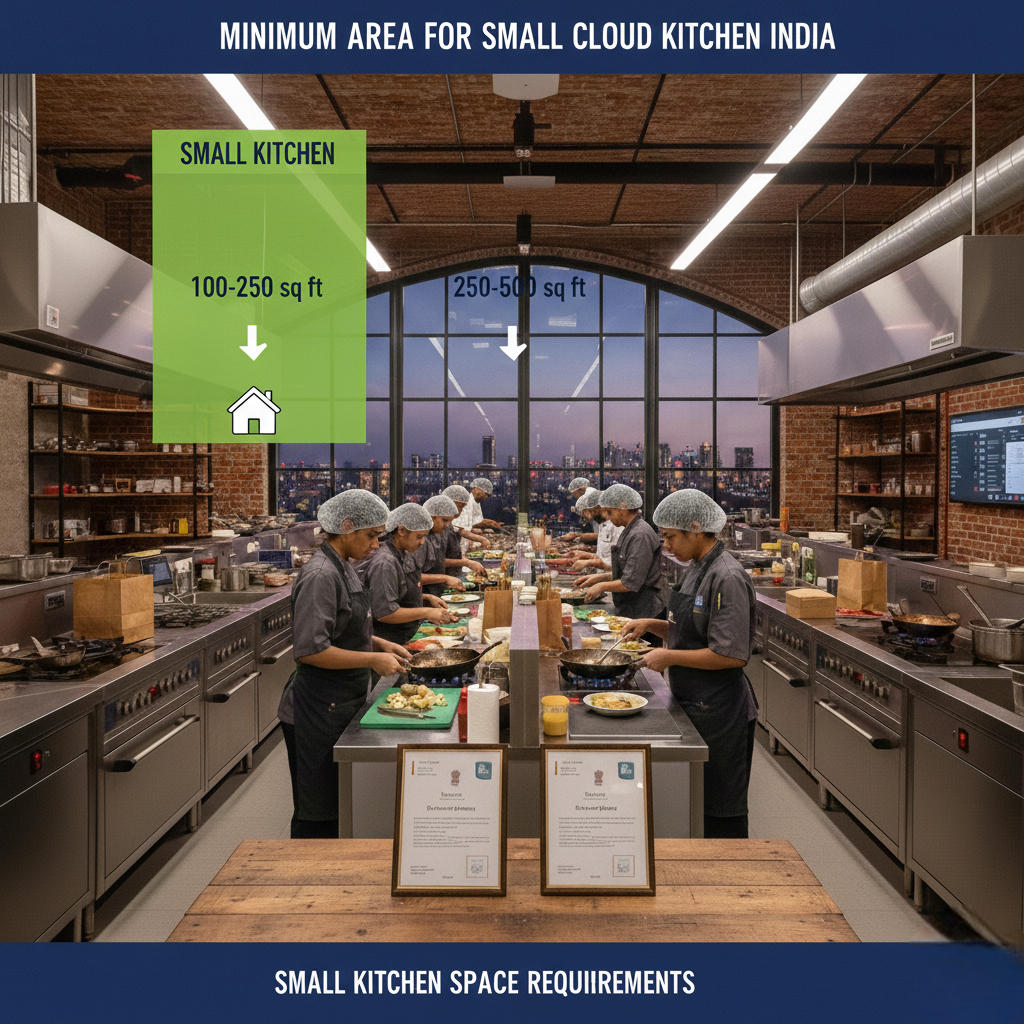
What “Small Cloud Kitchen” Actually Means (And Why Size Is Not the Real Risk)
A small cloud kitchen is usually not a “small ambition” business. It is a business operating with limited staff, limited buffer, and limited tolerance for mistakes. Most small kitchens are running: one location, one to two brands, 15 to 80 orders per day in peak weeks, and monthly revenue somewhere between ₹1L to ₹6L.
Founders think the constraint is scale. In reality, the constraint is repeatability. When repeatability is weak, every additional order feels heavier. When repeatability is strong, even a small kitchen feels calm at volume.
CKaaS works for small kitchens only when it increases repeatability while controlling leakage. Otherwise, it simply increases complexity: another team, another layer, another handoff, another place for errors.
If your kitchen works only because you personally check packing, correct staff, and chase vendors, you are not running an operation. You are acting as the operating system. CKaaS only becomes valuable when the system can replace you, not when it depends on you.
The Unit Economics Lens: CKaaS Can Help Small Kitchens Only If It Buys Down Leakage
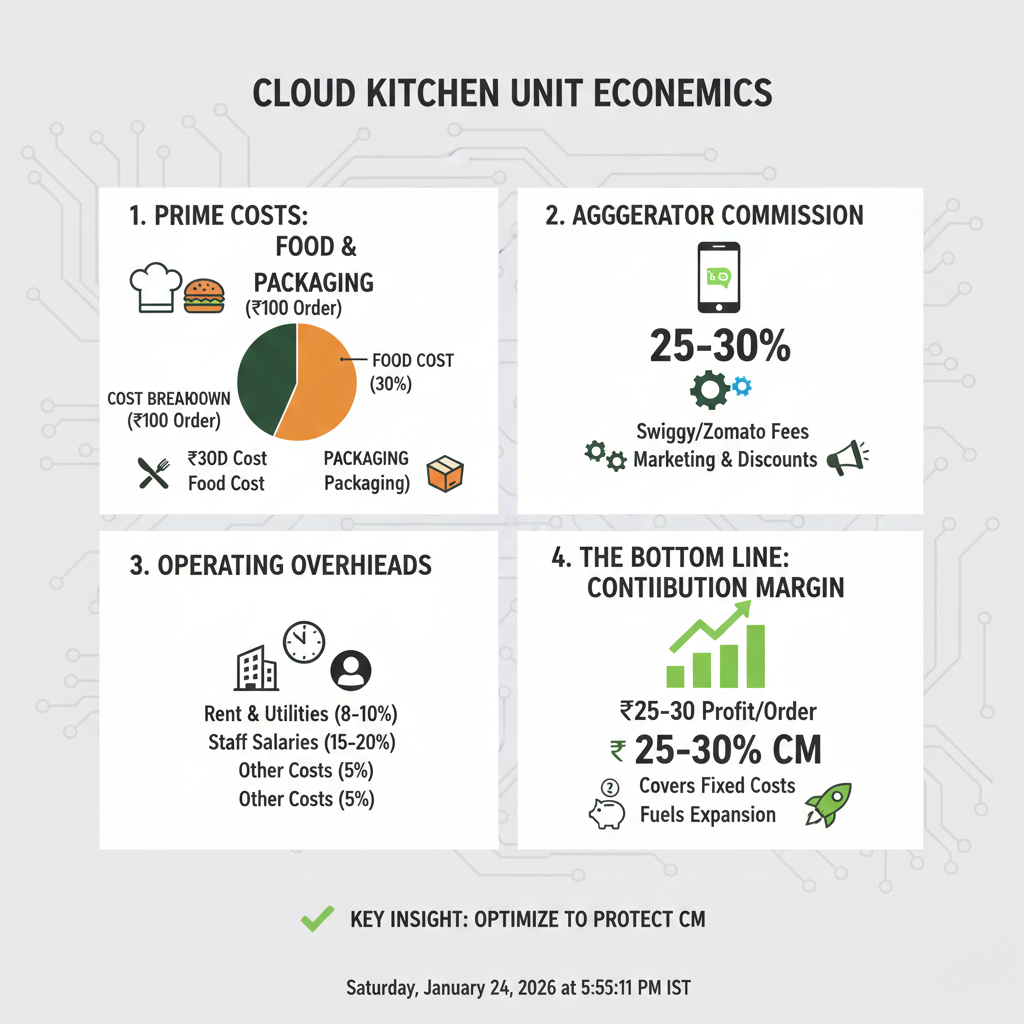
Small kitchens feel cost leakage faster than larger kitchens. A wrong item is not a “small issue.” It is a refund plus a replacement plus a rating hit. A stock-out is not an “availability problem.” It is cancellation penalties plus reduced distribution plus discount dependency.
Regardless of model, profit is still decided per order:
Order Value minus Aggregator commission & charges minus CKaaS service fee / revenue share minus Packaging cost minus Food cost (COGS) minus Discount burn minus Refund/penalty leakage equals Contribution Margin.
CKaaS becomes suitable when it reduces at least one of these consistently: food cost drift, refunds, late dispatch, waste, cancellations, or discount dependence.
If CKaaS adds fees but does not reduce leakage, your margin collapses faster. That is why many small founders feel “orders are coming but profit is unclear” after moving to a service model.
If you want platform cost clarity, read Aggregator Commission Impact in India and refund leakage patterns via Refunds and Cancellations Impact on Cloud Kitchen Profitability.
The 14 Reasons CKaaS Fails for Small Cloud Kitchens (And What Each One Looks Like)
CKaaS failure for small kitchens rarely comes from one dramatic event. It usually comes from multiple small mismatches: the founder outsources execution but never installs control. Below are the most common reasons CKaaS becomes unsuitable for small cloud kitchens.
1) Founders outsource operations without fixing unit economics first. If your base margin is weak, CKaaS fees do not “improve efficiency.” They convert weak economics into guaranteed loss.
2) Menu is not engineered for delivery execution. Too many SKUs, too many variants, too many customizations. Small teams cannot execute complexity without errors. CKaaS does not remove complexity; it exposes it.
3) Portions and recipes are not standardized. If the recipe lives in someone’s head, outcomes vary by shift. In small kitchens, portion drift becomes food cost drift quickly.
4) The founder was the quality gate before CKaaS. Many small kitchens survive because the founder checks packing, taste, and dispatch. When the founder steps away, standards decay unless gates replace presence.
5) Dispatch discipline was never designed. Many small kitchens “hand over orders.” They do not have a dispatch gate. Missing add-ons, wrong items, and leakages become routine. Install discipline using Cloud Kitchen Dispatch SOP.
6) Procurement becomes reactive. If RM specs and reorder routines are not documented, teams buy “whatever is available.” Small kitchens then face inconsistent quality and unpredictable food costs.
7) Prep planning and par levels are absent. Stock-outs cause cancellations. Cancellations destroy platform trust. Small kitchens need simple par-level planning to protect availability during peak.
8) Staff training is treated as a one-time event. Training must be a system: shadow shifts, checklists, sign-offs, retraining triggers. Without that, errors repeat. Errors become refunds. Refunds become distribution loss.
9) Packing and sealing rules are inconsistent. A small change in packaging can create leakage, sogginess, or presentation failure. Customers judge the received pack before the taste.
10) Roles are unclear, so accountability disappears. “Everyone does everything” kills repeatability. Prep, cook, pack, dispatch must have owners and gates. If you want the model, use Role-Based Kitchen Operations Explained.
11) Pricing is copied from competitors. Small founders often price based on what they see on Swiggy/Zomato. But your cost structure is different. CKaaS fees need to be built into pricing logic, not absorbed emotionally.
12) Discounts are used to “make CKaaS work.” Discounts don’t fix operations. They amplify volume and amplify failure. If your kitchen is unstable, more orders create faster collapse.
13) Founders confuse “less work” with “less responsibility.” CKaaS reduces execution load, not decision responsibility. If the founder does not track metrics, margins, and SOP compliance, performance decays quietly.
14) There is no weekly feedback loop. Refund reasons, rating comments, late dispatch counts, and cancellation causes are data. If you don’t review weekly and update SOPs, the same failures repeat forever. If you want the systems discipline lens, reference How Process Discipline Improves EBITDA.
If you want the recurring leak map, use Common Operational Mistakes in Cloud Kitchens and if you are discounting to survive, map the spend logic via Marketing Spend vs ROI in Cloud Kitchens.
Swiggy/Zomato Reality: Platforms Don’t Care If You Are Small or Using CKaaS
Platforms evaluate outlets on reliability signals, not founder effort. Late dispatch, cancellations, refunds, poor ratings, and availability issues reduce visibility regardless of model.
A weak CKaaS kitchen gets suppressed. A weak independent kitchen gets suppressed. The platform only sees risk.
External policy context: Swiggy Refund Policy and Zomato Online Ordering Terms.
The practical takeaway: treat CKaaS as a reliability upgrade, not as a “growth hack.” If reliability does not improve, distribution will fall and you will discount to compensate.
Small Kitchens Become CKaaS-Ready When Three Engines Are Stable: Prep + Packing + Dispatch
Small kitchens don’t collapse because food is terrible. They collapse because operational engines are unstable: prep planning fails (stock-outs, slow throughput), packing fails (missing items, leakage, weak presentation), and dispatch fails (late handover, cold food, queue chaos).
When these engines are stable, the outlet feels calm even at peak. When they are unstable, the outlet feels chaotic even at low volume.
Install dispatch predictability using Cloud Kitchen Dispatch SOP and reduce repeat failures by mapping station-wise errors using Common Operational Mistakes in Cloud Kitchens.
The Real Question: Do You Want CKaaS to Run the Kitchen or to Make the Kitchen Runnable?
CKaaS is suitable for small kitchens when it creates role-based stability. That means outcomes do not depend on “who showed up today.” They depend on gates.
Here is what role-based stability looks like:
Prep role:
owns batch schedules, labeling, and par levels so peak readiness is predictable.
Cook role:
owns portion tools, holding-time rules, and consistency checks.
Pack role:
owns packing checklist, add-on verification, sealing rules, and clean presentation.
Dispatch role:
owns final scan, rider handover speed, and bag stability.
Manager role:
owns weekly review: refunds, cancellations, ratings, ETA, stock-outs and SOP upgrades.
If you want the full framework, use Role-Based Kitchen Operations Explained.
How to Decide Correctly: A Practical 7 to 30 Day Readiness Checklist Before Choosing CKaaS
If you are a small kitchen founder considering CKaaS, your goal is not to “move fast.” Your goal is to move with control. Below is a practical readiness sequence used in system-led kitchen networks.
Step 1 (Day 1–2): Calculate true contribution margin on your top 10 SKUs. If you don’t know margin per SKU, CKaaS is a blind decision. Fix the numbers before fixing the model.
Step 2 (Day 1–3): Reduce menu complexity for replication. Remove low-selling SKUs. Kill near-duplicate variants. Keep execution simple so accuracy stays high.
Step 3 (Day 2–5): Install packing checklist + dispatch scan as a non-negotiable gate. This reduces wrong items, missing items, add-on misses, and leakage. Implement via Cloud Kitchen Dispatch SOP.
Step 4 (Day 3–7): Build prep planning with par levels and batch yields. Define buffers for top SKUs. Protect availability. Reduce cancellations.
Step 5 (Week 2): Standardize procurement specs and reorder routines. Lock RM specs and approved vendors. Stop reactive buying. Reactive buying creates cost drift and inconsistency.
Step 6 (Week 2): Install role ownership. Prep, cook, pack, dispatch must have owners. “Everyone does everything” kills standards when you are not present.
Step 7 (Week 3): Start weekly reviews and SOP updates. Review refund reasons, cancellations, rating comments, late dispatch counts, and stock-outs. Update SOPs. Retrain. Repeat. Without this loop, CKaaS will not sustain performance.
If you want the process discipline lens, use How Process Discipline Improves EBITDA and if you are spending for growth, map ROI properly via Marketing Spend vs ROI in Cloud Kitchens.
External process references (useful for standardisation thinking): Standardized Work (Lean lexicon), ISO 22000 overview, and FSSAI Hygiene Requirements (Schedule 4 reference).
Final Takeaway: CKaaS Is Suitable for Small Kitchens Only When It Converts Effort Into Repeatability
CKaaS is not a shortcut for small kitchens. It is a multiplier. Multiply discipline and you grow. Multiply leakage and you collapse.
CKaaS becomes suitable when it reduces execution load while protecting outcomes: consistent portions, predictable prep, checklist-driven packing, gated dispatch, controlled refunds, stable availability, and weekly reviews that force SOP upgrades.
Operating frameworks from GrowKitchen, and operating partner brands like Fruut and GreenSalad help founders convert “founder-driven kitchens” into “system-driven kitchens.”
FAQs: Is CKaaS Suitable for Small Cloud Kitchens?
Is CKaaS affordable for small cloud kitchens?
Only if operational savings and leakage reduction exceed CKaaS fees consistently.
Can a loss-making small kitchen use CKaaS to turn profitable?
Not safely. Fix contribution margin, refunds, cancellations, and pricing first before adding a service layer.
Does CKaaS reduce founder work?
It reduces execution work, not responsibility for decisions, standards, and KPI tracking.
What is the fastest way to know if CKaaS will work for me?
If your top SKUs have stable SOPs, your packing/dispatch is gated, and your margins are clear, CKaaS can create leverage.
- Cloud Kitchen Profitability Consultant in India
- Common Operational Mistakes in Cloud Kitchens
- Cloud Kitchen Dispatch SOP
- Role-Based Kitchen Operations Explained
- Refunds and Cancellations Impact on Cloud Kitchen Profitability
- Aggregator Commission Impact in India
- Marketing Spend vs ROI in Cloud Kitchens
- How Process Discipline Improves EBITDA
- Grow Kitchen on Twitter