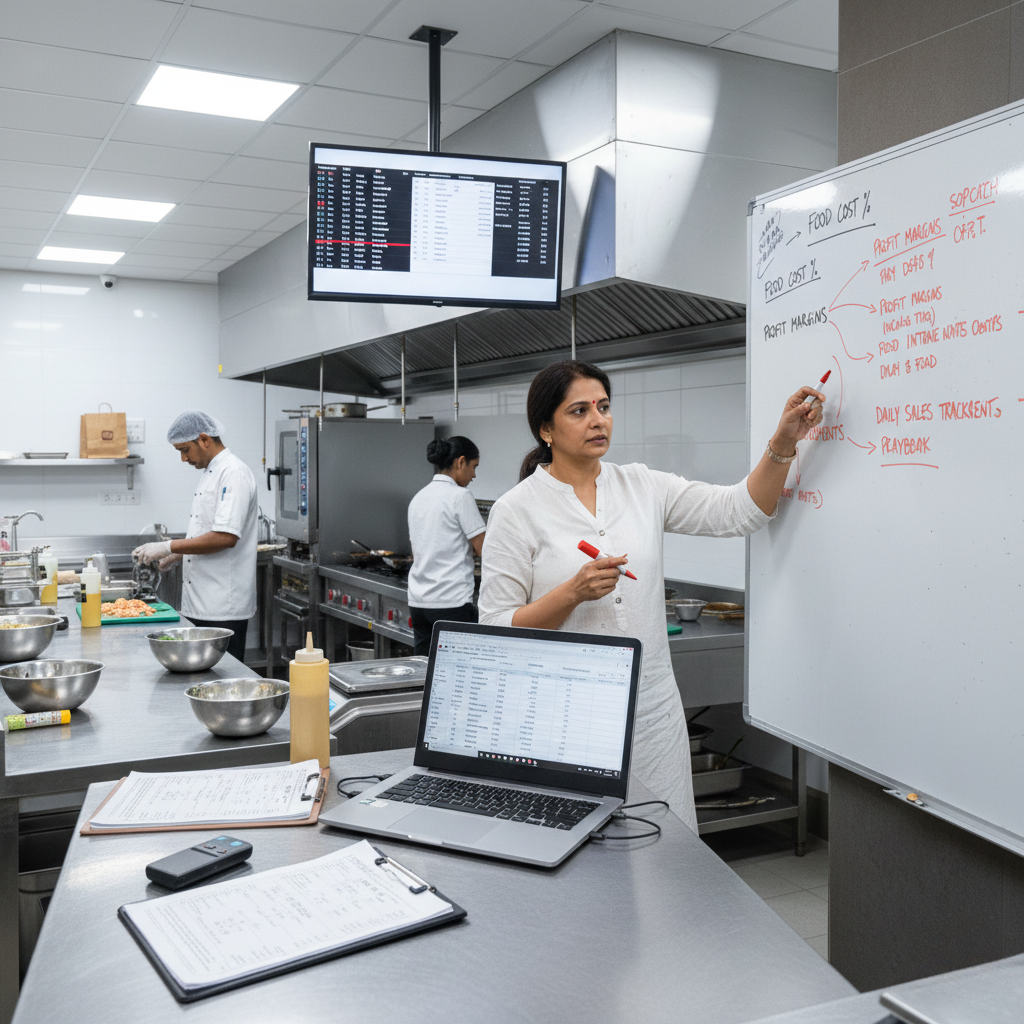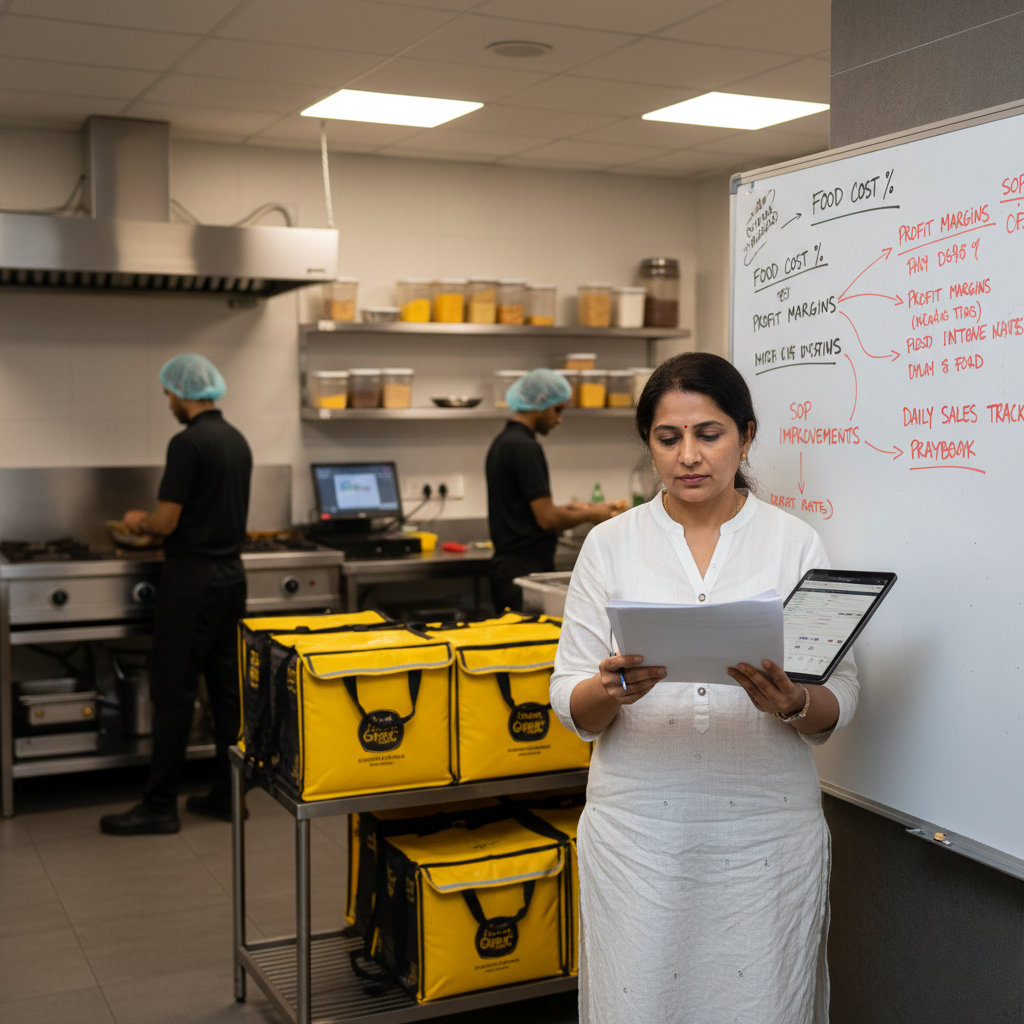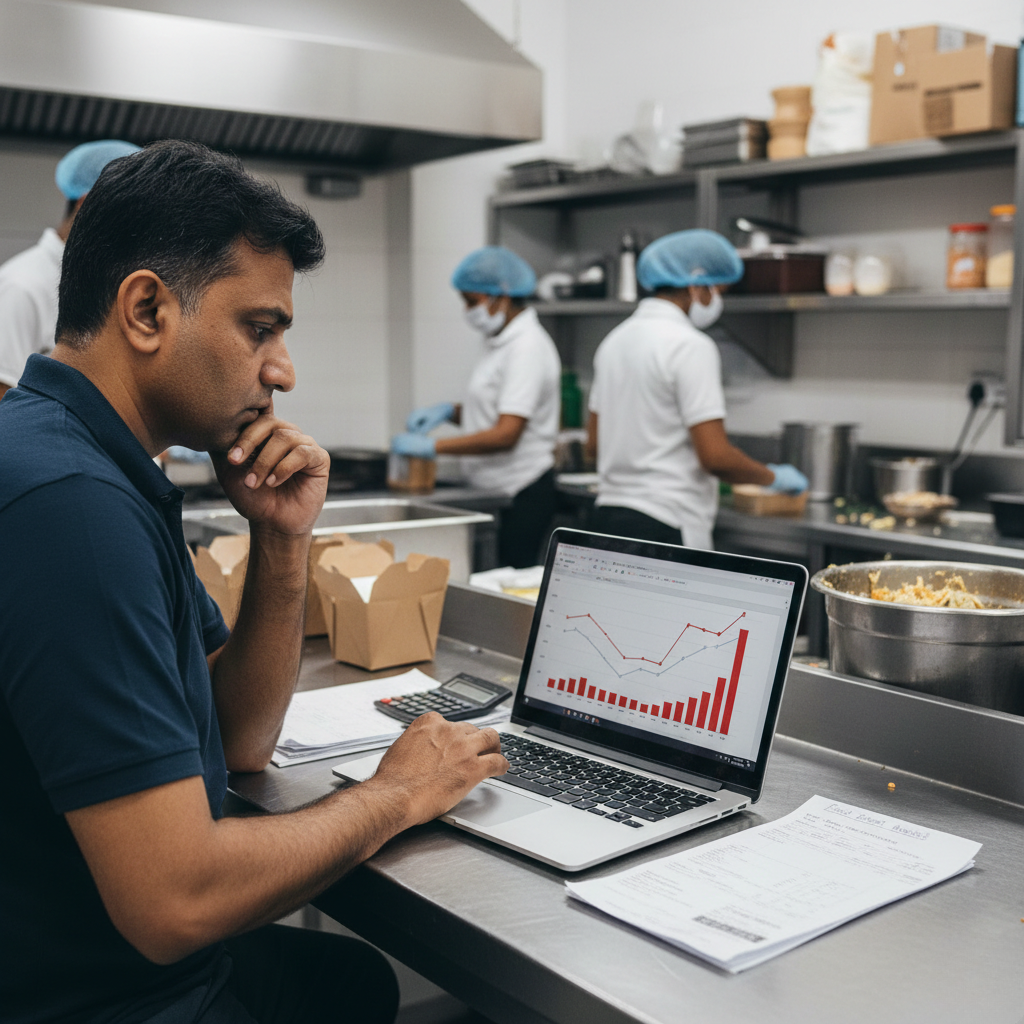

Multi Brand Cloud Kitchen Case Study — This case study documents how a fast-growing multi-brand cloud kitchen was stabilised using CKaaS after facing operational volatility across brands. While topline numbers looked healthy, internal execution issues were silently eroding profitability—an issue many founders face, as discussed in Why My Cloud Kitchen Profits Are Declining.
Over a ninety-day intervention period, the kitchen moved from daily firefighting to predictable operations across all brands. No menus were changed, no pricing revisions were made, and no discounting was introduced. Stability came entirely from operational discipline and systemisation, similar to approaches used when Fixing Cloud Kitchen Delays, Refunds, and Complaints.
Multi Brand Cloud Kitchen Case Study: Case Background
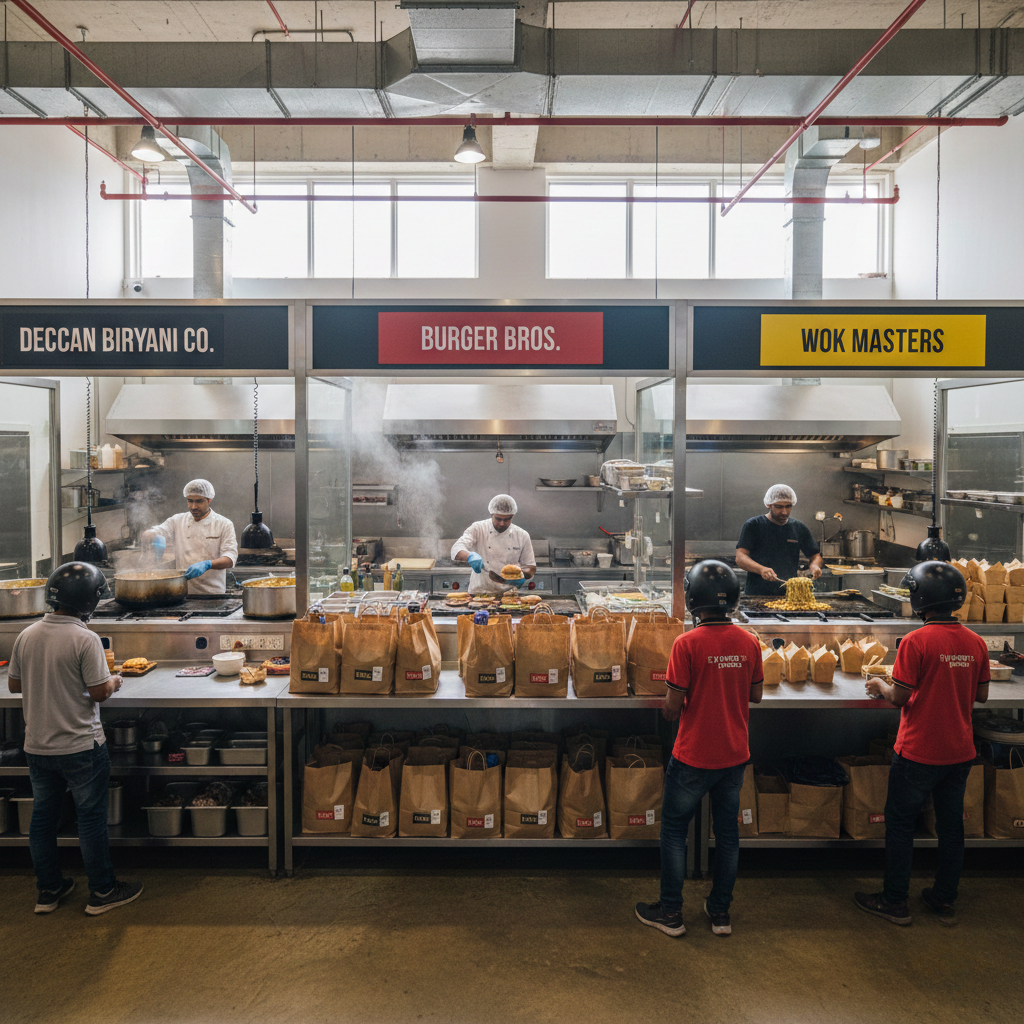
The kitchen operated four delivery-only brands from a single location, with combined daily order volumes fluctuating between two hundred and two hundred sixty orders.
Despite decent ratings, operational pressure was mounting. Staff confusion between brands and inconsistent execution created instability across shifts.
This Multi Brand Cloud Kitchen Case Study highlights how multi-brand setups increase complexity when systems are not standardised early.
The Core Problem
The founder initially believed the issue was brand overload and considered shutting down brands.
However, deeper analysis revealed the real issue was lack of systemisation, not brand count. Execution gaps were being repeated across all brands.
Brand-Level Operational Audit
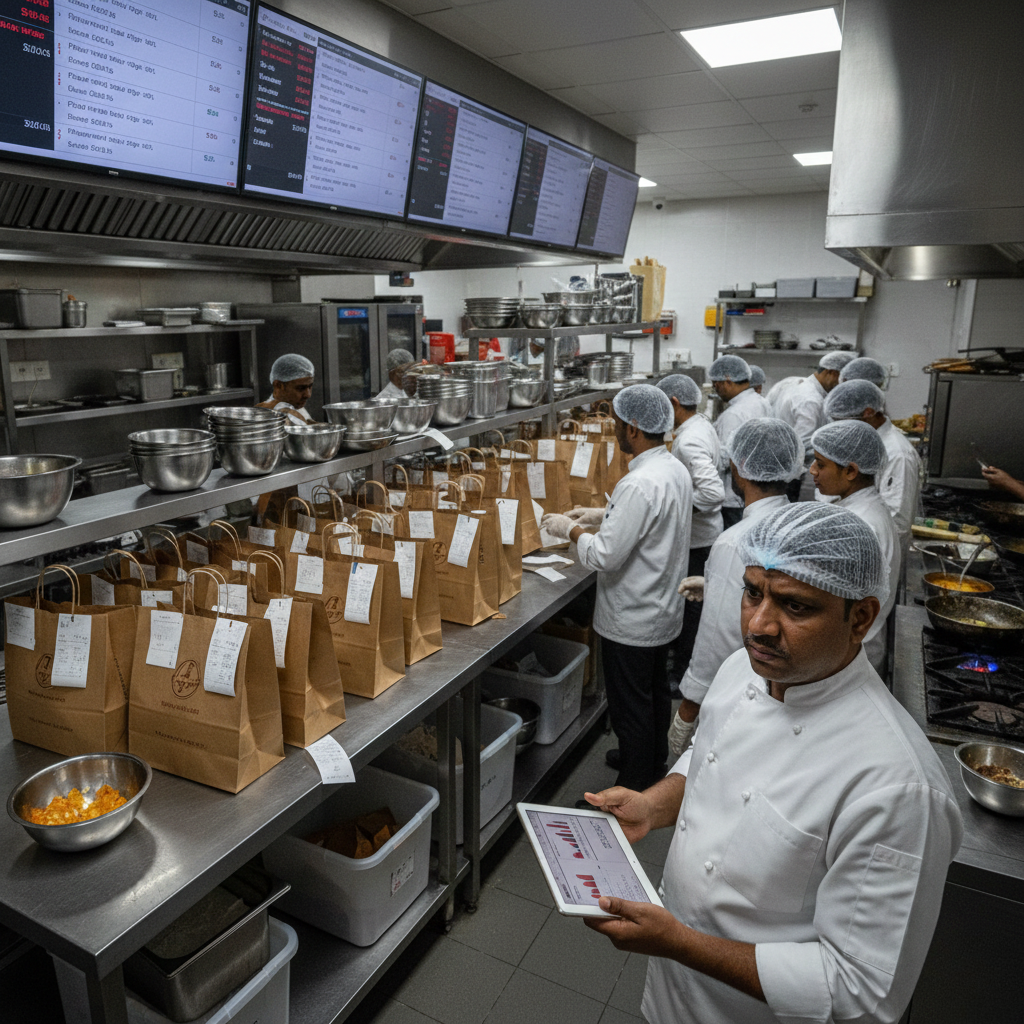
The audit focused on execution consistency across brands and revealed operational overlap issues.
Each brand was being run differently, leading to confusion in prep, packing, and dispatch processes.
Identifying Failure Points
The study identified role confusion, SOP conflicts, and cross-brand interference as the primary causes of instability.
This Multi Brand Cloud Kitchen Case Study shows that without clear separation, multi-brand kitchens struggle to maintain consistency.
CKaaS System Implementation
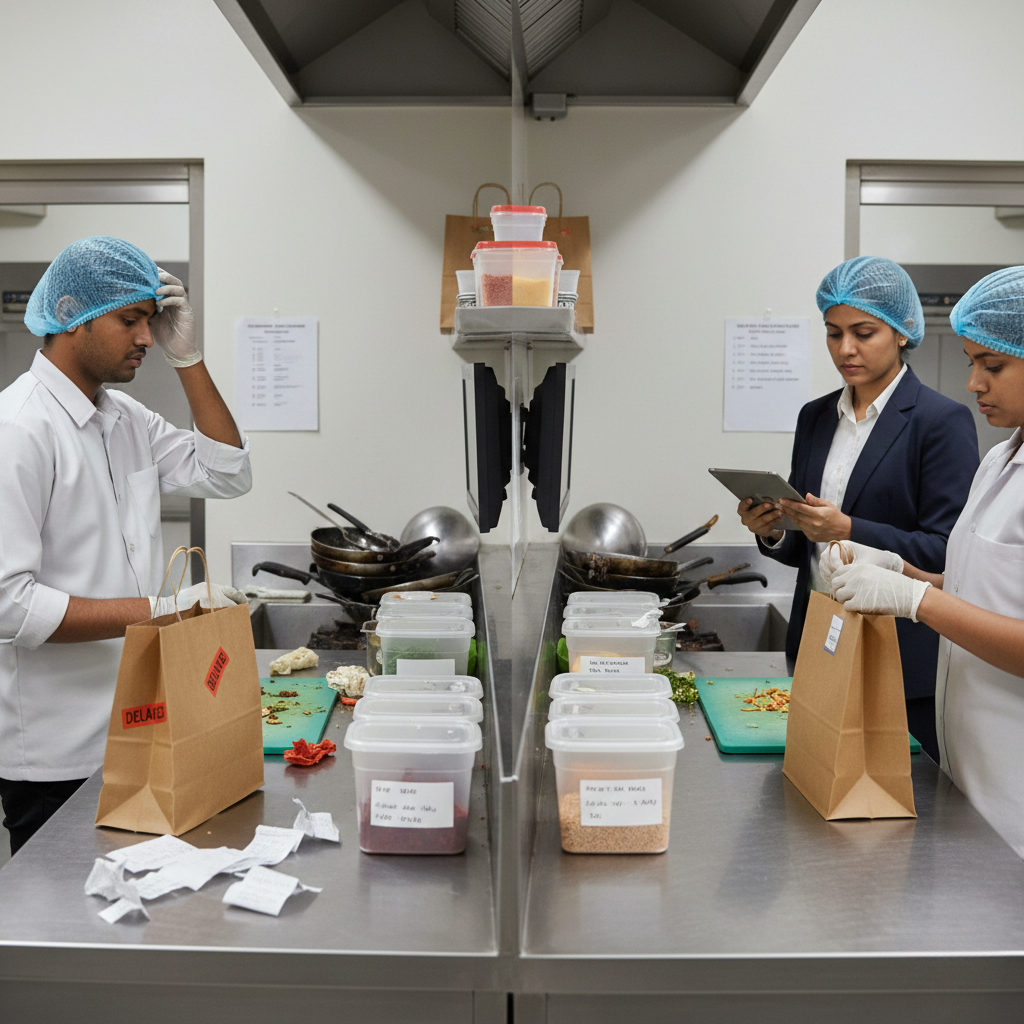
CKaaS introduced structured SOPs and brand-level execution clarity.
Brand segmentation ensured that each order followed a defined workflow, reducing errors and improving accountability.
Shift-Level Discipline
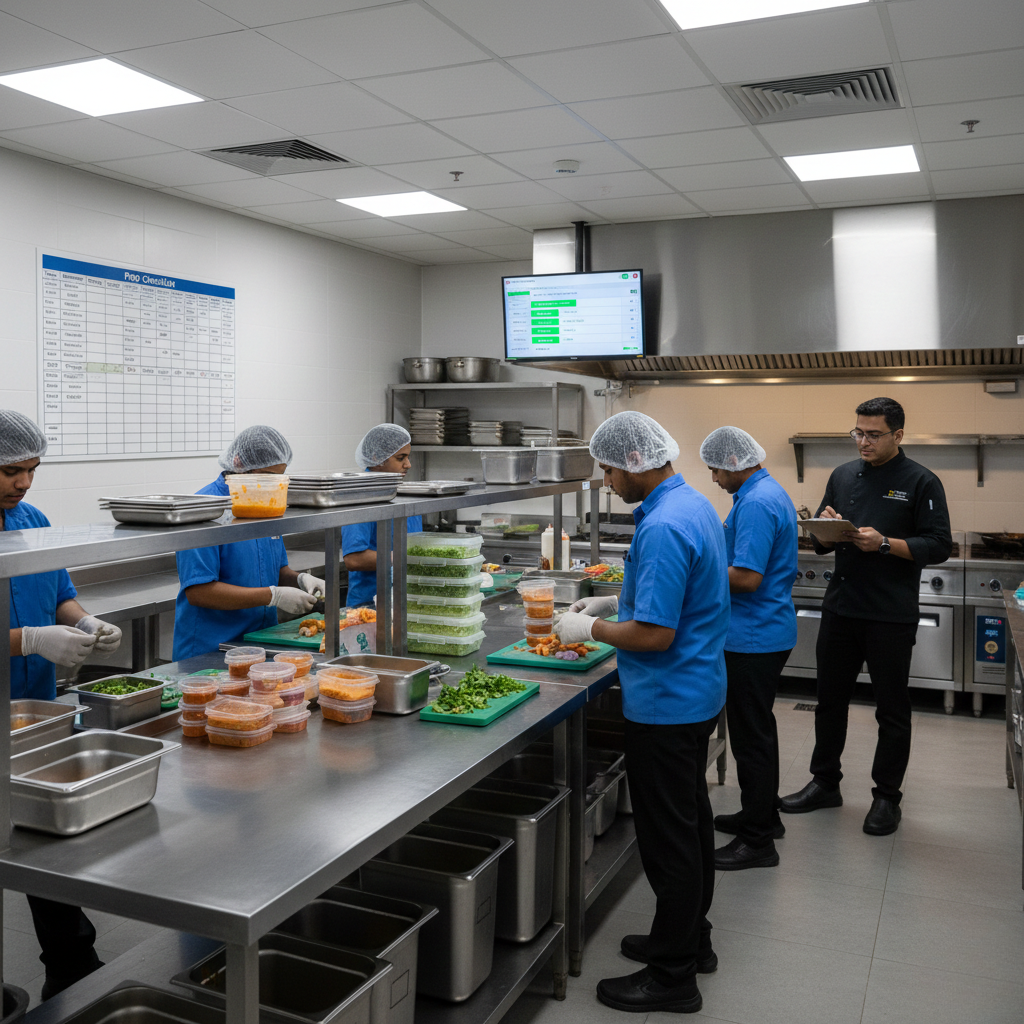
Daily shift discipline improved execution consistency across brands.
Teams were trained to follow structured processes, reducing dependency on the founder.
Operational Insight: Why Multi-Brand Kitchens Become Unstable
Multi-brand cloud kitchens often appear scalable on the surface because demand is distributed across multiple brands. However, operational complexity increases exponentially when execution systems are not unified.
Each additional brand introduces variations in prep methods, cooking sequences, packaging rules, and dispatch timelines. Without structured SOPs, these variations create confusion among staff, especially during peak hours.
This Multi Brand Cloud Kitchen Case Study highlights that instability is not caused by growth itself, but by unmanaged variation across processes.
When roles are not clearly defined, staff frequently switch responsibilities across brands, leading to delays, errors, and inconsistent output. Over time, this creates operational fatigue and reduces overall kitchen efficiency.
System-driven kitchens, on the other hand, standardise execution while allowing brand-level differentiation. This balance is what enables sustainable scaling without operational breakdown.
Outcome and Results
Within ninety days, execution stability improved significantly. Order errors reduced and staff efficiency increased.
This Multi Brand Cloud Kitchen Case Study proves that systems solve complexity, not reducing brands.
Key Takeaways
Multi-brand cloud kitchens do not fail because of brand count—they fail due to lack of system separation.
This Multi Brand Cloud Kitchen Case Study demonstrates that structured systems allow multiple brands to operate smoothly within a single kitchen.
Related Case Studies and Reads
- How to Fix a Loss-Making Cloud Kitchen
- Why Discounts Are Not Solving Your Profit Problem
- From 50 Orders to 300 Orders: Operations Scaling Guide
- Standardizing Kitchen Execution Across Shifts
Have Questions?
If you want deeper clarity on managing multi-brand cloud kitchens using CKaaS systems, detailed answers are available in the Grow Kitchen FAQs.
External References
To explore more insights on cloud kitchen systems and execution, visit: