Cloud Kitchen Portion Control Case Study — This case study explains how a multi-brand cloud kitchen fixed portion inconsistency across shifts and staff using CKaaS. While ratings were stable, margins and complaints were increasing due to inconsistent serving.
Over a sixty-day period, the kitchen achieved consistent portion output across brands without changing recipes or portion sizes. Improvements came from operational discipline and systemisation.
Case Background
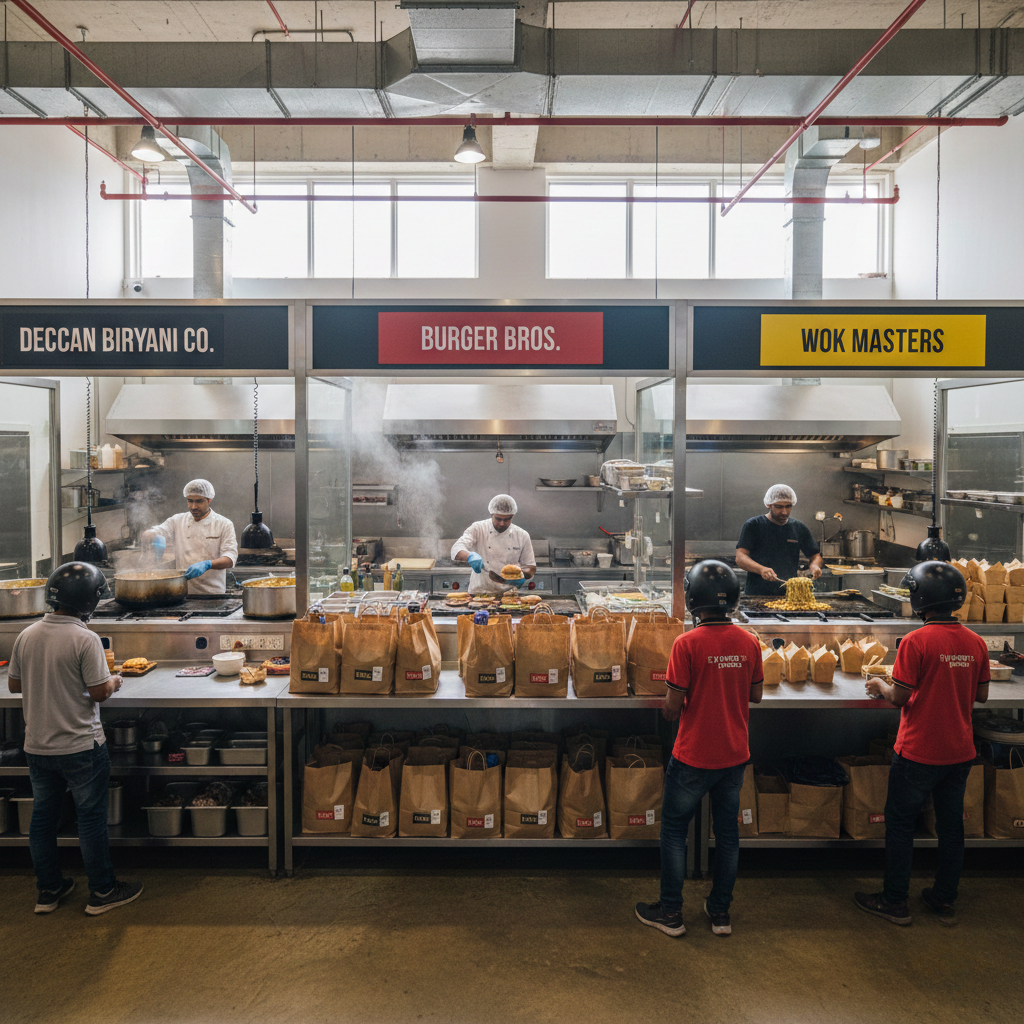
The kitchen operated three delivery-only brands from a single facility, handling between one hundred eighty and two hundred twenty orders daily.
Despite stable ratings, customers occasionally reported inconsistent portions. At the same time, food cost fluctuations were observed.
This Cloud Kitchen Portion Control Case Study highlights how small inconsistencies can create large financial impact.
The Core Problem
Initially, the founder assumed inconsistency was unavoidable due to staff variation and rush periods.
However, the real issue was lack of measurement and standardisation in portion control.
Portion Variance Audit

Sample orders were weighed across shifts to identify variance in portion size.
The audit showed that most variation came from manual estimation rather than intentional over-serving.
Identifying Breakdown Points
Inconsistencies were found in ladle sizes, scoop usage, and plating sequence.
Portions varied depending on staff experience and workload pressure.
CKaaS System Implementation

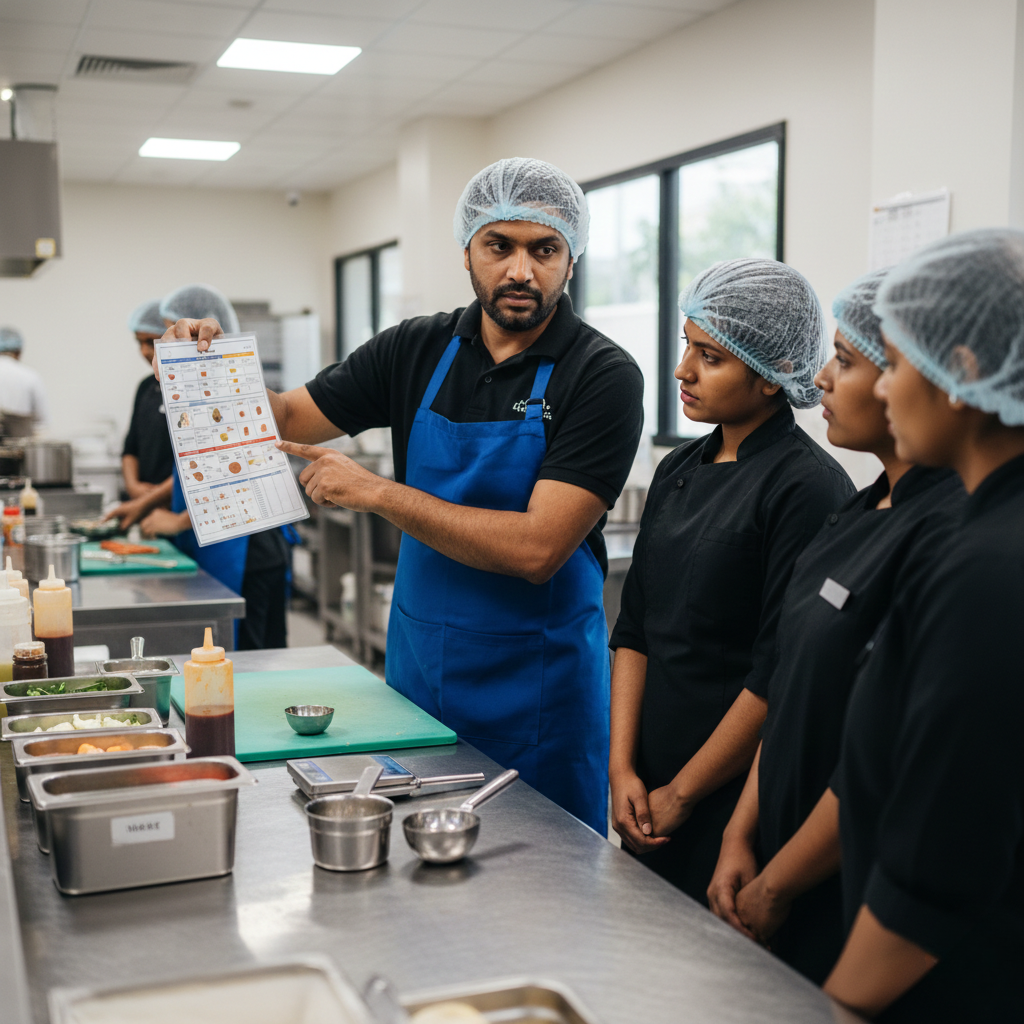
CKaaS introduced standardised portion tools, visual SOPs, and defined serving methods for each dish.
These systems ensured consistency without reducing portion size or impacting customer satisfaction.
Operational Insight: Why Portion Inconsistency Happens
Portion inconsistency is rarely intentional. It usually occurs when staff rely on estimation instead of measurement.
During peak hours, speed becomes a priority, leading to over-serving or under-serving. Over time, this creates cost leakage and inconsistent customer experience.
Without defined tools and clear SOPs, each staff member develops their own way of serving, which increases variation across orders.
This Cloud Kitchen Portion Control Case Study shows that consistency requires measurable processes, not just training.
Operational Insight: How Standardisation Improves Profitability
Standardisation ensures that every portion served matches predefined benchmarks, reducing both wastage and customer complaints.
When portion sizes are consistent, food cost becomes predictable. This allows better planning of procurement and inventory.
It also improves customer trust, as customers expect the same experience every time they order.
Standard systems reduce dependency on individual staff skills, making operations scalable across shifts and locations.
Over time, these improvements lead to stronger margins and brand reliability.
Operational Insight: Tools That Make Portion Control Consistent
Consistency improves significantly when the right tools are standardised across stations. Using fixed-volume ladles, calibrated scoops, and portion scales removes guesswork during peak hours.
Visual portion guides placed at plating areas help staff match expected serving sizes quickly without slowing down service. This is especially useful for new team members during onboarding.
Pre-portioning high-variance ingredients during prep further reduces inconsistency during rush periods. It also speeds up assembly and reduces decision fatigue on the line.
Regular spot checks during shifts ensure that tools are used correctly and standards are maintained across teams. Over time, these practices build muscle memory and sustain consistency.
Outcome and Results
Within sixty days, portion variance reduced significantly across all brands. Food costs stabilised and complaints decreased.
Execution became predictable, improving both profitability and customer satisfaction.
Key Takeaways
Portion inconsistency is a system problem, not a people problem.
This Cloud Kitchen Portion Control Case Study proves that structured processes improve both margins and customer trust.
Related Case Studies and Reads
- How to Fix a Loss-Making Cloud Kitchen
- Why Discounts Are Not Solving Your Profit Problem
- From 50 Orders to 300 Orders: Operations Scaling Guide
- Standardizing Kitchen Execution Across Shifts
Have Questions?
If you want deeper clarity on portion control systems, detailed answers are available in the Grow Kitchen FAQs.
External References
To explore more insights: