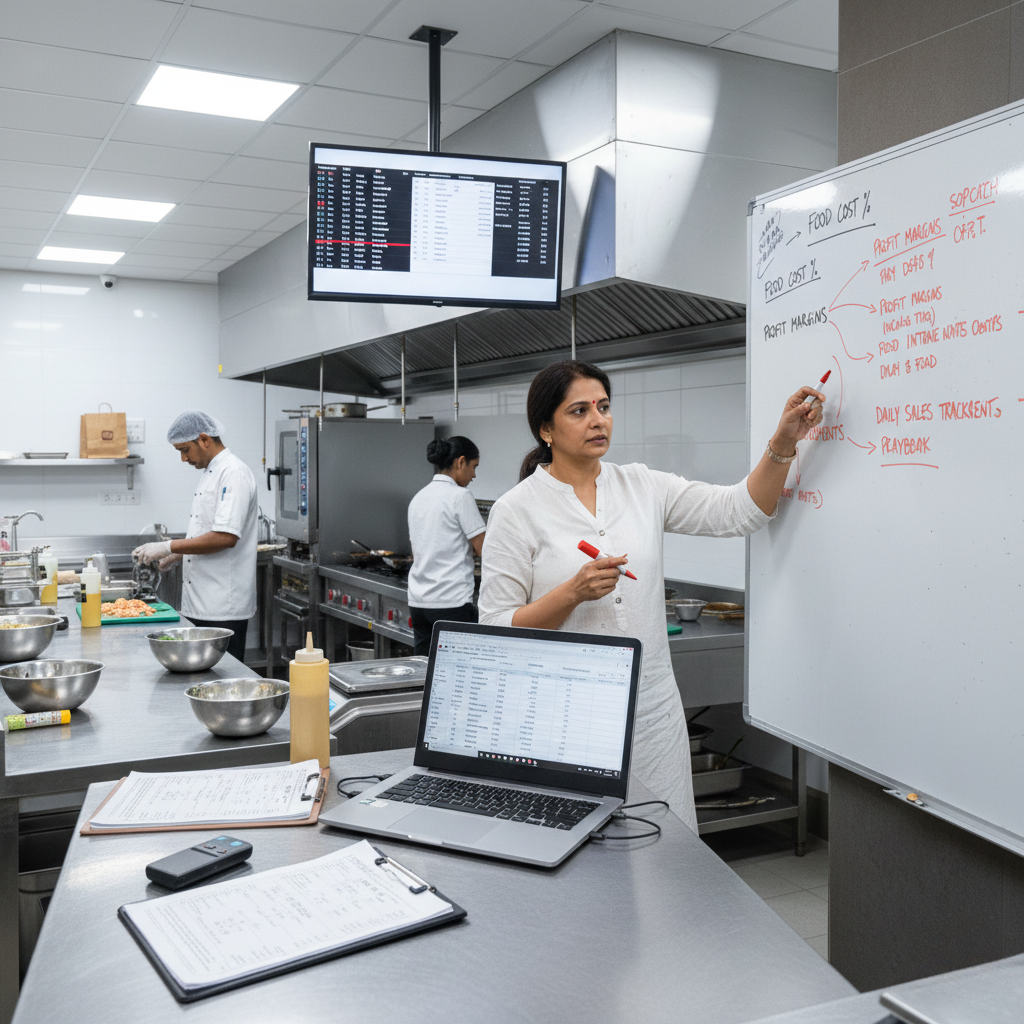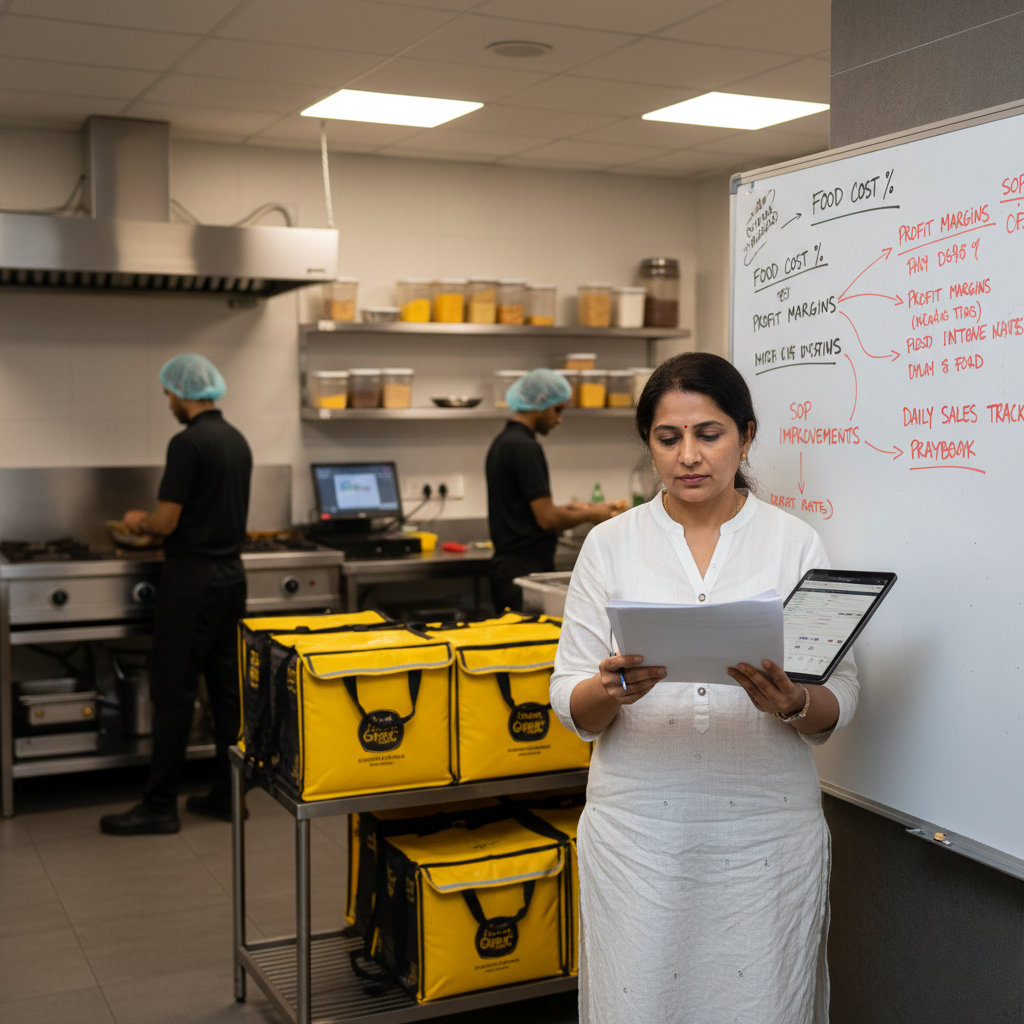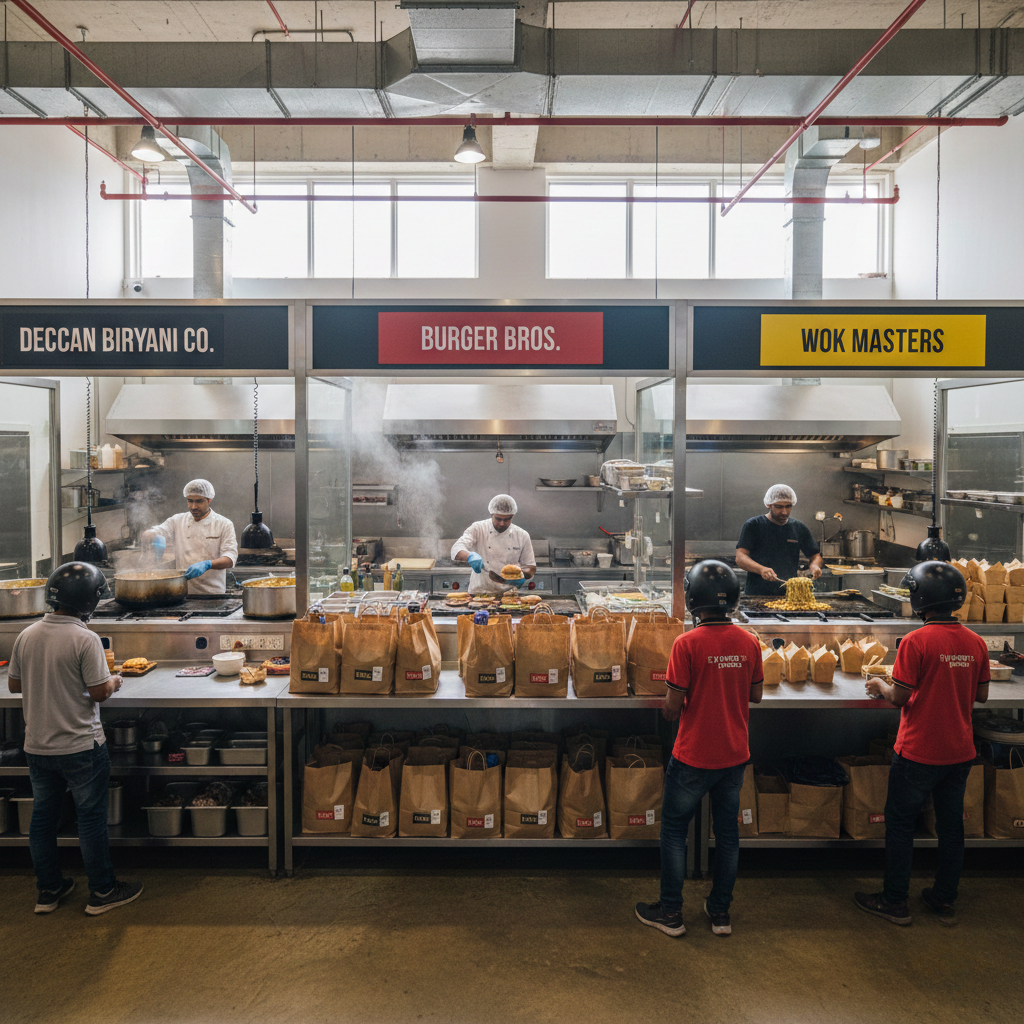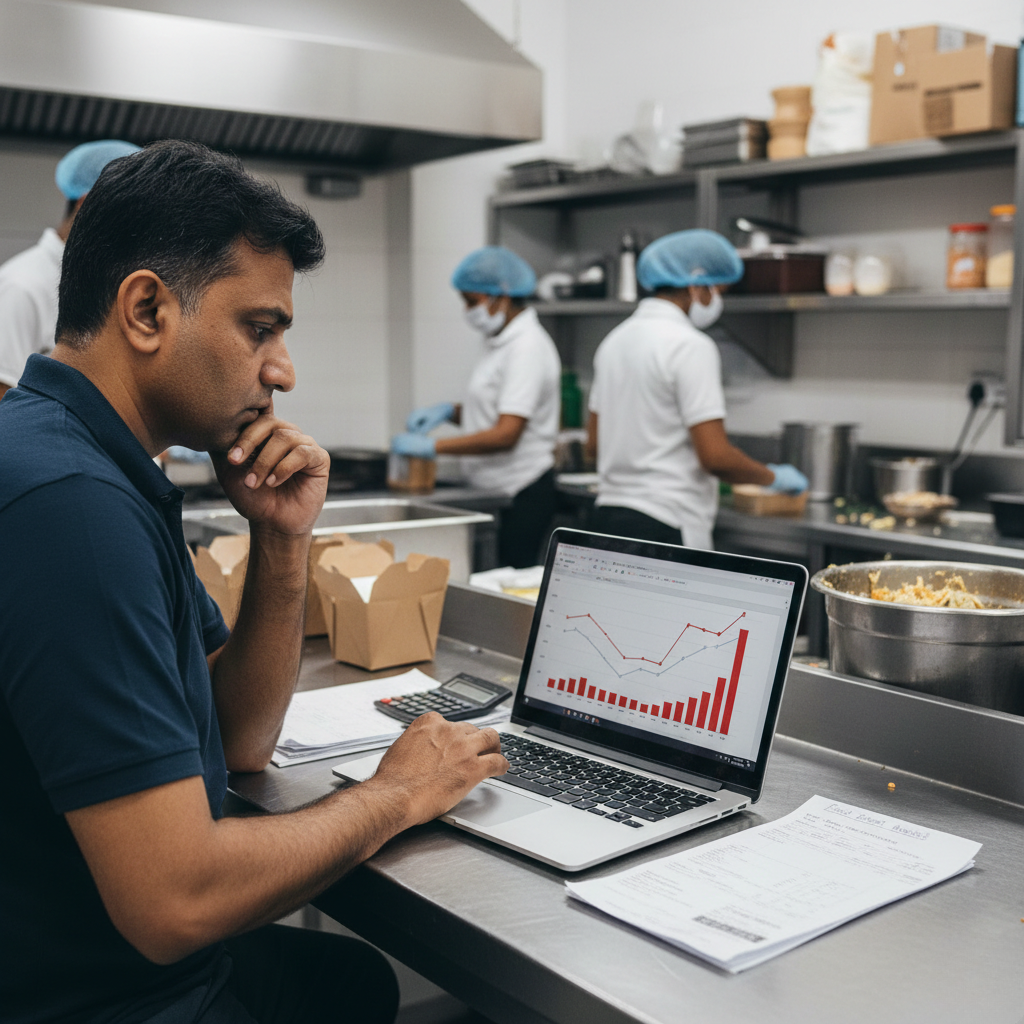
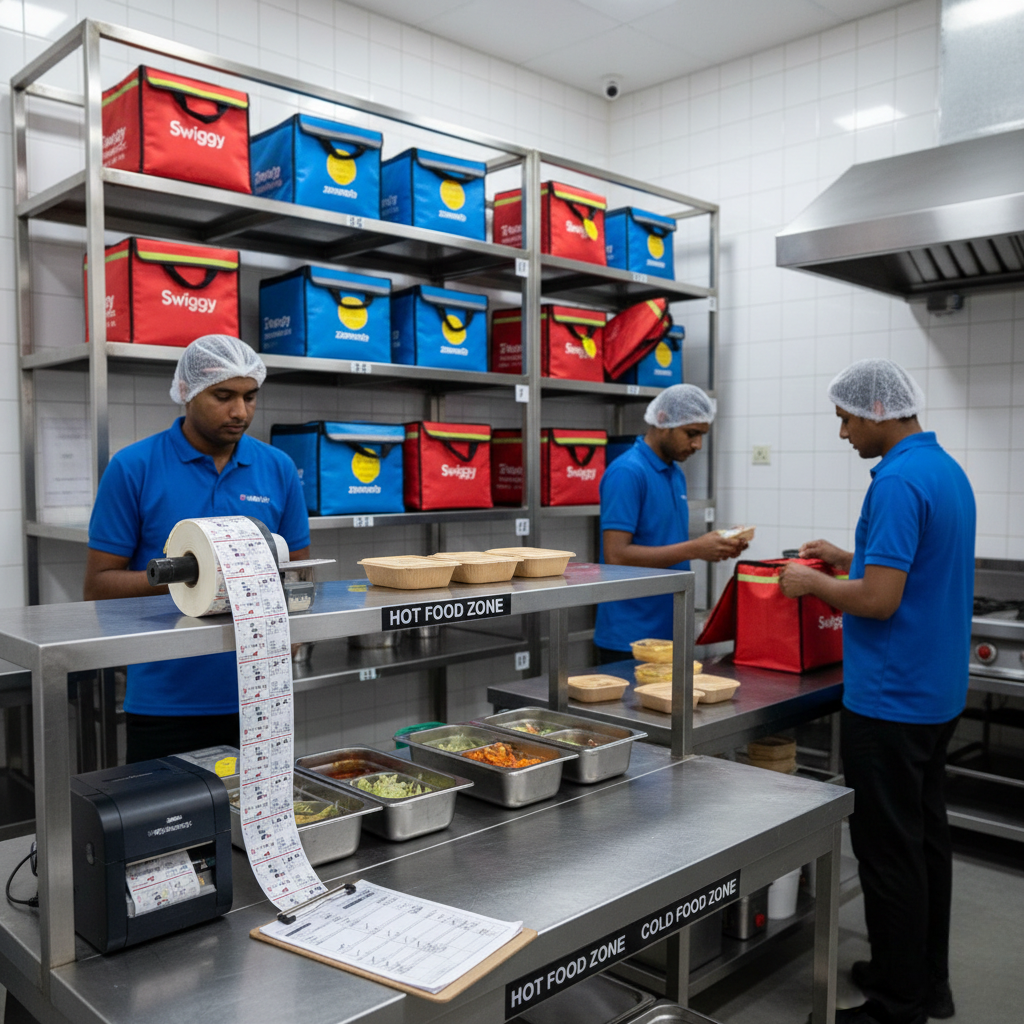
Is Cloud Kitchen as a Service worth it? is not a “cheap kitchen vs expensive kitchen” question or a “outsourcing vs ownership” debate. It is a control + capital efficiency + speed-to-market + execution reliability question. CKaaS becomes worth it when founders want to scale brands without building operations from scratch, and it becomes a trap when operators treat it as “rent a kitchen and hope for profit.” The truth is simple: CKaaS does not replace thinking. It replaces operational load. This guide explains when Cloud Kitchen as a Service is worth it in India, when it is not, and how to evaluate CKaaS models using unit economics, SOP depth, control systems, and long-term scalability using systems, not assumptions.
Is Cloud Kitchen as a Service Worth It? The Real Question Founders Should Ask
Cloud Kitchen as a Service sounds attractive: no capex, faster launch, shared resources, built-in operations, and the promise of “focus on brand and growth.”
But founders quickly split into two camps: some scale calmly using CKaaS, others bleed money and blame the model.
The hard truth: CKaaS is neither a magic solution nor a scam. It is a leverage tool. And like any leverage, it amplifies what you already are.
If you want the profitability foundation lens first, start with Cloud Kitchen Profitability Consultant in India and map execution risks using Common Operational Mistakes in Cloud Kitchens.
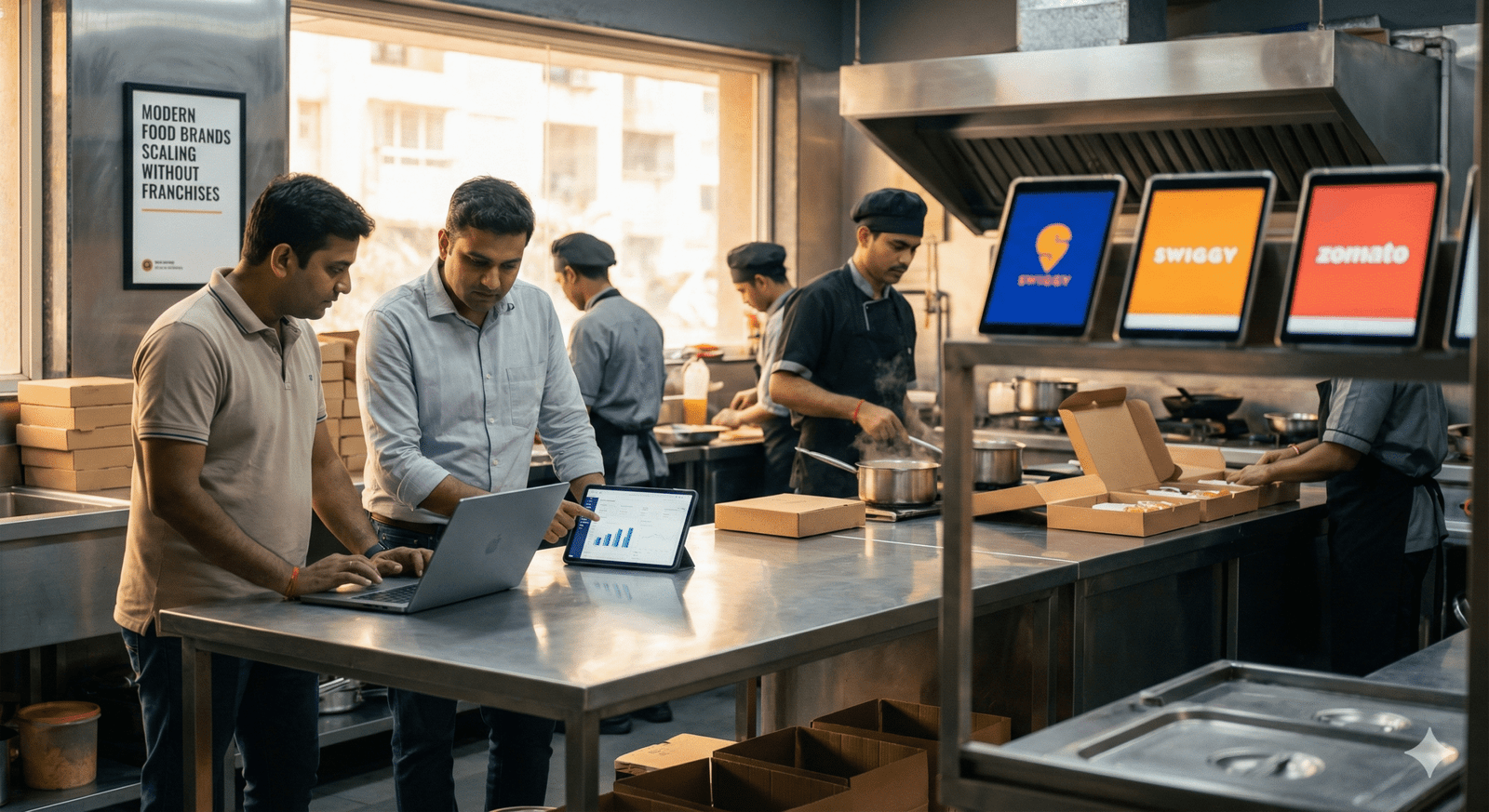
What “CKaaS Worth It” Actually Means (Not Just “Lower Cost”)
When founders ask “is CKaaS worth it,” they usually mean one of three things: will I save money, will I scale faster, or will this reduce my daily stress?
CKaaS is worth it only when it improves at least two of these three simultaneously: capital efficiency, execution reliability, and speed of iteration.
CKaaS fails when founders expect: guaranteed profit, zero involvement, or marketing-led success without operational discipline.
So the real evaluation is not: “Is CKaaS good or bad?” It is: “Is this CKaaS model designed to protect unit economics and execution under volume?”
The Unit Economics Lens: When CKaaS Is Worth It (And When It Isn’t)
CKaaS changes your cost structure. Instead of capex-heavy ownership, you move to: fixed service fees, variable revenue share, or hybrid models.
But the per-order math does not disappear. The same equation still decides profit:
Order Value minus Aggregator commission & charges minus CKaaS fee or revenue share minus Packaging cost minus Food cost (COGS) minus Discount burn minus Refund/penalty leakage equals Contribution Margin.
CKaaS is worth it when: the service fee is lower than your inefficiency cost, SOPs reduce refunds and wastage, and throughput increases without adding manpower.
If you want the commission and payout layer clarity, read Aggregator Commission Impact in India and refund behavior via Refunds and Cancellations Impact on Cloud Kitchen Profitability.
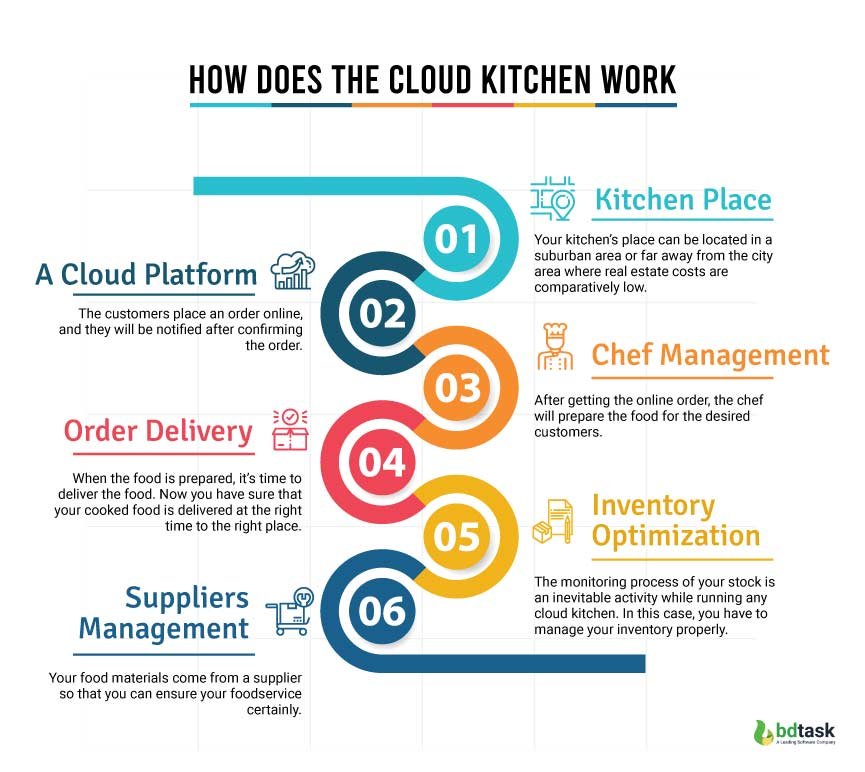
The 14 Reasons Founders Say CKaaS Is “Not Worth It” (And Why They’re Often Wrong)
Most CKaaS failures follow the same pattern. Below are the real reasons founders feel disappointed and the actual root cause.
1) They expected CKaaS to fix weak unit economics. CKaaS cannot rescue low-margin menus or discount-heavy brands.
2) SOPs were shallow or generic. A kitchen space is not a system. Without deep SOPs, CKaaS becomes shared chaos.
3) No clarity on role ownership. When “the CKaaS team” owns everything, nothing is truly owned.
4) Packing and dispatch gates were missing. Most refund leakage comes from weak handoffs. Use Cloud Kitchen Dispatch SOP.
5) Pricing was copied, not engineered. CKaaS changes cost structure. Pricing must be rebuilt, not reused.
6) Menu complexity was not reduced. CKaaS rewards standardized components, not hyper-unique SKUs.
7) Founders stopped reviewing numbers weekly. CKaaS removes execution load, not accountability.
8) The model relied on discounts for traction. Discounts scale losses faster in CKaaS.
9) No dashboard connected ops + profit. Without visibility, CKaaS feels expensive even when it’s efficient.
10) Vendor and RM specs were unclear. Shared kitchens need stricter specs, not looser ones.
11) Training was assumed, not validated. SOP sign-offs matter more in CKaaS.
12) Brands scaled before stability. CKaaS amplifies instability if used prematurely.
13) Founder treated CKaaS as “set and forget.” That mindset guarantees disappointment.
14) Wrong CKaaS partner selection. Not all CKaaS models are equal. Some rent kitchens. Some run operating systems.
Swiggy/Zomato Reality: CKaaS Is Invisible to Aggregators Outcomes Are Not
Aggregators do not care whether you operate via CKaaS or ownership. They judge outcomes: dispatch time, cancellations, refunds, complaint rate, rating stability.
CKaaS is worth it only if it improves these signals. Otherwise, the platform will suppress visibility regardless of your model.
External policy context: Swiggy Refund Policy and Zomato Online Ordering Terms.
CKaaS Is Worth It When These Three Engines Are Locked
Successful CKaaS operators lock three engines: prep planning, packing accuracy, and dispatch reliability.
If any one engine fails, CKaaS feels expensive. If all three are stable, CKaaS feels like leverage.
Implement dispatch predictability using Cloud Kitchen Dispatch SOP.
CKaaS Needs Clear Ownership, Not Blind Trust
CKaaS works best when roles are explicit: who owns prep, who owns packing, who owns dispatch, who owns audits, and who owns profit review.
Use: Role-Based Kitchen Operations Explained.
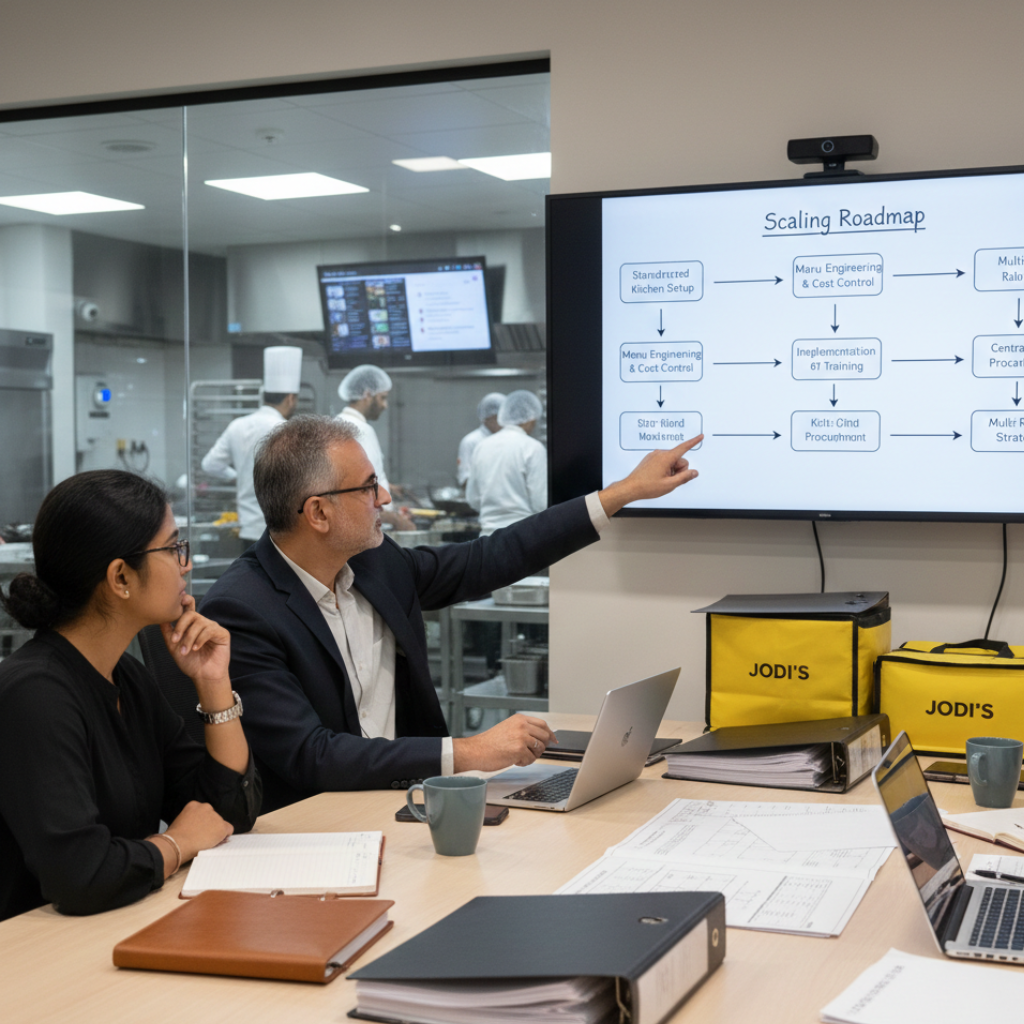
When Is Cloud Kitchen as a Service Actually Worth It? (A Clear Checklist)
CKaaS is worth it if most of these are true:
- You know your contribution margin per SKU
- You are willing to simplify menus
- You want speed without building ops from scratch
- You review numbers weekly
- You choose a CKaaS with deep SOPs, not just space
If not, fix fundamentals first using How Process Discipline Improves EBITDA.
External references: Standardized Work (Lean), ISO 22000, FSSAI Schedule 4.
Final Takeaway: CKaaS Is Worth It When It Buys You Control, Not Convenience
Cloud Kitchen as a Service is worth it when it replaces chaos with systems, reduces capital risk, and improves execution reliability.
It is not worth it when founders outsource thinking, ignore unit economics, or treat operations as someone else’s problem.
Frameworks from GrowKitchen, and operating brands like Fruut and GreenSalad are built to make CKaaS a scale tool not a cost trap.
FAQs: Is Cloud Kitchen as a Service Worth It?
Is CKaaS better than owning a cloud kitchen?
It depends on your stage. CKaaS is better for speed and capital efficiency, ownership is better once systems are mature.
Can CKaaS guarantee profits?
No. CKaaS guarantees infrastructure and systems, not demand or margin.
Who should avoid CKaaS?
Founders with weak unit economics, high discount dependency, or zero process discipline.
What makes a good CKaaS partner?
Deep SOPs, clear role ownership, transparent dashboards, and audit-driven improvement.
- Cloud Kitchen Profitability Consultant in India
- Common Operational Mistakes in Cloud Kitchens
- When Growth Is Hurting Your Cloud Kitchen Operations
- Aggregator Commission Impact in India
- Refunds and Cancellations Impact on Cloud Kitchen Profitability
- Cloud Kitchen Dispatch SOP
- Role-Based Kitchen Operations Explained
- Marketing Spend vs ROI in Cloud Kitchens
- How Process Discipline Improves EBITDA
- Grow Kitchen on Twitter