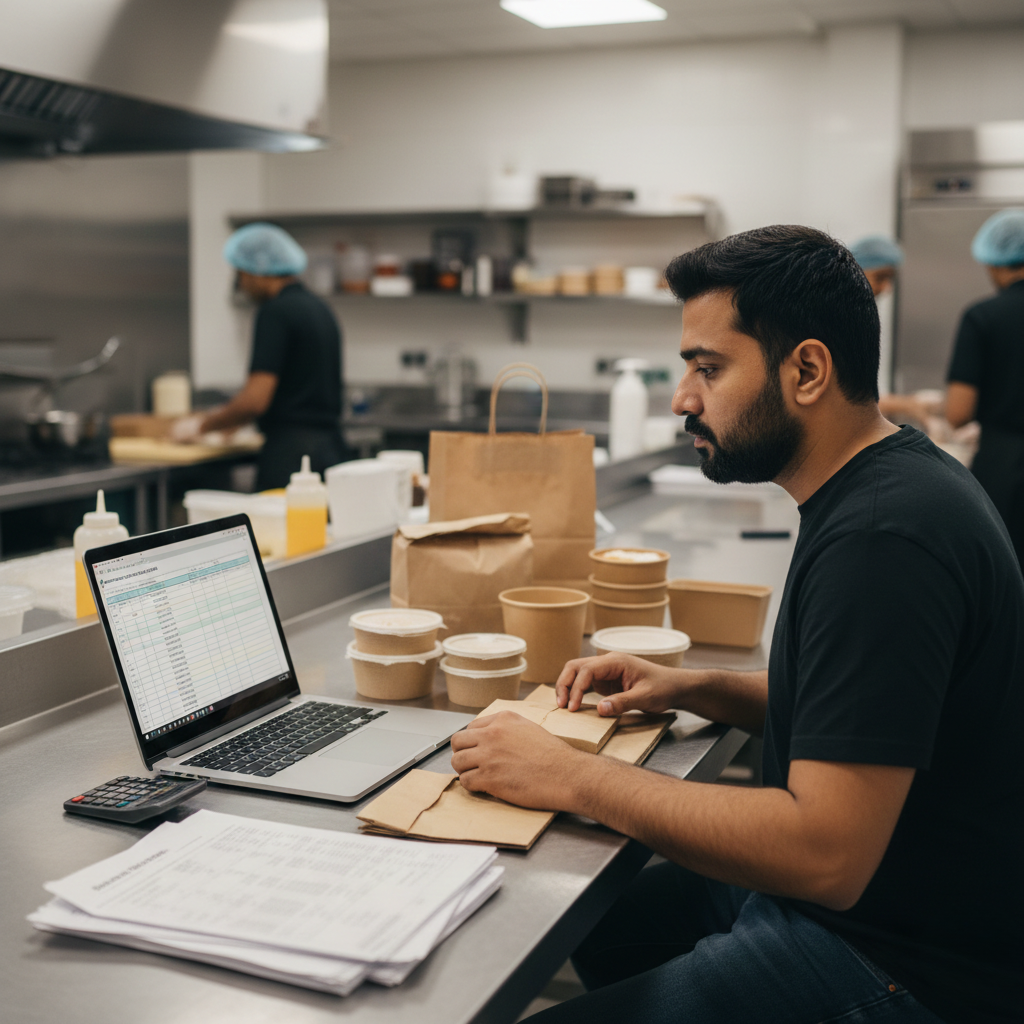
Cloud Kitchen Packaging Cost Optimization Case Study — This case study documents how a multi-brand cloud kitchen reduced excessive packaging costs using CKaaS systems.
Despite steady order volume and stable ratings, margins were shrinking due to uncontrolled packaging spend. Over sixty days, packaging costs were reduced significantly without changing customer experience or delivery platforms.
Cloud Kitchen Packaging Cost Optimization Case Study: Case Background
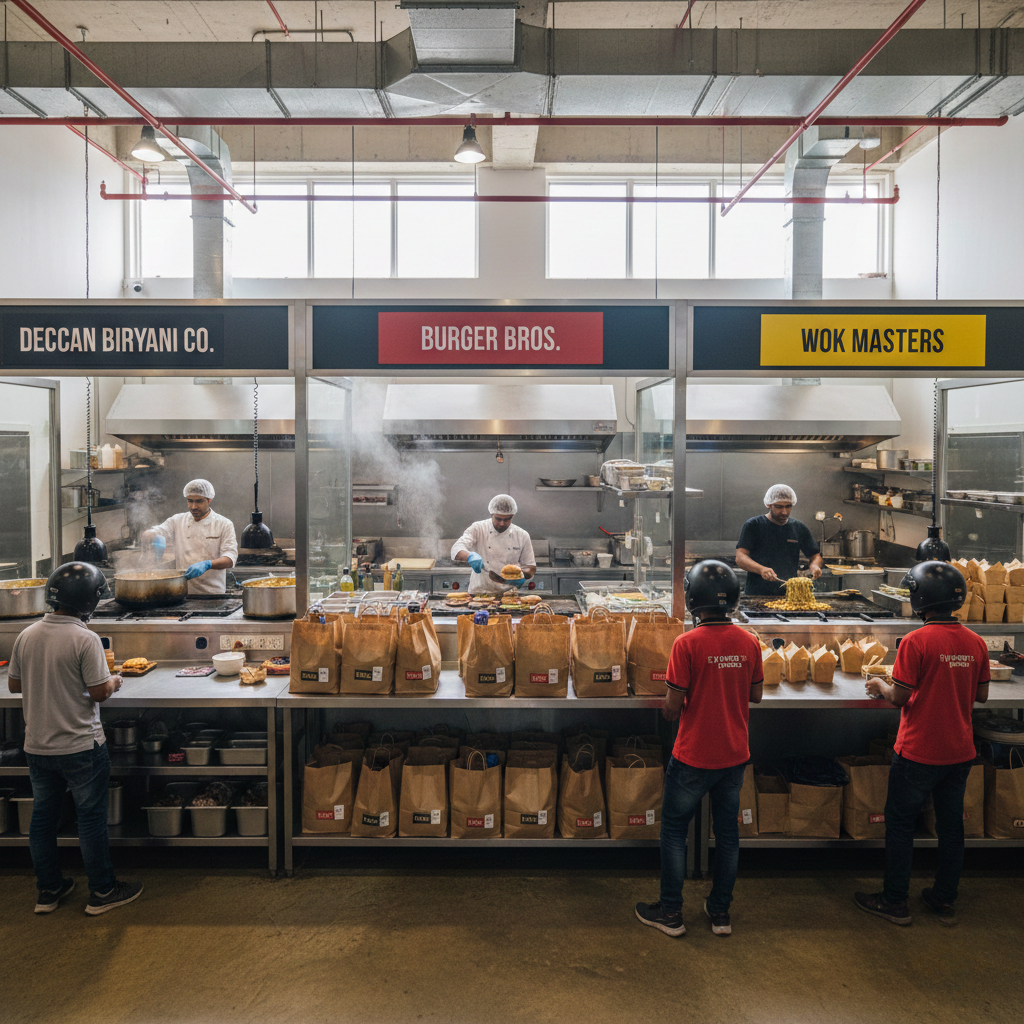
The kitchen operated three delivery-only brands from a single facility, processing between one hundred eighty and two hundred thirty orders daily.
Packaging cost as a percentage of revenue had steadily increased due to inconsistent packing practices and overuse of materials.
This Cloud Kitchen Packaging Cost Optimization Case Study highlights how hidden operational inefficiencies impact profitability.
Cloud Kitchen Packaging Cost Optimization Case Study: The Core Problem
The founder initially believed higher packaging costs were unavoidable due to customer expectations.
However, the real issue was inconsistent container usage, unnecessary layering, and lack of standardisation.
Intervention: Packaging Cost Audit
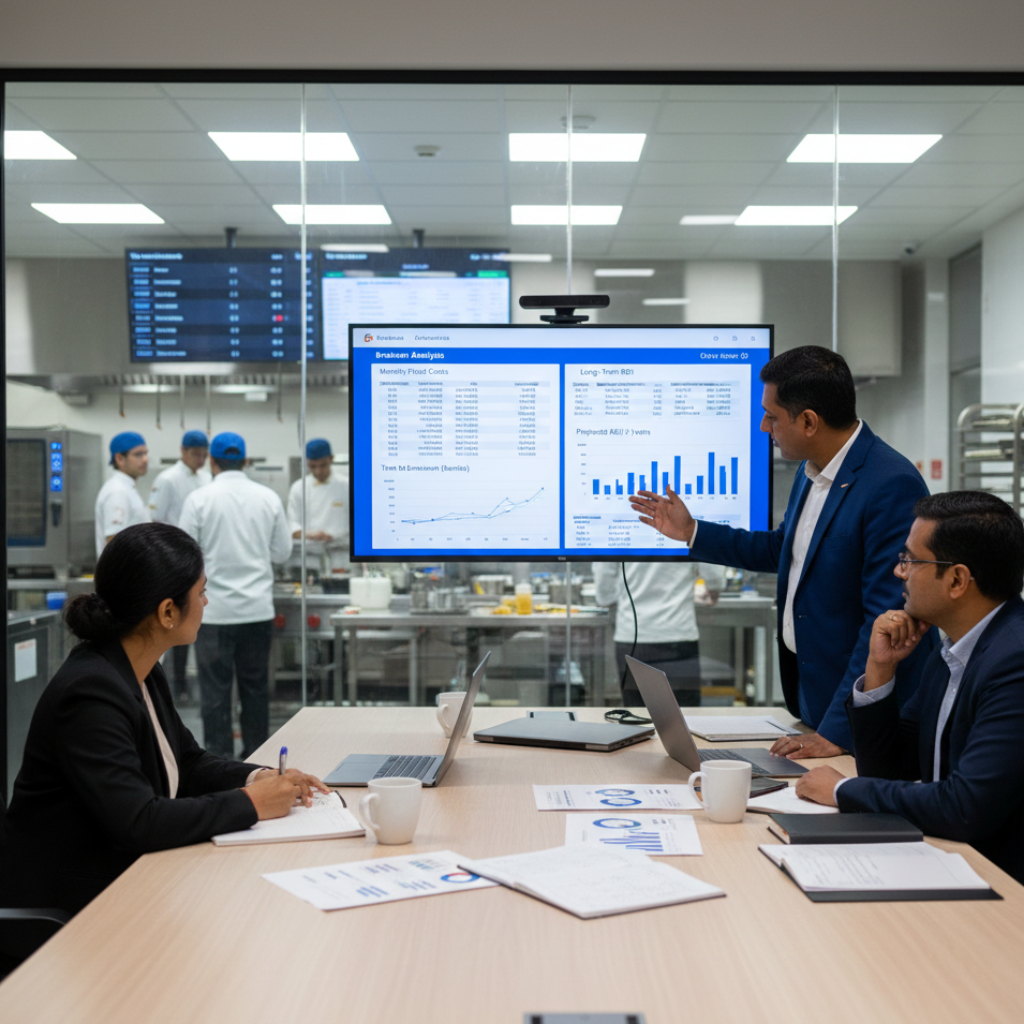
CKaaS conducted a detailed audit analysing container usage and packing patterns across orders.
The audit revealed that most excess cost came from avoidable overuse like extra containers and double packaging.
Intervention: Identifying Packaging Breakdown Points
Packing workflows varied significantly across staff and shifts.
Container selection depended on individual judgment, leading to inconsistency and cost leakage.
Cloud Kitchen Packaging Cost Optimization Case Study: CKaaS SOP Systems
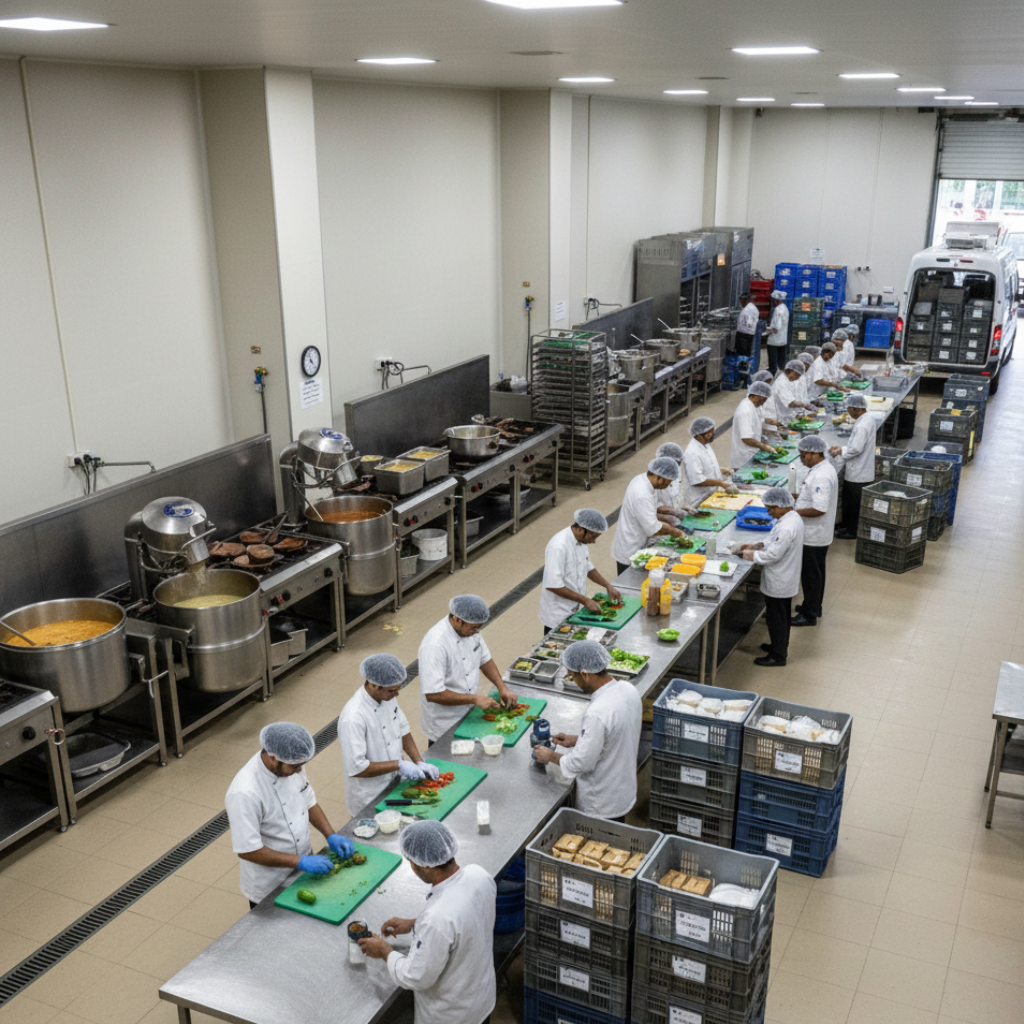
CKaaS introduced item-wise packaging SOPs defining exact container types and usage rules.
Visual SOPs removed guesswork and ensured consistent packaging decisions.
Redundant packaging was eliminated without affecting food safety or presentation.
Operational Insight: Why Packaging Costs Increase
Packaging costs usually increase not because of higher prices but because of inconsistent usage.
Without clear guidelines, staff tend to over-pack to avoid mistakes, leading to unnecessary cost.
Over time, these small decisions compound into significant financial leakage.
This Cloud Kitchen Packaging Cost Optimization Case Study shows that control, not cost-cutting, drives efficiency.
Operational Insight: How Standardisation Reduces Cost
Standardisation ensures that every order uses the exact required packaging—no more, no less.
When container usage is predefined, procurement becomes predictable and wastage reduces significantly.
It also speeds up packing time, improving kitchen throughput during peak hours.
Teams develop consistency, reducing dependency on individual judgment.
Over time, this creates a stable system where cost remains controlled even as order volume grows.
Operational Insight: How Packaging Standardisation Improves Scalability
Packaging standardisation not only reduces cost but also improves scalability across multiple locations and teams. When every order follows the same packaging rules, consistency becomes independent of staff experience.
This allows new team members to be trained faster, as they do not need to rely on judgment. Instead, they follow clearly defined SOPs for every item and scenario.
Standardised packaging also simplifies procurement. Predictable consumption patterns help optimise inventory planning and reduce over-ordering or stockouts.
As order volume increases, these systems ensure that operational complexity does not increase at the same pace. This is what enables sustainable scaling without cost leakage.
Intervention: Shift-Level Packaging Discipline

Daily shift reviews focused on one packaging mistake from the previous day.
This improved awareness and ensured SOP adherence across teams.
Outcome and Results
Within sixty days, packaging cost per order reduced significantly and became stable.
Customer experience remained unchanged while operational efficiency improved.
Key Takeaways
Packaging cost problems are usually execution problems, not pricing problems.
This Cloud Kitchen Packaging Cost Optimization Case Study proves that systems drive cost efficiency.
Related Case Studies and Reads
- How to Fix a Loss-Making Cloud Kitchen
- Why Discounts Are Not Solving Your Profit Problem
- From 50 Orders to 300 Orders: Operations Scaling Guide
- Standardizing Kitchen Execution Across Shifts
Have Questions?
If you want deeper clarity on packaging optimisation, visit Grow Kitchen FAQs.