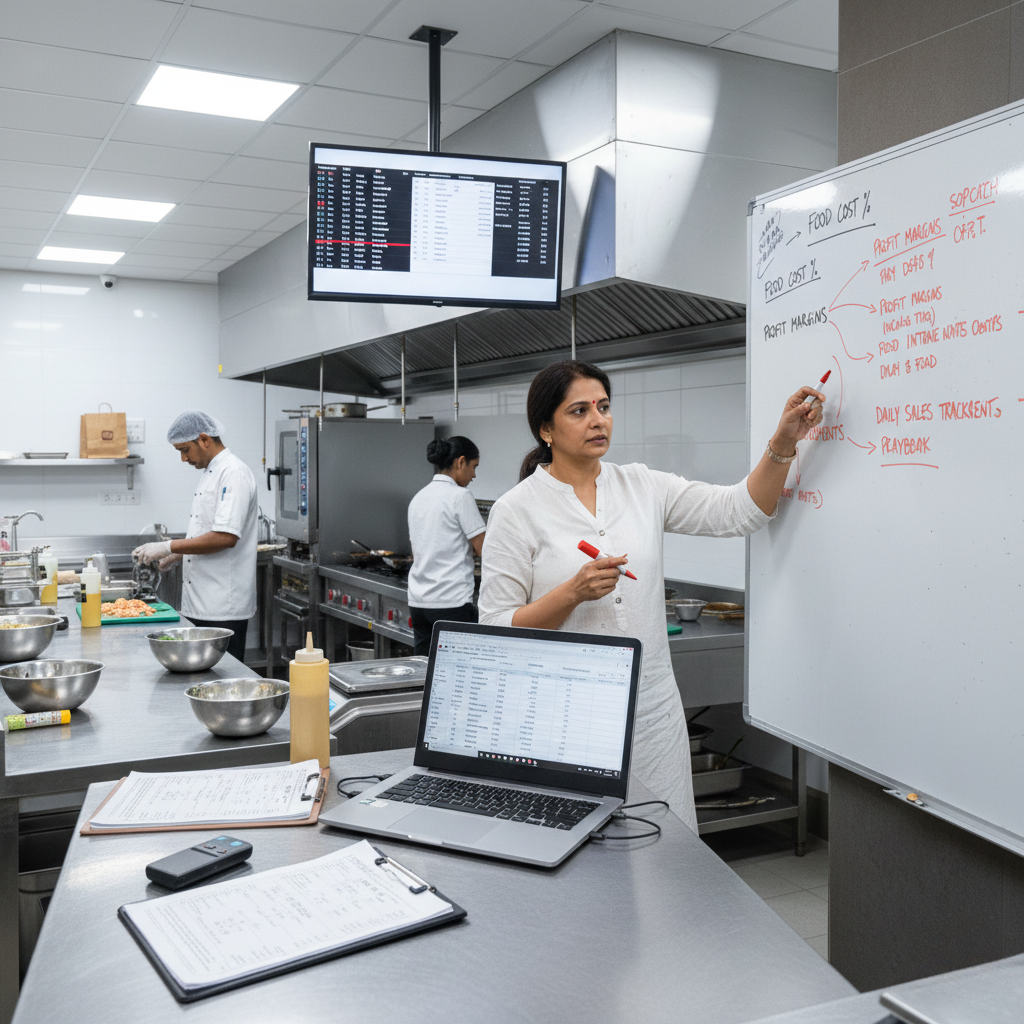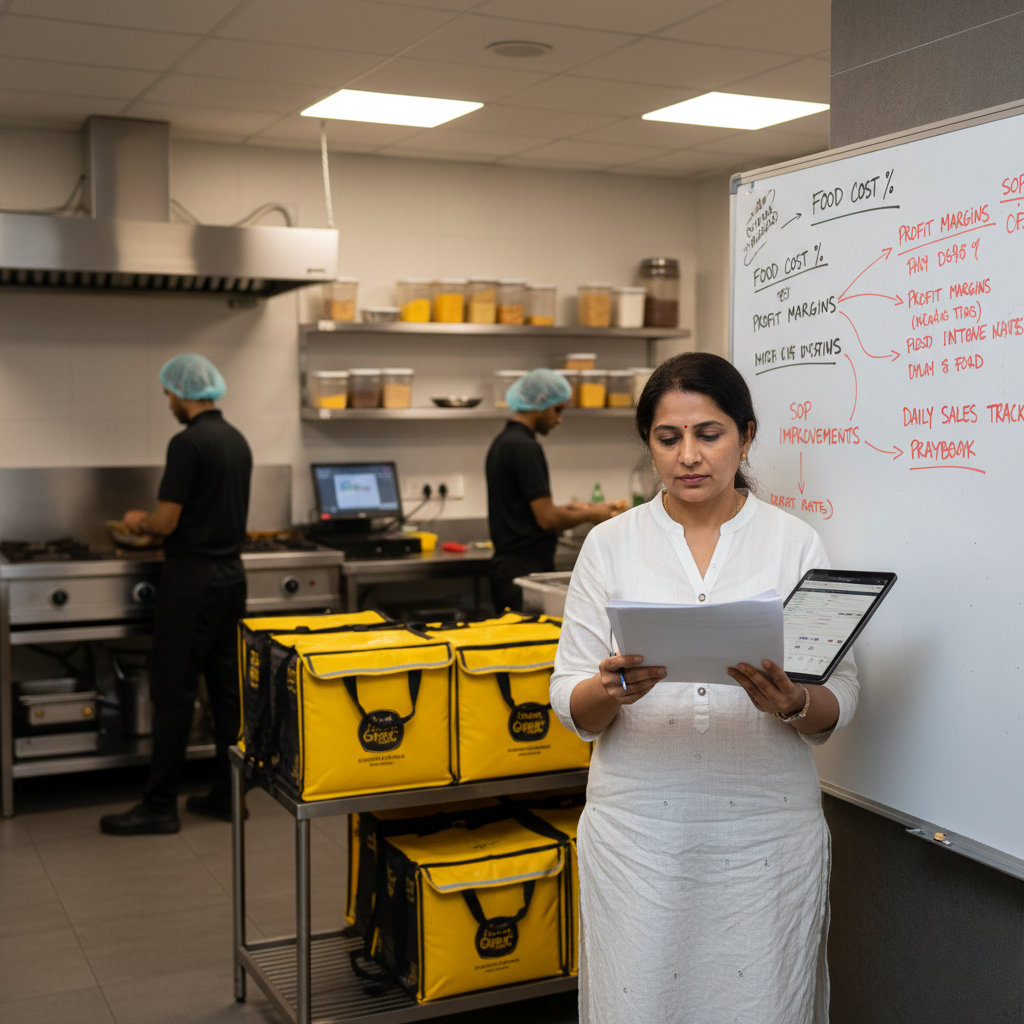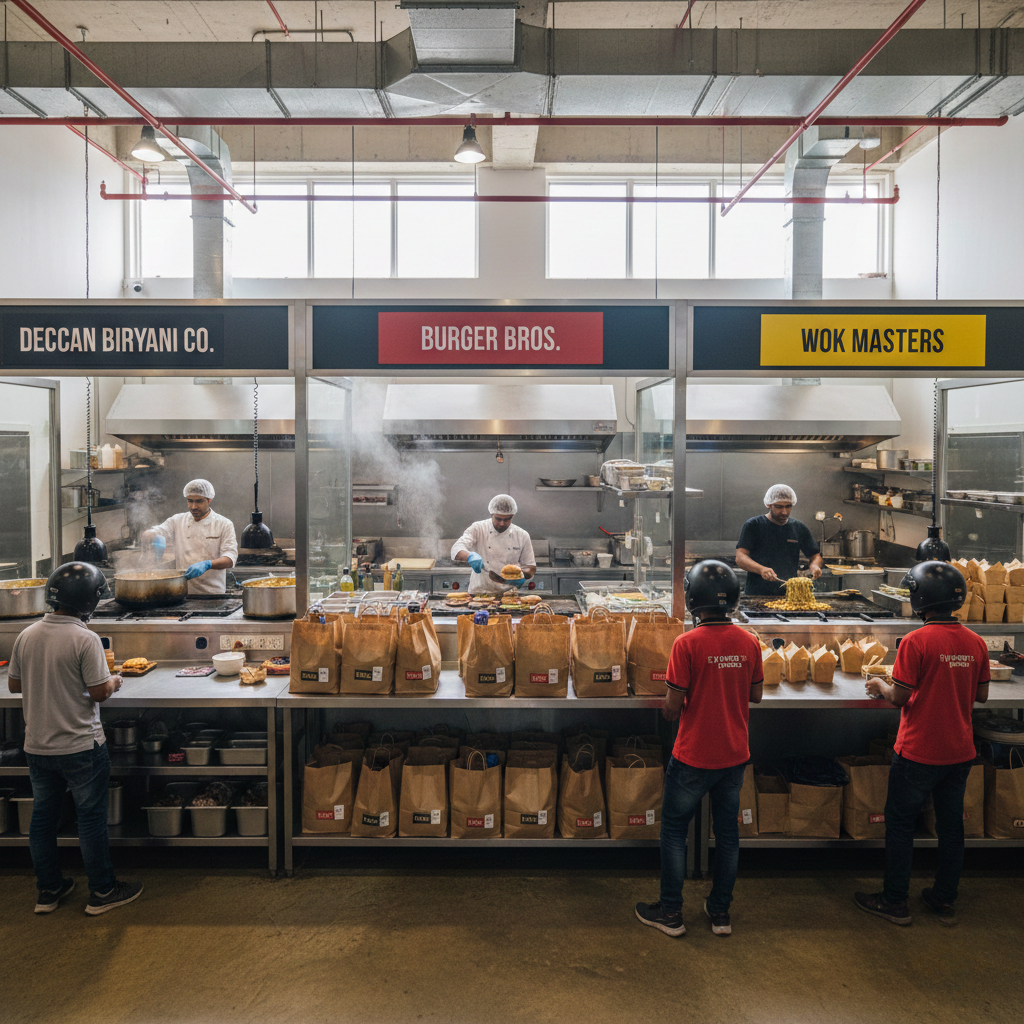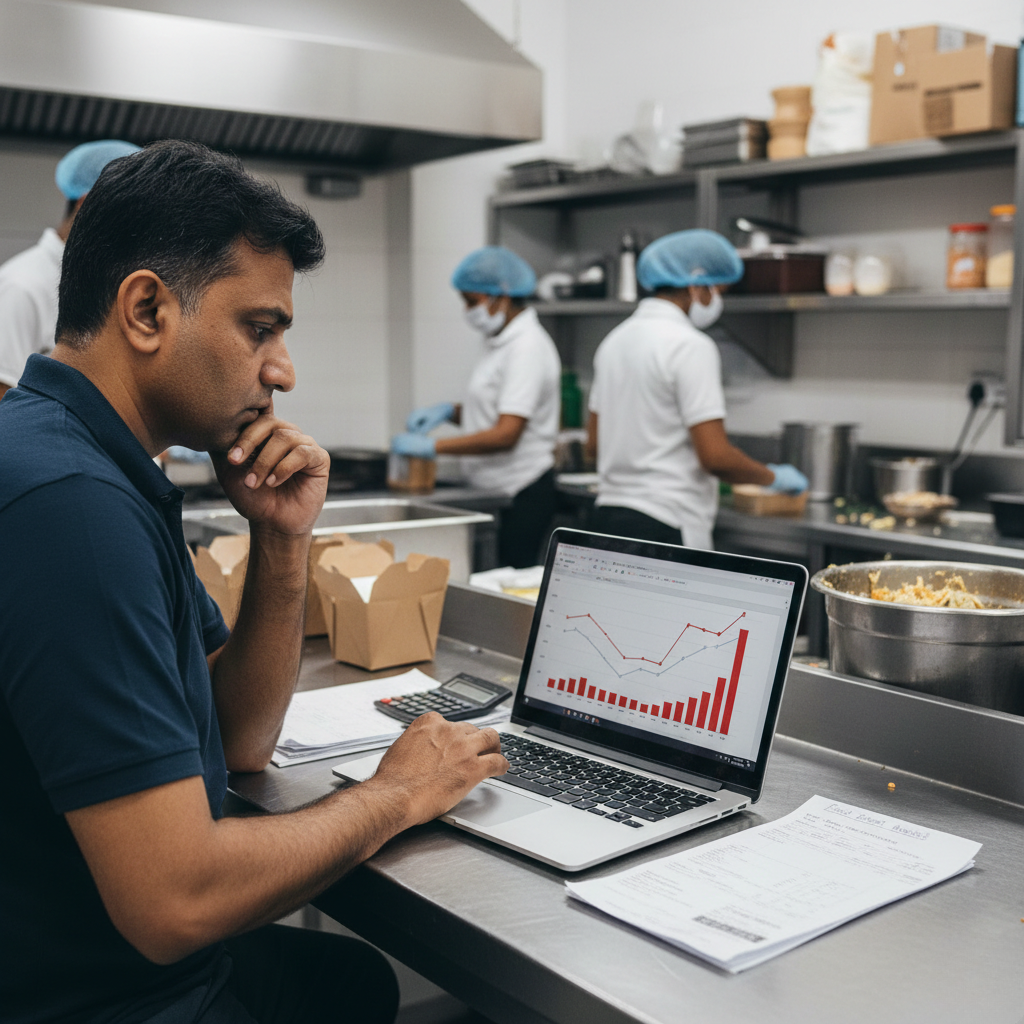
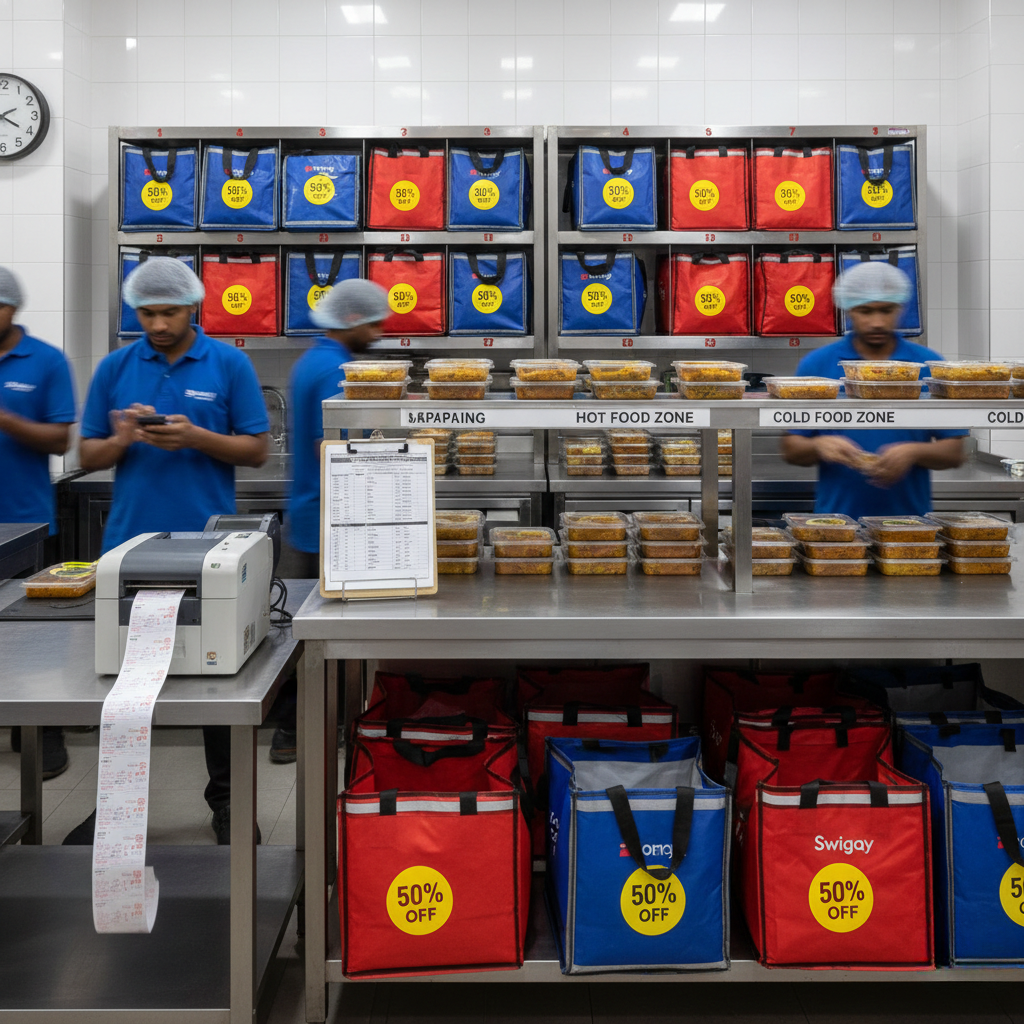
Why does discounting stops working over time? is not a “sales problem” or a “need more offers” problem. It is a customer-conditioning + unit-economics + trust-signal problem. Discounts can lift short-term conversion, but over time they train customers to wait, weaken value perception, attract deal-only buyers, and amplify operational leaks (refunds, delays, wrong items) that kill repeat orders. When discounting stops working, it usually means your growth is running on artificial demand: low trust signals, weak menu positioning, inconsistent delivery outcomes, and thin contribution margin per order. This guide explains why discounting stops working over time in Indian cloud kitchens and how to build a discount-resistant operating system end-to-end using menu engineering, value positioning, SOPs, station gates, reliability control, and feedback loops using systems, not supervision.
Why discounting stops working over time? The Real Reason “Offers” Stop Saving Your Orders
Many cloud kitchen founders start with a simple growth hack: run discounts, push offers, watch orders rise. And for a while it works. Impressions go up, conversions improve, and the dashboard looks “healthy.”
Then the same founder hits a confusing phase: the discount is still live, but orders don’t rise like they used to. Worse, profit feels even tighter. The kitchen feels busier, refunds and complaints increase, and repeat customers don’t feel loyal they feel price-sensitive.
The hard truth: discounting is a short-term lever, not a long-term system. When you use it as your primary growth engine, you train the market to buy you only when you’re cheaper. Over time, discounting stops creating “growth” and starts creating “dependency.”
If you want the profitability foundation lens first, start with Cloud Kitchen Profitability Consultant in India and map recurring execution leaks using Common Operational Mistakes in Cloud Kitchens.
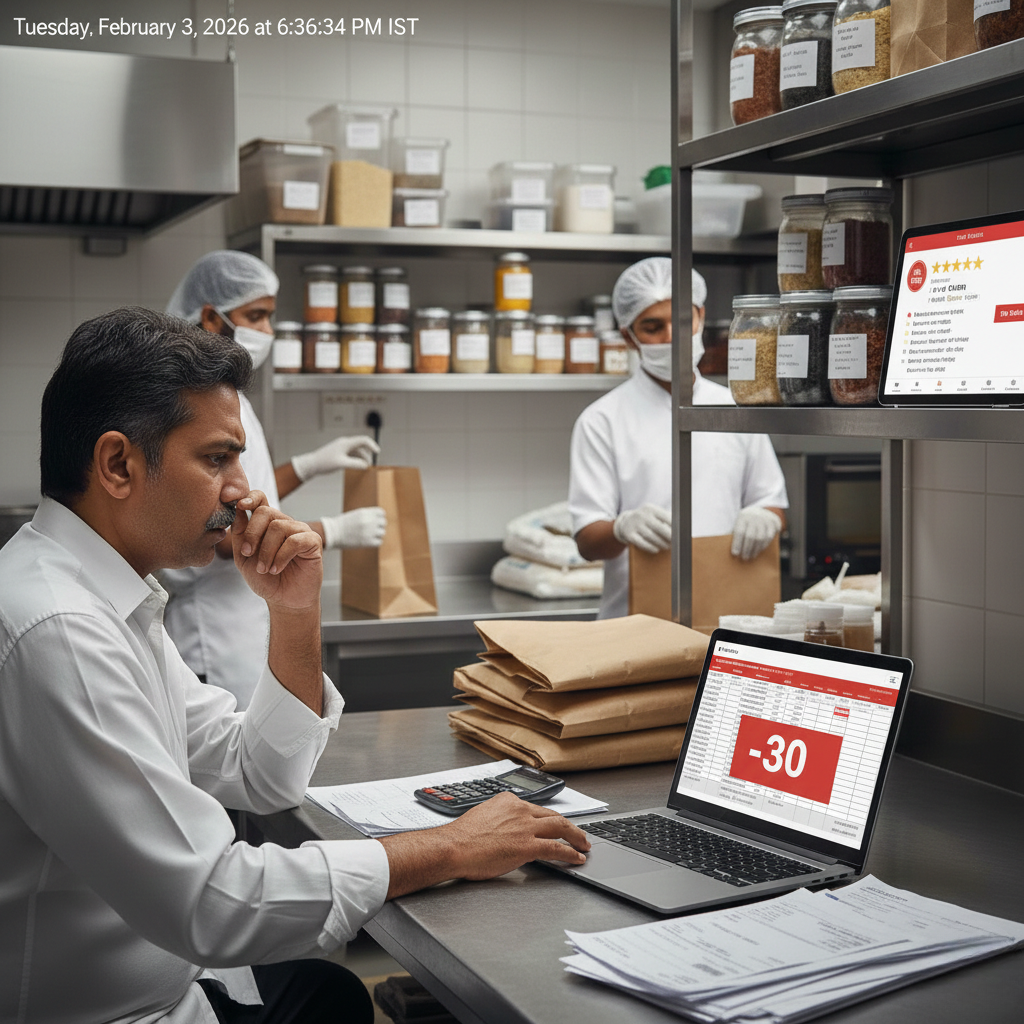
What “Discounting Stops Working” Actually Means (Not Just “Market Is Slow”)
When discounting stops working, it usually means one of three things is happening: customers are now conditioned to wait for deals, the platform is no longer rewarding your offer with extra distribution, or your outlet’s trust and reliability signals are too weak to scale beyond price.
In aggregator markets, customers don’t “choose a brand” like they do in retail. They choose a listing in a grid. The grid is influenced by: thumbnails, ETA, rating, price bands, offers, availability, and past satisfaction.
Discounts can win clicks. But long-term growth depends on what happens after the click: conversion quality, delivered experience, and repeat behavior. If the delivered outcome is inconsistent (cold food, leakage, missing items), discounting attracts more buyers but also creates more complaints. That lowers ratings, increases refunds, and damages trust.
So “discounting stops working” is usually a signal that your outlet is not yet strong enough to compete on value, reliability, and differentiation only on price. And price competition always gets harder over time.
The Unit Economics Lens: Discounts Shrink Contribution Margin, Then Force More Discounts
In cloud kitchens, profit is decided per order. Discounts directly reduce the contribution margin (CM) you keep after platform costs. A practical order-level view looks like this:
Order Value minus Aggregator commission & charges minus Packaging cost minus Food cost (COGS) minus Discount burn minus Refund/penalty leakage equals Contribution Margin.
The danger is not only “discount reduces CM.” The deeper danger is the loop discounting creates: discounts attract price-sensitive customers, price-sensitive customers complain more when expectations aren’t met, complaints trigger refunds and rating volatility, rating volatility reduces conversion, and founders discount even more to recover sales.
If you want the payout-quality and commission lens in detail, read Aggregator Commission Impact in India. And if refunds/cancellations rise with offers, map it using Refunds and Cancellations Impact on Cloud Kitchen Profitability.
The goal is not “never discount.” The goal is “discount as a controlled lever, not a permanent crutch.”
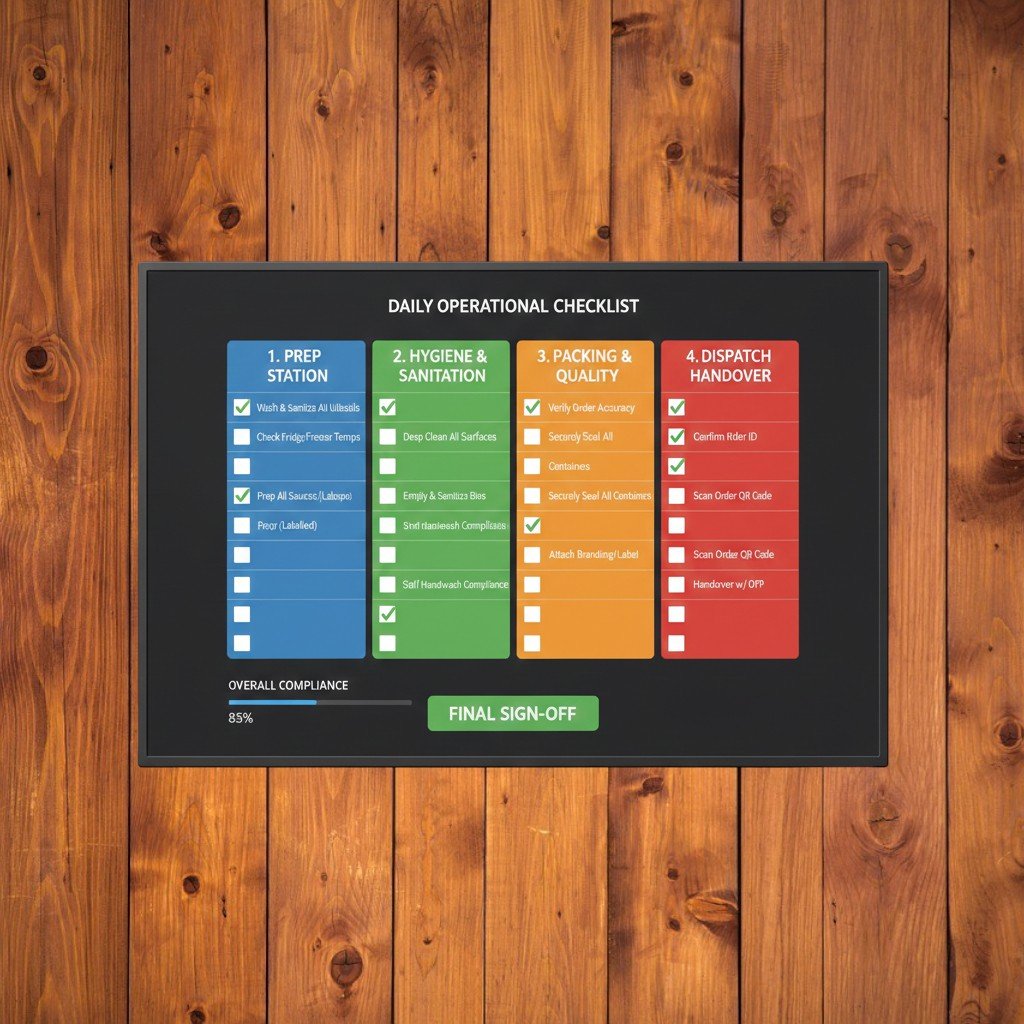
The 14 Reasons Discounting Stops Working Over Time (And What Each One Looks Like)
Discounting stops working because markets adapt. Customers adapt. Competitors adapt. And platforms adapt. Below are the most common reasons discounting loses power in Indian delivery kitchens.
1) You train customers to wait for deals. When you discount frequently, customers learn your “real price” is lower. They delay purchase until the next offer. Your baseline conversion drops, and offers become the only way to trigger orders.
2) You attract deal-only buyers, not loyal buyers. Deals bring volume, but not always retention. Many discount-driven customers chase the cheapest listing and switch instantly. They don’t remember your brand; they remember your price.
3) Your outlet stops looking premium even if food is good. Frequent discounts silently signal “this brand needs offers to sell.” That weakens perceived value. Customers become more critical and less forgiving.
4) Competitors match your discount, so the advantage disappears. Discounting is easy to copy. When competitors match your price, you lose differentiation and you’ve already sacrificed margin. This is why price wars rarely create durable winners.
5) Platforms don’t reward the same offer forever. Aggregators optimize for platform ROI. If your offer no longer improves successful orders per impression, the platform stops boosting it. Discounting then feels like it “stopped working” even though the offer is still live.
6) Discounting increases volume, and volume multiplies weak SOPs. Offers create peak pressure. Peak pressure creates: portion drift, wrong items, missing add-ons, late dispatch, and leakage. The offer may raise orders, but the operational failures create refunds and rating damage.
7) Refund leakage increases and silently cancels out the “sales gain.” Many kitchens celebrate higher gross sales on offer days, then ignore the refund spike and remake cost. If refunds rise with discounts, discounting is not “working” it’s amplifying leakage.
8) Ratings become volatile, reducing conversion even at discounted prices. Low ratings reduce trust. Trust affects conversion more than price after a point. This is why a discounted listing can still underperform if the rating signal is weak. If you’re seeing this pattern, read: Why Do Ratings Drop Even When Food Quality Is Good? (if live on your site).
9) Discounts compress your ability to invest in packaging and reliability. When margin shrinks, founders cut quality inputs: cheaper packaging, fewer staff, less prep buffer. That increases complaints. Complaints reduce trust. Trust loss makes discounts less effective.
10) Your menu has too many low-margin SKUs, so offers burn faster. If your bestsellers already have thin contribution margin, discounting turns them into loss-leaders. Growth becomes “more orders, less money.” Fixing menu mix is often more powerful than increasing offers.
11) Expectations rise when you discount (customers become stricter). This sounds backward, but it’s common: discounted buyers often demand “perfect value.” Any mismatch triggers complaints: quantity less, not as expected, packaging issues. The result is higher support burden and more refunds.
12) Your outlet loses visibility if discount-led orders reduce success rate. Platforms prefer reliable converters. If offer-driven volume produces late deliveries, cancellations, or complaints, the platform may reduce distribution later. That makes discounting feel weaker over time.
13) There is no retention engine, so you keep paying for the same customer again. Discounting without a retention system means your repeat rate stays weak. You continuously “buy” customers instead of keeping them. That keeps CAC high inside aggregators and erodes profit.
14) No feedback loop connects offer performance to SOP upgrades. Many founders run offers and only watch order count. They don’t review: refund reasons, late order counts, SKU-level margin on offer days, and complaint themes. Without feedback loops, offers keep scaling the same operational cracks.
For the systems stack that reduces complaints and leakage, read How SOPs Reduce Food Cost & Complaints and implement dispatch discipline using Cloud Kitchen Dispatch SOP.
Swiggy/Zomato Reality: Discounts Are a Short-Term Conversion Tool, Not a Long-Term Brand Strategy
Swiggy/Zomato are marketplaces. They reward outlets that maximize successful orders per impression. Discounts can temporarily increase conversion, but if discounted orders cause: late deliveries, refunds, cancellations, and rating drops, then the platform sees your outlet as higher risk.
That’s why discounting loses power: it cannot override weak trust signals forever. In the long run, the platform prefers outlets that convert reliably with stable outcomes.
External policy context helps while mapping refund/cancellation mechanics: Swiggy Refund & Cancellation Policy and Zomato Online Ordering Terms.
The actionable mindset: use discounting as a controlled campaign lever, while building operations and menu systems that make your outlet “purchase-worthy” without constant price cuts.
Discount-Resistant Growth Comes From Two Engines: Value Positioning + Delivery Reliability
Discounts stop working when you have no other reason to be chosen. So the long-term fix is not “bigger discounts.” The fix is building two engines: (1) value positioning that increases conversion without price cuts, and (2) delivery reliability that protects ratings and repeat orders.
Value positioning looks like: clear bestsellers, strong naming, strong photos, tight categories, and engineered combos that feel like value without destroying margin. Reliability looks like: packing checklist gates, add-on verification, label discipline, liquid sealing rules, and fast dispatch flow.
If discount days are triggering more chaos, strengthen the floor using: Cloud Kitchen Dispatch SOP and audit repeat failure patterns using: Common Operational Mistakes in Cloud Kitchens.
Why Discount Control Must Be Role-Based (Not “Let’s Run Offers Carefully”)
Offer-led growth collapses when responsibility is shared and outcomes are unclear. Discount days need ownership: someone owns prep readiness, someone owns packing accuracy, someone owns dispatch speed, and someone owns post-campaign review.
Here is what role-based discount control looks like:
Prep role:
builds batch buffers and par levels so “unavailability” and cancellations don’t spike on offer days.
Cook role:
follows recipe cards and holding-time rules so output stays consistent under volume.
Pack role:
runs the packing checklist gate, verifies add-ons, seals and labels correctly to prevent refunds.
Dispatch role:
controls handover flow so late dispatch and cold outcomes don’t destroy ratings during campaigns.
Manager role:
reviews offer results weekly: CM impact, refund reasons, complaint themes, and SOP upgrades.
If you want the role-based operations framework, use Role-Based Kitchen Operations Explained.
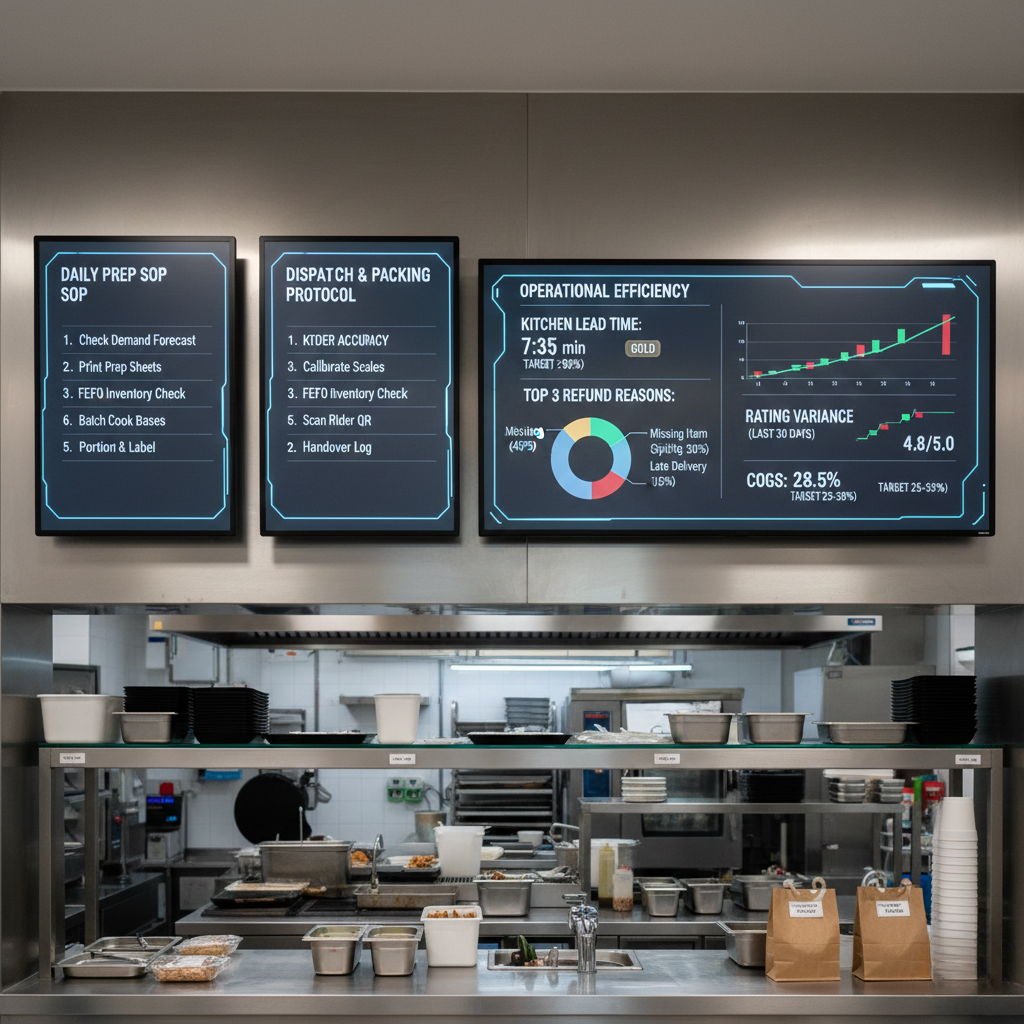
How to Make Discounting Work Again (Without Becoming Discount-Addicted) in 7 to 30 Days
Discounting becomes powerful again when it is used strategically on top of stable systems. Below is a rollout sequence used in cloud kitchens where discounts must lift volume without destroying margin.
Step 1 (Day 1–2): Separate “offer uplift” from “profit impact.” Pull last 30 days campaign days and non-campaign days. Compare: order volume, average order value, discount burn %, refunds, cancellations, and rating movement. If offer days increase refunds and reduce CM, the offer is not working it’s leaking.
Step 2 (Day 1–3): Calculate contribution margin for top 20 SKUs (with discount scenarios). Identify which SKUs can handle discounts without becoming loss-makers. Many kitchens discount everything equally. Smart kitchens discount selectively based on CM and conversion role.
Step 3 (Day 2–5): Rebuild your “value menu” so you don’t need constant discounts. Create: bestsellers, engineered combos, and add-ons that lift AOV. The goal is to improve conversion through choice architecture, not only through price cuts. If you want the bigger economics lens, map it with: Marketing Spend vs ROI in Cloud Kitchens.
Step 4 (Day 3–7): Fix the top 2 refund causes triggered by volume. Discount days amplify packing and dispatch failures. Pull refund reasons and fix the top two: liquids first (spillage), then add-on misses or wrong items. Install a packing checklist gate + dispatch scan using: Cloud Kitchen Dispatch SOP.
Step 5 (Week 2): Set “offer-day capacity rules” so operations don’t collapse. Define: max concurrent orders, temporary SKU reduction during peak, and holding-time limits. A controlled menu on offer days often outperforms a chaotic full menu with high refunds.
Step 6 (Week 2): Shift from blanket discounts to targeted levers. Replace “flat % off on everything” with: combo value, add-on bundling, time-window offers, and selective discounts on high-margin SKUs. This lifts conversion without destroying CM.
Step 7 (Week 3): Run weekly “discount audit” like an ops audit. Review: CM by SKU on offer days, refund reasons, cancellations, late dispatch counts, and rating movement. Make 3 changes per week. Measure again.
Step 8 (Week 3–4): Lock a feedback loop: every campaign updates SOPs and menu rules. If offer-day refunds rise → packing SOP upgrade. If offer-day cancellations rise → prep buffer upgrade. If offer-day CM collapses → pricing/discount structure upgrade. Without feedback loops, discounting will keep losing power.
If you want discipline-led profitability thinking, map this with How Process Discipline Improves EBITDA.
External process references (useful for standardisation mindset): Standardized Work (Lean lexicon), ISO 22000 overview, and FSSAI Hygiene Requirements (Schedule 4 reference).
Final Takeaway: Discounting Stops Working When It Becomes Your Only Reason to Win
Discounting stops working over time because markets adapt and customers get conditioned. If your outlet relies on price cuts to convert, you eventually attract deal-only demand, compress margins, and amplify operational failures that damage trust.
Discount-resistant kitchens become predictable: value is clear without heavy offers, menu converts through structure and differentiation, dispatch is reliable, refunds and cancellations stay controlled, and ratings remain stable. That predictability is what creates sustainable growth without permanent discount addiction.
Operational frameworks from GrowKitchen, and operating partner brands like Fruut and GreenSalad are built to convert “offer-dependent kitchens” into “value-led, profitable kitchen networks.”
FAQs: Why Does Discounting Stop Working Over Time?
What is the biggest reason discounting becomes less effective?
Customer conditioning. Frequent discounts train people to wait and buy only on deals, reducing baseline conversion.
Can discounting hurt my ratings and visibility?
Yes, if discount-led volume increases delays, refunds, or wrong items. Those outcomes damage ratings and can reduce distribution.
What should I fix first if discounting isn’t lifting orders?
First identify whether the issue is trust (ratings/refunds), conversion (menu structure/value perception), or reliability (dispatch/stock-outs). Fix the top two repeating leak points, then use targeted discounts instead of blanket offers.
How do I run offers without destroying profit?
Calculate contribution margin by SKU, discount only on SKUs that can absorb it, engineer combos/add-ons to lift AOV, and install packing/dispatch gates so offer volume doesn’t spike refunds.
- Cloud Kitchen Profitability Consultant in India
- Marketing Spend vs ROI in Cloud Kitchens
- Aggregator Commission Impact in India
- Refunds and Cancellations Impact on Cloud Kitchen Profitability
- Common Operational Mistakes in Cloud Kitchens
- Cloud Kitchen Dispatch SOP
- How SOPs Reduce Food Cost & Complaints
- Role-Based Kitchen Operations Explained
- How Process Discipline Improves EBITDA
- Grow Kitchen on Twitter