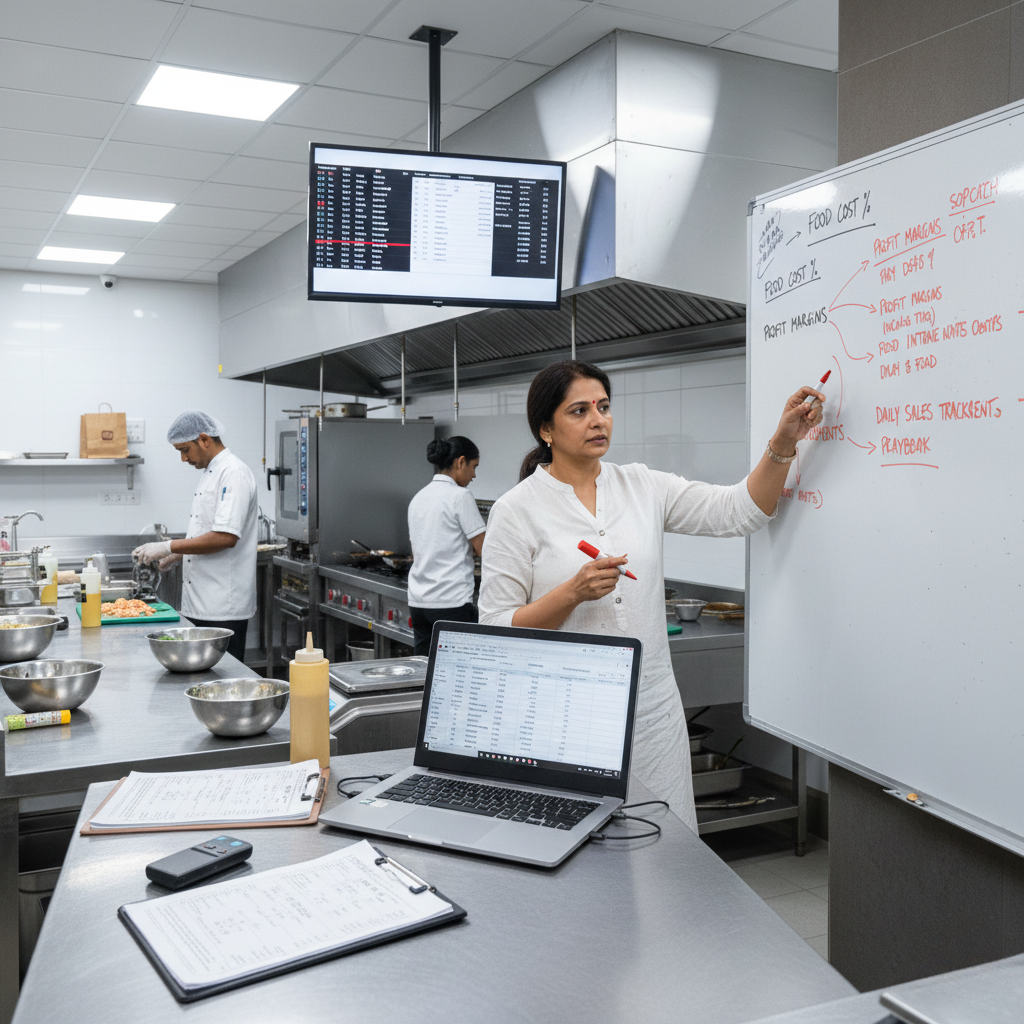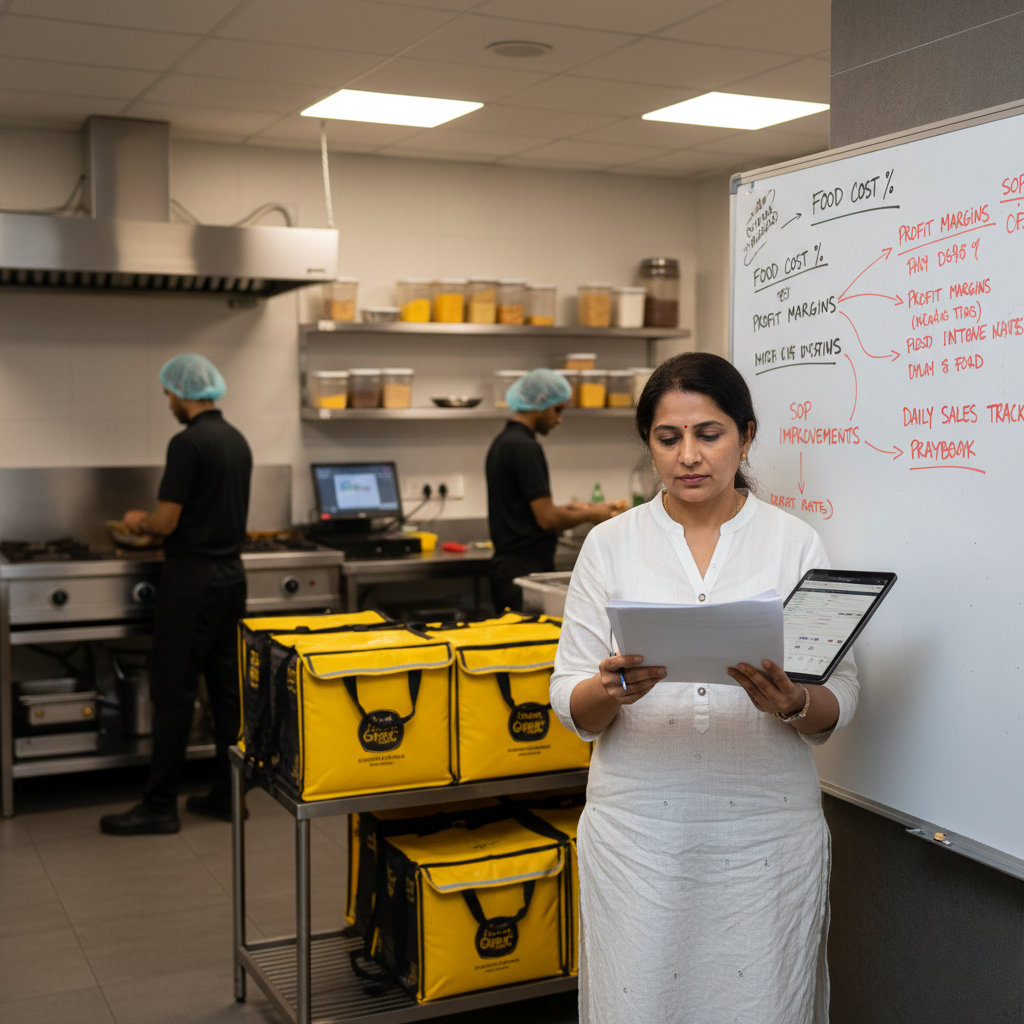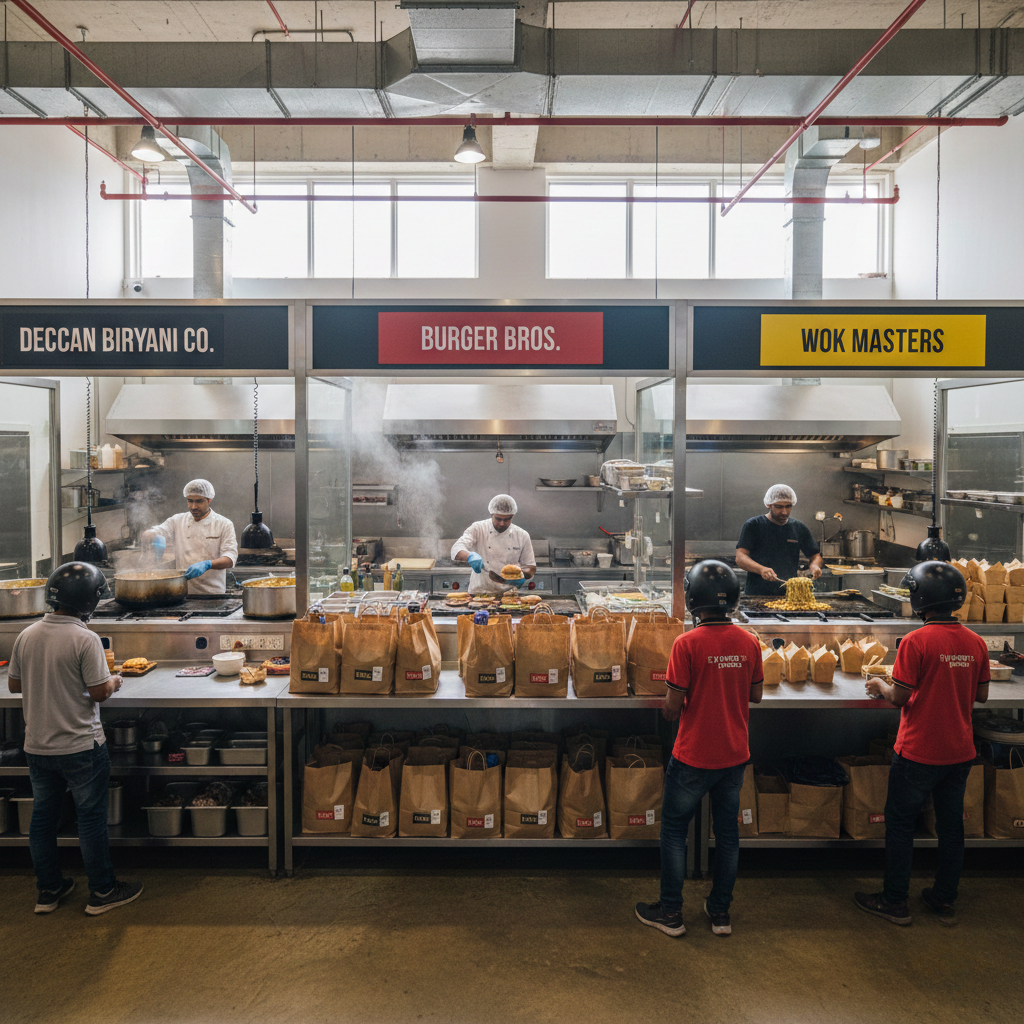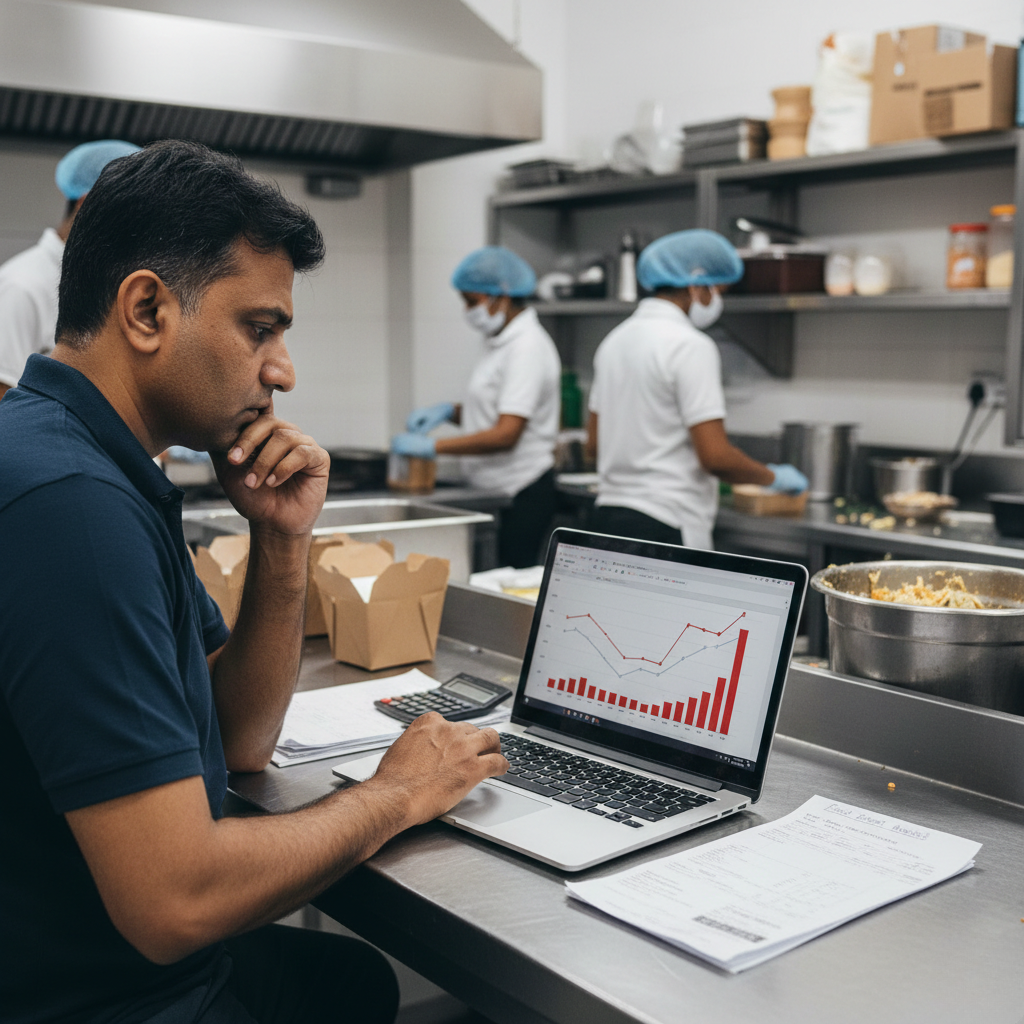
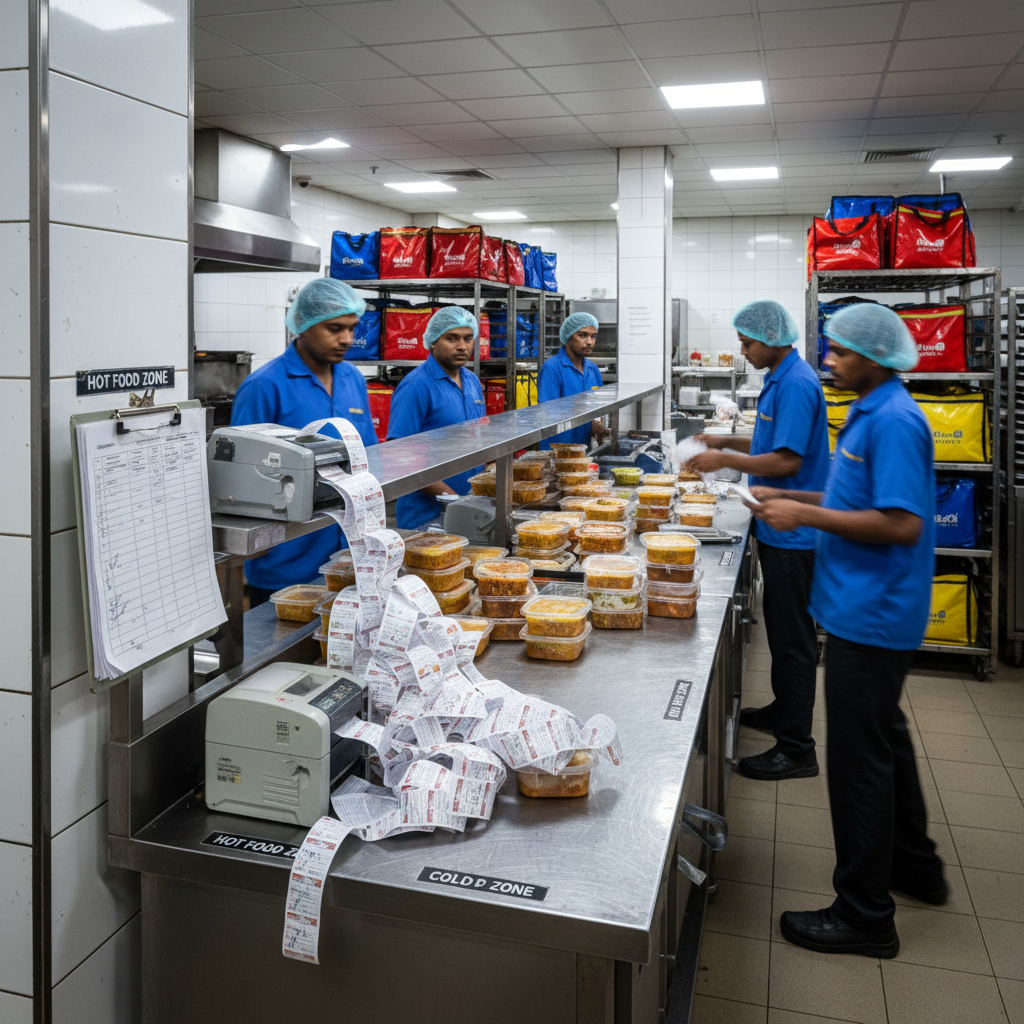
Why does aggregator growth not translating to profit? is not a “sales problem” or a “need more marketing” problem. It is a unit-economics + payout-quality + execution-discipline problem. Swiggy/Zomato growth can increase revenue while quietly destroying contribution margin through commissions, discount burn, refund leakage, packing/dispatch failures, and portion drift. When orders rise but profit doesn’t, it usually means you are scaling volume on broken economics: low contribution margin per order, discount dependency, high refunds, high cancellations, and weak SOP control. This guide explains why aggregator growth fails to translate into profit in Indian cloud kitchens and how to build a profit-first operating system end-to-end using menu engineering, pricing logic, SOPs, station gates, procurement discipline, audits, and feedback loops using systems, not supervision.
Why Does Aggregator Growth Not Translate to Profit? The Real Reason “More Orders” Still Feels Like “More Stress”
Many cloud kitchen founders enter a frustrating phase: orders are rising, dashboards look active, some days even feel “busy,” yet bank balance doesn’t improve.
Instead, the business feels heavier: more peak chaos, more staff pressure, more refunds, more discounting, more customer complaints, and still no clarity on profit.
The hard truth: aggregator growth can be revenue growth without profit growth. Because aggregators scale volume faster than they scale your control systems. If your unit economics are weak, growth multiplies your leakage.
If you want the profitability foundation lens first, start with Cloud Kitchen Profitability Consultant in India and map recurring execution leaks using Common Operational Mistakes in Cloud Kitchens.
What “Aggregator Growth” Actually Means (Not Always “Business Growth”)
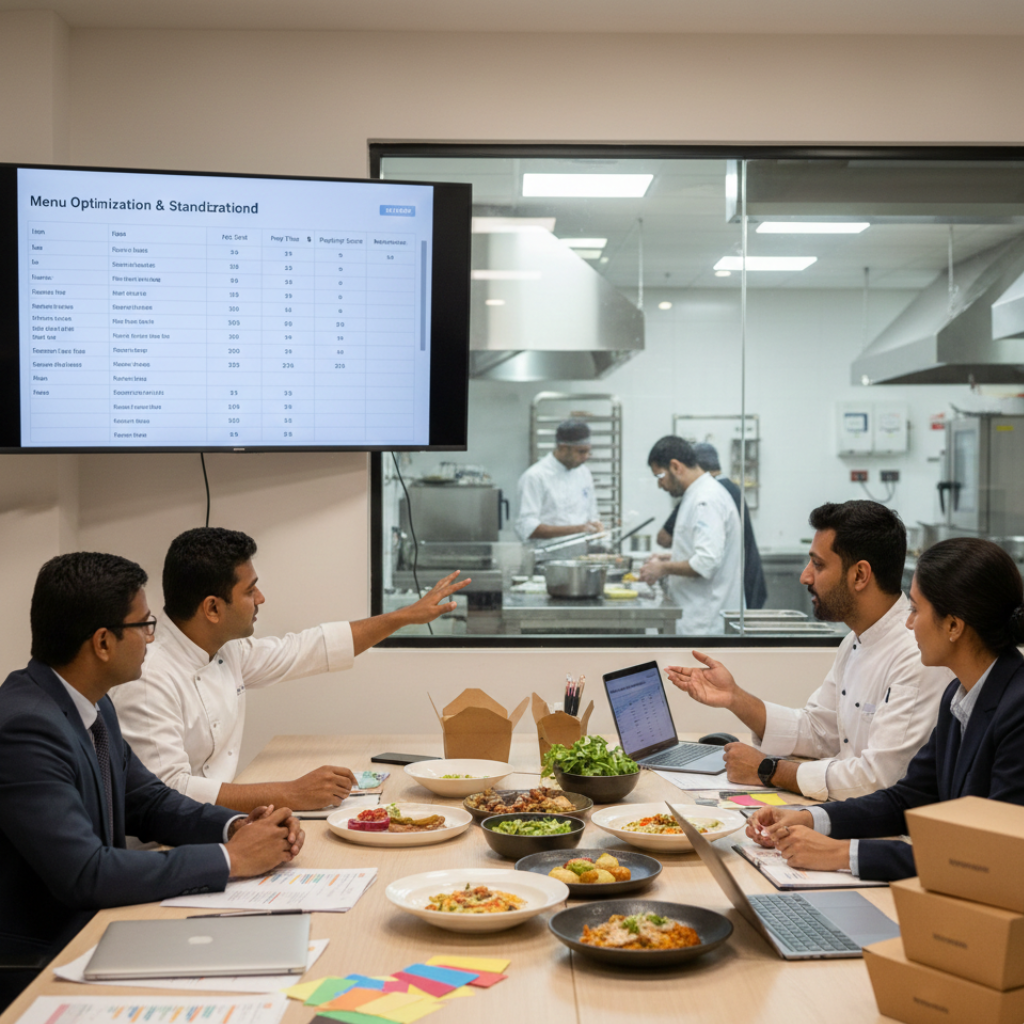
Aggregator growth usually means: more orders from Swiggy/Zomato, more revenue recorded, and more operational load on the kitchen. But profit depends on something different: how much contribution margin is left per order after all leakages.
A simple mindset shift: revenue is a vanity number on aggregators. Profit is a discipline number. Profit only exists when each order leaves behind margin after commissions, packaging, food cost, discounts, refunds, and penalties.
Most kitchens confuse “more orders” with “more profit” because they are not measuring the real unit economics. They see total sales. They don’t see how much margin each order actually creates.
This is why some outlets grow in orders and still feel broke: growth is happening on weak economics, and weak economics gets worse under peak pressure.
The Unit Economics Lens: Contribution Margin Decides Whether Growth Helps or Hurts
In delivery kitchens, profit is decided per order. Contribution margin (CM) is the money left after direct order costs. A practical order-level view looks like this:
Order Value minus Aggregator commission & charges minus Packaging cost minus Food cost (COGS) minus Discount burn (platform + brand-funded) minus Refunds/penalties impact equals Contribution Margin.
If contribution margin is healthy, growth creates profit. If contribution margin is weak, growth creates workload and leakage.
If you want the deeper payout and commission lens, read Aggregator Commission Impact in India. And if refunds/cancellations are rising alongside growth, map it using Refunds and Cancellations Impact on Cloud Kitchen Profitability.
The real goal is not “more orders.” The goal is “more orders with stable contribution margin.”
The 14 Reasons Aggregator Growth Does Not Translate to Profit (And What Each One Looks Like)
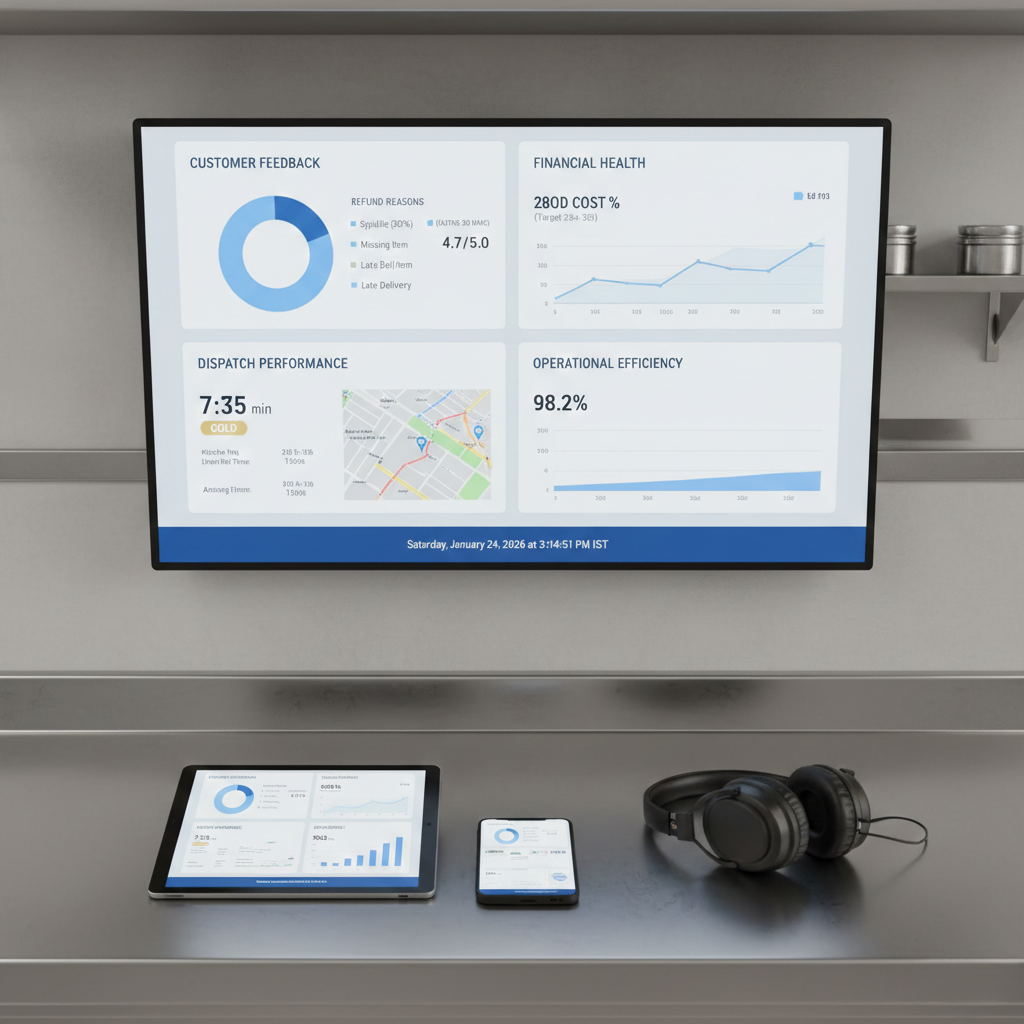
“More orders but no profit” is rarely one issue. It is usually a stack of small leakages that become massive at volume. Below are the most common reasons aggregator growth fails to translate into profit in Indian cloud kitchens.
1) Commission and platform charges scale automatically with revenue. The more you sell, the more you pay. If your pricing isn’t engineered to absorb commission, growth increases platform cost faster than it increases margin.
2) Discount dependency is masking weak conversion and weak trust. Many outlets “grow” because discounts push conversion. But discount-led growth reduces contribution margin per order. If you stop discounting and orders drop, it’s not growth it’s dependency. For the reality check, read: Marketing Spend vs ROI in Cloud Kitchens.
3) Food cost is drifting due to portion inconsistency. Growth increases speed pressure. Speed pressure creates portion drift. Portion drift increases COGS silently. That turns volume into leakage. This is why SOP-led portion control is a profit system, not a chef preference.
4) Packaging cost expands as you add SKUs and “premium” containers. In delivery, packaging is not optional. Many outlets upgrade packaging to reduce complaints but don’t re-engineer pricing. Result: better packs, lower margin. Packing discipline must reduce complaints without uncontrolled packaging inflation.
5) Refunds rise as volume rises because weak processes repeat more often. If 2% of orders fail at 50 orders/day, that’s manageable. If 2% fail at 300 orders/day, refunds become daily margin destruction. Refunds are a system metric. Fix the system, not the customer.
6) Cancellations and stock-outs create invisible waste. Cancellations waste prep, staff time, and often raw material. Stock-outs force last-minute purchases at higher rates. Both increase operational cost while reducing payout quality.
7) Your menu is selling low-margin SKUs as “bestsellers.” Many kitchens scale the wrong items. They push what sells easiest, not what pays best. If your top 5 SKUs are low-margin, growth makes you busy but not profitable. Menu engineering is about ranking profit and conversion together.
8) Add-ons and combos are not engineered to increase AOV and margin. Growth without AOV improvement keeps margin thin. If your menu doesn’t nudge customers into combos, sides, beverages, and profitable upgrades, you will grow orders but not grow contribution margin.
9) Prep-time and dispatch issues create late deliveries, which trigger refunds and discounting. Late outcomes create complaints. Complaints create refunds. Refunds create rating drops. Rating drops create more discount burn. This loop destroys profit even while orders rise. Fix the station flow using: Cloud Kitchen Dispatch SOP.
10) Peak-hour chaos increases wastage and remakes. Under pressure, kitchens remake items to avoid complaints, over-pack freebies to compensate, and lose control over inventory. Remakes are hidden costs that scale with volume.
11) Procurement rates increase because buying becomes reactive. When sales rise, many kitchens buy in panic. Panic buying reduces negotiation leverage and increases spoilage risk. Your vendor discipline must scale with volume or food cost percentage will rise.
12) Kitchen labor cost rises because the process is not standardized. Without SOPs and station design, adding volume requires adding people. Adding people without systems adds cost faster than it adds output. Systems create throughput. Headcount alone creates burn.
13) Penalties and visibility suppressions force more discounting to sustain sales. When performance flags appear, outlets lose impressions. To recover volume, founders discount. Discounts crush margin. If penalties are rising, map the cause using: Aggregator Commission Impact in India and operationally audit using: Common Operational Mistakes in Cloud Kitchens.
14) There is no weekly feedback loop tying growth metrics to profit metrics. Many founders track orders, not contribution margin. Without weekly CM review, low-margin items keep scaling, refunds keep repeating, and discount burn stays uncontrolled. Growth without feedback loops is uncontrolled expansion.
If you want the SOP-led link between control and fewer complaints/refunds, read How SOPs Reduce Food Cost & Complaints and the operational “leak map” reference: Common Operational Mistakes in Cloud Kitchens.
Swiggy/Zomato Reality: Growth Is Easy to Buy, Profit Is Hard to Earn
Aggregators are designed to make ordering easy. They are not designed to make your unit economics easy. A kitchen can “grow” on aggregators through: discounts, boosted placements, aggressive pricing, and heavy offers.
But if that growth is not built on stable contribution margin, you are simply buying revenue with margin. That is why growth feels exciting on dashboards and painful in bank accounts.
External policy context is helpful while mapping refunds/cancellations: Swiggy Refund & Cancellation Policy and Zomato Online Ordering Terms.
The practical takeaway: treat aggregator growth like a finance problem first. Fix contribution margin, then scale volume.
Profit Is Won at Three Places: Menu Engineering + Portion Control + Refund Control
Most founders try to fix profit by “getting more orders.” But profit is usually won by fixing three operational engines: menu engineering (pricing, margins, combos), portion control (COGS stability), and refund control (packing/dispatch reliability).
When these three engines are stable, aggregator growth becomes profitable growth. When these engines are weak, aggregator growth becomes leakier growth.
If refunds are part of your leak stack, implement station discipline using: Cloud Kitchen Dispatch SOP, and if packing errors are repeating, reference: Why Do Packing Errors Keep Happening? (if live on your site).
Why Profit Control Must Be Role-Based (Not “Let’s Be Careful With Costs”)
Profit does not improve through motivation. Profit improves through ownership and gates: someone owns portion tools, someone owns packing checklist accuracy, someone owns procurement rates, and someone owns weekly contribution margin review.
Here is what role-based profit control looks like:
Prep role:
pre-portions components and labels batches so peak speed doesn’t create drift.
Cook role:
follows recipe cards + portion tools to keep COGS consistent per order.
Pack role:
follows packing checklist, verifies add-ons, seals correctly, labels clearly to prevent refunds.
Dispatch role:
controls handover flow to prevent delays and cold outcomes that trigger complaints.
Manager role:
reviews weekly CM, top refund causes, top low-margin SKUs, and upgrades SOPs/menu rules.
If you want the full role-based operations model, use Role-Based Kitchen Operations Explained.
How to Convert Aggregator Growth Into Profit in 7 to 30 Days (A Practical System That Works)
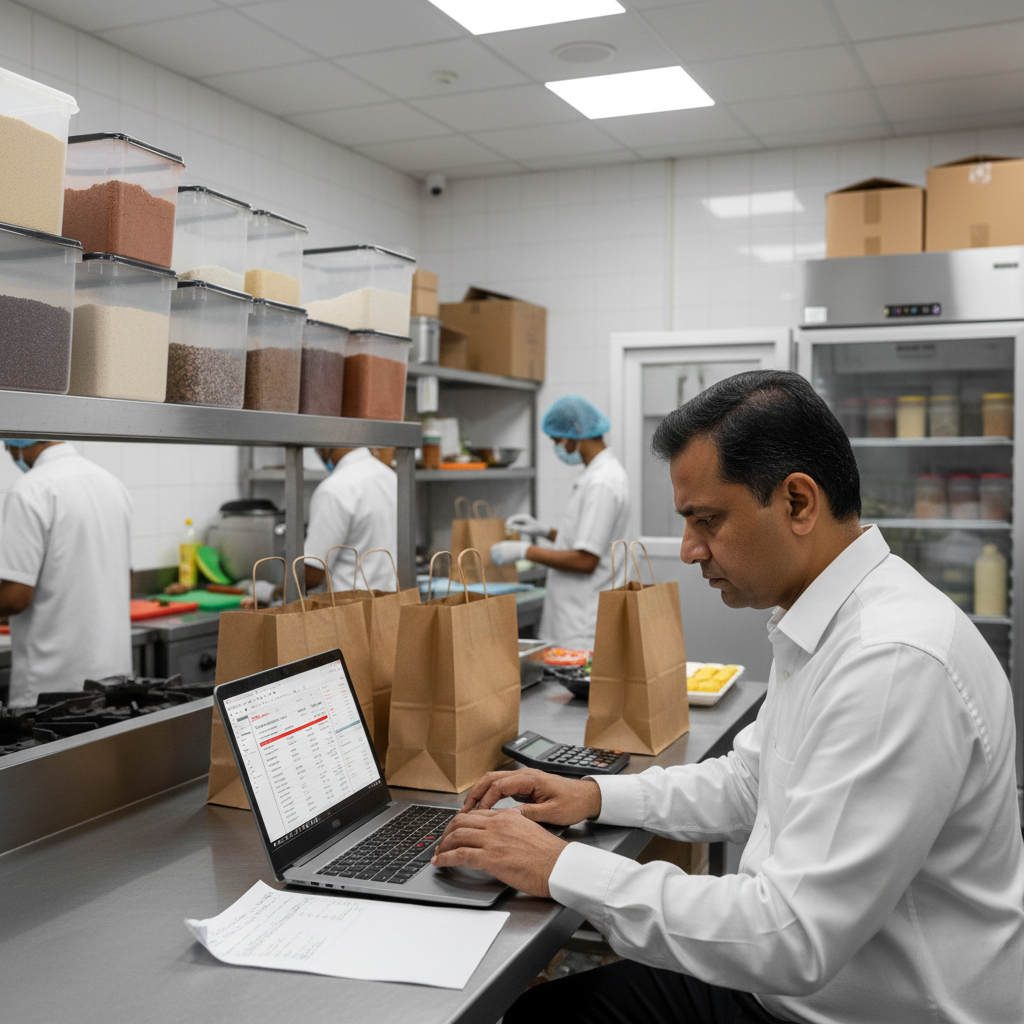
Profit does not appear by “trying harder.” Profit appears when you install systems that protect contribution margin under volume. Below is a rollout sequence used in kitchens where growth must translate into money.
Step 1 (Day 1–2): Calculate contribution margin for your top 20 SKUs. Don’t guess. Calculate: selling price, commission impact, discount impact, packaging cost, food cost, and average refund leakage. You cannot fix profit without knowing which items are actually profitable.
Step 2 (Day 1–3): Identify “volume without margin” items and stop promoting them. If bestsellers are low-margin, growth will never translate to profit. Either reprice, re-portion, repackage, or reposition. Menu engineering is the first profit lever.
Step 3 (Day 2–5): Install portion tools + recipe cards for top sellers. Start with the top 10 selling items. Define portion tools, weights, ladles, scoops, and fill lines. Portion stability is the fastest way to stop COGS drift.
Step 4 (Day 3–7): Fix refunds on the top 2 repeating reasons. Pull last 30 days refunds. Classify. Fix liquids first (spillage), then fix add-on misses or wrong items. Use the packing checklist gate and dispatch scan from: Cloud Kitchen Dispatch SOP.
Step 5 (Week 2): Engineer combos and add-ons to lift AOV without killing margin. Add-ons should be high-margin and easy to choose. Combos should improve perceived value while protecting CM. Growth with AOV is far more profitable than growth with discounts.
Step 6 (Week 2): Fix procurement discipline with par levels and batch planning. Define par levels for top raw materials. Plan batches for peak. Reduce reactive buying. Reactive buying increases cost and increases waste.
Step 7 (Week 3): Run weekly “profit review” like an ops audit. Review: CM by category, top refund SKUs, discount burn percentage, packaging cost percentage, and COGS drift. Make 3 system changes per week. Measure again.
Step 8 (Week 3–4): Lock a feedback loop: growth data must update SOPs and pricing rules. If refunds repeat → packing SOP upgrade. If COGS drifts → portion tools upgrade. If low-margin items dominate → menu architecture and pricing upgrade. Without feedback loops, growth will keep scaling leakage.
If you want the discipline-led EBITDA lens, map this with How Process Discipline Improves EBITDA and the “growth with leakage” warning: When Growth Is Hurting Your Cloud Kitchen Operations.
External process references (useful while standardising): Standardized Work (Lean lexicon), ISO 22000 overview, and FSSAI Hygiene Requirements (Schedule 4 reference).
Final Takeaway: Aggregator Growth Becomes Profit Only When Unit Economics Are Protected
If your aggregator growth is not translating to profit, it usually means one thing: you are scaling volume on weak contribution margin. Not because the business can’t be profitable, but because commission, discounts, refunds, packaging, and portion drift are eating the margin silently.
Profit-first kitchens become predictable: SKUs are engineered for margin, portions are controlled, refunds reduce through packing + dispatch gates, procurement becomes planned, and discounting becomes a choice not a dependency. That is what converts “more orders” into “more money.”
Operational frameworks from GrowKitchen, and operating partner brands like Fruut and GreenSalad are built to convert “high-order-low-profit kitchens” into “controlled, profitable kitchen networks.”
FAQs: Why Does Aggregator Growth Not Translate to Profit?
What is the biggest reason growth doesn’t turn into profit on Swiggy/Zomato?
Weak contribution margin per order usually due to commission impact, discount burn, refunds, and portion drift.
Are discounts the main reason profit stays low?
Discounts are a major reason, but they become deadly when combined with refunds and weak portion control. The full leak stack must be fixed.
Which fix improves profit the fastest?
Start with top sellers: calculate contribution margin, control portions, and fix the top two refund causes. Then engineer combos and add-ons for AOV.
How do I track profit properly in a cloud kitchen?
Track contribution margin by SKU: selling price minus commission, discounts, packaging, food cost, and refund leakage. Review weekly and upgrade SOPs/menu rules.
- Cloud Kitchen Profitability Consultant in India
- Aggregator Commission Impact in India
- Marketing Spend vs ROI in Cloud Kitchens
- Refunds and Cancellations Impact on Cloud Kitchen Profitability
- Cloud Kitchen Dispatch SOP
- How SOPs Reduce Food Cost & Complaints
- Common Operational Mistakes in Cloud Kitchens
- When Growth Is Hurting Your Cloud Kitchen Operations
- How Process Discipline Improves EBITDA
- Grow Kitchen on Twitter