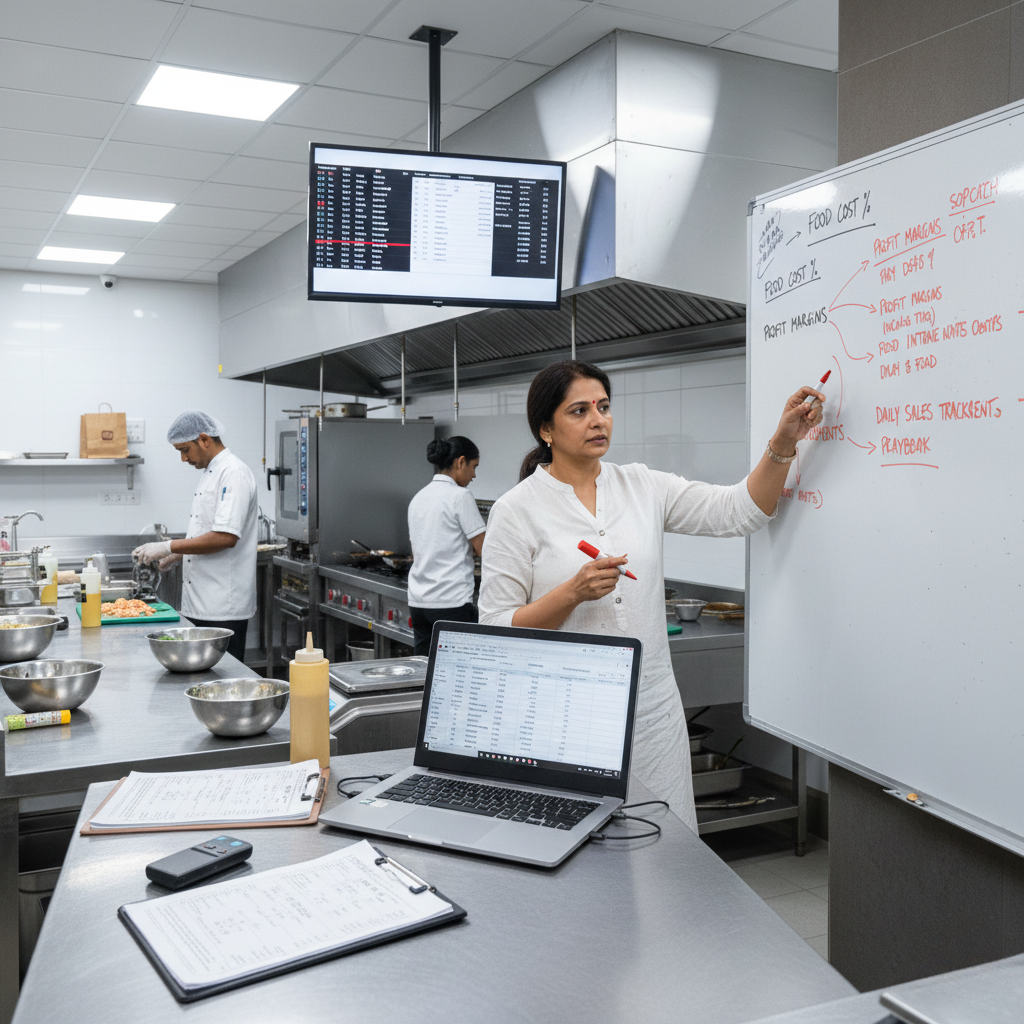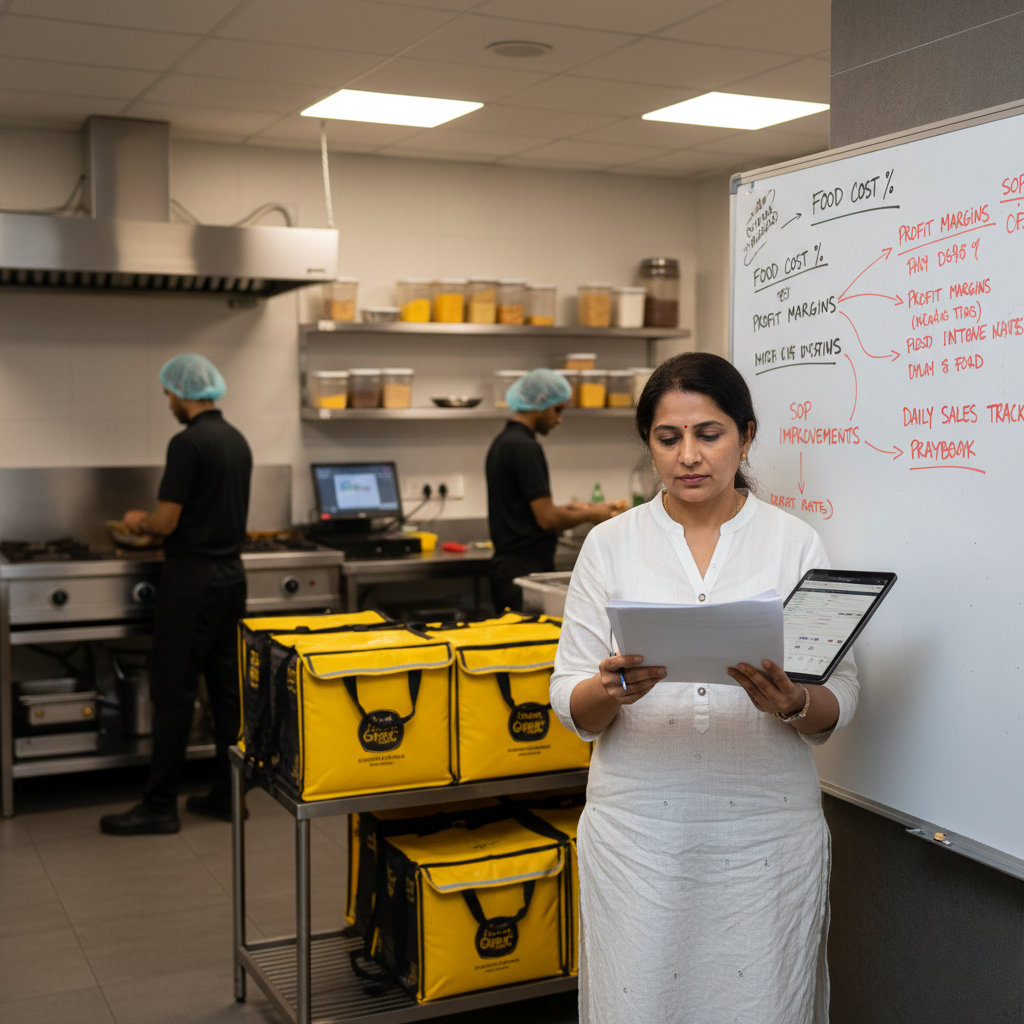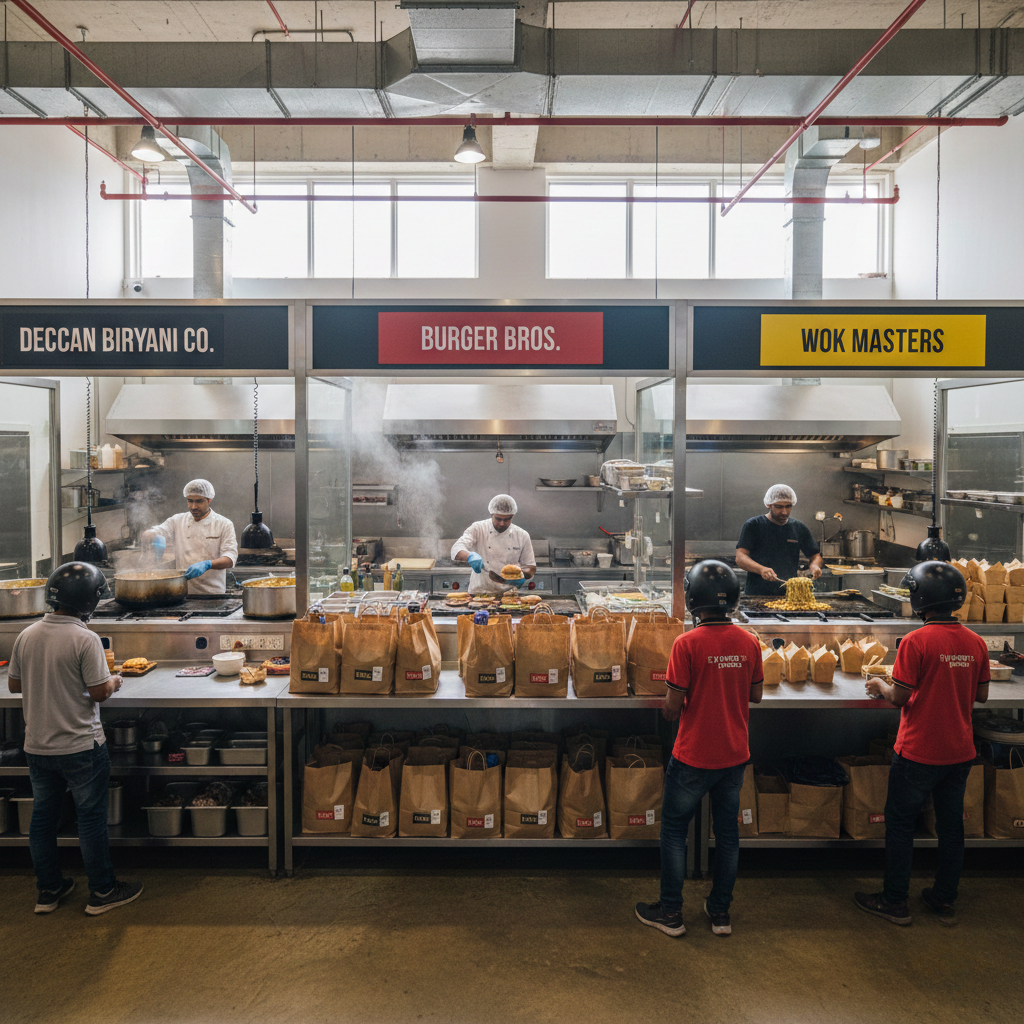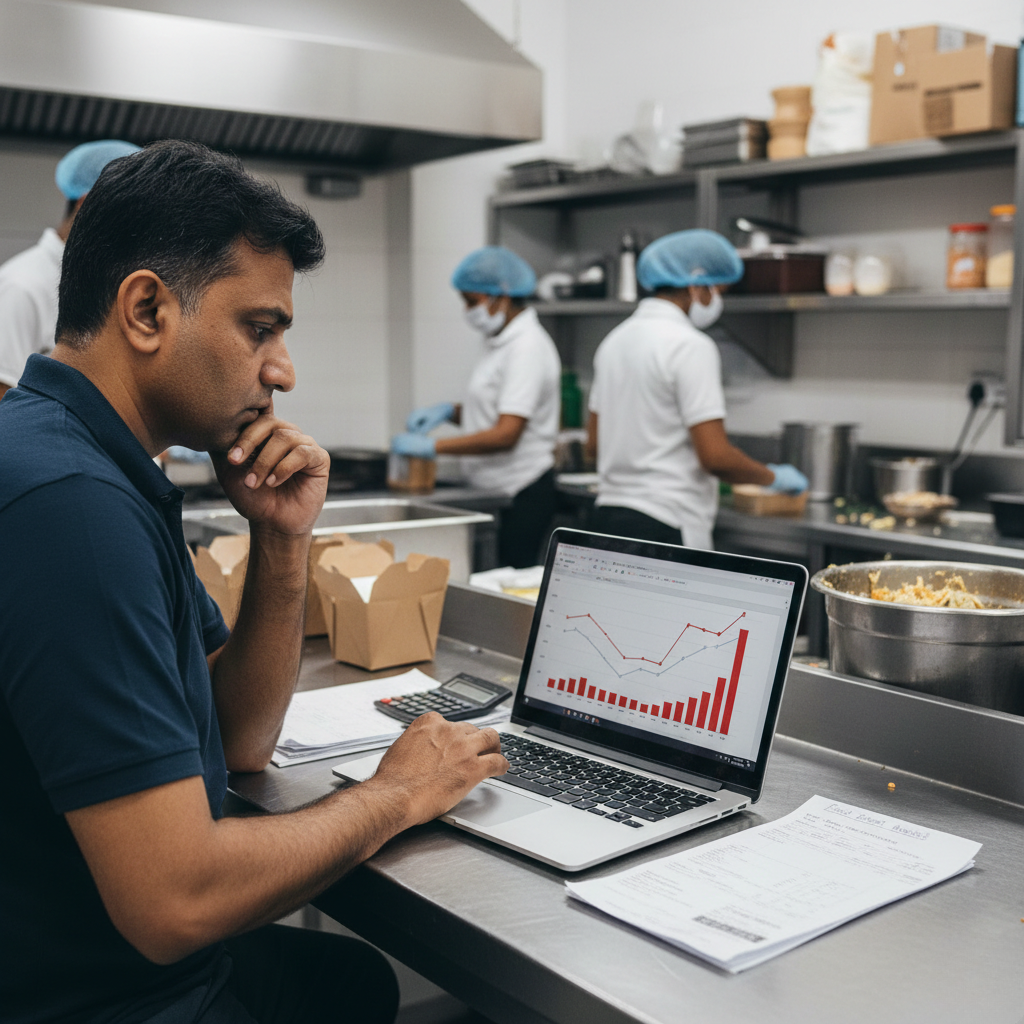
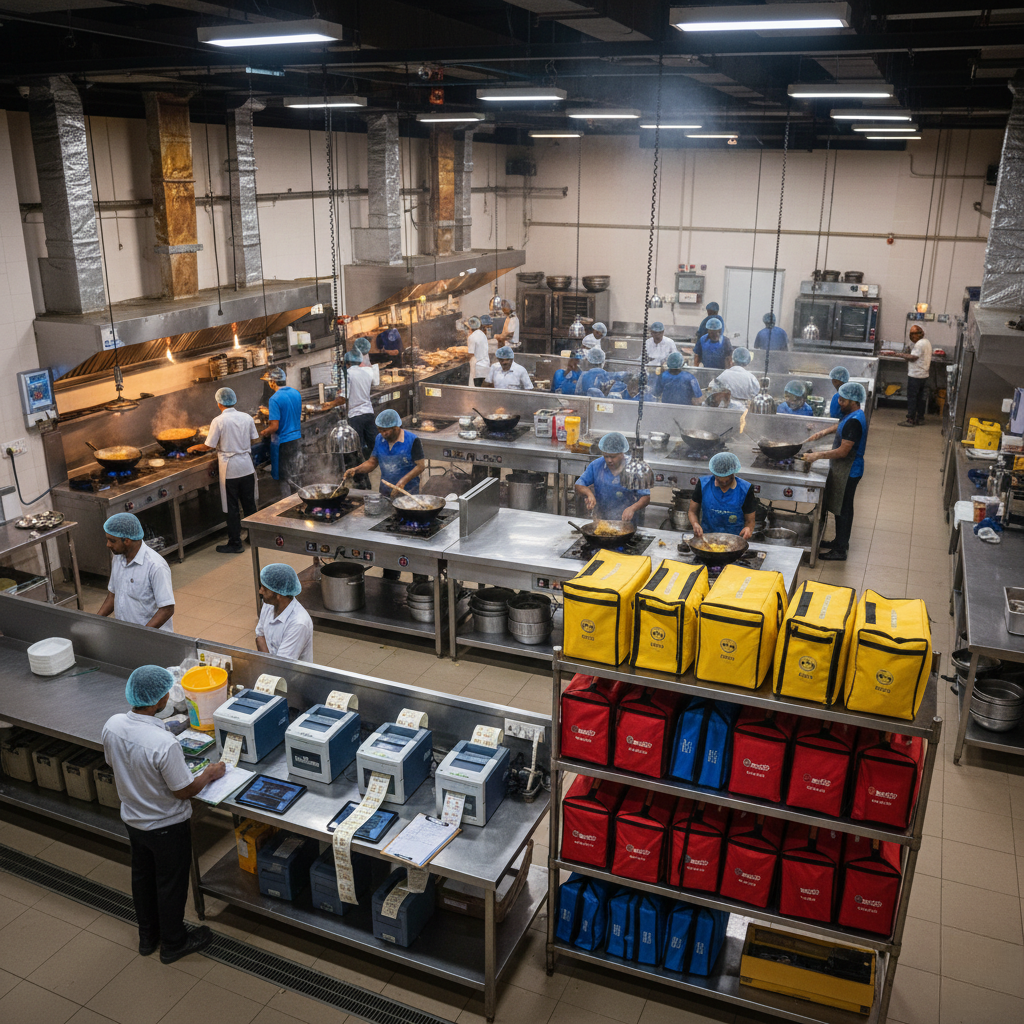
Why do I get orders but poor visibility on Swiggy and Zomato? is not a “Swiggy/Zomato algorithm hates me” problem or a “my food is not good” problem. It is a discoverability + conversion + reliability problem. Aggregators don’t only show outlets that exist they promote outlets that predict customer satisfaction at scale. When visibility is low, it usually means your outlet is not winning on a few system metrics: click-through rate, conversion rate, availability, prep-time reliability, cancellation/refund risk, rating consistency, and menu competitiveness. This guide explains why cloud kitchens get orders but still struggle with visibility in India and how to build a visibility-resistant operating system end-to-end using menu engineering, SOPs, station discipline, prep planning, dispatch gates, audits, and feedback loops using systems, not supervision.
Why Do I Get orders but poor visibility on Swiggy and Zomato? The Real Reason “Sales Exist” But Growth Feels Stuck
Many cloud kitchen founders enter a confusing zone: you are not at zero. Orders do come in. Some customers repeat. But the outlet still feels “invisible.”
You see it in the daily reality: your impressions look low, your listing doesn’t show up in top rows, you don’t appear in enough searches, and your growth becomes dependent on discounts or peak-time luck.
The hard truth: visibility is not a reward for existence. Visibility is a reward for predictable performance. Platforms are not trying to be “fair.” They are trying to reduce customer risk. The more your outlet looks like “low risk” (high conversion + low complaints + reliable SLA), the more it earns distribution.
If you want the profitability foundation lens first, start with Cloud Kitchen Profitability Consultant in India and map recurring execution leaks using Common Operational Mistakes in Cloud Kitchens.
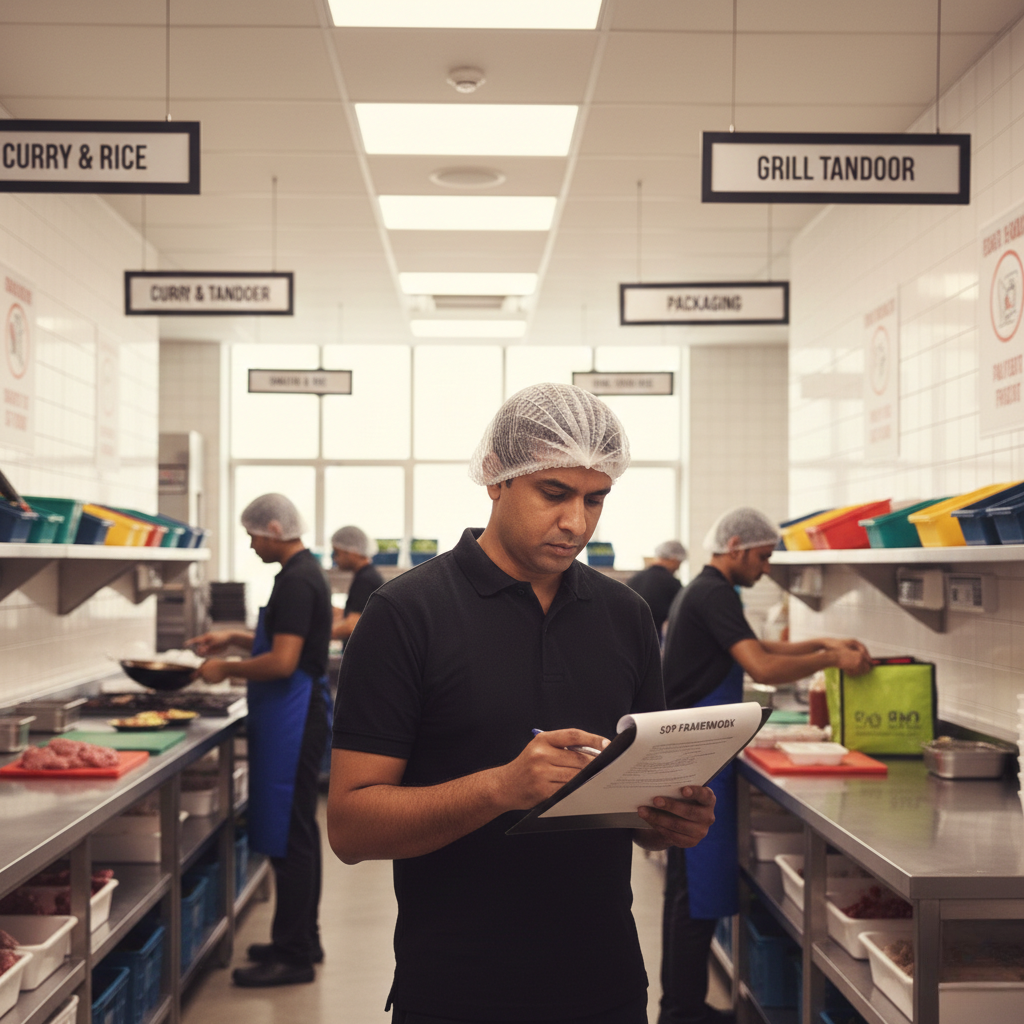
What “Poor Visibility” Actually Means (Not Just “I’m Not Ranking”)
Poor visibility is a symptom, not a root cause. It means the platform is not giving you enough distribution: fewer impressions, fewer search placements, fewer category placements, and fewer “recommended” surfaces.
A key mindset shift: platforms think in funnels. They don’t ask “is this kitchen good?” They ask: will this outlet get clicked, will it convert after click, will it deliver on time, will it avoid refunds/complaints, and will the customer come back?
So visibility gets limited when one or more funnel stages are weak: low CTR (menu photos, titles, pricing, offers aren’t compelling), low conversion (menu structure, trust signals, delivery time, ratings, value perception), low reliability (cancellations, delays, stock-outs), or high dissatisfaction (refunds, complaints, rating volatility).
This is also why you can get some orders and still be “invisible.” You may be converting well from a small pool of impressions, but the platform is not expanding that pool because risk signals are present.
The Unit Economics Lens: Poor Visibility Forces Discount Dependency and Raises CAC
Poor visibility is not just a growth problem. It becomes a profitability problem. When organic visibility is low, founders compensate with discounts, ads, and heavy offers. That creates a CAC problem inside aggregators: you “buy” conversion rather than earning it.
The loop usually looks like this: low visibility → fewer impressions → fewer orders → discounts to recover volume → lower contribution margin → pressure to sell more → even more discounting.
This is why “orders exist” but money feels tight. If you want the deeper growth-vs-profit lens, read Marketing Spend vs ROI in Cloud Kitchens and for payout understanding: Aggregator Commission Impact in India.
The goal is not “get visibility.” The goal is “become a predictable converter with low customer risk.” Once you look predictable, platforms expand your distribution.
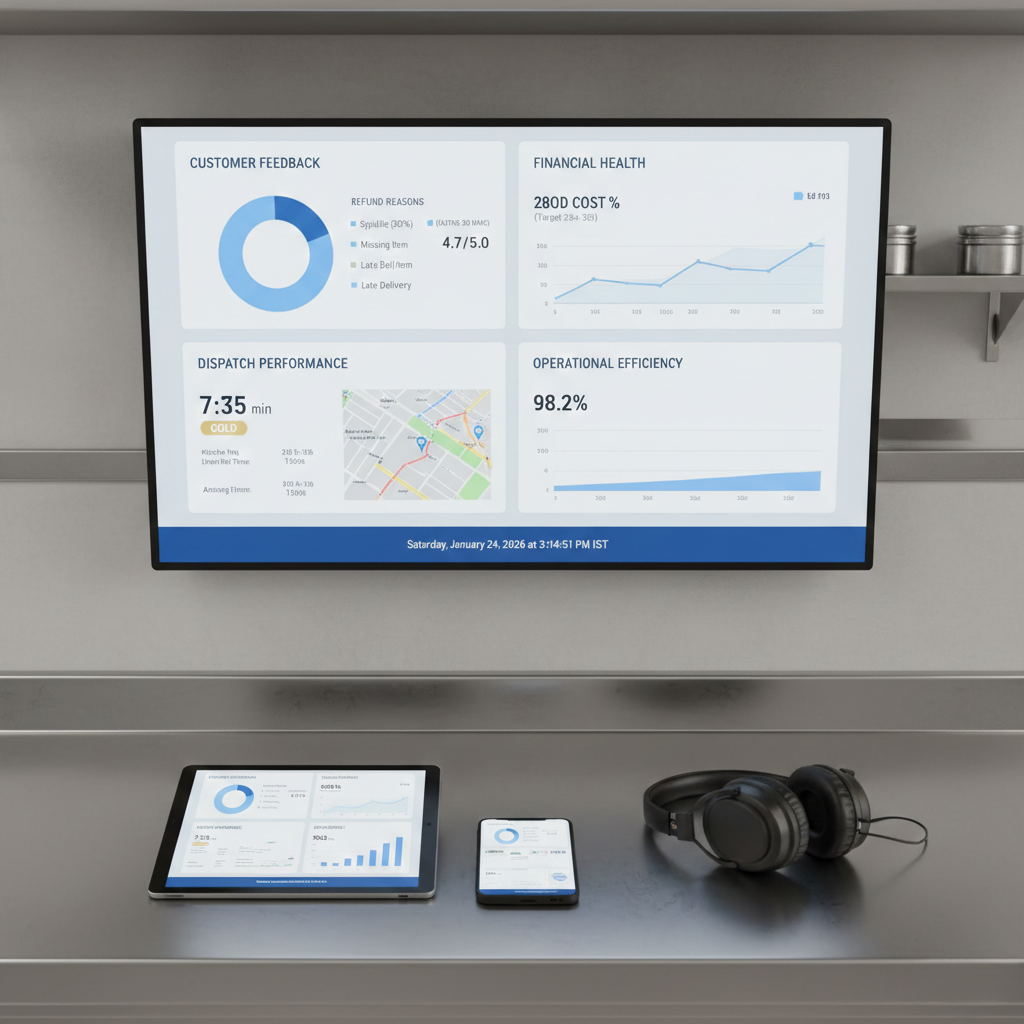
The 12 Reasons You Get Orders But Still Have Poor Visibility (And What Each One Looks Like)
Visibility feels mysterious because it’s the output of multiple variables. But in practice, poor visibility usually comes from a few repeatable causes. Below are the most common ones in Indian cloud kitchens.
1) Your click-through rate is low (people see you but don’t click). This happens when thumbnails are weak, titles are generic, pricing feels unclear, delivery time looks high, or your offer isn’t compelling. If CTR is low, the platform learns: “showing this outlet doesn’t lead to orders,” so it reduces impressions.
2) Your conversion rate is low (people click, then bounce). Conversion drops when menu feels confusing, too many SKUs look similar, bestsellers aren’t obvious, combos aren’t engineered, or value perception is weak compared to competitors. Platforms optimize for outlets that convert after click.
3) Delivery time / prep time looks uncompetitive. Even if your food is great, long ETA reduces conversion. Many kitchens lose visibility because their prep time is set too high, or because operations are slow and ETA becomes consistently longer than nearby outlets.
4) Stock-outs and “unavailable items” are frequent. If customers land on your menu and see items unavailable, they bounce. That bounce trains the algorithm that your outlet is unreliable. This is a prep planning + par-level system issue, not a “demand” issue.
5) Cancellations are high (platform sees you as risk). Cancellations break trust more than delays. Many cancellations happen due to stock-outs, prep not ready, staff shortage, or accepting orders you cannot fulfill. Repeated cancellations reduce distribution and trigger performance flags.
6) Refunds and complaints are silently suppressing you. Refund-heavy outlets often still get “some” orders, but platforms hesitate to scale them. Refund reasons usually come from packing leakage, wrong items, missing add-ons, or cold delivery outcomes. Use: Refunds and Cancellations Impact on Cloud Kitchen Profitability as the deeper leak model.
7) Rating volatility reduces trust even if average rating looks “okay.” One week is smooth, next week spikes of 1-star. Platforms learn consistency. If outcomes are inconsistent, they reduce distribution because inconsistent outlets increase support burden. If you’re dealing with this, read: Why Do Ratings Drop Even When Food Quality Is Good? (if already live on your site).
8) Your menu architecture is not engineered for discovery. Many kitchens list items like a kitchen inventory, not like a conversion funnel. Missing: bestsellers row, combos, family packs, add-ons, and “easy to decide” categories. When decision is hard, conversion drops, and visibility drops.
9) Your price bands are misaligned with the category. If you are priced higher than category leaders without stronger value proof, conversion drops. If you are priced too low, contribution margin dies and discount dependency increases. Visibility improves when pricing is competitive and value signals are clear.
10) Packaging/dispatch discipline is reducing repeat orders. A customer may try you once because of a deal. But if delivered outcome is inconsistent (leakage, missing items, cold food), they don’t reorder. Low repeat signals reduce long-term distribution. Fix using: Cloud Kitchen Dispatch SOP.
11) You’re competing in crowded keywords without differentiation. “Biryani,” “Chinese,” “rolls,” “pizza” are intense categories. If your title, thumbnails, and hero items look like everyone else, CTR stays low. You need clear differentiation: signature bowls, unique naming, strong bestseller visuals, and conversion-first combos.
12) No feedback loop converts funnel data into SOP + menu upgrades. Most founders look at “orders.” But visibility is driven by: impressions → CTR → conversion → reliability → satisfaction. If you don’t review these weekly and upgrade systems, visibility stays capped.
For the operational stack that reduces friction, use: Common Operational Mistakes in Cloud Kitchens and How SOPs Reduce Food Cost & Complaints.
Swiggy/Zomato Reality: Visibility Is a Platform ROI Decision
Platforms are not showing outlets to be nice. They are showing outlets that maximize successful orders per impression. If your outlet produces: low CTR, low conversion, delays, cancellations, refunds, or complaint spikes, then impressions given to you generate lower platform ROI. So distribution gets limited.
This is why the visibility fix is never just “run offers.” Offers can temporarily increase conversion, but if reliability and satisfaction remain weak, the platform will not scale distribution.
External policy context (useful while mapping refund/cancellation issues): Swiggy Refund & Cancellation Policy and Zomato Online Ordering Terms.
Translate platform behavior like a system: low visibility is usually the result of low funnel performance or high customer-risk signals.
Visibility Growth Starts With Two Fixes: Menu Conversion + Dispatch Reliability
Many founders assume visibility is “marketing.” But in practice, visibility expands when you fix two foundations: (1) your menu converts better than competitors, and (2) your outlet delivers predictable outcomes at speed.
Menu conversion improvements look like: a clear bestseller structure, fewer confusing variants, engineered combos, add-ons that are easy to select, and images that increase CTR. Dispatch reliability improvements look like: packing checklist gates, add-on verification, label discipline, and fast handover flow.
Implement dispatch predictability using Cloud Kitchen Dispatch SOP and audit repeat leak patterns using Common Operational Mistakes in Cloud Kitchens.
Why Visibility Improvement Must Be Role-Based (Not “Let’s Do Better Marketing”)
Visibility doesn’t improve with one brainstorm. It improves when roles own the funnel outcomes: someone owns availability, someone owns dispatch speed, someone owns packing accuracy, and someone reviews data weekly. If responsibility is shared, output becomes unclear. If responsibility is owned, output becomes stable.
Here is what role-based visibility control looks like:
Prep role:
maintains par levels, batch yields, and peak readiness so items don’t go unavailable.
Kitchen lead:
keeps prep time realistic, controls station flow, and prevents peak chaos that creates delays.
Pack role:
follows packing checklist, verifies add-ons, seals correctly, labels clearly, and prevents refund-causing mistakes.
Dispatch role:
controls handover speed, queue discipline, and final scan so SLA doesn’t drift.
Manager/growth role:
reviews impressions, CTR, conversion, cancellations, refunds weekly and upgrades menu + SOPs.
If you want the full role-based ops model, use Role-Based Kitchen Operations Explained.
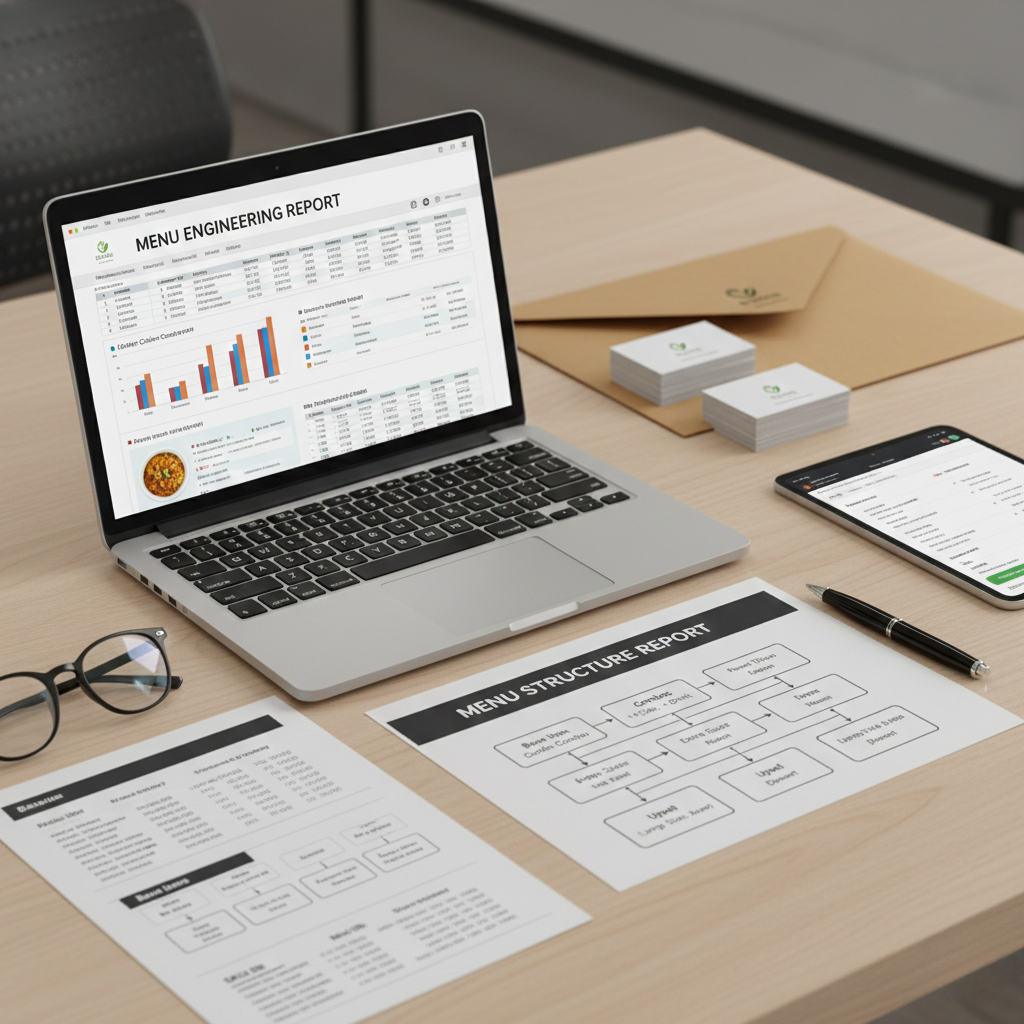
How to Improve Visibility in 7 to 30 Days (A Practical System That Works)
Visibility doesn’t improve with one offer. It improves when funnel performance improves and reliability signals reduce risk. Below is a rollout sequence used in cloud kitchens where visibility must scale without discount addiction.
Step 1 (Day 1–2): Pull last 30 days funnel snapshot (impressions → CTR → conversion). Don’t only track orders. Track: impressions, menu opens, add-to-cart rate, conversion rate, cancellations, refunds, and average ETA. If you don’t measure the funnel, you can’t fix visibility.
Step 2 (Day 1–3): Identify whether the problem is CTR or conversion. Low impressions + low menu opens usually indicates CTR problem: thumbnails, pricing, hero items, offer visibility. Good menu opens but low orders indicates conversion problem: menu structure, confusion, ETA, trust, value perception.
Step 3 (Day 2–5): Rebuild menu architecture for faster decisions. Create: “Bestsellers” category, “Combos” category, “Value bowls” or “Meals” category, “Add-ons” category. Reduce near-duplicate SKUs. Make choosing easy.
Step 4 (Day 3–7): Fix availability and stock-out routines. Visibility gets capped when customers hit unavailable items. Create par levels for top SKUs, batch prep schedule, and a peak readiness checklist. If you want the system mindset, reference: When Growth Is Hurting Your Cloud Kitchen Operations.
Step 5 (Week 2): Improve dispatch reliability (reduce refunds + delays). Install a packing checklist gate and dispatch scan. Fix add-on verification. Fix label format. Fix liquid sealing rules. Use: Cloud Kitchen Dispatch SOP.
Step 6 (Week 2): Align prep time to reality (then earn reductions later). Unrealistic prep time creates chronic late orders. Chronic late orders reduce conversion and trigger platform risk signals. Set realistic prep time, then improve station speed so you can reduce prep time sustainably.
Step 7 (Week 3): Run weekly “visibility review” like an ops audit. Review: top search terms, CTR by category, conversion by category, refunds by SKU, cancellations by time window, stock-outs by SKU. Make 3 changes per week. Measure again.
Step 8 (Week 3–4): Convert repeating negatives into SOP + menu upgrades. If refunds repeat → packing rule update. If cancellations repeat → prep readiness update. If low CTR repeats → hero item photo/title/pricing update. If low conversion repeats → menu simplification + combos + ETA improvement. No feedback loop = permanent low visibility.
If you want the discipline-led profitability link, map this with How Process Discipline Improves EBITDA and the ad-spend reality check: Marketing Spend vs ROI in Cloud Kitchens.
External process references (useful for standardisation thinking): Standardized Work (Lean lexicon), ISO 22000 overview, and FSSAI Hygiene Requirements (Schedule 4 reference).
Final Takeaway: You Get Visibility When You Look Like a Low-Risk Converter
If you get orders but still have poor visibility, it usually means your outlet is capped by one of two things: funnel weakness (CTR/conversion) or risk signals (stock-outs, cancellations, refunds, delays, rating volatility). Platforms expand distribution when outlets convert well and deliver predictably.
Visibility-ready kitchens become predictable: menu is easy to choose from, bestsellers and combos drive conversion, availability is stable, dispatch is reliable, refunds and cancellations reduce, and ratings stay consistent. That predictability earns more impressions and sustainable growth.
Operational frameworks from GrowKitchen, and operating partner brands like Fruut and GreenSalad are built to convert “order-coming-but-invisible kitchens” into “scaled, discoverable kitchen networks.”
FAQs: Why Do I Get Orders But Poor Visibility?
What is the biggest reason visibility stays low on Swiggy/Zomato?
Low funnel performance (CTR or conversion) or high risk signals (cancellations, refunds, stock-outs, late orders). Platforms scale outlets that convert reliably.
Can discounts improve visibility permanently?
Discounts can temporarily lift conversion, but permanent visibility comes from stable conversion plus predictable delivery outcomes.
What should I fix first: menu or operations?
Fix both in sequence: first improve menu structure (CTR/conversion), then improve packing/dispatch reliability (refunds/delays), then fix availability and prep planning (stock-outs/cancellations).
How do I track visibility issues properly?
Track impressions → CTR → conversion, then map cancellations/refunds/delays by station and SKU. Upgrade SOPs and menu weekly using that data.
- Cloud Kitchen Profitability Consultant in India
- Common Operational Mistakes in Cloud Kitchens
- Marketing Spend vs ROI in Cloud Kitchens
- Aggregator Commission Impact in India
- Refunds and Cancellations Impact on Cloud Kitchen Profitability
- Cloud Kitchen Dispatch SOP
- Role-Based Kitchen Operations Explained
- When Growth Is Hurting Your Cloud Kitchen Operations
- How Process Discipline Improves EBITDA
- Grow Kitchen on Twitter