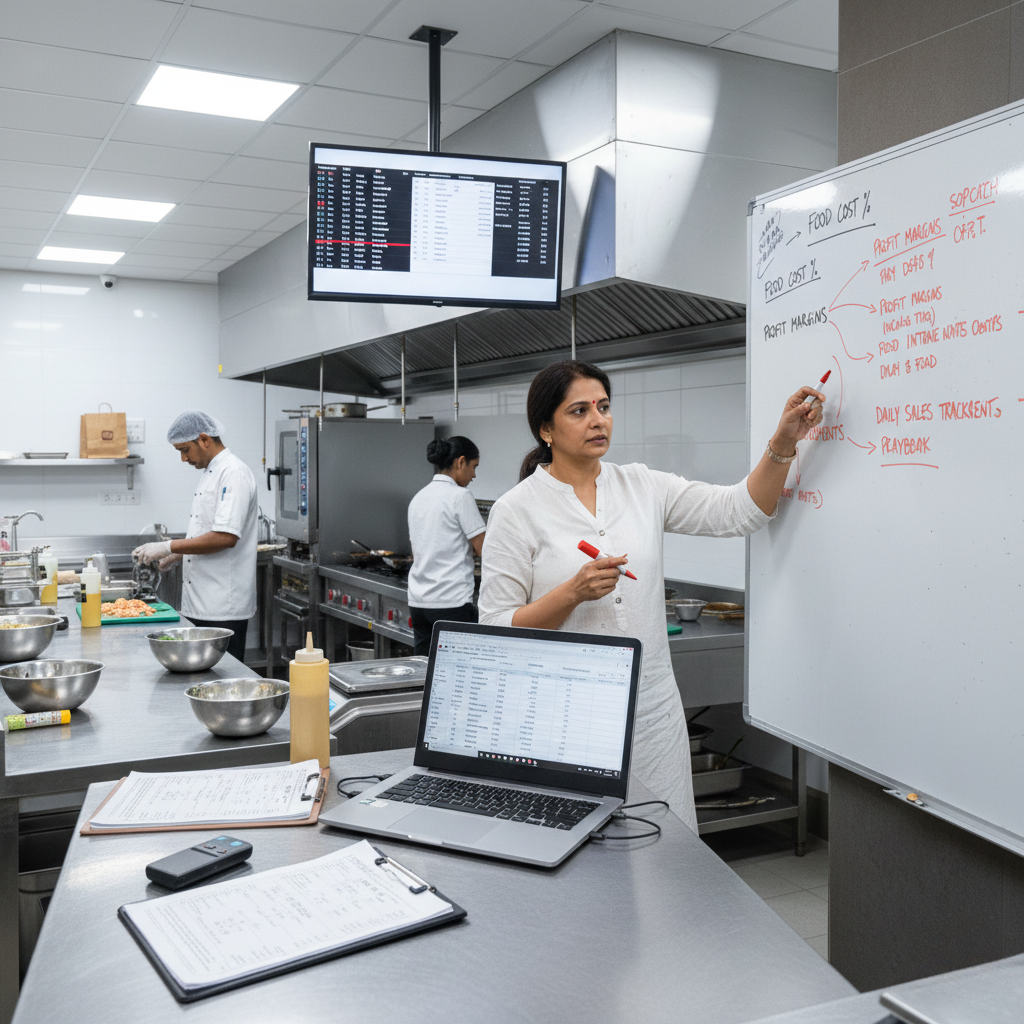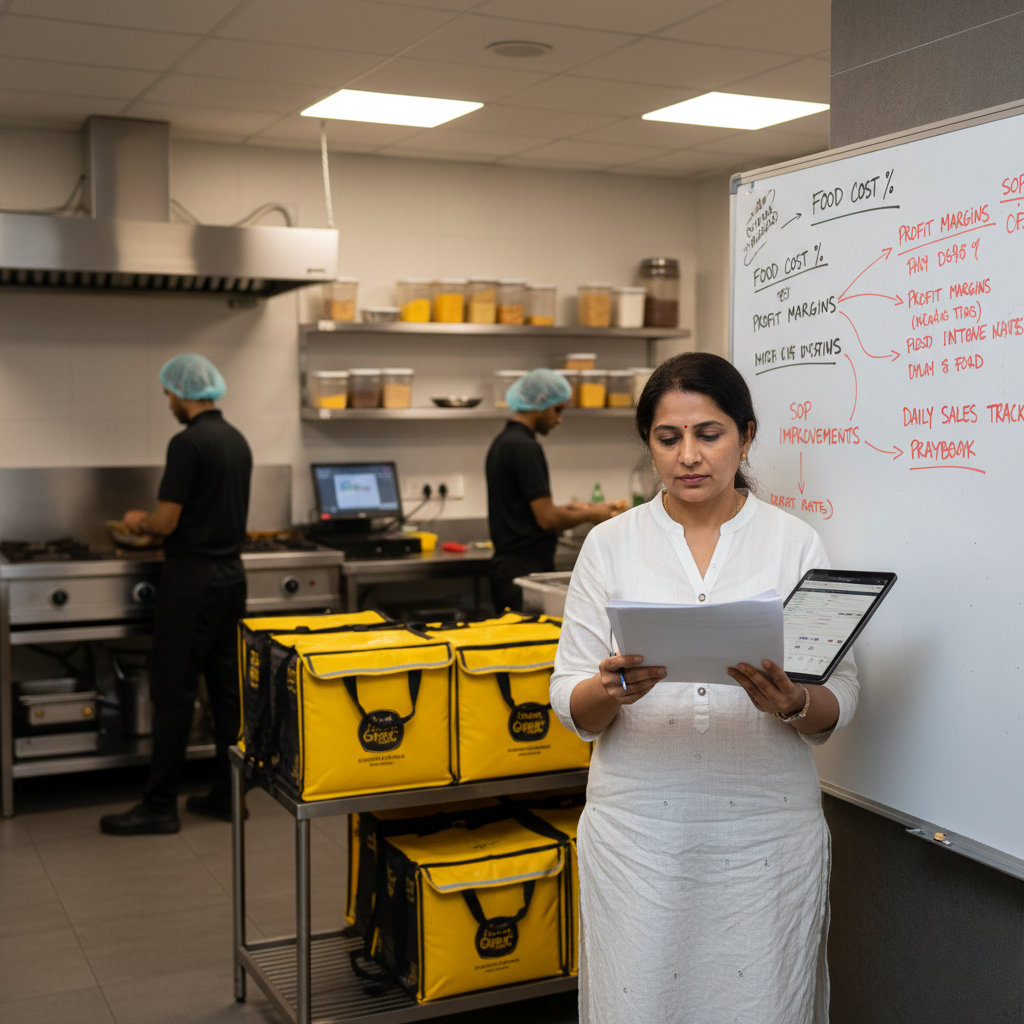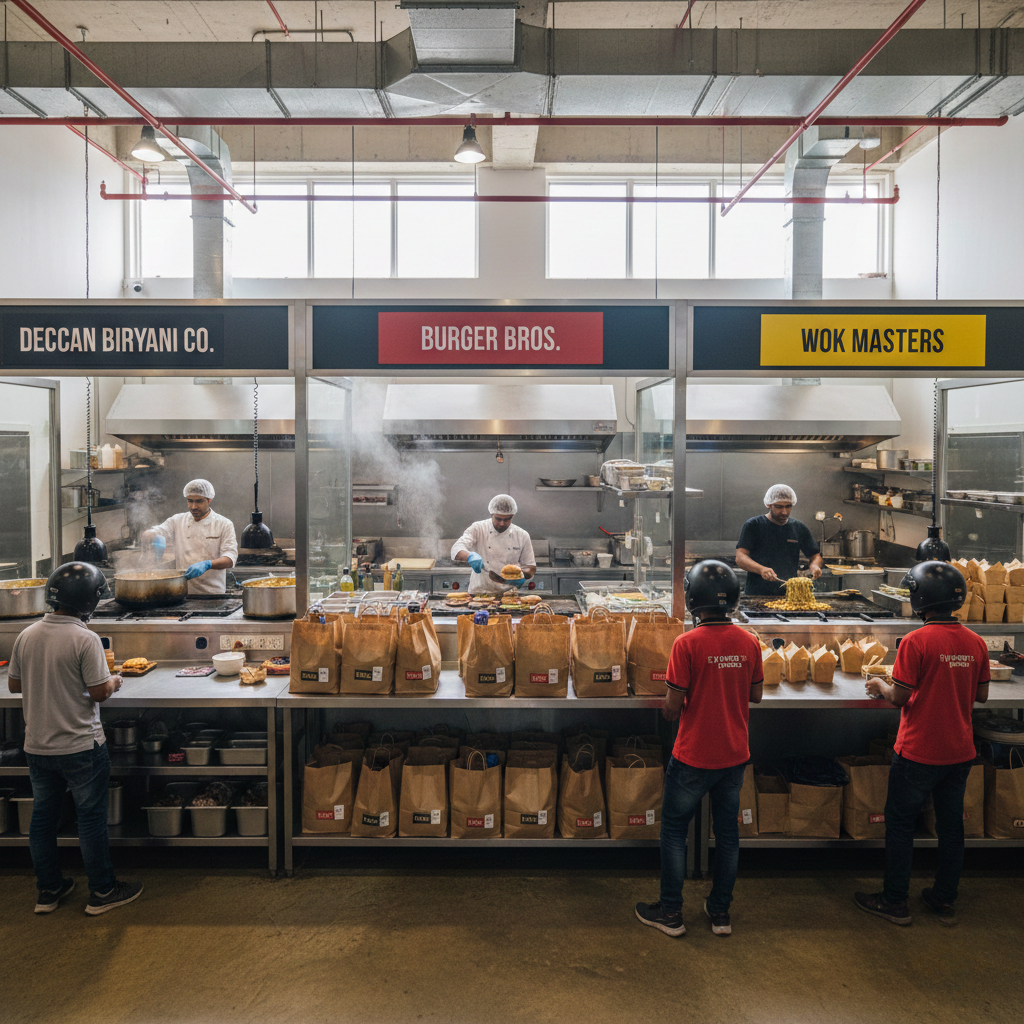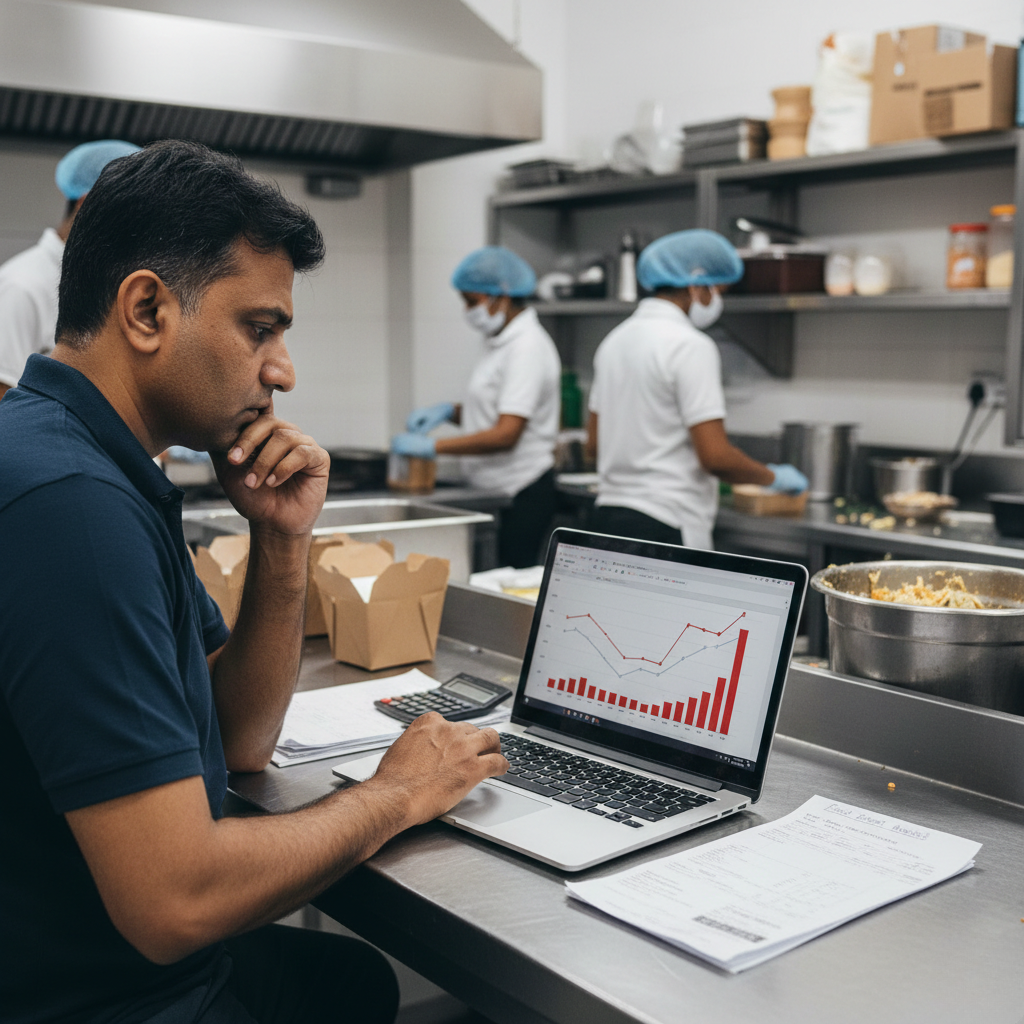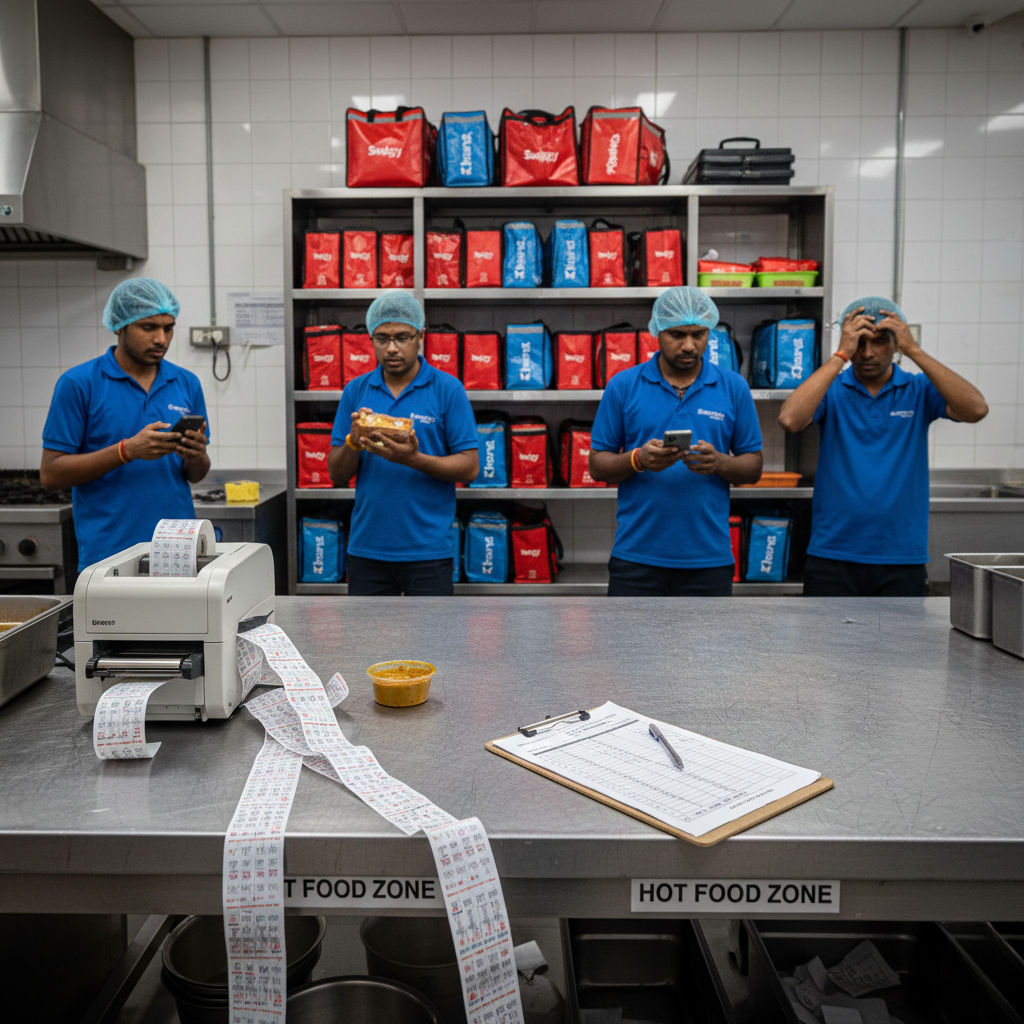
Why aggregators penalize cloud kitchens? is not a “platform hates me” problem or a “Swiggy/Zomato are unfair” problem. It is a compliance + service-level + consistency problem. Aggregators reward predictable operations and punish repeatability failures because they protect customer trust at scale. When penalties rise, it usually means one or two operational failures are repeating: late dispatch, high cancellations, high refunds, inconsistent prep times, stock-outs, packing failures, and complaint loops that never update SOPs. This guide explains why aggregators penalize cloud kitchens in India and how to build a penalty-resistant operating system end-to-end using SOPs, station discipline, prep planning, dispatch gates, audits, and feedback loops using systems, not supervision.
Why aggregators penalize cloud kitchens? The Real Reason “Good Food” Still Gets Punished
Every cloud kitchen founder eventually hits this confusing phase: orders are coming, ratings feel okay some weeks, but deductions, penalties, and performance flags keep appearing.
It feels random at first. One day it’s “late orders.” Another day it’s “cancellations.” Then you see “high refunds,” “unavailability,” “prep time issues,” “packing complaints,” or “customer dissatisfaction.”
The hard truth: aggregators don’t penalize “taste.” They penalize risk. Risk to customer experience, delivery predictability, and platform trust. In delivery, platforms are managing millions of outcomes. They reward stable kitchens and suppress kitchens that create inconsistent customer outcomes.
If you want the profitability foundation lens first, start with Cloud Kitchen Profitability Consultant in India and map recurring execution leaks using Common Operational Mistakes in Cloud Kitchens.
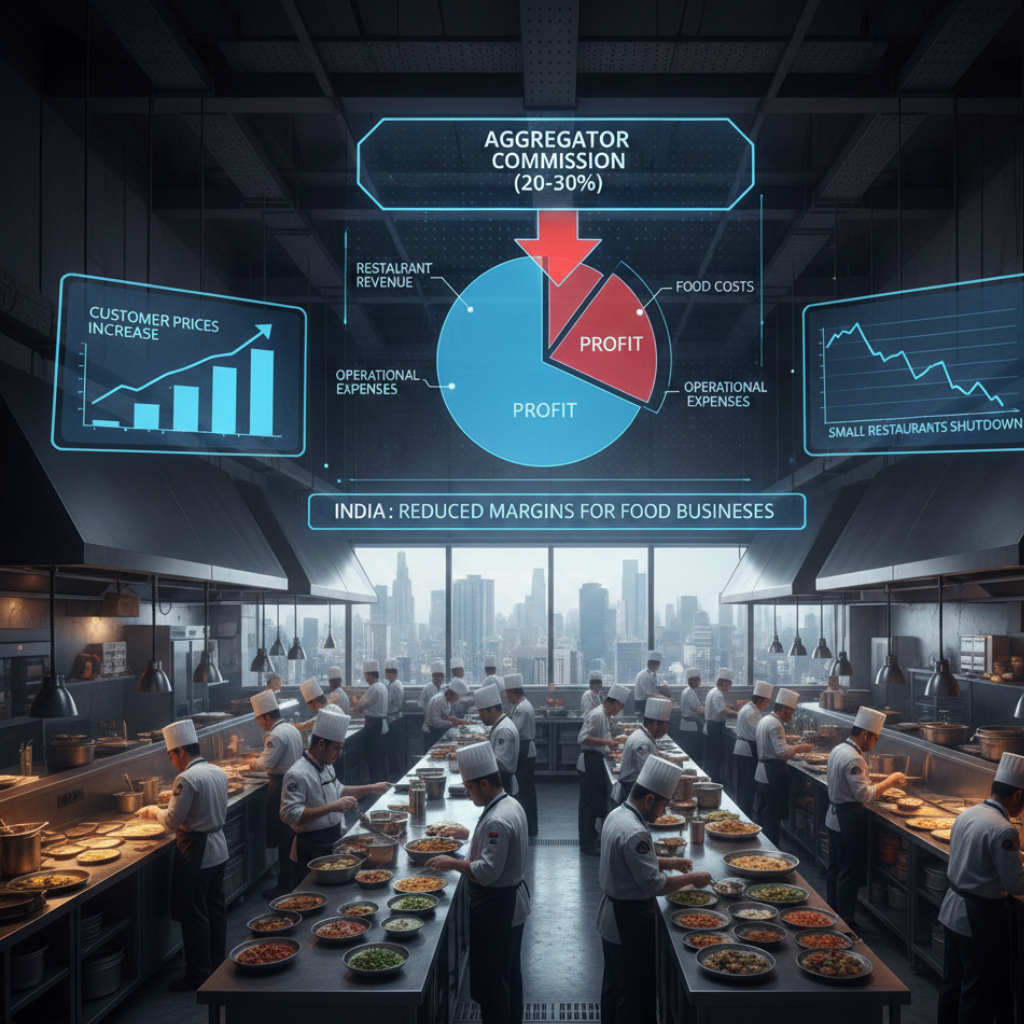
What “Aggregator Penalty” Actually Means (Not Just “They Deduct Money”)
An aggregator penalty is not only a deduction. It is a signal that your kitchen output is becoming unreliable in one or more platform metrics. Platforms measure reliability because reliability predicts customer satisfaction at scale.
Penalties and suppressions typically show up in three forms: (1) direct payout deductions (service issues, cancellations, SLA misses), (2) performance flags (high complaints, high refunds, high delays), and (3) visibility impact (lower ranking, fewer impressions, lower conversion).
The key mindset shift: aggregators behave like risk managers. If your outlet repeatedly creates customer friction, they protect the platform by reducing your reach or charging you for the failure.
This is why penalties often increase as orders increase. Not because platforms become strict suddenly. Because volume multiplies your weak process. The same small operational failure now happens 30 times instead of 5 times.
The Unit Economics Lens: Penalties Are Margin Leakage + Growth Suppression
Most founders treat penalties as a “platform expense.” In reality, penalties are profit leakage plus growth suppression. The visible loss is the deduction. The hidden loss is what happens after: lower conversion, more discount dependency, and unstable repeat orders.
Think of penalties as the platform charging you for unreliability. If your kitchen creates refunds, late deliveries, frequent cancellations, and complaint spikes, the platform spends money to resolve customer dissatisfaction. Penalties are how they shift that cost back to the kitchen.
If you want the payout-quality lens in detail, read Aggregator Commission Impact in India and (for refund-driven leakage) Refunds and Cancellations Impact on Cloud Kitchen Profitability.
The real goal is not “avoid penalties.” The goal is “become operationally predictable so penalties cannot trigger repeatedly.”
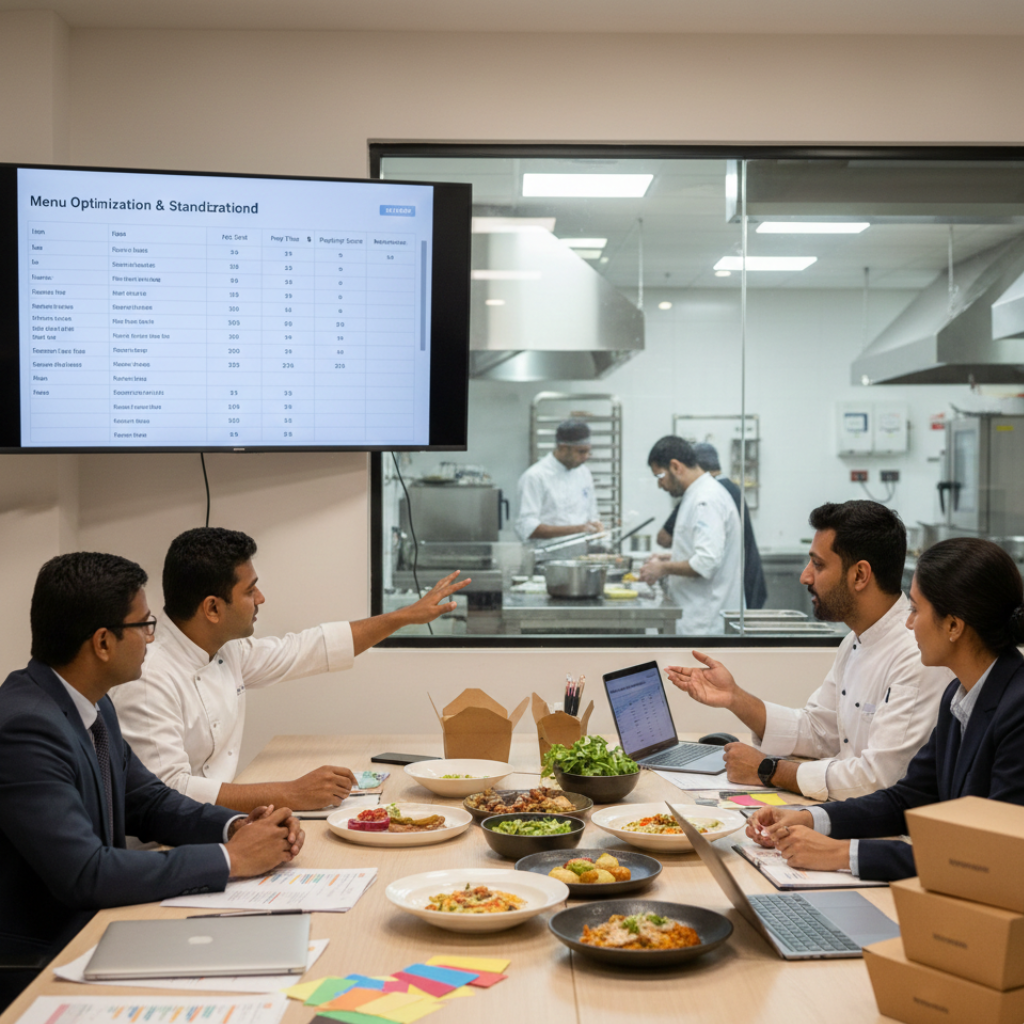
The 12 Reasons Aggregators Penalize Cloud Kitchens (And What Each One Looks Like)
Penalties feel random until you map them to operational failure categories. In reality, penalties come from a few repeatable patterns. Below are the most common reasons aggregators penalize cloud kitchens and how they show up on the floor.
1) Late dispatch is repeating, not occasional. Kitchens often blame riders or traffic. But many “late” outcomes are created inside the outlet: queue chaos, missing packing materials, delayed handover, and no dispatch gate. Late dispatch makes food colder and increases complaints, so platforms treat it as risk.
2) High cancellations signal operational instability. Cancellations usually come from: stock-outs, prep not ready, staff shortage, or accepting orders you cannot fulfill. Platforms penalize cancellations because customers feel betrayed. A cancellation is worse than a late order because it breaks trust completely.
3) Unavailability / “item not available” is too frequent. When kitchens frequently mark items unavailable after peak starts, platforms see it as poor inventory + prep planning. It kills customer conversion on the platform, so repeated unavailability reduces trust and ranking.
4) Refunds are high, meaning delivered outcomes are inconsistent. Refunds don’t happen because “customers are picky.” They happen because: spillage, wrong/missing items, missing add-ons, cold delivery outcomes, and “not as expected” texture failures repeat. Refund-heavy kitchens are platform risk.
5) Complaint spikes show quality gates are missing. A complaint spike often happens after: packaging change, new staff onboarding, new SKU launch, or festival volume. If your kitchen has no audit system, spikes become monthly patterns and platforms penalize the trend.
6) Prep-time mismatch creates SLA failure. If your listed prep time is unrealistic, orders will be late even if the kitchen is working hard. Kitchens often keep prep time low to “get more orders.” But low prep time without faster systems becomes chronic SLA failure. Chronic SLA failure triggers penalties and suppressions.
7) Packing errors create “defective received product.” A spilled gravy is not a “small issue.” It is a broken product. Platforms treat packaging complaints seriously because they are visual and easy to verify. If packing is checklist-free, leakage repeats.
8) Wrong items / wrong variants increase support burden. Wrong item issues create platform support tickets. Support tickets cost the platform time and money. If a kitchen repeatedly creates wrong order issues, platforms reduce its visibility or impose deductions.
9) Add-on misses trigger “I paid but didn’t receive” anger. Paid add-ons are the fastest trust killers. Customers complain harder because it feels like cheating. If add-ons are not verified as a hard gate, add-on misses become chronic and penalty risk rises.
10) Menu complexity rises but SOPs don’t. As kitchens add combos, variants, and multiple brands, error probability increases. If station visuals, labels, and packing rules don’t update, accuracy fails at scale. Platforms penalize the resulting refunds, complaints, and SLA misses.
11) “Peak-hour shortcuts” become permanent habit. During peak, staff finds shortcuts. Without audits, shortcuts become the default. Defaults create repeat failures: weak seals, missed items, wrong labels, and delayed dispatch. Platforms don’t care about intent, they measure outcomes.
12) No feedback loop converts penalty reasons into SOP upgrades. The biggest reason penalties repeat is simple: founders treat penalties as “platform problem,” not “system data.” Every penalty category should create a system change: checklist update, station layout change, prep plan update, container update, or dispatch gate upgrade.
If you want the operations-side fix stack, read Cloud Kitchen Dispatch SOP and How SOPs Reduce Food Cost & Complaints.
Swiggy/Zomato Reality: Penalties Protect Platform Trust, Not Kitchen Feelings
Aggregators are not judging your effort. They are protecting platform trust. Trust is the platform’s core asset: customers open the app expecting predictable outcomes. If some outlets consistently break that expectation, the platform must control the risk.
This is why penalties often correlate with these measurable signals: high cancellations, high refunds, chronic late dispatch, and complaint spikes. These signals predict customer dissatisfaction. Customer dissatisfaction reduces repeat use of the app, so platforms treat it aggressively.
Use external policy context here: Swiggy Refund & Cancellation Policy and Zomato Online Ordering Terms.
The actionable takeaway: don’t fight penalties emotionally. Translate them operationally: penalty category → station → root cause → SOP update.
Penalty Control Starts at Three Stations: Prep Planning + Packing + Dispatch
Most penalties are not created by a single “bad staff member.” They are created by system gaps at three stations: prep planning (readiness, stock, batch yield), packing (accuracy, sealing, add-ons), and dispatch (handover speed, label clarity, queue flow).
If prep is weak, you get stock-outs and cancellations. If packing is weak, you get refunds and complaints. If dispatch is weak, you get delays and cold food outcomes. All three increase platform risk and trigger penalties.
Implement dispatch predictability using Cloud Kitchen Dispatch SOP and audit repeat failure patterns using Common Operational Mistakes in Cloud Kitchens.
Why Penalty Reduction Must Be Role-Based (Not “Team, Please Perform Better”)
Penalties reduce when responsibility is designed into the flow. If responsibility is shared, output becomes unclear. If responsibility is owned, output becomes stable. Role clarity is not HR work. Role clarity is platform-performance work.
Here is what role-based penalty control looks like:
Prep role:
maintains par levels, batch yields, and “peak readiness” so items don’t go unavailable.
Cook role:
follows recipe cards, portion tools, and holds output inside defined time windows.
Pack role:
follows packing checklist, verifies add-ons, seals correctly, labels clearly, and packs with separation logic.
Dispatch role:
runs the final scan and controls handover speed so late dispatch doesn’t become a habit.
Manager role:
reviews weekly penalties, maps root causes, and updates SOPs so penalties cannot repeat.
If you want the full role-based ops model, use Role-Based Kitchen Operations Explained.
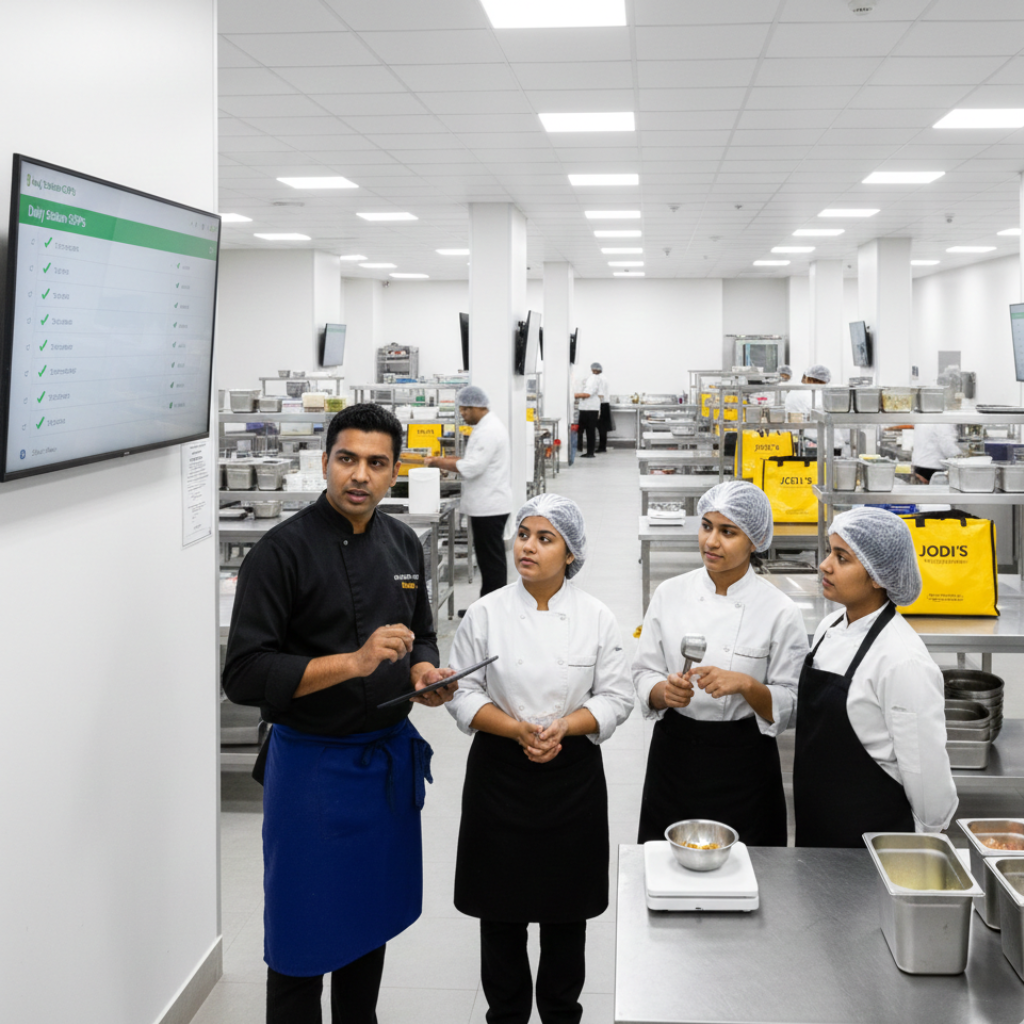
How to Reduce Aggregator Penalties in 7 to 30 Days (A Practical System That Works)
Penalties don’t reduce with one strict warning. They reduce when your station systems change and feedback loops close. Below is a rollout sequence used in running kitchens where platform performance must stay stable at volume.
Step 1 (Day 1–2): Pull last 30 days penalties + deductions and classify them. Don’t label everything “Swiggy issue.” Classify categories: late dispatch, cancellations, unavailability, refunds, complaints, prep time mismatch. If you don’t classify, you can’t fix.
Step 2 (Day 1–3): Map each category to a station. Late dispatch → dispatch flow + packing speed. Cancellations → prep readiness + stock-outs. Unavailability → par levels + batch planning. Refunds → packing checklist + accuracy gates. Complaints → texture/temperature + packaging logic. Fix station-wise, not person-wise.
Step 3 (Day 2–4): Fix the top 2 repeat causes first (not everything). Most kitchens have 2 root causes creating 60% of penalties. Pick the top two. Install the system change. Measure weekly. Then expand.
Step 4 (Day 3–7): Install a visible packing checklist + dispatch scan gate. Checklist must include: item count, add-ons, cutlery/tissues, sealing, labeling, bag closure, and dispatch sign-off. If it is not visible, it will not stick.
Step 5 (Week 2): Build a prep readiness + par level routine. Your goal is simple: no “item not available” surprises during peak. Define par levels for top SKUs, plan batch yields, and build a peak readiness checklist so cancellations reduce.
Step 6 (Week 2): Align prep time to reality (don’t promise what you can’t deliver). If your prep time is too low, you will always be late. Fixing prep time is not “lowering ambition.” It is reducing chronic SLA failure. Combine this with station speed improvements so your real prep time can reduce later.
Step 7 (Week 3): Run random peak-time audits. Check 5 orders during peak and 5 during non-peak. Track: pack accuracy, sealing quality, add-on verification, dispatch time. Audits train the system, not the person.
Step 8 (Week 3–4): Convert repeating penalty reasons into SOP upgrades. Every repeating penalty must trigger one change: prep checklist update, par level update, container update, sealing rule update, label format update, or dispatch scan step update. If penalties don’t update SOPs, penalties repeat forever.
If you want the discipline-led profitability link, map this with How Process Discipline Improves EBITDA and (for the “growth making things worse” pattern) When Growth Is Hurting Your Cloud Kitchen Operations.
External hygiene + process standards (useful while standardising): FSSAI Hygiene Requirements (Schedule 4 reference), ISO 22000 overview, and Standardized Work (Lean lexicon).
Final Takeaway: Aggregators Penalize Unreliability, Not Effort
Aggregators penalize cloud kitchens because platforms must protect customer trust at scale. If your outlet repeatedly creates late dispatch, cancellations, refunds, or complaint spikes, the platform treats you as operational risk and pushes cost back through deductions or visibility suppression.
Penalty-resistant kitchens become predictable: prep is ready, stock-outs reduce, packing is checklist-driven, dispatch is fast and accurate, refunds fall, and customer trust stabilizes. That predictability is what improves platform performance and protects payouts.
Operational frameworks from GrowKitchen, and operating partner brands like Fruut and GreenSalad are built to convert “penalty-heavy kitchens” into “stable, scalable kitchen networks.”
FAQs: Why Do Aggregators Penalize Cloud Kitchens?
What is the biggest reason aggregators penalize cloud kitchens?
Repeatability failures: late dispatch, cancellations, refunds, and complaints. Platforms penalize patterns, not one-off mistakes.
Do penalties always mean my food quality is bad?
No. Many penalties are caused by dispatch, packing, stock-outs, and prep-time mismatch even when recipes are good.
Which station should I fix first to reduce penalties quickly?
Packing + dispatch first (refund and delay reduction), then prep planning (stock-outs and cancellations reduction).
How should I track penalties for real improvement?
Track penalty category → station → time → SKU/shift. Then update SOPs and station gates so the same penalty cannot repeat.
- Cloud Kitchen Profitability Consultant in India
- Common Operational Mistakes in Cloud Kitchens
- Aggregator Commission Impact in India
- Refunds and Cancellations Impact on Cloud Kitchen Profitability
- Cloud Kitchen Dispatch SOP
- Role-Based Kitchen Operations Explained
- When Growth Is Hurting Your Cloud Kitchen Operations
- How Process Discipline Improves EBITDA
- Grow Kitchen on Twitter