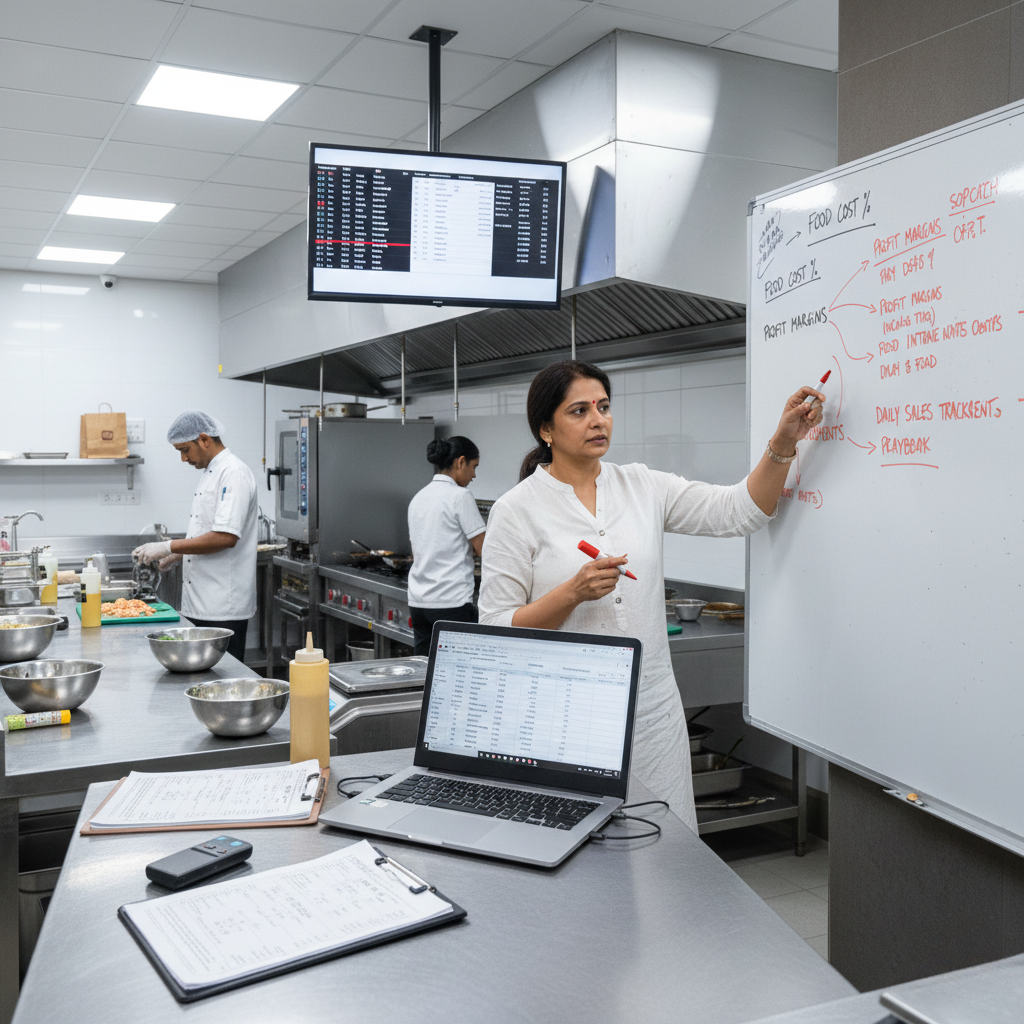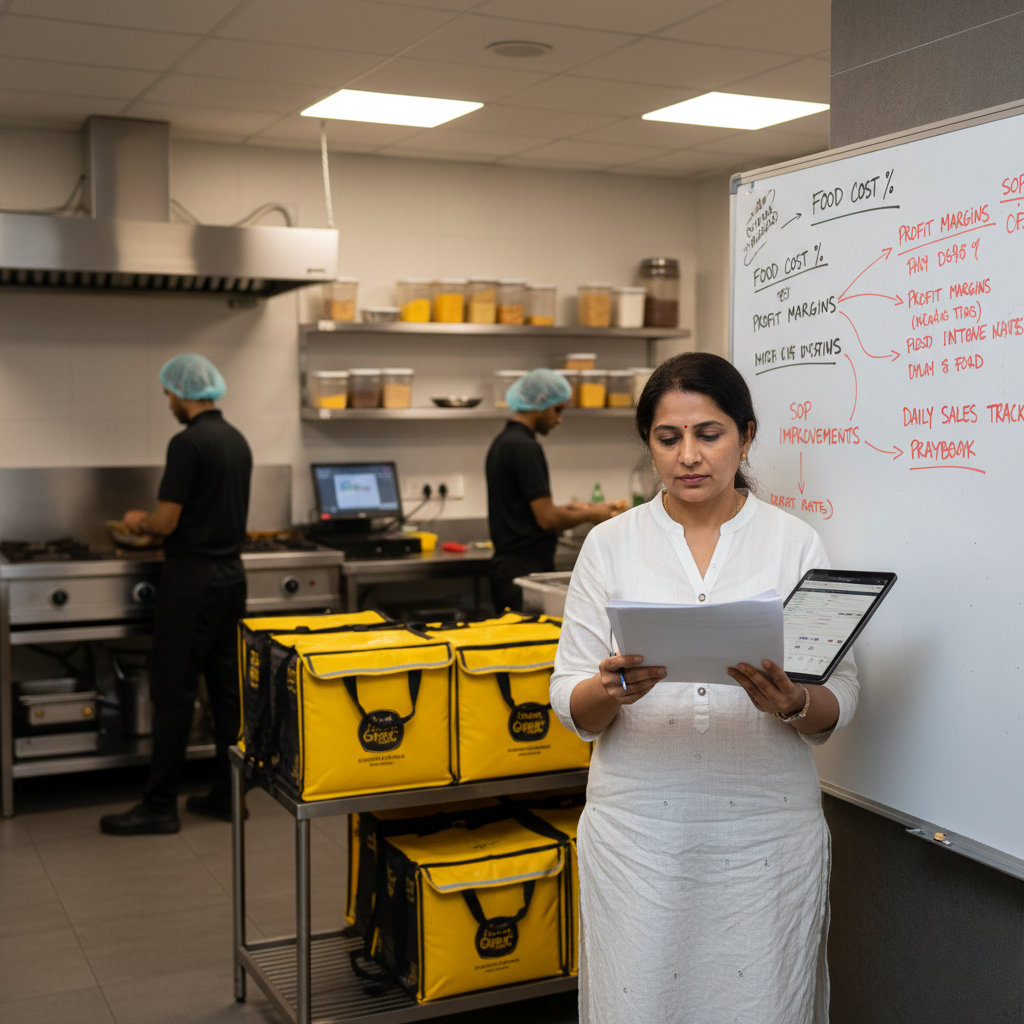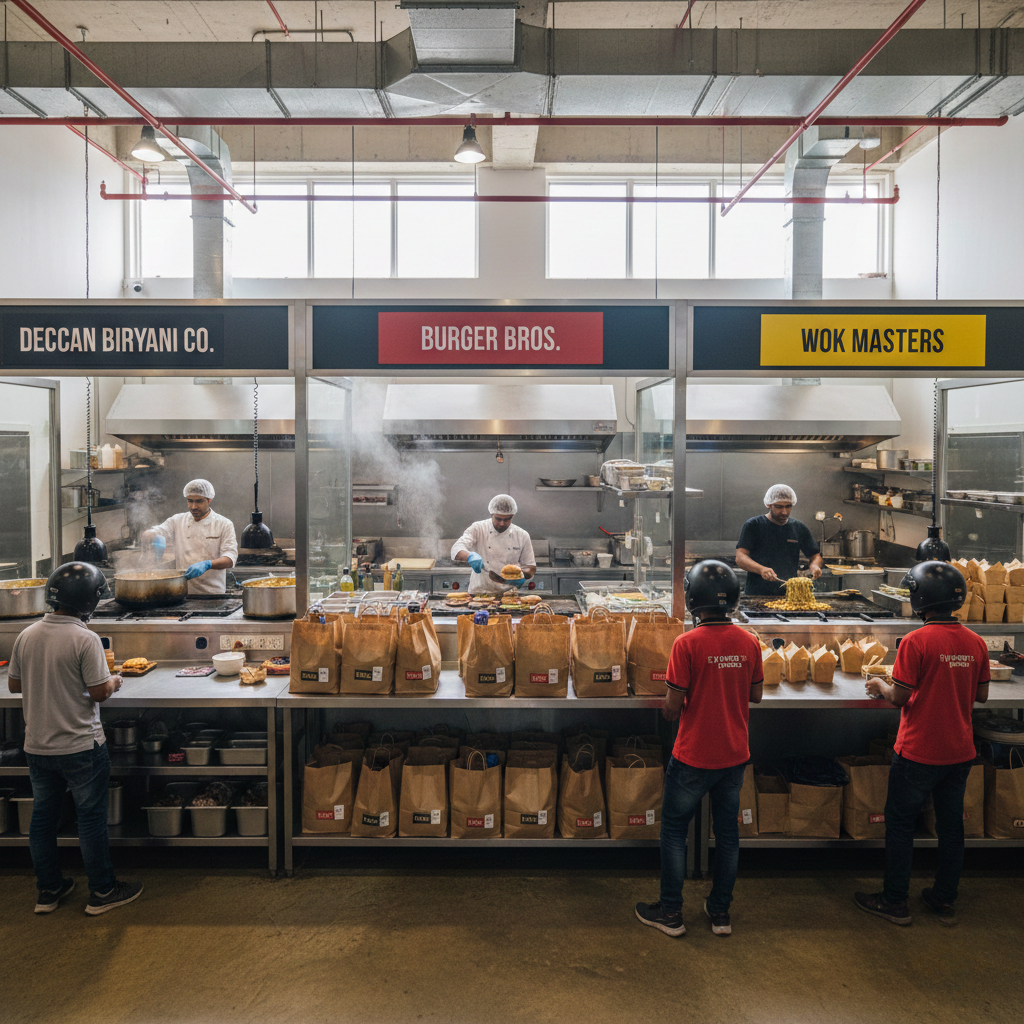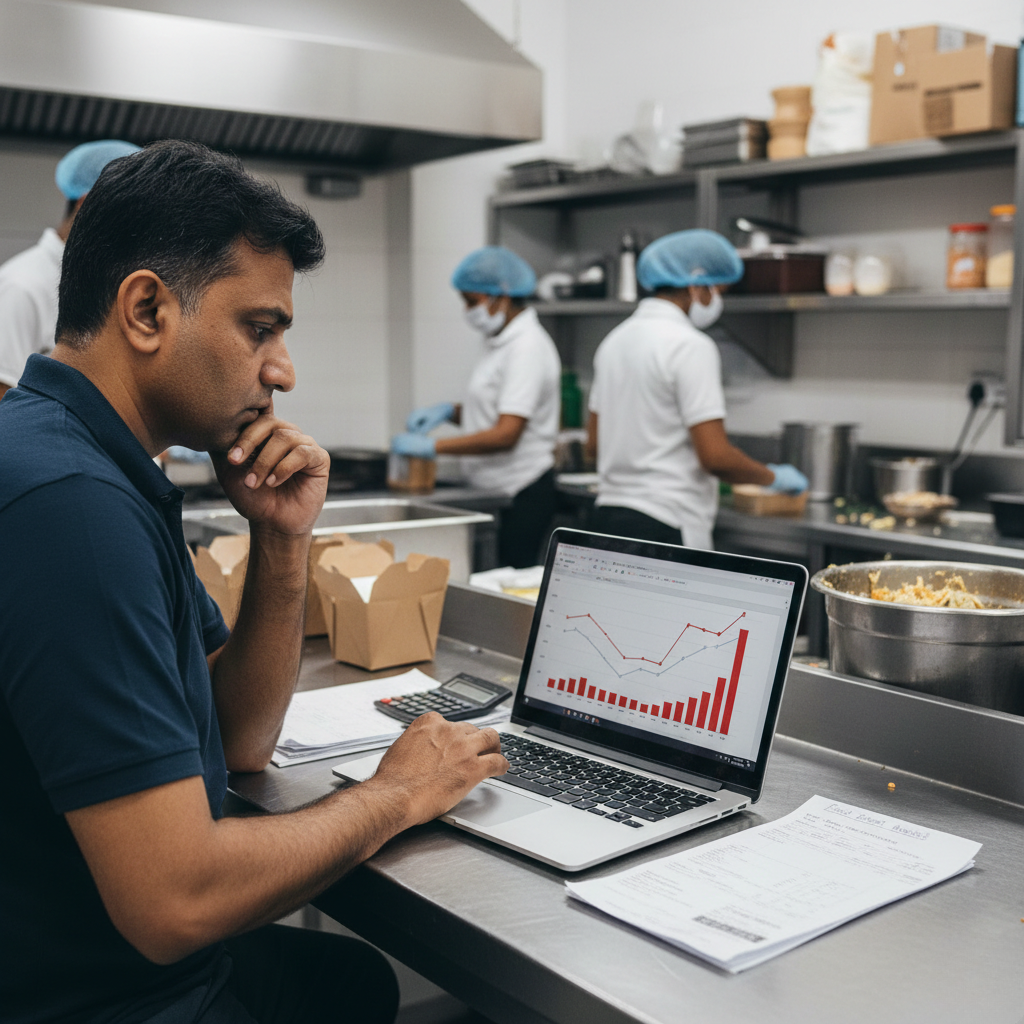
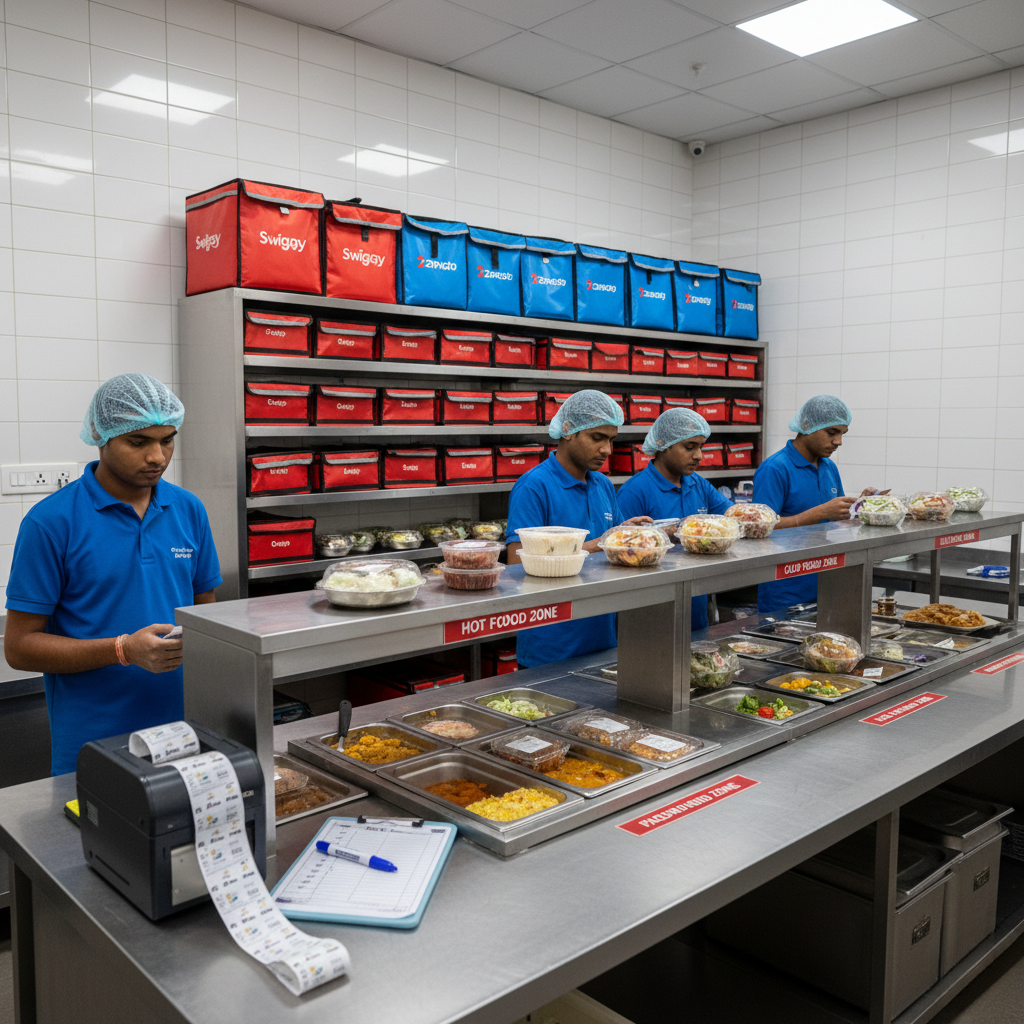
Why are my Swiggy Zomato refunds high? is not a “bad luck” problem or a “platform hates me” problem. It is a payout-quality + execution-system problem. Cloud kitchens run on speed, stacking, rider movement, and repeatability. When refunds rise, it is usually because the same operational failure is repeating at scale: packing leakage, wrong/missing items, add-on misses, delayed dispatch, inconsistent portions, and complaint loops that never update SOPs. This guide explains why Swiggy/Zomato refunds go high in cloud kitchens in India and how to build a refund-resistant operating system end-to-end using SOPs, station gates, tools, audits, and feedback loops using systems, not supervision.
Why Are My Swiggy Zomato refunds high? The Real Reason Your Kitchen Feels “Busy But Leaking”
Most cloud kitchen founders reach a point where refunds feel normal. Orders are coming in. The dashboard looks active. But payout feels inconsistent and complaints keep popping up.
The refund reasons look repetitive: spilled gravies, cold food, missing cutlery, wrong item, missing add-ons, “quantity less,” late delivery, and “order not as expected.”
The confusing part is: you may feel your food is good. Your recipes are stable. Your team is trying. So why do refunds stay high?
Because refunds are not a “taste metric.” Refunds are a system metric. They are the output of your packing station, your dispatch discipline, your add-on verification, your portion system, and your complaint-to-SOP feedback loop.
If you want the profitability foundation lens first, start with Cloud Kitchen Profitability Consultant in India and map recurring execution leaks using Common Operational Mistakes in Cloud Kitchens.
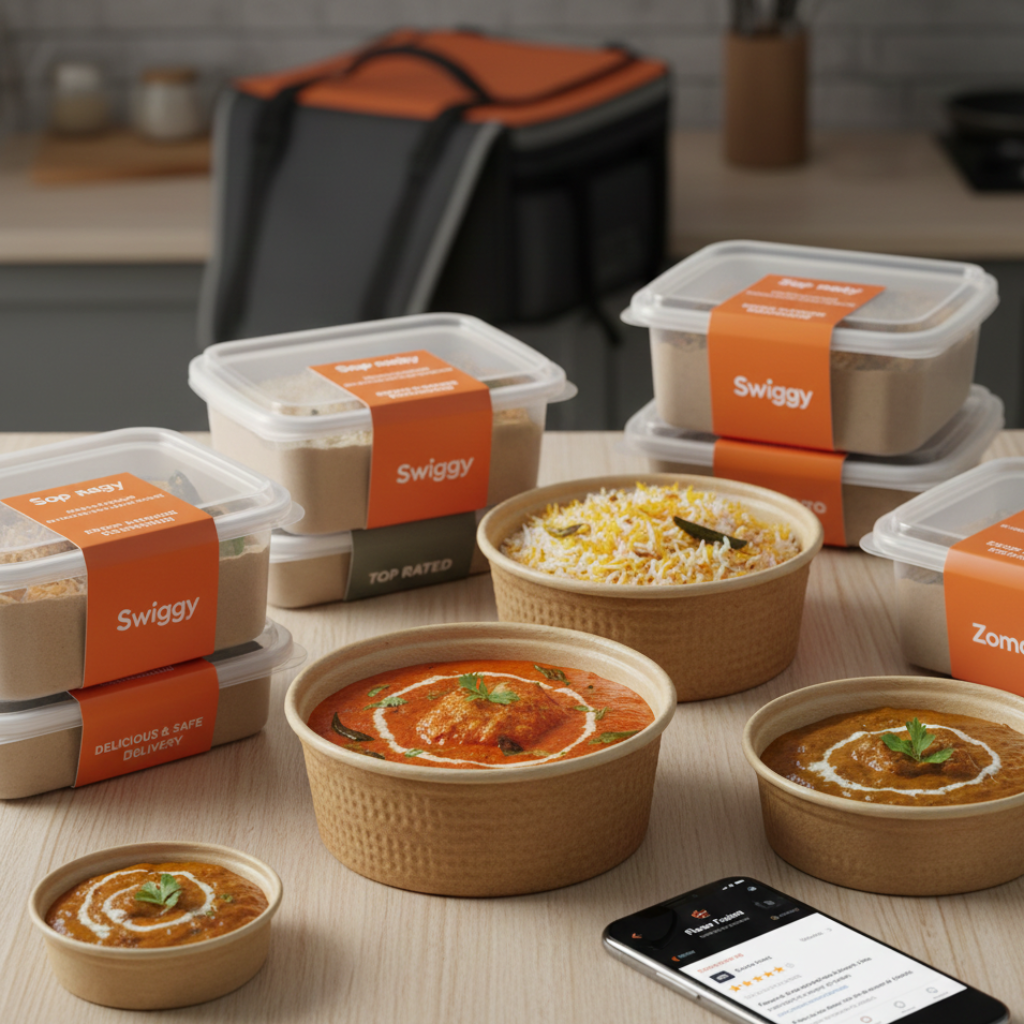
What “High Refunds” Actually Means (Not Just “Customers Are Complaining Too Much”)
High refunds mean your delivered product outcome is inconsistent. It does not always mean your food is bad. It means your kitchen is failing to deliver the promised experience consistently at speed.
In delivery-first kitchens, refunds usually come from five predictable buckets: packing failure (spillage, broken seal, soggy texture), accuracy failure (wrong/missing items, missing cutlery, wrong label), add-on failure (paid extras missed), portion perception failure (inconsistent quantity, drifting portions), and time failure (late dispatch, long rider wait, cold delivery).
The dangerous part is this: refunds are not isolated. One refund often triggers a chain reaction: refund → low rating → conversion drop → discount dependency → margin collapse.
If your refunds are rising while orders are rising, it usually means your kitchen volume increased but your execution system did not. The same weak process is now repeating more times per day.
The Unit Economics Lens: Refunds Are a Direct Attack on Contribution Margin
Cloud kitchen profitability is decided per order. Your contribution margin is: selling price minus commission minus packaging minus food cost minus refunds/penalties impact.
Refunds destroy this equation in three ways: (1) payout reduction (the platform refund hits your revenue), (2) remake cost (you often remake to protect rating or customer retention), and (3) conversion recovery cost (you burn discounts because ratings and trust drop).
Many founders only measure the visible loss: “Refund amount.” But the real loss is the full chain: refund + extra packaging + extra food cost + staff time + delay + rating volatility + discount burn.
If you want the bigger payout and leakage lens, read Aggregator Commission Impact in India and (for the refund-leak model) Refunds and Cancellations Impact on Cloud Kitchen Profitability.
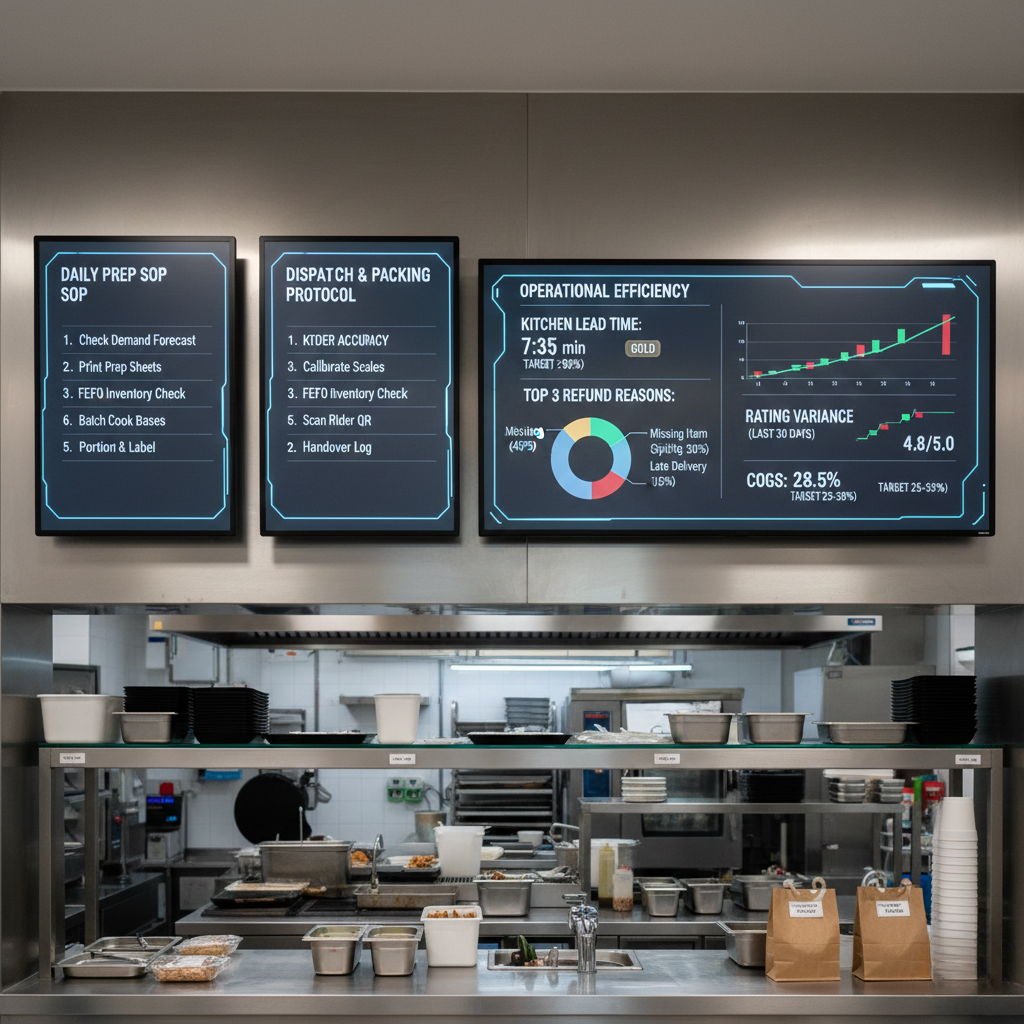
The 12 Reasons Your Swiggy and Zomato Refunds Are So High (And What Each One Looks Like)
Refunds feel random until you track them properly. In reality, high refunds are almost always caused by a few repeating failure patterns. Below are the most common reasons refunds stay high in delivery kitchens.
1) Packing is not a checklist-based quality gate. If packing is “just put it in a bag,” the output depends on memory. Memory collapses during peak. No checklist means missing items and weak seals keep repeating.
2) Liquids are overfilled and under-sealed. Gravy bowls filled to the brim leak on speed breakers. Lids pop under heat pressure. Spillage complaints create refunds even when the food is perfect.
3) Add-ons are not systemized. Paid add-ons are the most refunded category because customers feel “cheated.” If add-ons are not visually flagged and verified at packing, misses will keep happening.
4) Wrong item / wrong variant happens due to weak labeling. In multi-brand kitchens, mislabeling is the fastest way to trigger refunds. “Veg vs non-veg,” “spicy vs non-spicy,” “regular vs large,” or “combo vs single” becomes a complaint loop when labels are unclear.
5) Heat + steam destroys texture (soggy fries, limp snacks, watery noodles). Many refunds come from “not as expected” because texture fails in delivery. If you pack hot crispy items in sealed boxes without venting logic, steam becomes condensation and crisp becomes soggy.
6) Dispatch delays create cold food outcomes. A kitchen can cook fast but still lose on dispatch. Rider waiting, bag searching, missing tape, missing labels, or late handover makes food cold and complaint probability rises.
7) Portion perception is inconsistent. Even when portions are “technically okay,” inconsistency triggers complaints. If a customer gets 2 heavy bowls and then 1 light bowl, the light bowl is perceived as “quantity less.” This is why portion control is a refund reduction system, not only a food cost system.
8) Packaging inventory is not standardized (random containers, random lids). When procurement changes containers or lids frequently, the kitchen keeps relearning sealing behavior. That means leakage increases temporarily every time materials change.
9) You don’t track refunds by root cause and station. Kitchens improve what they track. If you don’t track “refund reason → station → time → SKU,” refunds remain a complaint story, not a fixable system.
10) Your replacement policy is unclear, so staff “overcompensates.” When staff fears escalation, they do freebies and remakes without structure. This trains the kitchen to accept refunds as normal instead of fixing the root cause.
11) Menu complexity grew, but SOPs didn’t. As you add combos, variants, new brands, and new SKUs, the number of accuracy failure points rises. If your station visuals and SOP boards don’t update, refunds rise automatically.
12) No feedback loop converts complaints into SOP updates. Every repeated complaint should create one SOP upgrade: a new checklist line, a new label rule, a container change, or a sealing method change. If complaints do not update the system, refunds repeat forever.
For the operations-side fix stack, read How SOPs Reduce Food Cost & Complaints and Cloud Kitchen Dispatch SOP.
Swiggy/Zomato Reality: Refunds Create Rating Volatility and Discount Dependency
High refunds don’t only reduce payout. They also damage your growth engine. Customers who face spillage or missing items are more likely to rate low. Low ratings reduce conversion. Reduced conversion pushes founders into discounting to recover sales.
This is why kitchens feel trapped: “If we don’t discount, orders drop.” That is rarely only a marketing problem. It is a trust problem caused by inconsistent delivery experience.
If you want to understand how payout quality gets affected structurally, read Aggregator Commission Impact in India.
External reference links (policy context): Swiggy Refund & Cancellation Policy and Zomato Online Ordering Terms.
Refund Reduction Starts at Two Stations: Packing + Dispatch (Not Ads)
In most cloud kitchens, 60–80% of refund reasons originate at packing and dispatch. That is where the most variables exist: sealing, labeling, add-ons, bag load, handover timing, and rider movement.
A strong refund-resistant dispatch system includes: container SOP by item type, max fill lines for liquids, sealing rules, add-on verification, label format rules, and a final “order completeness” scan before handing to rider.
Implement station discipline using Cloud Kitchen Dispatch SOP and use this as the broader audit reference: Common Operational Mistakes in Cloud Kitchens.
Why Refund Control Must Be Role-Based (Not “Team, Please Be Careful”)
Refunds don’t reduce with motivation. Refunds reduce when roles and gates are built into the station system. If responsibility is shared, output becomes unclear. If responsibility is owned, output becomes stable.
Here is what role-based refund control looks like:
Prep role:
ensures components are pre-portioned, labeled, and ready so peak does not become chaos.
Cook role:
follows recipe cards, portion tools, and ensures the right container is used for the right item.
Pack role:
follows the packing checklist, verifies add-ons, seals correctly, labels clearly, and packs with separation logic.
Dispatch role:
does the final scan: order completeness, bag stability, rider handover timing, and correct bag count.
Store/Manager role:
runs weekly refund review, root cause mapping, and SOP updates on repeating failures.
If you want the full role-based operations model, use Role-Based Kitchen Operations Explained.
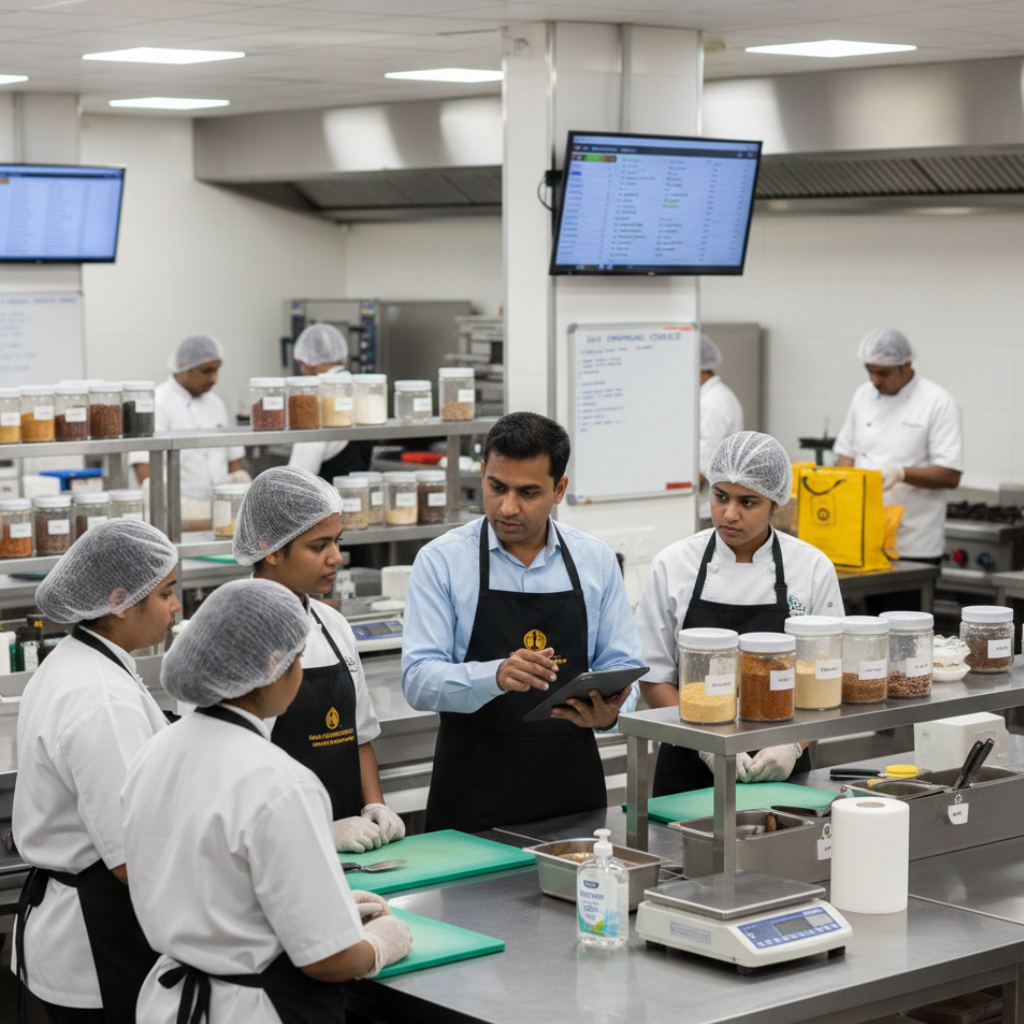
How to Reduce Swiggy and Zomato Refunds in 7 to 30 Days (A Practical System That Works)
Refunds don’t reduce with “one strict day” or “one training.” They reduce when your station system changes and the feedback loop closes. Below is a rollout sequence that works in running cloud kitchens.
Step 1 (Day 1–2): Pull last 30 days refunds and classify by reason. Don’t write “customer issue.” Write categories: spillage, missing item, wrong item, add-on missed, quality/texture, late delivery. If you don’t classify, you can’t fix.
Step 2 (Day 1–3): Map each refund reason to a station. Spillage → packing station. Missing add-on → packing checklist failure. Wrong item → labeling/dispatch scan failure. Cold food → dispatch delay and rider wait. Map station-wise, not person-wise.
Step 3 (Day 2–4): Fix liquids first (highest refund multiplier). Decide correct container, define max fill line, define sealing points (tape type + count), and define bag placement rule (liquids always bottom, upright).
Step 4 (Day 3–7): Install a visible packing checklist gate. Checklist must include: item count, add-ons, cutlery/tissues, sealing, labeling, bag closure, and dispatch scan sign-off. If it is not visible, it will not stick.
Step 5 (Week 2): Add add-on verification as a hard gate. Paid add-ons must never be “remembered.” Use a system: sticker, highlight marker, or tray segregation. Add-ons are the fastest trust killers if missed.
Step 6 (Week 2): Redesign the station layout for speed without chaos. Fix tool parking positions: tape, scissors, labels, markers, extra lids, bags, napkins, cutlery, sauce cups. Searching creates stress. Stress creates refunds.
Step 7 (Week 3): Run random peak-time audits (not full-time policing). Check 5 orders in peak and 5 in non-peak. Log errors with station and reason. Correct immediately. Audits train the system, not the person.
Step 8 (Week 3–4): Convert repeating refund reasons into SOP upgrades. Every repeat reason must trigger one change: container update, sealing rule update, label format update, checklist line update, or dispatch scan step update. If refunds don’t update SOPs, refunds repeat forever.
If you want the profitability discipline link, map this with How Process Discipline Improves EBITDA.
External hygiene + process standards (useful while standardising): FSSAI Hygiene Requirements (Schedule 4 reference), ISO 22000 overview, and Standardized Work (Lean lexicon).
Final Takeaway: High Refunds Mean Your Delivery System Is Not Repeatable Yet
If your Swiggy and Zomato refunds are high, it usually means one thing: your kitchen is producing inconsistent delivered outcomes at speed. Not because your food is “bad,” but because packing, dispatch, add-on verification, and station discipline are not systemized.
Refund-resistant kitchens become predictable: fewer spills, fewer missed add-ons, fewer wrong orders, fewer complaints, fewer refunds, and more stable ratings and payouts. That predictability is what creates scalable delivery growth.
Operational frameworks from GrowKitchen, and operating partner brands like Fruut and GreenSalad are built to convert “refund-heavy kitchens” into “controlled, profitable kitchen networks.”
FAQs: Why Are My Swiggy and Zomato Refunds So High?
What is the biggest reason refunds stay high in cloud kitchens?
Because execution is memory-based and checklist-free. Packing + dispatch systems don’t scale with order volume.
Do better containers alone reduce refunds?
Containers help, but refunds reduce only when you add fill limits, sealing rules, add-on verification, labeling rules, and a dispatch scan gate.
Which refund category should I fix first?
Fix liquids first: spillage creates the fastest refunds and the fastest rating damage.
How do I track refunds properly for improvement?
Track refund reason → station → time → SKU. Then update SOPs for repeating reasons instead of blaming staff.
- Cloud Kitchen Profitability Consultant in India
- Common Operational Mistakes in Cloud Kitchens
- Refunds and Cancellations Impact on Cloud Kitchen Profitability
- Aggregator Commission Impact in India
- Cloud Kitchen Dispatch SOP
- Role-Based Kitchen Operations Explained
- How SOPs Reduce Food Cost & Complaints
- How Process Discipline Improves EBITDA
- Grow Kitchen on Twitter