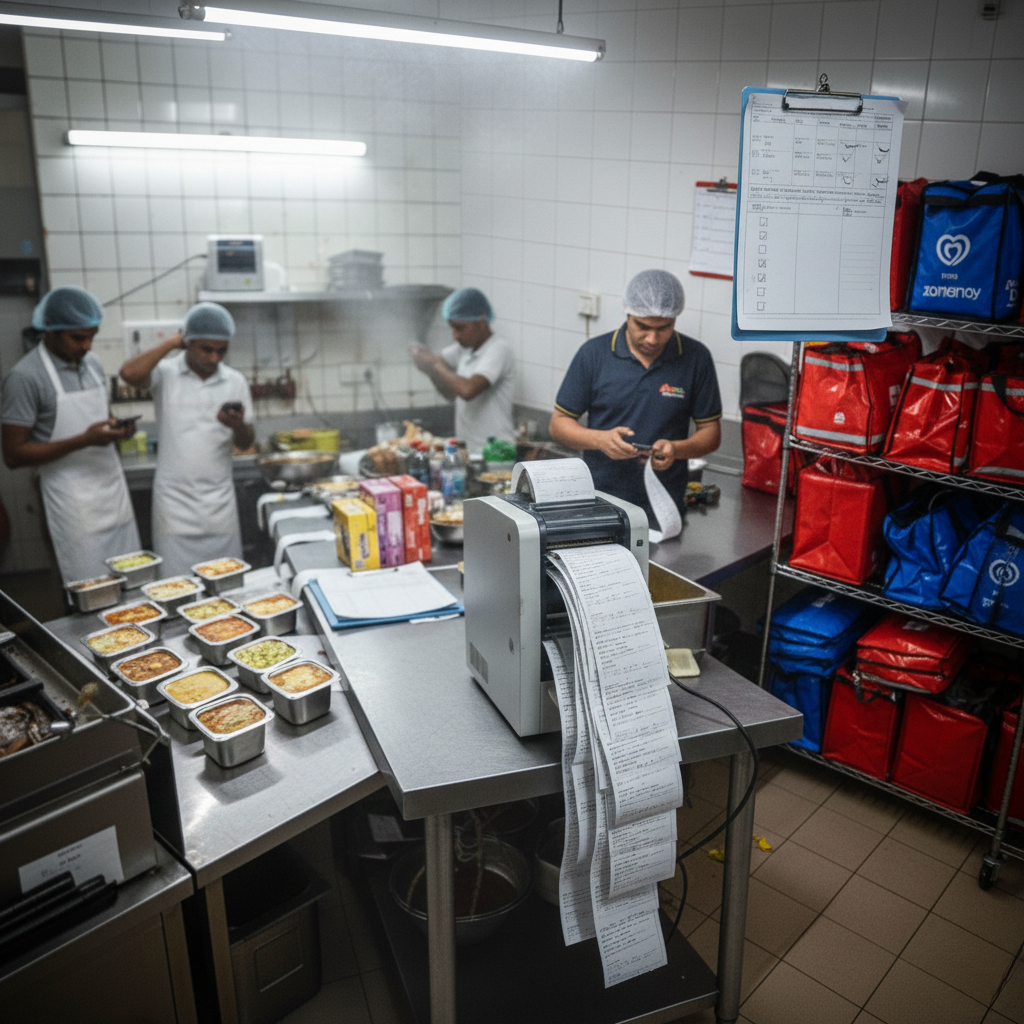
Why refunds increase as orders increase? is not a “Swiggy/Zomato problem” or a “customers are too demanding” problem. It is a scale-without-systems problem. Cloud kitchens run on speed, batching, rider stacking, and repeatability. When volume grows but your SOPs, stations, and quality gates don’t, small errors multiply into daily leakage: wrong items, missing add-ons, spillage, delays, cold food, and complaint-driven refunds. This guide explains why refunds rise with order volume in cloud kitchens in India and how to build a refund-resistant operating system end-to-end using SOPs, packing gates, station design, audits, and KPI loops using systems, not supervision.
Why refunds increase as orders increase? The Real Reason “More Sales” Can Mean “More Losses”
Every cloud kitchen founder has seen this frustrating pattern: orders are increasing, revenue looks higher, your store looks “busy,” but refunds, cancellations, and complaints start rising with it.
The dashboard starts showing familiar lines: wrong item, missing item, spilled gravy, cold food, delayed delivery, rider waiting too long, poor packaging, and quality mismatch compared to last time.
This feels unfair because you assume higher volume should improve operations through repetition. But delivery kitchens don’t automatically improve with volume. They improve only when the operating system upgrades with volume. If systems stay manual, memory-based, and founder-dependent, refunds will rise as orders rise.
If you want the profitability foundation lens first, start with Cloud Kitchen Profitability Consultant in India and map recurring execution leaks using Common Operational Mistakes in Cloud Kitchens.
What Refunds Actually Mean in a Cloud Kitchen (Not Just “Customer Issues”)
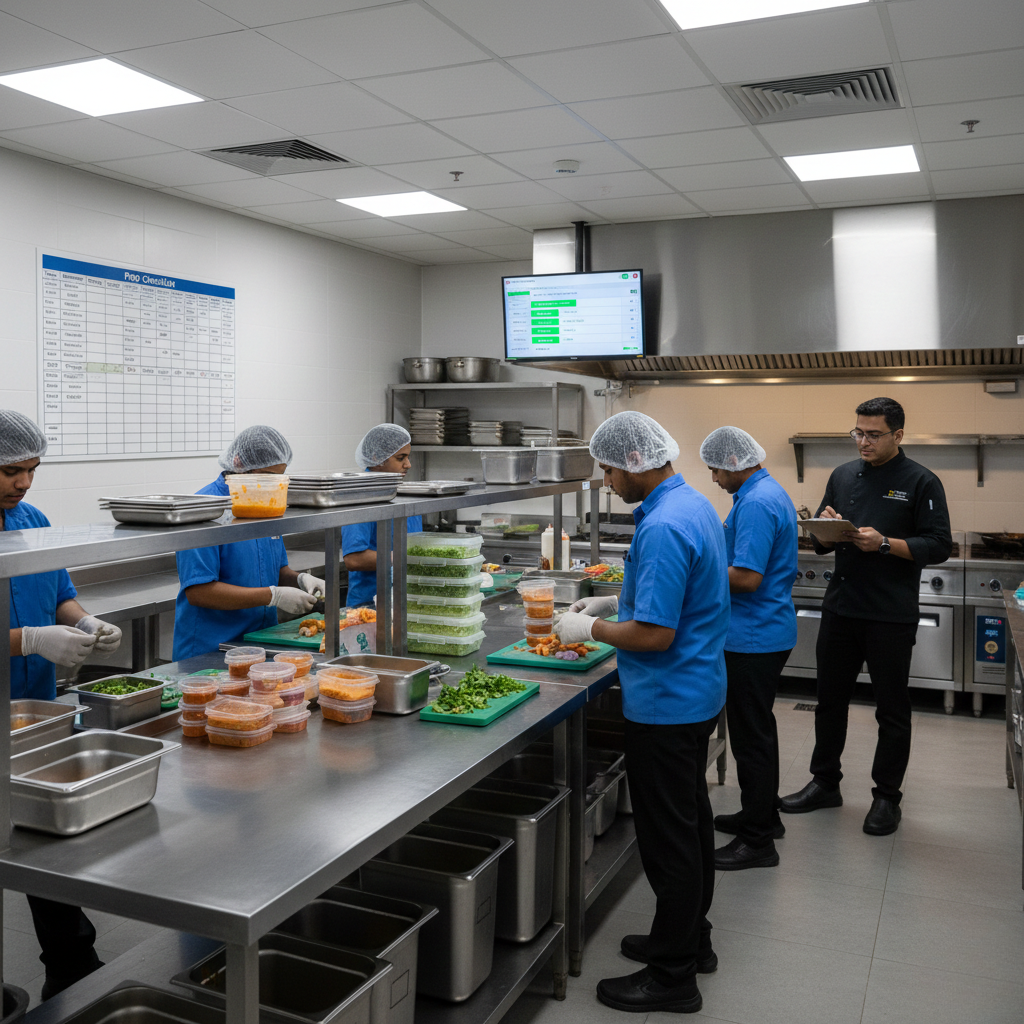
Refunds are not random. Refunds are a signal that your delivered output is becoming inconsistent. A customer doesn’t refund because your kitchen was busy. They refund because the received product failed in some visible way.
In delivery-first kitchens, refund triggers usually fall into five buckets: accuracy failures (wrong/missing item), packing failures (spillage, burst sauces, weak seals), timing failures (late dispatch, long rider wait), quality failures (cold, soggy, overcooked, undercooked), and expectation failures (inconsistent portioning, mismatch vs menu photos, inconsistent spice).
The important shift: treat refunds like a production defect metric, not a customer-service headache. The kitchen doesn’t need “more apologies.” The kitchen needs fewer defect opportunities.
A powerful way to think about it: your menu price is fixed, platform fees are fixed, packaging costs are mostly fixed, so every refund becomes a direct hit to contribution margin. If refunds go up while orders go up, revenue can grow but profits can shrink.
The Unit Economics Lens: Refunds Are Not Small Leakages They Are Margin Multipliers
Cloud kitchen profitability is decided per order. Your contribution margin is basically: selling price minus platform commission minus payment charges minus packaging minus food cost minus operational leakages. Refunds and replacements hit this equation brutally because they create both direct and indirect losses.
Direct loss:
refund value (full or partial) plus remake food cost plus extra packaging plus staff time plus rider delays.
Indirect loss:
ratings volatility, reduced conversion, higher discount burn to recover sales, and increased customer acquisition cost.
Example logic (common in busy kitchens): one spilled gravy order becomes a refund. the kitchen remakes the order to protect rating. that remake delays the next batch. rider waits. late delivery increases another complaint. you now created a chain of refunds because one station failed.
If you want to understand how operational drift destroys profitability beyond refunds, audit using Common Operational Mistakes in Cloud Kitchens.
The 10 Reasons Refunds Increase As Orders Increase (And What Each One Looks Like)
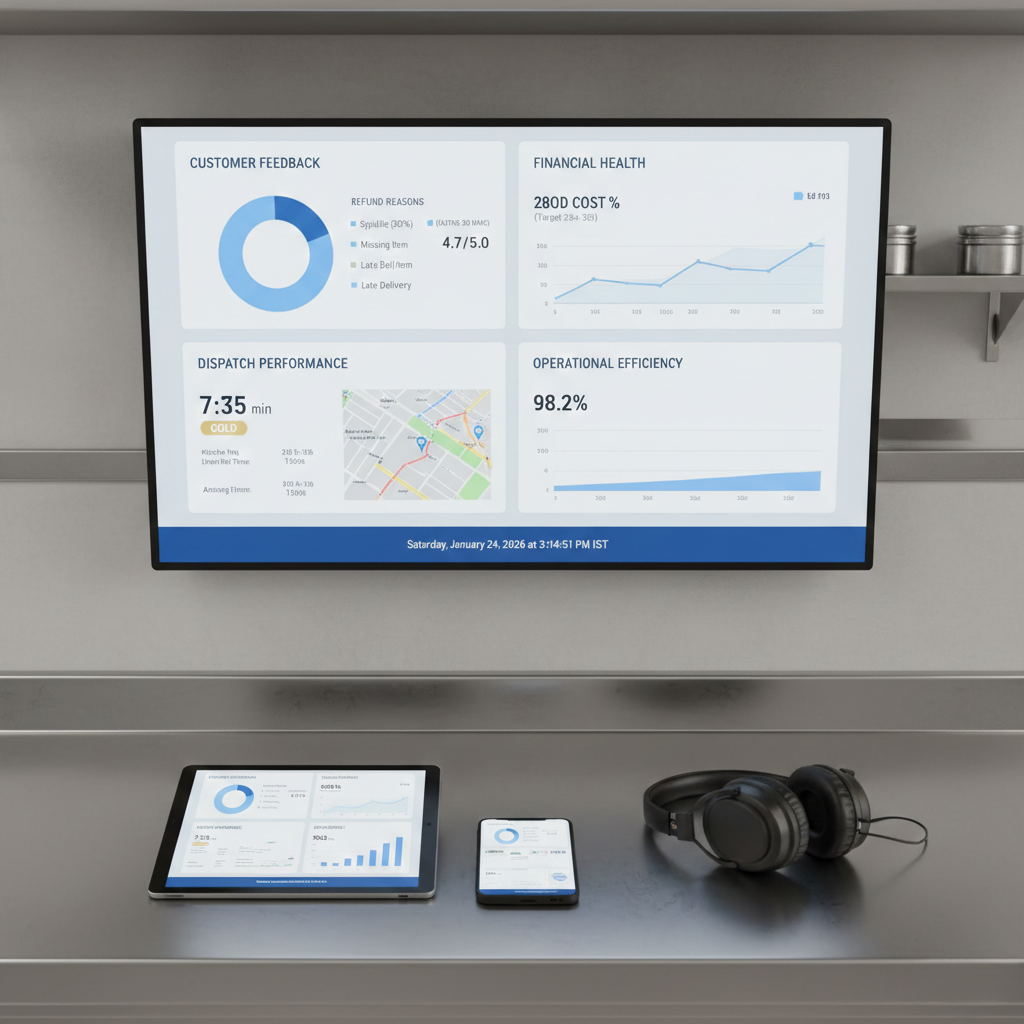
Refunds feel like a platform problem because they show up on the platform. But the root causes usually live inside the kitchen. When orders grow, complexity, pressure, and defect opportunities grow. Here are the real reasons refunds rise with volume and what each looks like in daily operations.
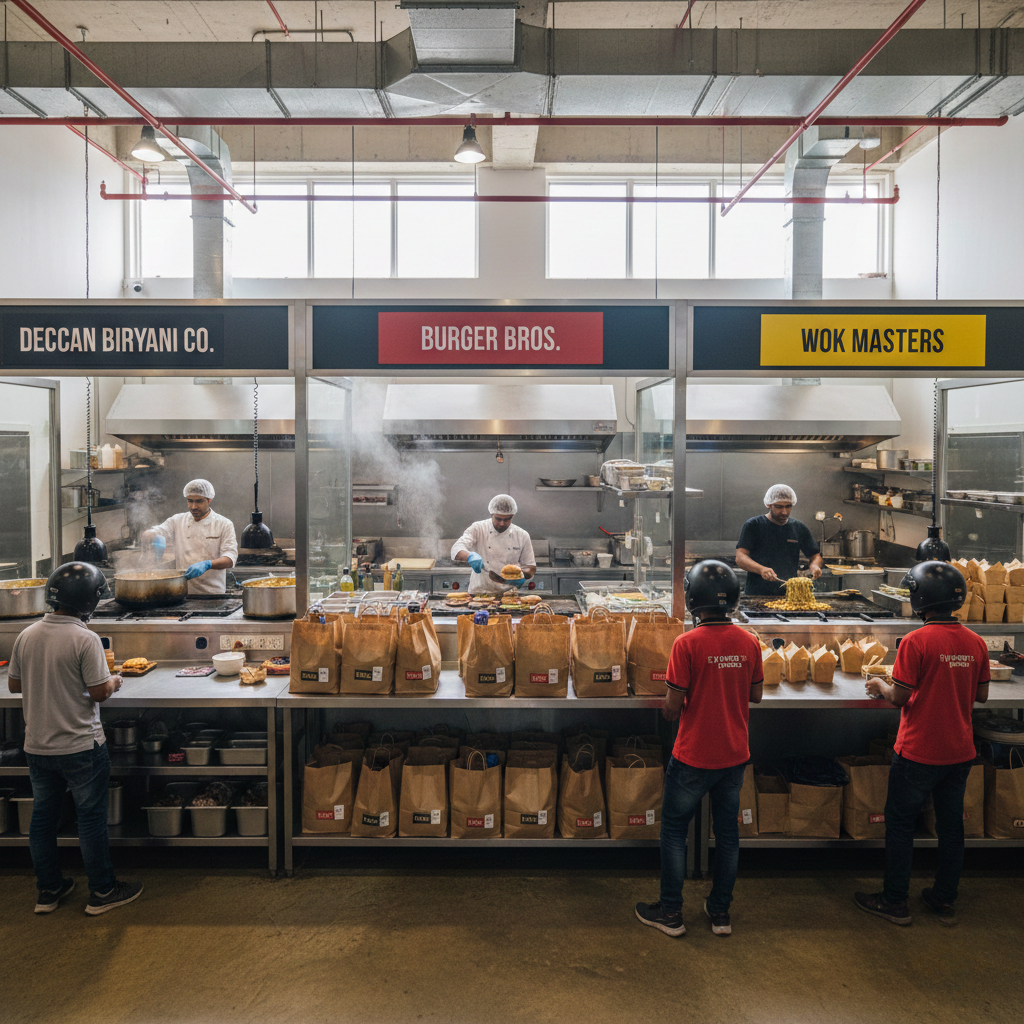
1) Peak-hour batching increases without a dispatch control system. When 15–25 orders hit together, the kitchen switches into survival mode. Without a station sequence and final gate, accuracy drops, packing gets rushed, and mistakes multiply.
2) Packing becomes the bottleneck and bottlenecks create errors. As volume grows, packing is often understaffed. Under pressure, packers skip steps: labels, cutlery, add-ons, sealing checks, bag stability. Skipped steps become refund triggers.
3) Add-ons scale faster than memory. Higher volume usually means more add-ons and combos. Add-ons are the most missed items. If add-ons are not visually flagged and checklist-verified, misses rise with orders.
4) Rider stacking exposes weak packaging. A pack that survives “table delivery” may fail in real rider movement. As orders grow, riders stack more, tilt more, and move faster. Weak sealing + overfill + poor bag structure becomes spillage refunds.
5) Prep planning fails and quality becomes inconsistent. If prep yields are not tracked, kitchens run out mid-peak. Running out creates last-minute substitutions and rushed cooking. Rushed cooking creates quality complaints and refunds.
6) Portions drift when speed increases. More orders increases the chance of “extras” and “short portions.” Inconsistent portions create perceived cheating. Perceived cheating triggers complaints even if taste is good. Portion control must become a tool-led station system.
7) Labels and variants get mixed up. As volume grows, similar SKUs become dangerous: Jain vs regular, spicy vs normal, with add-on vs without, veg vs egg, single vs combo. Without clear labeling rules, wrong variants increase and refunds follow.
8) No real-time scoreboard exists for “refund reasons.” Kitchens improve what they track. If you don’t track refund reasons by category daily/weekly, the same failures repeat. Volume hides failures because sales look high until refunds become painful.
9) Training stays static while menu complexity increases. More orders usually happens because menu expands or discounts run. But SOPs are not updated. The team runs new items with old habits, and refunds rise.
10) No feedback loop converts complaints into SOP upgrades. Complaints are data. If 20 “spillage” complaints don’t force a container + seal rule update, you will keep paying for the same mistake. Refund resistance comes from closing the loop.
If you want the SOP-led link between fewer complaints and stronger operations, read How SOPs Reduce Food Cost & Complaints.
Swiggy/Zomato Reality: Refunds Rise With Orders When Quality Gates Are Missing
Aggregators are not “trying to hurt you.” They are enforcing customer experience standards at scale. As your orders increase, the number of customer touchpoints increases. If your defect rate stays the same, absolute refunds increase. If your defect rate worsens, refunds grow even faster.
The dangerous truth: even a small defect rate becomes expensive at high volume. A 2% defect rate at 50 orders/day is 1 refund/day. The same defect rate at 300 orders/day becomes 6 refunds/day. If your defect rate rises during peak, the number becomes worse.
To understand payout dynamics and how platform economics amplify leakage, read Aggregator Commission Impact in India.
External reference links (policy context): Swiggy Refund & Cancellation Policy and Zomato Online Ordering Terms.
Dispatch Reality: Refunds Rise When Dispatch Is Treated Like “Handover” Not “Verification”
Most refunds that founders blame on “customers” start at dispatch. Dispatch is not only handing a bag to a rider. Dispatch is verifying that the correct, sealed, complete order leaves the kitchen.
A refund-resistant dispatch system includes: a packing checklist, add-on verification gate, label and variant confirmation, bag stability rules, and a final scan before handover. If your dispatch has no quality gate, errors will scale with volume.
Implement dispatch predictability using Cloud Kitchen Dispatch SOP.
Why Refund Control Must Be Role-Based (Not “Team, Please Be Careful”)
Refunds do not reduce with motivation. Refunds reduce when roles, gates, and ownership are designed into the system. When everyone is responsible, no one is accountable.
Here is what role-based refund control looks like:
Prep role:
ensures batch yields, labeling, holding times, and availability during peak.
Cook role:
follows portion tools, recipe cards, and assembly sequence to reduce quality variance.
Pack role:
uses checklists, seals, add-on verification, and labeling rules.
Dispatch role:
runs final “order completeness” verification before rider handover.
Store role:
reviews refunds by type weekly and updates SOPs.
If you want the full role-based operations model, use Role-Based Kitchen Operations Explained.
How to Reduce Refunds in 7 to 30 Days: A Practical System That Works
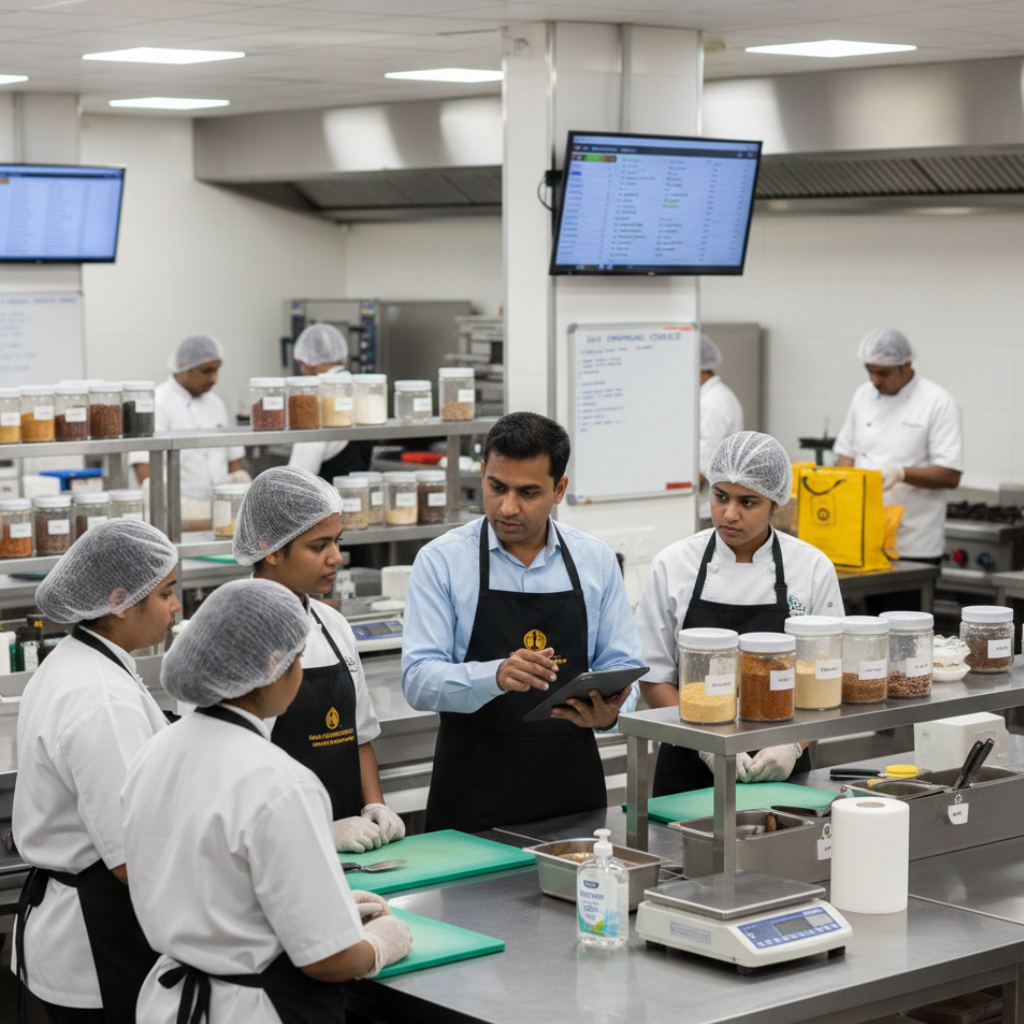
Refund reduction is not a one-day training. It is a rollout of quality gates, station rules, and weekly feedback loops. Below is a sequence that works in running cloud kitchens.
Step 1 (Day 1–2): Categorize refunds from the last 30 days by reason. Don’t write “customer complaint.” Write categories: wrong item, missing item, spillage, cold food, delayed dispatch, quality mismatch, missing add-ons. What you can’t classify, you can’t fix.
Step 2 (Day 1–3): Identify the top 3 refund reasons by volume and by cost. Some refund reasons happen frequently. Some are costly when they happen. Prioritize both. Example: spillage might be frequent, wrong item might be expensive due to remakes.
Step 3 (Day 2–4): Install a packing + dispatch checklist gate. Make it visible at the station. The checklist must include: item count, add-ons, cutlery/napkins, sealing, labeling, bag stability. If it’s not visible, it won’t stick.
Step 4 (Day 3–7): Create add-on verification as a hard rule. Paid add-ons must never rely on memory. Use a system: sticker flag, marker highlight, tray segregation, or bag tagging. Missing add-ons are low-effort, high-cost mistakes.
Step 5 (Week 2): Fix the top packaging failure mode (usually liquids). Define: correct container, max fill line, sealing method, bag structure rule, and placement rule inside bag. Liquids are the fastest refund source for many kitchens.
Step 6 (Week 2): Add random audits (not constant policing). Check 5 orders in peak and 5 in non-peak. Log defects by type. Correct immediately. Random audits train behavior without slowing the line.
Step 7 (Week 3): Start a weekly “refund review” that updates SOPs. Every repeating refund reason must trigger an SOP change: tool change, sequence change, packaging change, or station layout change. Complaints must upgrade the system.
Step 8 (Week 3–4): Stabilize prep planning and holding discipline. Many quality refunds are caused by rushed cooking due to prep gaps. Fix yields, batch timing, and holding labels. A stable prep system prevents peak chaos.
If you want the broader discipline-led profitability link, map this with How Process Discipline Improves EBITDA.
External hygiene + process standards (useful while standardising): FSSAI Hygiene Requirements (Schedule 4 reference), ISO 22000 overview, and Standardized Work (Lean lexicon).
Final Takeaway: Refunds Increase With Orders When Systems Don’t Scale
Refunds increase as orders increase because delivery kitchens amplify variability. If your operating system stays manual, memory-based, and checklist-free, higher volume creates more defect opportunities and more customer-visible failures.
Kitchens with strong systems become predictable: fewer wrong items, fewer missed add-ons, fewer spills, fewer delays, fewer complaints, and more stable contribution margin. That predictability is what creates scale.
Operational frameworks from GrowKitchen, and operating partner brands like Fruut and GreenSalad are built to convert “refund-heavy kitchens” into “controlled, profitable kitchen networks.”
FAQs: Why Do Refunds Increase As Orders Increase?
Is it normal for refunds to increase when orders increase?
Refund numbers can increase even if your defect rate stays the same, because volume multiplies everything. But if refunds rise faster than orders, your defect rate is worsening due to system gaps.
What is the fastest way to reduce refunds?
Fix packing + dispatch first: checklist gate, add-on verification, sealing rules, and labeling accuracy. These reduce the most frequent refund triggers quickly.
Which refund reasons should I prioritize first?
Prioritize reasons that cause both refunds and rating drops: wrong/missing items, spillage, and delayed dispatch. These damage payouts and conversion together.
Do refunds come more from cooking or packing?
Many refunds originate at packing/dispatch (missing items, spillage, labeling errors), while cooking issues often create quality complaints (cold, soggy, inconsistent taste). Fix packing gates first, then stabilize prep and portioning.
- Cloud Kitchen Profitability Consultant in India
- Common Operational Mistakes in Cloud Kitchens
- How SOPs Reduce Food Cost & Complaints
- Aggregator Commission Impact in India
- Cloud Kitchen Dispatch SOP
- Role-Based Kitchen Operations Explained
- When Growth Is Hurting Your Cloud Kitchen Operations
- How Process Discipline Improves EBITDA
- Grow Kitchen on Twitter