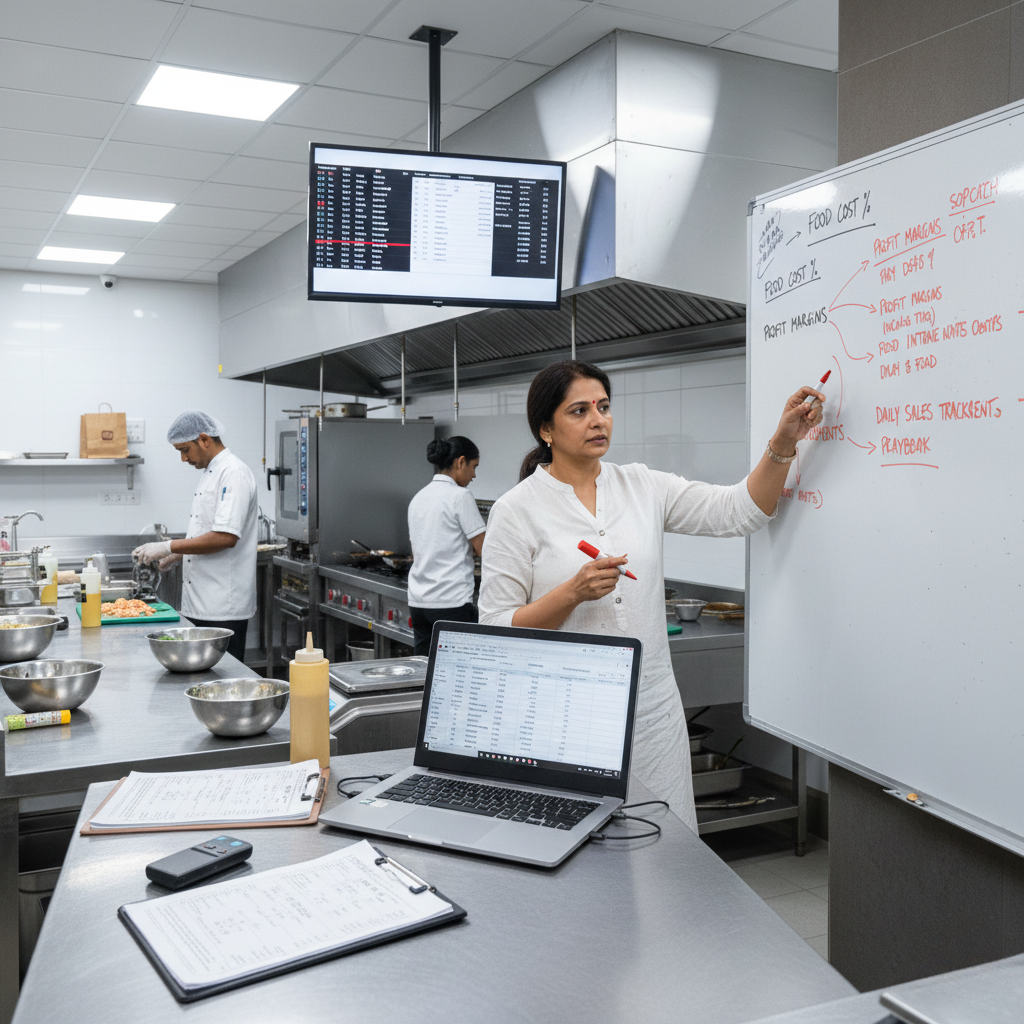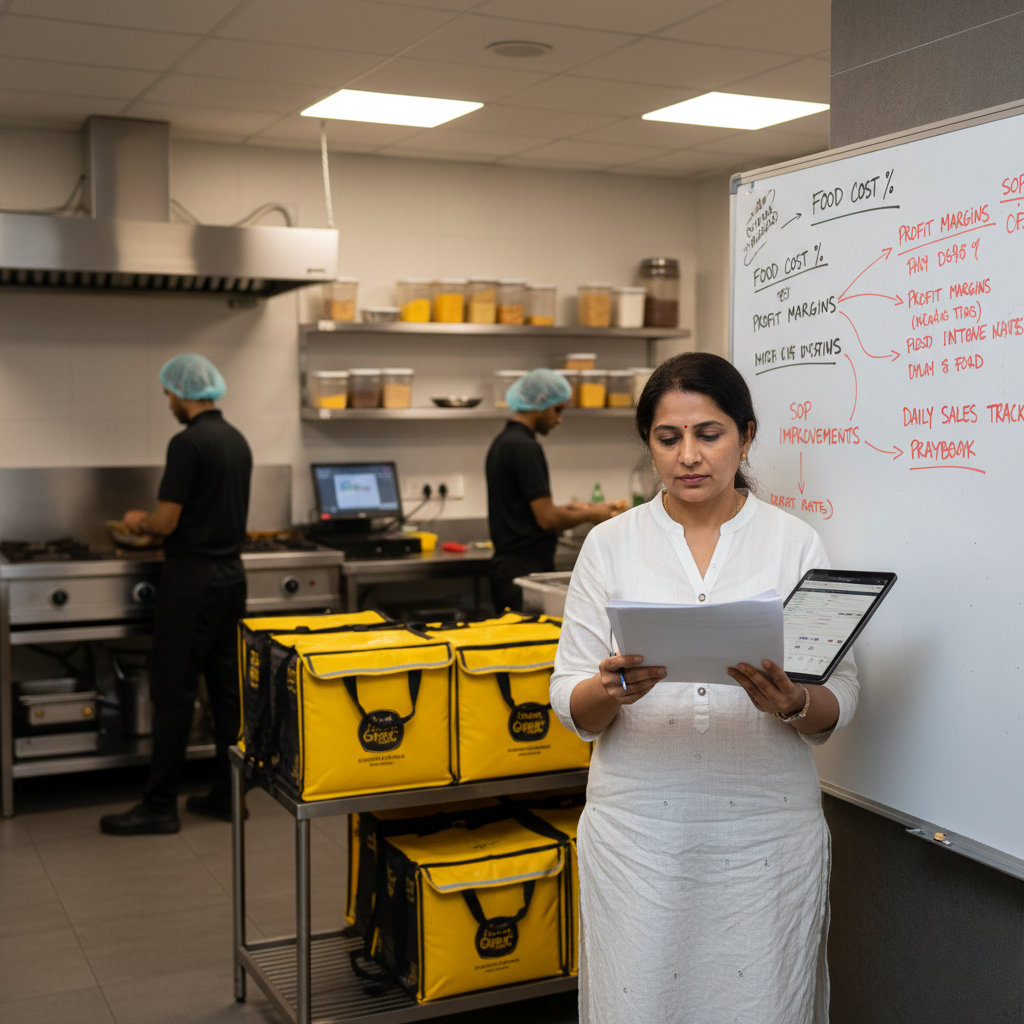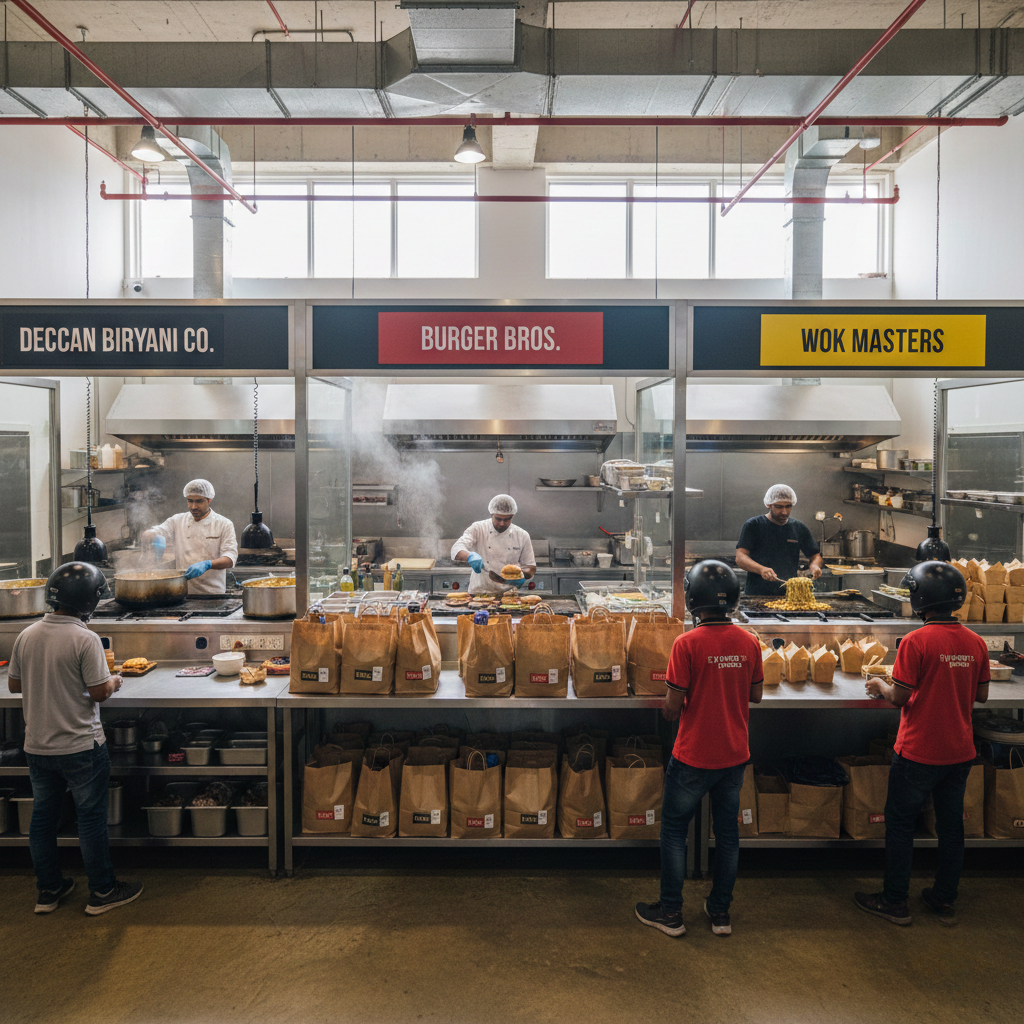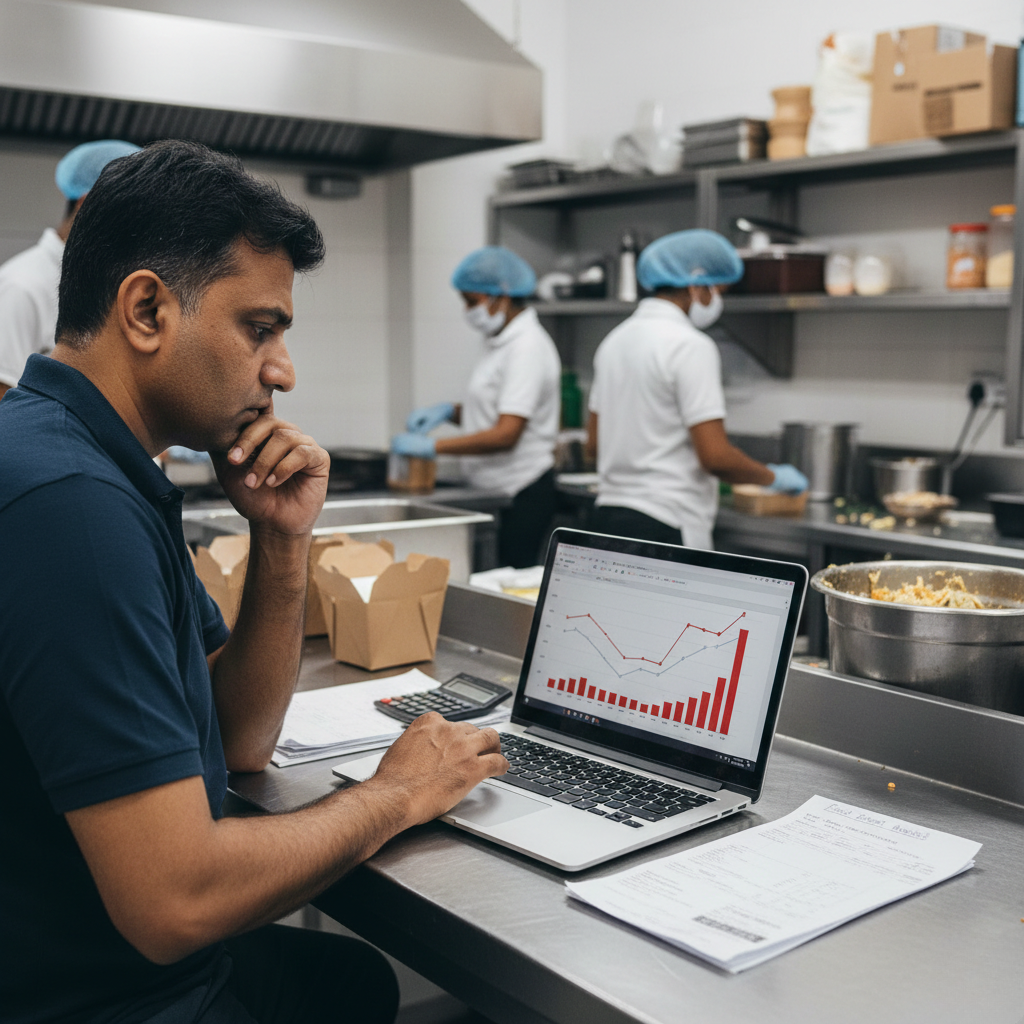
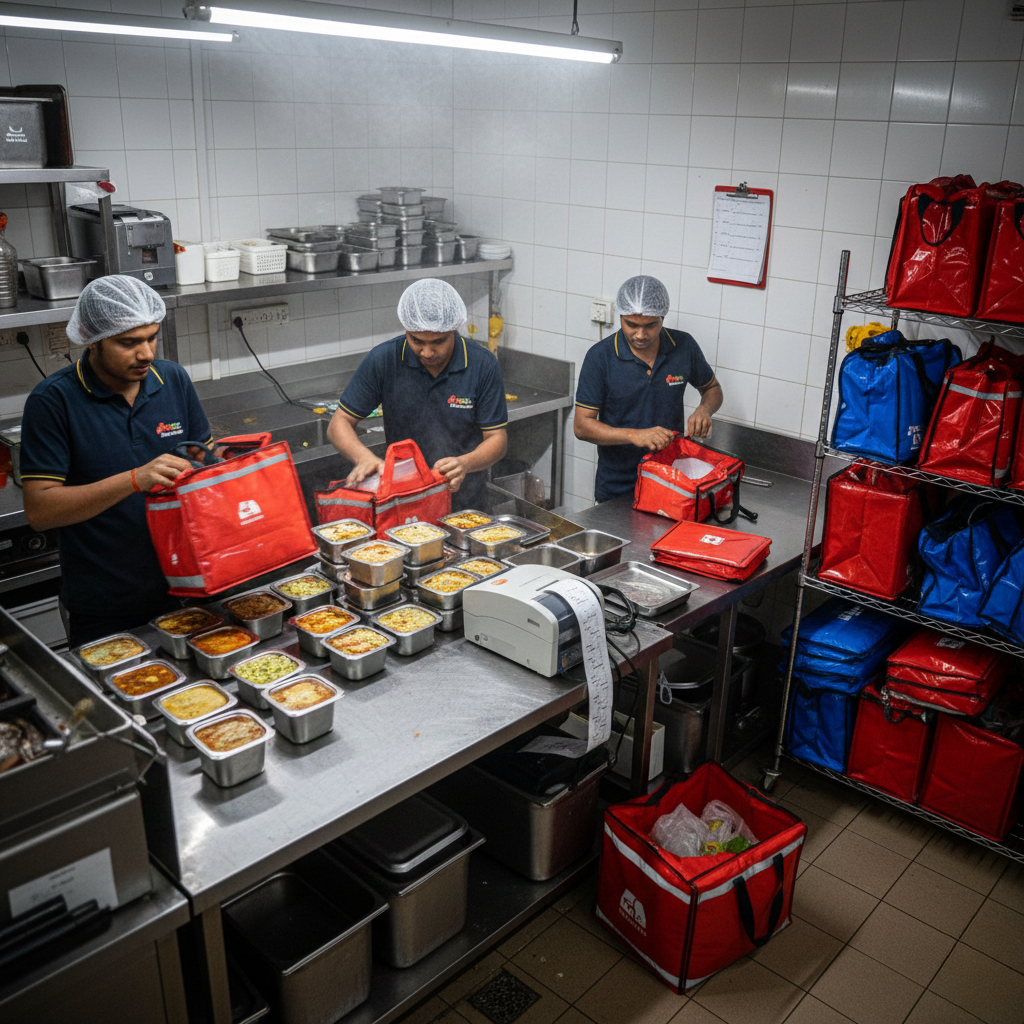
Why do packing errors keep happening? is not a “packing boy problem” or a “better container” problem. It is a dispatch operating system problem. Cloud kitchens run on speed, stacking, rider movement, and zero tolerance for leakage. When packing depends on memory, rushed sealing, random container choices, and no checklist gate, small errors compound into daily leakage: spillage, missing items, wrong labeling, temperature loss, refunds, and rating drops. This guide explains why packing errors keep repeating in cloud kitchens in India and how to build a mistake-resistant packing + dispatch system end-to-end using tools, stations, checklists, audits, and pack-design rules using systems, not supervision.
Why Do Packing Errors Keep Happening? The Real Reason “Good Food” Still Gets Complaints
Every cloud kitchen founder has seen this contradiction: food tastes great in the kitchen, orders are going out fast, but complaints keep coming in.
The patterns feel familiar: gravy spills, lids pop, rice bowls leak, fries turn soggy, sauces burst, cutlery is missing, add-ons are forgotten, labels are wrong, and riders complain about loose bags.
The hard truth: packing is not a support task. Packing is the final quality gate. In delivery kitchens, your customer doesn’t eat your “kitchen product.” They eat your “delivered product.” If packing is weak, your best cooking cannot protect your ratings.
If you want the profitability foundation lens first, start with Cloud Kitchen Profitability Consultant in India and map recurring execution leaks using Common Operational Mistakes in Cloud Kitchens.

What Packing Errors Actually Mean in a Delivery Kitchen (Not Just “Seal It Properly”)
Packing errors are not only about sealing. They are failures of dispatch design under real rider movement. A bag gets squeezed. A box tilts. A gravy bowl travels over speed breakers. A rider stacks multiple orders. Your packaging and packing method must survive the real world, not the kitchen table.
In delivery-first kitchens, packing errors typically fall into five buckets: spillage/leakage, missing items (cutlery, tissues, add-ons), wrong items (wrong SKU or wrong variant), temperature and texture loss (soggy fries, cold noodles), and labeling/identification issues (mix-ups, wrong stickers).
The key point: packing errors repeat when packing depends on memory and speed. Packing errors reduce when packing is treated like a station system with fixed tools and checks.
A powerful way to think about it: your kitchen has one job deliver the same product outcome every time. Packing is the bridge between your product and the customer experience. If the bridge fails, your brand feels inconsistent even if recipes are perfect.
The Unit Economics Lens: Packing Errors Are Refund Multipliers
Cloud kitchen profitability is decided per order. Your contribution margin is: selling price minus commission minus packaging minus food cost minus refunds/penalties impact.
Packing errors hit you twice: they create direct costs (refunds, replacements, remake food cost, extra packaging), and they create indirect costs (rating drops, conversion loss, higher discount burn).
Most founders underestimate the multiplier. A single spillage complaint can become: complaint → refund → remake → rider delay → lower rating → discount to recover conversion. That is not a “packing issue.” That is a margin system failure.
If you want the broader leak map, audit using Common Operational Mistakes in Cloud Kitchens.

The 10 Reasons Packing Errors Keep Happening (And What Each One Looks Like)
Packing errors feel like “staff carelessness.” In delivery kitchens, they are usually “system gaps.” Here are the core reasons packing errors repeat and what each one looks like on the floor.
1) Packing is not treated as a station with a checklist gate. If packing is “just put it in the bag,” your output depends on memory. Memory collapses during peak. No checklist means no consistency.
2) Wrong container choice invites leakage. A container that is too shallow spills. A lid that is weak pops. A bowl filled to the brim leaks. Container choice is part of SOP, not a last-minute decision.
3) Fill levels are not defined. Overfilled gravies spill. Overfilled noodles push lids open. “Generous filling” becomes “refund risk” in delivery kitchens. Every liquid item needs a max fill rule.
4) Liquids and dry items are packed without separation logic. Hot gravies and cold add-ons placed together create condensation and sogginess. Sauces placed on top burst under weight. Separation rules reduce leakage and texture loss.
5) Sealing method is inconsistent. Sometimes tape is used, sometimes not. Sometimes lids are double sealed, sometimes rushed. When sealing is not standardized, leakage becomes random and frequent.
6) Add-ons are not systemized at packing. Paid add-ons are the most missed items. If add-ons are not visually flagged and verified, misses repeat daily.
7) Bag selection and bag strength are ignored. A weak bag stretches. Stretching tilts containers. Tilting spills gravies. Bag choice is a system decision, not a procurement accident.
8) Rider stacking is not designed for. Riders stack multiple orders. If your bag doesn’t hold shape, containers tilt and leak. Packing must assume stacking, not single-order delivery.
9) Labeling is missing or unclear. Without labels, mixed orders become wrong orders. Wrong orders become refunds. Labels are not branding labels are operational accuracy.
10) No feedback loop converts complaints into packing SOP upgrades. Complaints are data. If spillage complaints don’t change container choice or sealing rules, the same complaint repeats.
If you want the SOP-led link between control and fewer complaints, read How SOPs Reduce Food Cost & Complaints.
Swiggy/Zomato Reality: Packing Errors Create Refunds, Rating Drops, and Discount Dependency
Packing errors are one of the fastest ways to destroy payout quality. On aggregators, the customer doesn’t see your kitchen effort. They see the received pack condition.
A spill is a “defective product” in the customer’s mind. A missing cutlery item feels like “careless service.” A wrong label becomes “wrong order.” These trigger complaints and refunds.
When refunds rise, ratings become volatile. When ratings become volatile, conversion drops. When conversion drops, founders push discounts. That discount burn reduces your contribution margin.
To understand payout dynamics, read Aggregator Commission Impact in India.
External reference links (policy context): Swiggy Refund & Cancellation Policy and Zomato Online Ordering Terms.
Packing + Dispatch: The Packing Station Must Be Designed Like a Quality Gate
Packing errors reduce when packing becomes a station system: fixed tools, fixed sequence, and a final verification gate.
A proper packing system includes: container selection SOP by item type, max fill lines for liquids, sealing method rules, add-on verification, label checks, and bag load rules (how many items per bag).
Implement dispatch predictability using Cloud Kitchen Dispatch SOP.
Why Packing Accuracy Must Be Role-Based (Not “Pack Carefully”)
Packing errors don’t reduce with motivation. Packing errors reduce when roles and checks are built into the system.
Here is what role-based packing accuracy looks like:
Cook role:
hands over items in correct containers and ensures fill limits are respected.
Pack role:
follows packing checklist, seals, verifies add-ons, labels, and closes bags correctly.
Dispatch role:
does final “order completeness” scan before handover to rider.
Store role:
weekly complaint analysis and SOP update for packaging failures.
If you want the full role-based ops model, use Role-Based Kitchen Operations Explained.
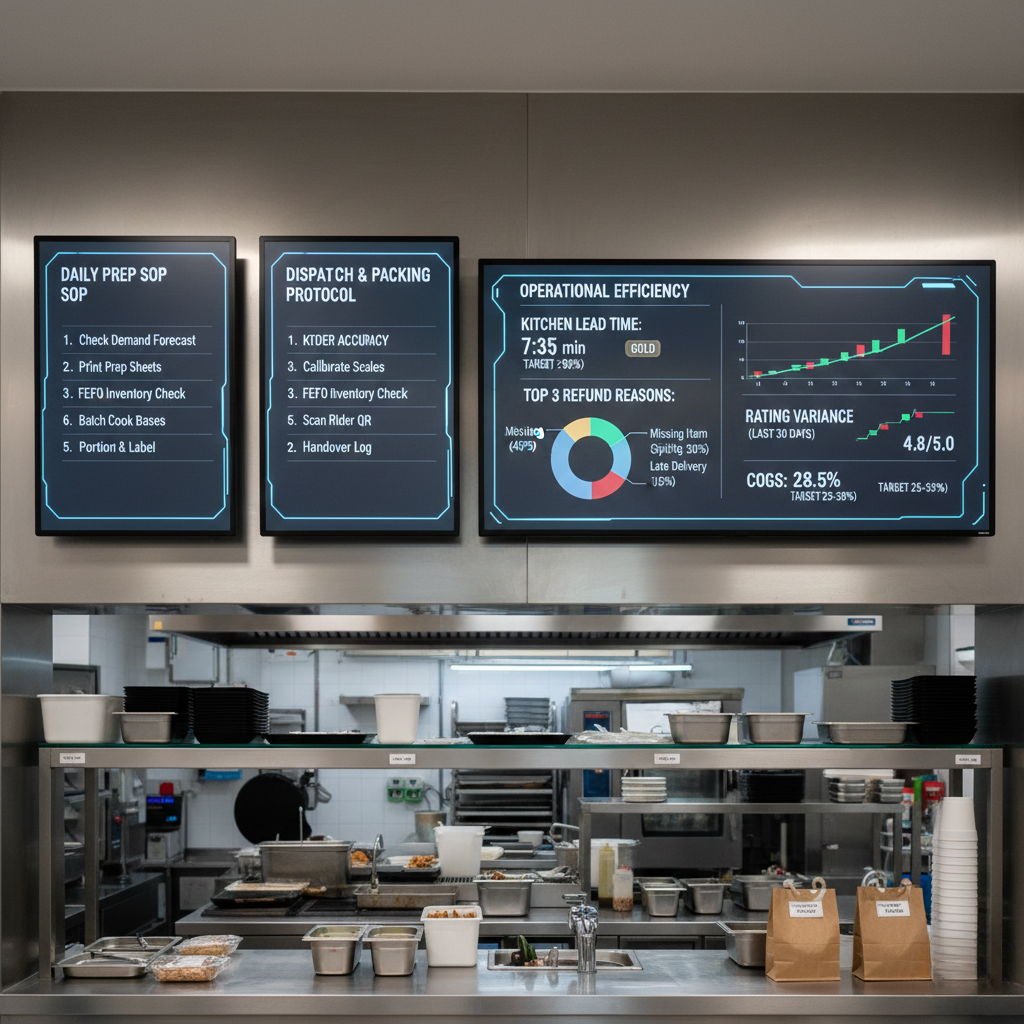
How to Fix Packing Errors in 7 to 30 Days: A Practical System That Works
Packing errors don’t reduce with one training. They reduce when station systems, container logic, and check gates are installed. Below is a rollout sequence that works in running cloud kitchens.
Step 1 (Day 1–2): Categorize your last 30 days complaints by packing type. Write categories: spillage, missing item, wrong item, temperature/texture, label mix-up. If you don’t classify errors, you can’t fix them.
Step 2 (Day 1–3): Assign container SOP per item type. Liquids need deep bowls with strong lids. Dry items need venting if they turn soggy. Cold items need separation from hot items. Container choice must be standardized.
Step 3 (Day 2–4): Define max fill lines and sealing rules. Define fill limits for gravies and bowls. Define sealing method: tape type, number of seal points, and lid press checks.
Step 4 (Day 3–7): Install a packing checklist and make it visible. The checklist should cover: item count, add-ons, cutlery, napkins, sealing, labeling, bag closure.
Step 5 (Week 2): Create add-on verification as a hard gate. Paid add-ons must never rely on memory. Use stickers, highlights, or tray segregation to ensure add-ons are packed.
Step 6 (Week 2): Redesign station layout for speed without chaos. Tools must have fixed positions: tapes, stickers, labels, markers, sauce cups, bags. Searching creates stress. Stress creates mistakes.
Step 7 (Week 3): Start random peak-time audits. Check 5 orders in peak time and 5 in non-peak. Log packing failures. Fix immediately. This trains the system, not the person.
Step 8 (Week 3–4): Convert recurring complaints into SOP upgrades. Every repeating spillage complaint must trigger: container change, fill limit change, sealing rule update, or bag logic update. Complaints must improve SOPs.
If you want the broader discipline-led profitability link, map this with How Process Discipline Improves EBITDA.
External hygiene + process standards (useful while standardising): FSSAI Hygiene Requirements (Schedule 4 reference), ISO 22000 overview, and Standardized Work (Lean lexicon).
Final Takeaway: Packing Errors Keep Happening When Packing Is Not a System
Packing errors keep happening because delivery kitchens punish variability. When packing is treated as a “last step” instead of a “quality system,” the same mistakes repeat daily: spillage, missing items, wrong labels, and refunds.
Kitchens with strong packing systems become predictable: fewer spills, fewer missed add-ons, fewer complaints, fewer refunds, and more stable ratings. That predictability is what creates scalable delivery operations.
Operational frameworks from GrowKitchen, and operating partner brands like Fruut and GreenSalad are built to convert “leaky kitchens” into “controlled, profitable kitchen networks.”
FAQs: Why Do Packing Errors Keep Happening?
What is the biggest reason packing errors repeat in cloud kitchens?
Because packing is memory-based and checklist-free. Without a packing station system, errors repeat during peak.
Do better containers alone solve packing errors?
No. Containers help, but sealing rules, fill limits, add-on verification, and bag logic are equally important.
Where do most packing complaints come from?
Spillage from overfilled liquids, weak seals, poor bag strength, and rider stacking pressure.
What should I fix first to reduce packing errors fast?
Fix liquids first: correct container, max fill line, sealing method, and bag stability rules.
- Cloud Kitchen Profitability Consultant in India
- Common Operational Mistakes in Cloud Kitchens
- How SOPs Reduce Food Cost & Complaints
- Aggregator Commission Impact in India
- Cloud Kitchen Dispatch SOP
- Role-Based Kitchen Operations Explained
- When Growth Is Hurting Your Cloud Kitchen Operations
- How Process Discipline Improves EBITDA
- Grow Kitchen on Twitter