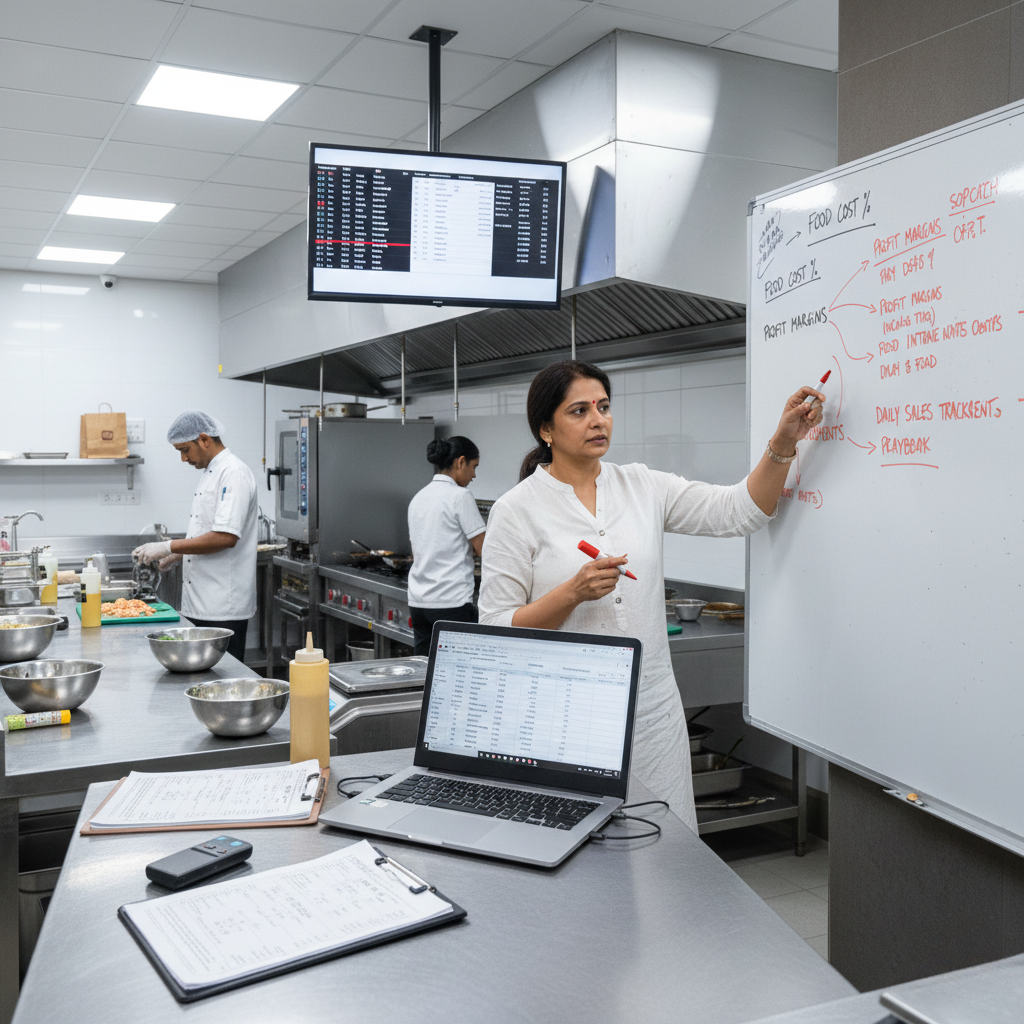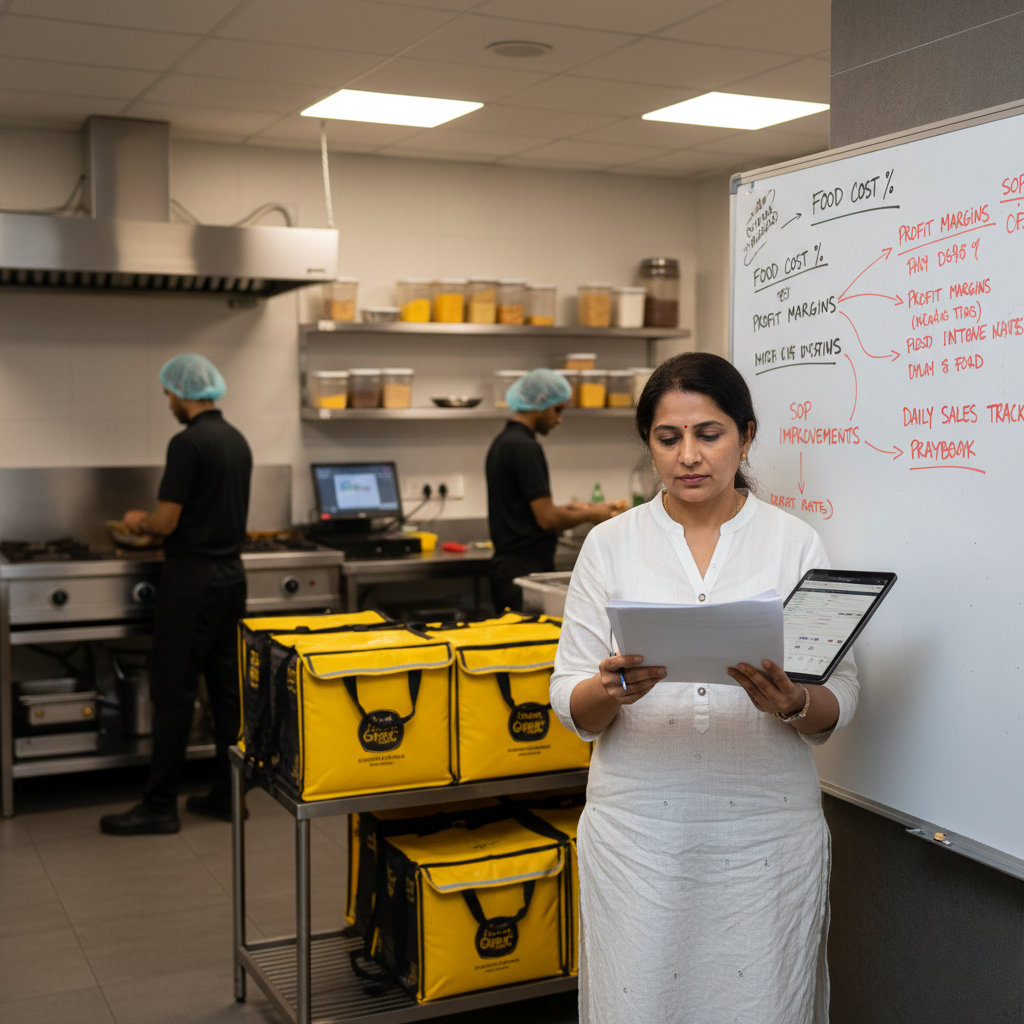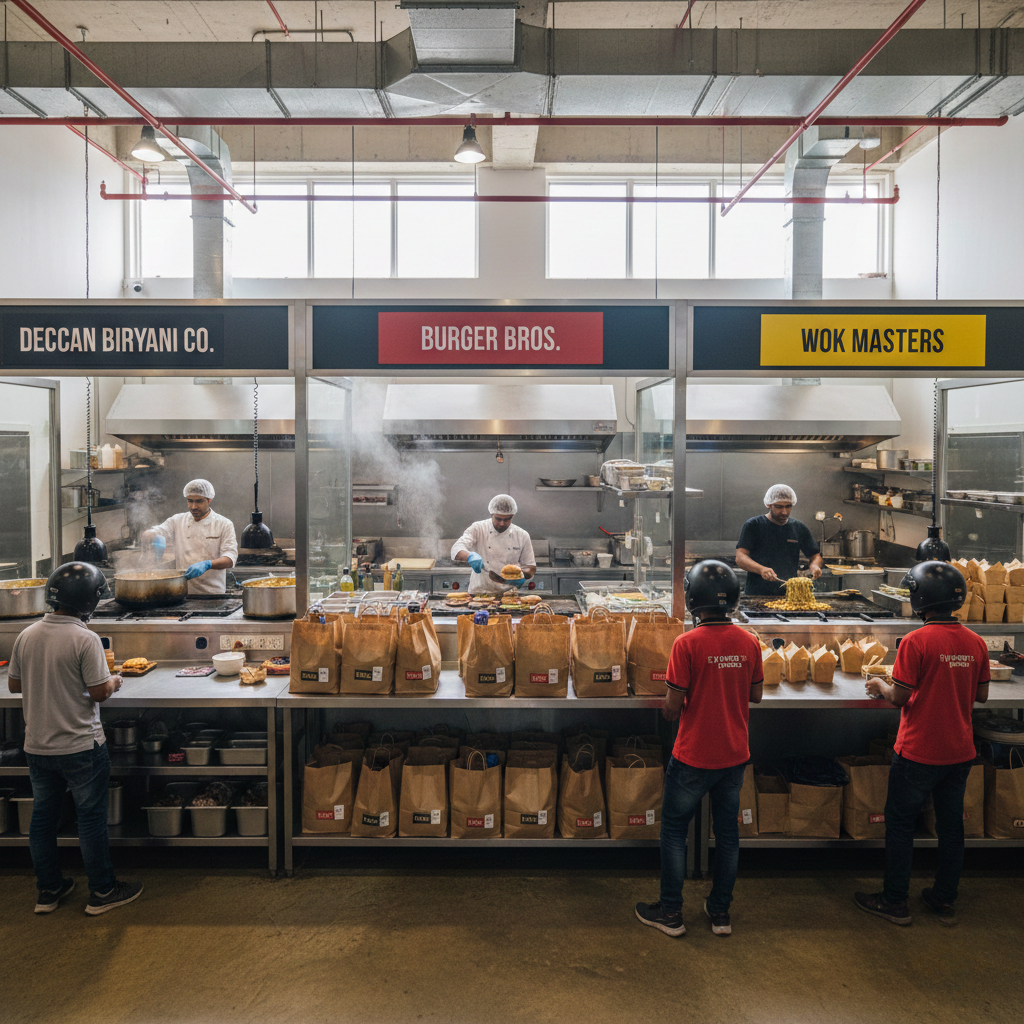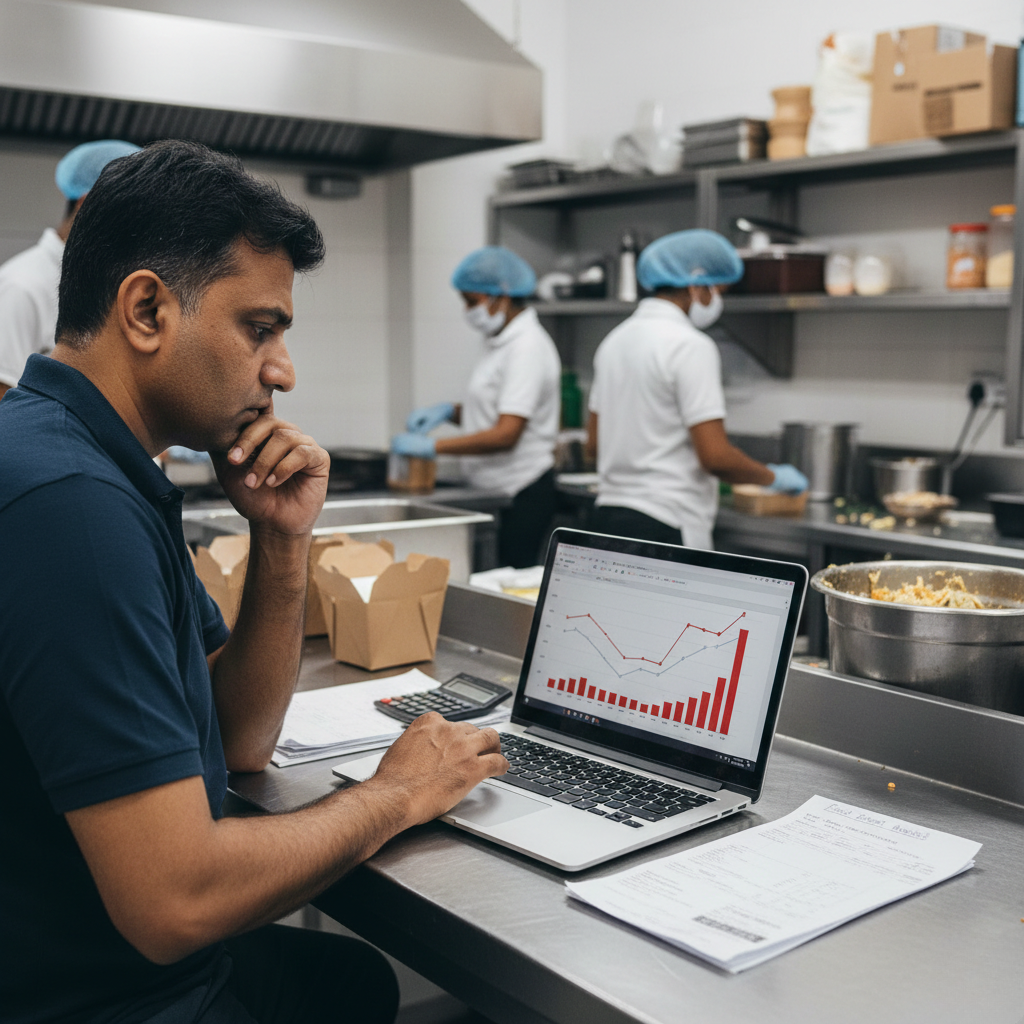
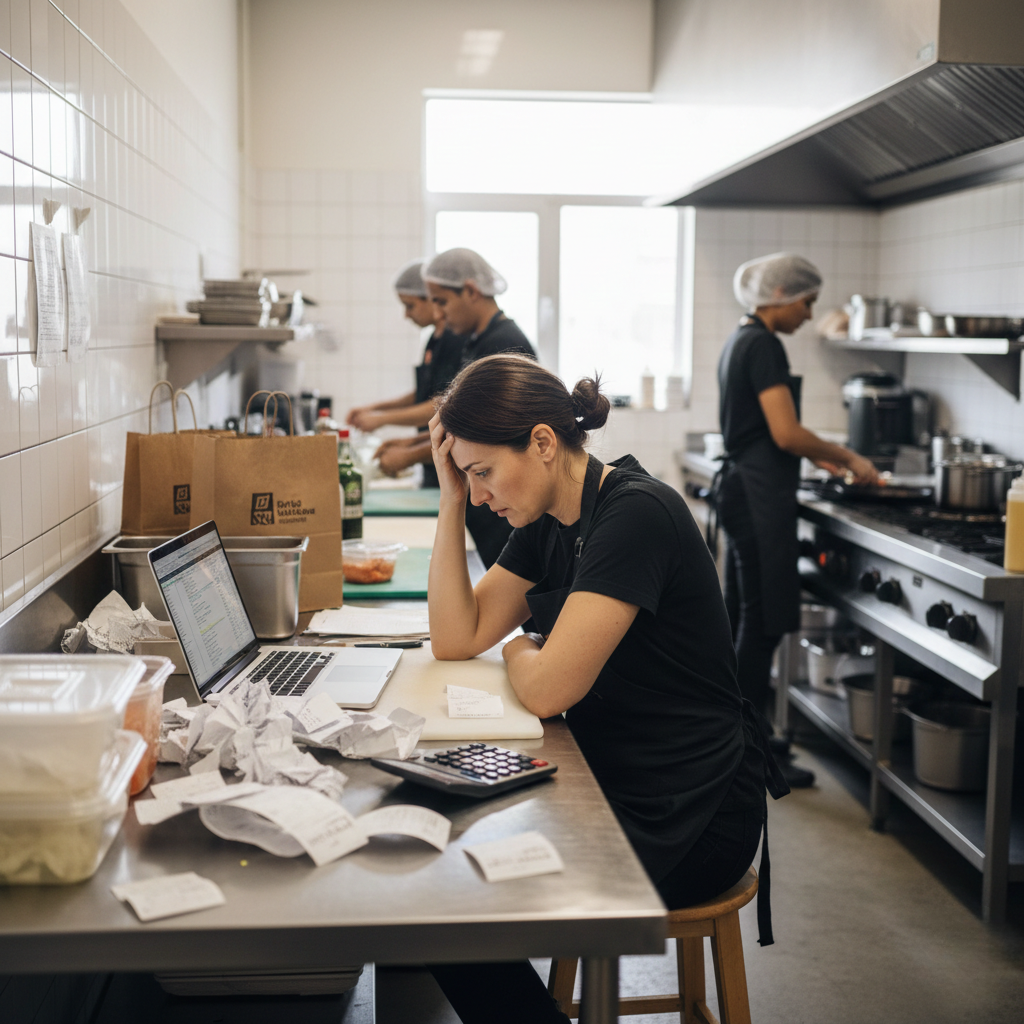
Founder Dependent Cloud Kitchen Case Study-This case study explores one of the most dangerous but common phases in a cloud kitchen’s lifecycle: founder dependency. The kitchen was running, orders were steady, and customers were satisfied-but nothing moved without the founder. Cloud kitchen as a service
Every decision, every problem, and every exception required the founder’s presence. Growth felt impossible, breaks felt risky, and burnout felt inevitable. This Founder Dependent Cloud Kitchen Case Study shows how that kitchen was converted into a system-driven operation using CKaaS.
Founder Dependent Cloud Kitchen Case Study: Background of the Kitchen
The cloud kitchen operated from a single location with two delivery-only brands. Daily order volumes ranged between 90 and 130 orders. Revenue was stable, and the business had survived its early launch phase.
However, the entire operation revolved around the founder:
- Staff waited for the founder to resolve issues
- Inventory decisions required approval
- Recipes were clarified verbally
- Scheduling changes happened last-minute
If the founder stepped away, performance dropped. Mistakes increased. Stress spread quickly.
This phase is extremely common in growing kitchens, as explained in what happens when cloud kitchens scale without systems.
The Hidden Cost of Founder Dependency
At first, founder involvement felt necessary and even responsible. But over time, the costs became clear:
- Founder burnout and decision fatigue
- Slow problem resolution during peak hours
- Staff hesitancy and lack of ownership
- No scalability beyond one location
Despite working long hours, the founder felt trapped inside the business instead of running it.
Why Experience Alone Was No Longer Enough
The founder had years of food business experience. Most decisions were correct — but correctness did not equal repeatability.
As order volume increased, relying on memory, verbal instructions, and personal supervision became unsustainable.
Experience helped the kitchen survive. Systems were required for stability.
Founder Dependent Cloud Kitchen Case Study: Initial Diagnostic by CKaaS
CKaaS began by mapping how decisions actually flowed inside the kitchen.
- Who decides portion sizes?
- Who handles inventory shortages?
- Who resolves dispatch issues?
- Who trains new staff?
The answer was always the same: the founder.
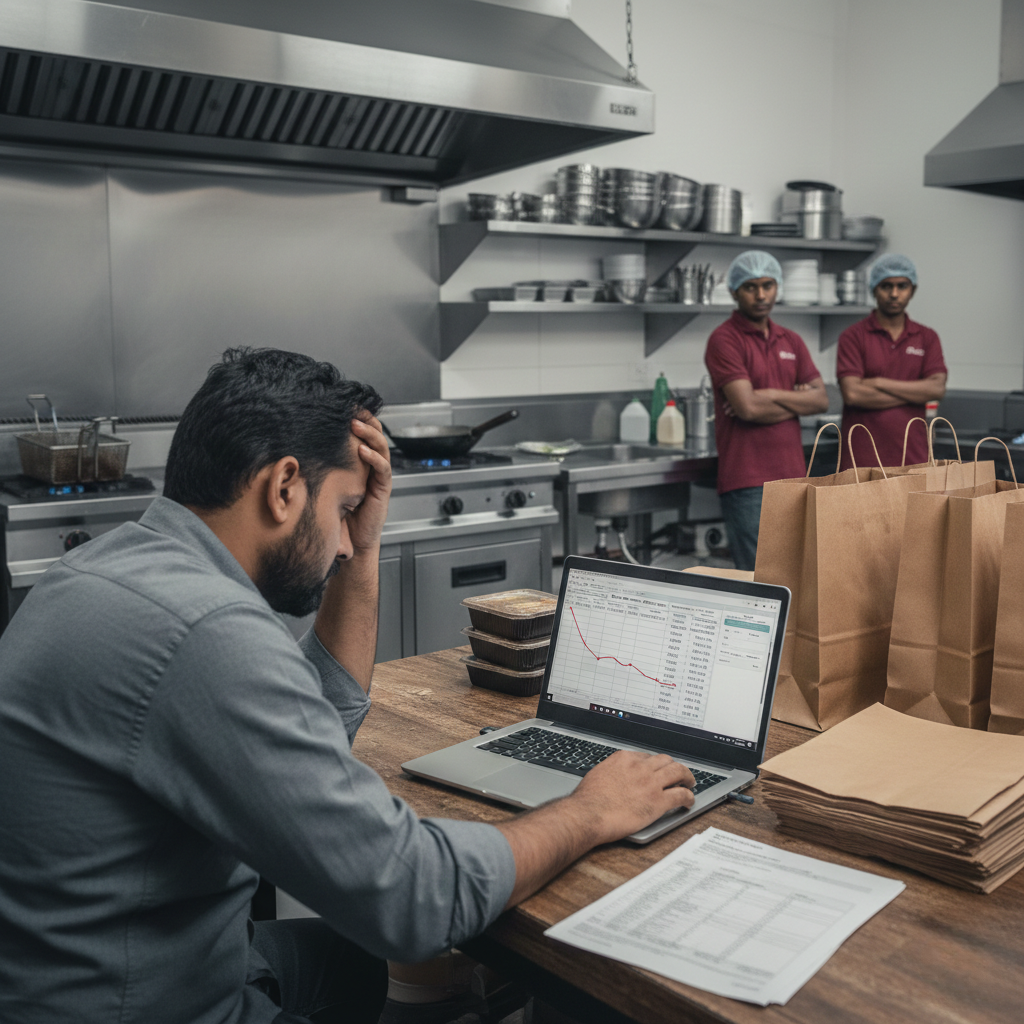
Problem Area #1: Knowledge Locked Inside the Founder’s Head
Critical operational knowledge existed only as verbal instructions:
- “This dish needs slightly less sauce”
- “Prep this item differently on weekends”
- “Call this vendor if stock runs out”
Staff depended on constant clarification. Mistakes happened whenever the founder was unavailable.
Knowledge was present — but undocumented.
Problem Area #2: No Decision Framework for Staff
Staff were capable, but unsure.
Without SOPs, they hesitated to act independently:
- Minor issues escalated unnecessarily
- Peak-hour decisions slowed down service
- Accountability remained unclear
Founder dependency was reinforced daily.
Problem Area #3: Founder-Controlled Inventory and Scheduling
Inventory planning and staff scheduling were handled personally by the founder.
This resulted in:
- Last-minute purchasing decisions
- Overstocking to avoid emergencies
- Scheduling based on availability, not demand
The founder was solving symptoms, not building structure.
CKaaS Intervention: Turning Decisions Into Systems
CKaaS approached founder dependency as a design problem, not a people problem.
The objective was simple: remove the founder from daily decisions without reducing control.
The intervention focused on:
- Documenting repeat decisions
- Standardizing outcomes
- Creating clear ownership
System 1: SOPs That Replaced Verbal Instructions
All critical processes were converted into SOPs:
- Recipe SOPs with gram weights
- Prep and cooking SOPs
- Dispatch and handoff SOPs
- Issue-resolution SOPs
SOPs became the first point of reference — not the founder.
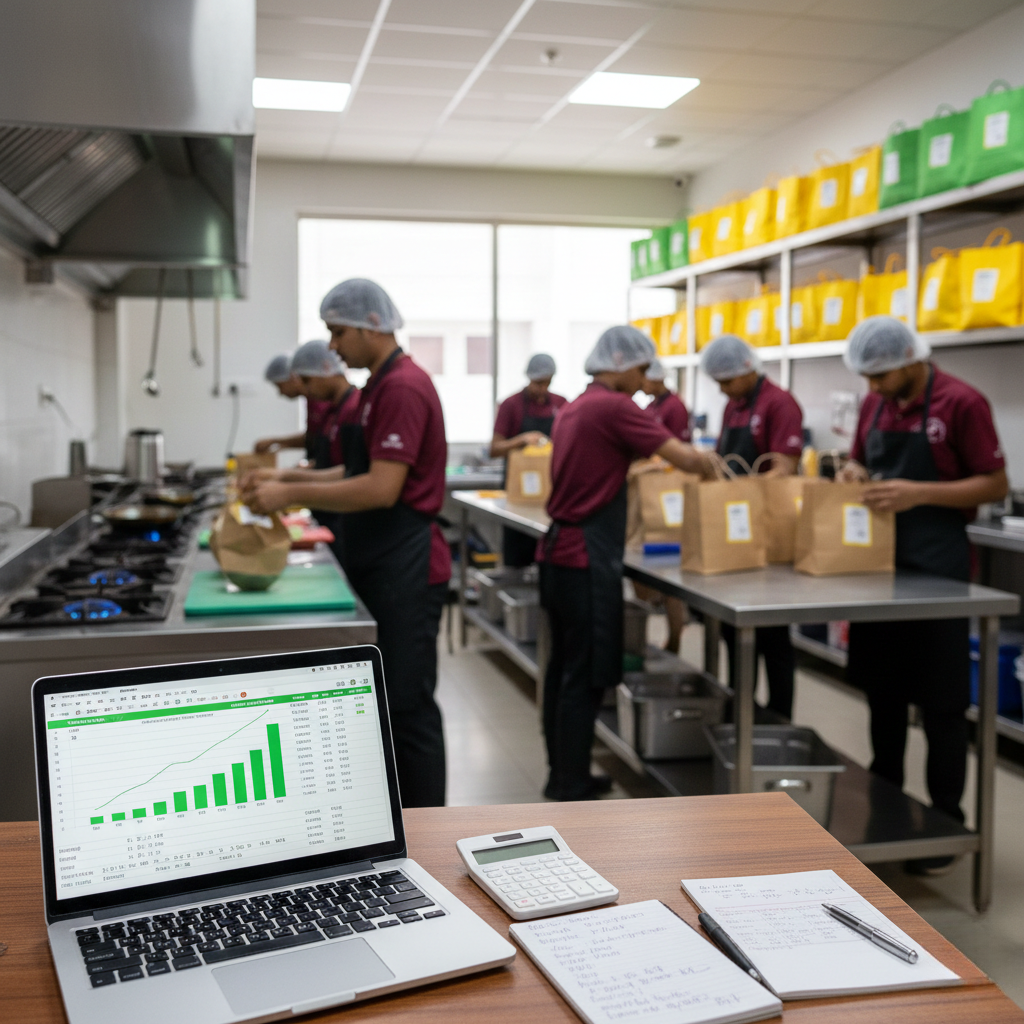
System 2: Role-Based Responsibility Mapping
CKaaS introduced role clarity across the kitchen:
- Prep lead responsibilities
- Cooking station ownership
- Dispatch accountability
Each role had defined decisions they could take without escalation.
This reduced interruptions and increased confidence.
The approach mirrors principles explained in role-based kitchen operations explained.
System 3: Demand-Based Inventory SOPs
Inventory planning was shifted from founder memory to system logic:
- Weekly demand-based forecasts
- Defined reorder points
- Clear vendor escalation rules
Stock issues reduced. Cash flow improved. Founder involvement dropped.
System 4: Data Visibility for Control Without Presence
Daily dashboards were introduced:
- Order volume by time slot
- Food cost consistency
- Staff productivity indicators
- Daily contribution margin
The founder could now monitor outcomes instead of managing processes.
The Transition Phase: Letting Go Without Losing Control
The most difficult part was psychological. Letting systems replace personal oversight felt risky at first.
However, within weeks:
- Staff handled routine issues independently
- Escalations reduced drastically
- Founder availability stopped affecting performance
The kitchen began operating consistently — regardless of who was present.
Founder Dependent Cloud Kitchen Case Study: Final Outcome
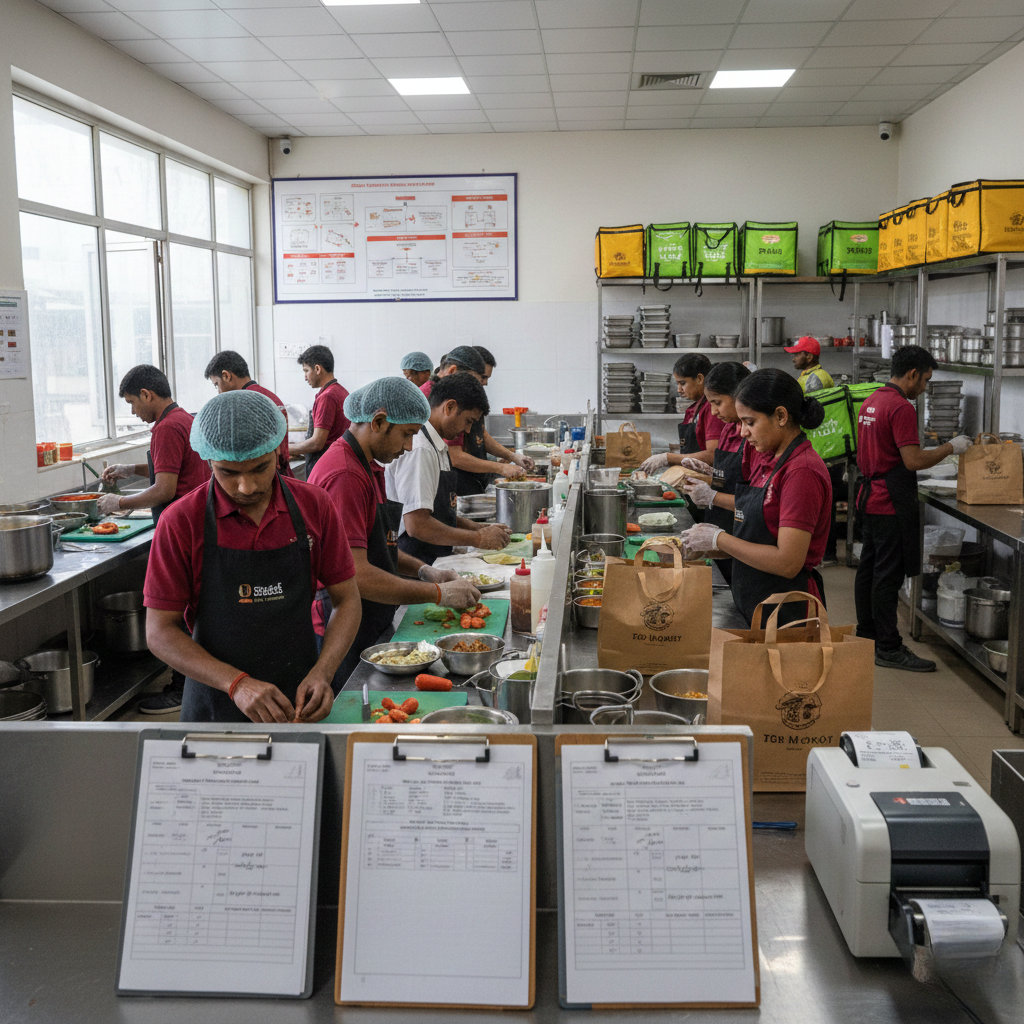
Within 60 days, the transformation was visible:
- Founder working hours reduced significantly
- Operational errors decreased
- Staff accountability increased
- Margins stabilized due to consistency
Most importantly, the business could now scale.
Founder Takeaways From This Case
- Founder dependency is a growth ceiling
- Systems free time without reducing control
- Consistency improves margins automatically
- Freedom comes from structure
Why CKaaS Worked in This Case
CKaaS worked because it treated operations as an operating system — not a checklist.
Instead of asking “What should the founder do?”, it asked:
- What decisions repeat daily?
- What outcomes must be consistent?
- What can be systemized?
This Founder Dependent Cloud Kitchen Case Study proves that a kitchen does not become scalable only by increasing orders. It becomes scalable when daily decisions become repeatable, measurable, and independent of the founder.
This approach aligns with insights shared by industry professionals like Rahul Tendulkar and system-first brands such as Green Salad and Fruut.
Final Thoughts
A founder-dependent kitchen can survive — but it cannot scale sustainably.
System-driven operations are not about removing people. They are about removing fragility. That is the real lesson from this Founder Dependent Cloud Kitchen Case Study.
Still Have Questions?
For common operational and scaling questions, read the Grow Kitchen FAQs.
You may also find these internal resources helpful:
- How to Fix a Loss-Making Cloud Kitchen
- From Zero Profit to Sustainable Margins
- What Happens When Cloud Kitchens Scale Without Systems
- Cloud Kitchen Without SOPs vs After CKaaS Implementation
- Grow Kitchen on X