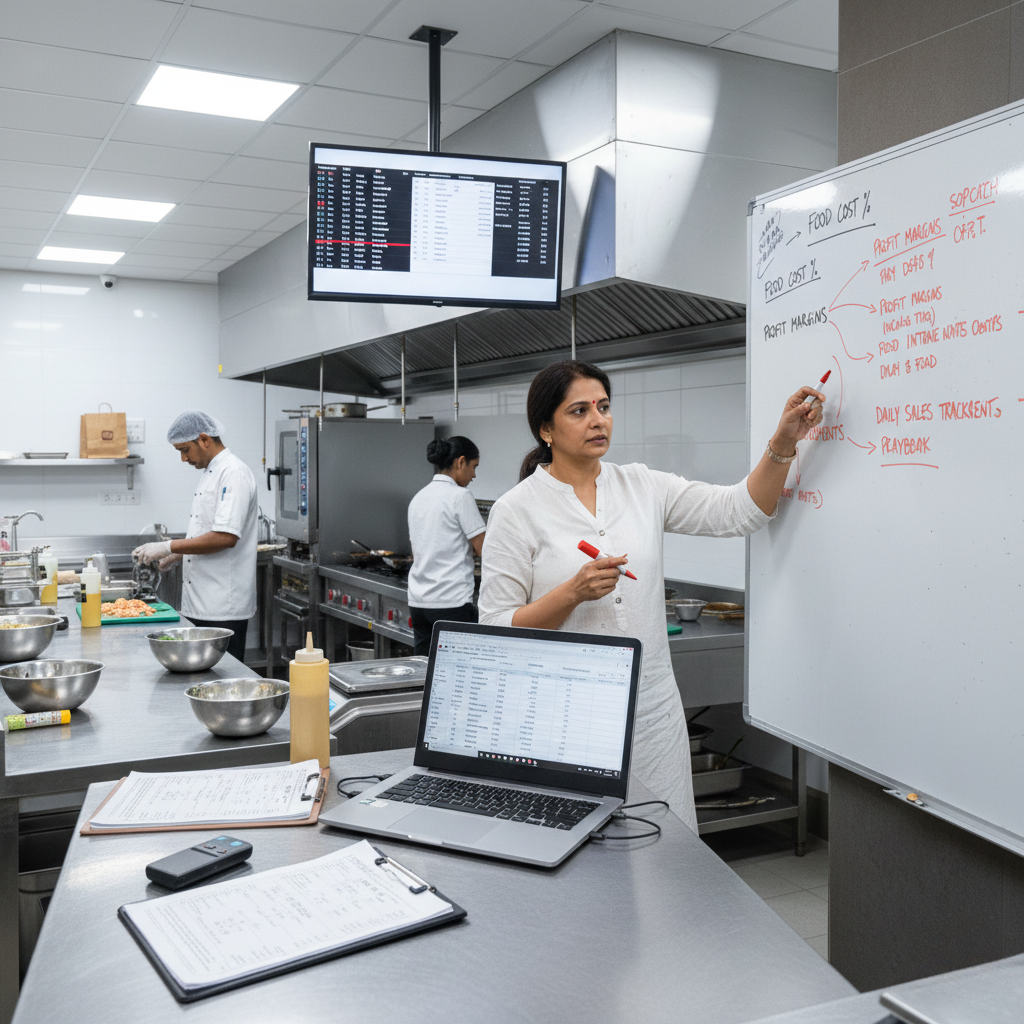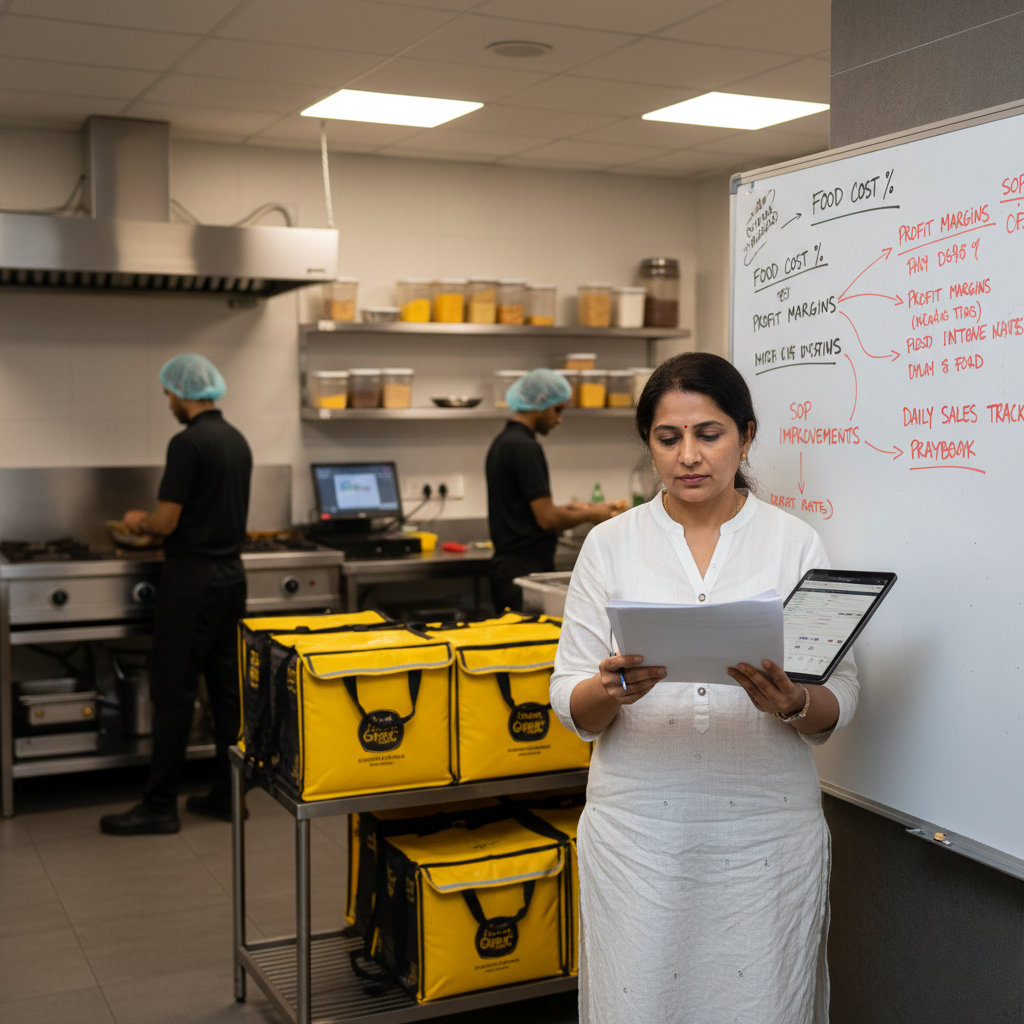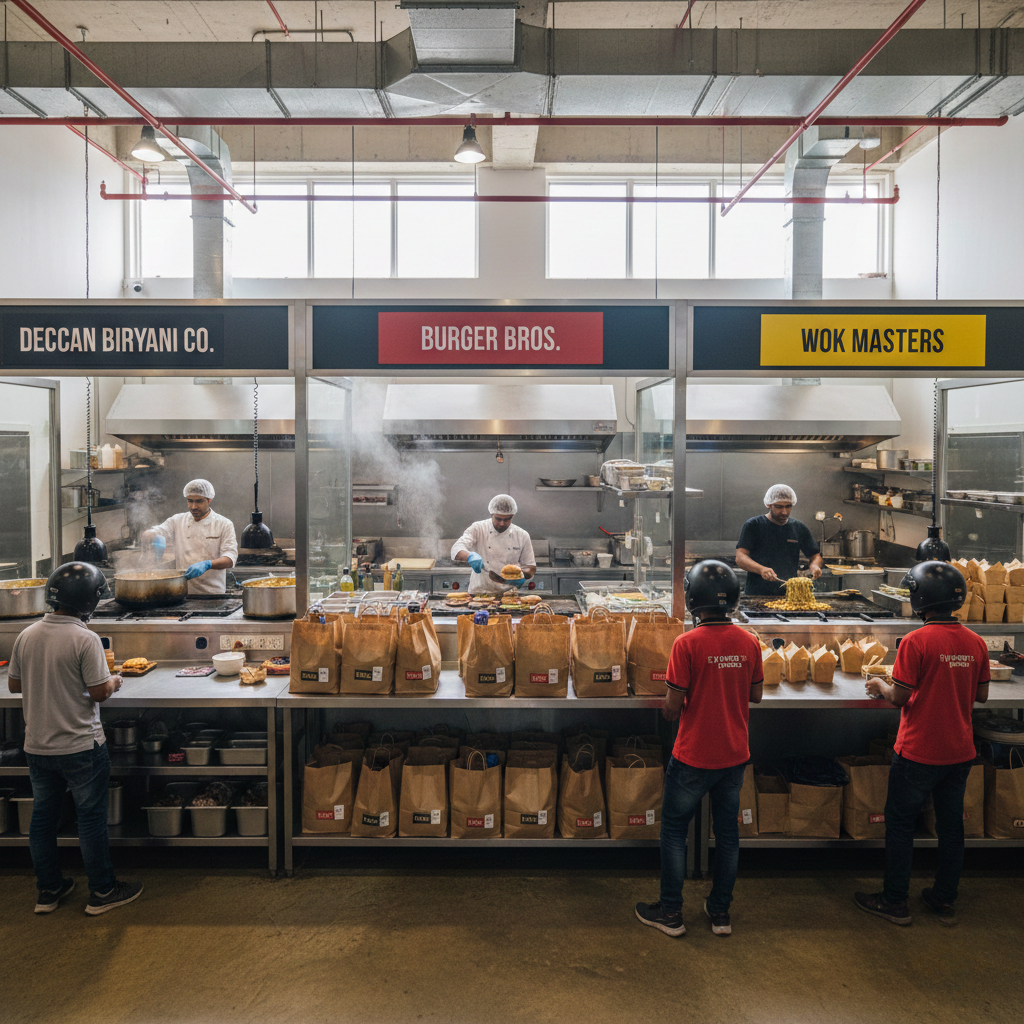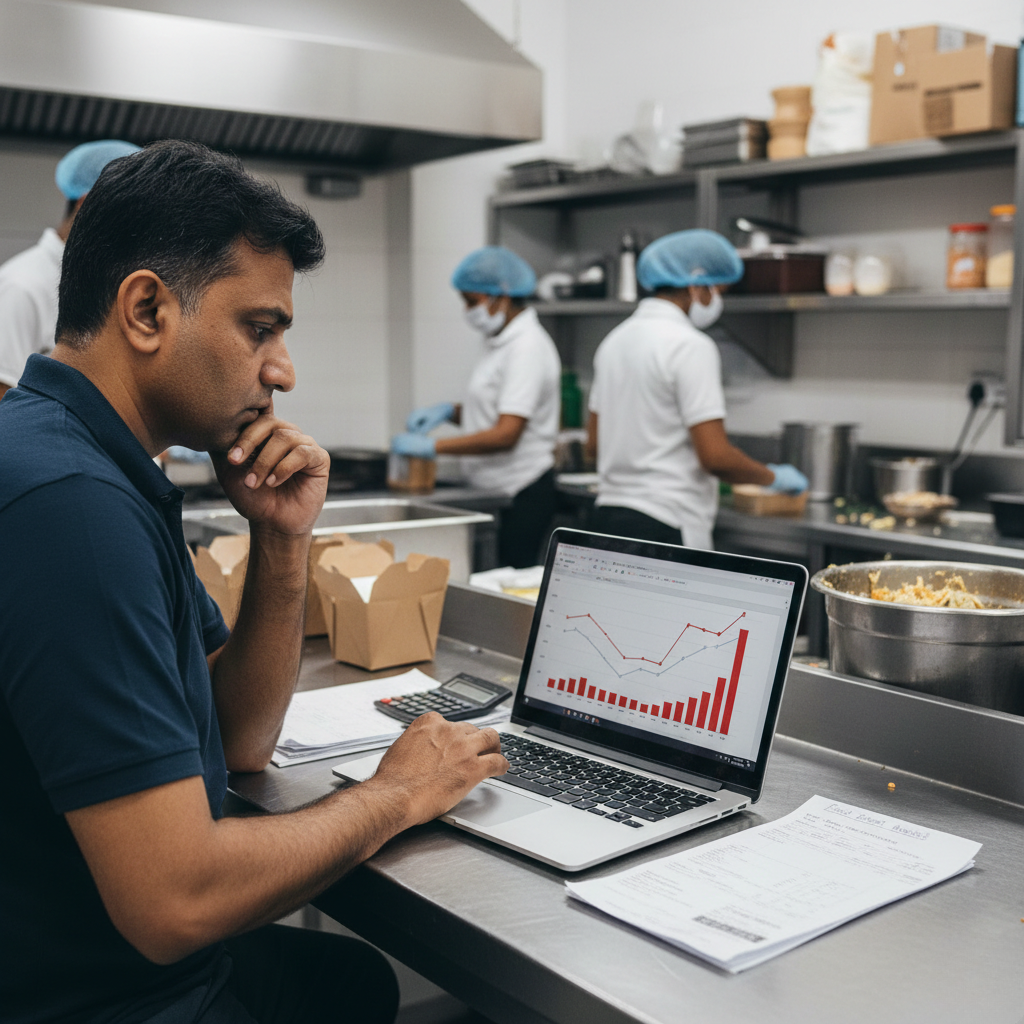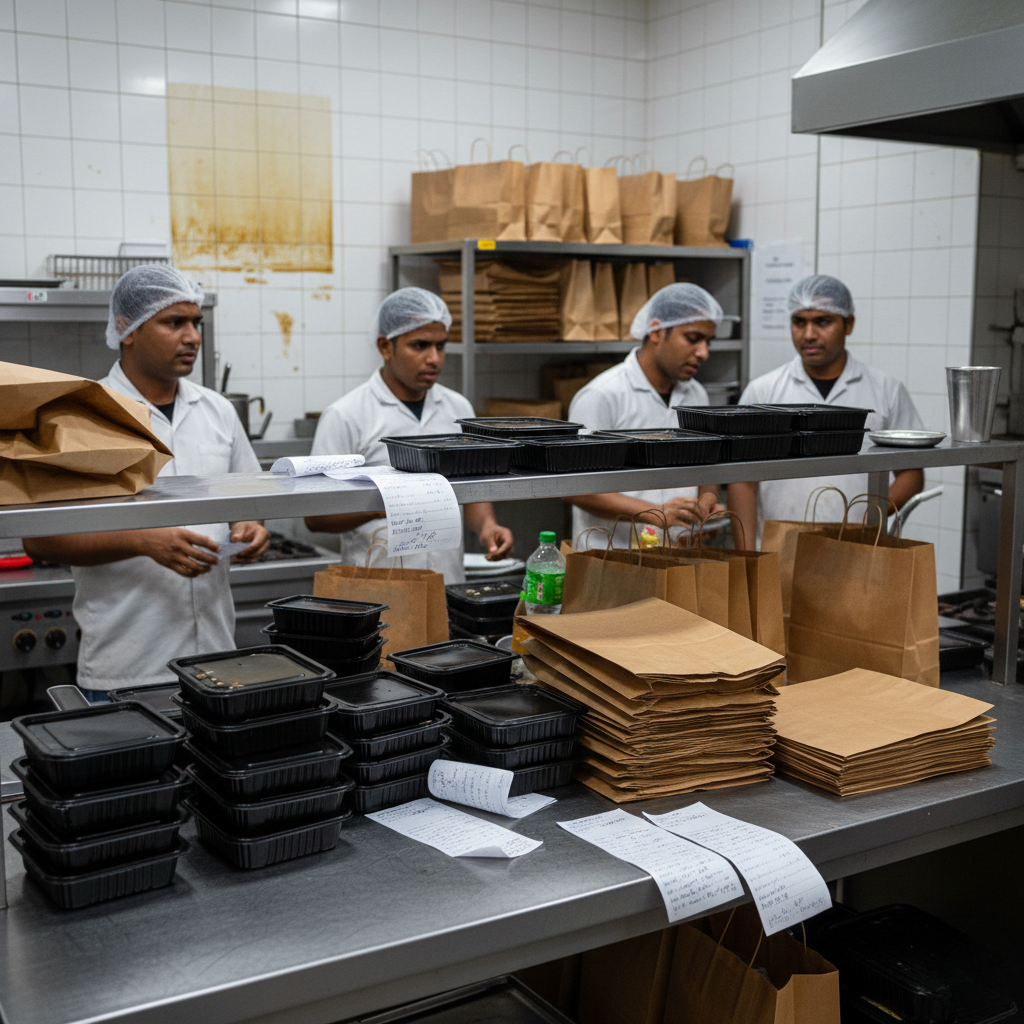
Why cloud kitchens fail without SOPs? is not a “staff problem” or a “marketing problem.” Cloud kitchens fail when execution varies by person, shift, and mood because delivery businesses run on repeatability. Without SOPs, portion drift becomes permanent, dispatch errors become normal, refunds become routine, inventory becomes guesswork, and founders become the system. This guide explains why SOP-less cloud kitchens in India collapse even when orders look strong on Swiggy/Zomato, and how to build an SOP-led operating system end-to-end from prep to packing to payout using systems, not supervision.
Why Do Cloud Kitchens Fail Without SOPs? The Hidden Reason “Good Food” Still Doesn’t Scale
Many founders start with confidence: the recipes are strong, the menu looks exciting, the brand photos are decent, and orders begin coming in. For a few weeks, the kitchen feels “fine” until reality hits.
A sudden peak causes delays. A new staff member changes portion sizes. Packing misses add-ons. One wrong order triggers a refund. Another spill triggers a replacement. Ratings dip. Conversion drops. Discounts become necessary to recover. Food cost rises. And the founder gets stuck in daily firefighting.
This is the real reason cloud kitchens fail without SOPs: delivery businesses amplify variability. Unlike dine-in, you don’t get a second chance to “explain” or “fix it at the table.” Every error becomes a refund, a replacement, a negative rating, and a visibility hit. When execution is not standardised, the kitchen becomes a leak factory.
If you want the profitability foundation lens first, start with Cloud Kitchen Profitability Consultant in India and identify recurring leak patterns via Common Operational Mistakes in Cloud Kitchens.
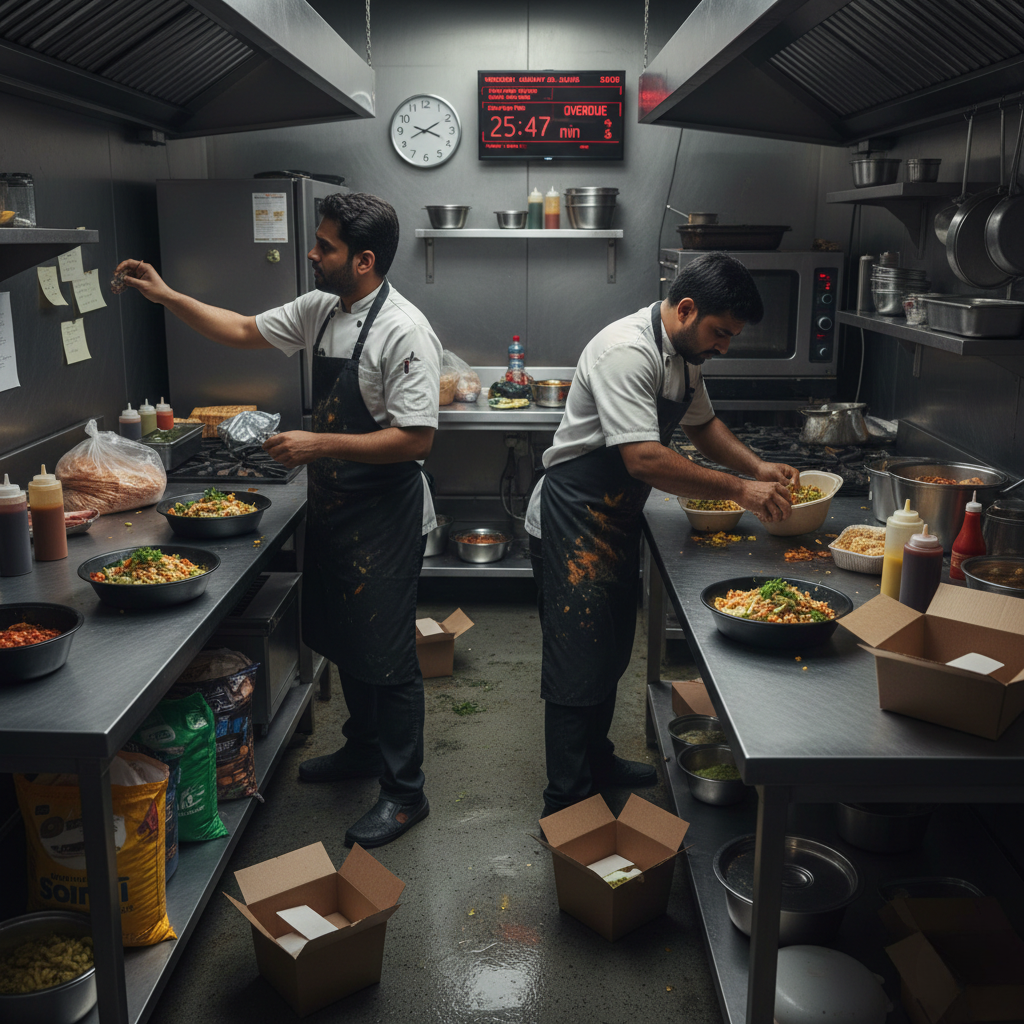
What SOPs Actually Mean in a Delivery Kitchen (And Why They’re Not “Documentation”)
SOPs (Standard Operating Procedures) are not “files” and not “training PDFs.” In cloud kitchens, SOPs are the operating rules that turn a chaotic kitchen into a predictable machine. SOPs define what must happen, in what sequence, with what measurements, within what time limits regardless of who is on shift.
Without SOPs, kitchens run on memory, instinct, and verbal instructions. That works only at low volume and only when the same people are always present. But cloud kitchens are built for volume, repeat orders, and consistent delivery outcomes. The moment volume rises or staff changes, non-standard kitchens collapse.
The most important shift is this: SOPs are not for the founder. SOPs are for the kitchen to run correctly even when the founder is not present.
The Delivery Reality: Without SOPs, Variability Becomes Daily Cash Leakage
Delivery kitchens operate on thin margins. Your contribution margin per order is shaped by: platform costs, packaging, food cost, refunds and replacements, and discount burn. Even small daily errors can erase the margin needed to pay rent and salaries.
SOPs protect margins by removing variability: portion sizes stay fixed, prep yield stays consistent, packing accuracy stays high, dispatch timing stays predictable, and inventory remains visible. Without SOPs, the kitchen’s output depends on who is cooking, who is packing, and how rushed the shift feels. That is not a business model that is gambling with payouts.
If you want a practical checklist of “where SOP gaps leak money,” audit your kitchen using Common Operational Mistakes in Cloud Kitchens.
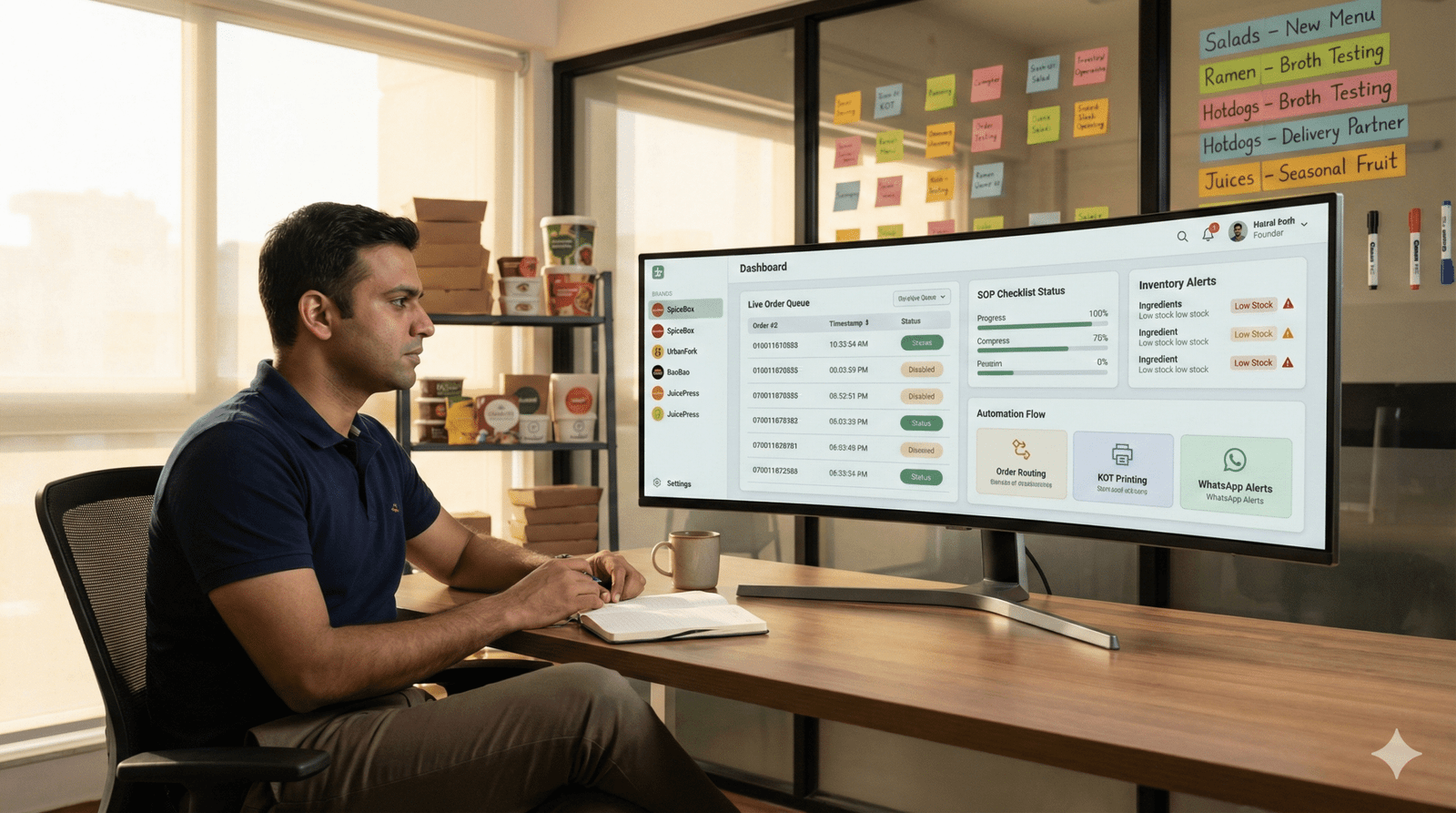
The 9 Reasons Cloud Kitchens Fail Without SOPs (And What It Looks Like on the Floor)
SOP-less failure is rarely dramatic. It’s usually slow and predictable. Below are the most common failure patterns that show up when kitchens run without standard procedures.
1) Portion drift becomes permanent. Without portion SOPs, staff serves by “feel.” During peak, “add a bit extra” becomes the default to avoid complaints. That extra becomes the new normal. Normal extra becomes daily margin leakage.
2) Yield variance stays invisible. Base gravies, marinades, batters, rice/noodles all have a yield. Without yield SOPs, the same batch gives 18 portions on Monday and 15 on Thursday. Nobody knows why. But cost rises anyway. Yield variance is silent food cost drift.
3) Over-prep and expiry becomes a lifestyle. Kitchens without prep SOPs prep based on fear: “prep more so we don’t run out.” This creates dead stock. Dead stock expires. Expiry becomes wastage. Wastage becomes cash burn.
4) Dispatch becomes error-prone under pressure. Without packing and dispatch SOPs, speed replaces accuracy. Add-ons get missed. Labels are inconsistent. Sealing is rushed. One wrong order triggers: refund → replacement → rating drop → conversion loss → discount burn. That chain is how cloud kitchens die quietly.
5) “Quality” becomes inconsistent, so repeat orders collapse. Customers don’t remember your best day. They remember your average day. Without SOPs, taste, spice level, portion size, and packaging experience varies by shift. Repeat orders drop. CAC becomes higher. Profit becomes harder.
6) Inventory becomes guesswork (and shrinkage becomes normal). Oil, cheese, mayo, sauces, spices, packaging add-ons and proteins are high-leak items. Without receiving SOPs, FIFO SOPs, and variance checks, the store is always “mysteriously low.” Stockouts create substitutions. Substitutions create complaints. Complaints create refunds.
7) Staff productivity collapses because roles are unclear. In SOP-less kitchens, everybody does everything. Prep interrupts service. Packing interrupts cooking. Dispatch is handled by whoever is free. The kitchen looks busy but output per person stays low. Low output per person increases cost per order.
8) Founders become the system, and burnout becomes inevitable. The founder answers every question: substitutions, escalations, rider issues, customer complaints, stockouts, and portioning disputes. The kitchen “works” only because the founder is present. This is not scalable. When the founder gets tired, the operation collapses.
9) Scaling amplifies the weakness. Many kitchens try to scale marketing before stabilising execution. But volume amplifies your system. If the system is weak, volume amplifies: drift, errors, refunds, penalties, and discount dependency. If growth is hurting your kitchen, use When Growth Is Hurting Your Cloud Kitchen Operations.
Swiggy/Zomato Reality: Without SOPs, Your Payout Quality Gets Worse
Many founders think platform commission is the only problem. But payout quality is heavily influenced by operational performance: wrong items, late dispatch, cancellations, missing add-ons, spillages, and complaint patterns.
SOPs reduce platform deductions by reducing the events that trigger them: fewer refunds, fewer replacements, fewer delays, and more consistent ratings. That’s why SOPs are not “operations hygiene” SOPs are a payout protection system.
For the full payout lens, read Aggregator Commission Impact in India.
External reference links (policy context): Swiggy Refund & Cancellation Policy and Zomato Online Ordering Terms.
Packing + Dispatch SOPs: The Highest ROI SOPs in a Delivery Kitchen
If you implement only one SOP category first, implement dispatch SOPs. Dispatch SOPs create immediate ROI because they reduce: wrong orders, missing items, spillages, refunds, replacements, and escalation calls.
A strong dispatch SOP usually includes: stage-wise SLA (accept → cook → pack → handover), pack checklist, add-on verification, sealing standards, label standards, and dual verification before rider handover.
Implement a dispatch-ready standard using Cloud Kitchen Dispatch SOP.
Why SOPs Must Be Role-Based (Not “General Instructions”)
SOPs fail when they are written like general advice: “maintain hygiene,” “follow portion,” “pack carefully.” That is not an SOP. That is a hope.
SOPs work when each role has clear ownership and measurable checks:
Prep SOPs:
batch target, label format, holding time, discard rules, storage location, and stock update method.
Cooking SOPs:
station sequence, reheat rules, portion tools, plating/assembly order, and ticket time expectations.
Packing SOPs:
order of packing, add-on checklist, sealing method, label method, and escalation rules for missing items.
Dispatch SOPs:
SLA checkpoints, rider handover routine, and “stop the line” rules if accuracy is uncertain.
Store SOPs:
receiving checks, FIFO discipline, daily critical-item count, and variance reporting.
If you want a structured role-and-handoff model, use Role-Based Kitchen Operations Explained.
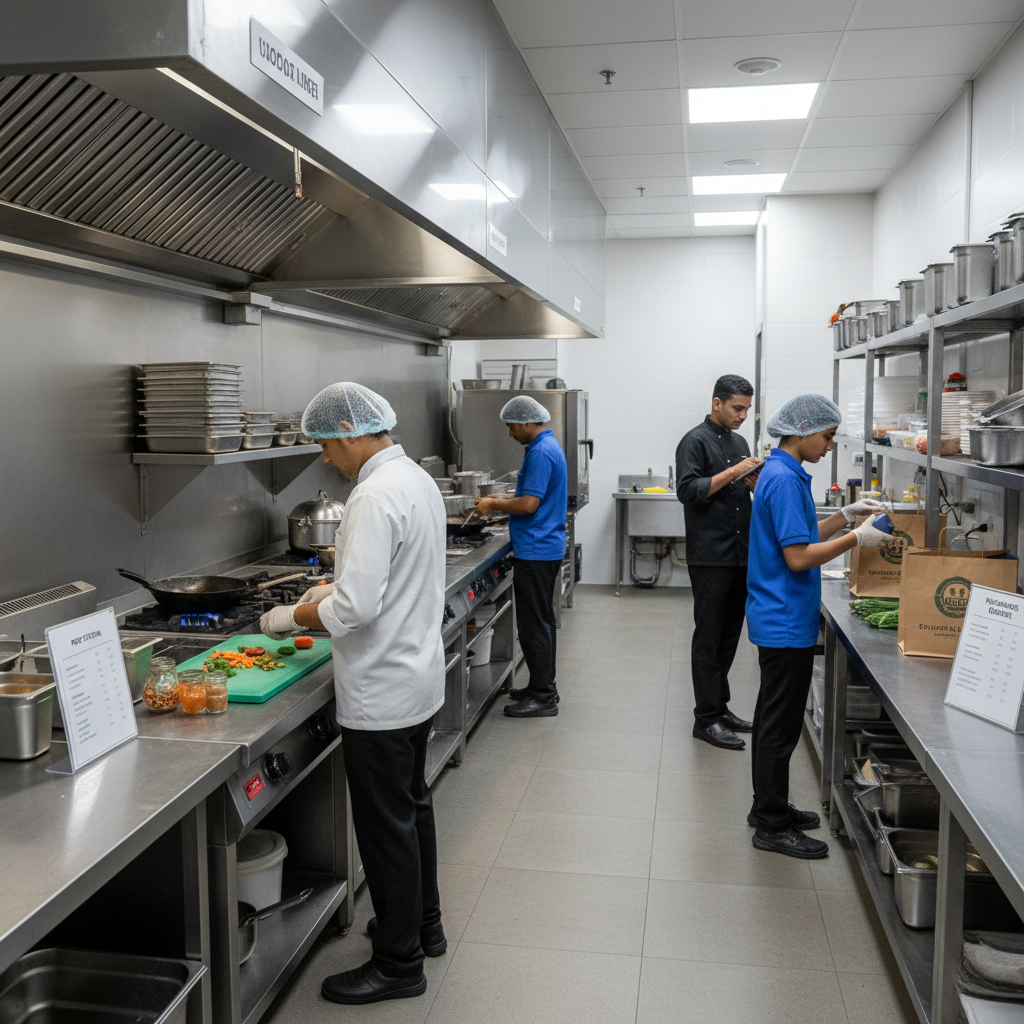
How to Build SOPs That Actually Work: A Practical 7-Day to 30-Day SOP Rollout
Many founders “create SOPs” and still don’t see results because the SOPs are not implemented as a system. SOPs succeed when they are built, trained, placed at stations, and checked daily. Below is a rollout sequence that works in running kitchens.
Step 1 (Day 1–2): Start with your top 10 high-risk SKUs. Pick the items that sell most AND create the most refunds/remakes. SOPs should protect revenue first. Build portion + packing SOPs for these items before documenting everything.
Step 2 (Day 1–3): Lock measurable portion standards. Define grams/ml for each component: gravy, protein, rice/noodles, toppings, sauces. Assign portion tools: ladles, scoops, cups, and weigh points. If the portion can’t be measured fast, it will drift during peak.
Step 3 (Day 3–5): Create dispatch SOP with dual verification. Build a simple checklist: item count, variant match, add-ons, cutlery, seal, label, and bag order. Add a second check before rider handover. This reduces refunds the fastest.
Step 4 (Day 4–7): Implement prep targets + holding time rules. Create demand-based batch sizes, label rules, and discard rules. Over-prep kills cash. Under-prep creates stockouts and substitutions. SOPs prevent both.
Step 5 (Week 2): Add purchasing + receiving SOPs. Lock specs for critical items: pack size, quality expectations, temperature requirement, and rejection rules. At receiving, verify: weight, damage, expiry, and temperature. If receiving is not controlled, food cost will drift no matter what you do inside the kitchen.
Step 6 (Week 2–3): Add inventory SOPs and weekly variance review. Do weekly counts for critical leak items: oil, cheese, mayo, sauces, spices, packaging add-ons, proteins. Compare expected consumption vs actual stock. Assign ownership for variance. Variance review is the control loop SOPs need.
Step 7 (Week 3–4): Add daily compliance checks + weekly review ritual. SOPs fail when no one checks them. Track daily: portion check, wastage log, remake log, dispatch delays, and refund reasons. Review weekly: yield variance, purchasing rate variance, complaint patterns.
If you want the discipline lens that ties SOP compliance to profitability, map this with How Process Discipline Improves EBITDA.
External hygiene + process standards (useful while standardising SOPs and compliance): FSSAI Hygiene Requirements (Schedule 4 reference), ISO 22000 overview, and FAO/Codex General Principles of Food Hygiene.
Optional external reference (standardisation lens): You can explore Standardized Work (Lean lexicon) to understand why repeatability reduces variability and protects margins.
Final Takeaway: SOPs Are Not Extra Work. They Are the Only Way a Cloud Kitchen Survives Scale
Cloud kitchens fail without SOPs because delivery punishes inconsistency. Without standard procedures, small mistakes become daily leakage: portion drift increases food cost, prep mistakes increase wastage, packing errors increase refunds, dispatch delays increase penalties, and discounts become the only recovery lever.
SOP-led kitchens don’t become “perfect.” They become predictable: portions become measurable, yields become repeatable, prep becomes planned, packing becomes checklist-driven, dispatch becomes controlled, and payout quality becomes stable. Predictability is what creates margin. Margin is what creates survival.
Operational frameworks from GrowKitchen, and operating partner brands like Fruut and GreenSalad are designed to convert “founder-dependent kitchens” into “system-driven kitchen networks.”
FAQs: Why Do Cloud Kitchens Fail Without SOPs?
What is the biggest reason SOP-less cloud kitchens fail?
Inconsistent execution. Portion drift, yield loss, dispatch errors, and refunds compound until margins collapse.
Which SOPs should I implement first for fast results?
Portion SOPs for top-selling SKUs AND packing/dispatch SOPs with dual verification. These reduce food cost drift and refunds fastest.
Can SOPs reduce refunds and improve ratings?
Yes. SOPs reduce wrong items, spillages, missing add-ons, and late dispatch issues the most common drivers of refunds and rating drops.
Do SOPs help even if I have experienced staff?
Yes. SOPs are not about skill; they are about consistency across shifts and people, especially during peak volumes.
- Cloud Kitchen Profitability Consultant in India
- Common Operational Mistakes in Cloud Kitchens
- How SOPs Reduce Food Cost & Complaints
- Aggregator Commission Impact in India
- Cloud Kitchen Dispatch SOP
- Role-Based Kitchen Operations Explained
- When Growth Is Hurting Your Cloud Kitchen Operations
- How Process Discipline Improves EBITDA
- Grow Kitchen on X