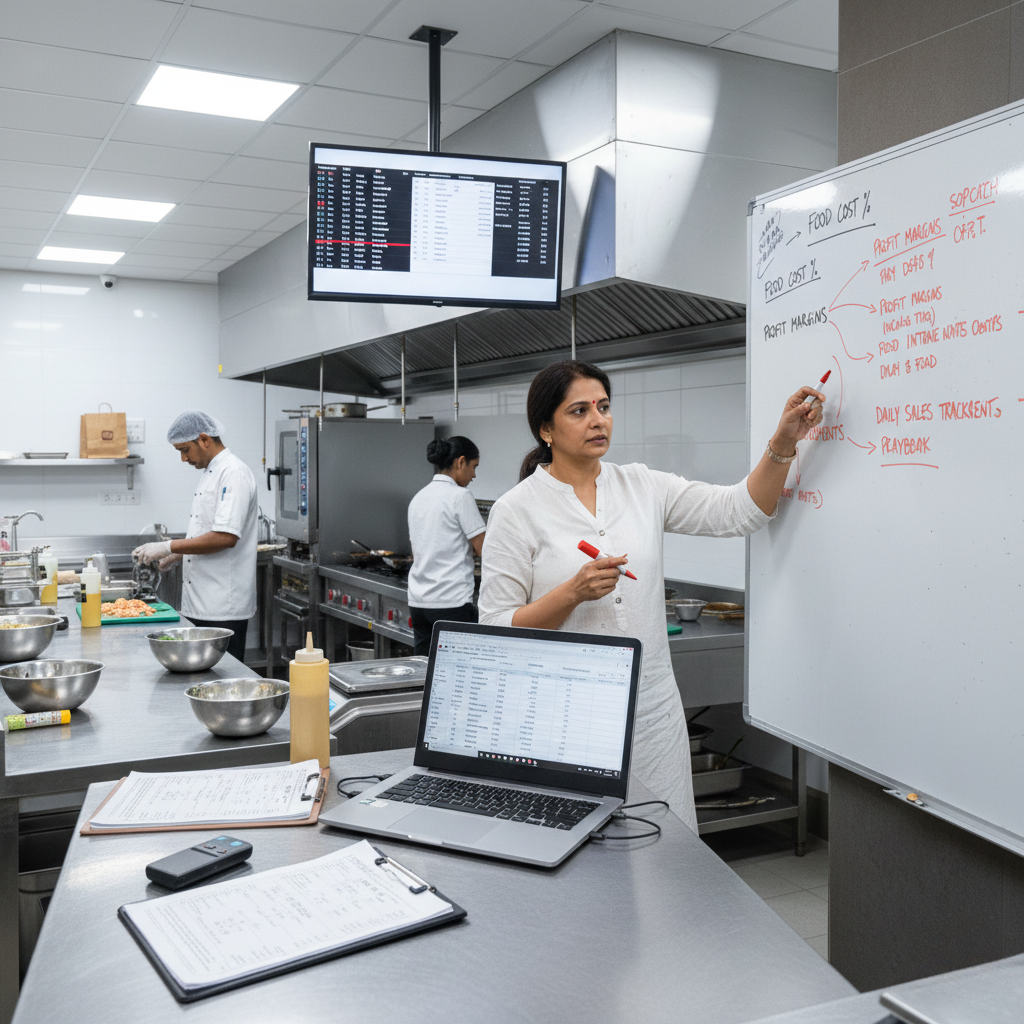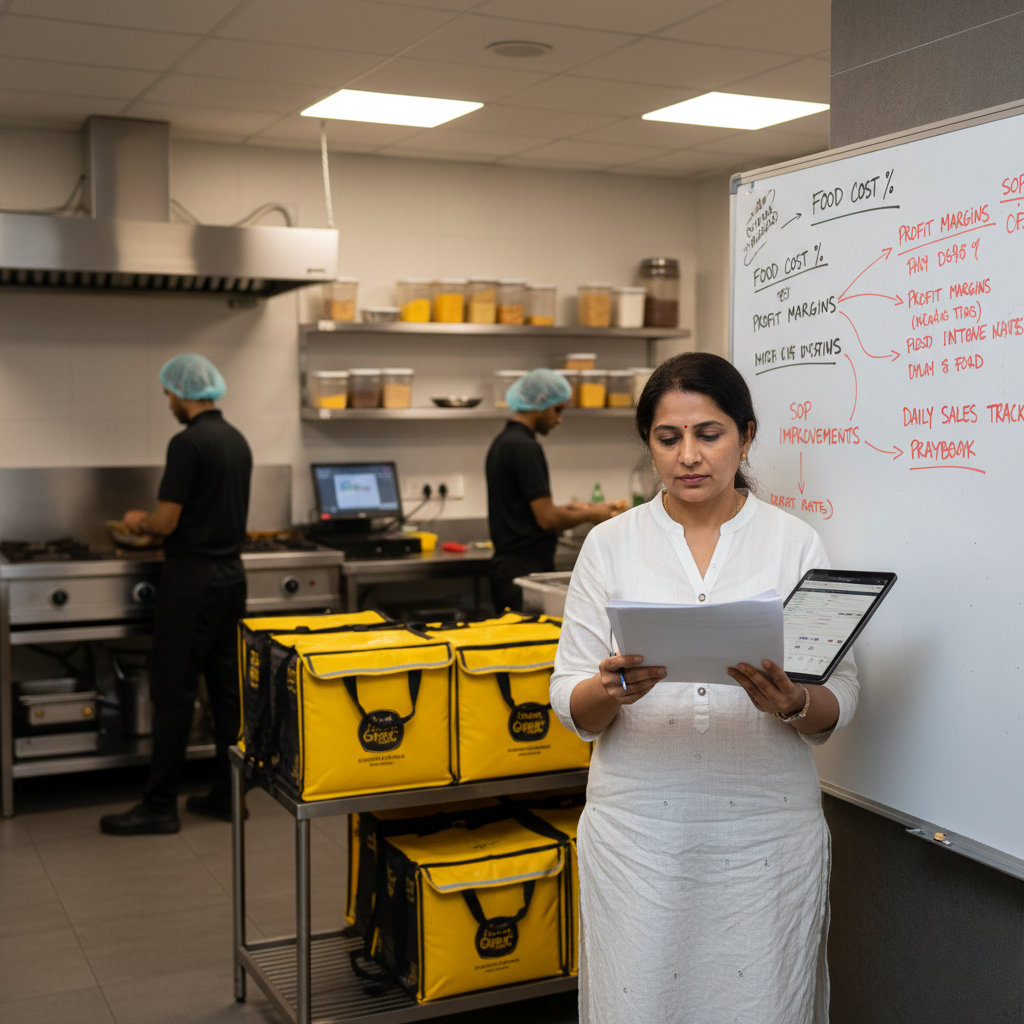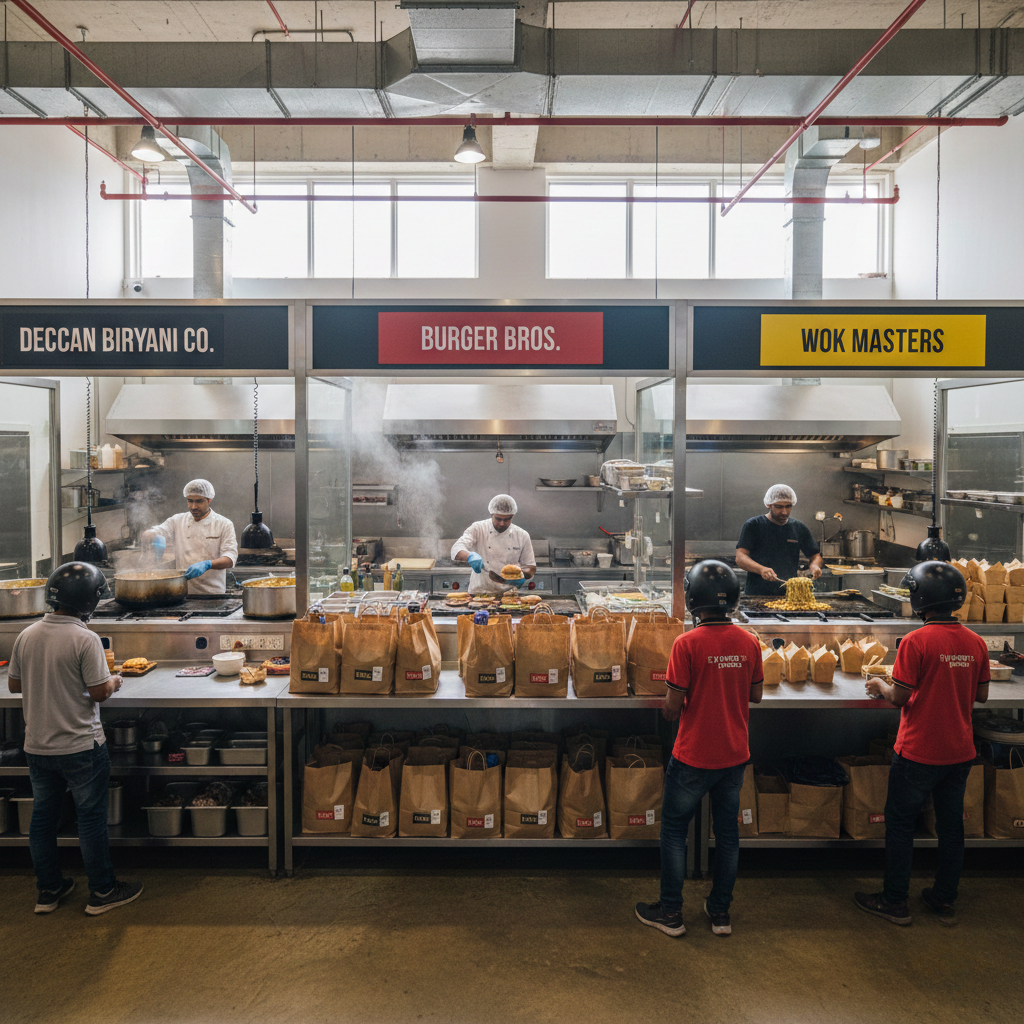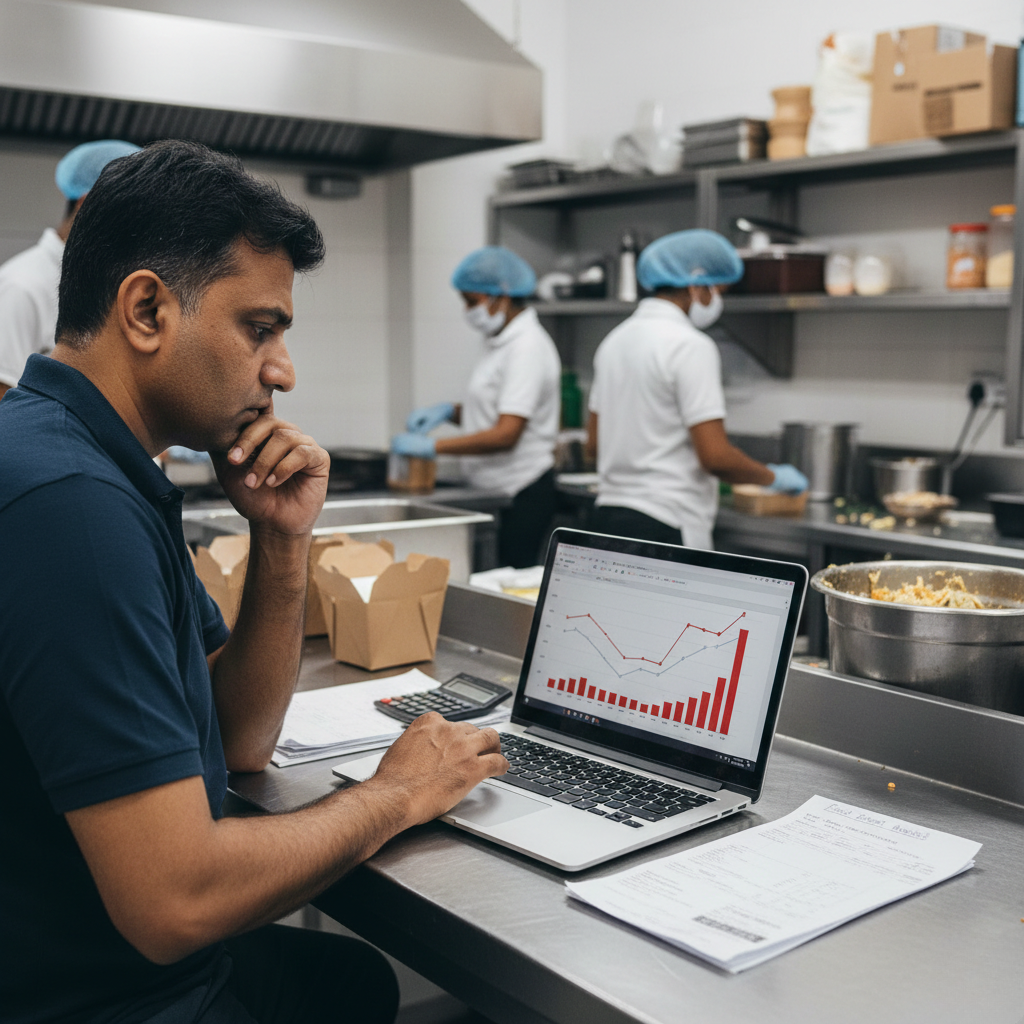
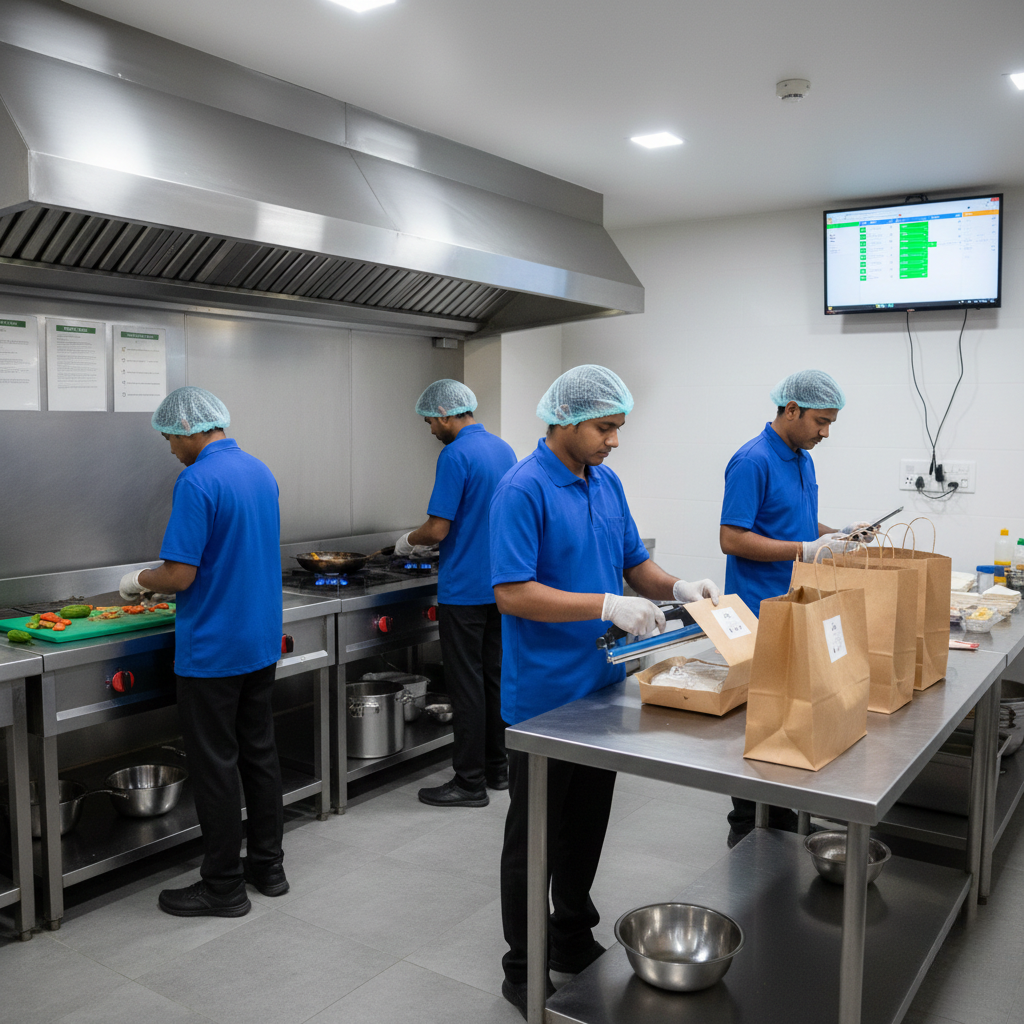
How Operations Impact Cloud Kitchen Profitability explains a truth many founders in India discover too late: profit is not created by demand alone. Cloud kitchens can generate high order volumes and still lose money every month. The difference between profitable and loss-making kitchens is operational discipline. This guide breaks down how daily operations directly shape food cost, labor efficiency, ratings, repeat orders, and long-term margins.
Why Profitability Is an Operations Problem, Not a Sales Problem
Many cloud kitchen founders focus on increasing orders when profits are low. Discounts, ads, and aggregator visibility may improve topline numbers, but they rarely fix margins. In India, most cloud kitchens bleed money because daily operations leak costs silently. Food wastage, over-portioning, staff inefficiency, refunds, and low ratings all originate inside operations.
This reality connects directly with Cloud Kitchen Operation Consultant and Cloud Kitchen Profit Margin in India.
What Operational Profitability Really Means in Cloud Kitchens
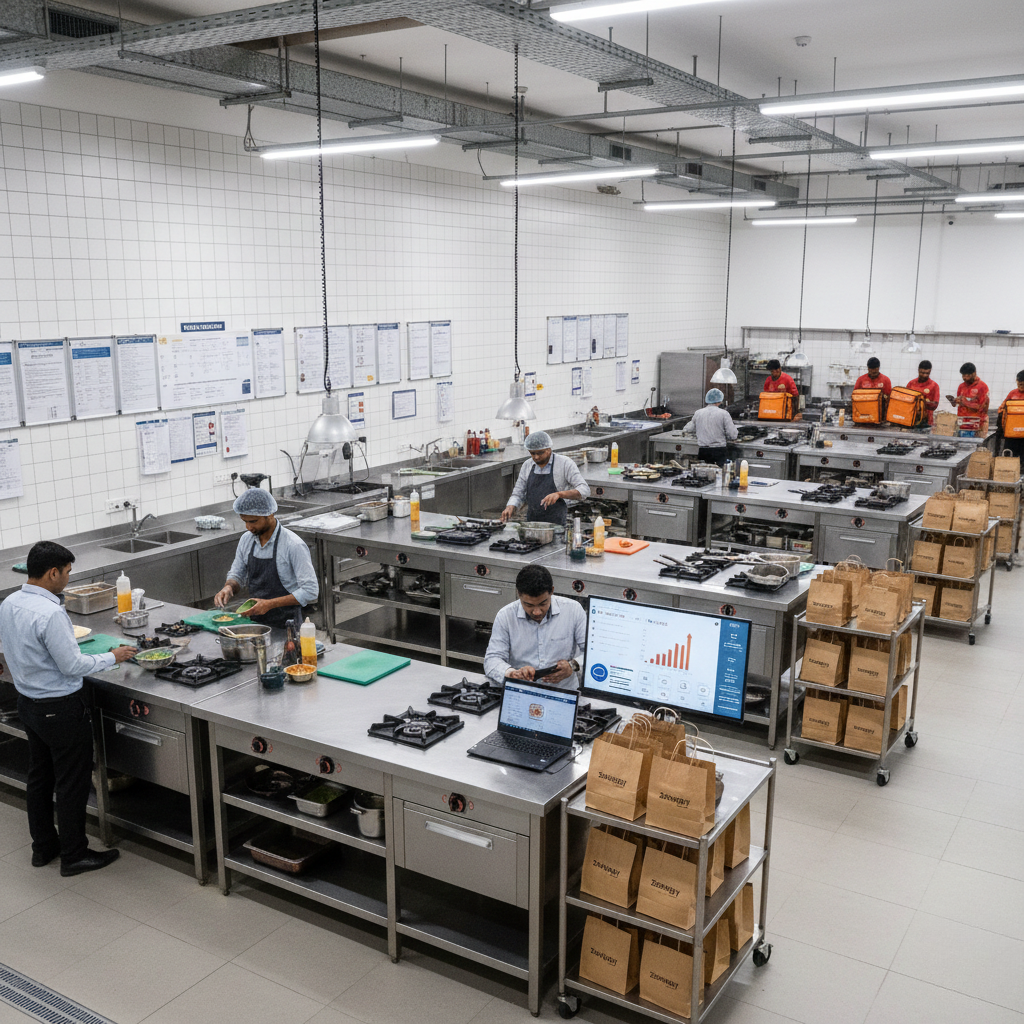
Operational profitability is not about cutting corners. It is about executing the same process the same way, every single day. Profitable kitchens do not rely on exceptional people. They rely on predictable systems.
How Operations Control Food Cost and Wastage
Food cost is the largest variable expense in a cloud kitchen. Poor prep planning, inconsistent portioning, and weak inventory tracking quietly inflate costs. Kitchens without prep discipline overproduce, discard expired items, and rush emergency purchases. Structured prep and inventory systems protect margins more than price increases.
Learn inventory discipline in Cloud Kitchen Inventory Management in India.
Labour Efficiency: The Hidden Profit Lever
<> Most kitchens add staff to handle rising order volumes. Profitable kitchens redesign workflows before adding people. Role-based operations increase output per staff member without increasing payroll. When roles are unclear, labour cost rises faster than revenue. Staffing fundamentals are covered in How Many Staff Does a Cloud Kitchen Really Need?.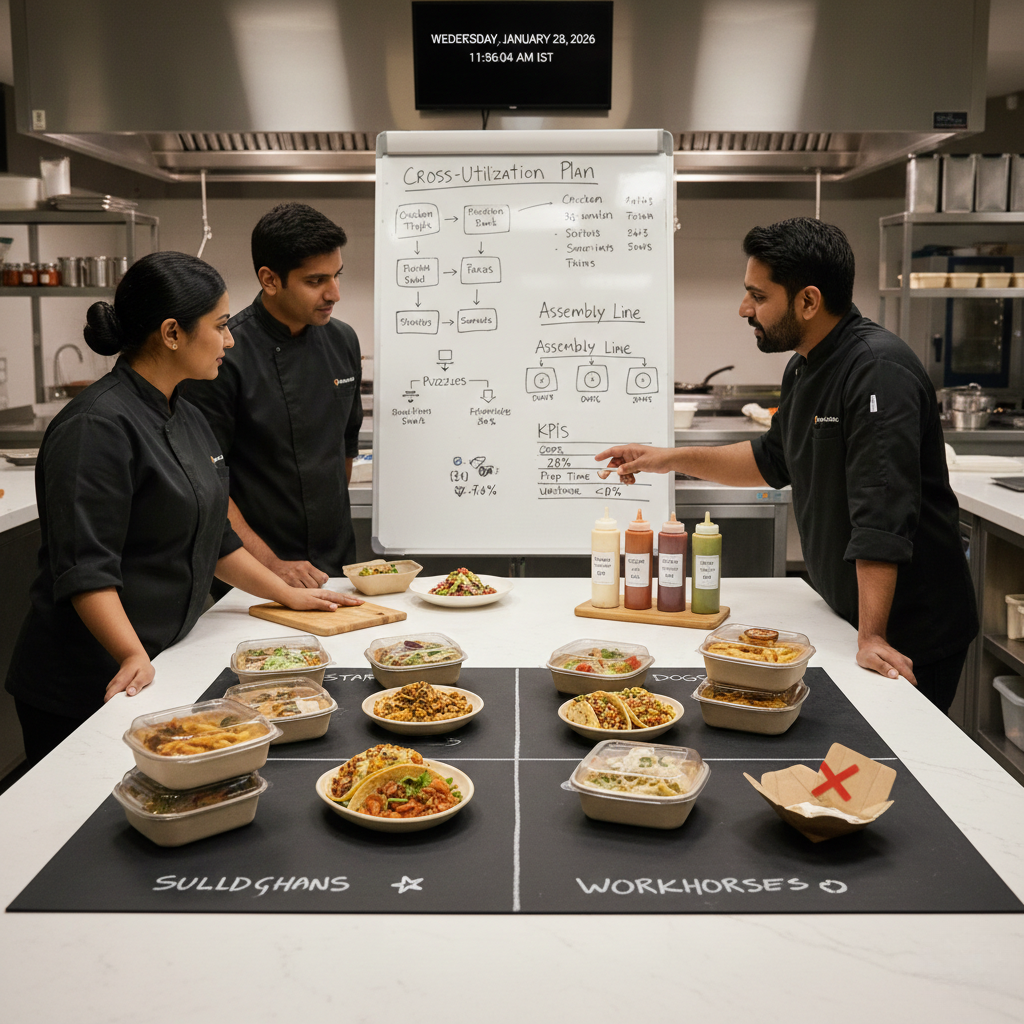
Why SOPs Are Directly Linked to Profitability
SOPs eliminate guesswork. Without SOPs, staff decisions vary by shift, leading to inconsistency. Inconsistent execution increases food cost, delays orders, and drives refunds. SOP-driven kitchens stabilize costs automatically.
Foundational guidance in Kitchen SOPs Every Cloud Kitchen Must Have.
Portion Control and Margin Protection
Over-portioning feels harmless but destroys margins at scale. One extra spoon per order compounds into thousands of rupees monthly. Profitable kitchens treat portion control as a core operational role.
Learn why this matters in Importance of Portion Control in Cloud Kitchens.
How Operations Influence Ratings and Repeat Orders
Ratings are not marketing metrics. They reflect operational consistency. Late orders, missing items, leakage, and cold food reduce repeat purchases. Fewer repeat customers increase dependency on discounts.
This relationship is explained in Operations vs Marketing: What Actually Drives Ratings?.
Dispatch Efficiency and Refund Leakage
Dispatch errors are expensive. Missed riders, wrong handovers, and delayed packing lead to refunds and penalties. Each refund erodes margins far beyond food cost. Structured dispatch systems protect profitability.
Learn dispatch discipline in Cloud Kitchen Dispatch SOP.
Why Founder-Dependent Operations Hurt Profitability
Founder-led execution is expensive. Decisions slow down, errors repeat, and scale becomes impossible. Profitability improves when systems replace supervision.
This connects closely to How Operations Systems Reduce Dependency on Founders.
Why Profitable Kitchens Scale Faster
Profitability provides breathing room. It allows reinvestment, staff stability, and process improvement. Loss-making kitchens scale stress, not systems. Scaling frameworks are detailed in Cloud Kitchen Scaling Strategy.
How Operations Impact Cloud Kitchen Profitability: Final Takeaway
Profit is created in the kitchen, not on dashboards. Operations decide how much of each rupee survives. Kitchens that master execution achieve stable margins even in competitive markets. Operational frameworks from GrowKitchen help founders convert activity into sustainable profitability.
FAQs: Operations & Cloud Kitchen Profitability
Can marketing fix profitability issues?
No. Marketing increases volume, not margins.
Which operational area impacts profit the most?
Food cost control and labour efficiency.
Are SOPs expensive to implement?
SOPs are cheaper than recurring losses.
Can small kitchens be profitable?
Yes. Smaller kitchens benefit faster from discipline.