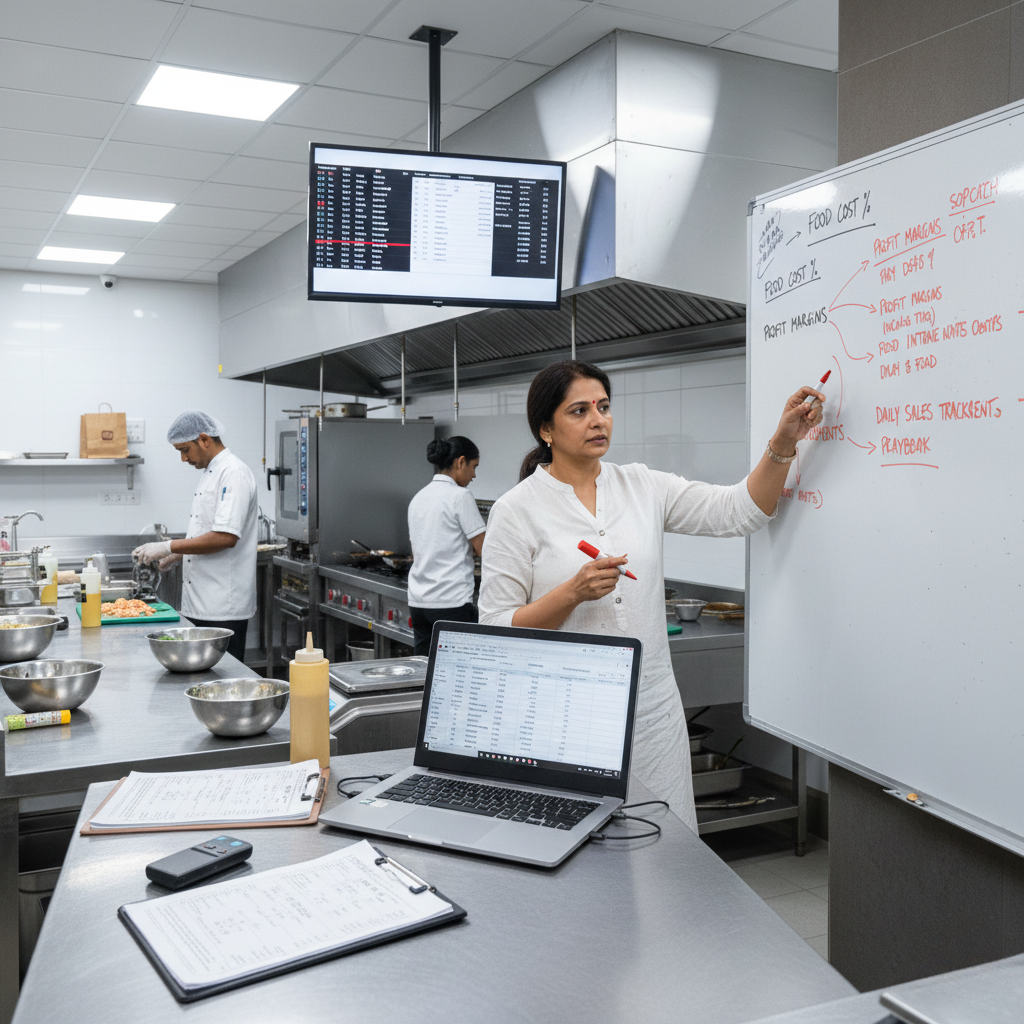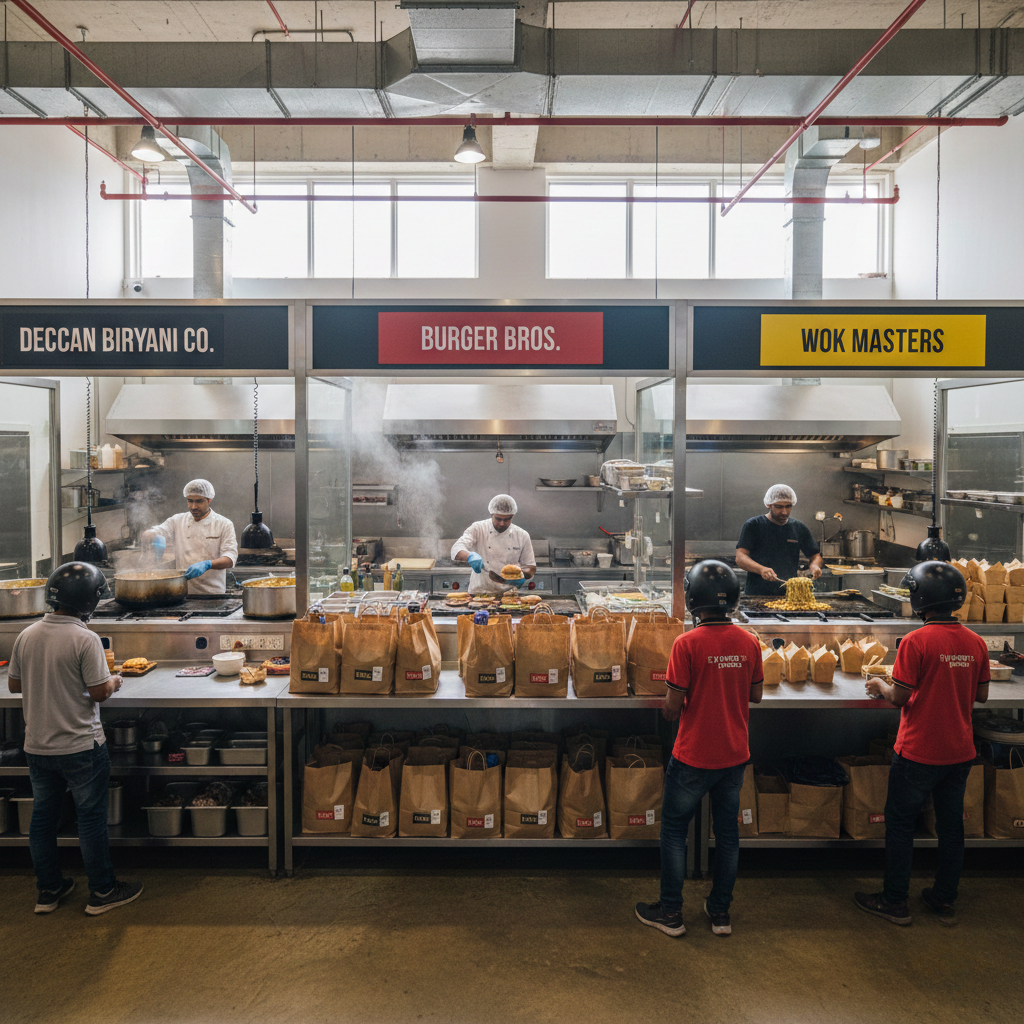
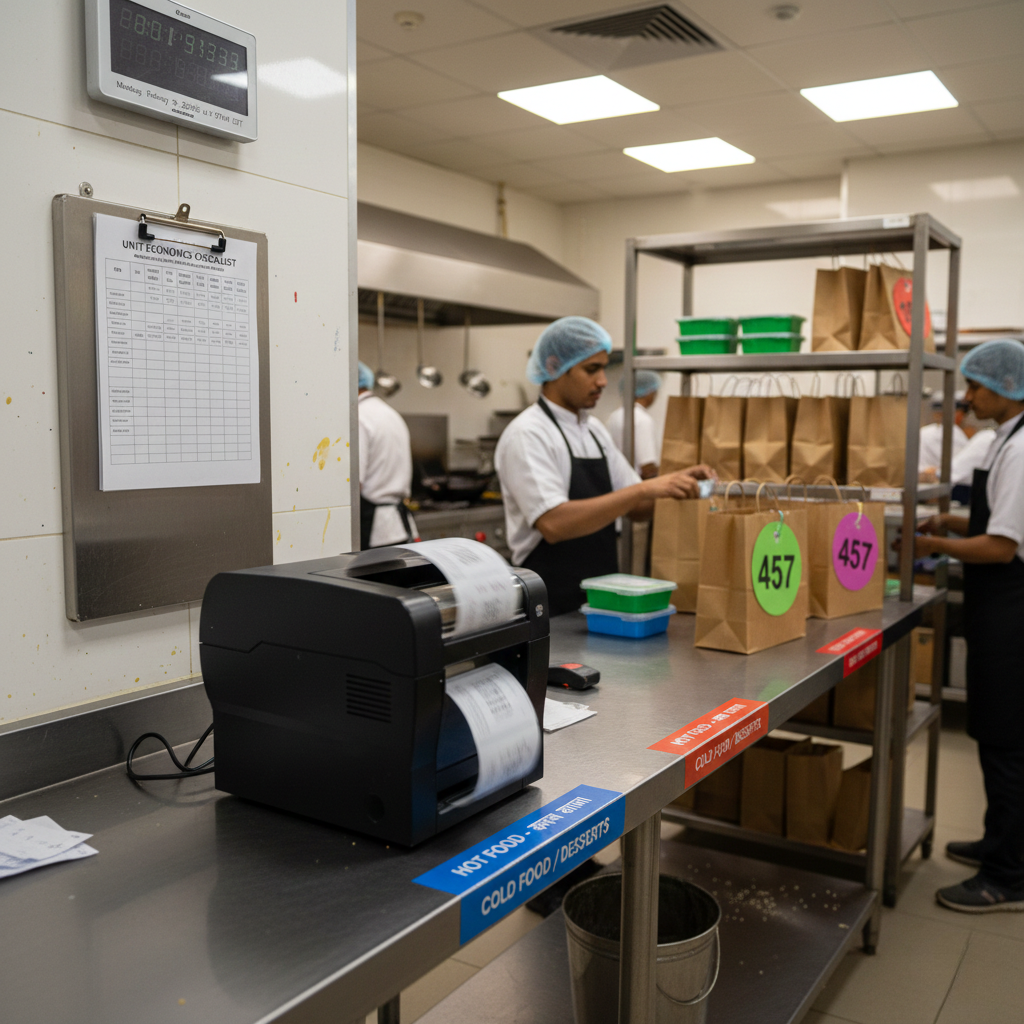
Cloud Kitchen Unit Economics Explained is one of the most misunderstood topics among cloud kitchen founders in India. Many kitchens track revenue, ratings, and order growth but never truly understand whether each order makes or loses money. Dashboards look busy. Sales feel encouraging. Yet profitability never arrives. This guide explains cloud kitchen unit economics in simple terms, why most founders get it wrong, and how profitable kitchens design systems where every order contributes positively to the business.
Why Cloud Kitchen Unit Economics Are So Often Ignored
Unit economics sounds technical. Many founders avoid it, assuming it is only relevant for large companies. In reality, unit economics matters most when kitchens are small. It determines whether growth helps or hurts.
To understand the ecosystem, start with Cloud Kitchen Business in India, Cloud Kitchen Profit Margin in India, and Cloud Kitchen Break-Even Explained Simply.
What Unit Economics Actually Means for a Cloud Kitchen
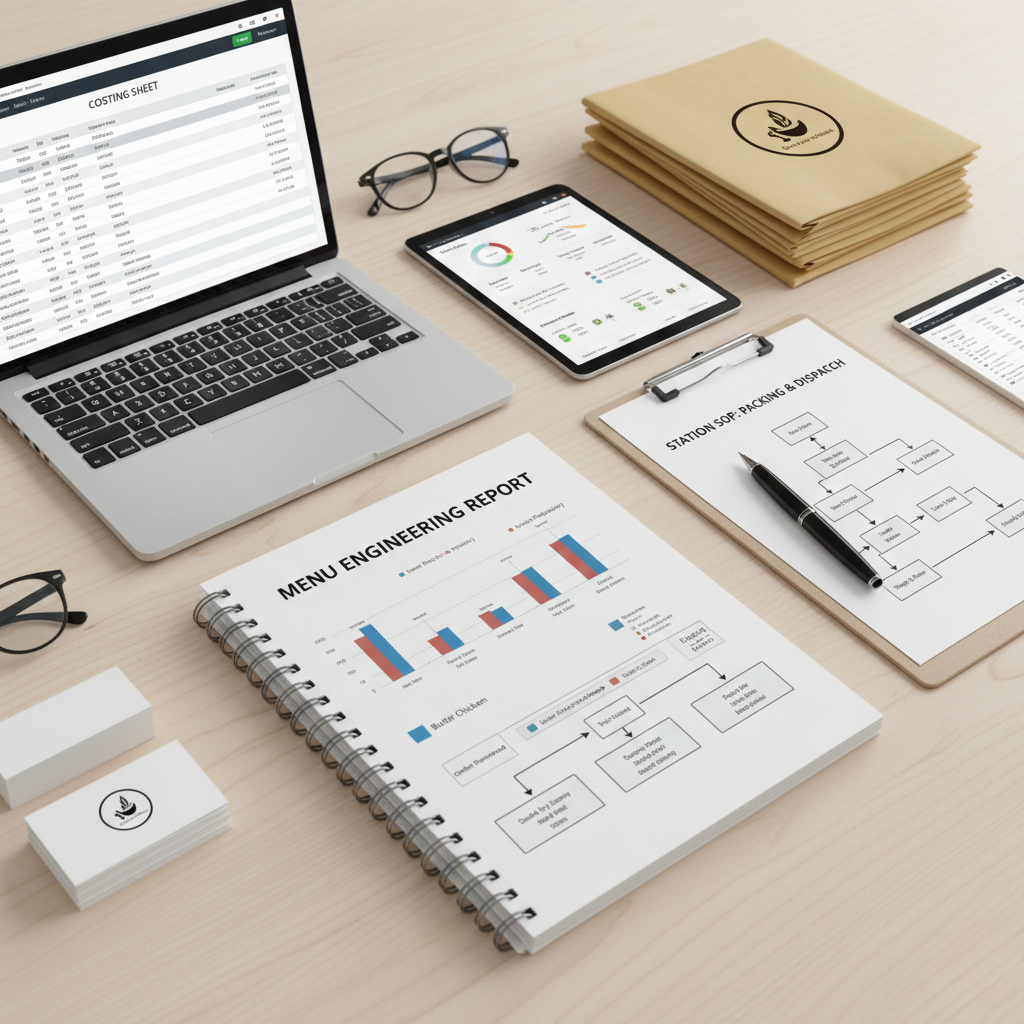
Unit economics answers one simple question: does a single order make money or lose money? Everything else is secondary. If one order is unprofitable, ten orders are worse. One hundred orders are dangerous.
The Biggest Myth: “We’ll Fix Unit Economics After Scaling”
Many founders believe unit economics improves automatically with scale. In cloud kitchens, the opposite often happens. Scaling magnifies inefficiencies, discounts, refunds, and staff pressure.
Broken unit economics never fixes itself. It only grows louder.
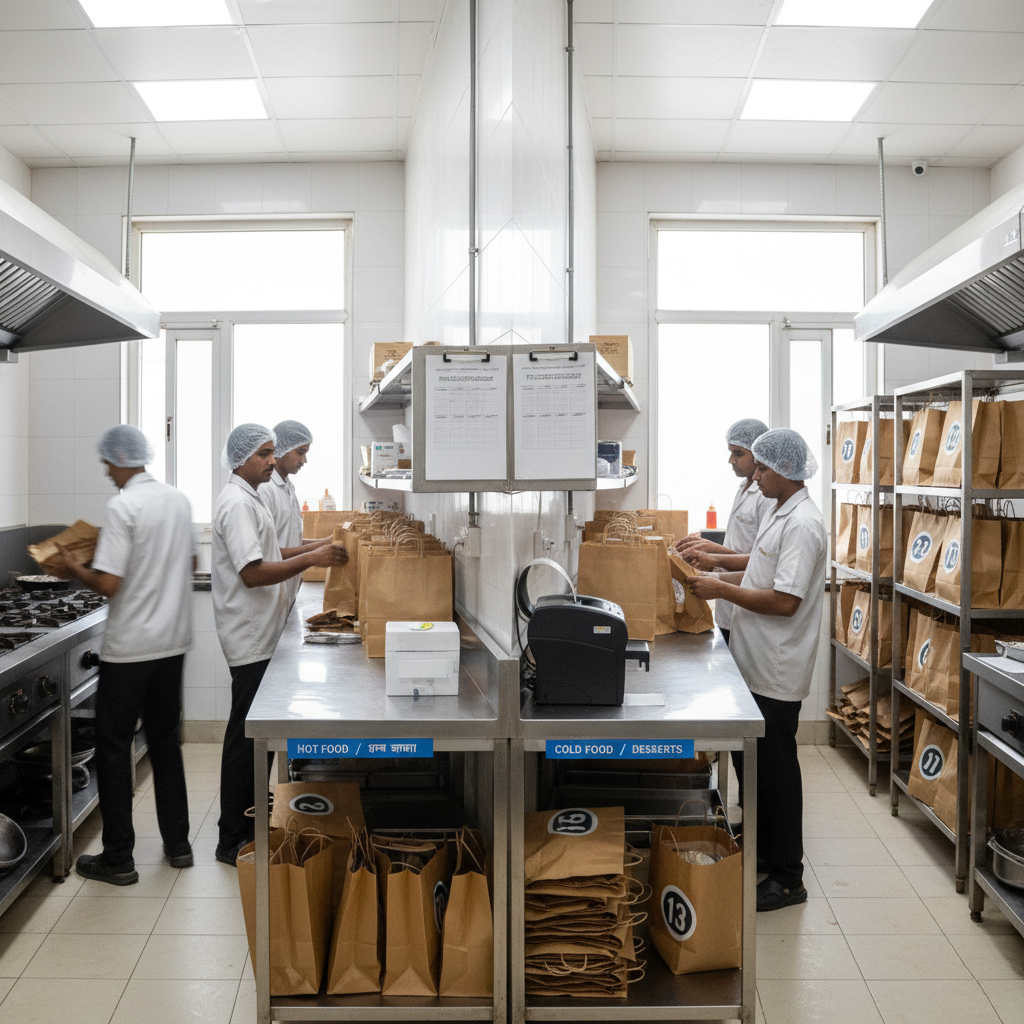
Core Components of Cloud Kitchen Unit Economics
Unit economics is built from a few controllable components: average order value, food cost per order, packaging cost, aggregator commissions, payment gateway fees, refunds, and per-order labour impact.
Ignoring any one component creates false profitability.
Average Order Value: The Starting Point
AOV sets the ceiling for unit economics. Low AOV menus struggle to absorb commissions and packaging. Healthy kitchens design menus that naturally push AOV through combos and add-ons, not discounts.
AOV growth without margin control is still dangerous.
Understanding True Cost Per Order
Most kitchens underestimate per-order cost. They count food but ignore packaging inflation, aggregator commissions, refunds, and operational inefficiencies.
True unit economics includes every rupee spent to fulfill one order.
This logic aligns with Harvard Business Review’s explanation of unit economics , which emphasizes per-unit contribution over topline growth.
Contribution Margin: The Heart of Unit Economics
Contribution margin is revenue per order minus variable cost per order. This is the money left to pay fixed costs and generate profit.
Positive contribution margin is non-negotiable.
How Staffing Impacts Unit Economics
Labour is often treated as a fixed cost. In reality, staffing efficiency directly affects per-order profitability. Overstaffed kitchens dilute contribution margin.
Learn staffing logic in How Many Staff Does a Cloud Kitchen Need.
Why SOPs Stabilize Unit Economics
SOPs reduce variance. Variance increases cost. Every deviation from portion size, cooking time, or packing process damages unit economics.
SOPs convert effort into predictable output.
Inventory Control and Its Direct Impact on Unit Economics
Inventory leakage silently inflates per-order cost. Spoilage, overproduction, and FIFO failures reduce contribution margin without being visible on dashboards.
Learn inventory discipline in Cloud Kitchen Inventory Management in India.
Multi-Brand Kitchens and Unit Economics Complexity
Multi-brand kitchens often assume shared resources improve unit economics. In practice, complexity increases cost unless SOPs are unified.
Unit economics improves only when systems scale, not chaos.
Learn structured design in How to Build SOPs for Multi-Brand Cloud Kitchens.
Why Unit Economics Must Be Fixed Before Scaling
Scaling multiplies unit economics. Positive units create profit. Negative units create faster losses. Kitchens that scale without clarity lock themselves into unsustainable growth.
This principle is central to Cloud Kitchen Scaling Strategy.
Cloud Kitchen Unit Economics Explained: Final Clarity
Unit economics is the truth layer beneath revenue, ratings, and growth stories. Kitchens that understand per-order profitability build businesses that last. GrowKitchen helps founders design systems where every order strengthens the business, not weakens it.
FAQs: Cloud Kitchen Unit Economics
Can a cloud kitchen grow with negative unit economics?
No. Growth only accelerates losses.
Is unit economics more important than revenue?
Yes. Revenue without unit economics is misleading.
How often should unit economics be reviewed?
Monthly at minimum, weekly for scaling kitchens.
Do discounts hurt unit economics?
Yes, unless fully funded and controlled.