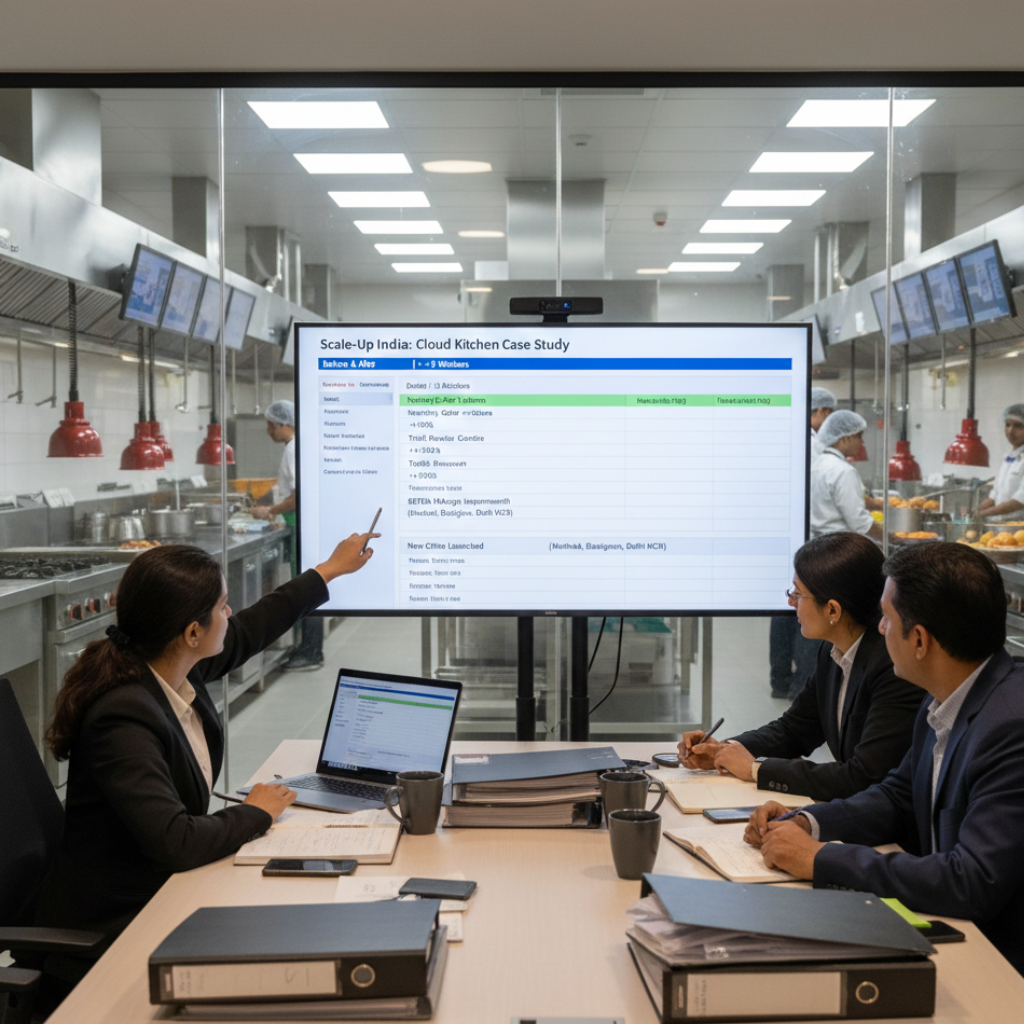
Cloud Kitchen Business Case Study in India matter because “tips” don’t show reality. In India, cloud kitchens grow when systems improve: menu discipline, SOPs, packaging, dispatch speed, ratings, and repeat orders. This 2025 case-study style breakdown shows how a typical delivery-first brand can go from unstable margins to predictable growth-and what lessons you can copy without burning money on discounts.
Where This Case Study Fits in the GrowKitchen Learning Series
This page is part of GrowKitchen’s cloud kitchen learning series. If you want the full foundation first (models, setup, costs, SOPs, scaling), start here: Cloud kitchen as a service
For official compliance references often required while onboarding vendors and aggregators, review: FSSAI, GST Portal, and Udyam (MSME).
Case Study Snapshot: 1 Kitchen, 1 Brand, 1 Micro-Market
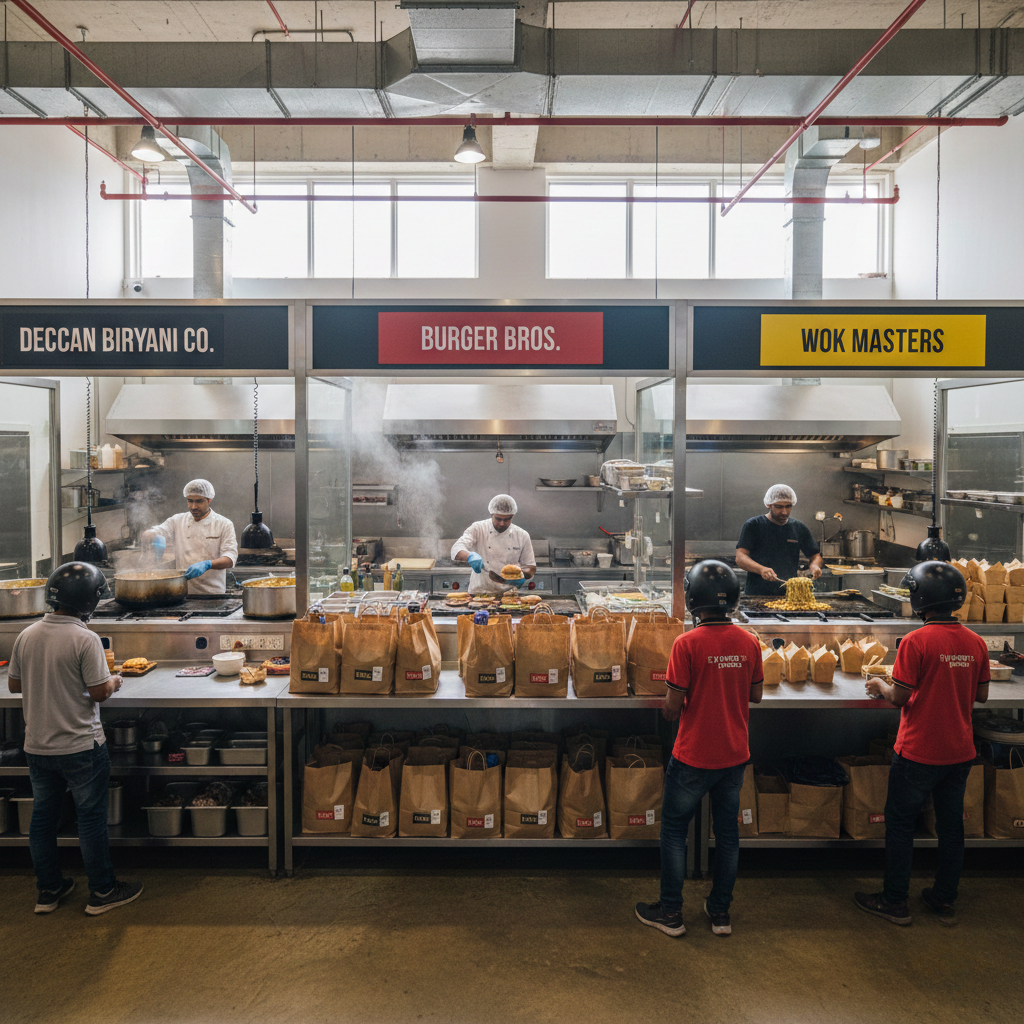
This case study represents a common India scenario: one delivery-only kitchen in a dense micro-market (Mumbai/Pune/Bangalore type demand), selling a repeat-friendly category like bowls, wraps, or North Indian meals.
- Model: single cloud kitchen, aggregator-first demand
- Goal: improve profit + ratings first, then scale
- Core problem: sales happening, but profit unstable
Phase 1: The “Busy But Not Profitable” Stage
What was happening
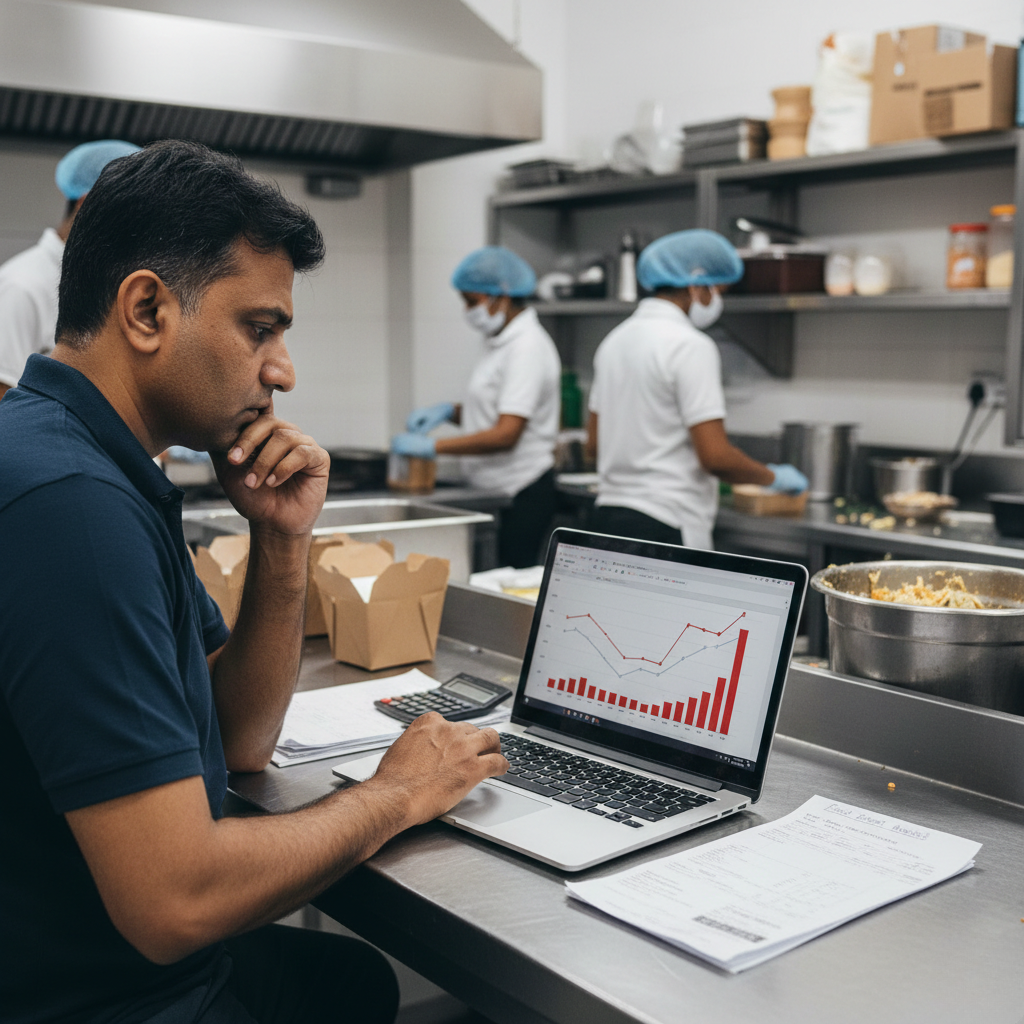
Orders were coming in, but margins were leaking. The team assumed “more orders will fix it.” Instead, more orders amplified errors-late dispatch, inconsistent portions, and occasional refunds.
Common symptoms (you may relate)
- Different cooks served different portions (food cost drifting weekly)
- Packaging failures caused spillage / sogginess (ratings hit)
- Discounting was random (contribution margin collapsing)
- No daily operations checklist (repeat mistakes)
This is exactly why most kitchens stall. If you want the failure patterns mapped clearly, read: Why Cloud Kitchens Fail in India.
Phase 2: The System Fix (SOP + Menu Discipline)
Fix #1: SOP checklist introduced
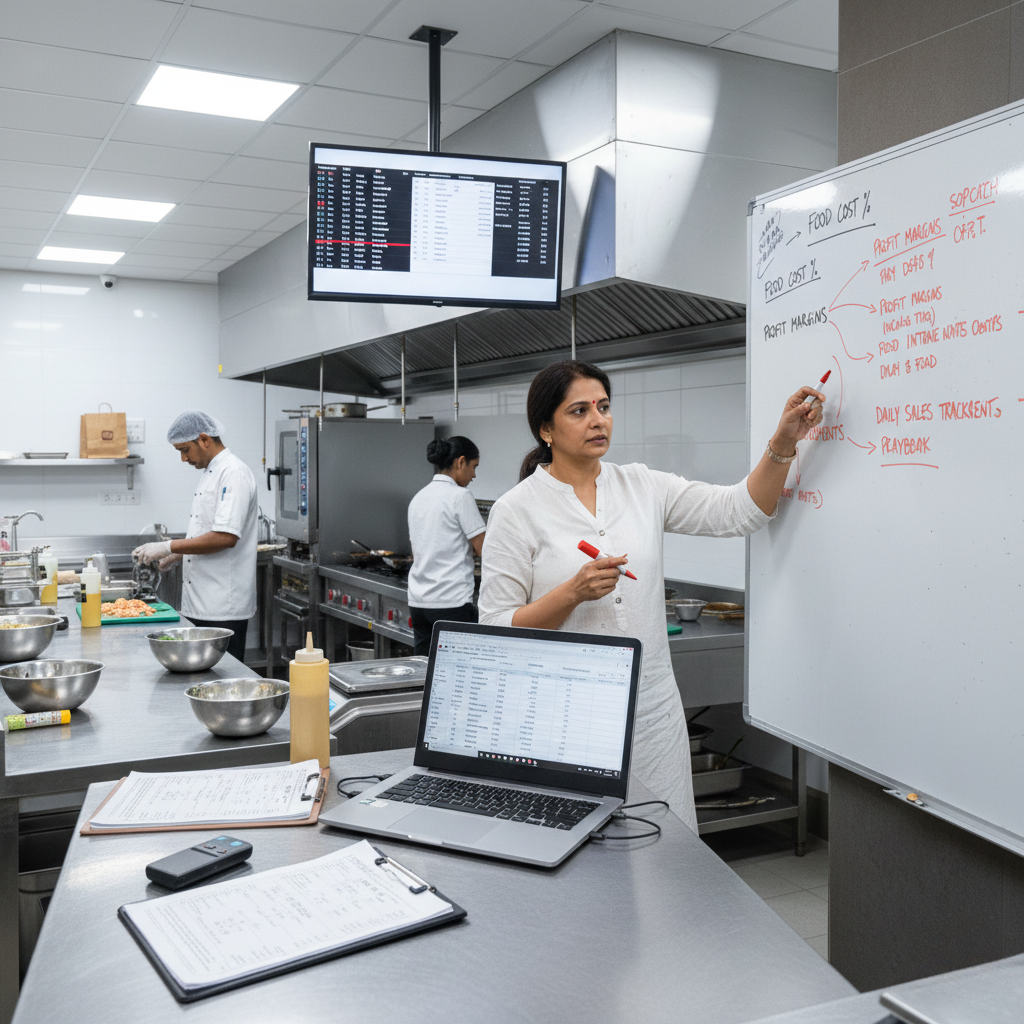
The turning point was simple: the kitchen stopped running on memory and started running on checklists. Prep, assembly, packing, and dispatch got documented so output became repeatable.
If you want the same structure, use: Cloud Kitchen SOP Checklist.
Fix #2: Menu trimmed and engineered
The brand removed low-margin, slow-moving items and focused on bestsellers that travelled well. This reduced prep load, improved speed, and stabilised raw material usage.
Fix #3: Portion control “ladle rules”
Portions were locked: fixed grams for protein, fixed ladles for gravies/sauces, and fixed garnish portions. This single change usually improves profit more than any marketing hack.
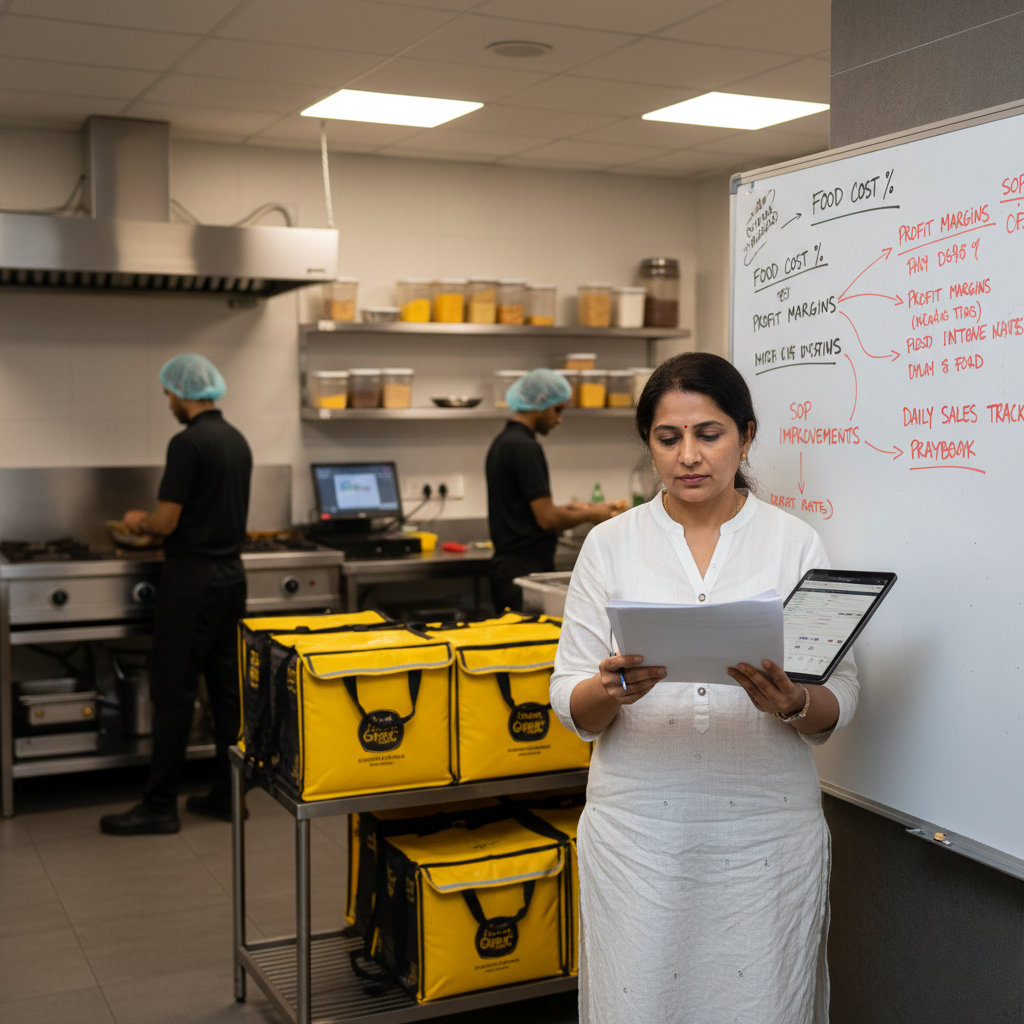
Fix #4: Packaging upgraded to protect ratings
Packaging was treated like a product component, not a purchase. Gravy separation, venting for fried items, and tighter sealing reduced refunds and improved customer experience.
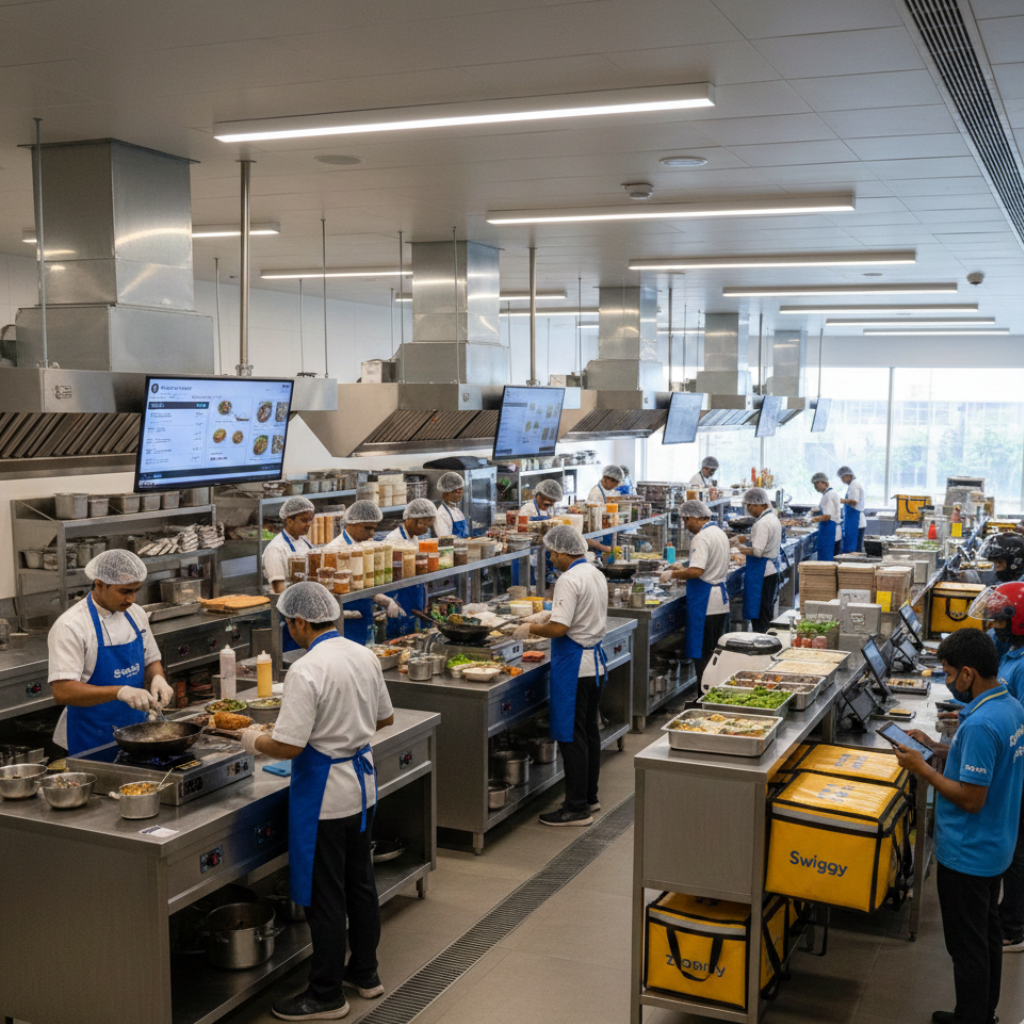
Phase 3: Growth Without Discount Addiction
What changed after systems
Once the kitchen became consistent, the platform started rewarding it naturally: better ratings, faster dispatch, fewer complaints, and more repeat orders. Marketing became easier because the product experience became reliable.
Retention layer added (reducing dependency)
The brand started capturing repeat customers through WhatsApp ordering and light CRM follow-ups, reducing the need for constant discounting.
If you want to build this, use: WhatsApp for Cloud Kitchen Growth.
Phase 4: Scaling Readiness (1 Kitchen → 2 Kitchens)
Only after the first unit became stable did expansion planning begin. Scaling wasn’t treated as “new location”; it was treated as “replication of the same output.”
- Same menu, same recipes, same portion rules
- Same packaging SKUs
- Same training and SOP playbook
- Weekly KPI review: ratings, refunds, food cost drift, prep variance
For the exact scaling framework, read: How to Scale Cloud Kitchens to Multiple Locations.
Real Lessons You Can Copy (2025)
- System beats hustle: SOPs reduce mistakes more than motivation
- Margin is built in the kitchen: portion control is a profit lever
- Packaging protects growth: ratings are a long-term asset
- Menu simplicity scales: complexity kills speed and control
- Scale only after stability: scaling chaos multiplies losses
Conclusion: Cloud Kitchen Growth in India Is a Systems Game
This case study reflects what we see across India: brands don’t grow because they “market harder.” They grow because operations become repeatable, margins become stable, and ratings become predictable.
If you want a structured start-to-scale roadmap, begin with: Cloud Kitchen Business in India.
- Cloud Kitchen Business in India (Pillar)
- Cloud Kitchen SOP Checklist
- Scale to Multiple Locations
- Why Cloud Kitchens Fail
- WhatsApp Growth for Cloud Kitchens
Also Refer To
Want a Case-Study Style Plan for Your Kitchen?
GrowKitchen helps founders improve margins, build SOP systems, reduce refunds, and scale cloud kitchens across micro-markets with repeatable execution.