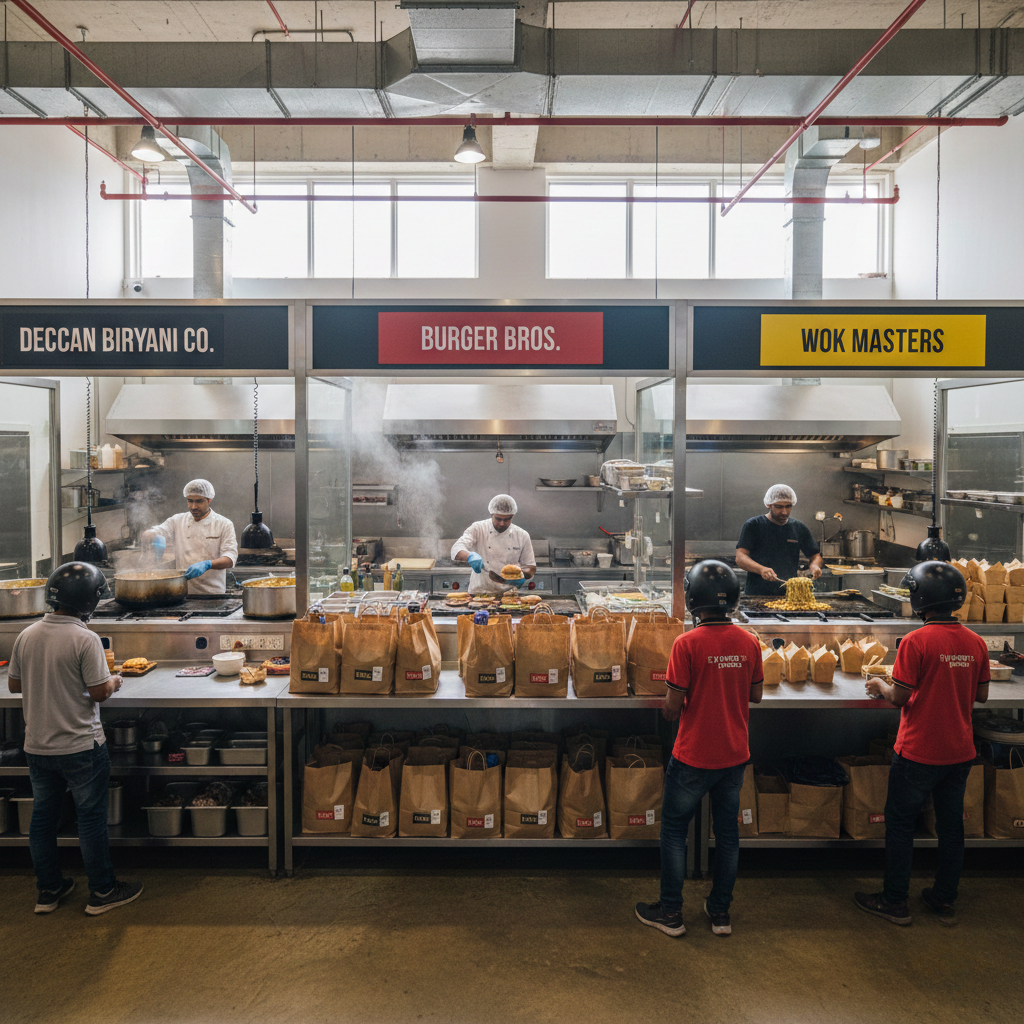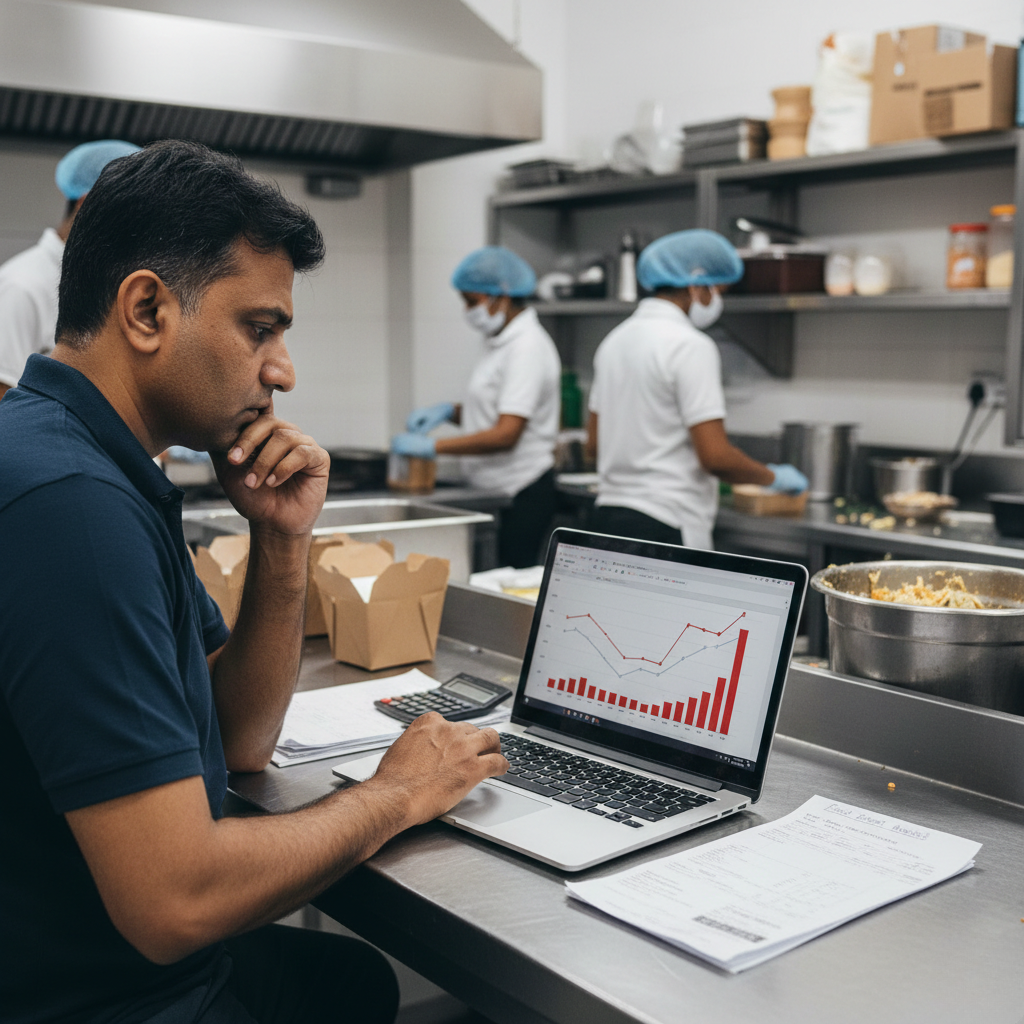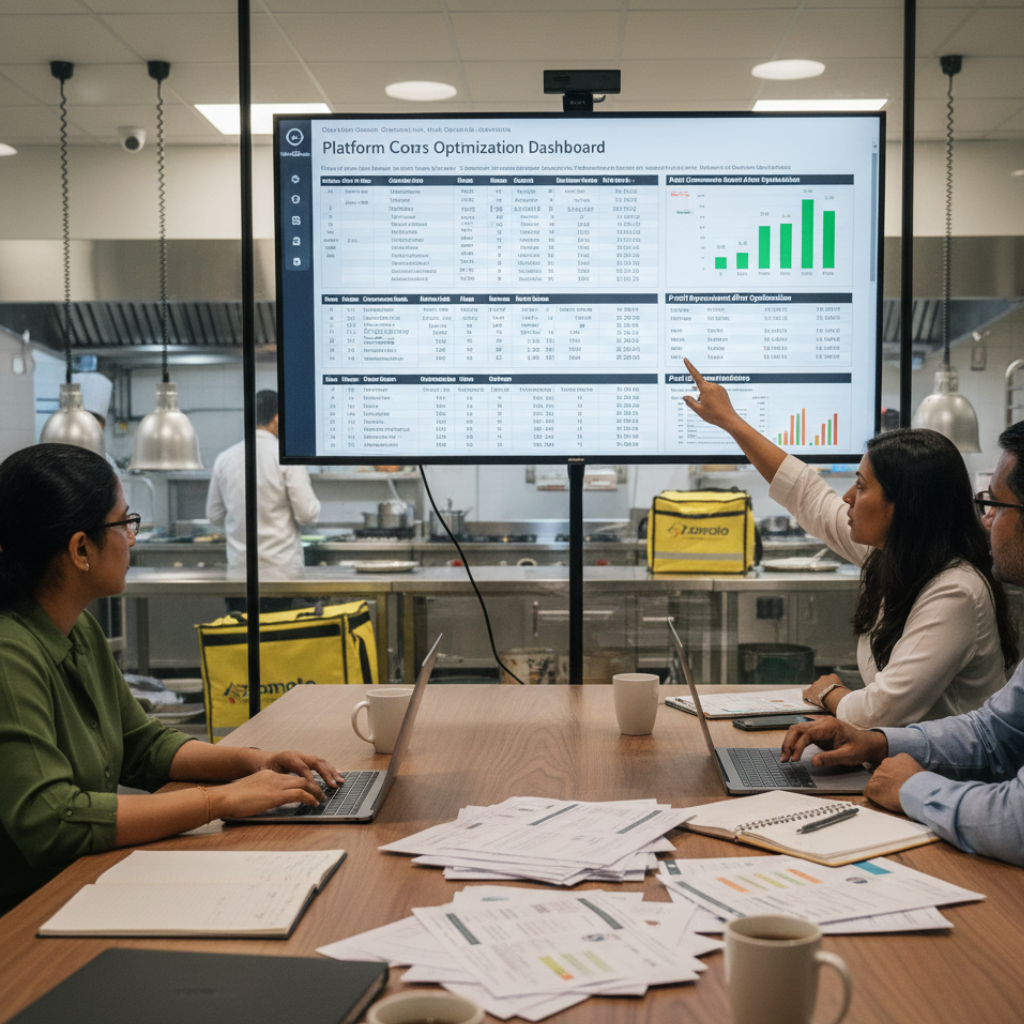
Swiggy & Zomato Commission Optimization are one of the biggest cost pressures for cloud kitchens in India. While these platforms provide demand and visibility, high commissions can severely impact margins if not managed strategically. This guide explains how cloud kitchens can optimize Swiggy and Zomato commissions without losing visibility, order volume, or ratings.
Why Commission Optimization Matters
This article is part of GrowKitchen’s cloud kitchen profitability and aggregator strategy series. If you are new to the business model, start with: Cloud Kitchen Business in India .
For platform-level policies and merchant tools, refer directly to Swiggy and Zomato.
Understanding Swiggy & Zomato Commissions
Swiggy and Zomato commissions typically range between 18% and 30% per order, depending on city, brand category, visibility programs, and negotiation terms.
For cloud kitchens operating on thin net margins, unmanaged commissions can quickly turn a profitable kitchen into a loss-making operation.
The Biggest Myth About Aggregator Commissions
Many cloud kitchen founders believe that higher commissions automatically guarantee higher visibility and more orders. In reality, visibility is driven by a combination of ratings, preparation time, menu performance, and customer behavior.
Kitchens that rely only on paid visibility often see temporary spikes in orders but poor long-term profitability.
3. Protect Ratings and Preparation Time
Ratings and preparation time are major organic visibility drivers. Even a 0.1 drop in rating can significantly reduce impressions.
Faster preparation times improve delivery experience and ranking, allowing kitchens to reduce commission-heavy boosts.
4. Use Paid Visibility Selectively
Paid visibility programs should be used strategically, not continuously. They are best suited for:
- New brand launches
- Low-demand time slots
- Testing new menu categories
Always track ROI at item level, not just overall order volume.
5. Improve AOV to Absorb Commission Impact
Higher Average Order Value (AOV) reduces the effective commission percentage. Packaging, delivery cost, and commission remain nearly constant per order.
Proven AOV strategies include: Cloud Kitchen AOV Improvement Strategies .
6. Negotiate Commissions With Data
High-performing kitchens with strong ratings and consistent volumes have negotiation leverage.
Use data such as monthly order count, customer repeat rate, and cancellation percentage to negotiate better commission slabs or reduced paid visibility dependency.
7. Build Partial Independence From Aggregators
While aggregators cannot be eliminated, reducing complete dependency is essential.
Direct ordering via WhatsApp, repeat customer flyers, or brand-led campaigns improves margins and long-term sustainability.
Common Commission Optimization Mistakes
Common mistakes include blindly increasing prices, turning off visibility overnight, or chasing order volume without contribution margin clarity.
Commission optimization must be gradual, data-driven, and reversible.
Key Metrics to Track
- Contribution margin per order
- Commission as percentage of net revenue
- Organic vs paid order ratio
- Rating and preparation time trends
Final Thoughts: Margin Protection Without Visibility Loss
Swiggy and Zomato commissions are unavoidable, but they do not have to destroy profitability. Cloud kitchens that treat commissions as a controllable variable rather than a fixed cost consistently outperform competitors.
Sustainable success lies in menu intelligence, operational discipline, and selective platform usage-not in discount-driven growth.
FAQs: Swiggy & Zomato Commission Optimization for Cloud Kitchens
What is Swiggy and Zomato commission for cloud kitchens in India?
Swiggy and Zomato commissions in India typically range from 18% to 30% per order, depending on the city, cuisine category, visibility programs, and negotiated terms.
Can cloud kitchens reduce Swiggy and Zomato commission?
Cloud kitchens cannot eliminate commissions, but they can reduce the impact through commission-aware pricing, higher AOV, selective paid visibility, and data-backed negotiation with aggregators.
Does paying higher commission improve visibility?
Higher commission alone does not guarantee visibility. Organic ranking on Swiggy and Zomato depends more on ratings, preparation time, menu performance, and customer retention.
Is it possible to stay profitable with aggregator commissions?
Yes, profitable cloud kitchens focus on contribution margin, menu engineering, and operational efficiency rather than relying solely on discounts or paid boosts.
What is the safest way to optimize commissions without losing orders?
The safest approach is gradual optimization: improve AOV, reduce low-performing items, track organic vs paid orders, and adjust visibility programs based on ROI.
- Cloud Kitchen Business in India
- Cloud Kitchen Setup Cost
- Why Cloud Kitchens Fail
- Cloud Kitchen Unit Economics
- Why Cloud Kitchens Fail in India