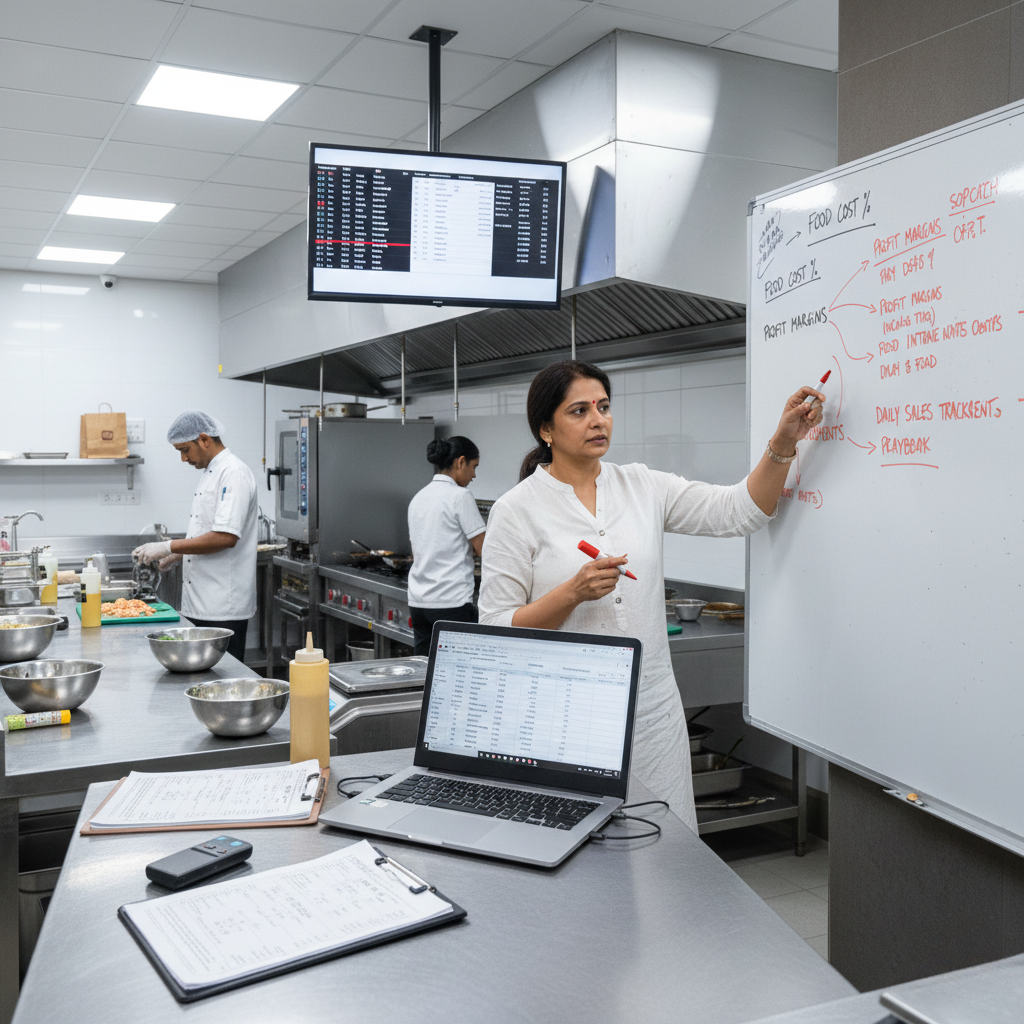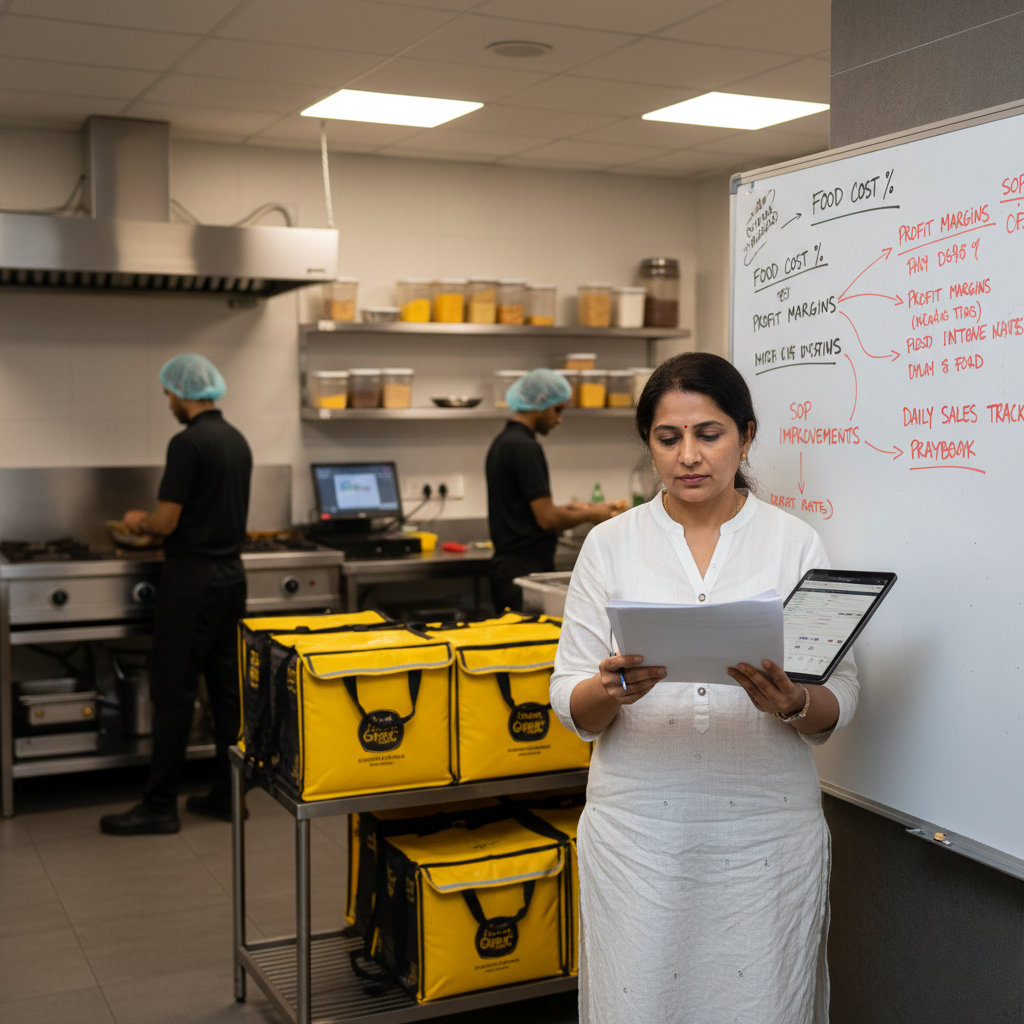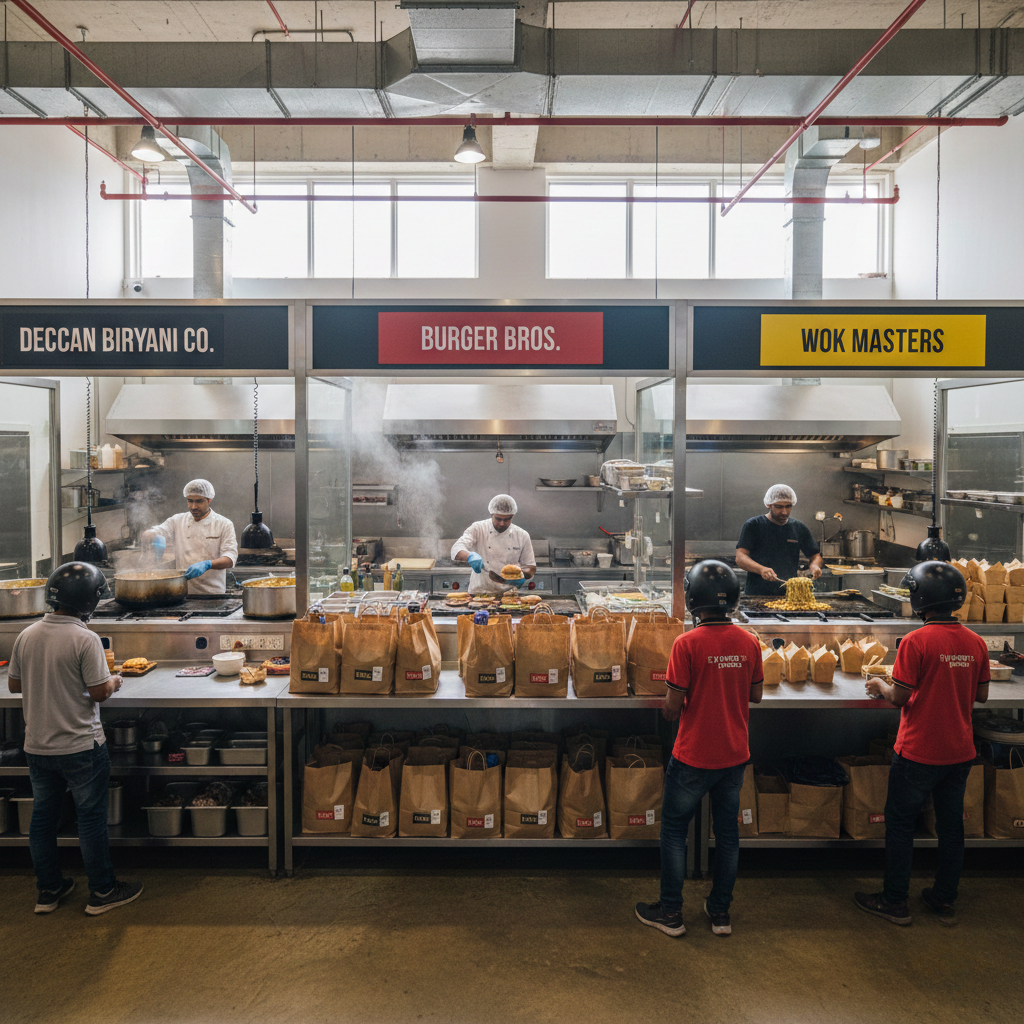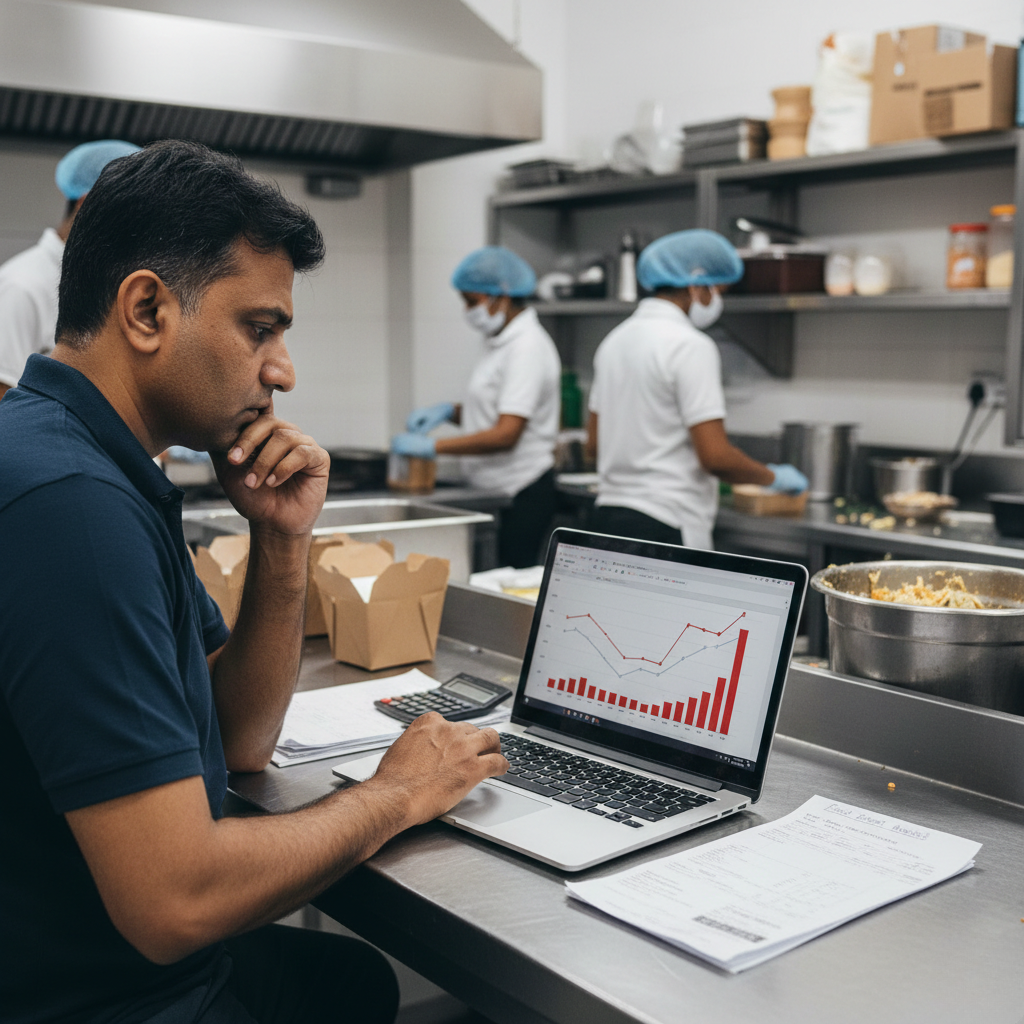
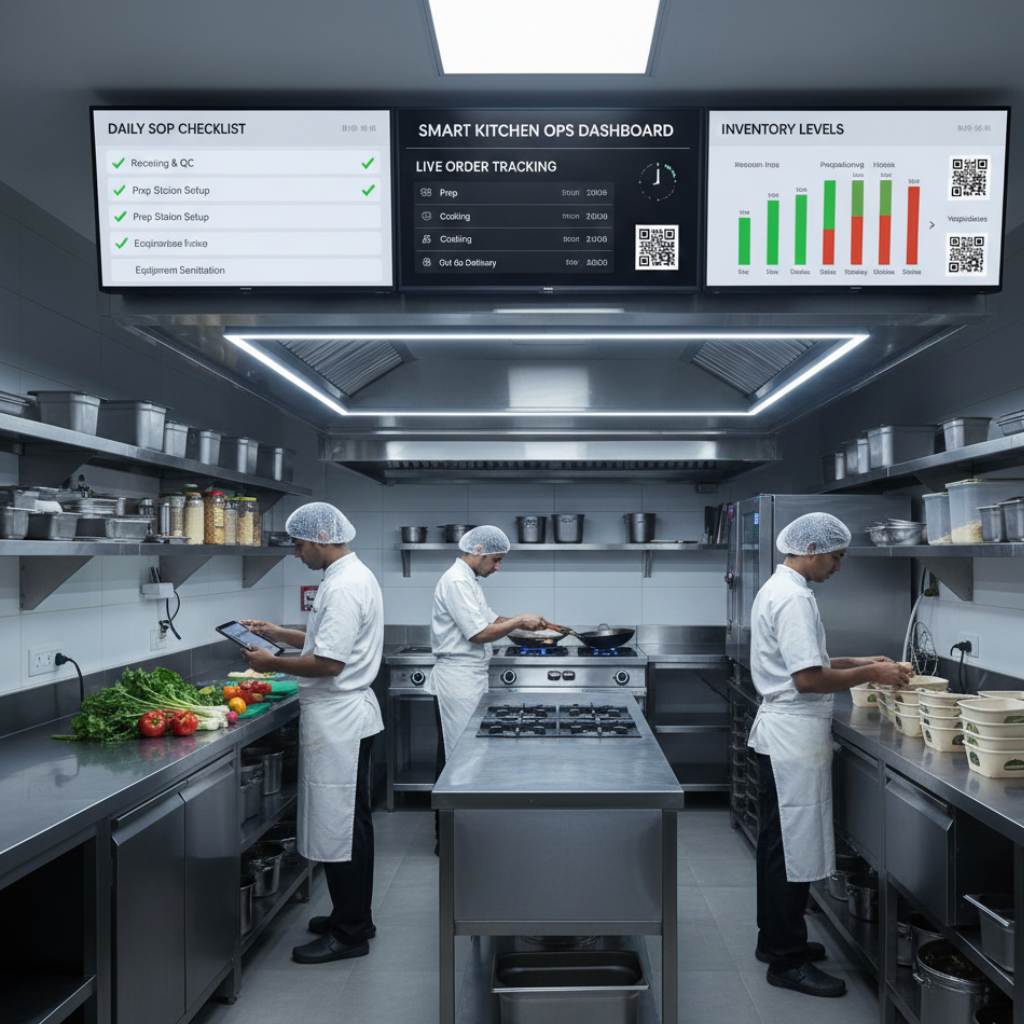
Cloud kitchen SOP checklist in India is the backbone of profitable, scalable food delivery businesses. While many cloud kitchens focus on marketing and recipes, the ones that succeed long-term rely on documented systems and operational discipline. This guide explains a complete cloud kitchen SOP checklist covering daily operations, cost control, quality consistency, and scalable growth.
Why SOPs Are Non-Negotiable for Cloud Kitchens
This article is part of GrowKitchen’s cloud kitchen operations and systems series. If you’re new to the business model, start with: Cloud Kitchen Business in India .
Cloud kitchens operating on Swiggy and Zomato must follow strict consistency standards to protect ratings and visibility.
What Is a Cloud Kitchen SOP Checklist?
A cloud kitchen SOP checklist is a documented set of Standard Operating Procedures that define how daily tasks are performed inside the kitchen. This includes food preparation, hygiene, inventory handling, order processing, manpower usage, and reporting.
SOPs reduce dependency on individual staff members and ensure consistent output regardless of who is working on a given day.

Why SOPs Are Critical for Cloud Kitchen Success
Cloud kitchens operate on thin margins, high order volumes, and aggregator-driven performance metrics. Any inconsistency directly affects ratings, costs, and visibility.
SOPs bring predictability to operations by defining how tasks must be done, not how individuals prefer to do them.
Daily Operations SOP Checklist
- Kitchen opening and closing procedures
- Equipment checks and cleaning schedule
- Daily sales and order reconciliation
- Preparation and cooking sequence
- Packaging and dispatch protocol
Daily SOPs ensure smooth execution during peak hours and reduce operational chaos.

Food Quality & Recipe SOPs
Recipe SOPs define ingredient quantities, cooking time, plating standards, and portion sizes.
Without recipe SOPs, food cost fluctuates and customer experience becomes inconsistent. Quality SOPs directly protect ratings and repeat orders.
Hygiene & Food Safety SOPs
Hygiene SOPs are mandatory for compliance and long-term platform approval. These include personal hygiene rules, cleaning schedules, and waste disposal processes.
All cloud kitchens must comply with FSSAI food safety guidelines.
Inventory Management SOPs
Inventory SOPs define how raw materials, semi-prepared items, and packaging are tracked. Daily opening stock, consumption, wastage, and closing stock must be recorded.
Poor inventory SOPs lead to silent profit leakage: Cloud Kitchen Inventory Management in India .
Manpower & Shift SOPs
Manpower SOPs define staff roles, shift timings, and task ownership. Cross-training staff reduces dependency on individual employees.
Efficient manpower planning protects margins: Cloud Kitchen Manpower Planning in India .
Daily Reporting & Review SOPs
Reporting SOPs ensure founders review daily sales, costs, and issues consistently. This prevents month-end surprises.
Daily numbers drive control: Cloud Kitchen Daily Sales Tracker .
How SOPs Enable Cloud Kitchen Scaling
SOPs make replication possible. Without systems, expanding to multiple brands or locations leads to inconsistency and losses.
Standardized SOPs allow faster onboarding, predictable costs, and uniform quality at scale.
Final Thoughts: SOPs Are the Real Growth Engine
Cloud kitchen SOP checklists in India are not paperwork-they are survival tools.
Kitchens that document, train, and enforce SOPs consistently run smoother operations, protect margins, and scale without chaos.
FAQs: Cloud Kitchen SOP Checklist in India
What is an SOP in a cloud kitchen?
An SOP is a documented process that defines how tasks like cooking, cleaning, inventory handling, and reporting are performed.
Why are SOPs important for cloud kitchens?
SOPs ensure consistency, reduce errors, control costs, and make scaling possible without losing quality.
Do small cloud kitchens need SOPs?
Yes, SOPs are even more important for small kitchens because margins are tight and errors are costly.
How often should SOPs be reviewed?
SOPs should be reviewed every 3–6 months or whenever menus, staff, or platforms change.
Can SOPs reduce manpower cost?
Yes, SOPs reduce dependency on skilled staff, improve productivity, and lower overall manpower cost.