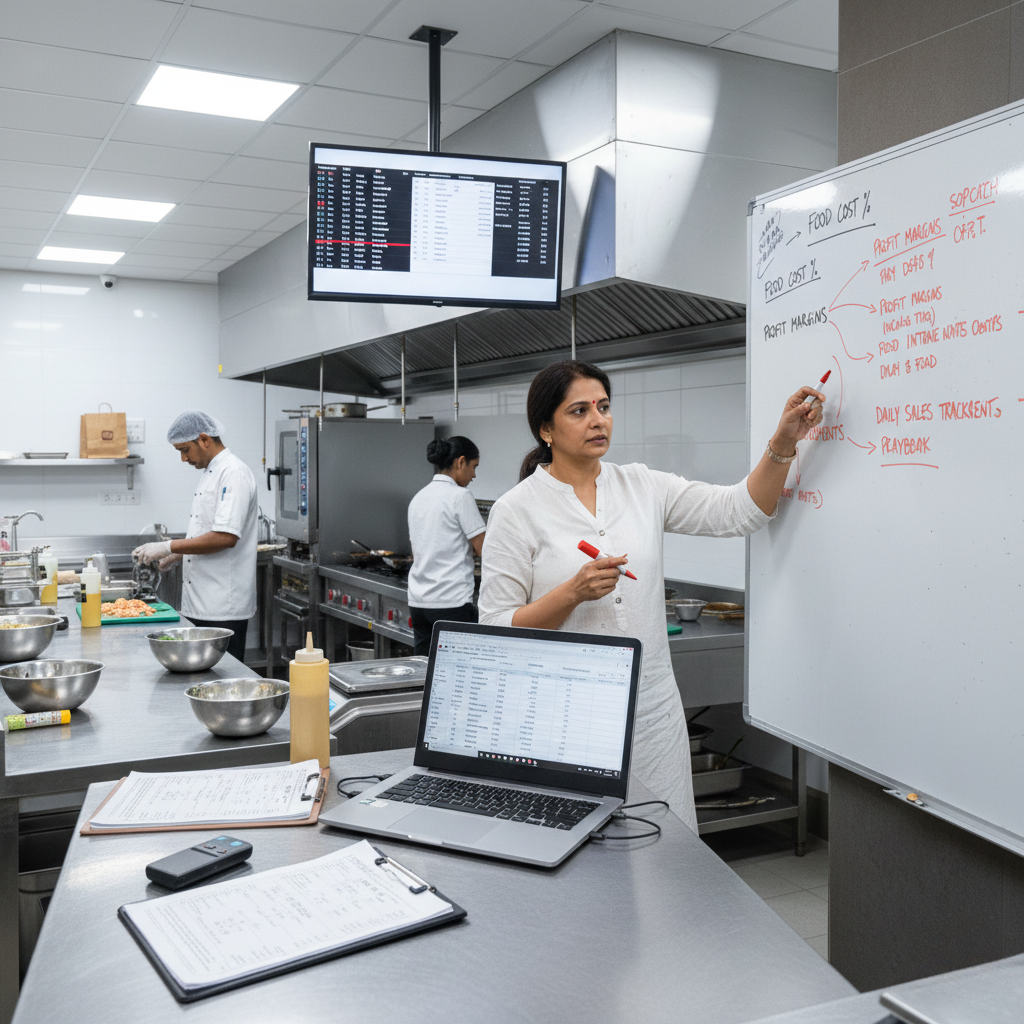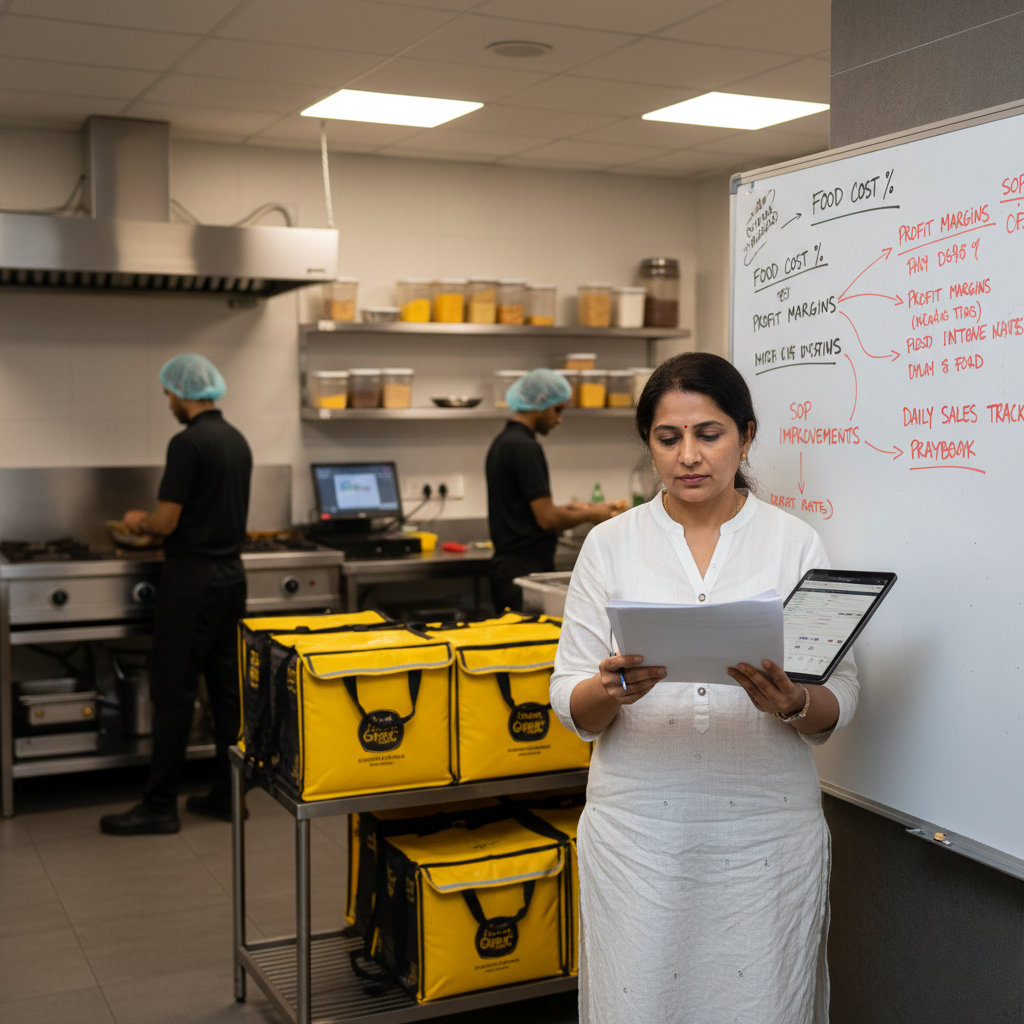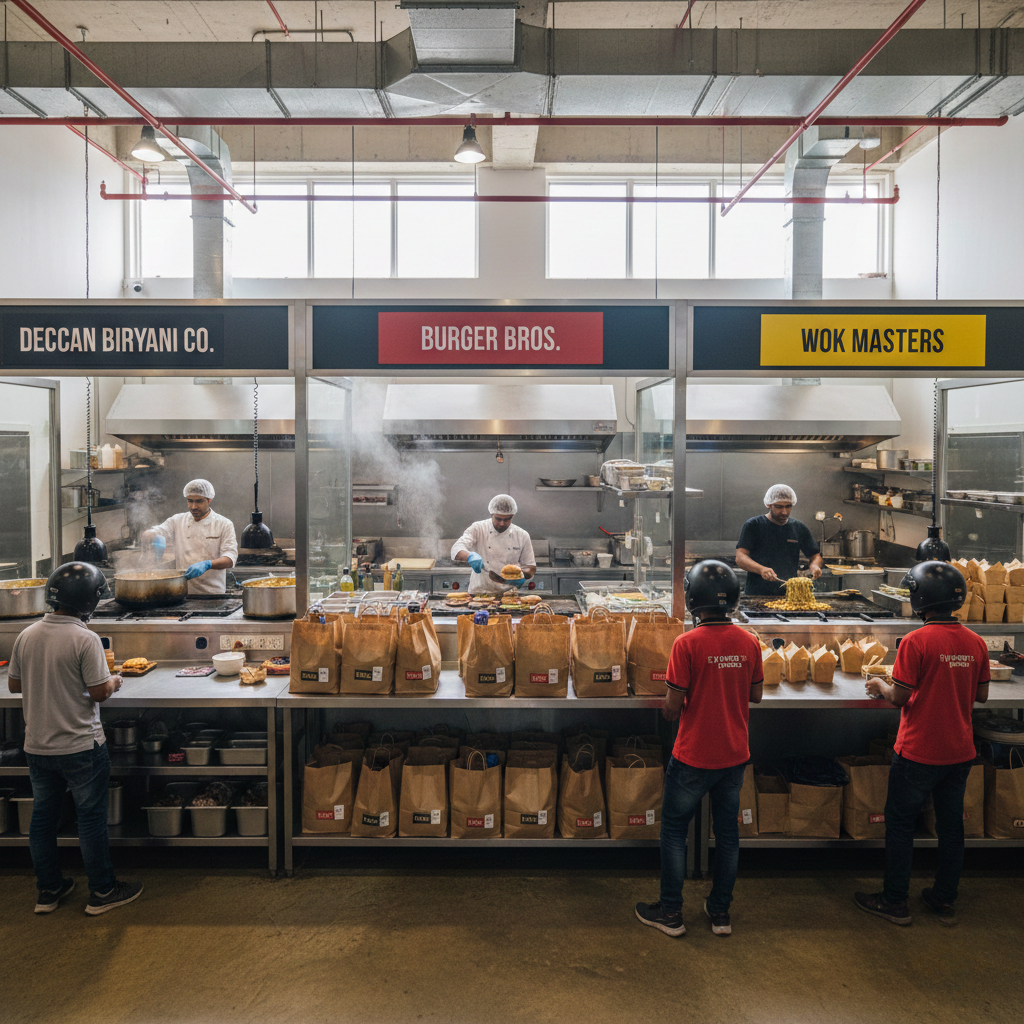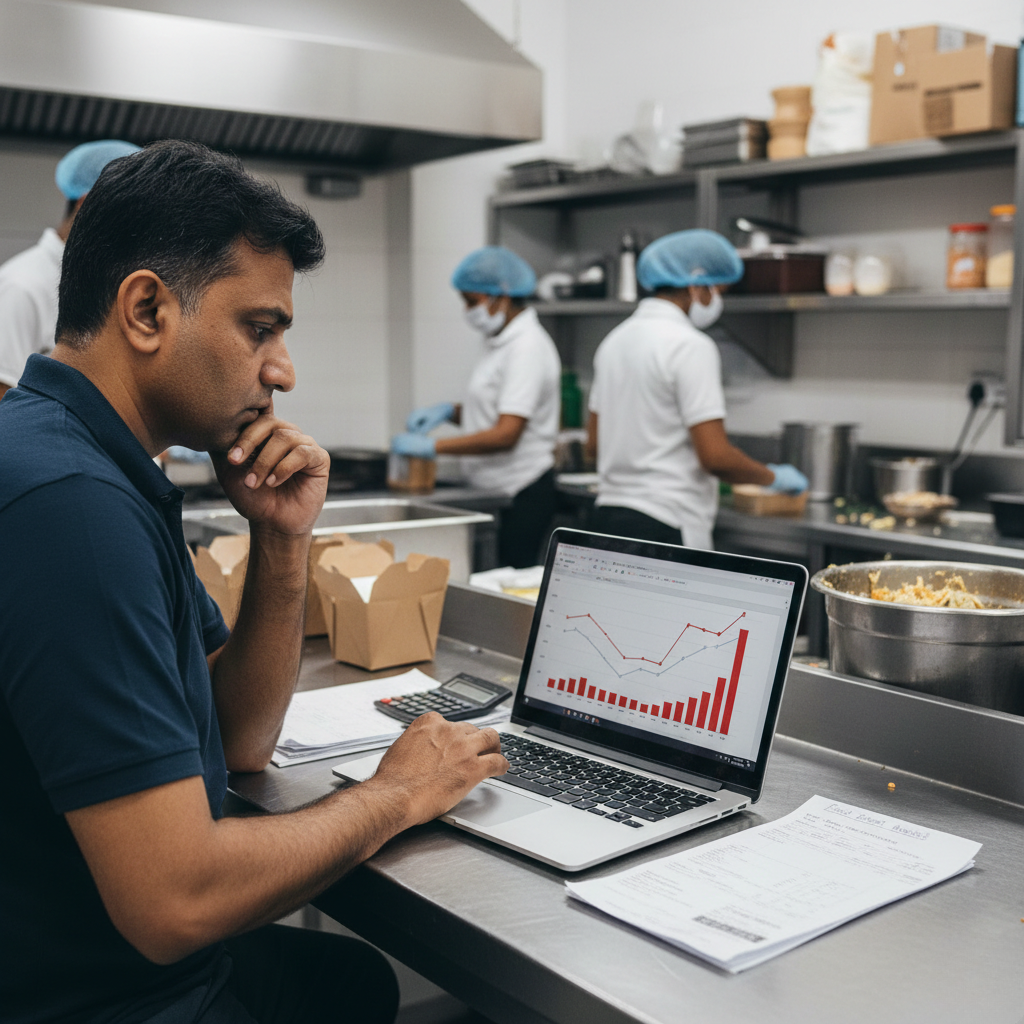
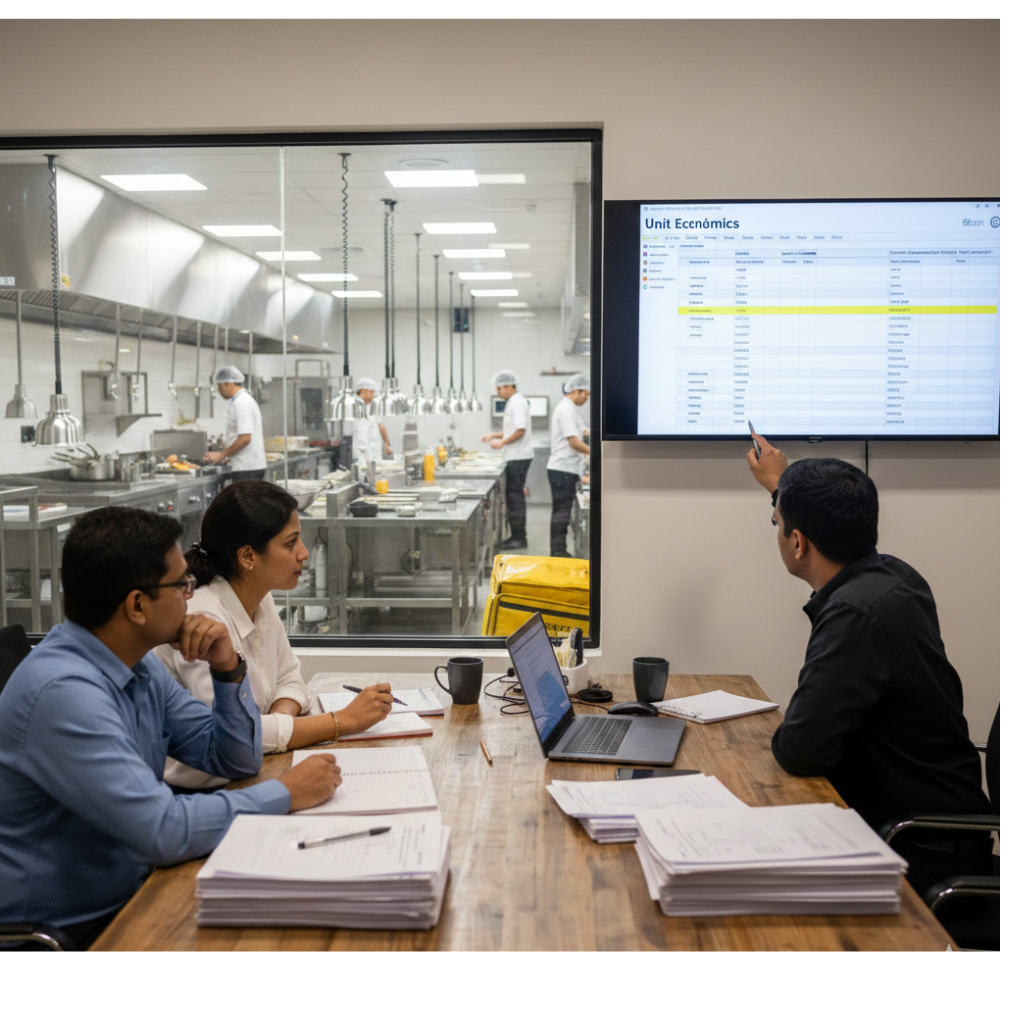
Cloud kitchen unit economics in India determines whether a brand survives, scales, or silently fails. While many founders focus on sales growth and visibility, long-term success depends on understanding the numbers behind every order. This guide breaks down cloud kitchen unit economics, explains key cost components, and shows how profitable kitchens make data-driven decisions.
Why Unit Economics Is the Backbone of Cloud Kitchens
This article is part of GrowKitchen’s cloud kitchen profitability and finance series. If you are new to the model, start with: Cloud Kitchen Business in India .
Most cloud kitchens in India operate through Swiggy and Zomato, making unit economics even more critical due to high commissions.
What Are Cloud Kitchen Unit Economics?
Cloud kitchen unit economics refers to the financial performance of a single order. It answers a simple but powerful question: Do you make money on every order?
Instead of looking only at monthly revenue, unit economics breaks costs down per order, revealing whether growth is profitable or misleading.
Core Components of Cloud Kitchen Unit Economics
Every cloud kitchen order in India has the following cost components:
- Food cost (ingredients & preparation)
- Packaging cost
- Aggregator commission
- Payment gateway and platform fees
- Manpower allocation per order
- Overheads (rent, utilities, software)
Profit exists only after all these costs are accounted for.
Food Cost: The Foundation of Unit Economics
Food cost is typically the largest variable expense. In a healthy cloud kitchen, food cost should remain within 30-35% of order value.
Poor recipe control, inconsistent portioning, and weak inventory systems push food cost higher: Cloud Kitchen Inventory Management .
Aggregator Commission Impact
Swiggy and Zomato commissions typically range between 18% and 30% per order. This single factor often decides profit or loss.
Kitchens that do not price menus with commission in mind often operate at negative contribution margins. Learn more here: Aggregator Commission Impact in India .
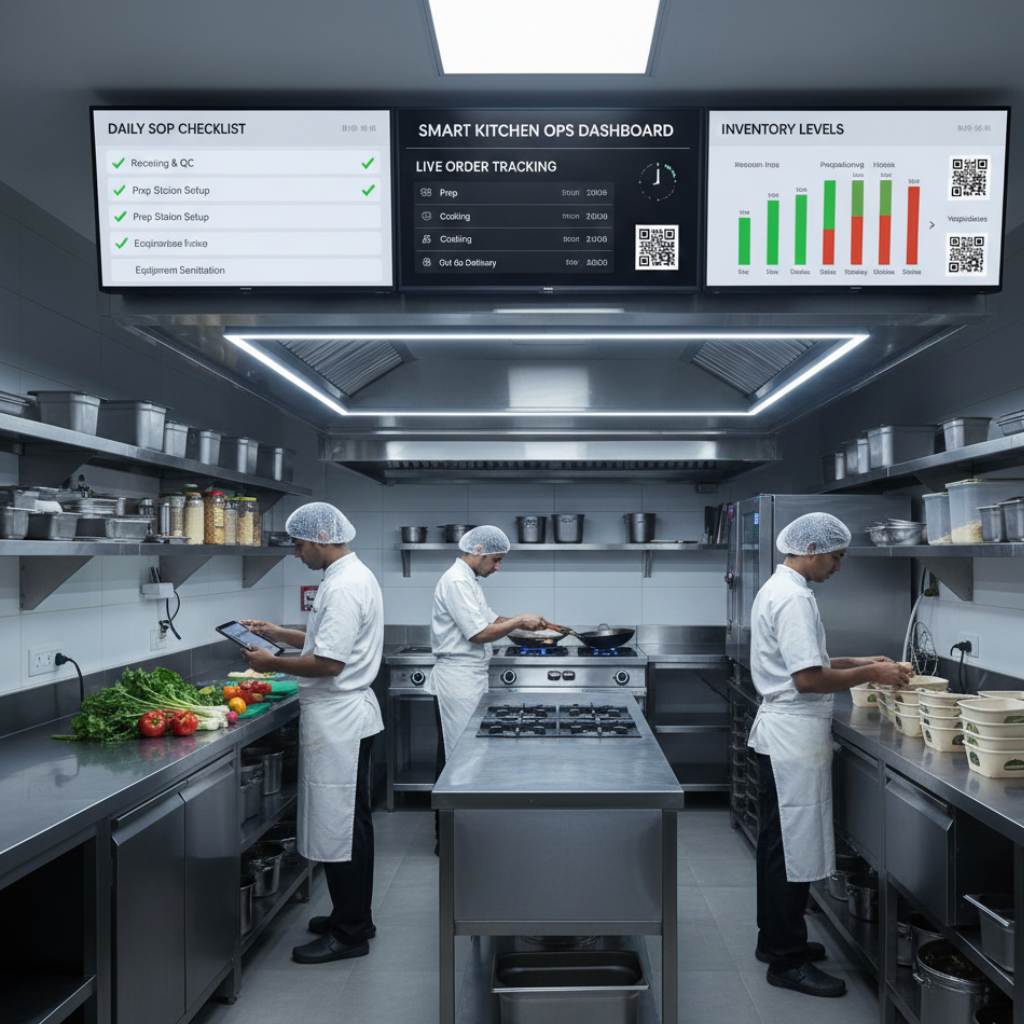
Why AOV Plays a Critical Role
Average Order Value (AOV) directly affects unit economics. Higher AOV spreads fixed costs like packaging and commission over a larger order value.
Kitchens that focus only on order volume often miss this leverage point: Cloud Kitchen AOV Improvement Strategies .
Manpower Cost Allocation Per Order
Manpower is a semi-fixed cost. When order volume drops, manpower cost per order increases sharply.
Efficient manpower planning protects unit economics: Cloud Kitchen Manpower Planning in India .
Contribution Margin: The Most Important Number
Contribution margin is the money left after variable costs are deducted from revenue. This margin pays for fixed costs and profit.
If contribution margin is negative, scaling only accelerates losses.
Tracking Unit Economics Daily
Profitable cloud kitchens track unit economics daily, not just monthly. This allows quick correction of pricing, menu mix, or promotions.
Learn how daily tracking works: Cloud Kitchen Daily Sales Tracker .
How Unit Economics Decides Scaling Success
Kitchens with strong unit economics can confidently expand to new locations or brands. Weak unit economics makes scaling dangerous.
Scaling should only begin after consistent contribution margins are achieved.
Final Thoughts: Numbers Decide Everything
Cloud kitchen unit economics in India is not a finance concept-it is a survival framework.
Founders who understand per-order profitability build scalable, resilient food brands, while others struggle despite high sales.
FAQs: Cloud Kitchen Unit Economics in India
What is unit economics in a cloud kitchen?
Unit economics measures profit or loss on a per-order basis after accounting for all variable and fixed costs.
Why is unit economics important for cloud kitchens?
It shows whether growth is profitable and prevents founders from scaling losses.
What is a good contribution margin for cloud kitchens?
A healthy contribution margin is typically 20-30% before fixed costs, depending on cuisine and city.
Can cloud kitchens be profitable with high commissions?
Yes, with strong pricing, AOV optimization, and cost control, kitchens can remain profitable despite high aggregator commissions.
How often should unit economics be reviewed?
Unit economics should be reviewed daily and analyzed weekly to guide decisions.
- Aggregator Commission Impact
- Inventory Management
- Food Cost Percentage
- Menu Engineering
- Scaling Framework