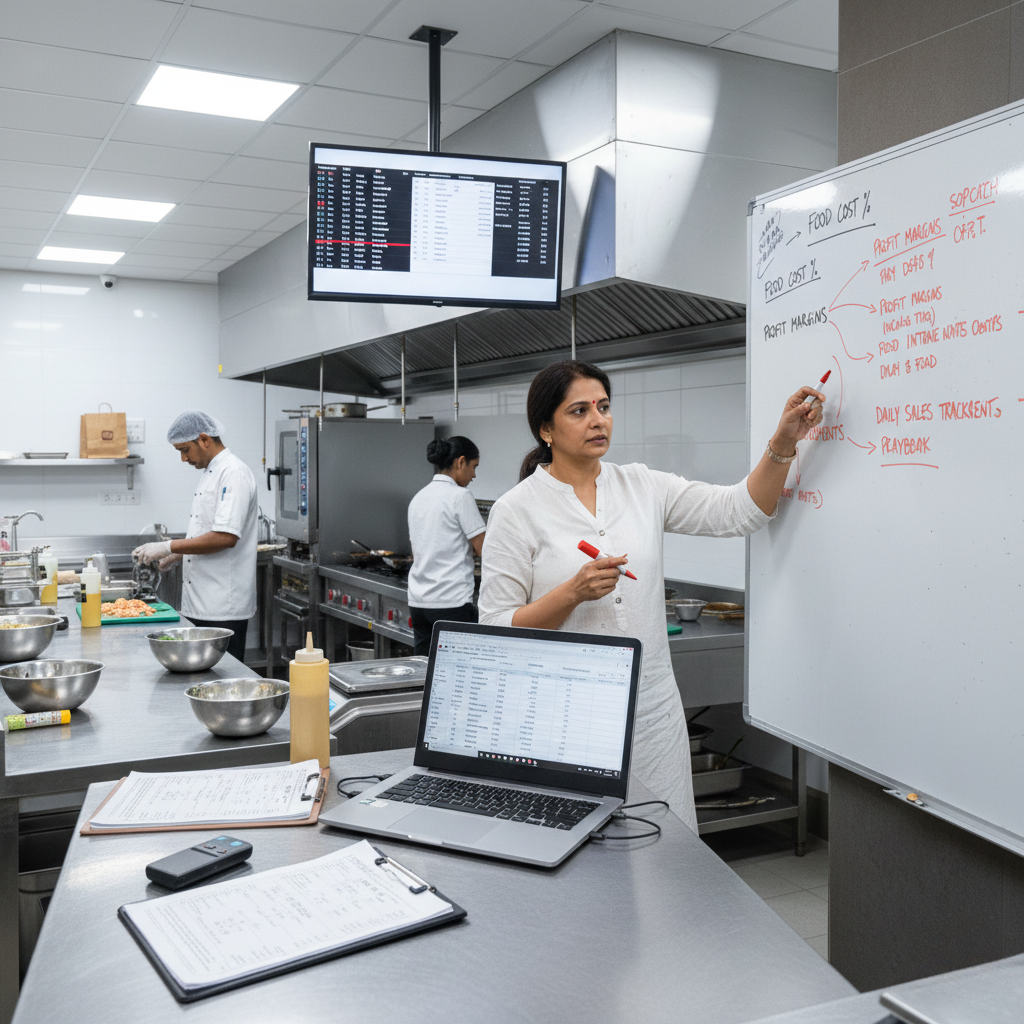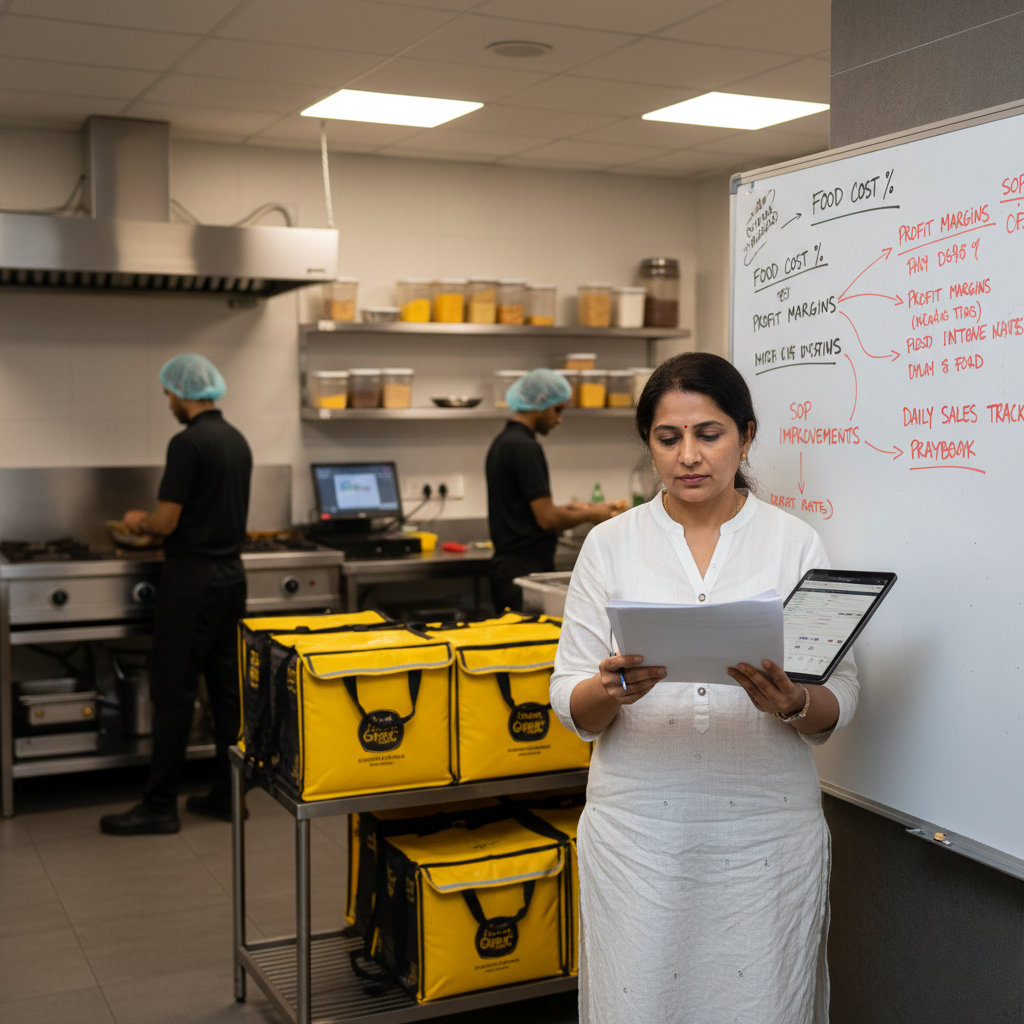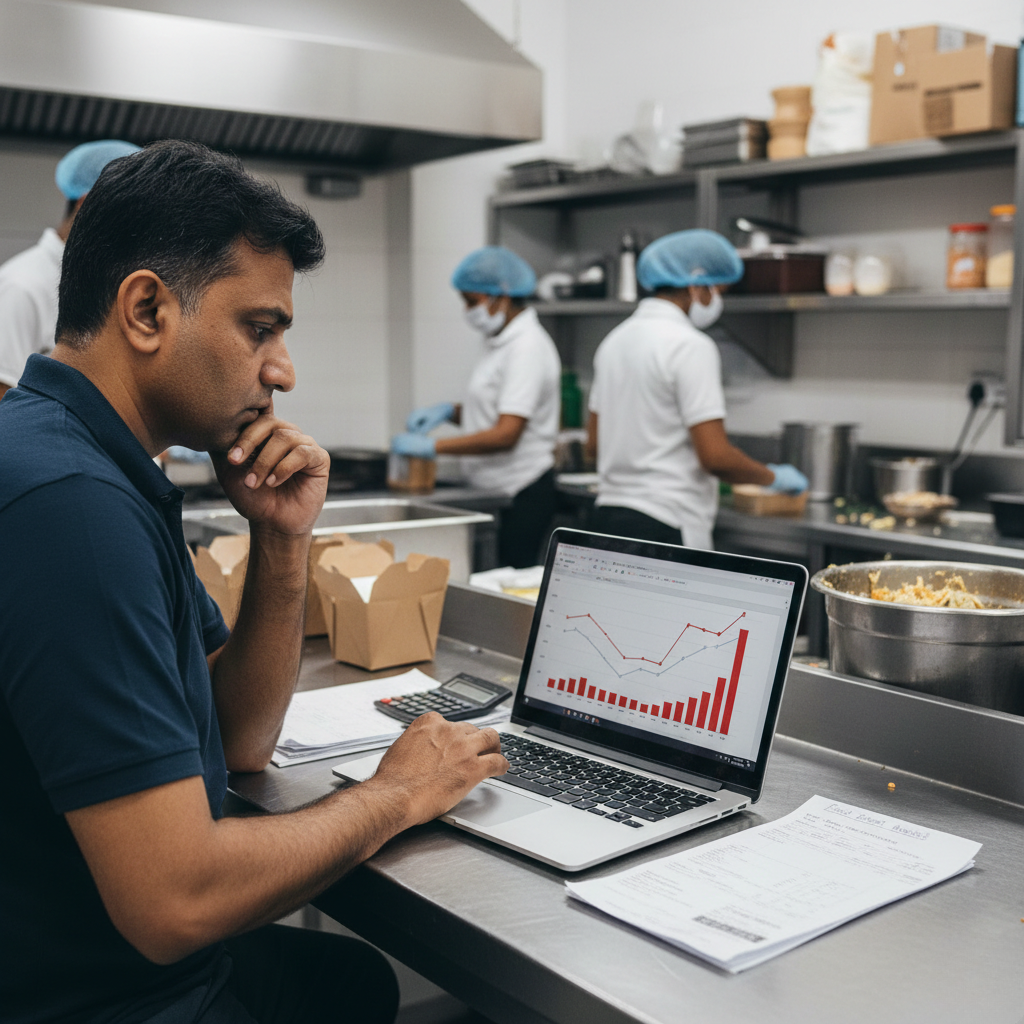
Many cloud kitchens in India start strong but struggle when they try to scale. Costs rise faster than revenue, quality drops, operations break down, and customer ratings fall. This is why building a scalable cloud kitchen model in India is far more important than simply launching a cloud kitchen.
Scalability means your business can grow in revenue, locations, and order volume without proportionally increasing costs or complexity. This article explains how to design a cloud kitchen model that scales sustainably.
What Does Scalability Mean in a Cloud Kitchen Business?
A scalable cloud kitchen model allows you to:
- Add new brands or cuisines without major cost increases
- Expand to new locations with predictable performance
- Maintain food quality and delivery speed at higher volumes
- Improve margins as revenue grows
Scalability is built into the system from day one-it cannot be fixed later.
Why Most Cloud Kitchens Fail to Scale in India
Many kitchens grow revenue but still fail due to weak foundations. Common mistakes are explained in detail in Cloud Kitchen Business in India and why cloud kitchens fail in India.
Key scalability blockers include:
- High food cost and wastage
- No standard operating procedures (SOPs)
- Over-dependence on discounts
- Inconsistent menus across locations
Core Scalable Cloud Kitchen Models in India
1. Single Kitchen, Multi-Brand Model
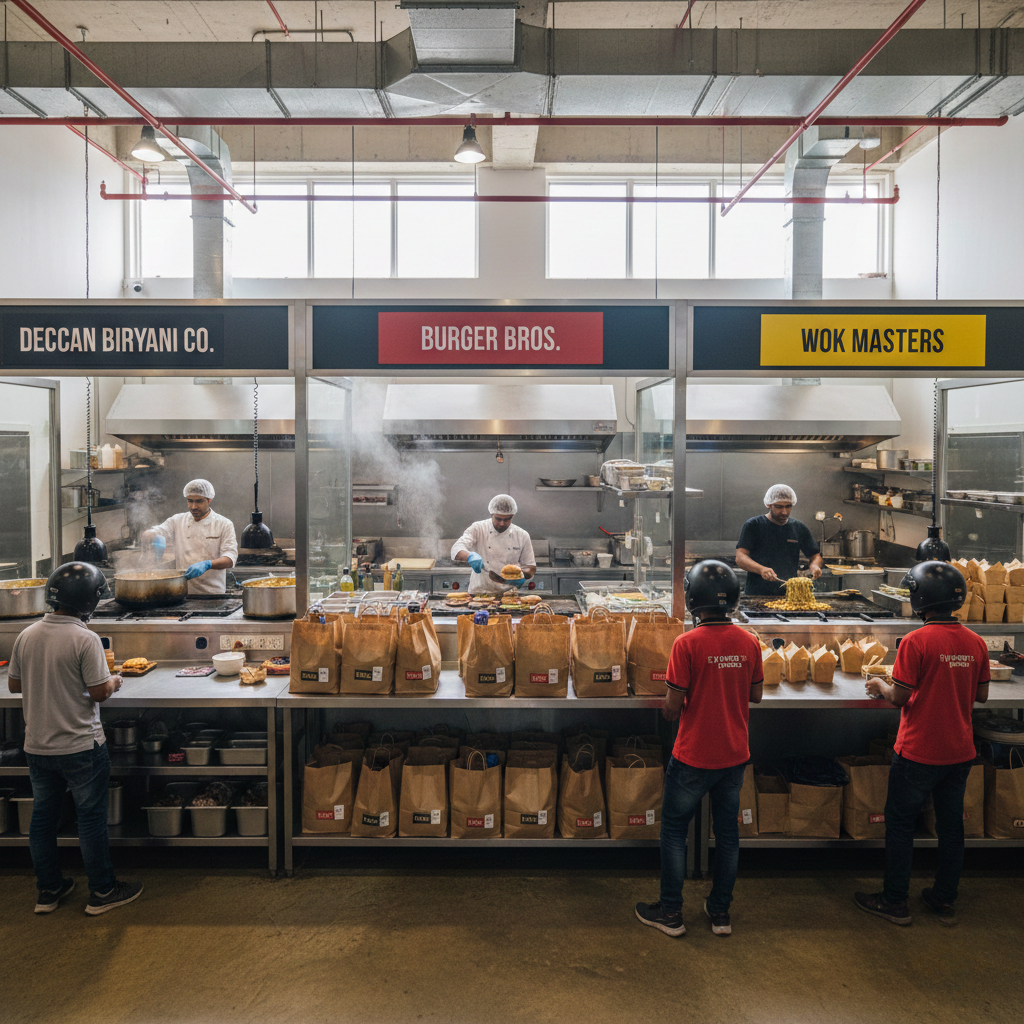
This is the most popular scalable model in India. Multiple virtual brands operate from the same kitchen using shared infrastructure.
- Lower fixed costs
- Better inventory utilization
- Higher revenue per square foot
This model works best when menus are engineered correctly. Learn more in cloud kitchen menu engineering in India.
2. Hub-and-Spoke Expansion Model
In this model:
- A central kitchen (hub) handles prep
- Multiple satellite kitchens (spokes) handle finishing & dispatch
This reduces duplication, improves quality control, and simplifies training.
3. Franchise-Ready Cloud Kitchen Model
A scalable cloud kitchen can also be franchised if:
- Recipes are standardized
- SOPs are documented
- Brand positioning is clear
Without systems, franchising leads to brand dilution.
Cost Structure That Supports Scalability
A scalable model requires disciplined cost control from day one.
- Food cost: 25%–30%
- Aggregator commission: 18%–25%
- Staff & rent: 15%–20%
- Packaging & marketing: 5%–8%
If food cost is not controlled early, scaling multiplies losses. Understand benchmarks in cloud kitchen food cost percentage in India.
Menu Design for Scalable Growth
Menus must be designed for replication, not creativity. Scalable menus:
- Use common base ingredients
- Have limited SKUs
- Maintain consistent taste across locations
Overloaded menus slow kitchens and break scalability.
Technology & SOPs: The Backbone of Scaling
Scaling without systems leads to chaos. You need:
- Inventory management software
- Centralized recipe documentation
- Kitchen SOPs for every process
- Performance dashboards
Operational discipline is explained in cloud kitchen operations management.
Marketing That Scales Without Burning Cash
Discount-heavy growth is not scalable. Instead, focus on:
- Brand positioning
- High-margin bestsellers
- Repeat customer retention
According to Restaurant India , strong brands outperform discount-led kitchens in long-term profitability.
Breakeven & Scaling Timeline
A scalable cloud kitchen usually:
- Breaks even in 6–12 months
- Adds new brands after stability
- Expands locations after process maturity
Rushing scale before breakeven is a common mistake. Learn more in cloud kitchen breakeven period in India.
Should You Take Expert Help for Scaling?
Scaling multiplies both profits and mistakes. Professional guidance helps build systems early and avoid costly errors.
Learn more in cloud kitchen consulting services in India.
Conclusion
A scalable cloud kitchen model in India is not about opening multiple locations quickly. It’s about building systems, discipline, and unit economics that allow growth without breaking operations or margins.
Start small, standardize everything, control costs, and scale only when the foundation is strong.
Frequently Asked Questions (FAQs)
What is the most scalable cloud kitchen model in India?
The multi-brand single-kitchen model is currently the most scalable and cost-efficient.
How many brands can one cloud kitchen run?
Typically 2–5 brands, depending on kitchen size, menu overlap, and operational capacity.
Is franchising a cloud kitchen scalable?
Yes, but only if recipes, SOPs, and brand standards are fully standardized.
What stops cloud kitchens from scaling?
High food cost, lack of SOPs, poor menu design, and over-reliance on discounts.
When should a cloud kitchen start scaling?
Only after achieving operational stability and consistent profitability at one location.
People Also Read
- Cloud Kitchen Business Model in India: Types & Examples
- Cloud Kitchen Profit Margin in India: Real Numbers Explained
- Why Cloud Kitchens Fail in India: 15 Real Reasons
- Cloud Kitchen Breakeven Period in India: How Long It Takes