
Cloud Kitchen as a Service in India | GrowKitchen CKaaS
Cost Comparison Guide

7 Powerful CKaaS vs Food Franchise Cost Differences Which Model Truly Protects Your Capital?

CKaaS vs Food Franchise Cost is not just a setup-cost question. Most food founders begin with the franchise dream: recognized brand, standard operating playbook, and marketing support. But that usually comes with heavy franchise fees, royalty cuts, interior compliance, and lower operational flexibility.

CKaaS vs Food Franchise Cost becomes a smarter comparison when you look at delivery-first infrastructure, contribution margin control, multi-brand stacking, and a scalable model built around measurable unit economics.

  • Lower upfront capital exposure
  • No royalty deductions eating into margin
  • Multi-brand revenue model under one kitchen
  • Scalable playbook across cities
  • Dashboard-driven performance visibility
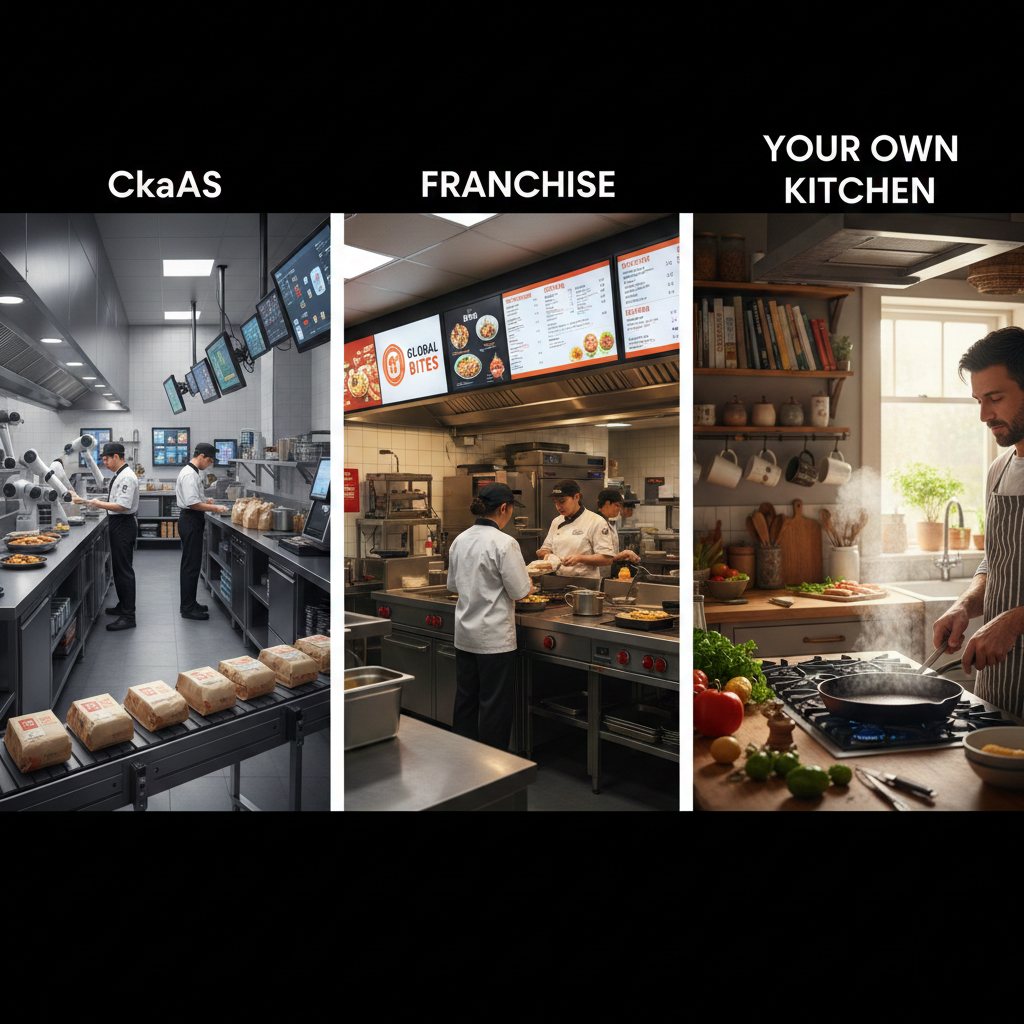
CKaaS vs Food Franchise Cost comparison for food business founders
Asset-Light • Delivery-First • Scalable
Upfront Investment

CKaaS vs Food Franchise Cost in Upfront Capital Required

The first major CKaaS vs Food Franchise Cost difference appears in setup capital. Franchises often demand high entry fees, design compliance, and outlet-level capex. CKaaS usually lowers entry risk through lean, delivery-first infrastructure.

Food Franchise Cost Structure

  • Franchise Fee: ₹8L – ₹25L
  • Interiors & Design: ₹15L – ₹40L
  • Equipment: ₹10L – ₹25L
  • Security Deposit & Setup: ₹5L+
Total: ₹40L – ₹1.2Cr+

CKaaS Cost Structure

  • Lean delivery-first kitchen
  • No heavy interiors
  • Shared multi-brand infrastructure
  • Optimized equipment investment
Total: ₹8L – ₹20L
Monthly Burn Structure

CKaaS vs Food Franchise Cost in Monthly Burn and Profit Impact

Upfront investment is only part of the story. The deeper CKaaS vs Food Franchise Cost comparison comes from monthly burn structure, royalty deductions, marketing commitments, and flexibility in how you protect margin.

Food Franchise Monthly Cost

  • Royalty deduction: 5%–8% of revenue
  • Marketing fund contribution: 2%–5%
  • Prime location rental pressure
  • Central vendor pricing premiums
  • Limited flexibility in pricing strategy
Even before food cost is calculated, 8–13% of revenue may be deducted. Margin flexibility stays restricted.

CKaaS Monthly Cost Structure

  • No royalty deductions
  • No forced marketing percentage
  • Delivery-first lower-rental locations
  • SKU-level food cost monitoring
  • AOV and margin optimization every week
More revenue is retained. More execution flexibility is preserved. Monthly decisions stay data-driven instead of contract-driven.
Scaling Logic

CKaaS vs Food Franchise Cost in Expansion and Scalability

A serious CKaaS vs Food Franchise Cost comparison must include how scale happens. Franchises often repeat heavy capex per outlet. CKaaS scales through brand stacking, higher kitchen utilization, and a replicable operating system.

Food Franchise Scalability

  • Each new outlet needs near-same capex again
  • Prime location dependency increases rent pressure
  • Territory rules and approvals slow expansion
  • Limited flexibility in pricing and menu engineering
  • Scaling increases management complexity
Result: Growth is possible, but capital exposure rises at every step.

CKaaS Scalability

  • Multi-brand stacking under one kitchen infrastructure
  • Shared manpower and inventory improve margins
  • Expansion driven by demand density, not décor burden
  • Central SOP library improves replication speed
  • Weekly KPI dashboard improves performance control
Result: Scale happens with a playbook, not with guesswork.
Risk Comparison

CKaaS vs Food Franchise Cost When Things Don’t Go as Planned

Risk is not just about whether it works. A real CKaaS vs Food Franchise Cost analysis asks what happens when order volume drops, margins shrink, or expansion slows down.

Food Franchise Risk

Heavy sunk cost in interiors and brand compliance
Royalty and marketing deductions reduce margin flexibility
Prime location rent remains fixed even if orders drop
Exit is difficult and resale value of interiors is low

CKaaS Risk Mitigation

Lower upfront exposure means lower downside pressure
Multi-brand diversification reduces single-brand dependency
Data-driven actions improve AOV, pricing, menu engineering, and refunds
SOP and dashboard systems stabilize execution and decisions
Start Here

Want a Real CKaaS vs Food Franchise Cost Model for Your City? Get a Practical Founder-Level Breakdown

Share your target city, cuisine, budget range, and monthly goal. We will map CKaaS vs Food Franchise Cost across setup cost, monthly burn, expected contribution margin, and the fastest path to a scalable food infrastructure model.

Limited consultation slots per cycle to protect execution quality.

Get a Custom Cloud Kitchen Plan for Your Brand

Not sure how to start or scale your cloud kitchen in India? Share a few details about your brand and we’ll send you a personalised setup and growth roadmap.

  • City-wise kitchen and location suggestions
  • Approximate investment & profit estimates
  • Menu and positioning recommendations
  • Whether CKaaS or own kitchen suits you better

Fill the form and our team will get in touch within one working day.