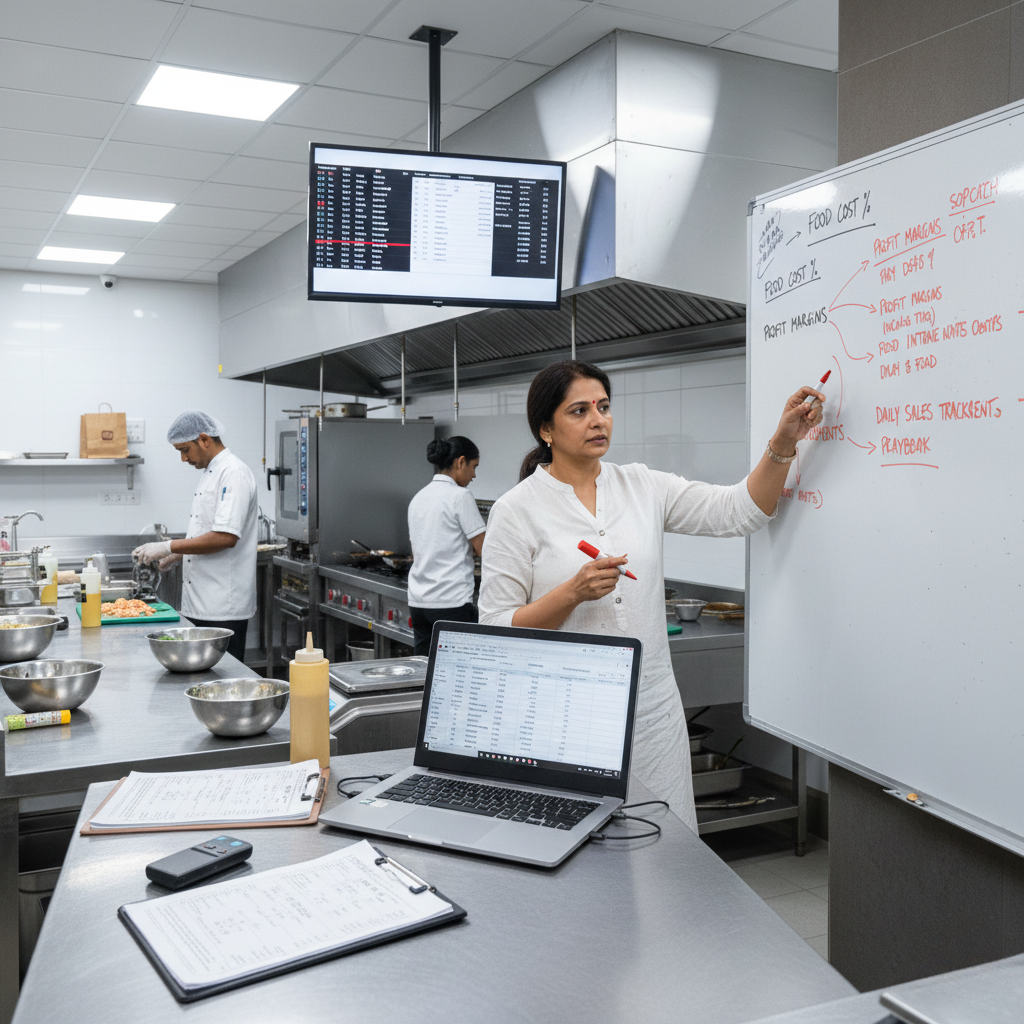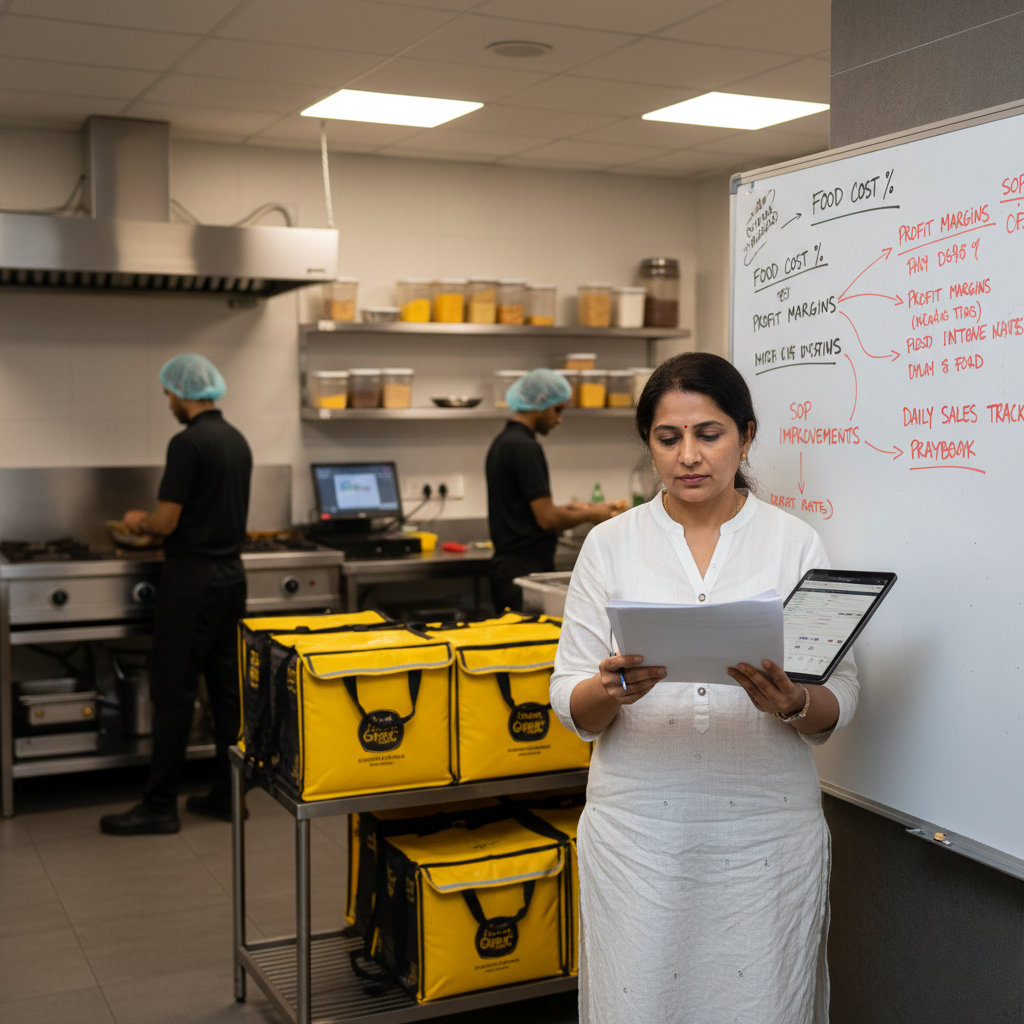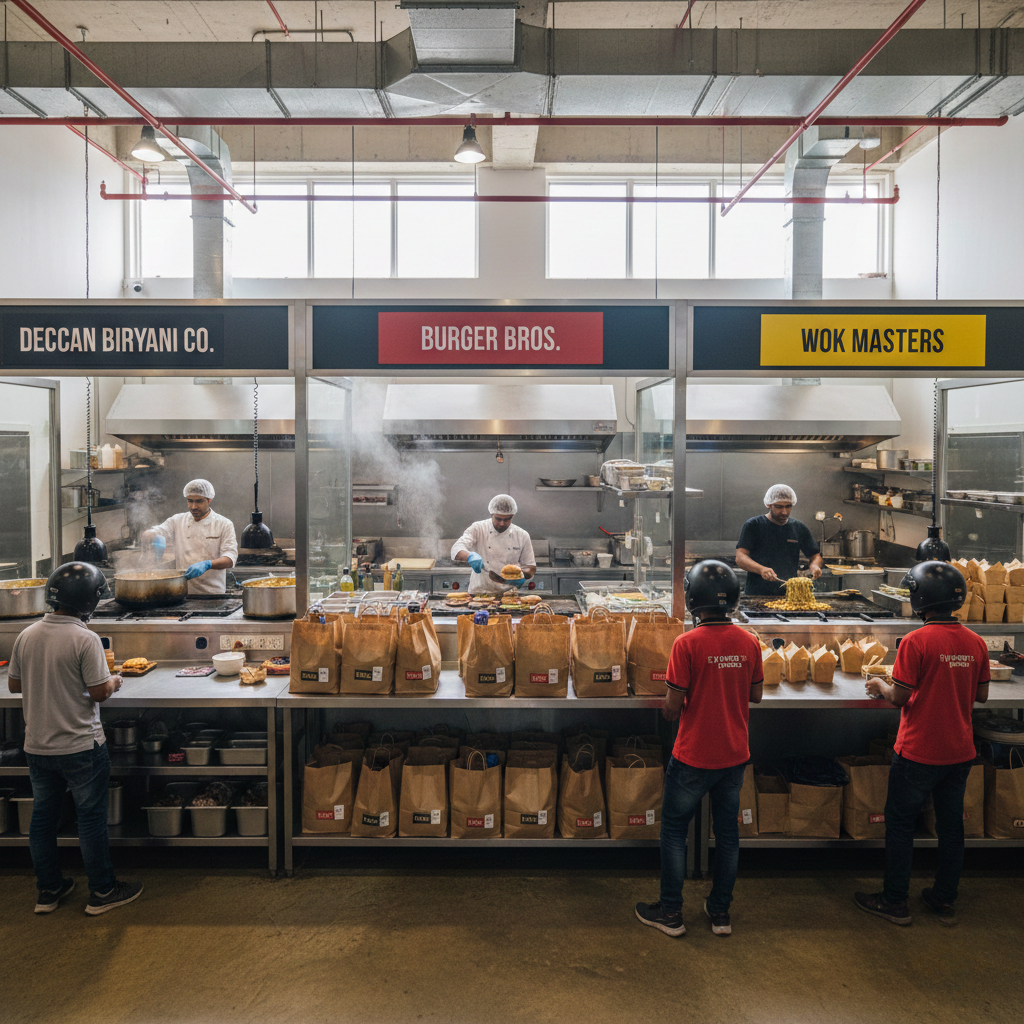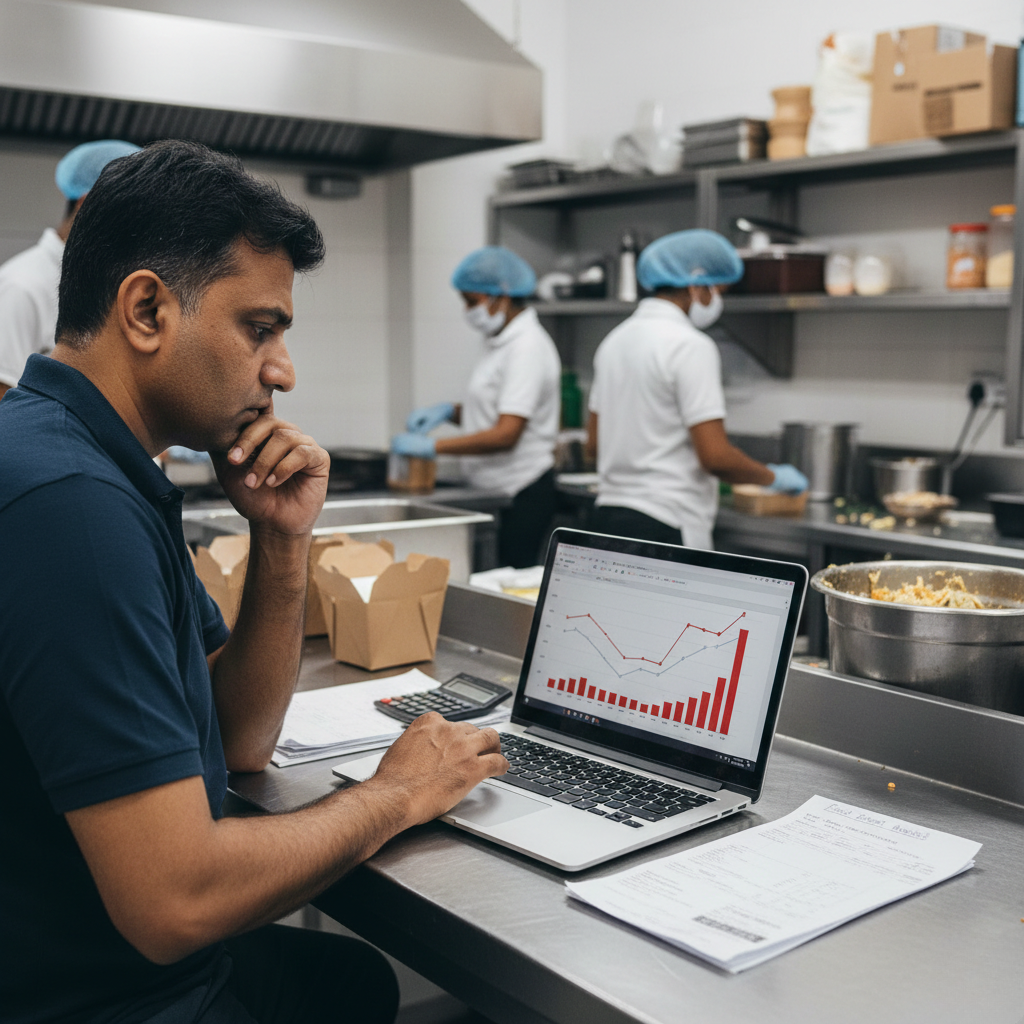
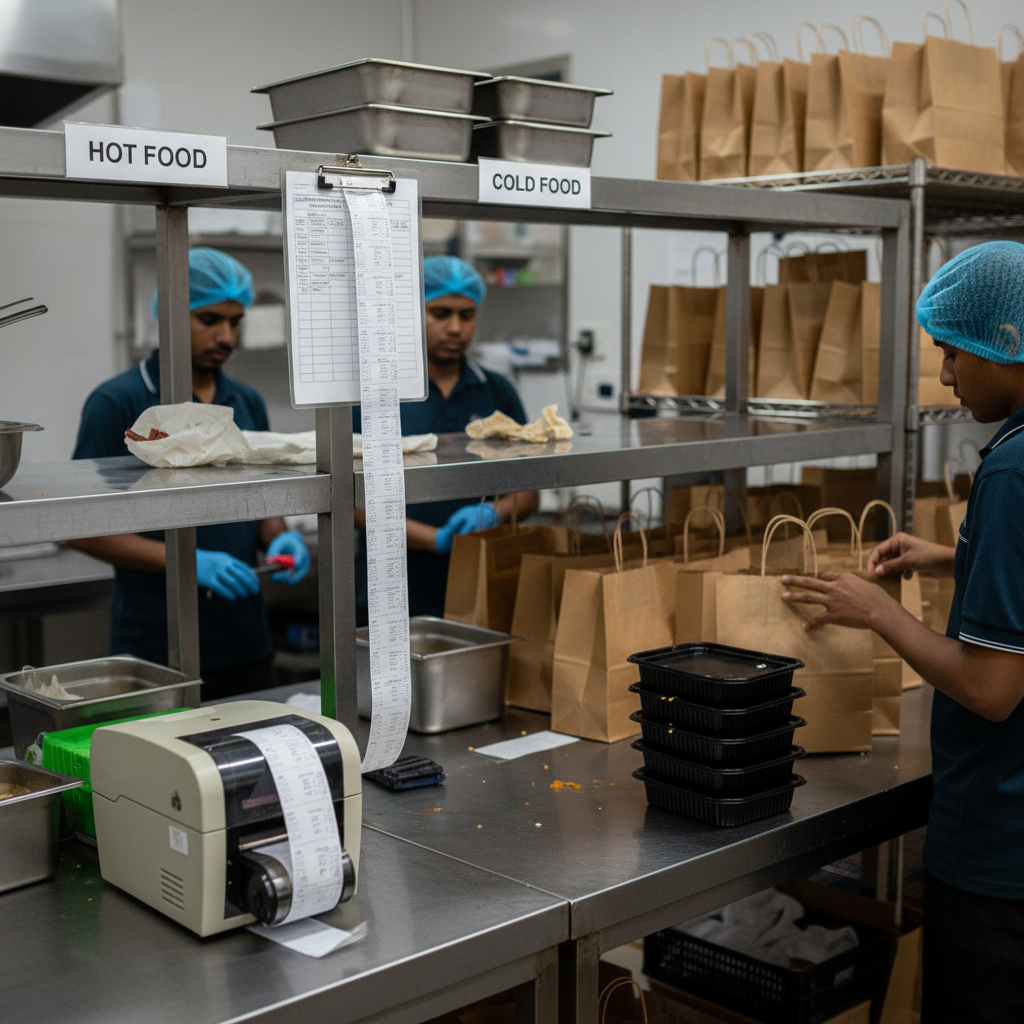
Why food cost keeps increasing? is not just a “vendor price went up” problem. In cloud kitchens, food cost rises when daily execution becomes inconsistent while volume increases. A small portion drift, a small yield loss, a few over-prep expiries, and a few substitutions can quietly destroy margins even when sales looks strong on Swiggy/Zomato. This guide explains the real reasons food cost keeps increasing in delivery kitchens in India and how to stop it end-to-end from purchasing to prep to portioning to inventory using systems, not assumptions.
Why Does My Food Cost Keep Increasing? The Real Reason Costing Sheets Don’t Match Reality
Most founders can relate to this pattern: orders are steady, the menu is selling, and yet every week you feel like “food cost is going out of control.” You check vendor bills and see some increases, but it still doesn’t explain the full drift. Then you check your costing sheet and it looks fine. The question becomes: if the sheet is fine, why does food cost keep increasing?
In cloud kitchens, food cost increases for one core reason: the kitchen stops behaving like the costing sheet. The sheet assumes repeatable execution: measured portions, repeatable batch yields, controlled substitutions, and consistent purchasing specs. But real kitchens drift through dozens of small “normal” decisions: giving a little extra during peak, prepping extra “so we don’t run out,” substituting ingredients when stock is missing, changing pack sizes, ignoring yield loss, and not tracking waste and shrinkage. Each action looks small. Together they become weekly margin leakage.
Food cost is not only a finance metric. It is an operations discipline metric. If operations is unstable, food cost will keep increasing even if vendor rates stay the same.
If you want the profitability foundation first, start with Cloud Kitchen Profitability Consultant in India and map your current leakage patterns via Common Operational Mistakes in Cloud Kitchens.

What “Food Cost Increasing” Actually Means in a Delivery Kitchen
Food cost increasing does not always mean you are buying expensive raw materials. In delivery kitchens, food cost increases when any of these move in the wrong direction: portion sizes grow, yields fall, wastage rises, rework increases, substitutions become frequent, theft/shrinkage becomes normal, or purchasing specs drift.
This is why founders feel confused: sales can be stable, but food cost rises because the kitchen has become inconsistent. A cloud kitchen survives on repeatability. The moment repeatability collapses, food cost becomes emotional: “add a little more,” “make it heavier,” “give extra gravy,” “don’t risk a complaint,” “prep extra just in case.” Emotion is expensive.
The fastest diagnostic shift is this: stop asking “what is our food cost % this month?” and start asking: “which station is causing cost drift today portioning, yield, wastage, purchasing, or inventory?” When you find the station, you can fix the system.
The Unit Economics Lens: Why Food Cost Drift Feels Small Daily but Becomes Big Weekly
Many kitchens lose money because they track food cost like a monthly accounting metric instead of a daily operations metric. Food cost drift typically happens in micro-leaks: +10g gravy here, +15g rice there, +1 extra cheese slice on a hero SKU, +1 extra sachet of mayo, +a “free” topping to avoid complaints, +one remade dish because packing missed an add-on.
Each incident feels harmless. But delivery kitchens run volume. Volume multiplies everything: good systems multiply profit, weak systems multiply leakage. If you do 80 orders/day, a ₹8 average drift per order becomes ₹640/day. Over 30 days, that becomes ₹19,200. That’s one small drift. Now stack five small drifts together and you understand why food cost feels like it keeps increasing even when sales is steady.
The second reason it feels worse is because platform payouts arrive after deductions. If refunds and rework rise due to operational mistakes, your “effective food cost” increases because you pay for food you don’t get paid for. That is why food cost control is inseparable from SOPs, dispatch accuracy, and menu engineering.
If you want a checklist for these drift points in real kitchens, use Common Operational Mistakes in Cloud Kitchens and audit your flow station-by-station.
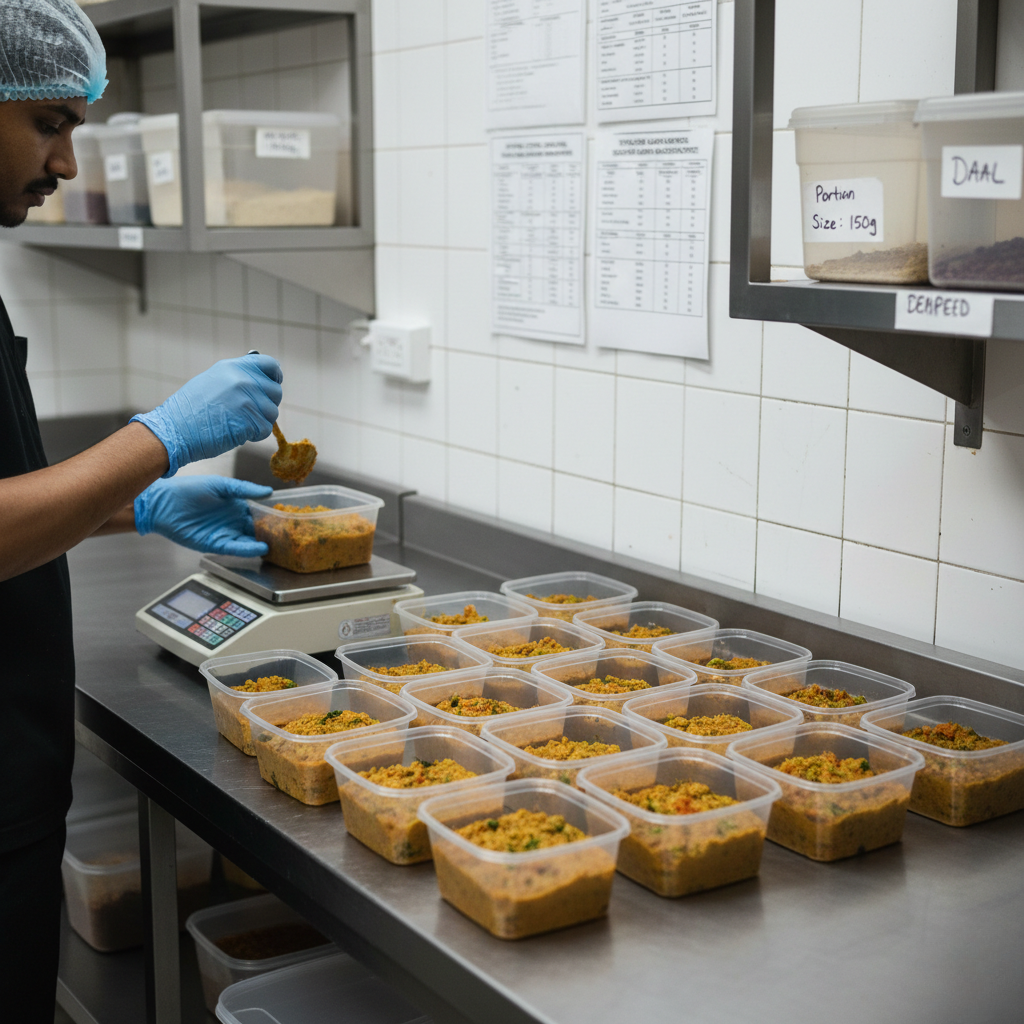
The Real Reasons Food Cost Keeps Increasing (And What Each One Looks Like on the Floor)
Food cost does not rise randomly. It rises through repeatable causes. Below are the most common reasons cloud kitchens in India see food cost drift month after month along with how the drift shows up in daily operations.
1) Portion drift (the silent killer): Portion drift is when staff starts serving “slightly more” than the standard portion. This happens most during peak hours because the priority shifts from control to speed and complaint avoidance. A ladle becomes a guess. A scoop becomes “as per feel.” A topping becomes “add a bit extra.” The problem is not one day. The problem is that “extra” becomes the new normal.
How it shows up: your hero items sell more, but margins fall. Customers don’t necessarily complain less, but your cost rises. Your kitchen team may even feel proud: “we give better quantity.” But quantity without control is cash leakage.
2) Batch yield variance: Yield variance happens when the same batch recipe produces different number of portions across days. A gravy that should yield 18 portions yields 16. A marinade batch yields less coated protein because of trimming loss. A rice batch yields fewer servings because water ratio varies. If you do not track yield, you do not see the drift.
How it shows up: you feel like you’re “using more raw material” but you can’t explain why. Staff blames market rates. Founders blame waste. The real issue is that yield is not measured or enforced.
3) Over-prep and expiry wastage: Over-prep is usually a fear-based habit: “prep more so we don’t stock out.” But prepping extra without demand-based targets creates dead stock. Dead stock becomes expiry. Expiry becomes wastage. Wastage becomes food cost increase.
How it shows up: you throw away sauces, cut veggies, gravies, batters, and marinated proteins. Sometimes you don’t throw it away you reuse it beyond holding time and then refunds increase. Either way, cost rises.
4) Uncontrolled substitutions: Substitutions happen when a key ingredient is missing and the team replaces it with “something close.” This breaks costing accuracy and taste consistency together. Substitutions also trigger customer dissatisfaction, which increases refunds and replacements.
How it shows up: food cost rises and ratings become volatile. The kitchen keeps “fixing” complaints by giving extras creating more cost drift.
5) Hidden rework (remakes, replacements, and complaint-driven freebies): If you remake 3–5 orders daily due to errors, you are paying for food that never gets paid back fully. Even when platforms do not deduct fully, you lose time, packaging, and raw materials. This is why dispatch accuracy is also food cost control.
How it shows up: “we had a few wrong items today,” “we had to replace one order,” “we gave extra to avoid escalation.” These statements are food cost drift statements.
6) Vendor spec drift (same item, different quality): Many kitchens buy “chicken 1kg,” “paneer 1kg,” “cheese 1kg.” But if the spec isn’t locked, you get different fat %, different moisture, different trimming loss, different yield. Quality drift creates yield drift. Yield drift creates food cost drift.
How it shows up: you feel like protein consumption increased even when portions stayed the same. In reality, trimming and cooking loss changed.
7) Inventory variance + shrinkage: When stock is not counted and variance isn’t reviewed, shrinkage becomes invisible. Oil, cheese, mayo, sauces, packaging add-ons, and spices are common leakage zones. Consumption drifts, but no one “owns” the variance.
How it shows up: you reorder faster than expected. The store “always feels low.” Nobody can explain why. That is variance without visibility.
If you want the SOP-led connection between cost control and fewer complaints/refunds, read How SOPs Reduce Food Cost & Complaints.
People + Process: How Staff Behaviour Quietly Increases Food Cost
Founders often treat food cost as a purchasing problem. But food cost is also a people problem specifically a training + station ownership problem. When roles are unclear and the kitchen runs on “best effort,” staff will make choices that increase food cost: adding extra to avoid complaints, wasting product during rush, cooking extra “just in case,” skipping measurement tools, and improvising substitutes.
This is not because staff is bad. It is because the system is unclear. When the system is unclear, the kitchen runs on emotion. Emotion is expensive.
Food cost stays stable when stations are role-based and predictable:
Prep ownership: demand-based prep targets, labeling, holding times, discard rules.
Cook ownership: batch timing, yield tracking, reheat rules, portion tools always in place.
Pack ownership: no freebies without approval, no unpriced add-ons, checklists reduce remakes.
Store ownership: FIFO discipline, daily critical item count, variance reporting.
For the full role-based model that stabilises output and reduces drift, use Role-Based Kitchen Operations Explained.
Purchasing + Inventory Discipline: The Missing System Behind Stable Food Cost
Even if your recipes and portions are perfect, food cost will keep increasing if purchasing is uncontrolled. Most kitchens have vendors. Few kitchens have purchasing discipline. Purchasing discipline means: spec sheets, approved vendor list, locked pack size, receiving checks, and rate monitoring.
Here’s the chain that founders miss: when specs are loose, quality drifts. When quality drifts, yield drifts. When yield drifts, food cost drifts. So a “vendor problem” is often a “no receiving check” problem.
Inventory discipline matters equally. If your kitchen does not do a weekly variance review, you will never know whether drift is coming from: portioning, wastage, shrinkage, or purchasing. Without variance, the business stays stuck in blame mode. With variance, the business becomes controllable.
For a broader leakage checklist that includes purchasing and receiving failure patterns, refer: Common Operational Mistakes in Cloud Kitchens.
Refunds + Platform Deductions: When Food Cost Rises Because You’re Paying for Food You Don’t Get Paid For
Food cost and platform performance are linked. If your kitchen has frequent wrong items, spillages, late dispatch, or missing add-ons, refunds and replacements rise. That means your kitchen consumes raw material without receiving full revenue back. Founders see it as “refunds problem,” but it is also “effective food cost” problem.
If you want the platform economics lens that explains payout deductions and hidden performance costs, read: Aggregator Commission Impact in India.
External reference links (platform policy context): Swiggy Refund & Cancellation Policy and Zomato Online Ordering Terms.
Packing + Dispatch Errors: The “Hidden Food Cost” That Feels Like Rising Consumption
When a kitchen remakes orders due to packing mistakes, the founder experiences it as “food cost increasing.” Because consumption rises but sales doesn’t rise proportionally. Dispatch discipline reduces food cost by reducing rework.
Common dispatch-related food cost increases happen through:
1) Wrong items and missing add-ons: remakes consume raw material, packaging, and time.
2) Spillage and packaging failures: replacements consume full food cost again.
3) No dual verification: repeat mistakes continue because nobody “owns” accuracy.
4) Panic substitutions during stockouts: leads to higher cost ingredients and complaints together.
For a dispatch-ready workflow that reduces remakes and refund-triggered replacements, implement: Cloud Kitchen Dispatch SOP.
Scaling Myth: Why Food Cost Increases Faster When Orders Increase
Many founders notice food cost drift becomes worse as volume grows. This is not surprising. Volume amplifies your system. If your system is weak, volume amplifies weakness: portioning becomes rushed, prep becomes fear-based, substitution becomes frequent, and inventory becomes messy.
That’s why “more orders” does not fix cost. More orders make cost drift visible. If growth is currently hurting your operations, read: When Growth Is Hurting Your Cloud Kitchen Operations.
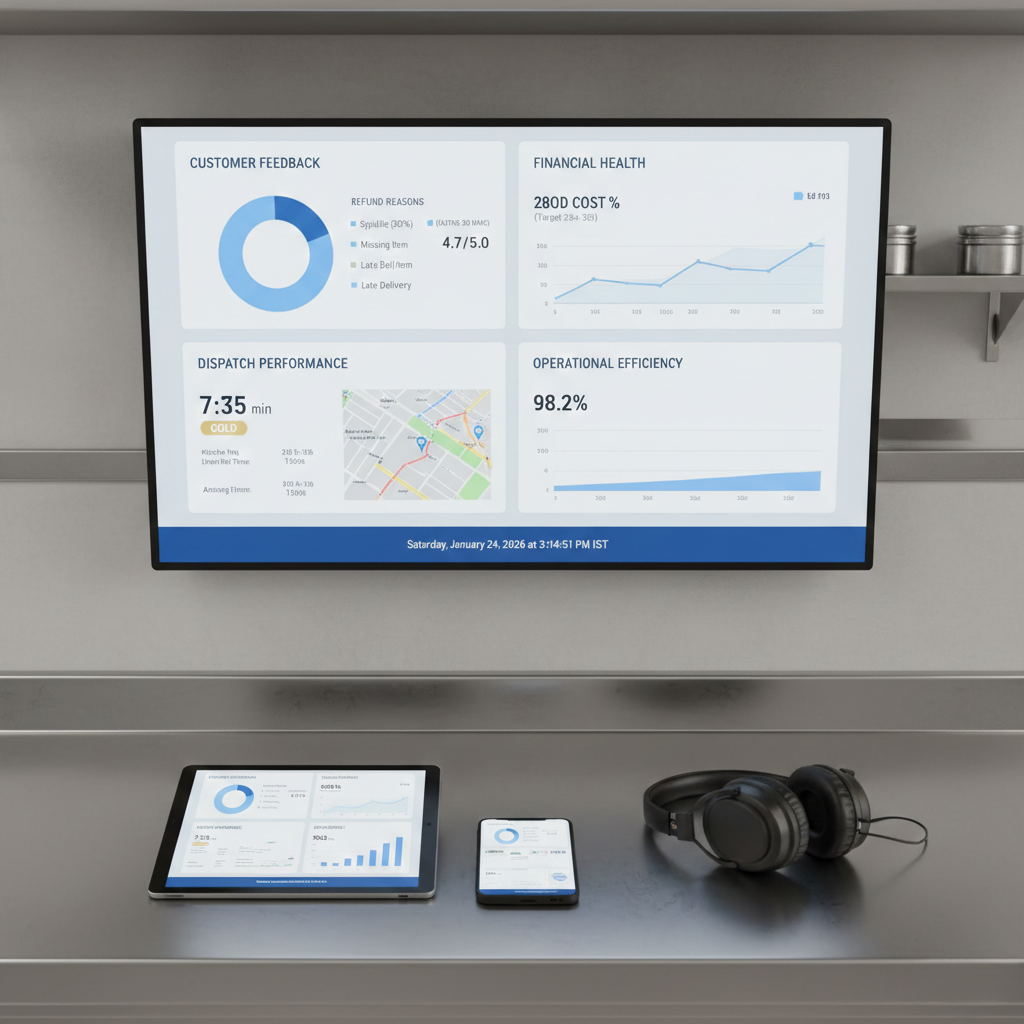
How to Stop Food Cost From Increasing: A Practical 7-Day to 30-Day Control System
The biggest mistake founders make is reacting to food cost with random actions: “change vendor,” “increase price,” “cut portion,” “stop toppings,” “run discounts for volume.” These actions can create short-term relief but rarely stabilise food cost long-term. Food cost stops increasing when the kitchen becomes repeatable.
Here is a practical implementation sequence that works in running kitchens:
Step 1 (Day 1–2): Identify your top 10 cost drivers. List the 10 raw materials contributing most to monthly spend (usually protein, dairy, oil, sauces, and packaging add-ons). If you don’t know your top 10, you don’t know your food cost problem.
Step 2 (Day 1–3): Lock portion tools and standards for top-selling SKUs. Define grams/ml for every component and assign portion tools: ladles, scoops, weighing scale points, pre-portioned cups. Run daily “portion tool check” at shift start.
Step 3 (Day 3–5): Start batch yield tracking for gravies and proteins. For each batch, record: batch input weight, final yield weight, number of portions. If yield falls, investigate immediately (water ratio, trimming loss, cooking loss, staff method drift).
Step 4 (Day 4–7): Implement a wastage + expiry log. Track daily wastage with reason: expiry, spillage, wrong prep, overcooked, returned, damaged packaging. Wastage without logging becomes a lifestyle.
Step 5 (Week 2): Lock purchasing specs + receiving checks. Create spec for each critical item: pack size, acceptable quality, temperature requirements, brand, cut type, moisture content expectations (where applicable). At receiving, verify: weight, damage, expiry, temperature, and rejection rules.
Step 6 (Week 2–3): Weekly inventory variance review for critical items. Do a weekly count for: cheese, mayo, oil, sauces, spices, packaging add-ons, and your top proteins. Compare expected consumption vs actual stock. Investigate variance. Assign ownership.
Step 7 (Week 3–4): Reduce menu complexity that creates drift. Remove low-margin complexity. Limit toppings that are not priced. Engineer add-ons with margin. Keep hero items stable and repeatable.
Step 8 (Ongoing): Make food cost visible daily. Track daily: portion compliance checks, yield variance, wastage log, remake count, and critical stock variance. Visibility converts food cost from “surprise” into “control.”
If you want the discipline-led EBITDA lens that ties these controls to profitability, map this with How Process Discipline Improves EBITDA.
External hygiene + safety standards (useful while standardising SOPs and storage): FSSAI Hygiene Requirements (Schedule 4 reference), ISO 22000 overview, and FAO/Codex General Principles of Food Hygiene.
Optional external reference (process standardisation lens): You can explore Standardized Work (Lean lexicon) to understand why repeatability reduces variability and protects margins.
Final Takeaway: Food Cost Keeps Increasing When Your Kitchen Stops Being Repeatable
If your food cost keeps increasing, it does not automatically mean vendors are cheating or prices are rising. Most of the time, it means execution drift is compounding daily: portions are not controlled, yields are not tracked, wastage is not measured, substitutions are not governed, purchasing specs are not locked, and inventory variance is not reviewed.
Food cost stops increasing when variation reduces: portions become measured, batch yields become repeatable, prep becomes demand-based, wastage becomes visible, purchasing becomes disciplined, inventory variance becomes owned, and remakes/refunds reduce through better SOPs.
Operational frameworks from GrowKitchen, and operating partner brands like Fruut and GreenSalad help founders convert “cost drift kitchens” into “controlled, profitable kitchen networks.”
FAQs: Why Does My Food Cost Keep Increasing?
What is the most common reason food cost keeps increasing in cloud kitchens?
Portion drift + batch yield variance. Small “extra” portions and untracked yield loss compound into major monthly cost leakage.
Can food cost increase even if vendor rates are stable?
Yes. Food cost increases through operational drift: wastage, substitutions, rework/remakes, and inventory variance.
What is the fastest action to control food cost in 7 days?
Lock portions for top-selling SKUs AND start yield tracking for gravies/proteins. These two actions reveal and stop the biggest drift fastest.
Why does food cost worsen when orders increase?
Volume amplifies system weakness. During peak, measurement breaks, prep becomes fear-based, and substitutions rise causing drift.
- Cloud Kitchen Profitability Consultant in India
- Common Operational Mistakes in Cloud Kitchens
- How SOPs Reduce Food Cost & Complaints
- Aggregator Commission Impact in India
- Cloud Kitchen Dispatch SOP
- Role-Based Kitchen Operations Explained
- When Growth Is Hurting Your Cloud Kitchen Operations
- How Process Discipline Improves EBITDA
- Grow Kitchen on X