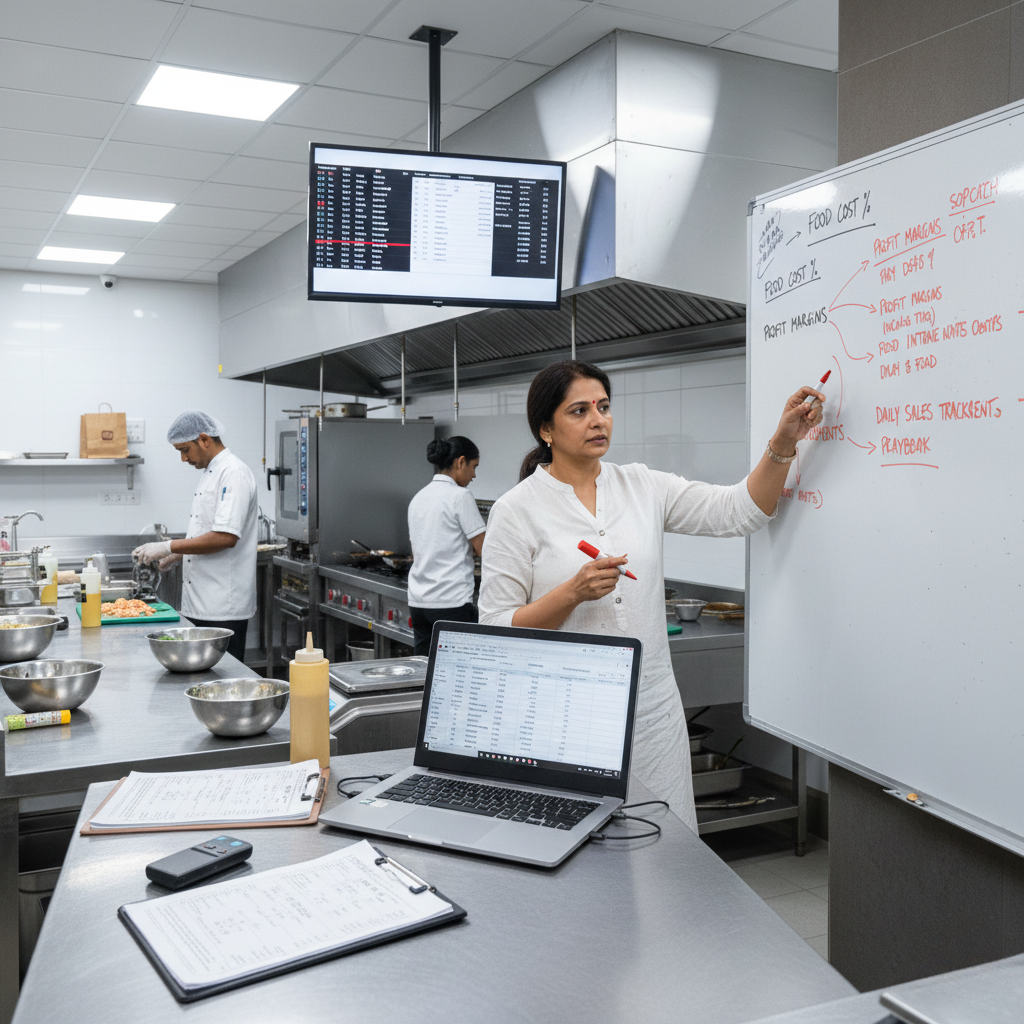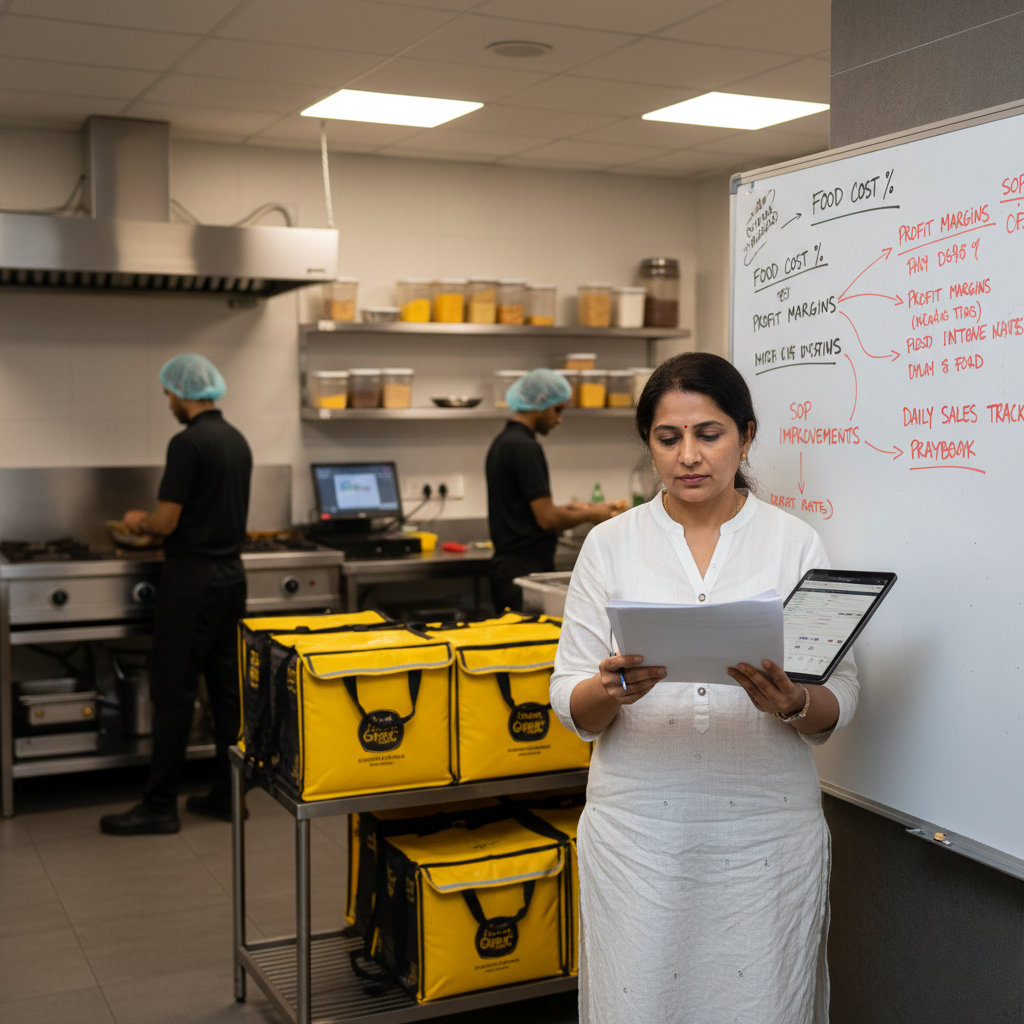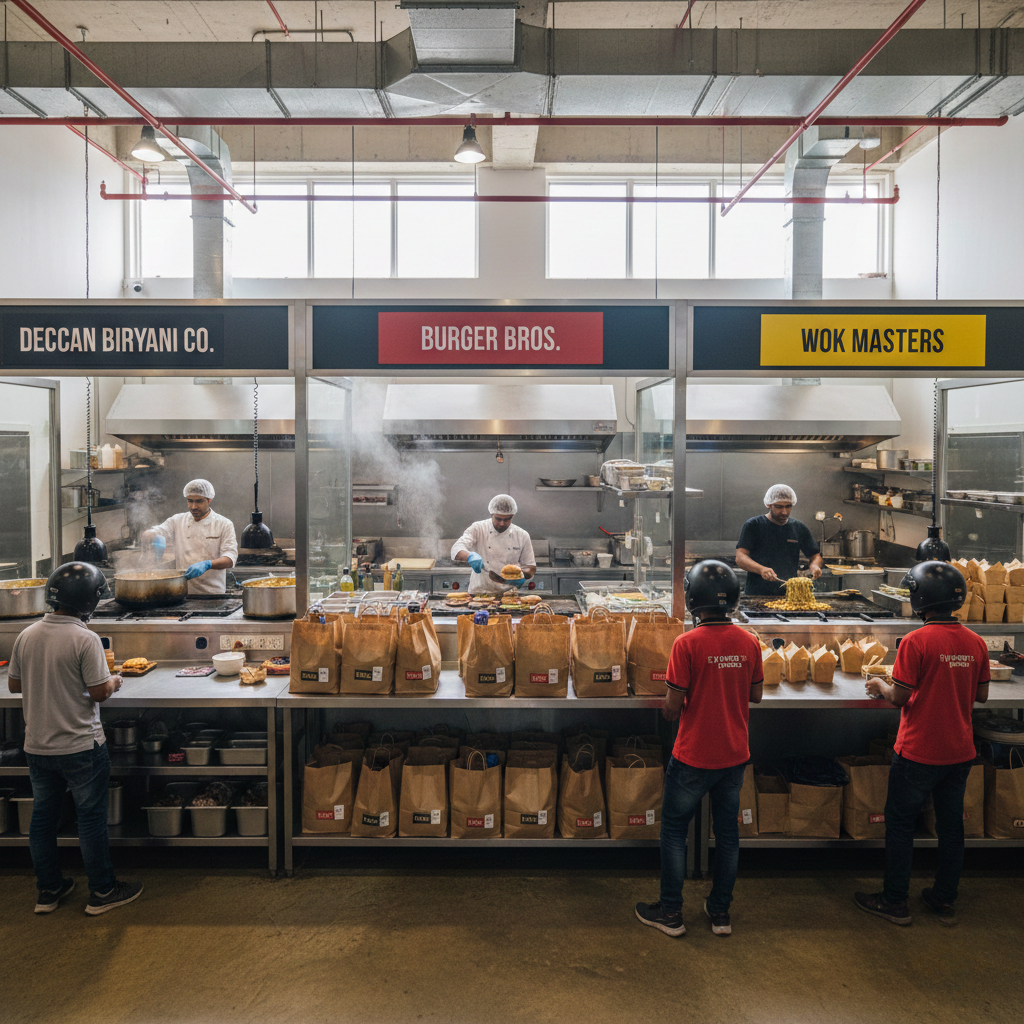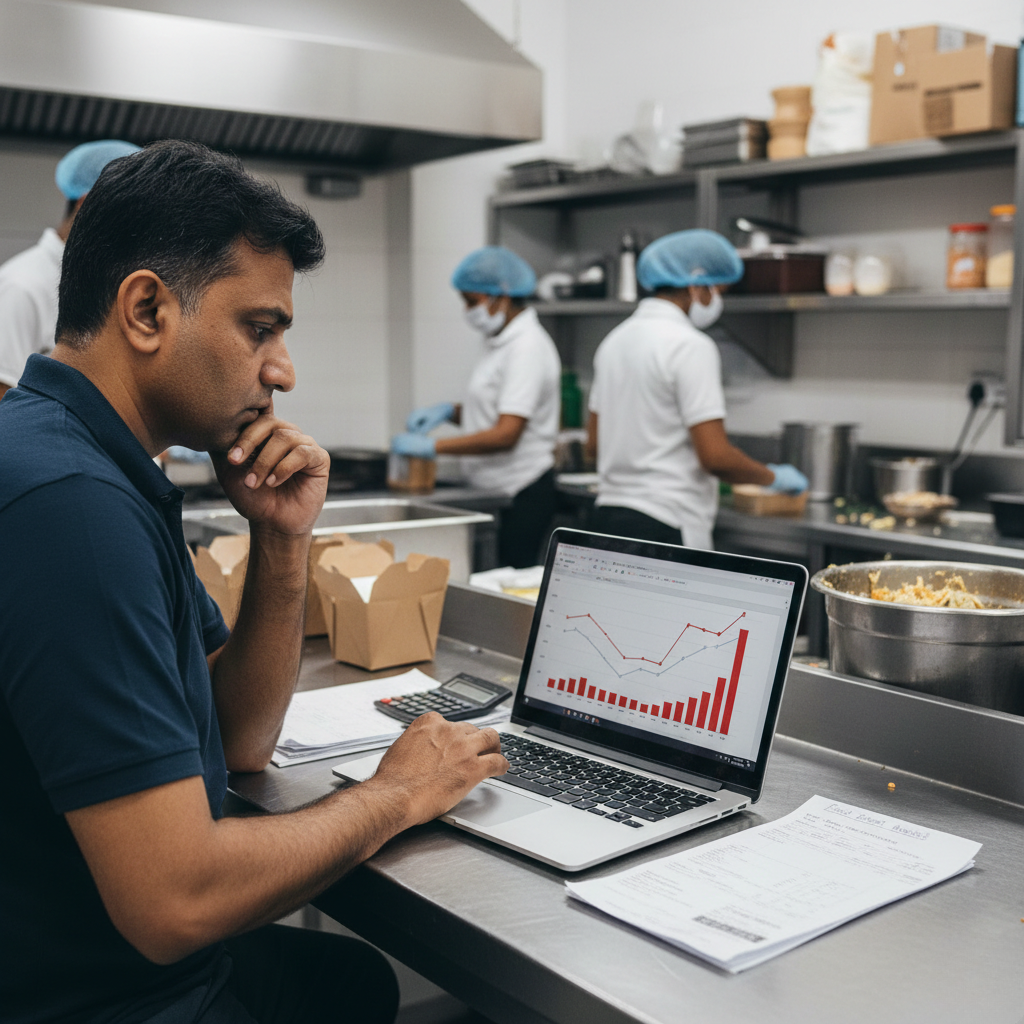
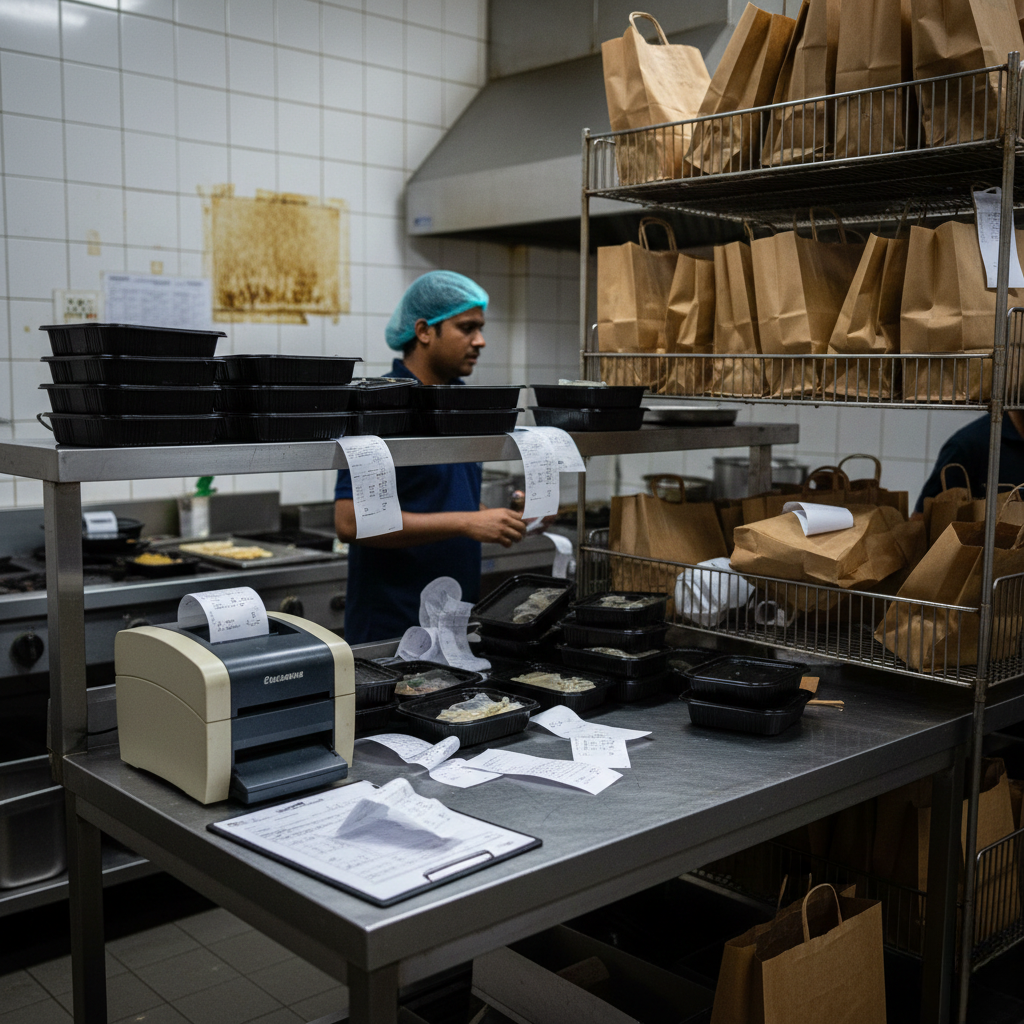
Why does my cloud kitchen bleed cash every month? is not a “we need more orders” problem. It is the difference between a kitchen that looks active on Swiggy/Zomato and a kitchen that consistently keeps cash after payout. Most kitchens bleed cash monthly because leakage compounds silently while fixed costs stay constant. Cash disappears through food cost drift, over-prep expiry, refunds, remakes, wrong packing, late dispatch penalties, discount burn, vendor rate variance, inventory mismatch, and founder-dependent firefighting. This guide explains why monthly cash bleed happens in delivery kitchens in India and how to stop it end-to-end from prep to packing to payout using systems, not hope.
Why Does My Cloud Kitchen Bleed Cash Every Month? The Hidden Cashflow Trap Behind “Busy” Dashboards
Many cloud kitchen founders reach a frustrating stage: orders are coming daily, the kitchen feels busy, staff is present, ads are running, and yet every month ends with the same question— “Where did the money go?”
This happens because cloud kitchens can show revenue without protecting cash. Sales creates movement. Movement creates activity. But activity is not the same as cash retained after leakages. When a kitchen bleeds cash monthly, it usually means the business is operating with unstable contribution margin per order and uncontrolled daily variability.
The monthly cash bleed is rarely one big mistake. It is usually a stack of small “normal” issues: a little extra portioning, “prep more so we don’t run out,” a few refunds that feel unavoidable, packing errors that happen “sometimes,” a few late dispatch penalties, inconsistent vendor rates, and discounts to recover ratings whenever conversion dips. Each one looks small. Together they quietly kill cash.
If you want the profitability foundation first, start with Cloud Kitchen Profitability Consultant in India and identify the leakage patterns via Common Operational Mistakes in Cloud Kitchens.
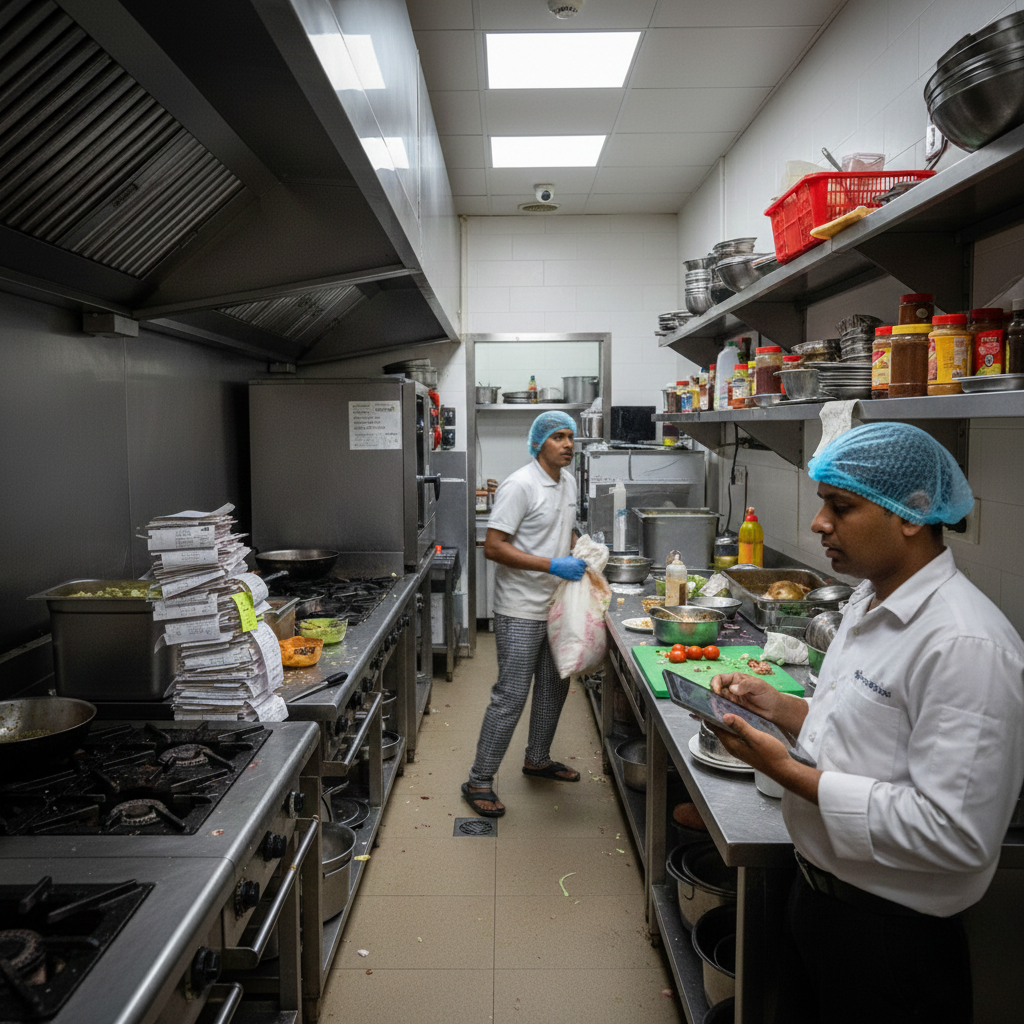
What “Monthly Cash Bleed” Actually Means in a Cloud Kitchen
In delivery kitchens, “profit” and “cash” can behave differently. You might be selling daily and still bleeding cash monthly because payouts and expenses don’t align cleanly. Platform payouts come after deductions. Vendors demand payment on their schedule. Salaries and rent are fixed. If your per-order contribution margin is unstable, the business ends up funding daily operations from tomorrow’s payout.
Monthly cash bleed usually shows up in one of these patterns: the payout is always lower than expected, vendor payments pile up, the founder keeps injecting money to “run smoothly,” or discounts become the default lever to keep orders flowing.
The solution is not motivation. The solution is measurement and control: stable food cost, stable packing accuracy, stable dispatch times, stable purchasing, stable inventory, and a menu designed for throughput and margin.
The Cashflow Problem: Why “Good Sales” Still Ends in Monthly Cash Shortage
Founders often track the big costs: rent, salaries, commissions, and ads. But monthly cash bleed is usually caused by variable cost leakage + timing mismatch. The kitchen leaks margin daily, and then fixed costs finish the job at month-end.
Here’s the practical truth: a cloud kitchen can only stay cash-positive if each order consistently contributes enough to cover fixed costs. If contribution margin fluctuates, your month becomes a gamble. Some days “feel profitable,” but the month still ends negative.
Common monthly cash bleed drivers include: over-portioning that turns high-selling items into low-margin items, wastage from over-prep, remakes and replacements that don’t show clearly in the dashboard, refunds that compound into payout deductions, discount burn that eats the last remaining margin, and purchasing rate variance across weeks.
If you want a reality checklist for where money disappears in active kitchens, use Common Operational Mistakes in Cloud Kitchens and compare it station-by-station against your current workflow.

Food Cost Drift + Wastage: The Core Reason Kitchens Bleed Cash Monthly
If your kitchen bleeds cash monthly, start with food cost. Food cost is the largest controllable variable. Many kitchens assume food cost drift happens because “market rate went up.” In reality, drift usually comes from execution mismatch: the costing sheet exists, but the kitchen does not enforce it during peak.
Monthly cash bleed shows up when food cost leaks through these repeatable issues:
1) Portion drift: gravy, protein, rice/noodles, toppings, sauces are eyeballed. The team adds “a bit extra” to avoid complaints. That extra becomes permanent. Permanent extra becomes monthly loss.
2) Batch yield variance: the same base gravy yields 18 portions on Monday and 15 on Thursday. That variance is silent cost leakage. If yield is not tracked, you never see the leak until payout feels low.
3) Over-prep and expiry: kitchens often prep “to be safe.” Safety prep becomes dead stock. Dead stock becomes wastage. Wastage becomes monthly cash bleed.
4) Uncontrolled substitutions: stockouts trigger random replacements. Substitutions break taste consistency and break costing accuracy. They create complaints, refunds, and margin drift together.
5) Shrinkage and untracked consumption: high-velocity items like cheese, mayo, oil, packaging add-ons leak through uncontrolled usage. The cost does not look dramatic daily, but it becomes visible monthly.
If you want the SOP-led connection between food cost control and fewer complaints/refunds, read How SOPs Reduce Food Cost & Complaints.
Staff Productivity + Rework: The Silent Cash Drain Founders Underestimate
Another monthly cash bleed driver is low throughput per person. Many kitchens add staff when things feel chaotic. But chaos is often not a headcount issue. It’s a role clarity + handoff issue.
When roles are unclear, productivity falls and rework rises. Rework is expensive because it creates: extra cooking, extra packaging, delayed dispatch, increased cancellations, and higher refund probability. The kitchen looks busy, but output per person stays low. Low output per person increases cost per order. That directly increases monthly cash bleed.
You’ll usually see productivity leakage in these symptoms: staff keeps asking for decisions, prep is interrupted during peak, packing is rushed, and dispatch becomes reactive. The founder becomes the system. The business becomes founder-stabilised instead of process-stabilised.
A system-driven kitchen fixes productivity by making work predictable:
Prep ownership: batch targets, label rules, storage rules, stock updates.
Cook ownership: station sequence, pan allocation, reheat rules, hold time rules.
Pack ownership: packing order, add-on checklist, sealing standards, label discipline.
Dispatch ownership: SLA checks, dual verification, rider handover process, escalation ladder.
For a structured role-and-handoff model, use Role-Based Kitchen Operations Explained.
Purchasing + Inventory Variance: Why Cash Bleeds Even When Food Cost “Looks Fine”
Many founders assume: “Our food cost should be okay because we buy at market rate.” But monthly cash bleed often comes from purchasing and inventory variance, not just recipe cost.
When buying is inconsistent, the same item is purchased at different rates across the month. When specs are loose, quality drifts. When quality drifts, yield drifts. When yield drifts, food cost drifts. This chain is why “purchasing discipline” is a profit lever, not admin work.
Inventory variance adds another layer: items are consumed without tracking, spoilage is unrecorded, pack sizes change, and “minor shortages” become normal. This turns into a predictable monthly pattern: the founder thinks profit should exist, but cash is missing.
If you want a system lens for controlling this, map your kitchen against: approved vendor list, spec sheet, reorder points, receiving checks, and weekly variance review. You can also reference the purchasing control approach via Common Operational Mistakes in Cloud Kitchens (purchasing + receiving sections).
Aggregator Deductions: Why Your Payout Feels Lower Every Month
Founders often treat commission as the only platform cost. But monthly cash bleed is heavily influenced by performance deductions: refunds, cancellations, wrong items, late dispatch issues, and complaint patterns that reduce visibility (forcing discounts to recover).
This is why two kitchens with similar revenue can have very different payout quality. One has stable operations. The other leaks through refunds + penalties + rating volatility.
If you want the full margin lens of platform economics, read Aggregator Commission Impact in India.
External reference links (platform policy context): Swiggy Refund & Cancellation Policy and Zomato Online Ordering Terms.
Packing + Dispatch Failures: The Fastest Monthly Cash Bleed Trigger
Dispatch is where profit dies silently. A kitchen can cook excellent food and still bleed cash monthly if dispatch is inconsistent. One wrong order does not just create one refund. It triggers a chain: refund, replacement, complaint, rating drop, conversion loss, and discount burn to recover.
Monthly cash bleed kitchens usually have repeat dispatch failures:
1) No stage-wise time control: acceptance → cooking → packing → handover has no defined SLA. This increases cancellations and rider escalations.
2) No dual verification: packer checks once and assumes it’s correct. Missing second check creates repeat errors.
3) Packaging inconsistency: wrong container, weak sealing, missing labels, missing cutlery/add-ons. Packaging failures convert into refunds quickly in delivery.
4) No escalation playbook: rider delays, stockouts, substitutions create panic. Panic creates errors. Errors create refunds.
For a dispatch-ready workflow, implement Cloud Kitchen Dispatch SOP.
Scaling Myth: Why More Orders Often Increases Monthly Cash Bleed
One of the biggest myths in cloud kitchens is: “More orders will solve our cash problem.” That’s only true if unit economics are already controlled. If your system leaks at 40 orders/day, it will leak faster at 120 orders/day. Volume amplifies your system. If the system is weak, volume amplifies weakness.
Without control, scaling increases: portion drift, over-prep wastage, rework, dispatch chaos, refunds, penalties, and discount burn. That is why many kitchens grow revenue and still bleed cash monthly.
If growth is currently hurting your operations, read When Growth Is Hurting Your Cloud Kitchen Operations.
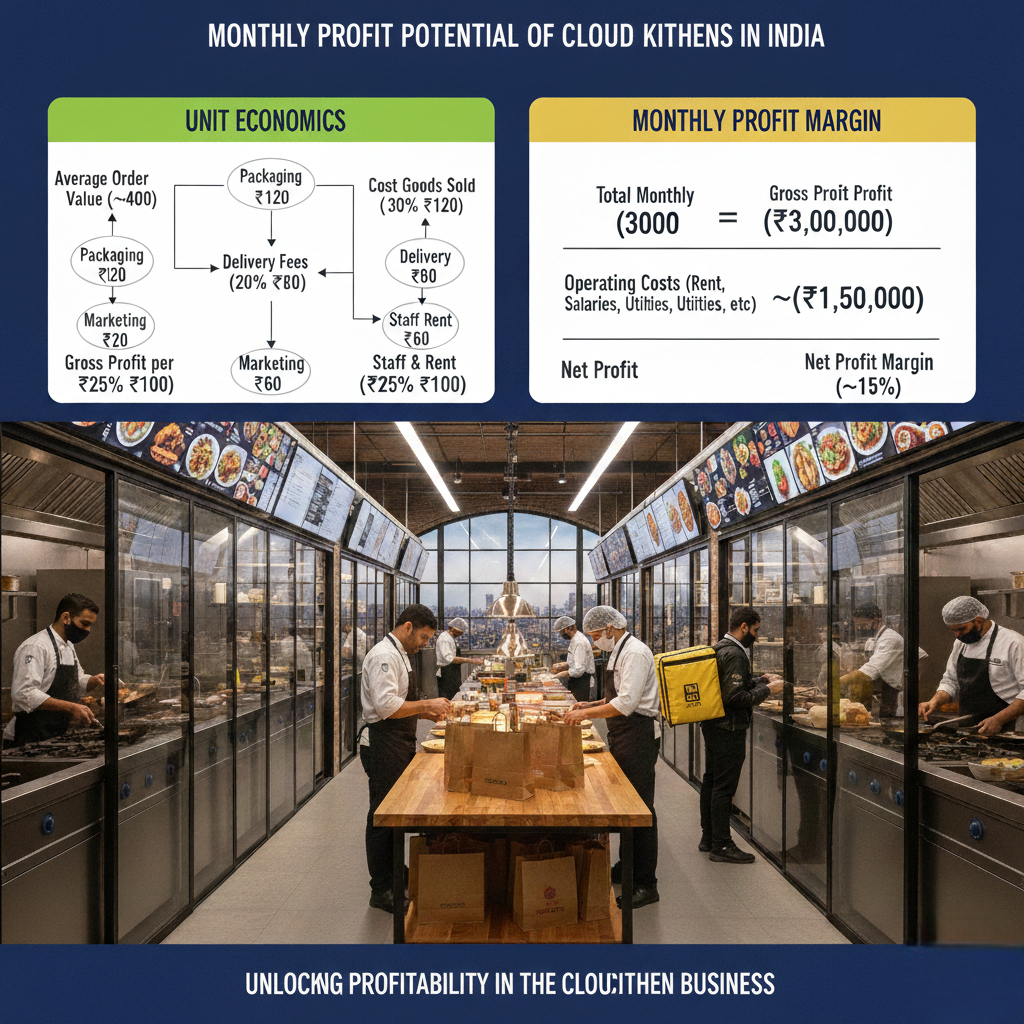
How to Stop Monthly Cash Bleed: A Practical 7-Day to 30-Day Fix Sequence
The biggest mistake founders make is trying to fix cash bleed using random actions: new offers, more ads, discounting harder, adding more menu categories, or chasing “viral” content. These can increase orders, but they rarely stop leakage. Cash bleed stops when the kitchen becomes repeatable.
Here is a practical implementation sequence that works in running kitchens:
Step 1: Measure contribution margin per order (reality, not assumptions). Pick 30 recent orders and calculate: selling price minus commission minus packaging minus food cost minus refunds/penalties share. If this number is thin or negative, your system will bleed monthly until fixed.
Step 2: Run a 7-day leakage log. Track daily: refunds, remakes, wrong items, spillage, delays, cancellations, wastage, stockouts, and the reason for each. Don’t assume. Measure.
Step 3: Lock portions before doing anything else. Standardise grams/ml for every component (gravy, protein, rice/noodles, toppings, sauces). Add daily ladle/weight checks. A kitchen with portion drift cannot become cash-positive consistently.
Step 4: Fix packing and dispatch verification immediately. Add a two-step verification: packer checklist AND dispatch checklist. This reduces refunds and replacements the fastest.
Step 5: Reduce over-prep and expiry with smaller batch cycles. Define: prep targets, holding times, labeling rules, discard rules. Wastage reduction is instant cash recovery.
Step 6: Stabilise purchasing for top SKUs (rate + spec + receiving). Lock specs and weekly/fortnightly rates for high-velocity items (proteins, dairy, packaging, oils, sauces). Implement receiving checks so vendors can’t drift weight and quality.
Step 7: Simplify the menu and engineer it for margin + throughput. Remove low-margin complexity, reduce station overload, push hero items with stable execution, and ensure add-ons are profitable and easy to deliver without error.
Step 8: Implement daily compliance checks + weekly variance review. Track daily: food cost variance, refunds, remakes, dispatch time, stock variance, complaints. Review weekly: rate variance, yield variance, wastage variance. What gets checked gets followed.
If you want a deeper execution rhythm that ties discipline to profit, map this with How Process Discipline Improves EBITDA.
External hygiene + safety standards (useful while standardising kitchen systems): FSSAI Hygiene Requirements (Schedule 4 reference), ISO 22000 overview, and FAO/Codex General Principles of Food Hygiene.
Optional external reference (process discipline lens): You can explore Standardized Work (Lean lexicon) to understand why repeatability reduces variability and protects cash.
Final Takeaway: Monthly Cash Bleed Is Not “Bad Luck.” It’s Daily Leakage Compounding
If your cloud kitchen bleeds cash every month, it does not automatically mean demand is low. Most of the time it means the kitchen is running with unstable unit economics and daily variability. Cash stops bleeding when variation reduces: portions become consistent, prep becomes planned, purchasing becomes controlled, packing becomes accurate, dispatch becomes predictable, refunds reduce, ratings stabilise, and payouts become reliable.
A kitchen without systems becomes discount-dependent. A kitchen with systems becomes profit-dependent. And profit-dependent kitchens are the ones that scale across brands and locations without burning cash monthly.
Operational frameworks from GrowKitchen, and operating partner brands like Fruut and GreenSalad help founders turn “busy kitchens” into “cash-positive kitchen networks.”
FAQs: Why Does My Cloud Kitchen Bleed Cash Every Month?
What is the most common reason cloud kitchens bleed cash monthly?
Food cost drift + wastage, usually caused by portion inconsistency, batch yield variance, and over-prep expiry.
Why does my payout feel lower even when orders are steady?
Refunds, wrong items, late dispatch penalties, cancellations, and rating volatility create hidden costs that reduce payout quality.
Will increasing orders fix monthly cash bleed?
Only if unit economics are controlled. If your system leaks at low volume, higher volume will usually amplify cash bleed.
What should I fix first to see quick cash improvement?
Portion control AND packing/dispatch verification. These two levers reduce food cost drift and refunds the fastest.
- Cloud Kitchen Profitability Consultant in India
- Common Operational Mistakes in Cloud Kitchens
- How SOPs Reduce Food Cost & Complaints
- Aggregator Commission Impact in India
- Cloud Kitchen Dispatch SOP
- Role-Based Kitchen Operations Explained
- When Growth Is Hurting Your Cloud Kitchen Operations
- Grow Kitchen on X