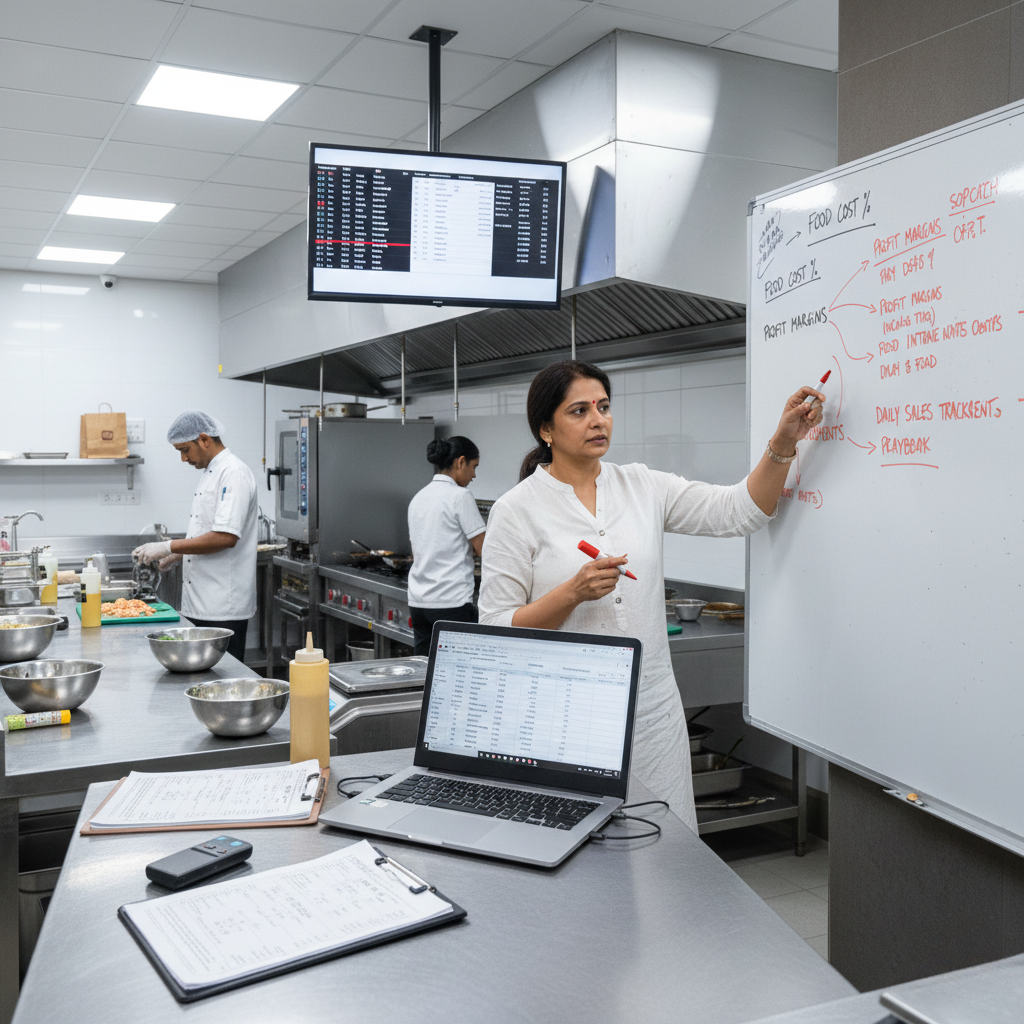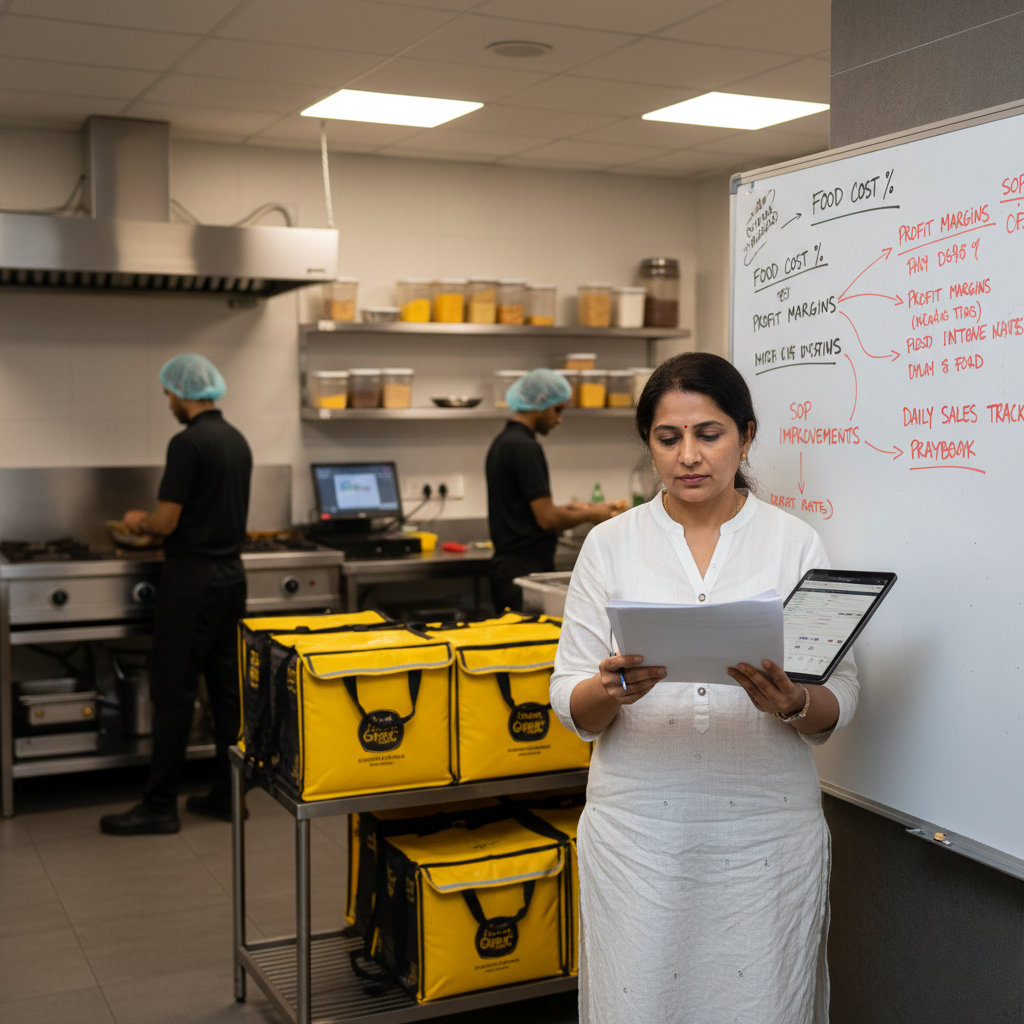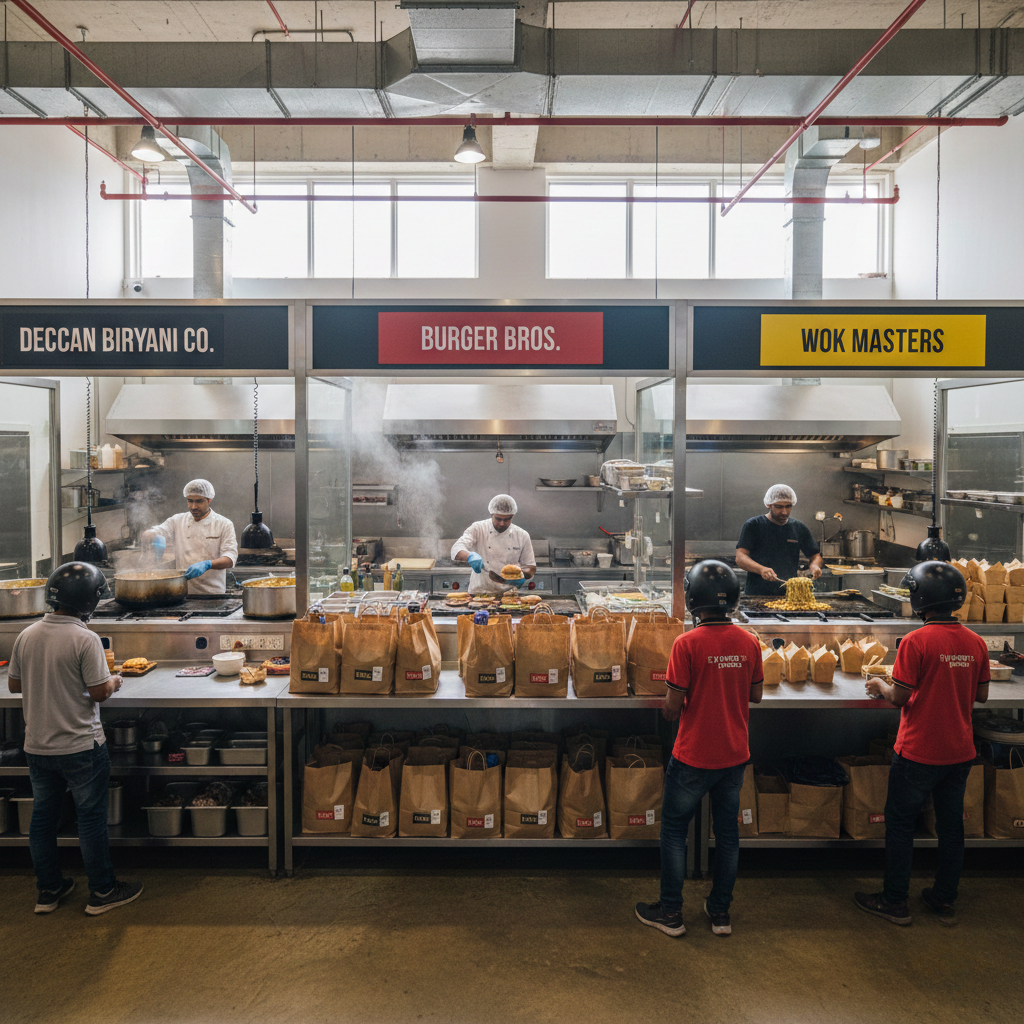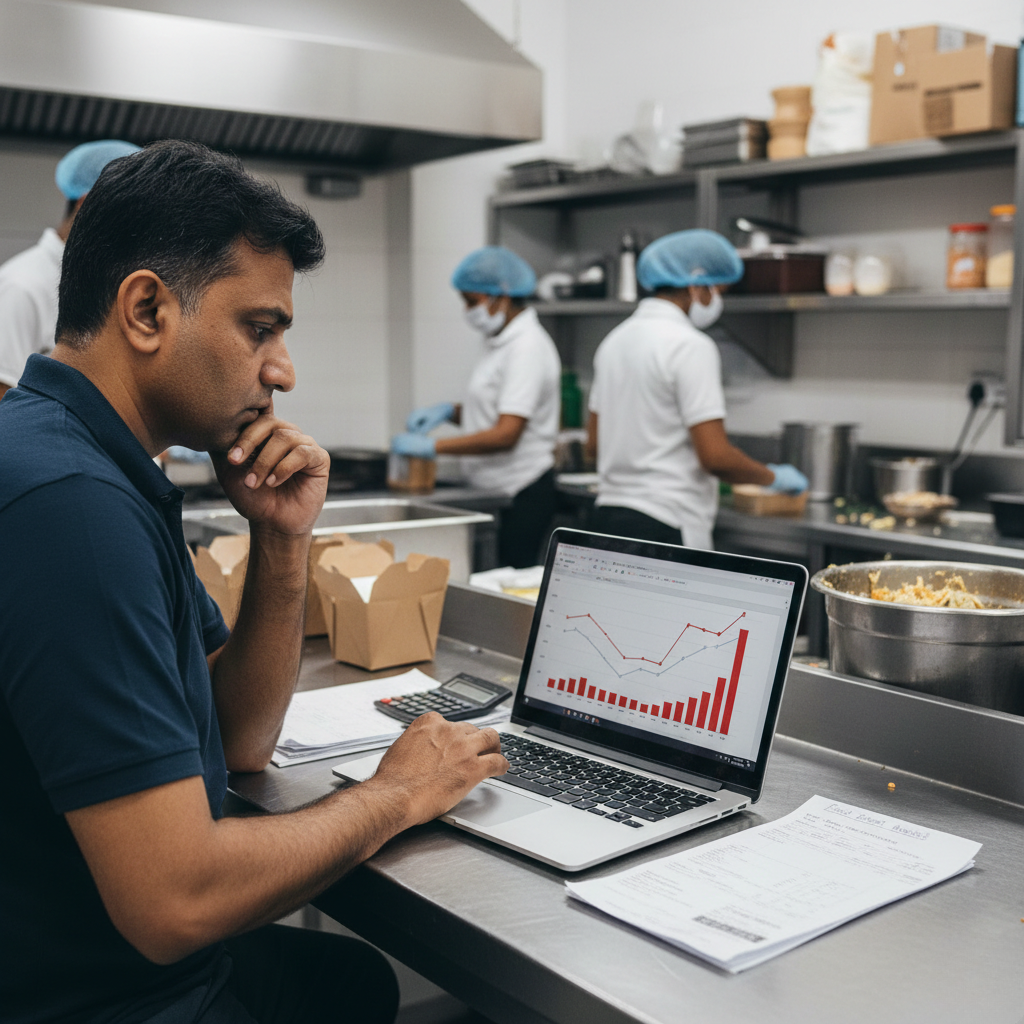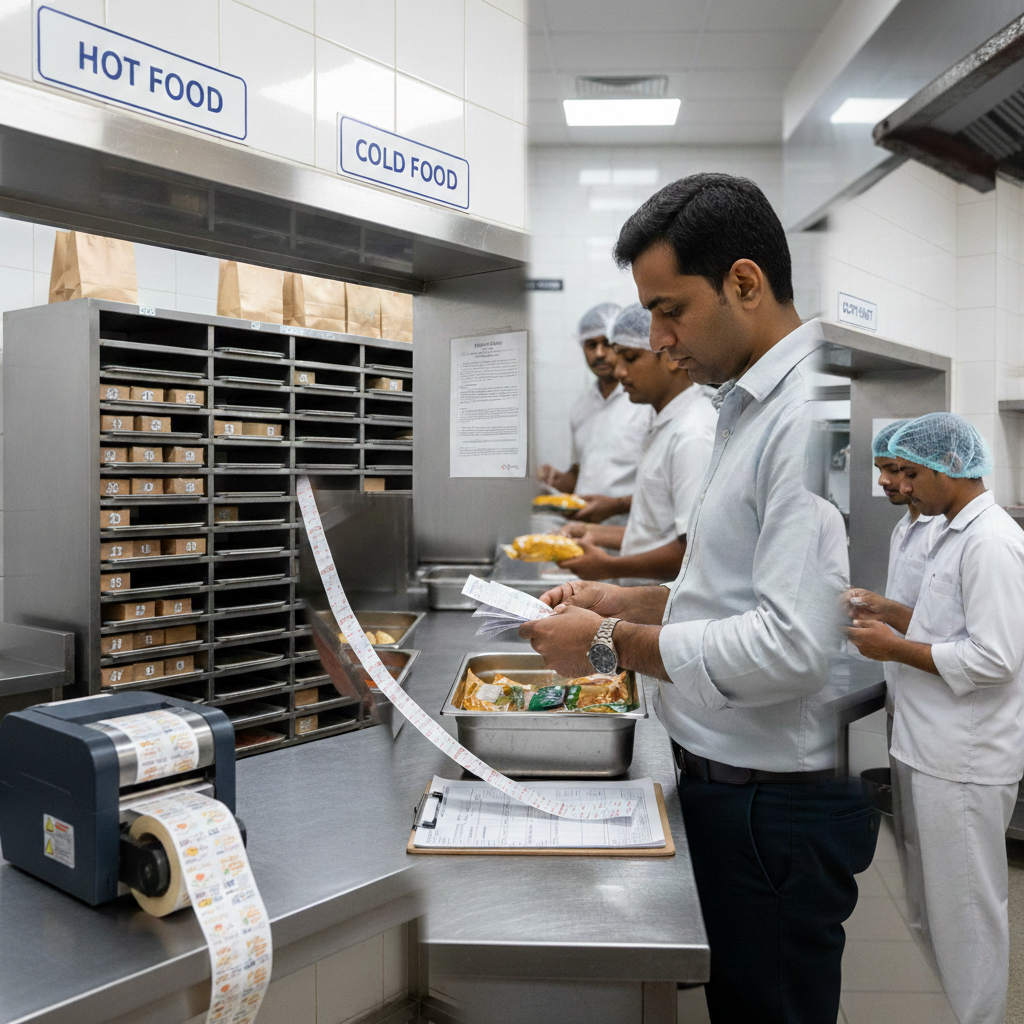
Turning Loss-Making cloud Kitchens Profitable is not a “more marketing” topic. It is the difference between a kitchen that looks busy and a kitchen that keeps cash. Most cloud kitchens don’t become loss-making because food is bad. They become loss-making because cost leaks silently through food cost drift, refunds, delays, wastage, poor menu structure, and inconsistent execution. Profitability is not one big fix. It is a controlled system where every order is repeatable, measurable, and accountable. This guide explains how to turn a loss-making kitchen profitable end-to-end from diagnosis to fixes to systems that hold margins even when volume increases.
Turning Loss-Making Kitchens Profitable: Why “More Orders” Doesn’t Fix a Broken System
Many founders hit the same confusing phase: orders are coming in, ads are running, aggregator dashboards show activity, staff is present every day, yet the bank balance feels worse every week. This happens because revenue can hide operational leakage. A kitchen can be busy and still be structurally loss-making.
Loss-making kitchens usually leak money in predictable places: food cost drift from portion inconsistency, wastage from poor prep planning, remakes from errors, refunds from wrong or missing items, late dispatch penalties, and ratings instability that forces discounting. These are not “small issues.” In delivery businesses, these are profit killers.
The solution is not motivation. It is control. Profitability improves when outcomes become repeatable, costs become measurable, and teams operate on systems, not guesswork.
If you want the profitability foundation first, start with Cloud Kitchen Profitability Consultant in India and identify leakage patterns via Common Operational Mistakes in Cloud Kitchens.
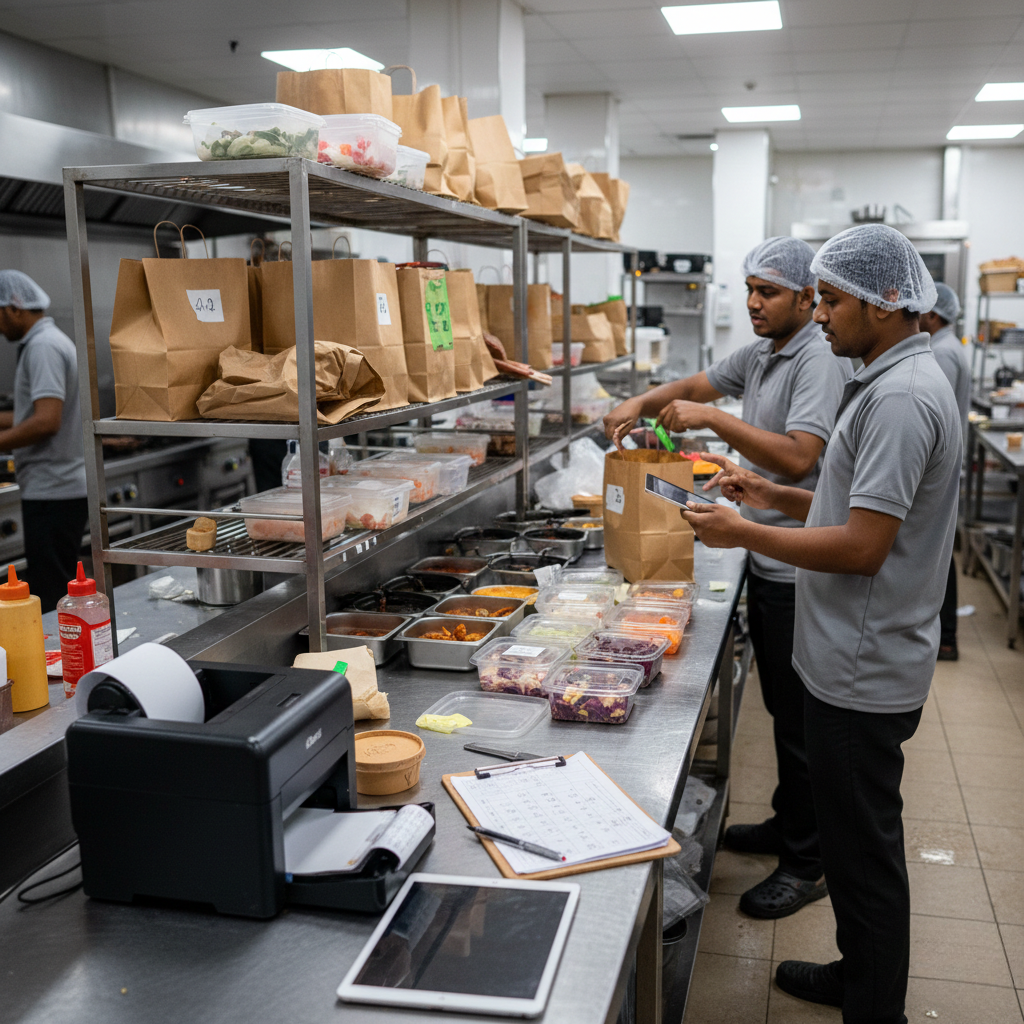
What “Loss-Making” Actually Means in a Cloud Kitchen
A kitchen is not loss-making because “profits are low.” A kitchen is loss-making when the unit economics are broken: each incremental order fails to add real cash after leakages. The kitchen might show gross sales growth, but EBITDA stays weak because variable costs and penalties scale with volume.
In most cases, founders misdiagnose the problem as sales. But if the kitchen leaks at 50 orders/day, scaling to 150 orders/day does not create profit. It multiplies leakage. That is why many kitchens grow revenue and still die.
Profitability comes from three outcomes: stable food cost, stable dispatch accuracy, and stable payouts. Everything in this guide is designed to stabilise those three.
Step 1: Fix the Cost Structure Before Fixing Growth
Most founders track visible costs: rent, salaries, commissions, and ads. But loss-making kitchens usually bleed through invisible costs that compound daily: wastage from over-prep, remakes due to errors, missing add-ons, packaging failures, refunds and replacements, late dispatch penalties, and discounting required to recover ratings.
The first profitability move is to map leakage clearly. Track 7 days of: refunds, remakes, complaint reasons, order delay buckets, wastage/expiry, and stockouts. If you can’t measure the leak, you can’t stop it.
Once you see leakage categories, you stop guessing. You stop fixing symptoms. You start fixing root causes. That is how a loss-making kitchen becomes a controlled kitchen.
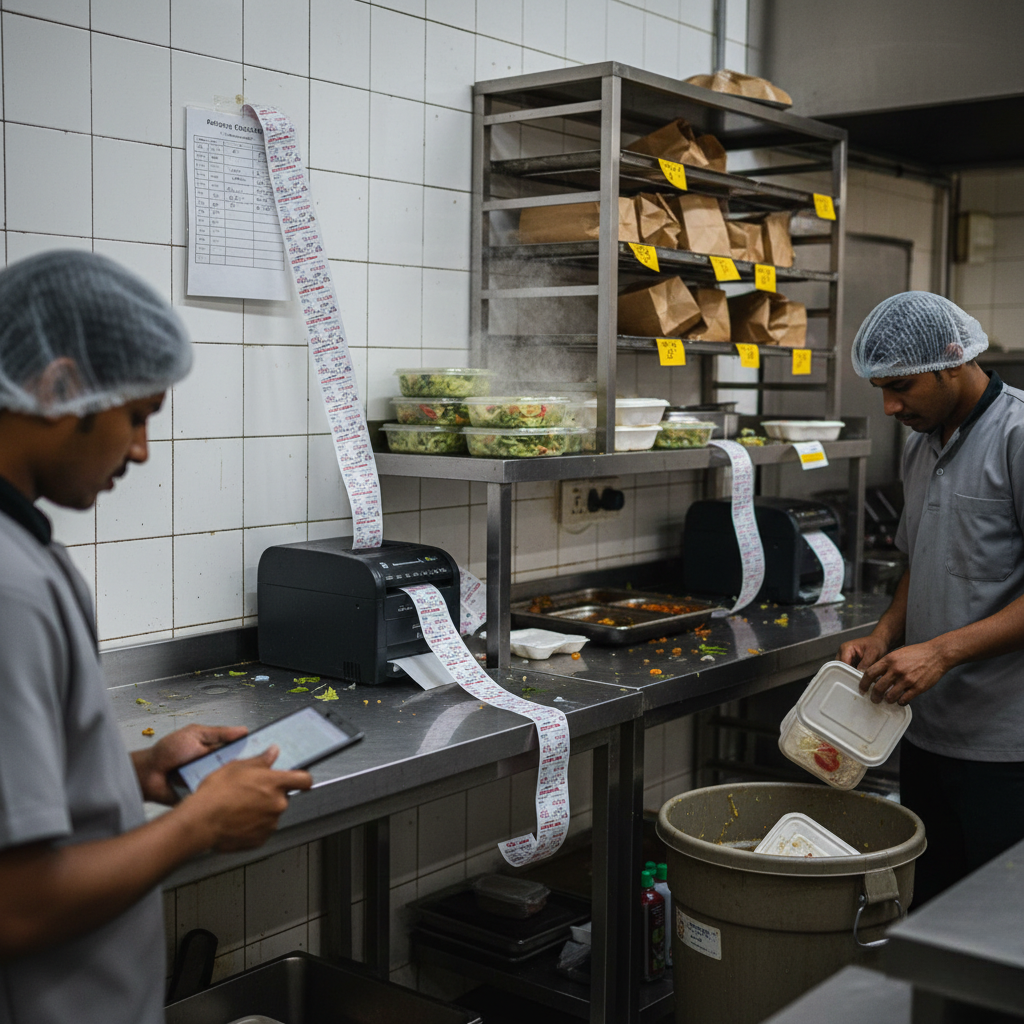
Step 2: Food Cost Control Is the Fastest Route to Profitability
Food cost is the biggest variable in a cloud kitchen. Most loss-making kitchens are not losing money because raw material rates increased. They lose money because food cost drift becomes normal: staff eyeballs portions, batch yields vary by cook, substitutions happen without costing updates, and prep planning creates expiry.
To turn profitability around quickly, apply five food-cost controls:
1) Lock portion sizes: define grams/ml for each component: gravy, protein, rice/noodles, toppings, sauces, and garnish. Use the right ladles and weighing rules.
2) Lock batch yield: for every base gravy, sauce, or protein batch, track expected yield (number of portions). If yield drops, find the reason. Yield variance is direct profit leakage.
3) Fix prep planning windows: over-prep creates expiry. Under-prep creates emergency buying and menu blocks. Use smaller prep cycles (example: 2–3 hour windows) until data stabilises.
4) Control substitutions: substitutions must be approved and documented. Random substitutions break taste consistency and cost accuracy.
5) Daily variance review: a 10-minute end-of-day check: portion tool check, yield check, and wastage note. Small daily checks prevent monthly losses.
If you want a direct connection between SOPs, food cost, and complaints, read How SOPs Reduce Food Cost & Complaints.
Step 3: Productivity Is Not Headcount. It’s Process
Loss-making kitchens often respond to chaos by adding staff. But more staff without role clarity increases confusion. Productivity improves when stations have ownership, handoffs are clean, and prep readiness is predictable before peak starts.
Implement a role-based workflow:
Prep owner: batching, labeling, storage discipline, par checks.
Cook owner: cooking sequence, pan allocation, batch timing, reheat rules.
Pack owner: packing sequence, seal discipline, add-ons checklist, labeling.
Dispatch owner: verification, rider handover timing, escalation rules.
This converts “busy kitchen energy” into real throughput. And higher throughput per staff member is what improves EBITDA.
For role clarity systems, use Role-Based Kitchen Operations Explained.
Step 4: Stop Payout Leakage from Refunds, Penalties, and Rating Drops
Many founders calculate profitability using commissions only. But in reality, payouts get hit by performance: wrong items, missing add-ons, cancellations, late dispatch, and repeated complaints. These don’t always show clearly in daily sales, but they show brutally in weekly payout reality.
Fix payouts by reducing repeat errors: order verification checklists, packing standards, sealing + labeling discipline, and time SLAs per stage. When these are consistent, refunds drop and ratings stabilise. Stable ratings reduce discount dependency, which protects margins further.
If you want the economics lens, read Aggregator Commission Impact in India.
External reference links (for platform policy context): Swiggy Refund & Cancellation Policy and Zomato Online Ordering Terms.
Step 5: Dispatch Accuracy Is a Profit System, Not a “Last Step”
Many kitchens cook well but lose money at dispatch. One wrong order triggers: refund, complaint, rating drop, and future conversion loss. That is why dispatch is one of the highest ROI fixes in a turnaround.
Build a dispatch discipline stack:
1) Dual verification: packer check + dispatch checker check. Reduce wrong/missing items immediately.
2) Packing sequence: hot items first or last based on packaging logic, gravy cups sealed, cutlery/tissue added, labels applied, and add-ons ticked.
3) Time SLAs: define maximum acceptable time: ticket acceptance, cook start, pack completion, rider handover. Time discipline reduces cancellations and late delivery complaints.
4) Escalation playbook: rider delay, item unavailable, substitution needed, or packaging issue. Escalation rules prevent panic and founder dependency.
For a dispatch-ready workflow, implement Cloud Kitchen Dispatch SOP.
The Scaling Myth: You Don’t Grow Out of Losses. You Systemise Out of Losses
Many founders believe: “Once we do more orders, we’ll become profitable.” That is only true if the system is already controlled. If the kitchen is leaking money today, more orders will leak money faster.
Safe scaling happens only after stability: stable food cost, stable dispatch, stable ratings, stable payouts. If your growth is currently hurting operations, read When Growth Is Hurting Your Cloud Kitchen Operations.
A Practical 14-Day Turnaround Plan to Make a Kitchen Profitable
Turning profitable is not about doing everything at once. It is about doing the highest ROI controls first and building routines that stick. Here is a practical 14-day sequence that works in running kitchens:
Days 1–2: Leakage audit. Capture refund reasons, remake reasons, delay buckets, wastage/expiry, stockouts, and top selling SKUs. Set a baseline.
Days 3–5: Portion + yield controls. Lock portion tools and portion grams/ml for top 20 SKUs. Add a daily portion tool check and yield check.
Days 6–7: Packing + dispatch controls. Implement dual verification and a packing checklist. Add a dispatch SLA board and escalation rules.
Days 8–10: Prep planning + holding time discipline. Shift to shorter prep cycles. Label batches with time. Define discard rules to avoid “tomorrow reuse” complaints.
Days 11–12: Role clarity + station ownership. Assign owners for prep, cook, pack, and dispatch. Add handoff checklists so work doesn’t float.
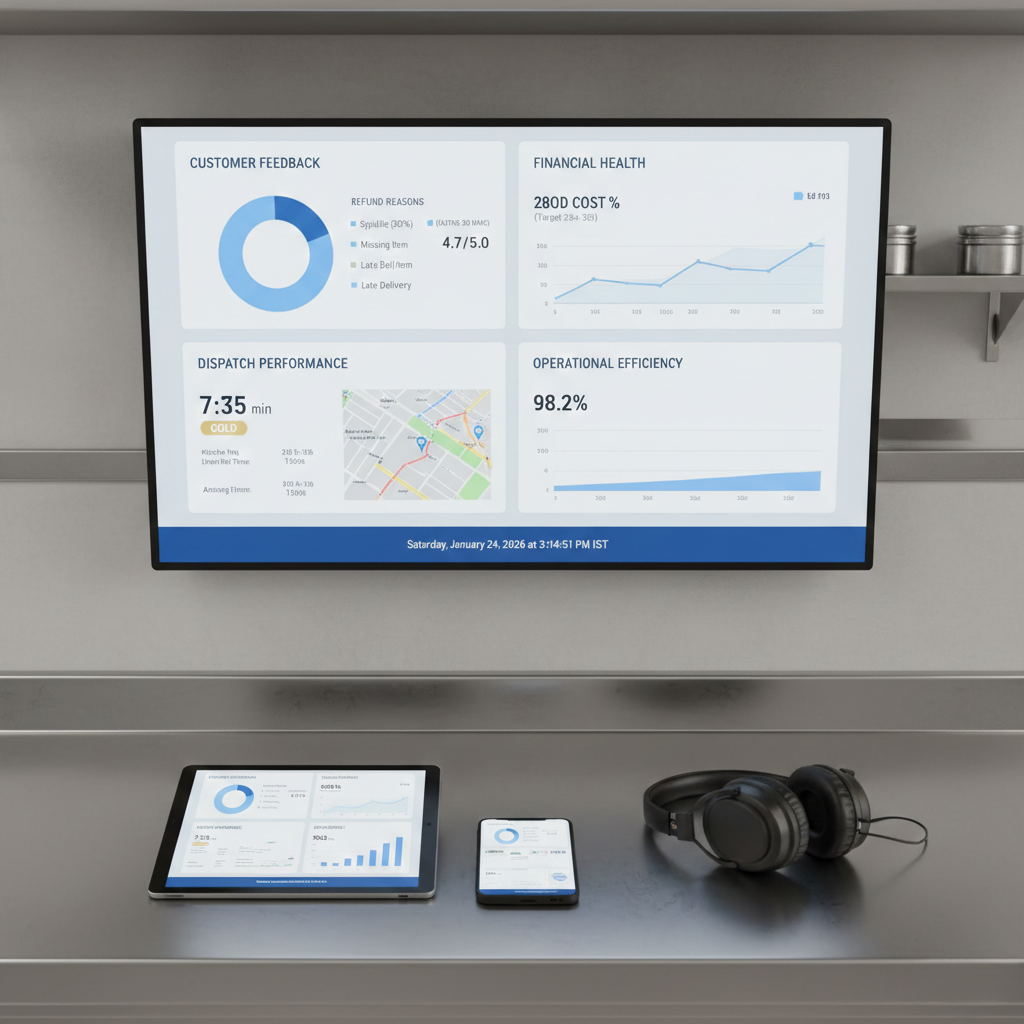
Days 13–14: Dashboard + weekly review. Track daily: refunds, remakes, dispatch time, food cost variance, wastage, and complaints. Review weekly and update SOPs.
External hygiene + safety standards (useful while standardising operations): FSSAI Hygiene Requirements (Schedule 4 reference), ISO 22000 overview, and FAO/Codex General Principles of Food Hygiene.
Final Takeaway: Profitability Is a Control System, Not a Hope Strategy
Turning a loss-making kitchen profitable does not start with “more marketing.” It starts with stopping the leaks: food cost drift, wastage, remakes, dispatch errors, refunds, delays, and payout instability.
When outcomes become repeatable, variable costs become controllable. When costs are controllable, profitability becomes predictable. That predictability is what allows you to scale safely across brands, shifts, and locations.
Operational frameworks from GrowKitchen, and operating partner brands like Fruut and GreenSalad help founders convert “busy kitchens” into “profitable, controlled kitchen networks.”
FAQs: Turning Loss-Making Kitchens Profitable
What is the fastest way to make a loss-making kitchen profitable?
Portion control + packing/dispatch verification. These reduce food cost drift and refunds immediately, which improves payout stability fast.
Should I stop ads if my kitchen is loss-making?
Reduce aggressive scaling until operations stabilise. If ads are pushing volume into a leaking system, they amplify losses. Fix the leak first, then scale.
How do I know if my problem is sales or operations?
If refunds, complaints, delays, and food cost vary by day or shift, it is operations. Sales problems don’t create variability. Weak systems do.
Can a single kitchen use these turnaround systems?
Yes. System discipline matters more in single kitchens because margins are tighter. These controls prevent small daily leaks from becoming monthly losses.
- Cloud Kitchen Profitability Consultant in India
- Cloud Kitchen Profitability Consultant in India
- CKaaS Explained
- Common Operational Mistakes in Cloud Kitchens
- How SOPs Reduce Food Cost & Complaints
- Cloud Kitchen Dispatch SOP
- Aggregator Commission Impact in India
- When Growth Is Hurting Your Cloud Kitchen Operations
- Grow Kitchen on X