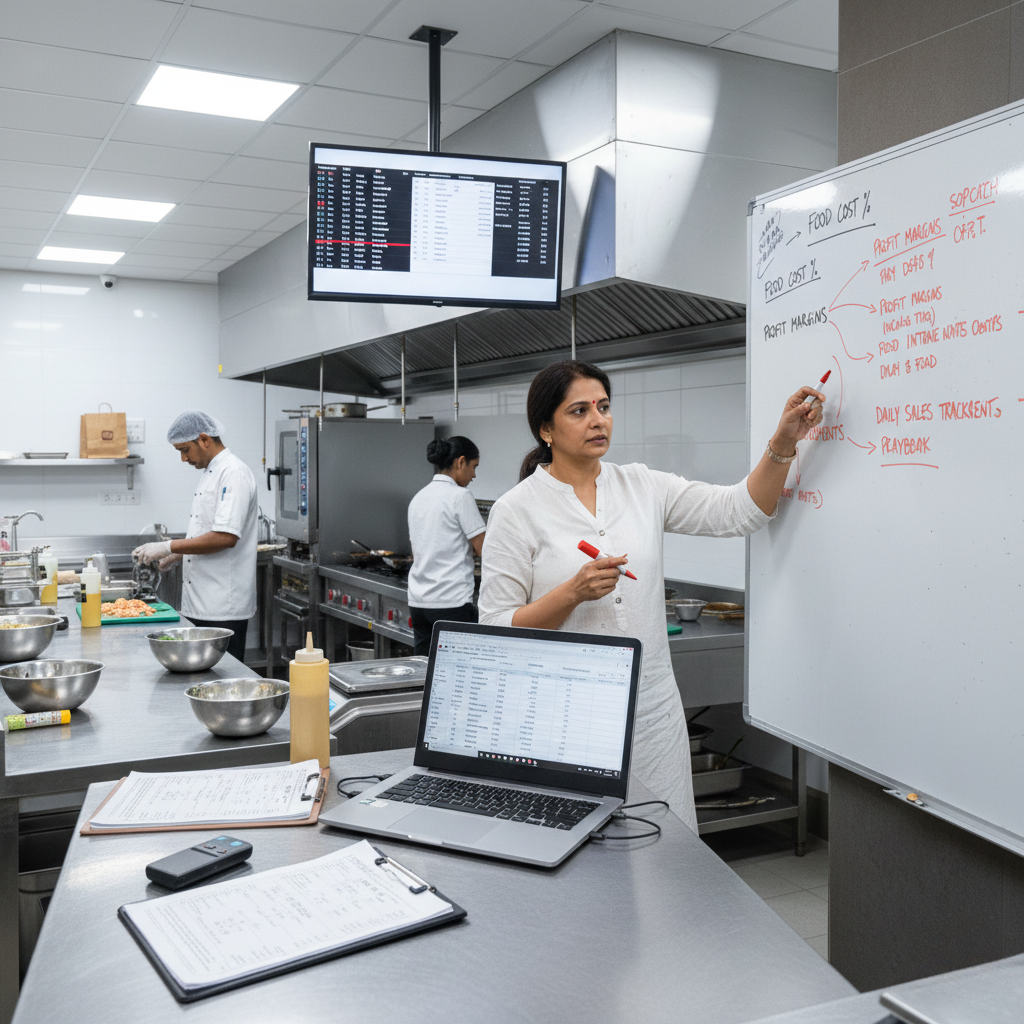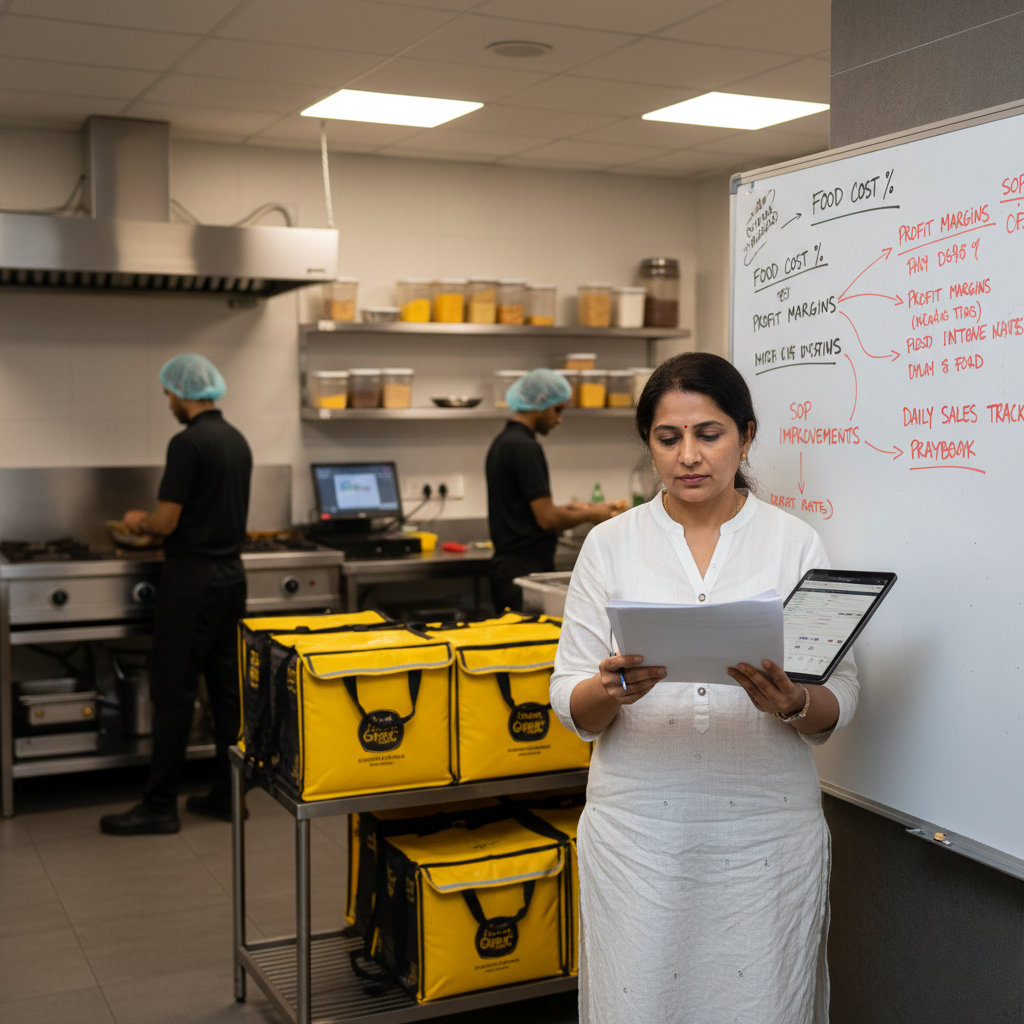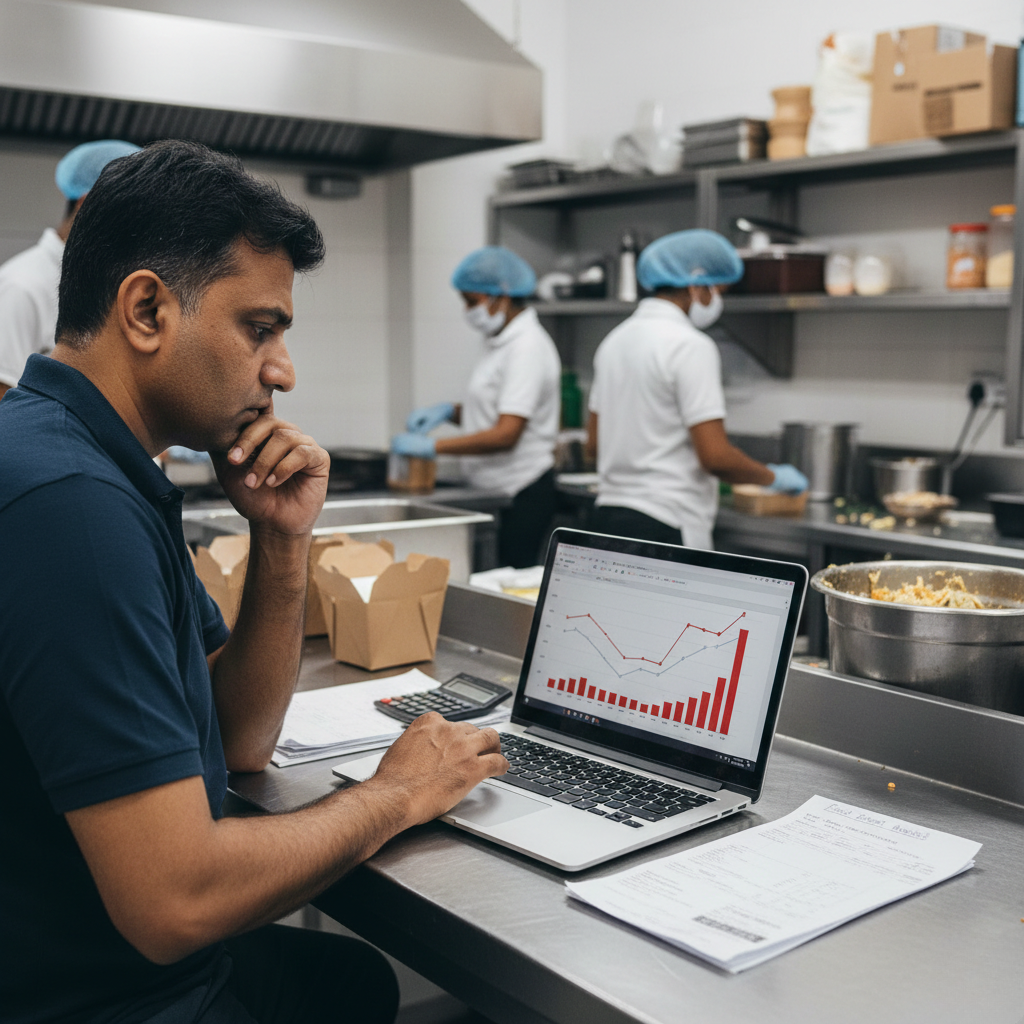

Most cloud kitchens in India don’t fail because food is bad—they fail because the business is not scalable. Scaling is not “opening more kitchens.” Scaling is replicating the same output: consistent taste, stable margins, predictable dispatch, and strong ratings-across multiple micro-markets. This guide breaks down the scalable cloud kitchen business model in India (2025), with the systems, structure, and execution framework used by serious operators.
Start Here If You Want the Big Picture First
This page is part of GrowKitchen’s core cloud kitchen learning series. If you want the full foundation (models, costs, setup, unit economics), start here: Cloud Kitchen Business in India.
For compliance references before you scale, review: FSSAI, GST Portal, and Udyam (MSME).
What Is a Scalable Cloud Kitchen Business Model?
A scalable cloud kitchen business model is designed to grow from 1 kitchen to multiple kitchens without losing control over quality, cost, and customer experience. It relies on standardisation, documentation, and predictable execution—not founder intuition.
Why Most Cloud Kitchens in India Can’t Scale
Most operators try to expand when the first kitchen is “working.” But what’s working is usually the founder’s presence-not a repeatable system.
- Recipes are not standardised (portioning changes daily)
- Staff training is informal (no SOP playbook)
- Inventory and wastage aren’t tracked weekly
- Packaging and dispatch are inconsistent (ratings drop)
- Expansion happens without micro-market demand mapping
If you want the real failure patterns, read: Why Cloud Kitchens Fail in India.
The 5 Pillars of a Scalable Cloud Kitchen Model (India)
1) Menu Built for Replication (Not Creativity)
Scalable menus are designed for repeatability: limited core ingredients, fast assembly, predictable cook times, and strong travel performance. The goal is stable ratings and stable cost.
Before scaling, lock your operating menu and build your daily systems: Cloud Kitchen SOP Checklist.
2) SOP System (Kitchen Runs Without the Founder)
SOPs are what make your output consistent across locations—prep SOP, cooking SOP, packing SOP, dispatch SOP, hygiene SOP, and complaint handling SOP. Without SOPs, scaling multiplies mistakes.
3) Unit Economics That Survive Expansion
The scalable model is built on contribution margin discipline. If you scale with weak margins, you only scale losses.
- Food cost: controlled through recipe + portioning + waste tracking
- Packaging: standardised for quality + cost
- Discounting: strategic, not emotional
- Refund rate: controlled through QC + dispatch discipline
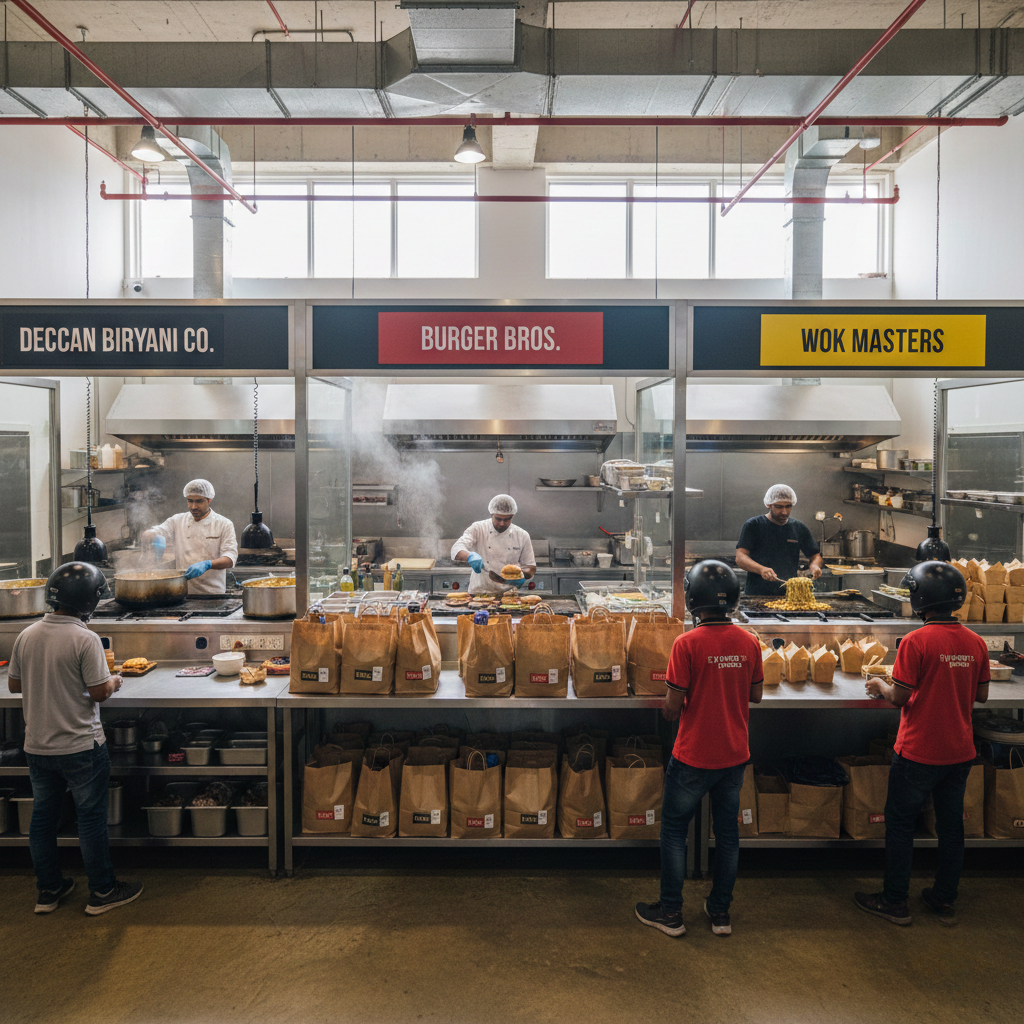
4. Multi-Brand Strategy (Higher Revenue Per Kitchen)
A scalable cloud kitchen model in India often uses multi-brand operations: 2-5 brands running from the same kitchen, sharing staff and prep. This improves utilisation and spreads fixed costs.
The trick is not “more brands”-it’s “shared prep + controlled complexity.”
5. Expansion Playbook (1 Kitchen → 3 → 10)
Scaling works when you replicate a proven kitchen template across micro-markets. The playbook includes: location selection, vendor mapping, staff training, SOP rollout, launch checklist, and weekly performance dashboards.
Use the step-by-step expansion framework here: How to Scale Cloud Kitchens to Multiple Locations.

Scalable Execution Framework (Simple, Practical)
If you want to scale cleanly, follow this sequence:
- Phase 1 (Stabilise): lock menu, SOP, packaging, and weekly costing
- Phase 2 (Systemise): training playbook + role-based staffing + QC checkpoints
- Phase 3 (Replicate): replicate the same kitchen template in a new micro-market
- Phase 4 (Control): weekly dashboards (ratings, refund rate, food cost, prep variance)
If you’re starting from scratch, use: How to Start a Cloud Kitchen in India.
Conclusion: Scale Systems, Not Stress
The scalable cloud kitchen business model in India is built on repeatability: menu engineering, SOP discipline, margin control, and micro-market replication. If you get these right, 1 kitchen can become 10+ without losing control.
If you skip systems and chase expansion, you’ll scale chaos-fast.
- Cloud Kitchen Business in India (Pillar Guide)
- How to Start a Cloud Kitchen in India
- Cloud Kitchen SOP Checklist
- How to Scale Cloud Kitchens to Multiple Locations
- Why Cloud Kitchens Fail in India
Also Refer To
- Grow Kitchen – Cloud Kitchen Systems & Consulting
- Grow Kitchen on LinkedIn
- Grow Kitchen on Facebook
- Rahul Tendulkar on LinkedIn
- Grow Kitchen on X
- Green Salad Official Website
- Fruut – Healthy Food Brand
Want to Scale 1 Kitchen to 10+ Without Losing Control?
GrowKitchen helps founders build SOP-led cloud kitchen models, tighten unit economics, and replicate kitchens across micro-markets with stable ratings and margins.