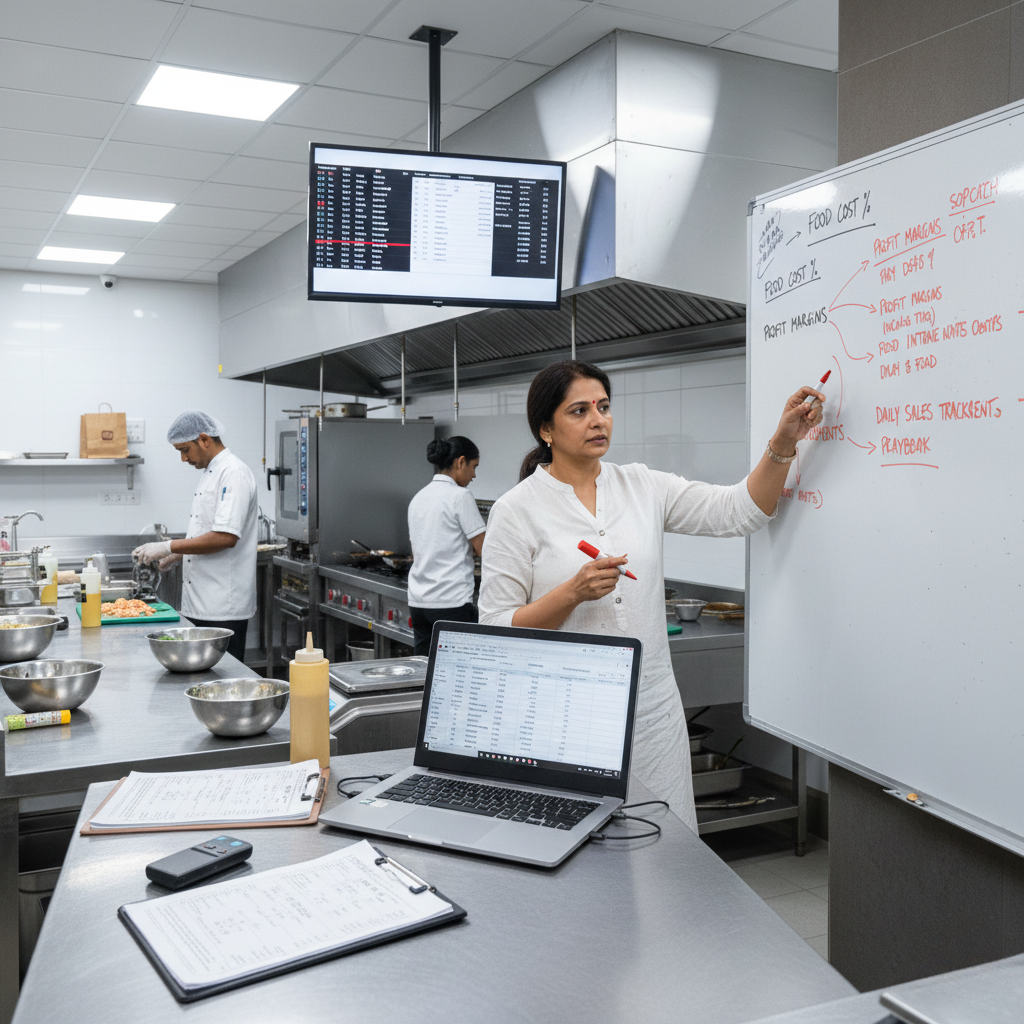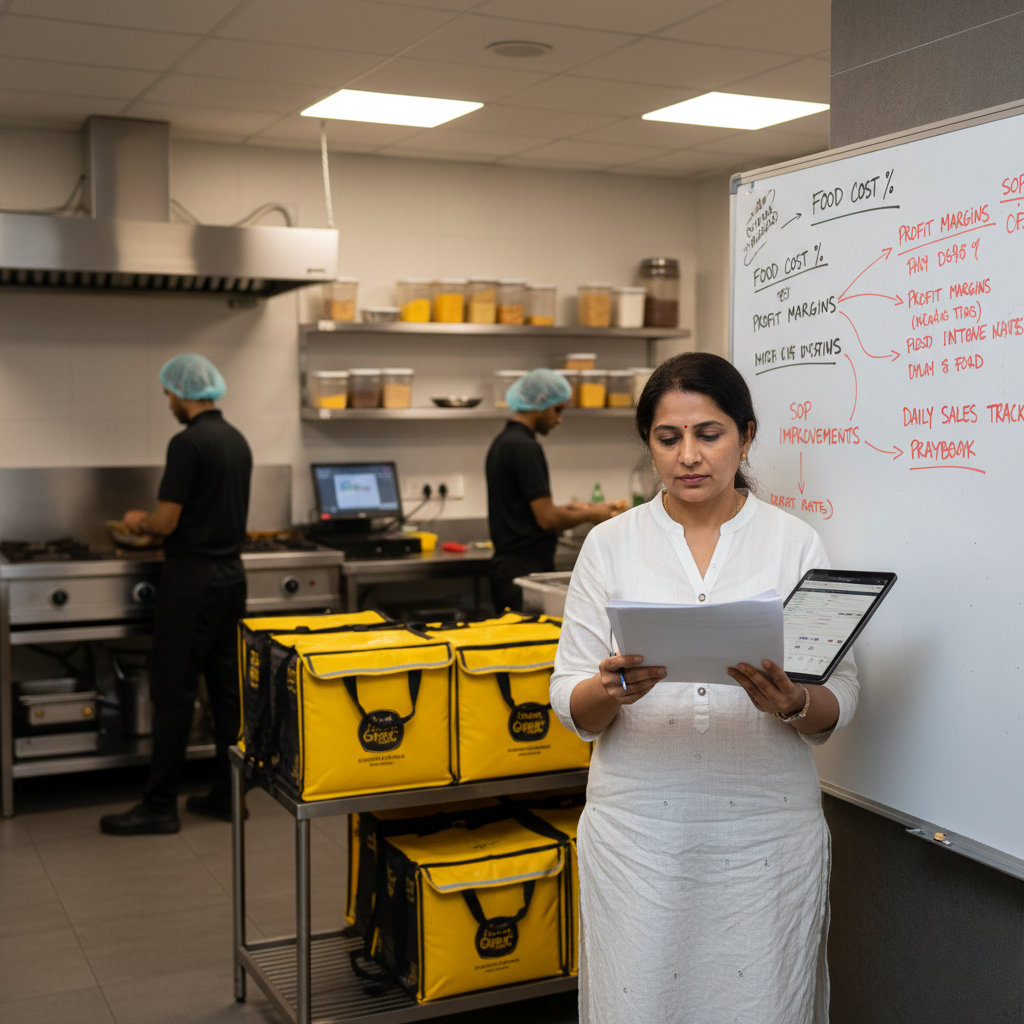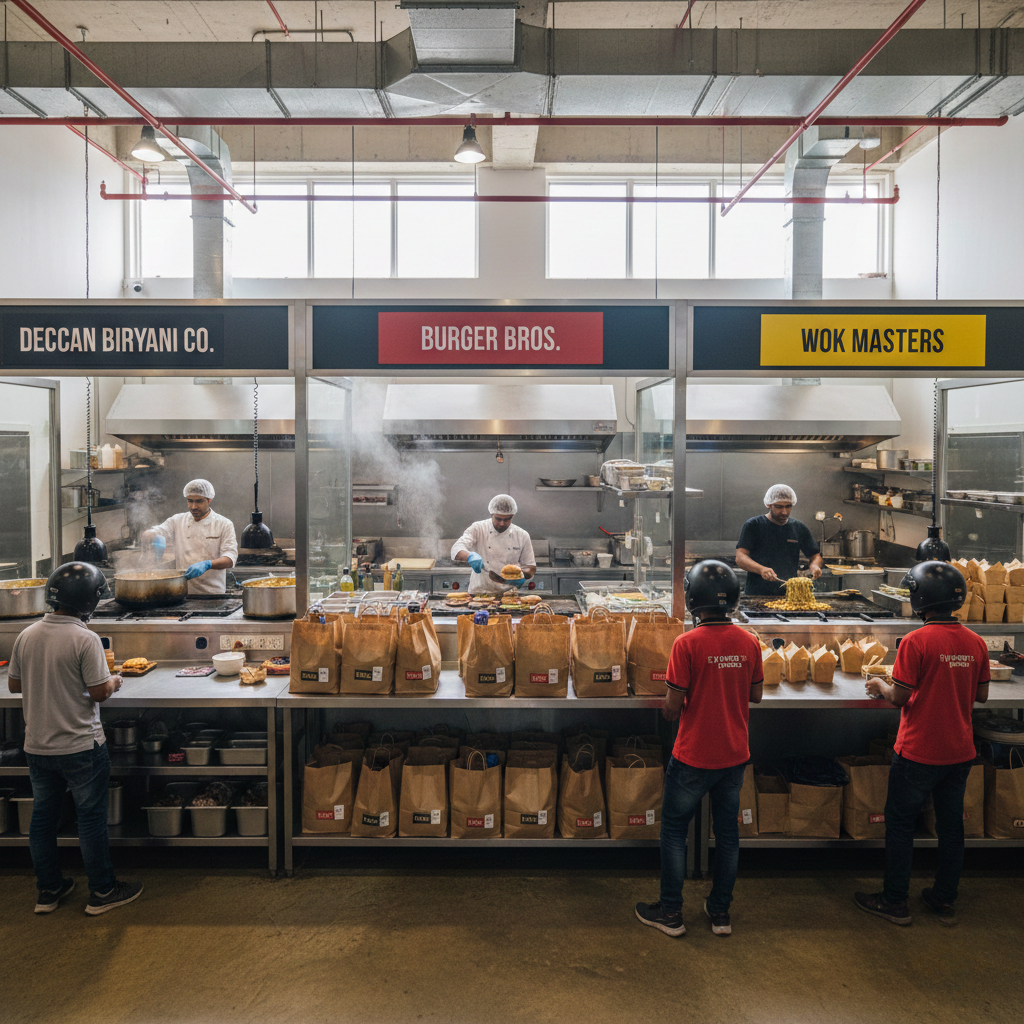
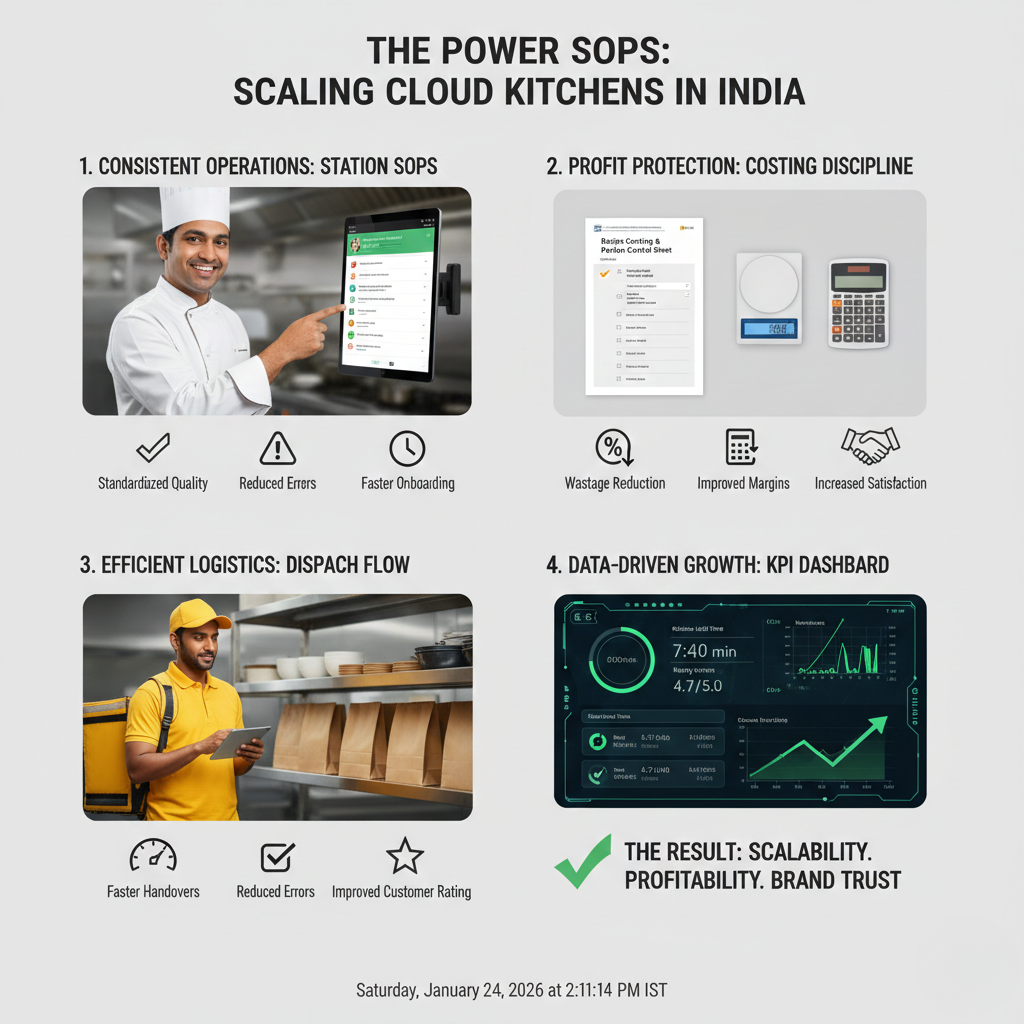
Scaling a cloud kitchen in India is not about opening more locations or adding more brands. It is about running the same kitchen outcome-taste, speed, cost, hygiene, ratings-every single day, across people, shifts, and locations. This is where SOPs (Standard Operating Procedures) stop being “documentation” and become the backbone of scale. This guide explains the real role of SOPs in scaling cloud kitchens in India, what types of SOPs actually matter, how they prevent margin leakage and rating collapse, and how founders should build SOPs that teams actually follow.
Start Here Before Understanding SOPs for Cloud Kitchen Scale
This article is part of GrowKitchen’s operations, profitability, and scalability learning series. If you’re new to delivery-first food businesses, start with: Cloud Kitchen Business in India.
SOP-driven kitchens also align better with compliance and audits. Scalable brands build SOPs that meet hygiene, training, and billing requirements defined by FSSAI, staff certification via FoSTaC, and clean reporting through the GST Network.
Why SOPs Decide Whether a Cloud Kitchen Can Scale or Collapse
Most cloud kitchens run fine at low volumes because the founder fills every gap. Taste checks, packing fixes, vendor follow-ups, and staff corrections all happen informally. The moment volumes rise-or a second kitchen opens-this informal control collapses.
SOPs are what convert founder effort into organizational capability. They allow the kitchen to perform correctly even when the founder is absent. Without SOPs, scaling only amplifies errors: refunds increase, food cost drifts, ratings fluctuate, and team discipline weakens.
What SOPs Actually Do in a Scaling Cloud Kitchen
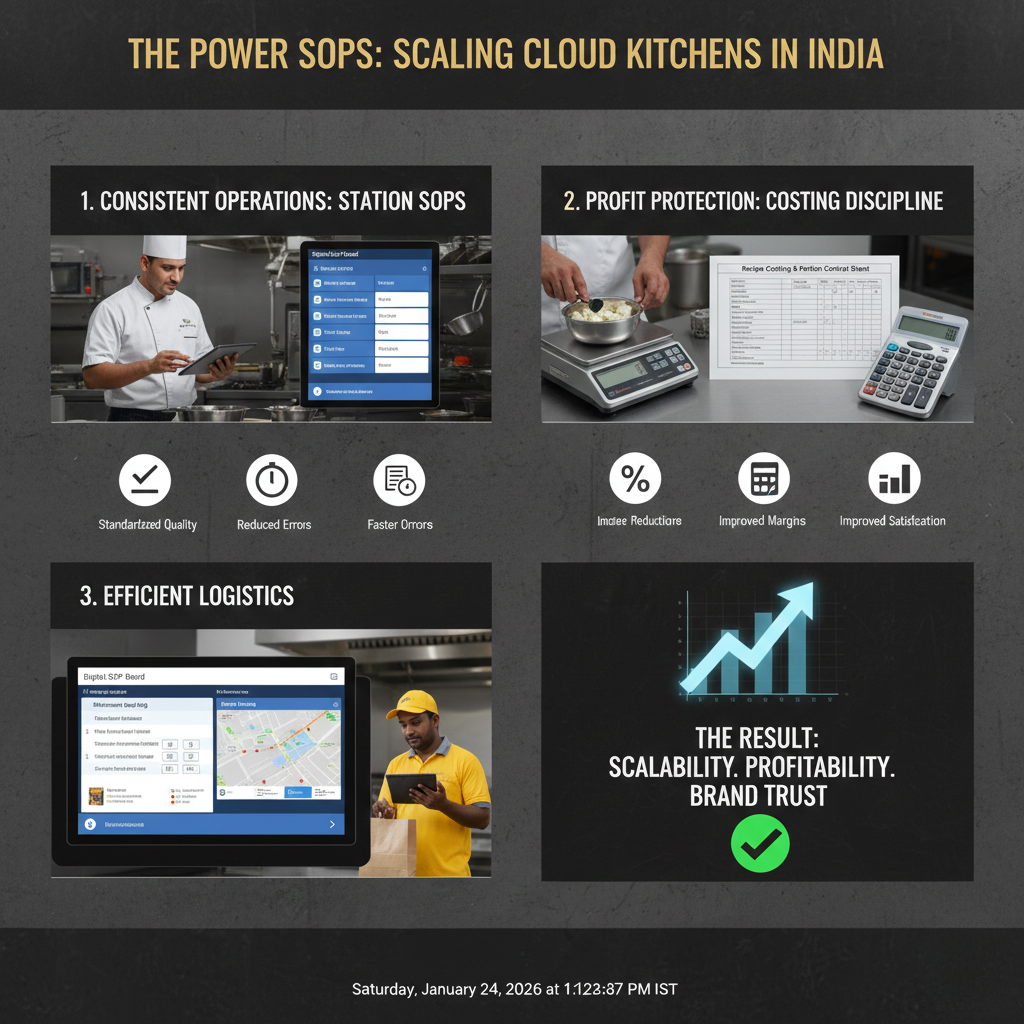
SOPs are not manuals to be read once and forgotten. In high-performing kitchens, SOPs act as live operating systems that control daily execution.
- Standardize output: same taste, same portion, same packing every time.
- Reduce decision fatigue: staff follow rules instead of improvising.
- Control food cost: portion rules and prep limits prevent silent leakage.
- Stabilize ratings: fewer mistakes during peak hours.
- Enable delegation: supervisors manage outcomes, not firefighting.
SOPs convert experience into repeatability-the only currency that allows scale. For a full operational view, read: Cloud Kitchen Operations Framework.
Types of SOPs Required to Scale Cloud Kitchens in India
Scalable kitchens do not rely on a single SOP document. They use layered SOPs that control the kitchen end-to-end.
- Prep SOPs: batch sizes, holding times, cooling, storage labeling.
- Cooking SOPs: recipe cards, ladle sizes, weigh points, pan rules.
- Packing SOPs: item checklist, seals, labeling, hot/cold segregation.
- Dispatch SOPs: ticket aging limits, rider handover flow.
- Inventory SOPs: RM master, par levels, reorder rhythm.
- Hygiene SOPs: cleaning schedules, personal hygiene, audits.
A practical checklist view is available here: Cloud Kitchen SOP Checklist.
How SOPs Enable Multi-Location Cloud Kitchen Scaling
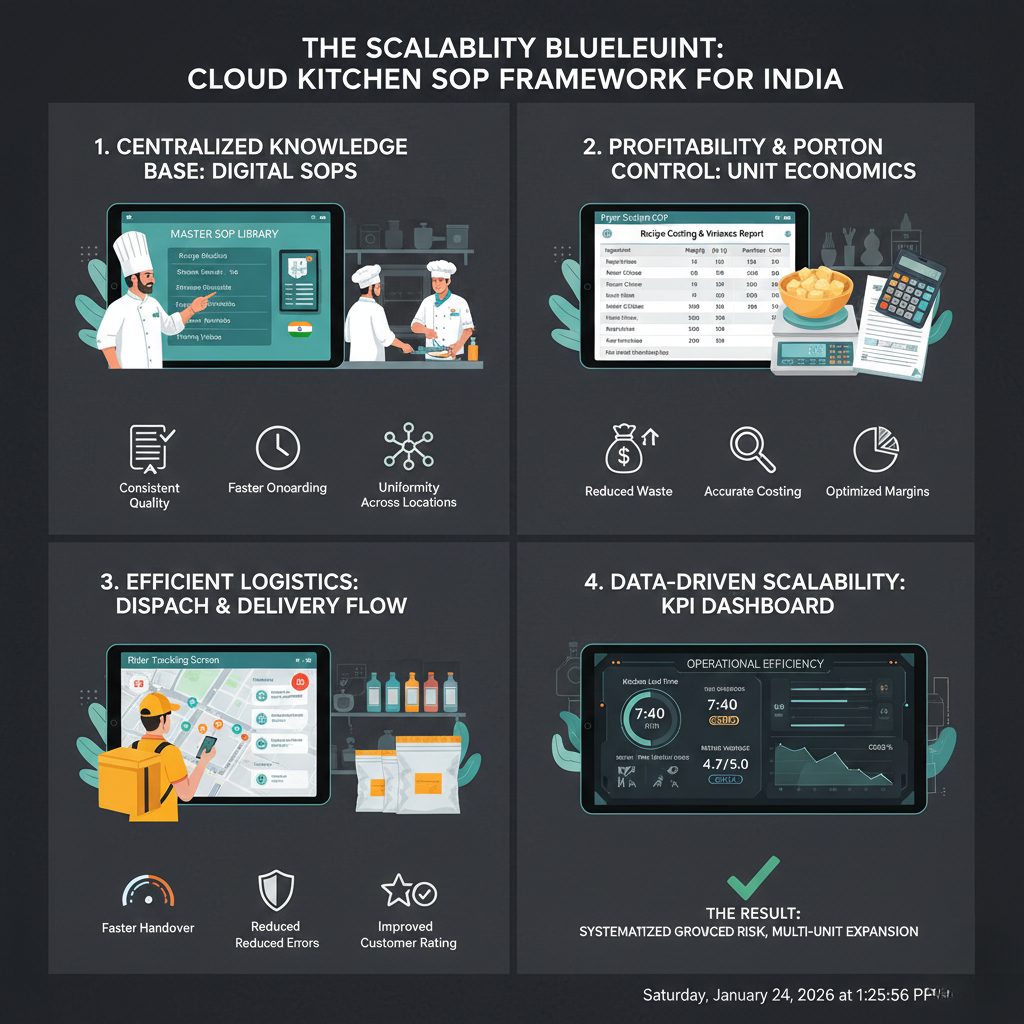
The biggest mistake founders make while expanding is copying menus, not copying systems. Locations fail when SOPs live in people’s heads, not in shared operating documents.
SOP-driven scaling ensures:
- New kitchens launch faster with predictable output.
- Training time reduces because SOPs replace shadow learning.
- Audits become objective, not opinion-based.
- Brand experience remains consistent across areas.
If expansion is your next step, use: How to Scale Cloud Kitchens.
Why SOPs Directly Impact Cloud Kitchen Profitability
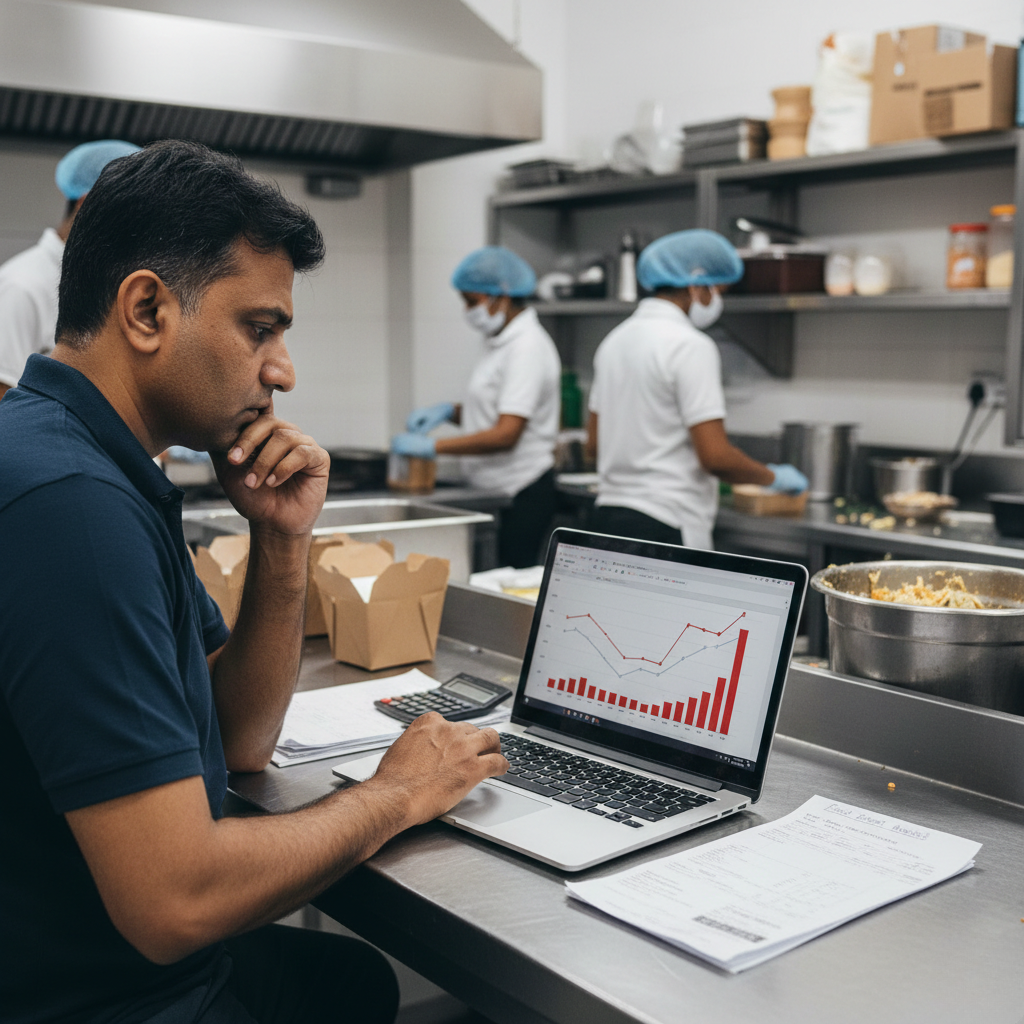
SOPs are not just operational tools-they are financial controls. Most margin loss in cloud kitchens comes from small daily deviations.
- Extra 10g protein per order = massive monthly food cost leak.
- Missing item refunds destroy contribution margin.
- Inconsistent prep increases wastage and rework.
SOPs lock these leakages by defining “acceptable execution.”
To understand margin mechanics, read:
Cloud Kitchen Profit Margin in India
see this – GreenSalad.
Why Most SOPs Fail in Indian Cloud Kitchens
SOPs fail not because teams are lazy, but because founders design SOPs that are impractical during peak pressure.
- SOPs written like textbooks instead of kitchen flows.
- No visual cues or station-level checklists.
- No accountability or KPI linkage.
- No refresher training or audits.
SOPs must be built for Indian kitchen realities-high churn, mixed skill levels, and aggregator-driven pressure.
Final Thoughts: SOPs Are the Real Scaling Engine
Cloud kitchens do not scale because founders work harder. They scale because systems work consistently. SOPs convert experience into process, and process into profit.
If your kitchen performs only when you are present, SOPs are not optional-they are urgent. Start with: Cloud Kitchen Operations Framework
FAQs: SOPs and Cloud Kitchen Scaling
Are SOPs necessary for small cloud kitchens?
Yes. SOPs matter even more for small kitchens because founders cannot afford leakage or instability.
When should SOPs be introduced?
Ideally before launch. If already live, SOPs should be introduced before scaling or adding brands.
Do SOPs slow down kitchens?
No. Well-designed SOPs reduce confusion and speed up execution during peak hours.
- Cloud Kitchen Business in India
- Cloud Kitchen Operations Framework
- Cloud Kitchen SOP Checklist
- Cloud Kitchen Profit Margin in India
- How to Scale Cloud Kitchens
- Why Cloud Kitchens Fail in India
- Cloud Kitchen Consultant in India
- CKaaS Explained
- Rahul Tendulkar on LinkedIn
- Grow Kitchen on LinkedIn
- Grow Kitchen on Facebook