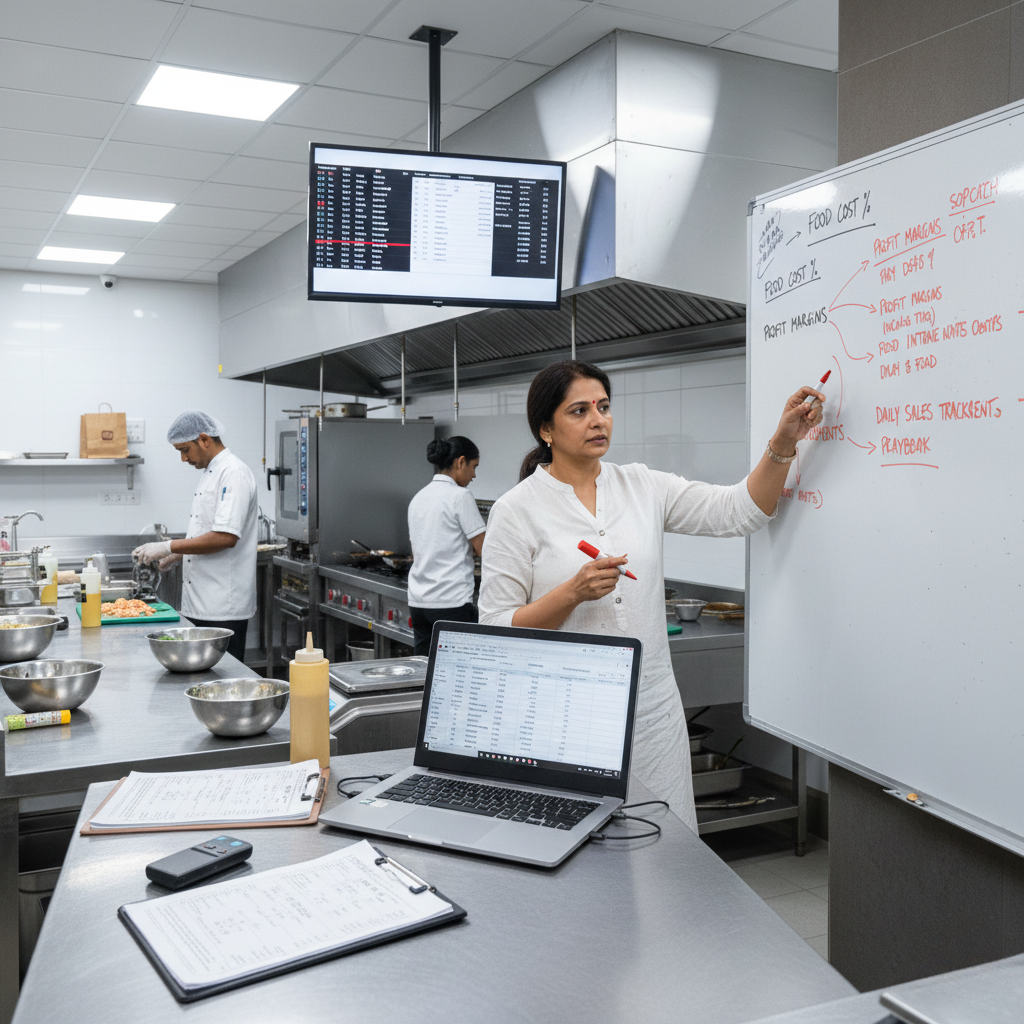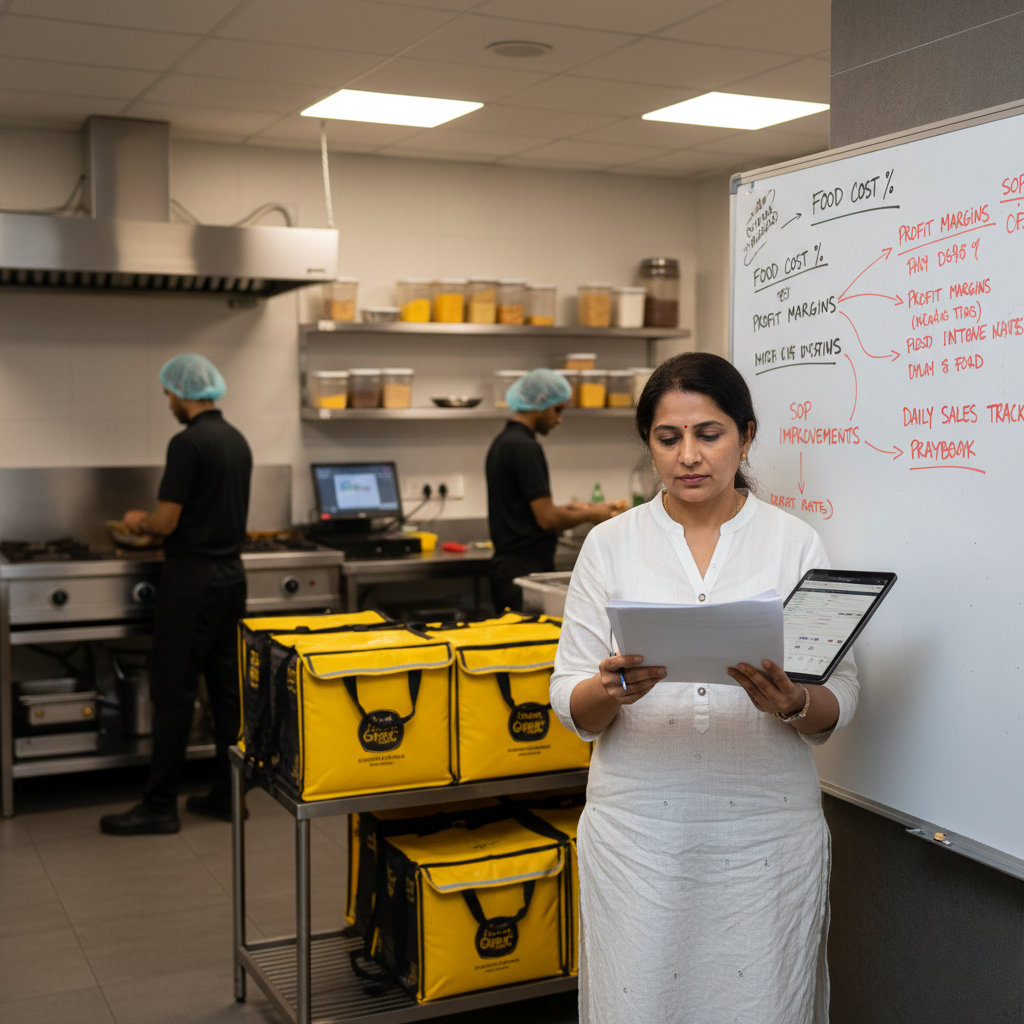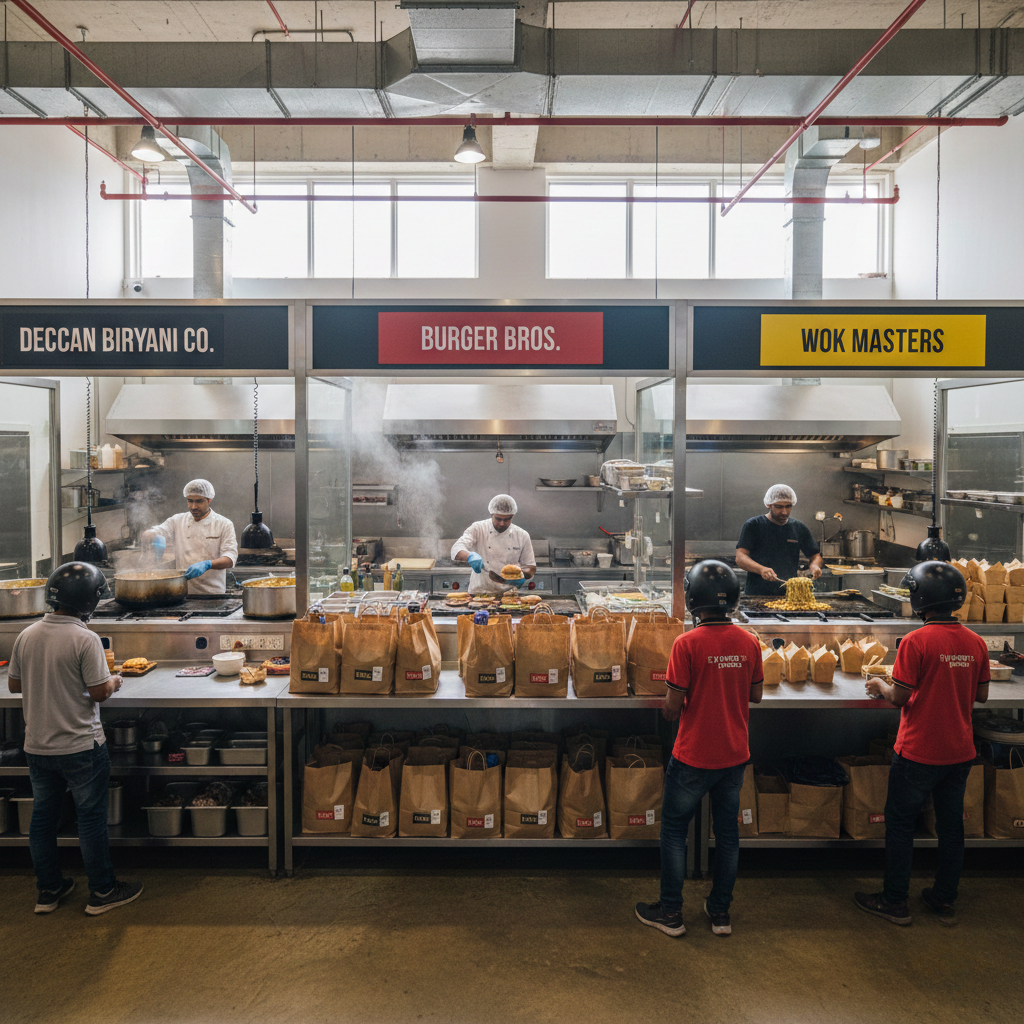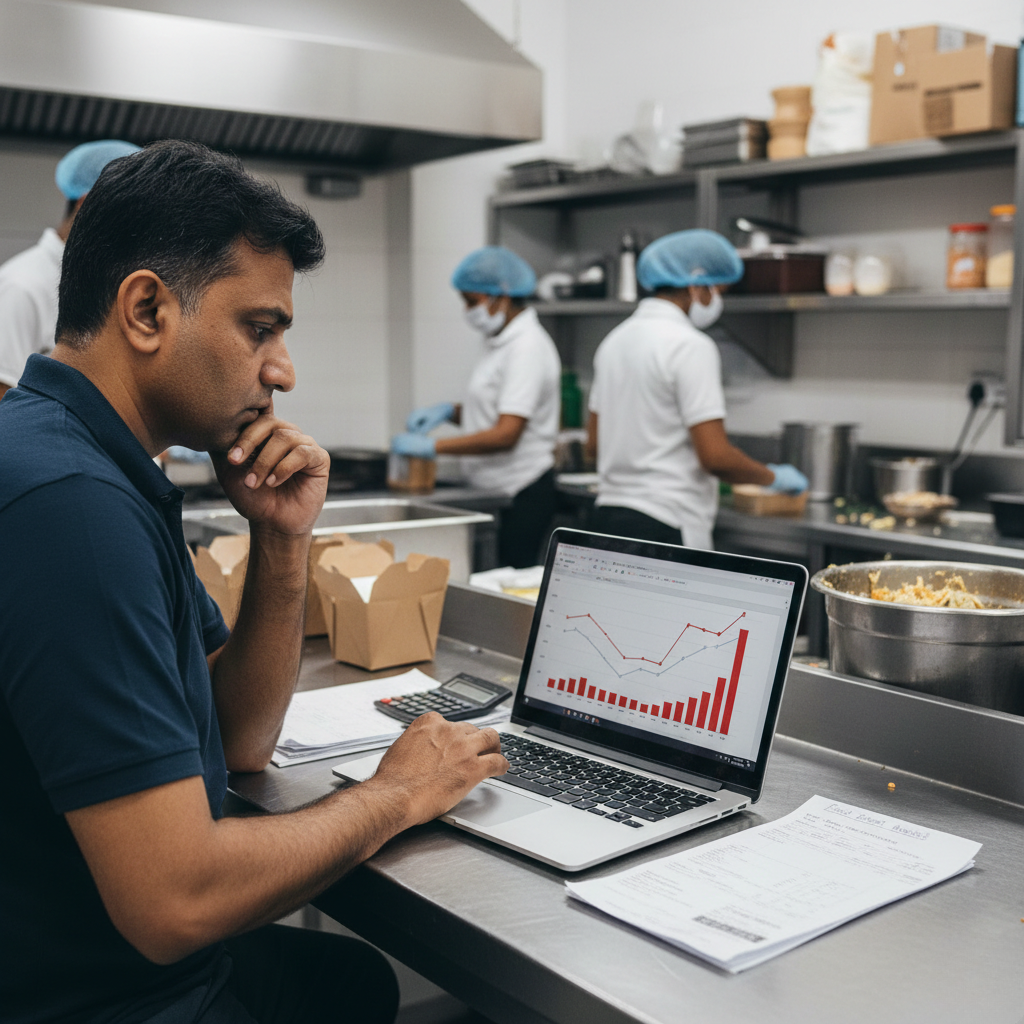
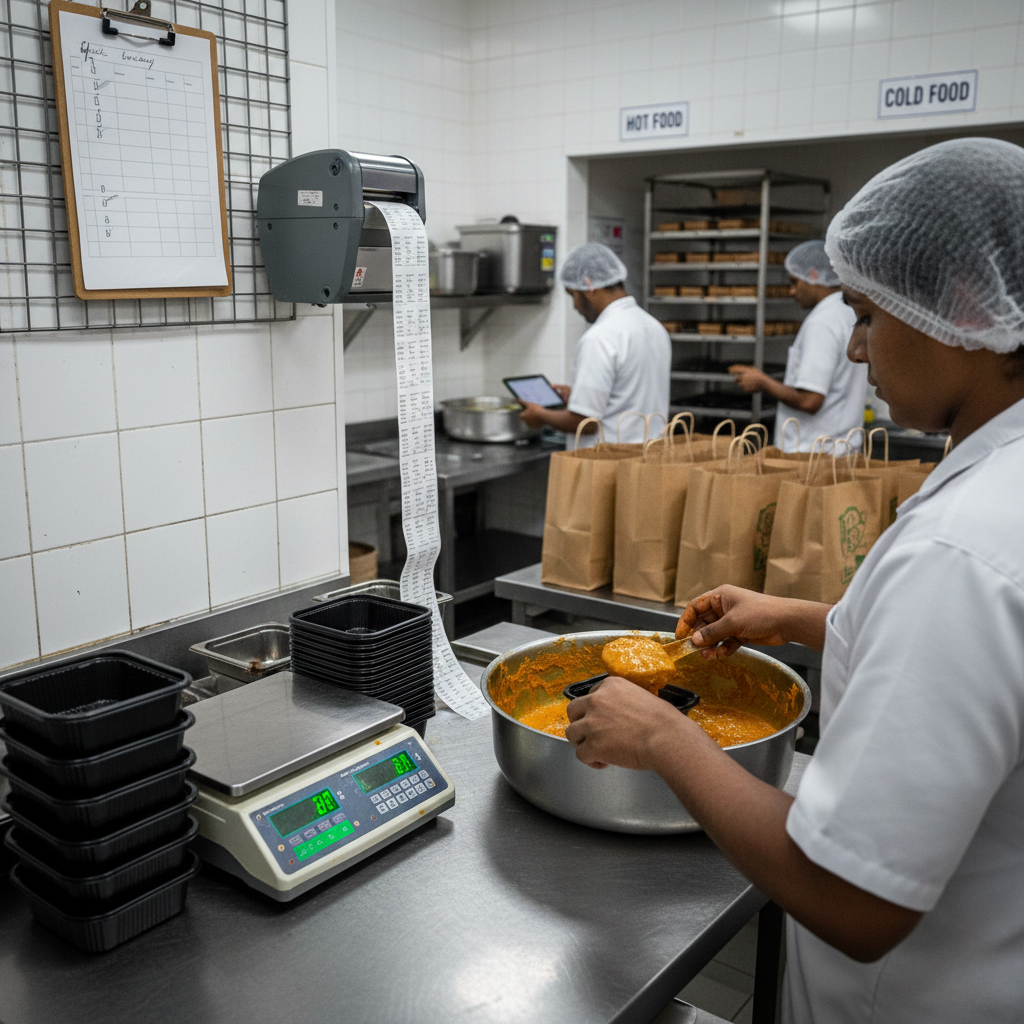
Why is portion control in cloud kitchens? is not a “kitchen discipline” topic. It is a profit survival system. Cloud kitchens run on thin contribution margins, high volume, and zero tolerance for variability. Without portion control, every extra ladle of gravy, every extra 10g of cheese, every heavier protein scoop quietly turns your best-selling items into loss-making items. This guide explains why portion control is the highest-ROI operational lever for cloud kitchens in India and how to implement a portion-control operating system end-to-end from recipe cards to tools to audits using systems, not supervision.
Why Is Portion Control So Important in Cloud Kitchens? The Real Reason Food Cost Keeps Drifting
Every cloud kitchen founder has felt this contradiction: orders are coming, top items are selling, ratings look okay, but food cost keeps creeping up and margins feel thin. You open your costing sheet and it looks right. You look at vendor bills and nothing feels “that different.” Then why does profit still feel missing?
The answer is usually portion drift. Not a dramatic theft. Not a single big mistake. Just small daily “extras” that become permanent: a little more gravy during peak, a heavier scoop of rice because the box looks empty, an extra cheese slice to avoid complaints, extra sauce sachets because customers “like it,” and free add-ons to prevent escalation.
In delivery-first kitchens, these micro extras compound faster than founders expect. Volume multiplies everything. If you do 80 orders/day, a ₹8 drift per order becomes ₹640/day. Over 30 days, that becomes ₹19,200. That’s only one drift. Stack 4–5 drifts and you’ll understand why your kitchen looks busy but feels cash-thin.
If you want the profitability foundation lens first, start with Cloud Kitchen Profitability Consultant in India and map your recurring leaks via Common Operational Mistakes in Cloud Kitchens.
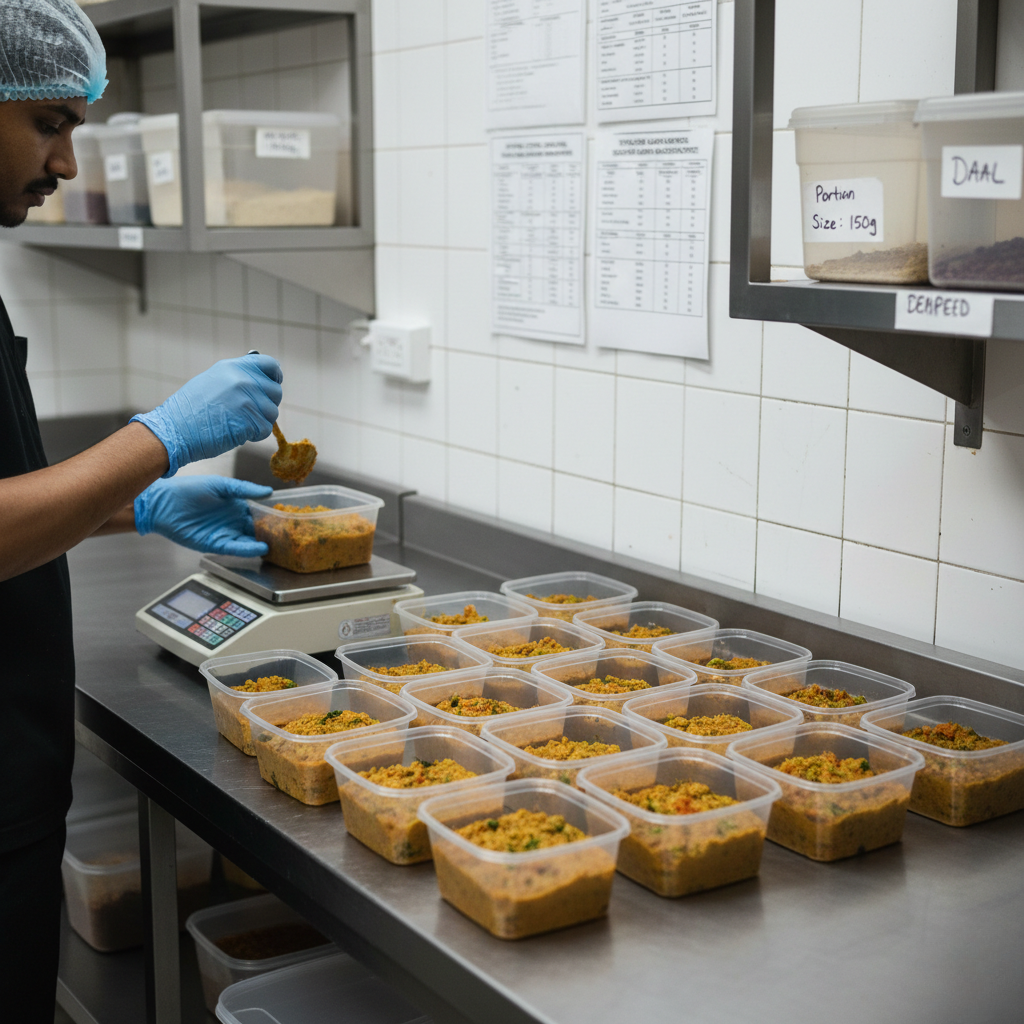
What Portion Control Actually Means in a Delivery Kitchen (Not Just “Weigh Everything”)
Portion control is not the same as “using a weighing scale for every order.” In a cloud kitchen, portion control means the output is predictable at speed. It means every SKU has defined grams/ml for each component and the team uses portion tools that make the correct portion the easiest portion.
If portioning depends on memory or “feel,” it will drift during peak. If portioning depends on the founder watching, it will collapse the moment you are not present. Portion control is a system that lives at the station: recipe card, portion tool, assembly sequence, and a daily compliance check.
A powerful way to think about it: your menu price is fixed. Your commission is fixed. Your packaging cost is mostly fixed. The biggest variable you can actually control daily is portioning. That’s why portion control is the most important operational lever in delivery kitchens.
The Unit Economics Lens: Portion Control Is Contribution Margin Control
Cloud kitchen profitability is decided per order. Your contribution margin is basically: selling price minus platform costs minus packaging minus food cost minus refunds/penalties share. In this equation, portion control hits food cost directly and hits refunds indirectly.
Here’s what most founders miss: poor portion control doesn’t only increase food cost. It increases inconsistency. Inconsistency increases complaints. Complaints increase refunds, replacements, and discount burn to recover conversion. So portion control is also a payout-quality system.
This is why “we give extra quantity” is not a strategy. It’s uncontrolled cost. If you want to give more, do it as a priced upgrade. Unpriced extras are silent losses.
If you want to see how operational drift destroys profitability beyond portions, audit using Common Operational Mistakes in Cloud Kitchens.
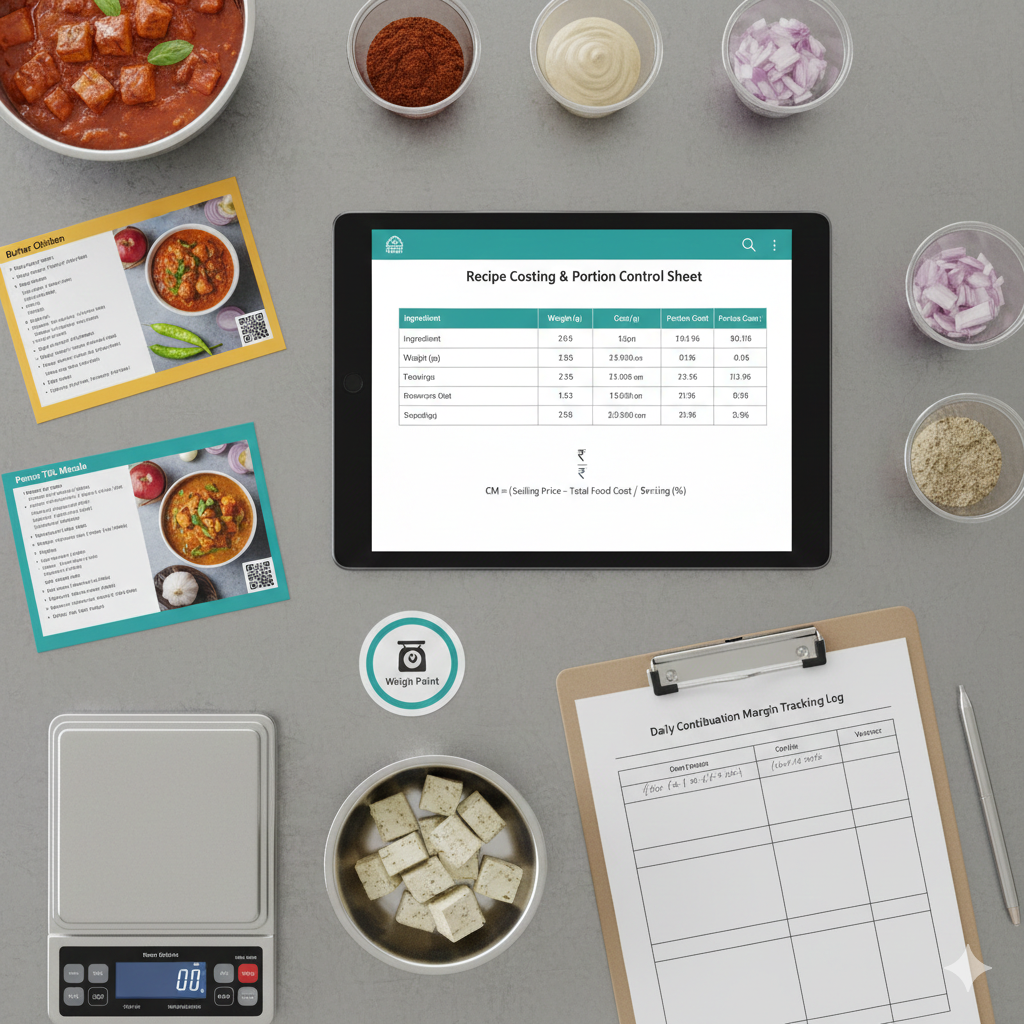
The 10 Reasons Portion Control Is Critical in Cloud Kitchens (And What It Fixes)
Portion control sounds like a small operational detail. In delivery kitchens, it is the difference between scaling profitably and scaling losses. Here are the core reasons portion control matters and what each one looks like on the floor.
1) It prevents food cost drift on high-selling SKUs. Your top-selling items define your monthly profitability. If your best-sellers drift by ₹8–₹15 each, margin disappears quietly. Portion control keeps those items stable.
2) It creates predictable yield planning. Portion control is not only for serving. It also improves batch planning. If your gravy portion is fixed, you can predict how many orders a batch supports. Without this, prep becomes guesswork and waste increases.
3) It reduces “peak hour panic extras.” During peak, staff often serves extra to avoid complaints. That becomes the new normal. Portion tools remove the need to “decide” portions under pressure.
4) It stabilizes customer experience and ratings. Customers don’t only judge taste. They judge consistency. If portion sizes vary across orders, customers feel cheated sometimes and “lucky” other times. Both are bad for trust. Stable portions reduce negative rating spikes.
5) It makes menu pricing accurate and defensible. A costing sheet assumes defined portions. If portions vary, pricing becomes fiction. Portion control makes your pricing real, and makes it easier to raise prices because value delivery is consistent.
6) It improves staff speed through predictable assembly. Counterintuitive truth: good portion control increases speed. When the scoop and ladle are fixed, assembly becomes muscle memory. Without tools, staff hesitates, rechecks, redoes, and creates delays.
7) It reduces wastage and rework. Overfilled boxes spill. Extra sauces burst. Over-portioned bowls leak. Leakage increases complaints and replacements. Portion control reduces packaging failures by keeping fill levels predictable.
8) It makes inventory variance visible. If portions are controlled, expected consumption becomes predictable. That means variance can be investigated properly. Without portion control, you can’t distinguish between normal consumption and leakage.
9) It protects you from founder dependency. Many kitchens only “maintain portions” when the founder is present. Portion SOPs + tools make consistency possible without supervision. This is essential for scaling beyond one kitchen.
10) It allows you to engineer profitable upgrades. The right way to increase quantity is not “give extra.” It’s “sell extra” as an add-on or premium size. When base portions are controlled, upgrades become clean, profitable, and easy to execute.
If you want the SOP-led link between cost control and fewer complaints, read How SOPs Reduce Food Cost & Complaints.
Swiggy/Zomato Reality: Portion Control Also Protects Payout Quality
Many founders treat portion control as purely a food-cost lever. In delivery kitchens, it also affects payout quality. Here’s how: overfilled packs spill more, spilled packs get more complaints, complaints trigger refunds/replacements, and refunds reduce payout quality.
On top of this, uncontrolled portions create inconsistent perceived value. Some customers get heavy portions, some get light. The light-portion customers complain more and rate lower. Ratings volatility reduces conversion, and founders respond with heavier discounts. That discount burn further reduces contribution margin.
To understand the payout lens in detail, read Aggregator Commission Impact in India.
External reference links (policy context): Swiggy Refund & Cancellation Policy and Zomato Online Ordering Terms.
Packing + Dispatch: Portion Control Prevents Spillage, Refunds, and Remakes
In delivery kitchens, portion control and dispatch accuracy are connected. Many kitchens spill because packs are overfilled or inconsistently filled. A gravy bowl filled to the brim is not “generous,” it is risky. The rider movement will test your packaging. One spill often becomes: complaint → refund/replacement → rating drop → discount burn.
A strong portion system includes “pack fill limits” as part of the SOP: max fill line for gravies, max fill line for rice bowls, and sauce placement rules to prevent leakage. This is how you reduce refunds without “better marketing.”
Implement dispatch predictability using Cloud Kitchen Dispatch SOP.
Why Portion Control Must Be Role-Based (Not “Team, Please Control Portions”)
Portion control fails when it is treated as a motivational instruction. Saying “Please don’t over-portion” does not work during peak. Portion control works when roles and checks are built into the system.
Here is what role-based portion control looks like:
Prep role:
batch recipes with expected yield, labeled holding times, and pre-portioned components where possible.
Cook role:
fixed ladle/scoop tools, weigh points for proteins, and assembly sequence that removes guessing.
Pack role:
pack fill limits, sealing rules, and checklist verification for add-ons and sauces.
Store role:
weekly variance review for leak items (oil, cheese, mayo, sauces, proteins).
If you want the full role-based operations model, use Role-Based Kitchen Operations Explained.
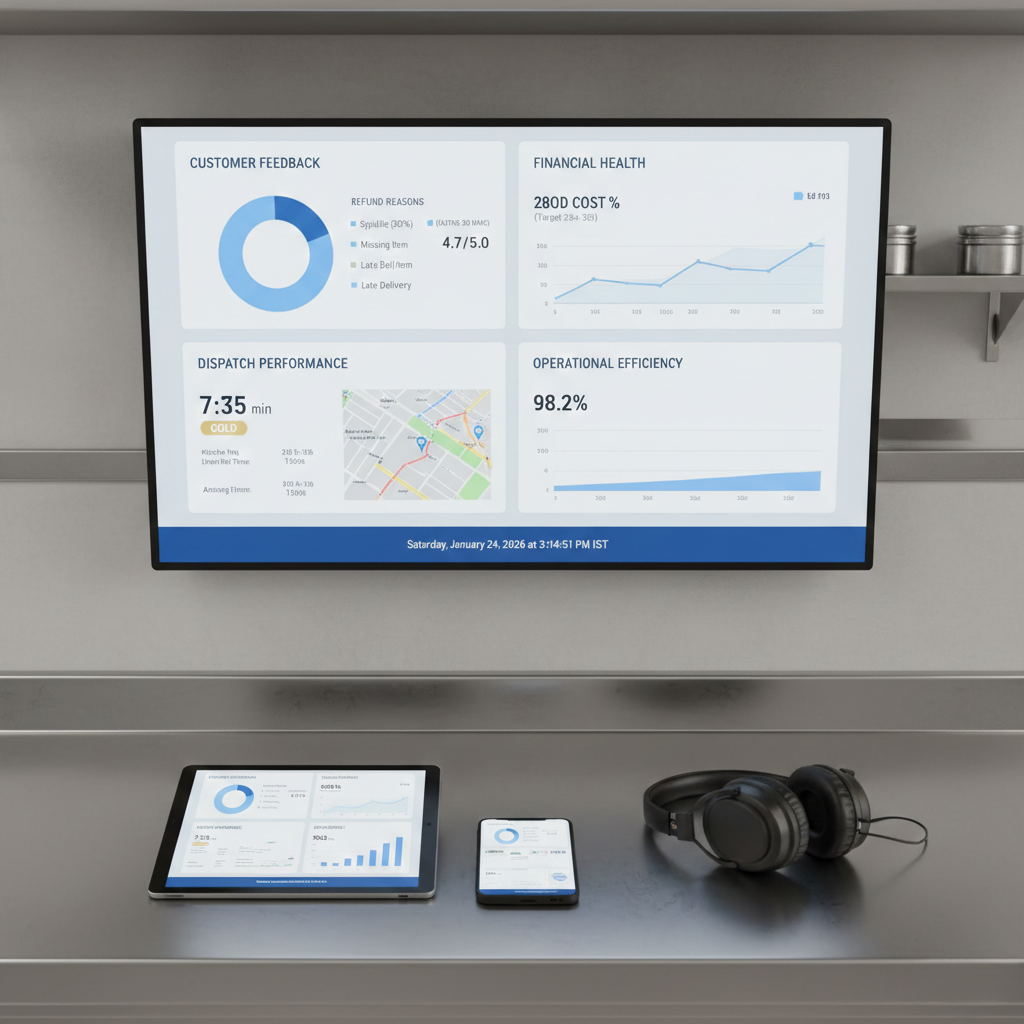
How to Implement Portion Control in 7 to 30 Days: A Practical System That Works
Portion control doesn’t work when it is implemented as a one-time training. It works when it is implemented as a station system with tools and daily checks. Below is a rollout sequence that works in running cloud kitchens.
Step 1 (Day 1–2): Pick your top 10 SKUs by sales and top 5 SKUs by complaints. Start where money is concentrated. Portion drift on best-sellers is the fastest leak. Complaint SKUs often involve inconsistency and spillage.
Step 2 (Day 1–3): Define component-wise grams/ml for each SKU. Don’t define “a bowl.” Define components: rice/noodles grams, protein grams, gravy ml, toppings grams, sauce grams, garnish grams. If it is not defined, it will drift.
Step 3 (Day 2–4): Assign tools that make the right portion fast. Ladles for gravies, scoops for rice/noodles, weigh points for proteins (e.g., 80g / 100g / 120g), portion cups for sauces, and a visible “tool parking spot” at the station. If the tool is missing, portion control collapses.
Step 4 (Day 3–7): Introduce weigh-point audits (not full weighing). You don’t need to weigh every order. You need to verify predictability. Do random checks: 5 orders in peak, 5 orders in non-peak, record variance, correct immediately.
Step 5 (Week 2): Add batch yield tracking for gravies and proteins. Track: input weight, output yield, portions produced. If yield changes, investigate method drift. Yield stability is the hidden engine behind portion stability.
Step 6 (Week 2): Align packaging to portion fill limits. Choose containers that match portion volumes. A container that is too big invites over-portioning. A container that is too small invites spillage. Define a max fill line as part of the SOP.
Step 7 (Week 3): Fix the “freebie culture.” Define rules: no unpriced extra toppings without approval, sauces only as per SOP or paid add-on, replacement policy aligned to error type. Freebies feel small, but they are margin leakage.
Step 8 (Week 3–4): Run weekly variance review for leak items. Cheese, mayo, oil, sauces, spices, proteins, and packaging add-ons. Compare expected vs actual. Investigate variance. Assign ownership. This closes the loop.
If you want the broader discipline-led profitability link, map this with How Process Discipline Improves EBITDA.
External hygiene + process standards (useful while standardising prep and station discipline): FSSAI Hygiene Requirements (Schedule 4 reference), ISO 22000 overview, and Standardized Work (Lean lexicon).
Final Takeaway: Portion Control Is the Highest ROI System in a Cloud Kitchen
Portion control is important in cloud kitchens because delivery economics punish variability. Without portion control, small extras compound into major leakage: food cost rises, packaging spills increase, refunds and replacements grow, ratings become volatile, and discount dependency becomes the recovery lever.
Portion-controlled kitchens become predictable: best-seller margins stay stable, batch yields become repeatable, packing outcomes become consistent, refunds reduce, and contribution margin becomes controllable. That predictability is what creates scale.
Operational frameworks from GrowKitchen, and operating partner brands like Fruut and GreenSalad are built to convert “drift kitchens” into “controlled, profitable kitchen networks.”
FAQs: Why Is Portion Control So Important in Cloud Kitchens?
What is the biggest benefit of portion control in cloud kitchens?
Stable contribution margin. Portion control prevents food cost drift on best-selling SKUs and keeps profitability predictable.
Do I need to weigh every order to control portions?
No. Use portion tools (ladles, scoops, cups) and run random peak-time audits. The goal is repeatability, not slow weighing.
Why does portion drift increase during peak hours?
Because speed and complaint avoidance become priorities. Without tools and SOPs, “feel-based portions” become permanent extras.
Which items should I portion-control first?
Top-selling SKUs and high-leak components like gravy, proteins, cheese, mayo, sauces, and rice/noodles base portions.
- Cloud Kitchen Profitability Consultant in India
- Common Operational Mistakes in Cloud Kitchens
- How SOPs Reduce Food Cost & Complaints
- Aggregator Commission Impact in India
- Cloud Kitchen Dispatch SOP
- Role-Based Kitchen Operations Explained
- When Growth Is Hurting Your Cloud Kitchen Operations
- How Process Discipline Improves EBITDA
- Grow Kitchen on X