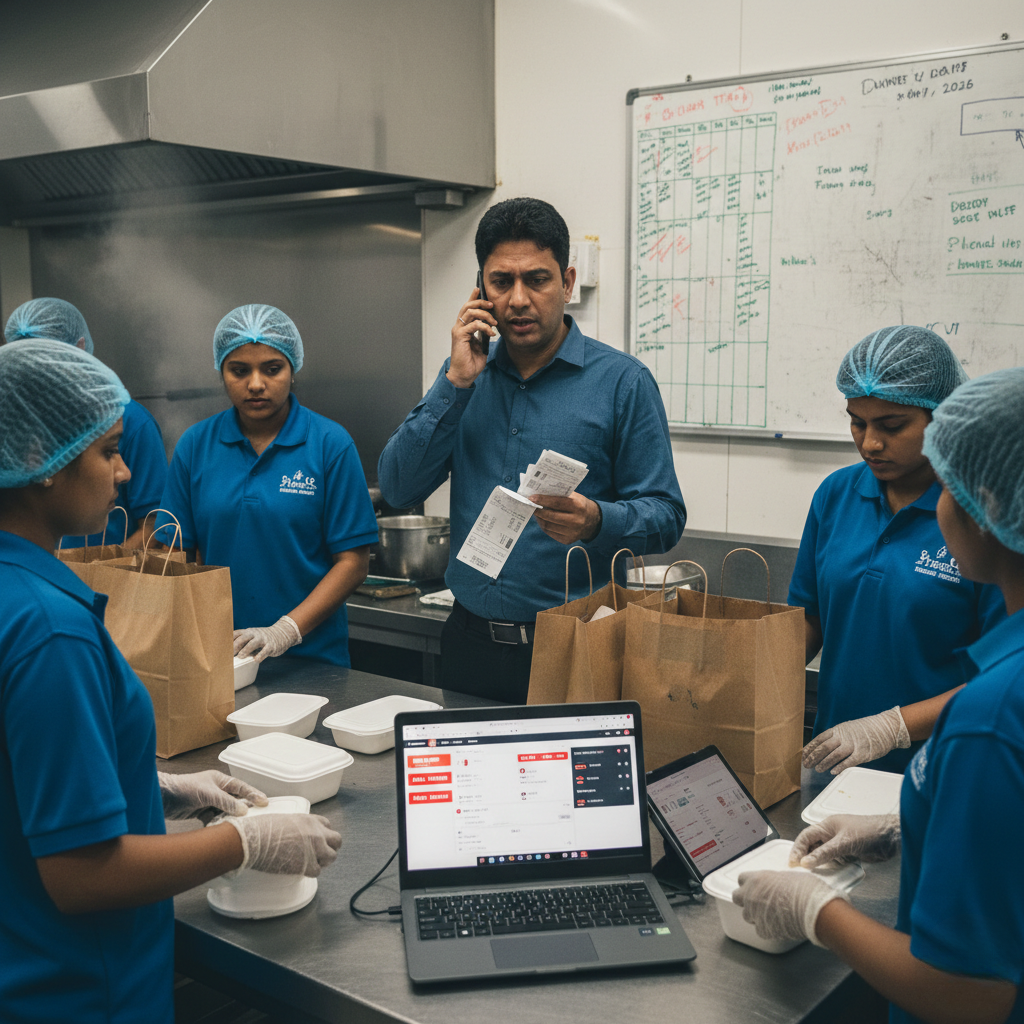
Why Owners Burn Out Managing Operations Manually explains a silent crisis inside India’s cloud kitchen ecosystem. Most founders do not fail because of lack of demand or poor food. They fail because daily operations consume their time, energy, and decision-making capacity. Manual operations feel manageable in the beginning, but as volume increases, founders become the system themselves. This article explains how manual execution leads to burnout, why owners normalize exhaustion, and how structured operations are the only sustainable exit.
Why Owner Burnout Is Common in Indian Cloud Kitchens
Cloud kitchens in India are often built by founders who are deeply involved in daily execution. In the early stages, this involvement feels necessary. Owners manage staff attendance, ingredient procurement, recipe consistency, aggregator dashboards, customer complaints, and last-minute firefighting. Initially, this hands-on approach delivers control. Over time, it delivers exhaustion. Burnout does not arrive suddenly. It builds quietly through long days, constant interruptions, and the absence of repeatable systems.
This pattern connects closely with Cloud Kitchen Operation Consultants and Why High Staff Turnover Kills Cloud Kitchens.
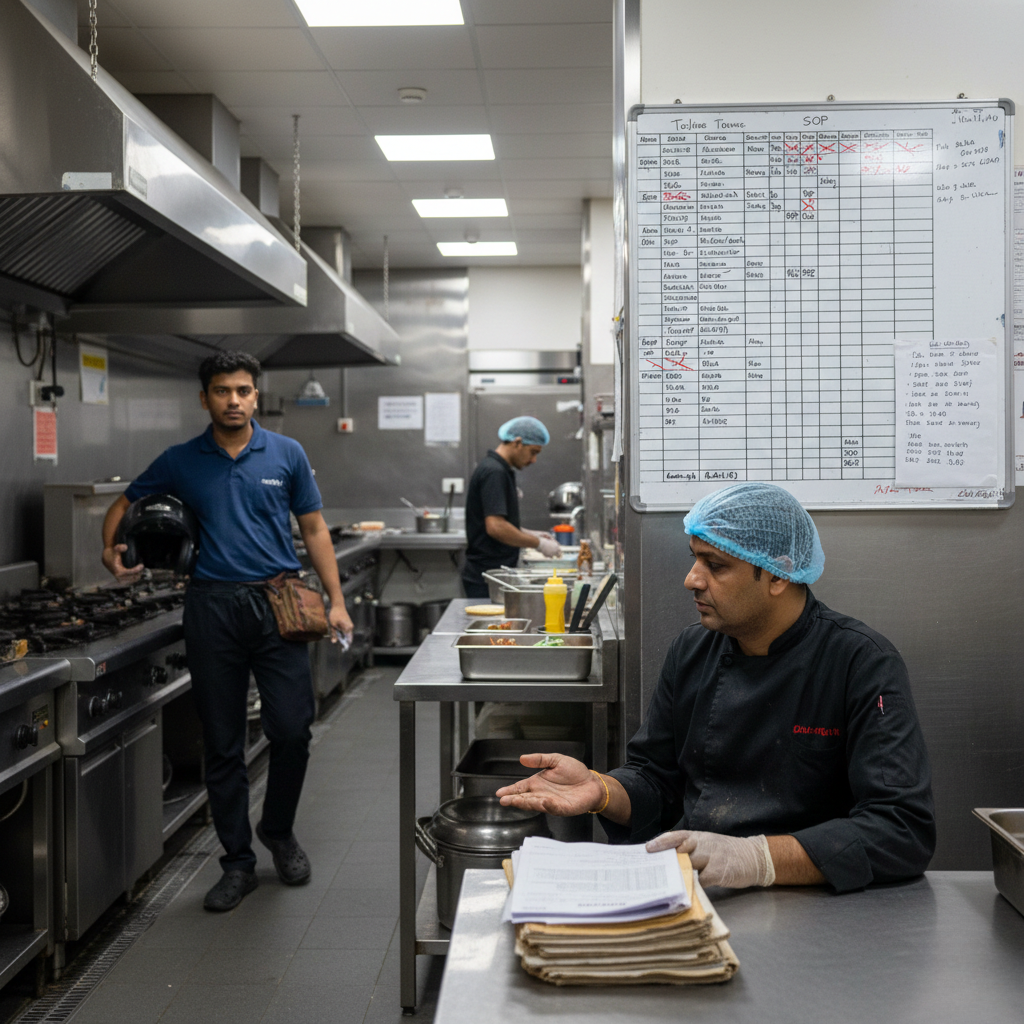
What Managing Operations Manually Actually Looks Like
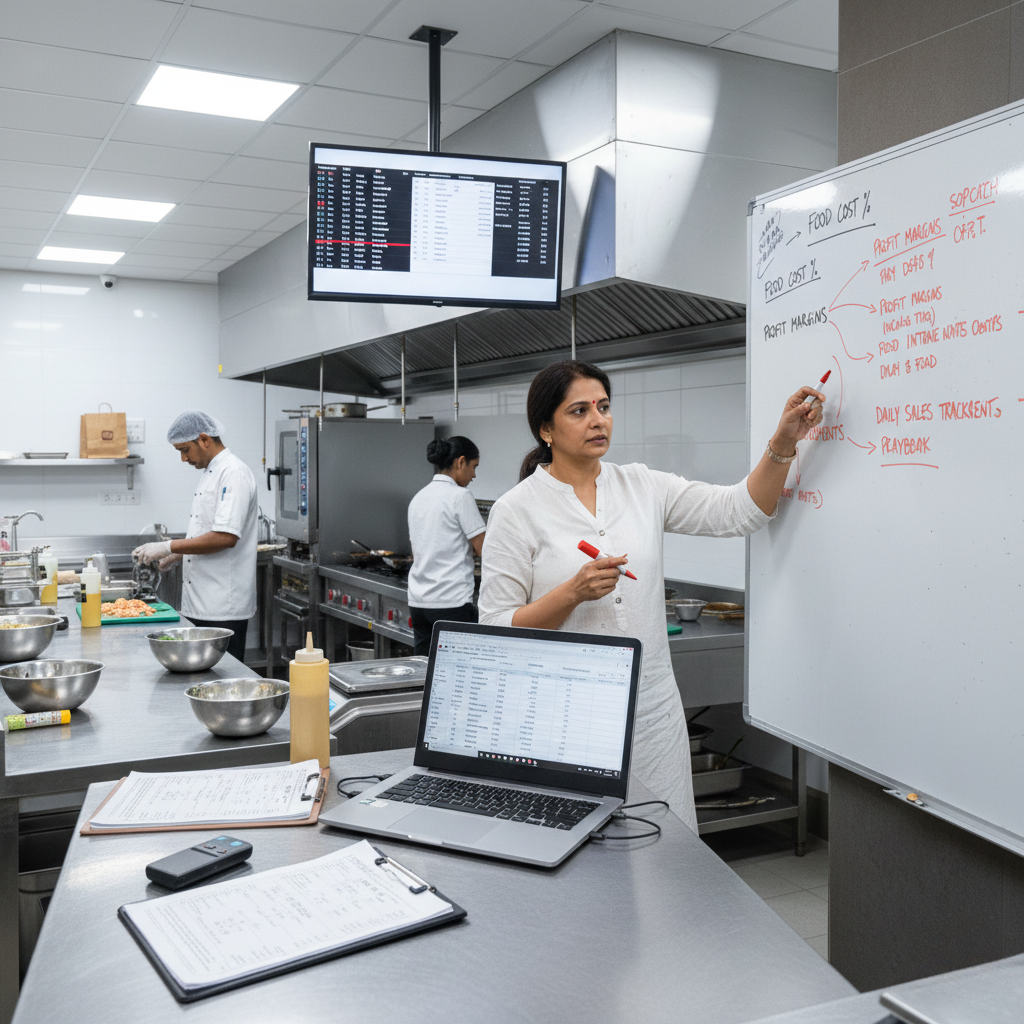
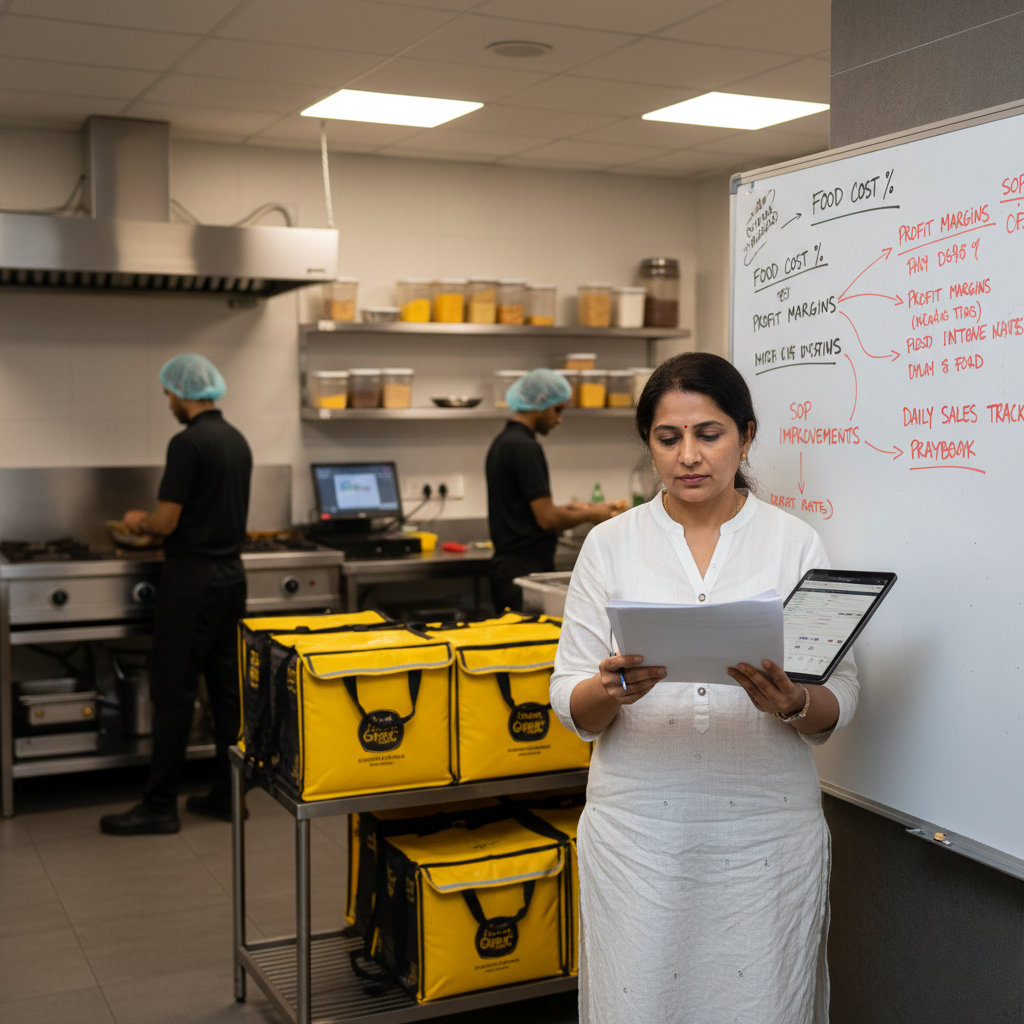
Manual operations do not always feel chaotic. They feel busy. Owners approve purchases on WhatsApp, track inventory mentally, resolve staff conflicts personally, and monitor live orders continuously. Every decision depends on the owner’s availability. The kitchen runs only when the owner is alert.
Early Signs That Manual Operations Are Breaking the Owner
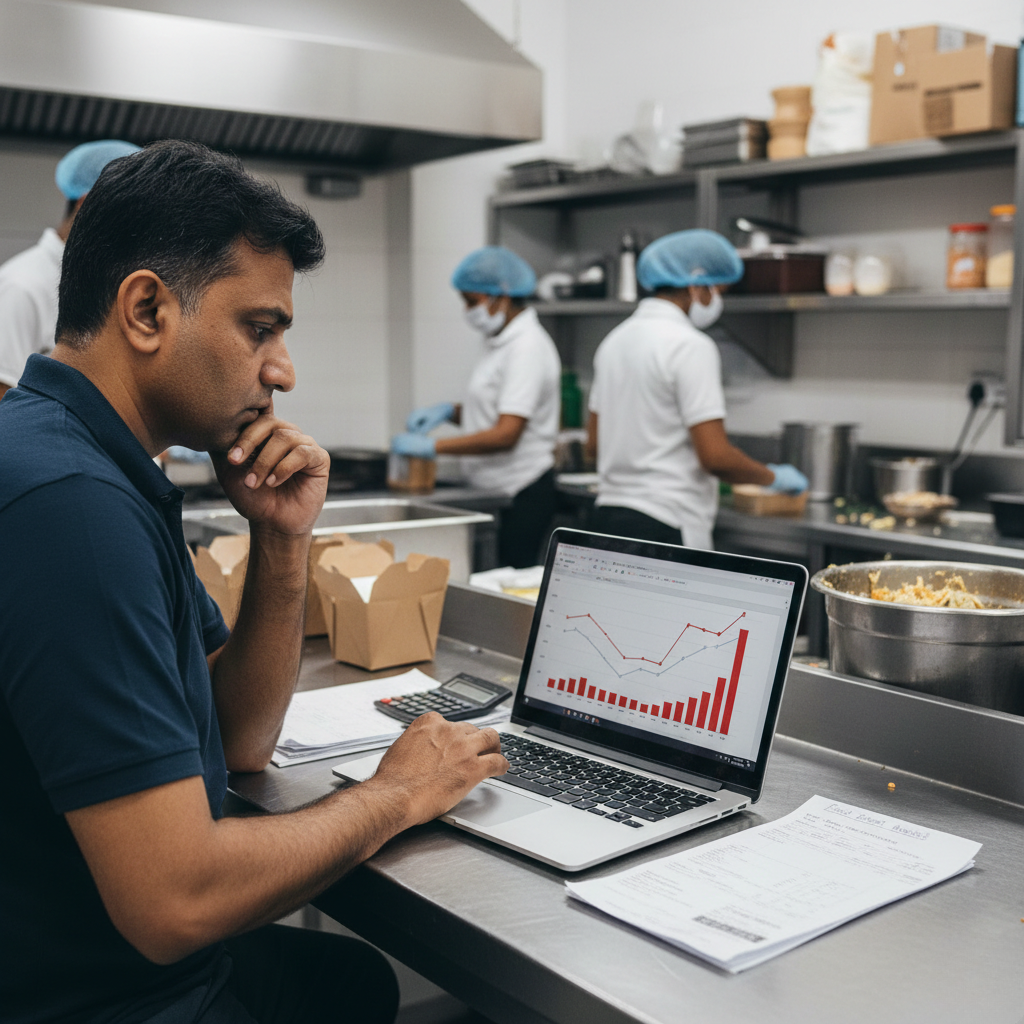
Burnout rarely starts with collapse. It starts with constant urgency. Owners feel unable to take days off, mentally stay connected to operations at all times, and react instead of planning. Sleep quality drops. Patience reduces. Decision-making becomes reactive. These signs are often ignored because sales numbers appear healthy.
The Real Reason Owners Cannot Step Away
Owners stay involved because operations are undocumented. When SOPs do not exist, staff rely on verbal instructions. When roles are unclear, every issue escalates upward. The absence of systems creates psychological pressure to stay present.
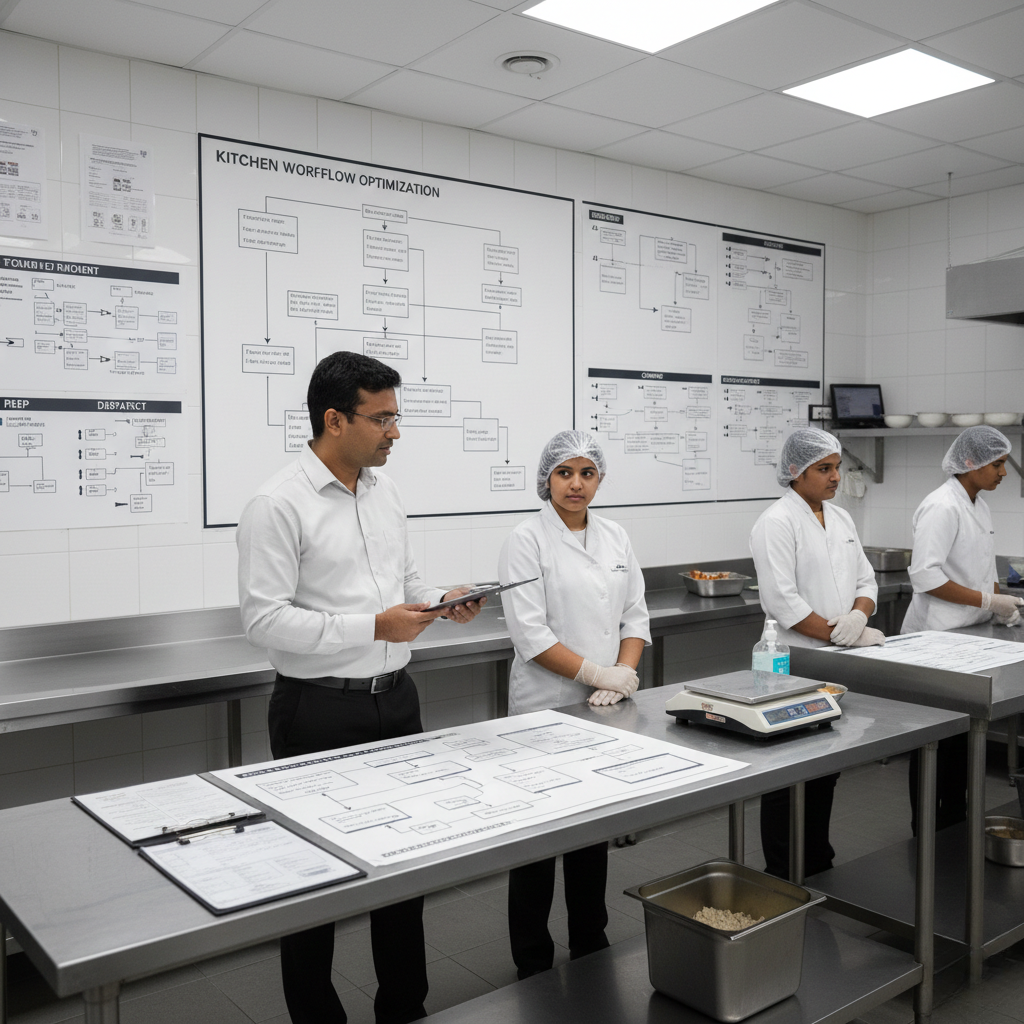
How Lack of SOPs Forces Owners Into Daily Firefighting
SOPs define how work happens without supervision. In kitchens without SOPs, staff decisions vary by shift, mood, and pressure. Owners step in to correct mistakes, unintentionally reinforcing dependency. Over time, the owner becomes the quality control mechanism.
Learn foundational documentation in Kitchen SOPs Every Cloud Kitchen Must Have.
Why Manual Operations Break Staff Accountability
When owners manage everything, staff stop taking ownership. Decisions wait for approval. Problems wait for resolution. Responsibility flows upward. This dynamic increases owner workload while reducing team confidence. Burnout accelerates when leaders carry both execution and accountability.
Manual Operations Replace Discipline With Presence
In manual setups, discipline exists only when the owner is present. Staff performance drops when supervision reduces. Owners compensate by staying longer hours, monitoring constantly, and intervening frequently. This cycle drains energy without improving stability.
Why Multi-Brand Kitchens Burn Owners Faster
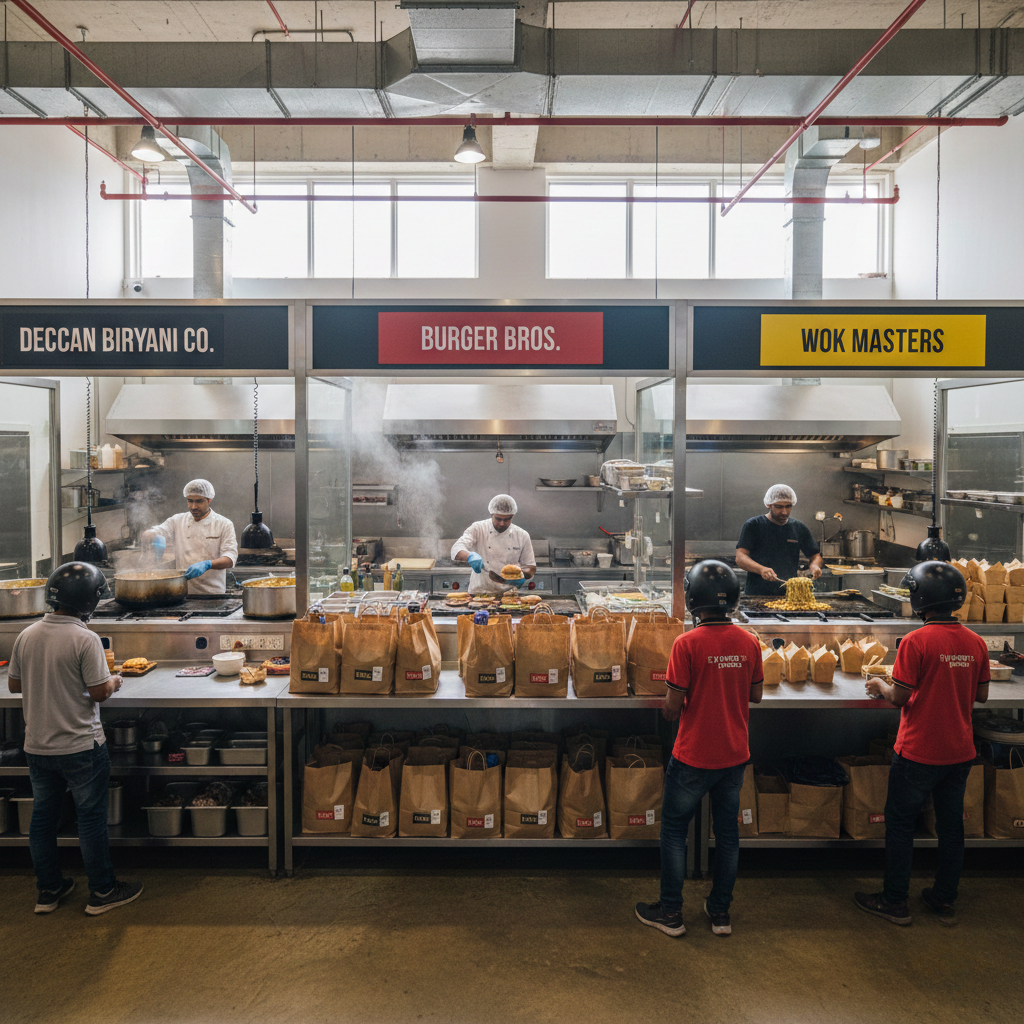
Multi-brand kitchens multiply operational decisions. Without systems, owners become the single source of clarity across brands. Brand mix-ups, recipe confusion, and packing errors increase pressure. Structured solutions are explained in How to Build SOPs for Multi-Brand Cloud Kitchens.
How Systems Remove Mental Load From Owners
Systems replace memory with structure. Checklists replace reminders. SOPs replace explanations. Supervisors replace constant oversight. This shift reduces decision fatigue and emotional stress. Owners regain strategic thinking capacity once operations stabilize.
Why Manual Operations Make Scaling Emotionally Impossible
Scaling multiplies complexity. Manual execution multiplies exhaustion. Owners managing operations manually hit a psychological ceiling. Systems enable replication without burnout.
Related insights in Cloud Kitchen Scaling Strategy.
Why Owners Burn Out Managing Operations Manually: Final Reality
Burnout is not a personal weakness. It is a structural failure. Manual operations demand constant presence, emotional labor, and decision-making. Systems protect owners as much as they protect businesses.
Frameworks from GrowKitchen help founders exit daily firefighting without losing operational control.
FAQs: Owner Burnout & Manual Operations
Is burnout common among cloud kitchen founders?
Yes. Manual operations make burnout almost inevitable.
Can small kitchens build systems?
Small kitchens benefit the most from early systemization.
Do systems reduce owner involvement?
They reduce stress while improving control.
How fast can burnout be reduced?
Operational relief begins as soon as systems are implemented.