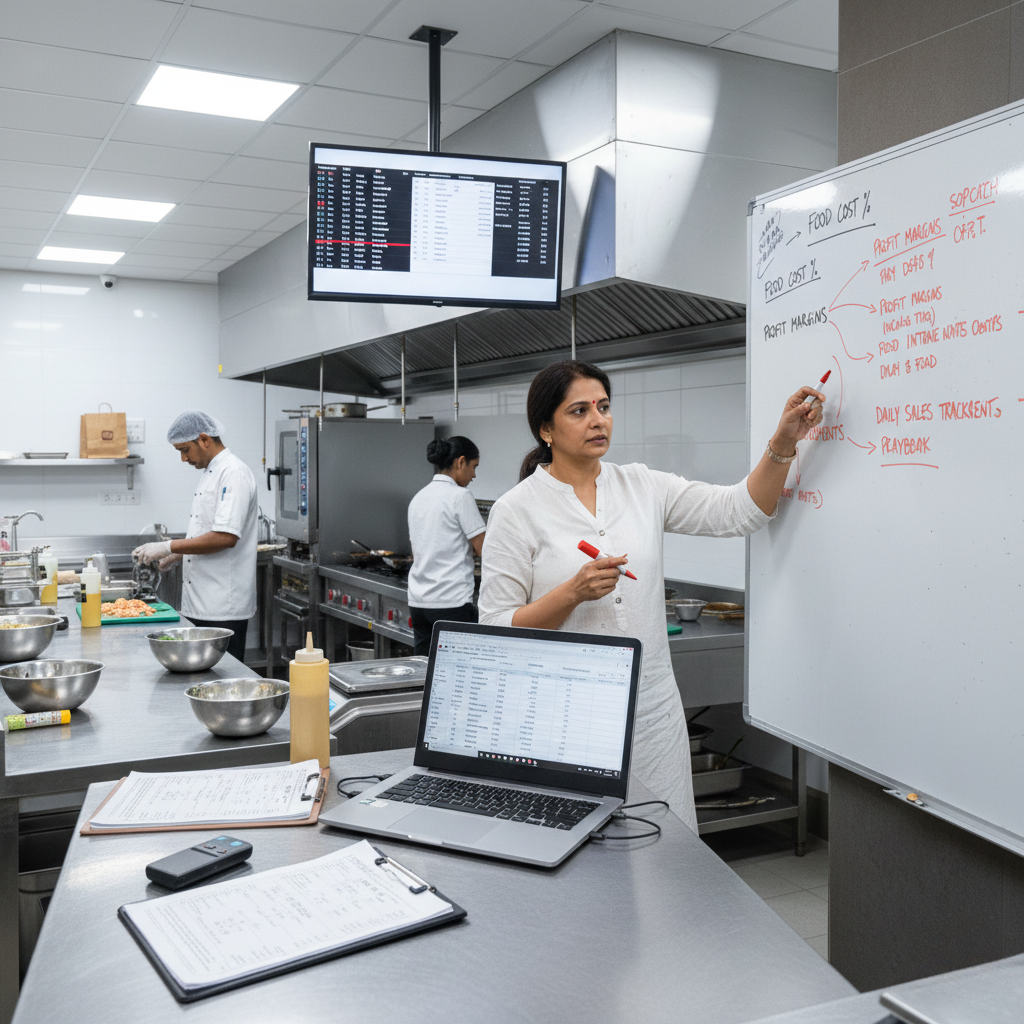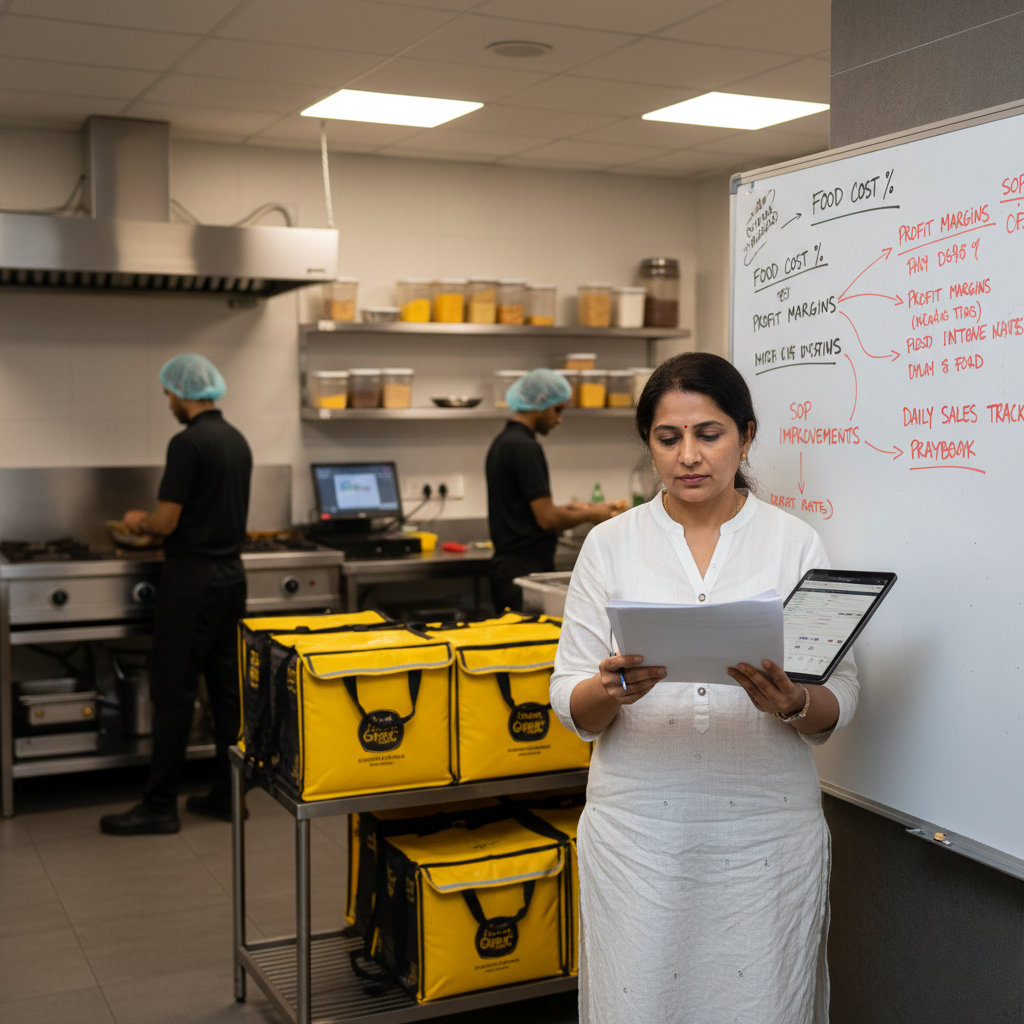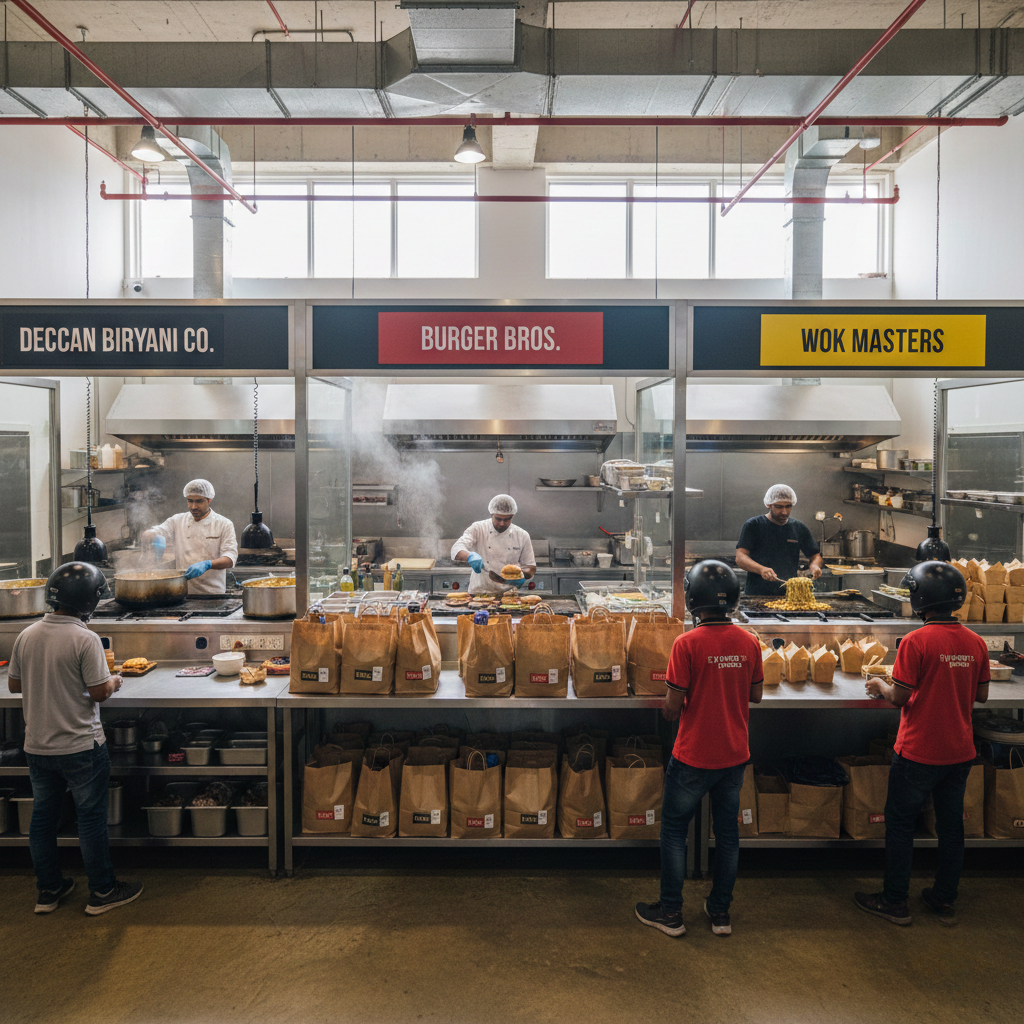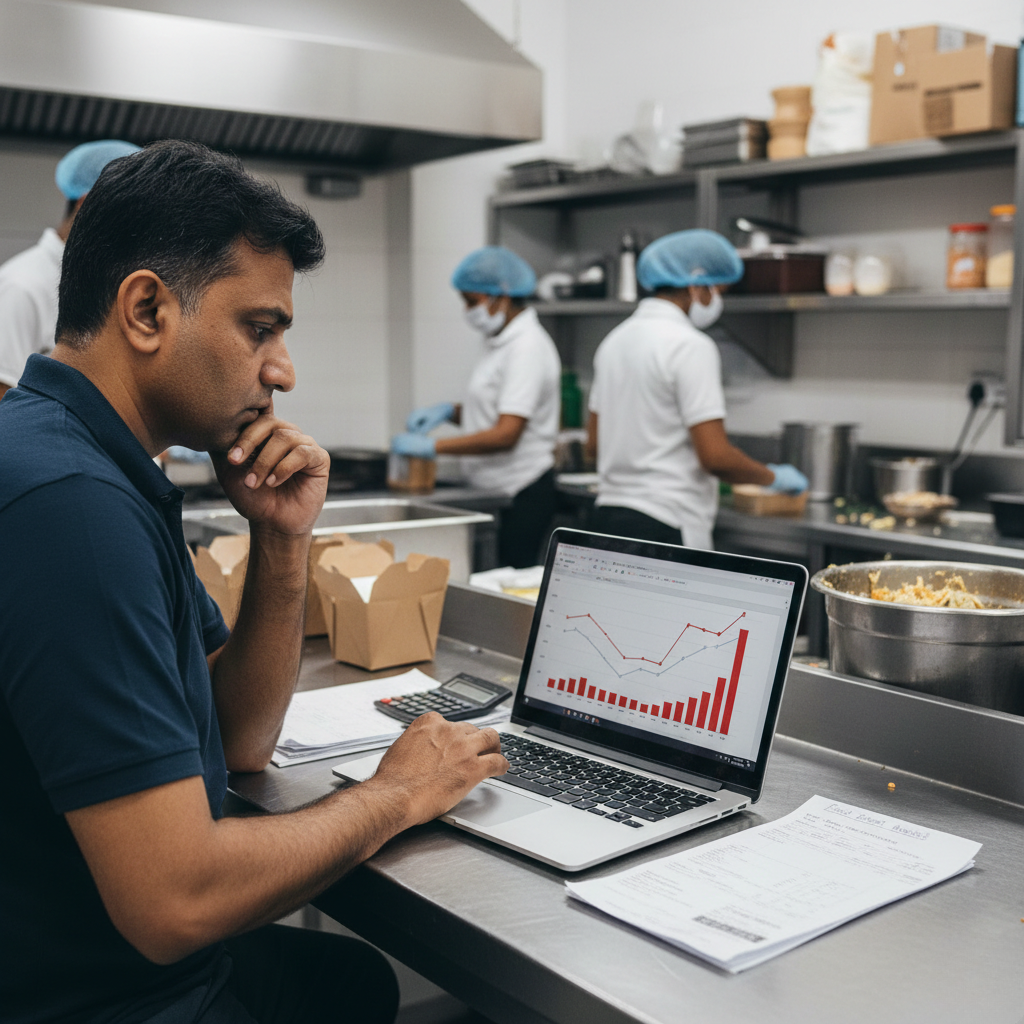
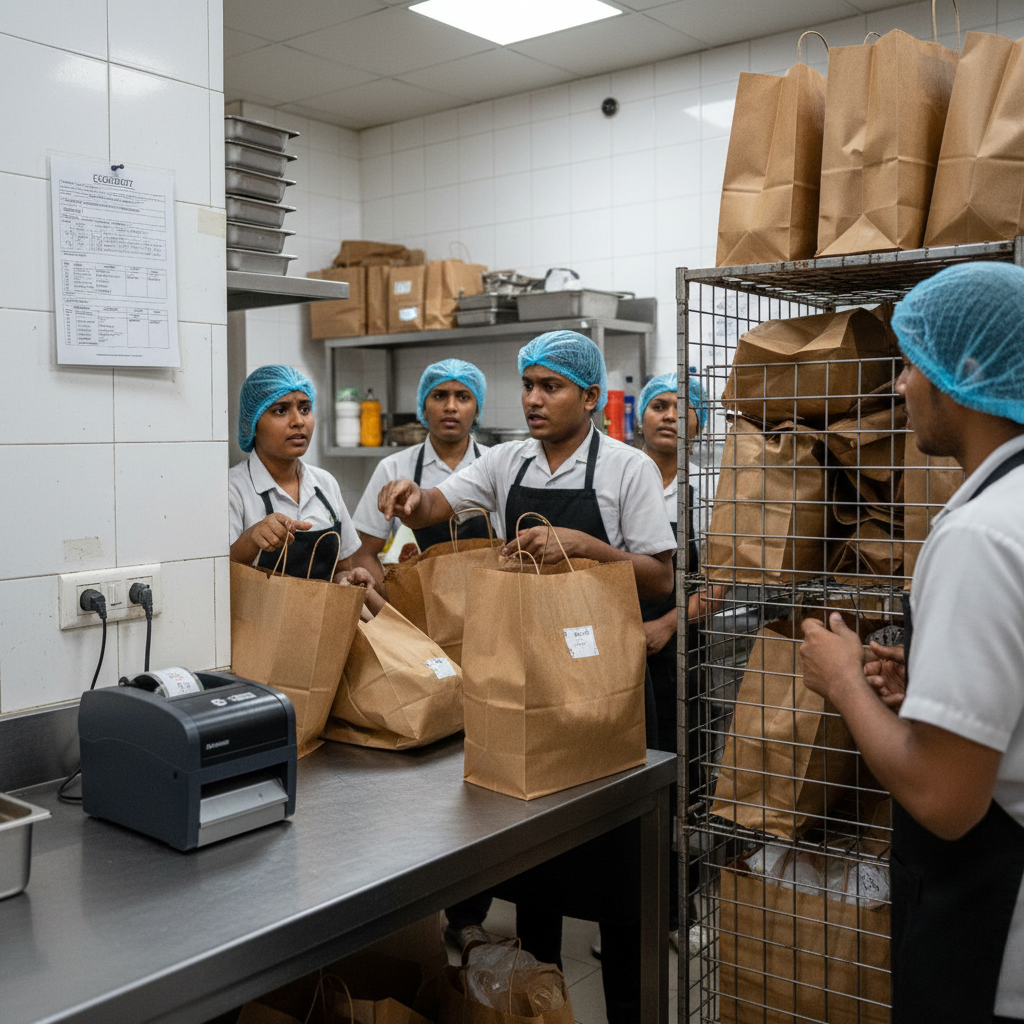
Why am I getting orders but no profit cloud kitchen? is not a “get more sales” problem. It is the difference between a kitchen that looks busy on Swiggy/Zomato and a kitchen that actually keeps cash after payout. Many cloud kitchens don’t fail because demand is low. They fail because margin leakage stays invisible while volume increases. Profit disappears through food cost drift, packaging failures, refunds, wrong items, late dispatch penalties, discount burn, rating volatility, and founder-dependent firefighting. This guide explains why orders don’t convert into profit in delivery kitchens and how to fix profitability end-to-end from prep to packing to payout using a repeatable system, not guesswork.
Why Am I Getting Orders but No Profit? The Real Reason Sales Doesn’t Become Cash
Many cloud kitchen founders hit a confusing stage: the dashboard looks active, orders are coming in daily, ads feel “working,” yet the bank balance doesn’t grow. One payout feels okay and the next payout feels like a shock.
This happens because delivery businesses can show revenue without showing profitability. Orders create movement, but movement is not margin. Volume hides leakage. Your kitchen looks busy, but profit leaks through: portion drift, over-prep and expiry, re-cooking, wrong packing, missing add-ons, late dispatch penalties, refunds, rating drops, and discounts used to recover conversion.
The goal is not “more orders.” The goal is predictable contribution margin per order after real leakages. When contribution margin becomes stable, profitability becomes repeatable.
If you want the profitability foundation first, start with Cloud Kitchen Profitability Consultant in India and identify the most common leak patterns via Common Operational Mistakes in Cloud Kitchens.
What “Orders but No Profit” Actually Means in Delivery Kitchens
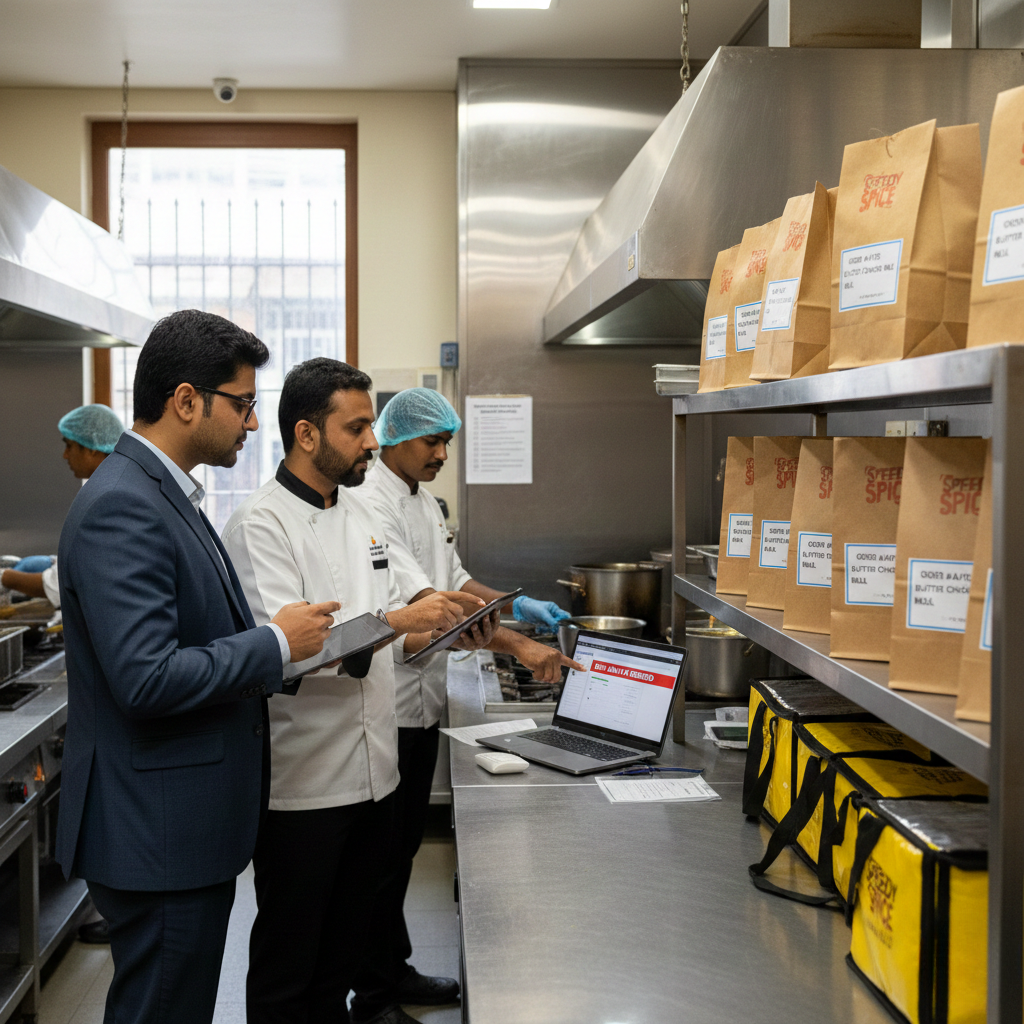
In a cloud kitchen, profitability is not a monthly event. It is a daily operating outcome. If you are getting orders but no profit, it usually means one or more of these are true: your food cost is drifting, your refunds/complaints are higher than you think, your packaging is failing, your dispatch process is inconsistent, your menu is not engineered for margin, your purchasing is inconsistent, or your discounts are eating the last remaining contribution margin.
The fastest diagnostic shift is this: stop asking “how many orders did we do?” and start asking: “how much contribution margin did we keep per order after leakage?”
When outcomes become repeatable, costs become controllable. And when costs are controllable, profit stops being a surprise.
The Unit Economics Problem: Why Your P&L Collapses Even When Sales Looks Strong
Most founders obsess over big visible costs: platform commissions, rent, salaries, and ad spend. But most “orders but no profit” cases are driven by unit economics failure: the kitchen is not keeping enough contribution margin per order after variable costs.
Variable cost leakage compounds daily through: over-portioning, over-prep and expiry, remakes due to errors, wrong or missing items, packaging failures, late dispatch penalties, refunds and replacements, rider escalations that slow throughput, and discount burn used to recover lost conversion after rating drops.
The trap is that each leakage looks small: ₹10 extra gravy, ₹8 extra cheese, ₹25 additional protein, ₹12 extra packaging, ₹60 refund, ₹40 replacement, ₹15 penalty. But multiply it by orders, days, and shifts profit disappears while the dashboard still looks active.
Use this as a leakage checklist alongside Common Operational Mistakes in Cloud Kitchens and you’ll usually find the hidden pattern within 7 days.
Food Cost Drift: The Biggest Reason Orders Don’t Convert into Profit
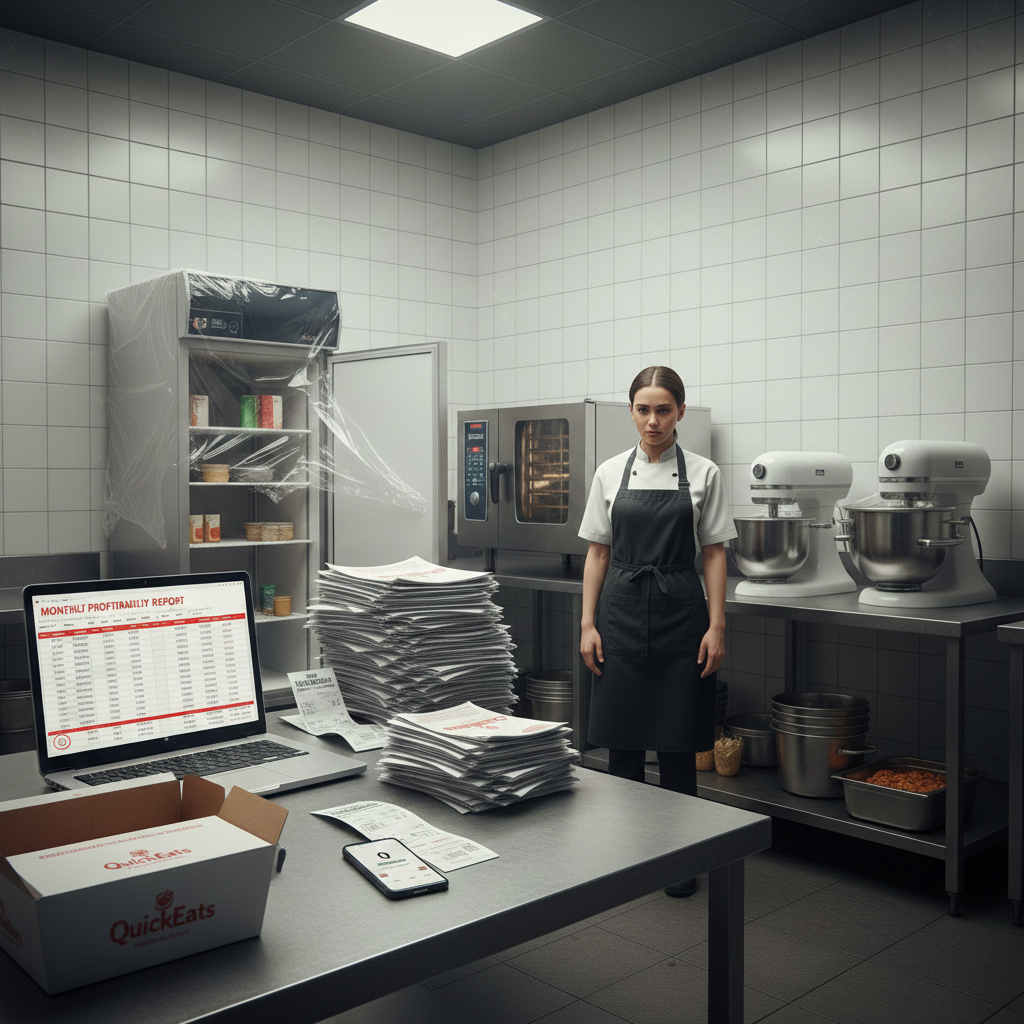
Food cost is the largest controllable variable in a cloud kitchen. Most founders think food cost drift happens because “market prices increased.” In reality, drift usually happens because the costing sheet is not enforced through execution. A kitchen can have perfect costing on paper and still bleed if portions are eyeballed.
Food cost drift shows up through five repeatable causes:
1) Portion drift during peak: staff adds “a little extra” to avoid complaints. That extra becomes permanent leakage.
2) Batch yield mismatch: the same gravy yields fewer portions on some days. Yield variance is direct margin variance.
3) Over-prep and expiry: “prep more to avoid stockouts” creates dead stock and wastage.
4) Uncontrolled substitutions: stockouts trigger substitutes without costing updates, hurting both taste and margins.
5) No daily variance checks: drift is discovered only after payout shock, not when it begins.
If you want the SOP-led fix that links food cost control with fewer complaints, read How SOPs Reduce Food Cost & Complaints.
Throughput Problem: Why More Orders Increase Stress but Not Profit
Many founders assume: “If we increase orders, profit will come.” But if throughput per person is low, more orders create more chaos, not more profit. The kitchen gets busier but not more efficient.
Low throughput usually comes from role confusion and broken handoffs. Staff multitasks randomly. Prep gets interrupted during peak. Packing becomes rushed. Dispatch slips. Complaints increase. Then refunds increase. Profit disappears.
Profitability improves when work becomes predictable:
Prep ownership: what is prepped, how much, by what time, how it’s labeled and stored.
Cook ownership: sequence, pan allocation, batch timing, reheat rules, station readiness.
Pack ownership: packing order, add-on checklist, sealing and labeling standards.
Dispatch ownership: time SLA, dual verification, rider handover, escalation rules.
For role-based execution systems that raise throughput and reduce chaos, use Role-Based Kitchen Operations Explained.
Payout Reality: Why “Commission” Is Not Your Only Platform Cost
Founders often calculate profitability using only aggregator commission percentages. But weekly payouts are impacted by performance costs: cancellations, refunds, wrong items, packaging failures, late dispatch, and complaint patterns. These costs don’t always show in daily sales, but they show brutally in payout deductions and conversion drops.
This is why two kitchens with identical sales can have very different payouts: one kitchen is operationally stable, the other is leaking through refunds and penalties.
If you want to understand platform economics as a margin system, read Aggregator Commission Impact in India.
External reference links (for platform policy context): Swiggy Refund & Cancellation Policy and Zomato Online Ordering Terms.
Packing & Dispatch: The Fastest Profit Killer in Delivery Kitchens
If you are getting orders but no profit, check dispatch. Dispatch is where margin dies silently. One wrong order triggers: refund, replacement, complaint, rating drop, and conversion loss. That’s not a service issue. That’s a profit system failure.
Dispatch leakage usually happens through four failures:
1) No stage-wise time control: acceptance to cooking to packing to handover has no defined SLA.
2) No dual verification: packer checks once and assumes it’s fine; repeat errors continue.
3) Packaging inconsistency: wrong container, weak sealing, missing labels, missing cutlery/add-ons.
4) No escalation playbook: rider delay, stockout, or substitution triggers panic and founder intervention.
For a dispatch-ready standard, implement Cloud Kitchen Dispatch SOP.
The Scaling Myth: Why More Orders Can Reduce Profit Further
More orders only increase profit if unit economics are already controlled. If the kitchen leaks at 50 orders/day, it will leak faster at 150 orders/day. Volume amplifies your system. If your system is weak, volume amplifies weakness.
Without control, scaling increases: portion drift, wastage, remakes, dispatch chaos, complaints, refunds, and discount burn. Many kitchens grow revenue and still die because profit was never stabilized first.
If growth is currently hurting your operations, read When Growth Is Hurting Your Cloud Kitchen Operations.
How to Fix “Orders but No Profit”: A 7-Day to 30-Day Practical Sequence
The biggest mistake founders make is fixing profitability with random actions: a new offer, a new ad, a new menu category, a new discount, or a new photoshoot. These can increase orders, but they rarely fix profit. Profit fixes come from removing leakage in the right order.
Here is a practical implementation sequence that works in running kitchens:
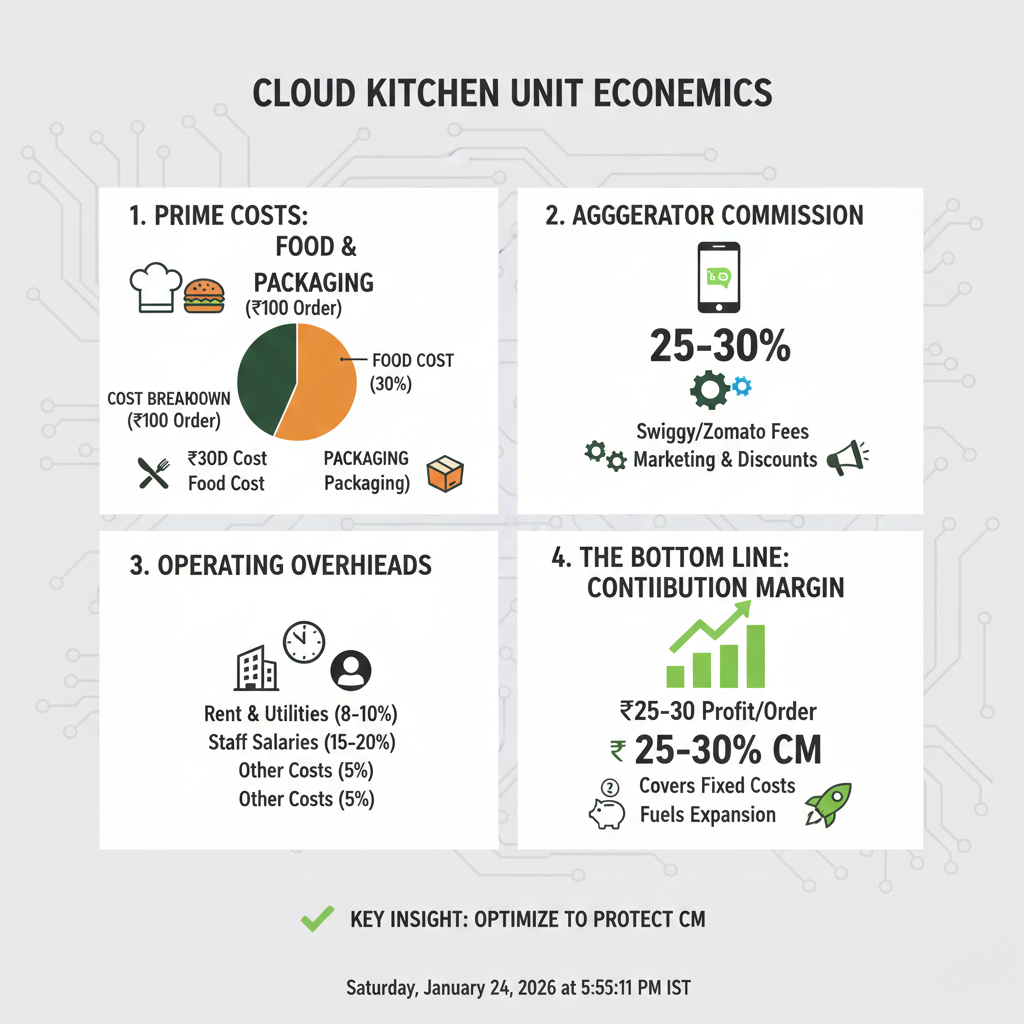
Step 1: Calculate contribution margin per order. For 20 recent orders, write: selling price minus platform commission minus packaging minus food cost minus refunds/penalties share. This shows if the model can ever work without fixes.
Step 2: Track leakage daily for 7 days. Log: refunds, remakes, delays, missing items, spillage, stockouts, and complaint reasons. Don’t assume measure.
Step 3: Lock portions before scaling marketing. Standardize grams/ml for each component and enforce ladle/weight checks daily. A kitchen with portion drift cannot become profitable at scale.
Step 4: Fix packing verification immediately. Add a two-step check: packer checklist + dispatch checklist. This reduces wrong orders, missing add-ons, and refunds fastest.
Step 5: Reduce over-prep and expiry with batch planning. Move to smaller prep cycles, define holding times, and enforce discard rules. Wastage reduction is direct profit recovery.
Step 6: Stabilize purchasing for high-velocity SKUs. Lock specs and rates for proteins, dairy, packaging, oil, sauces. Implement receiving checks so vendors can’t drift weight and quality.
Step 7: Engineer menu for margin + throughput. Remove low-margin complexity, push high-conversion hero items, reduce station overload, and ensure add-ons are profitable and easy to execute.
Step 8: Add daily compliance checks and a simple dashboard. Track daily: food cost variance, refunds, remakes, dispatch time, stock variance, and complaints. Visibility makes profit controllable.
If you want a discipline-led EBITDA lens that ties this together, you can map these steps with How Process Discipline Improves EBITDA.
External hygiene + safety standards (useful while standardising kitchen systems): FSSAI Hygiene Requirements (Schedule 4 reference), ISO 22000 overview, and FAO/Codex General Principles of Food Hygiene.
Optional external reference (process discipline lens): You can explore Standardized Work (Lean lexicon) to understand how repeatability reduces variability in operations.
Final Takeaway: Orders Don’t Create Profit. A Leak-Free System Does
If you are getting orders but no profit, you are not alone. Most delivery kitchens become unprofitable because leakage compounds daily while volume increases. Profit returns when you remove variation: portions become consistent, prep becomes disciplined, packing becomes accurate, dispatch becomes predictable, refunds reduce, ratings stabilize, and payouts become consistent.
A kitchen without systems becomes discount-dependent. A kitchen with systems becomes profit-dependent. And profit-dependent kitchens are the ones that scale across brands and locations without multiplying losses.
Operational frameworks from GrowKitchen, and operating partner brands like Fruut and GreenSalad help founders turn “busy kitchens” into “profitable kitchen networks.”
FAQs: Why Am I Getting Orders but No Profit?
What is the #1 reason I’m getting orders but no profit?
Food cost drift caused by portion inconsistency, yield mismatch, and over-prep wastage. This is the most common root cause in Indian delivery kitchens.
Why does my payout feel low even when sales is stable?
Refunds, cancellations, delays, wrong items, and rating drops create hidden performance costs that reduce weekly payouts and future conversion.
Should I increase discounting to improve profit?
Discounts can increase orders but usually reduce contribution margin. Fix portions and packing/dispatch accuracy first, then scale demand safely.
What should I fix first for quick profit recovery?
Portion control + packing/dispatch verification. These reduce food cost drift and refunds the fastest.
- Cloud Kitchen Profitability Consultant in India
- Common Operational Mistakes in Cloud Kitchens
- How SOPs Reduce Food Cost & Complaints
- Aggregator Commission Impact in India
- Cloud Kitchen Dispatch SOP
- Role-Based Kitchen Operations Explained
- When Growth Is Hurting Your Cloud Kitchen Operations
- Grow Kitchen on X