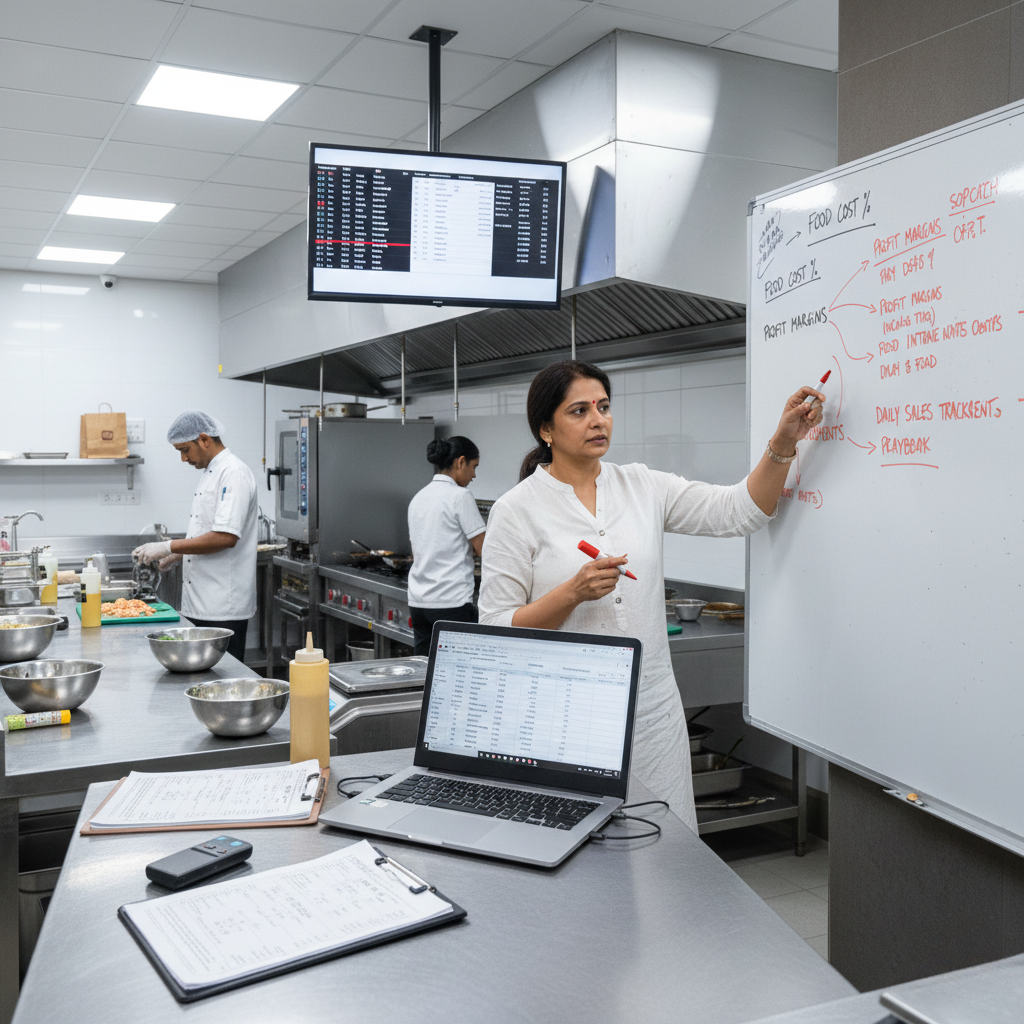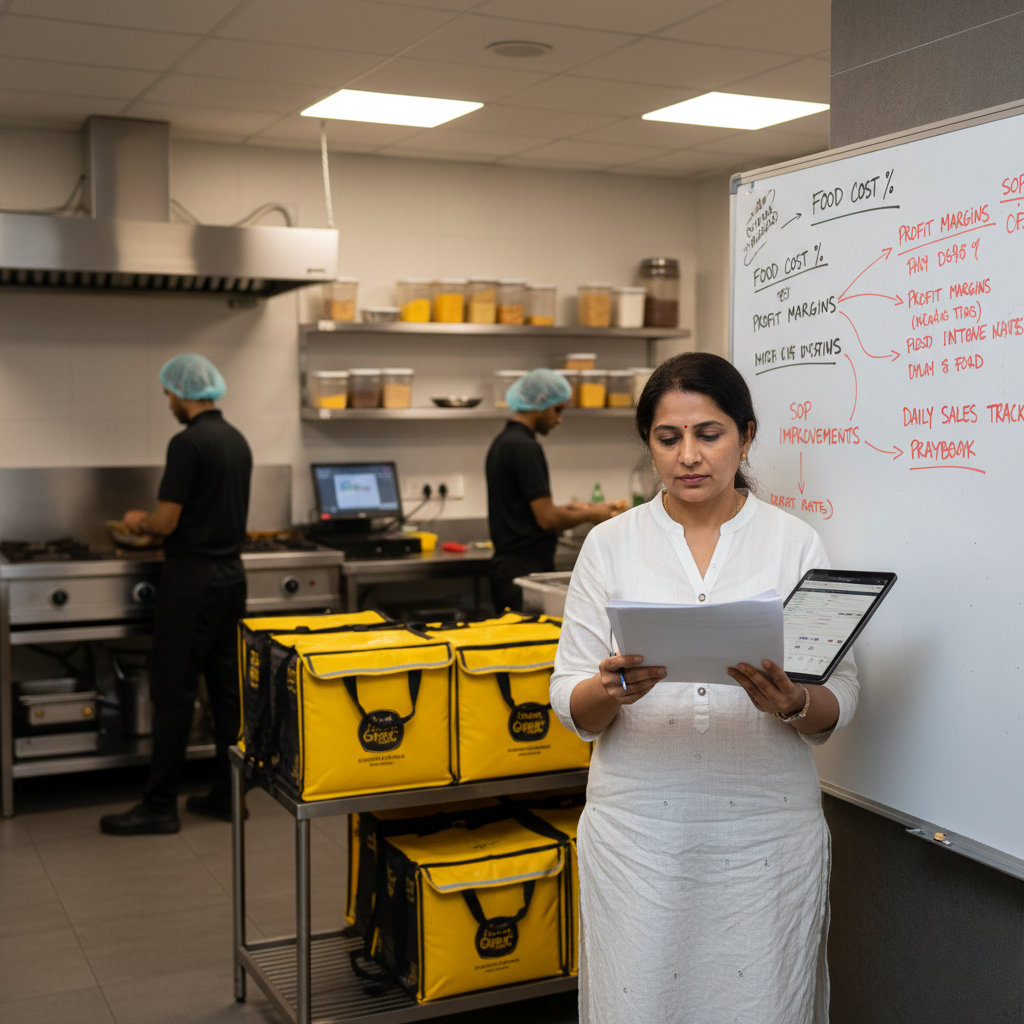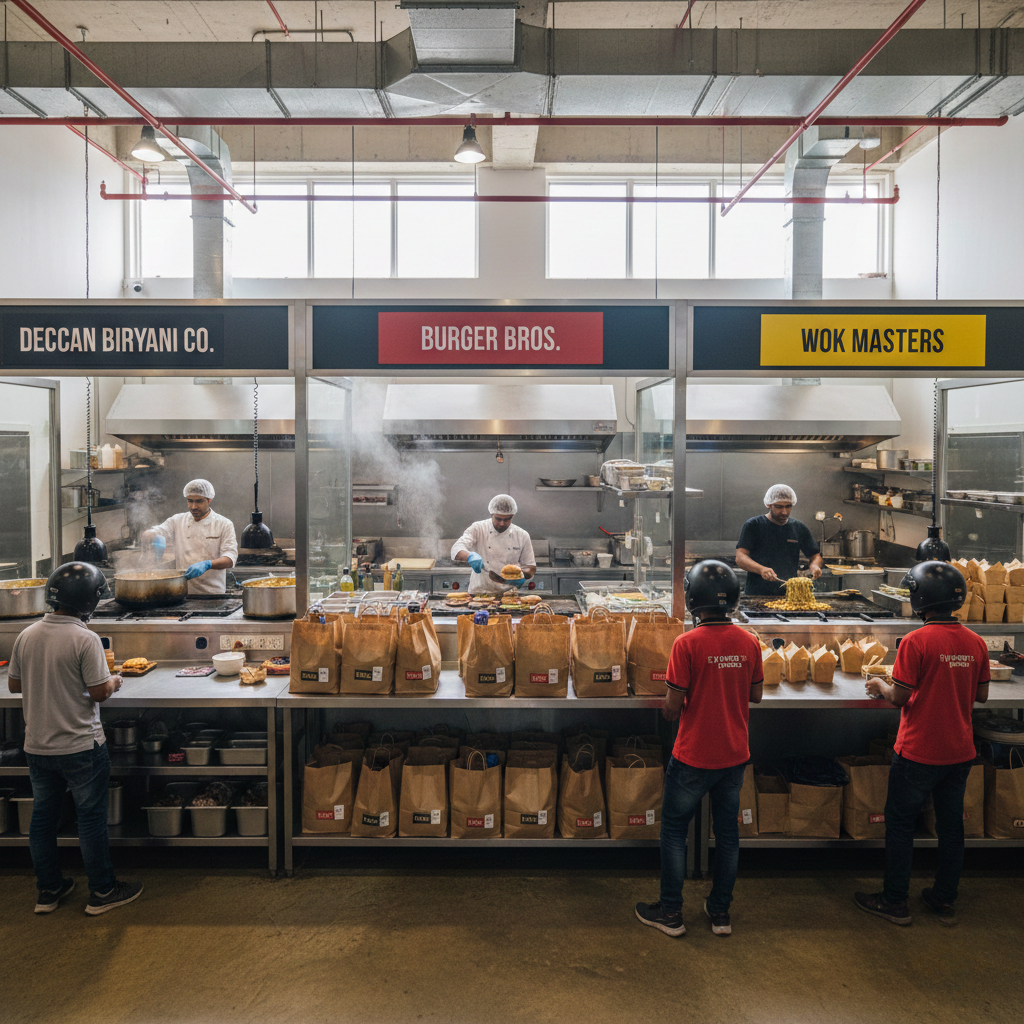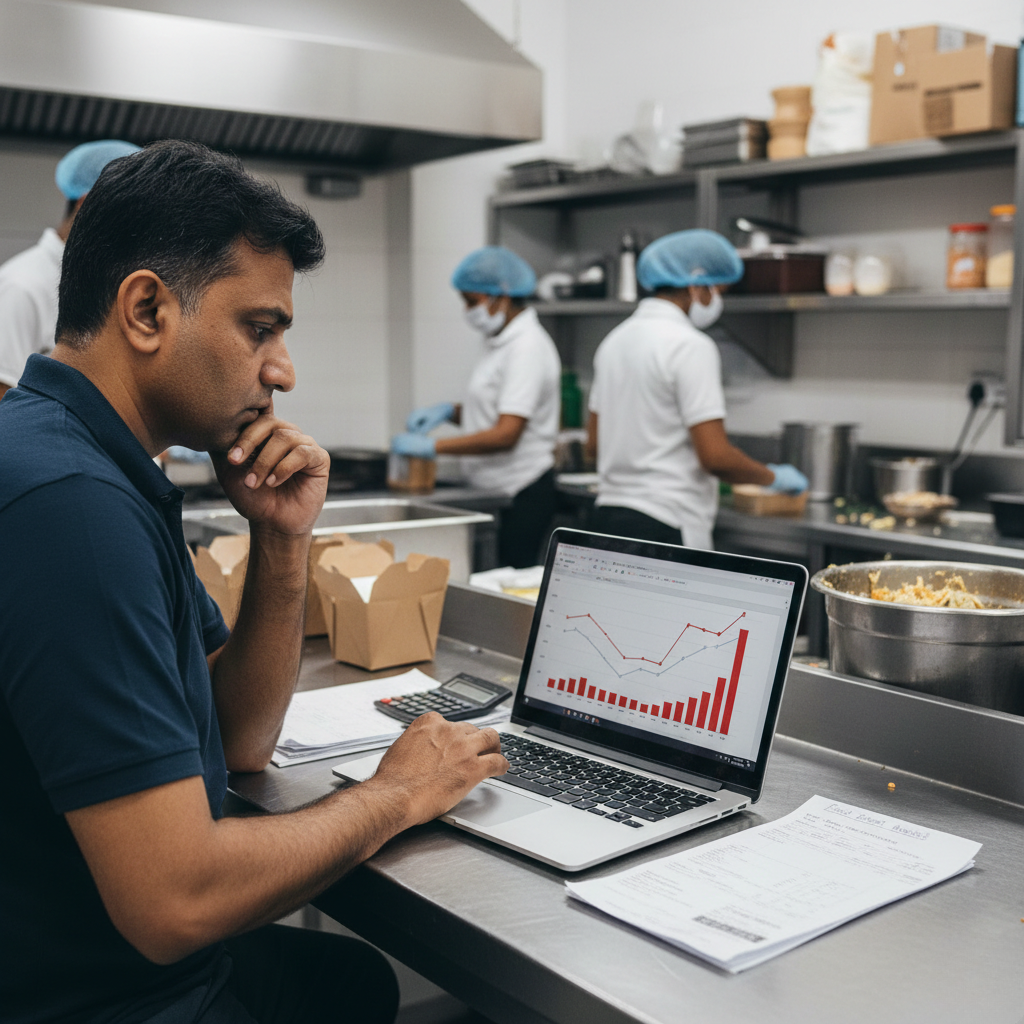
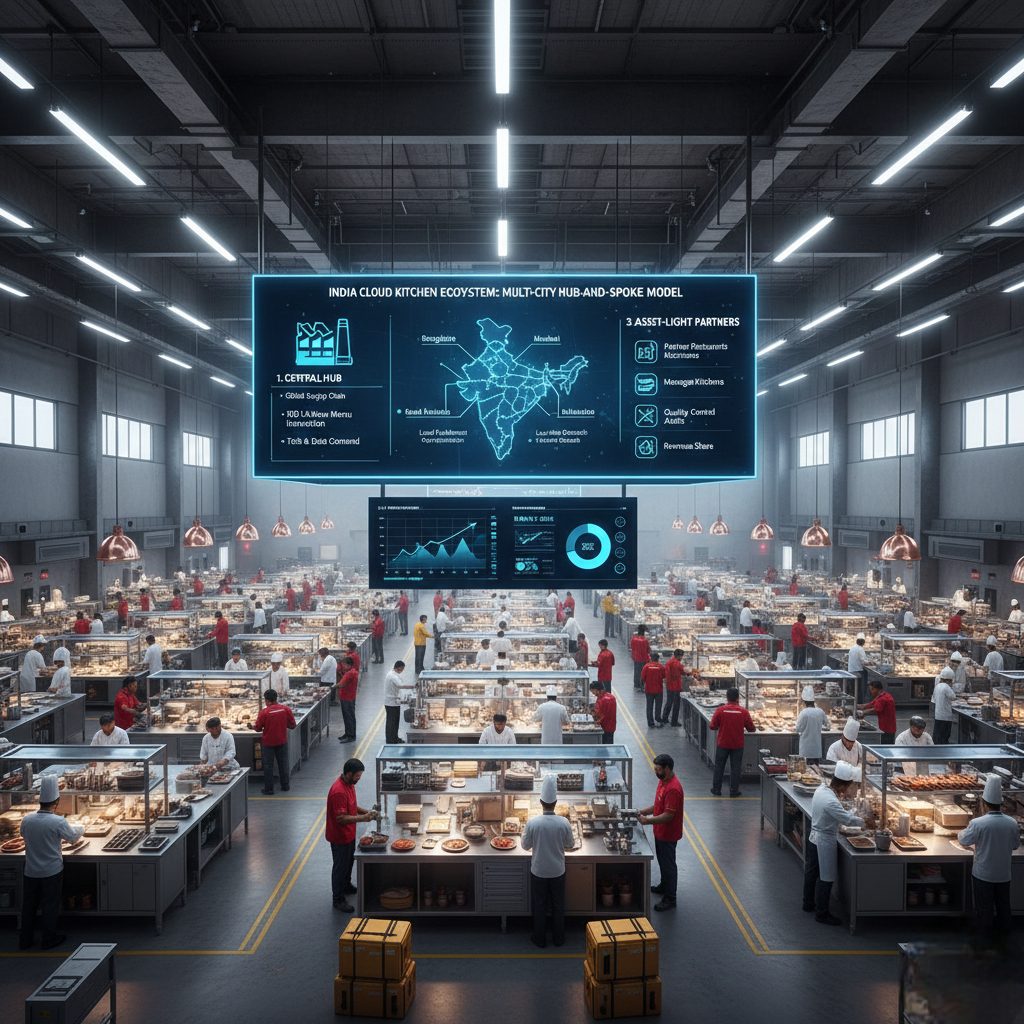
Multi-city cloud kitchen expansion is how delivery-first brands scale revenue without becoming dependent on one neighborhood, one aggregator cluster, or one operations team. But expansion fails when founders copy-paste menus and ads across cities without replicating the control stack: SOPs, training, procurement rules, packaging discipline, dispatch speed, and contribution-margin tracking. This guide explains multi city cloud kitchen expansion in India step-by-step: when you’re ready, how to pick the next city, which expansion model to use (asset-light, managed kitchens, hub-and-spoke), the non-negotiable systems that keep ratings stable, and the KPIs that protect margins while scaling from 1 city to 5+ cities.
Start Here Before Expanding to Multiple Cities
This article is part of GrowKitchen’s scaling + operations series. If you’re still building your base unit, start with: Cloud Kitchen as a Service (CKaaS) and Cloud Kitchen Advantages and Disadvantages. If you want a structured model view before scaling, read: Scalable Cloud Kitchen Business Model in India.
Multi-city scaling also multiplies compliance and operational risk across kitchens, teams, and vendor networks. Make sure you are aligned with food safety requirements under FSSAI, staff hygiene training via FoSTaC, and proper taxation workflows through the GST Network.
Multi City Cloud Kitchen Expansion Explained
Multi city cloud kitchen expansion means operating the same delivery brand across different cities while maintaining consistent taste, packaging performance, dispatch speed, ratings, and unit economics. In India, city behavior varies more than most founders expect peak times, rider availability, staff churn, and even ingredient consistency differ significantly between metros and Tier-1 markets.
Expansion succeeds when your brand runs like a repeatable system. The goal is not “launch everywhere.” The goal is to replicate a stable unit, then scale demand on top of it without creating refund spikes, rating drops, and margin collapse.
The Readiness Gate: When You Should Expand to the Next City
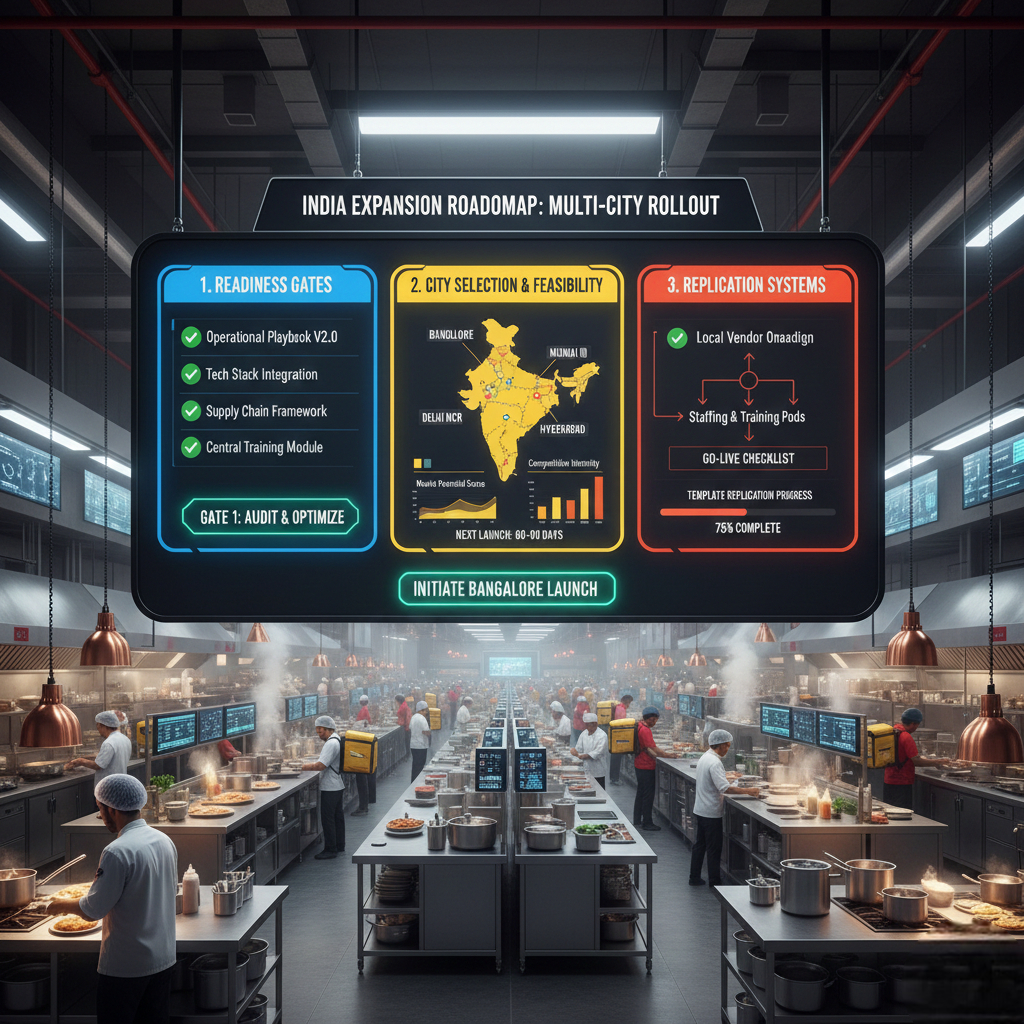
The most expensive mistake is expanding before your first city is stable. “Stable” does not mean a good weekend. It means consistent outcomes for weeks especially during dinner rush, weekends, and discount campaigns. Use this readiness gate before you add a new city:
- Ratings stability: not just high ratings, but low week-to-week variance.
- Refund control: predictable refund reasons, with clear fixes and owners.
- Time discipline: prep-to-pack and dispatch delays are measured and improving.
- Recipe repeatability: staff can execute without “your presence” in the kitchen.
- Margin clarity: contribution margin is tracked by SKU, not only by total sales.
If you are missing SOP documentation, fix that first: Cloud Kitchen Operation Framework.
How to Choose the Next City (Demand First, Not Ego)
City selection should be driven by demand clusters and operational feasibility not by “we want to be national.” A strong approach is to expand in logical corridors (example: Mumbai → Pune → Hyderabad), because team travel, vendor development, and training reuse becomes easier.
Use this short city scorecard:
- Category demand: does your cuisine have strong delivery volume in that city?
- Competitive density: how many similar brands dominate the top ranks?
- Rider reliability: are ETAs stable during peak hours?
- Real estate practicality: does your kitchen model fit rent + power + water realities?
- Talent supply: can you hire and retain a shift lead + core station staff?
If you are specifically building for metro execution, compare centralized control models: Centralized Cloud Kitchen Model in India.

3 Expansion Structures That Work Best Across Cities
Multi-city expansion becomes simpler when capex is controlled and the operating system is portable. These structures are most commonly used by Indian delivery brands:
- 1) Asset-light partner kitchens: fast to launch and good for testing demand. Risk is SOP drift and staff discipline unless audits are strong. (Deep dive: Asset-Light Cloud Kitchen Model)
- 2) Managed kitchens (CKaaS style): higher control through standardized training, reporting, and operator-led execution. Best when you want consistent replication across cities. (Model guide: CKaaS Model India)
- 3) Hub-and-spoke hybrid: a central prep hub creates uniform bases/sauces while city spokes handle finishing + dispatch. Best for consistency-sensitive menus and controlling food cost drift.
If you’re scaling outlets (multiple locations) and want a step-by-step rollout process: How to Scale Cloud Kitchens to Multiple Locations.
Unit Economics Across Cities: The Hidden Traps
A SKU that works in City A can bleed money in City B because your cost stack shifts: packaging availability, rider delays (more refunds), higher commission pressure, different discount behavior, and different kitchen efficiency. Multi-city scaling fails when brands measure “revenue growth” instead of contribution margin growth.
- Commission + ads + discounts: model the real net order value, not MRP.
- Packaging variance: different suppliers cause leakage and rating drift.
- Staff productivity: prep time changes with local hiring and training quality.
- Vendor yield: raw-to-cooked yield differs with different grades of ingredients.
- Refund leakage: late deliveries increase missing/cold complaints city-wise.
If you want to protect margins under aggregator pressure: How to Reduce Swiggy Commission.
The Replication Stack: What Must Be Identical in Every City
Multi-city expansion becomes easy when the brand owns a portable operating system. This is the replication stack you must standardize across locations:
- Recipe + portion bible: grams, ladles, timing, holding rules, substitutes.
- Vendor specs: approved brands, quality checks, rejection criteria.
- Packaging SOP: item-wise packaging, seals, labels, cutlery policy, heat retention rules.
- Dispatch discipline: ticket aging thresholds, escalation triggers, rider handover staging.
- Audit system: weekly taste + hygiene + packing audits with scorecards and penalties.
If you don’t have a clear SOP base yet, build it first: Cloud Kitchen SOP Checklist.
Multi City Launch Playbook: 14-Day Rollout With Control Gates
A controlled rollout beats a hype launch. The first two weeks decide whether your city becomes a stable unit or a constant firefighting mess. Use this practical 14-day rollout:
- Day 1–2: partner kitchen audit, infra fit, compliance check, station mapping.
- Day 3–4: city menu selection, RM master alignment, packaging trials, yield tests.
- Day 5–7: training drills, mock service, ticket aging tests, corrective actions.
- Week 1 go-live: limited SKUs + limited radius, strict QC, daily fixes.
- Week 2 scale: expand SKUs in batches, increase radius only after rating stability.
For a deeper view on how operations must run daily once you’re live: Cloud Kitchen Operation Framework.
KPIs That Protect Multi-City Expansion
In multi-city setups you can’t rely on physical presence. KPIs become your eyes. Track these weekly by city, and daily in the first 14 days:
- Contribution margin per order (by SKU + by city)
- Rating variance (stability matters more than peaks)
- Refund rate and top reasons (cold, leakage, missing, late)
- Dispatch delay % during peaks
- Food cost drift (purchase vs theoretical consumption variance)
- Repeat rate (city cohorts: week 1 → week 4)
If you want to understand why brands fail even after expanding: Why Cloud Kitchens Fail in India.
Common Mistakes Founders Make in Multi-City Expansion
Most multi-city failures are predictable. Avoid these and your expansion becomes smoother:
- Expanding demand before stability: ads expose weak ops and crash ratings.
- No city training system: new hires don’t inherit brand discipline automatically.
- Weak packaging control: leakage and cold food destroy repeat orders.
- Copy-paste menu: not every city supports the same SKU mix.
- No audit enforcement: SOPs become suggestions across cities.
Final Thoughts: Multi City Cloud Kitchen Expansion
Multi city cloud kitchen expansion is a systems game. The winners scale faster because they don’t scale “kitchens”-they scale a repeatable operating system: SOPs, training, procurement discipline, packaging control, dispatch rules, and KPI-driven audits. Stabilize one city, then replicate with readiness gates and scorecards.
If you treat each city as a controlled rollout with measurable gates, you can scale from 1 city to 5+ cities without losing ratings, margins, or customer trust.
FAQs: Multi City Cloud Kitchen Expansion
What is multi city cloud kitchen expansion?
It is the process of scaling a delivery-first brand across multiple cities while maintaining consistent taste, service speed, ratings, and unit economics through standardized SOPs and audit systems.
When should a cloud kitchen expand to a new city?
When the current city has stable ratings, controlled refunds, predictable peak operations, documented SOPs, and SKU-level contribution margins tracked consistently for multiple weeks.
Which model is best for multi-city expansion in India?
Asset-light works best for fast testing, managed kitchens work best for consistency and replication, and hub-and-spoke works best when your menu depends on centralized prep for uniform quality.
What KPIs matter most during expansion?
Contribution margin per order, rating variance, refund rate with reasons, dispatch delay percentage during peaks, food cost drift, and repeat rate by city cohorts.