
Is Cloud Kitchen Business Profitable In India:Yes a cloud kitchen can be profitable in India. But not automatically. Profitability comes from disciplined unit economics: portion control, packaging performance, commission-aware pricing, and repeat orders. If you’re relying on discounts and “volume will fix it,” margins will collapse quietly. This guide breaks down what “profitable” really means for cloud kitchens in India and how to build a stable profit engine.
Start Here If You Need the Full Cloud Kitchen Foundation
This page is part of GrowKitchen’s core learning series. If you want the full end-to-end view (models, setup cost, SOPs, scaling), read the pillar guide: Cloud Kitchen as a Service and the comprehensive business guide: Cloud Kitchen Business in India.
For official compliance references (often needed for onboarding vendors and aggregators), review: FSSAI, GST Portal, and Udyam (MSME).
Is a Cloud Kitchen Profitable in India?
A cloud kitchen can be profitable in India when the business is built around contribution margin, not just order volume. The model works because fixed costs can be lower than dine-in restaurants, operations can be standardised, and demand can be scaled through aggregators and retention.
What “Profitable” Means for Cloud Kitchens (Practical Definition)
In real operations, cloud kitchen profitability is measured in layers:
- Gross margin: after food cost
- Contribution margin: after food cost + packaging + aggregator commission + discounts
- Net profit: after manpower + rent + utilities + software + overheads
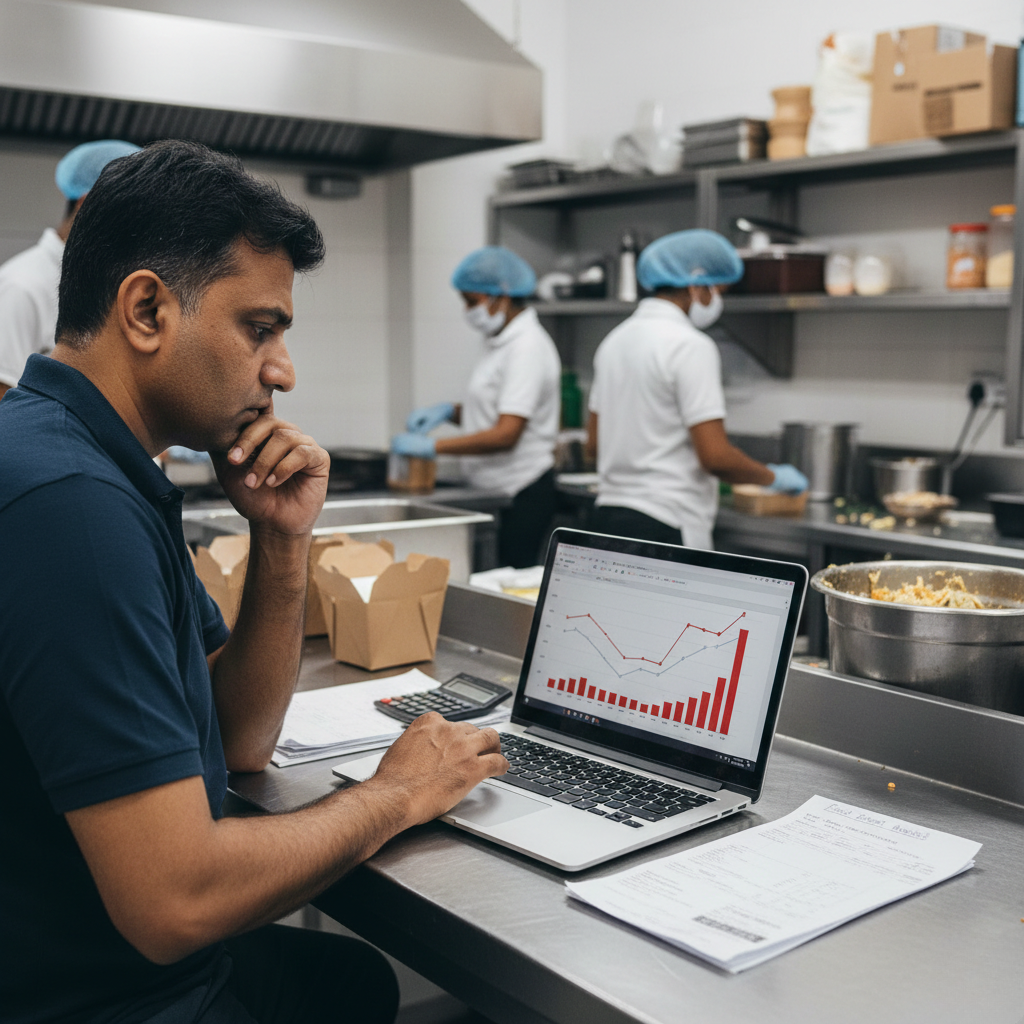
Most kitchens look “busy” but still lose money because contribution margin is weak. If you want a system-led view of daily execution, use: Cloud Kitchen SOP Checklist.
The Real Cost Structure That Decides Profit
1. Food Cost (Your Biggest Controllable Lever)
Food cost goes out of control when recipes and portioning are not standardised. Two cooks, two portions, two margins. That’s how profits leak silently.
Scalable kitchens use ladle rules, weighed proteins, batch prep, and strict garnish portions. If you’re planning to scale, read: Scalable Cloud Kitchen Business Model in India.
2. Packaging Cost (Ratings vs Margin Tradeoff)
Packaging is not an expense line-it is a ratings protection layer. Bad packaging creates spillage, sogginess, and refund risk. Good packaging protects repeat orders.
3. Aggregator Commission + Fees
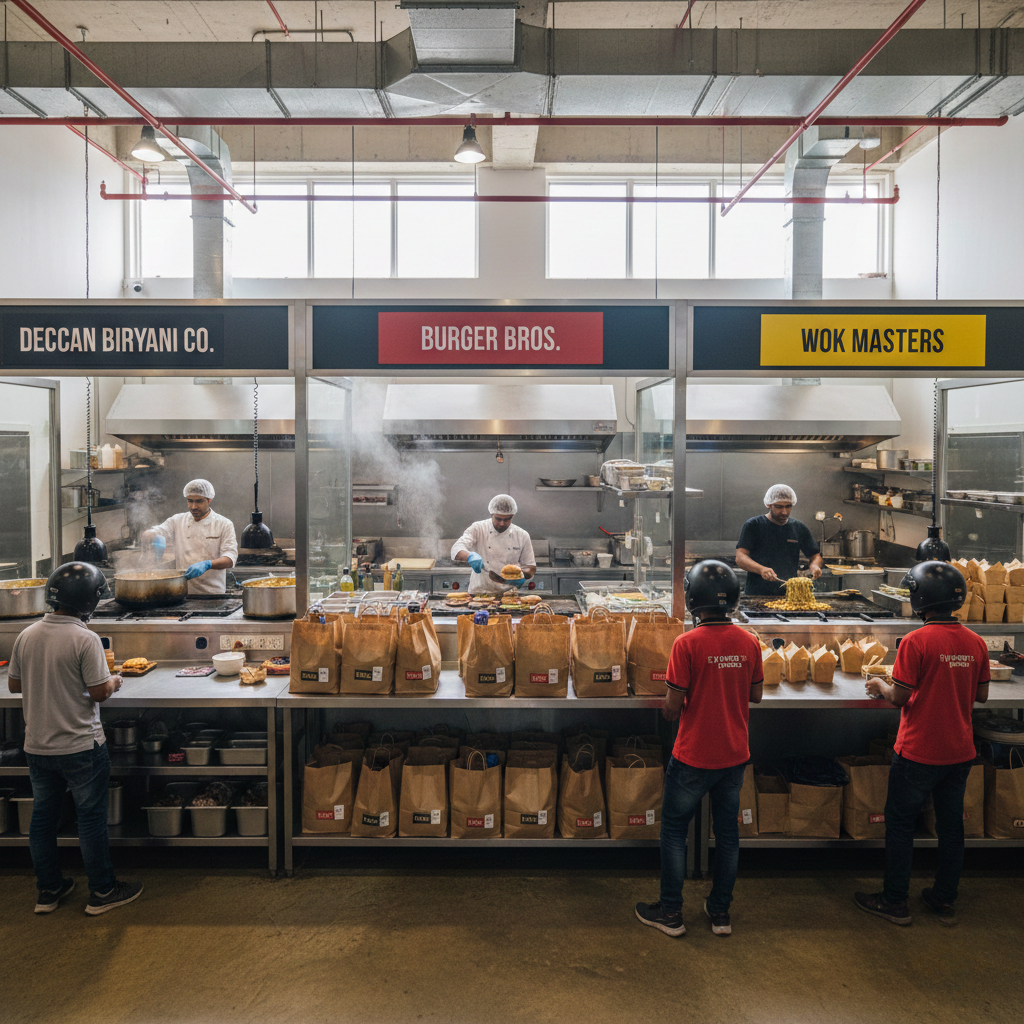
Most Indian cloud kitchens start with Swiggy/Zomato-led demand. That’s normal. But profitability depends on pricing and menu strategy that accounts for commission, rather than blindly matching competitors’ prices.
The long-term solution is to build direct repeat through retention: WhatsApp for Cloud Kitchen Growth.
4. Manpower (The “Hidden” Profit Killer)
Kitchens become unprofitable when manpower grows faster than output. The fix is role clarity: prep, assembly, packing, dispatch-each with SOPs and shift planning.
5. Refunds + Low Ratings (The Silent Tax)
Refunds don’t just cut one order-they reduce ranking, which reduces future orders. One bad week of operational errors can reduce visibility for weeks.
If you want to understand how kitchens fail even with “good food,” read: Why Cloud Kitchens Fail in India.
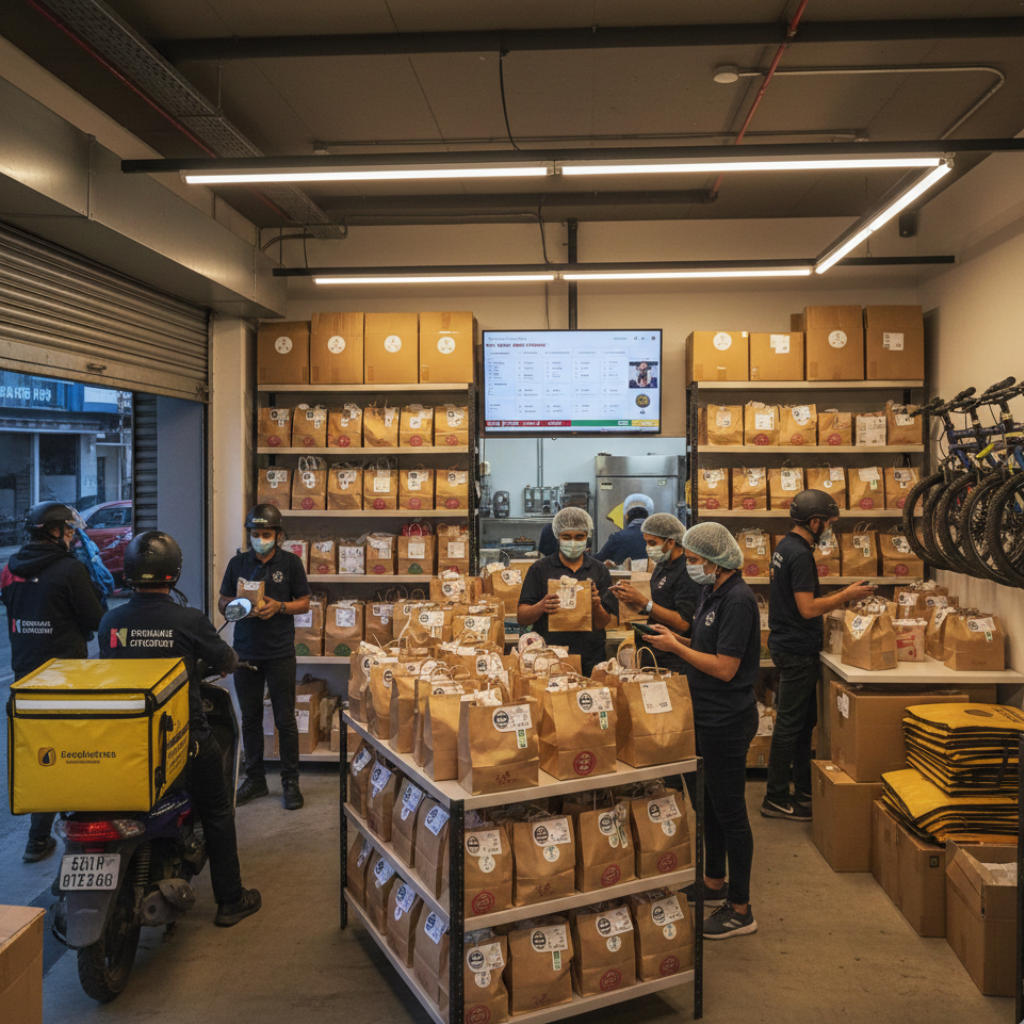
A Simple Profitability Framework (Used by Serious Operators)
If you want stable profits, focus on these levers in order:
- 1. Standardise recipes: fixed grams per portion + batch prep SOP
- 2. Engineer your menu: push high-margin bestsellers, reduce low-margin complexity
- 3. Fix packaging: reduce spillage/condensation and protect ratings
- 4. Reduce refunds: QC checkpoint before dispatch
- 5. Build repeat orders: WhatsApp flows, subscriptions, and CRM follow-ups
So, Is Cloud Kitchen Business Profitable in India?
Yes-cloud kitchens can be profitable in India when they are built like systems: controlled portions, smart menu engineering, stable dispatch, strong packaging, and retention beyond discounting.
If you build it like a “restaurant that happens to deliver,” profits will be unstable. If you build it like a production engine, profitability becomes predictable-and scalable.
- Cloud Kitchen Business in India (Pillar Guide)
- Cloud Kitchen SOP Checklist
- WhatsApp for Cloud Kitchen Growth
- How to Scale Cloud Kitchens
- Why Cloud Kitchens Fail in India
Also Refer To
Want to Build a Profitable Cloud Kitchen (With Real Systems)?
GrowKitchen helps founders improve contribution margins, reduce refunds, and scale cloud kitchens with SOP-led execution and stable ratings.