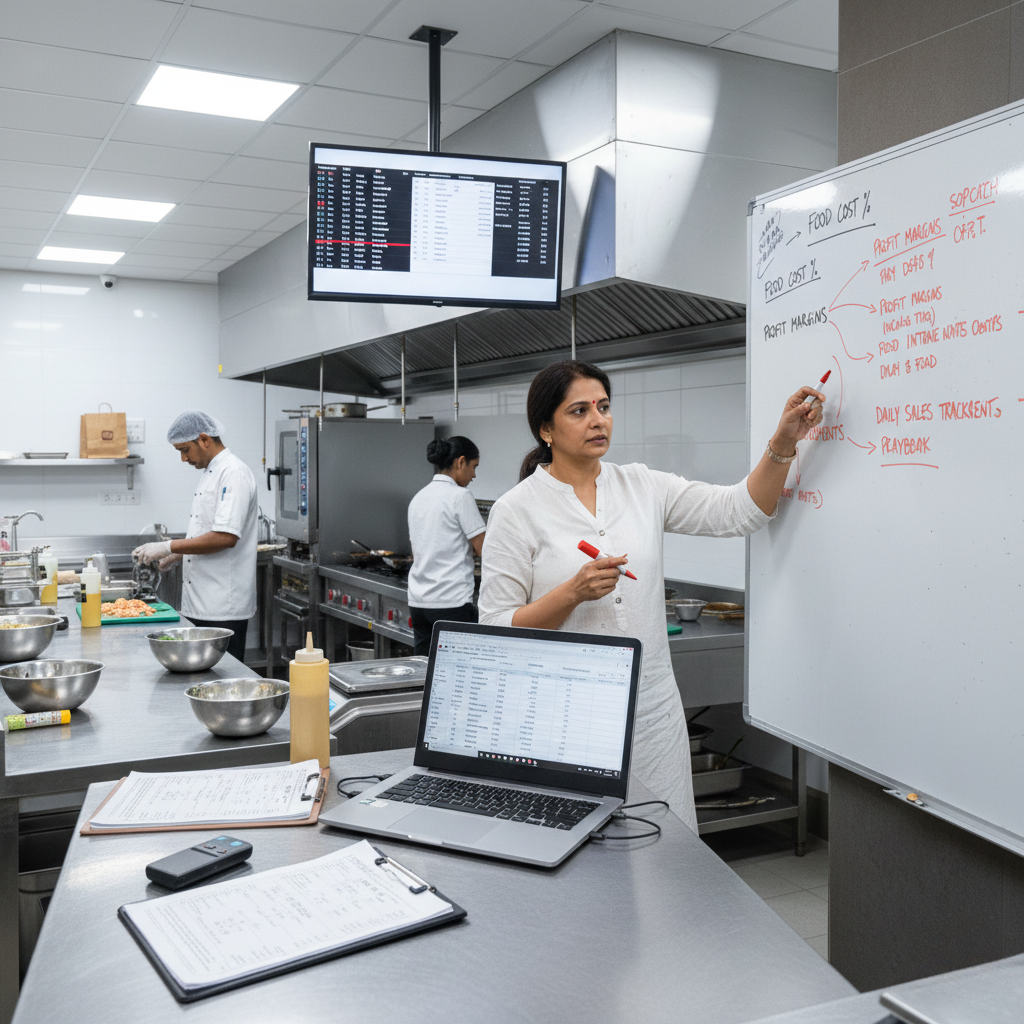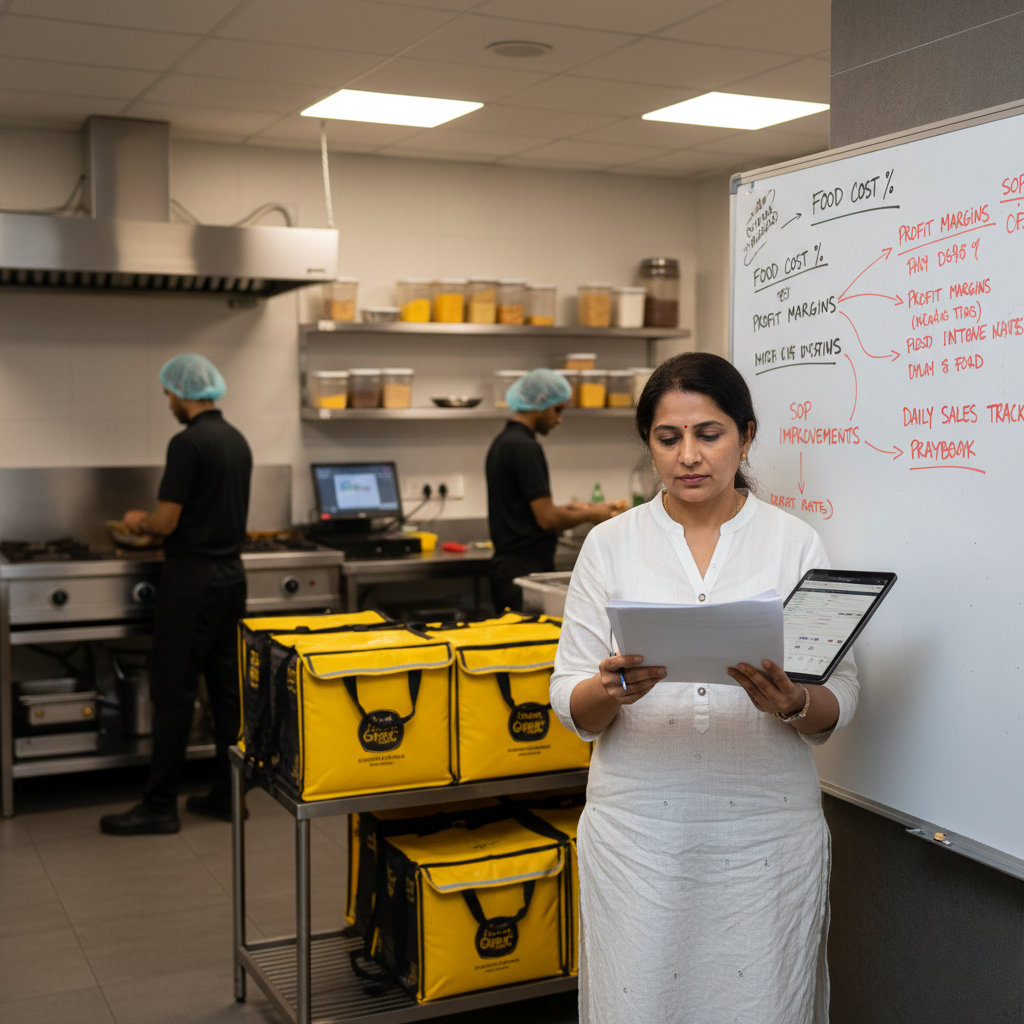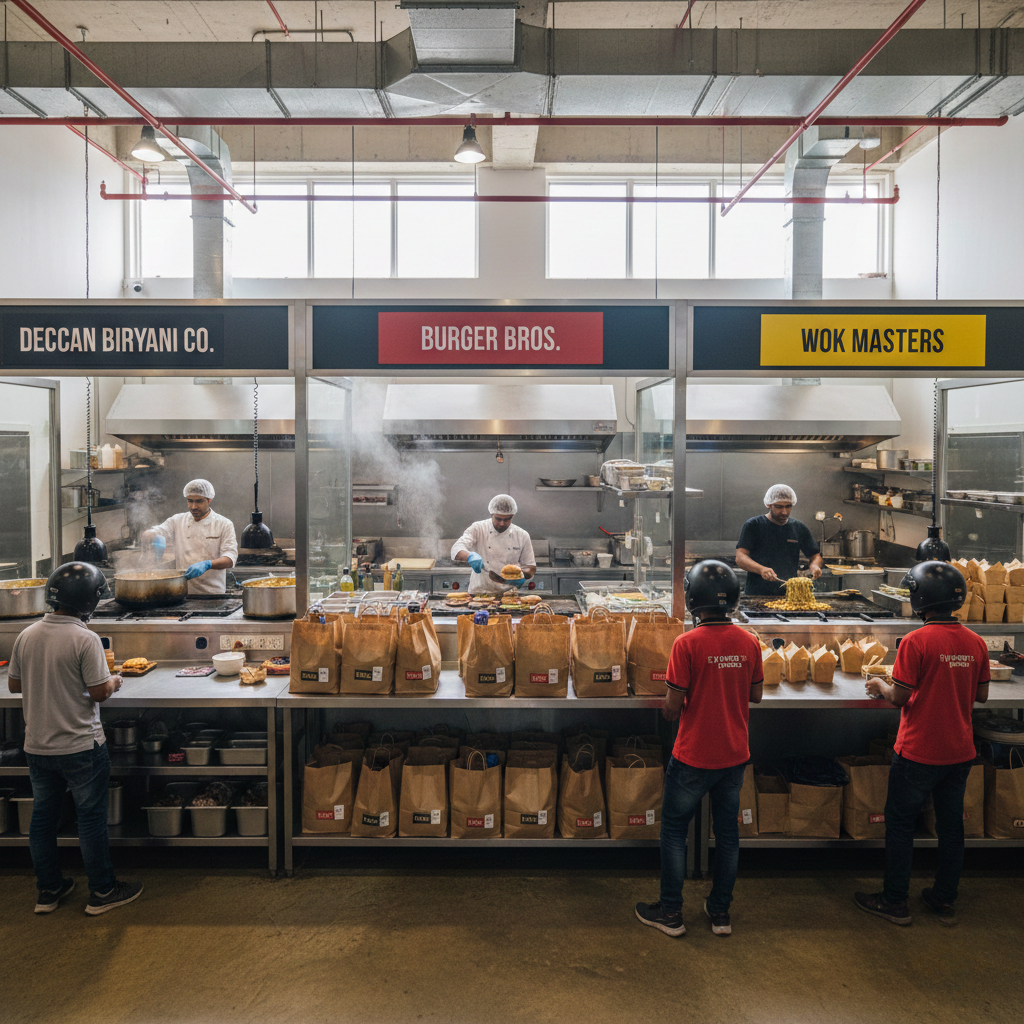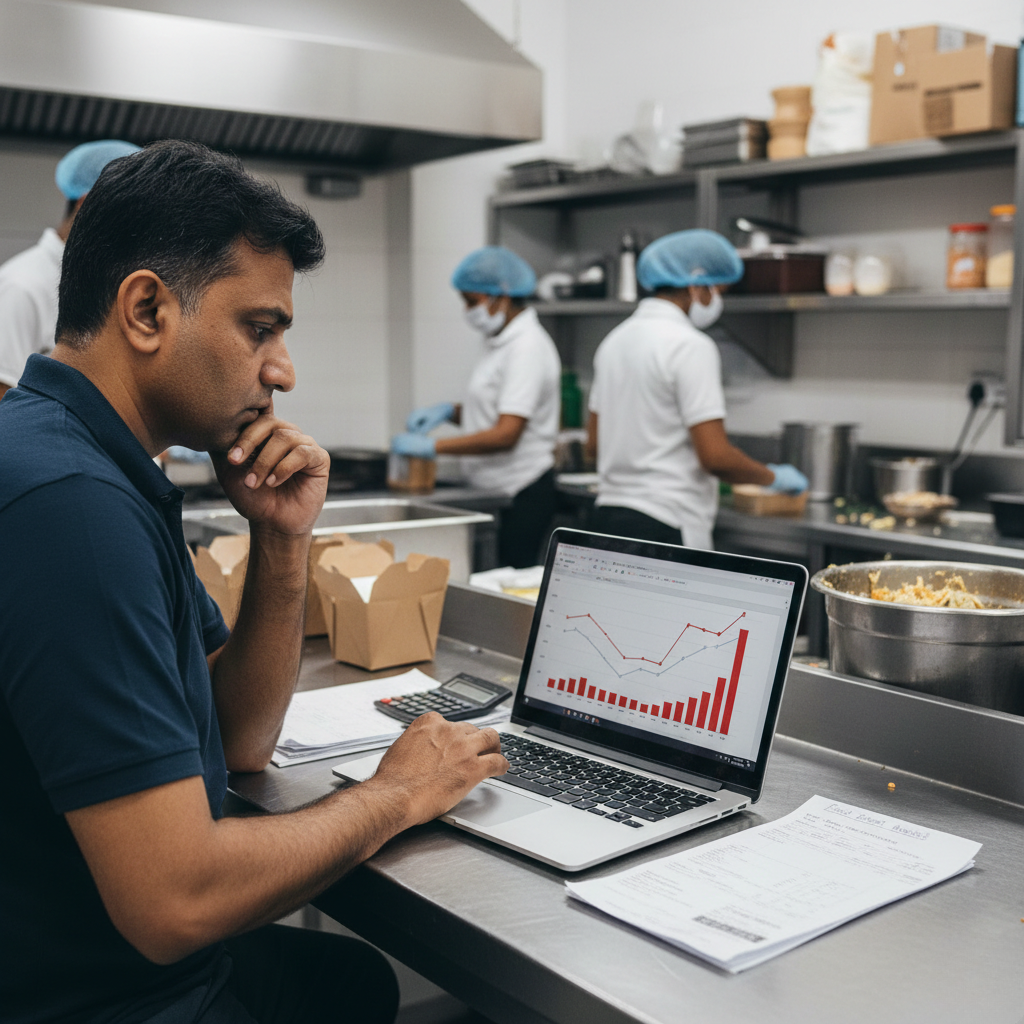
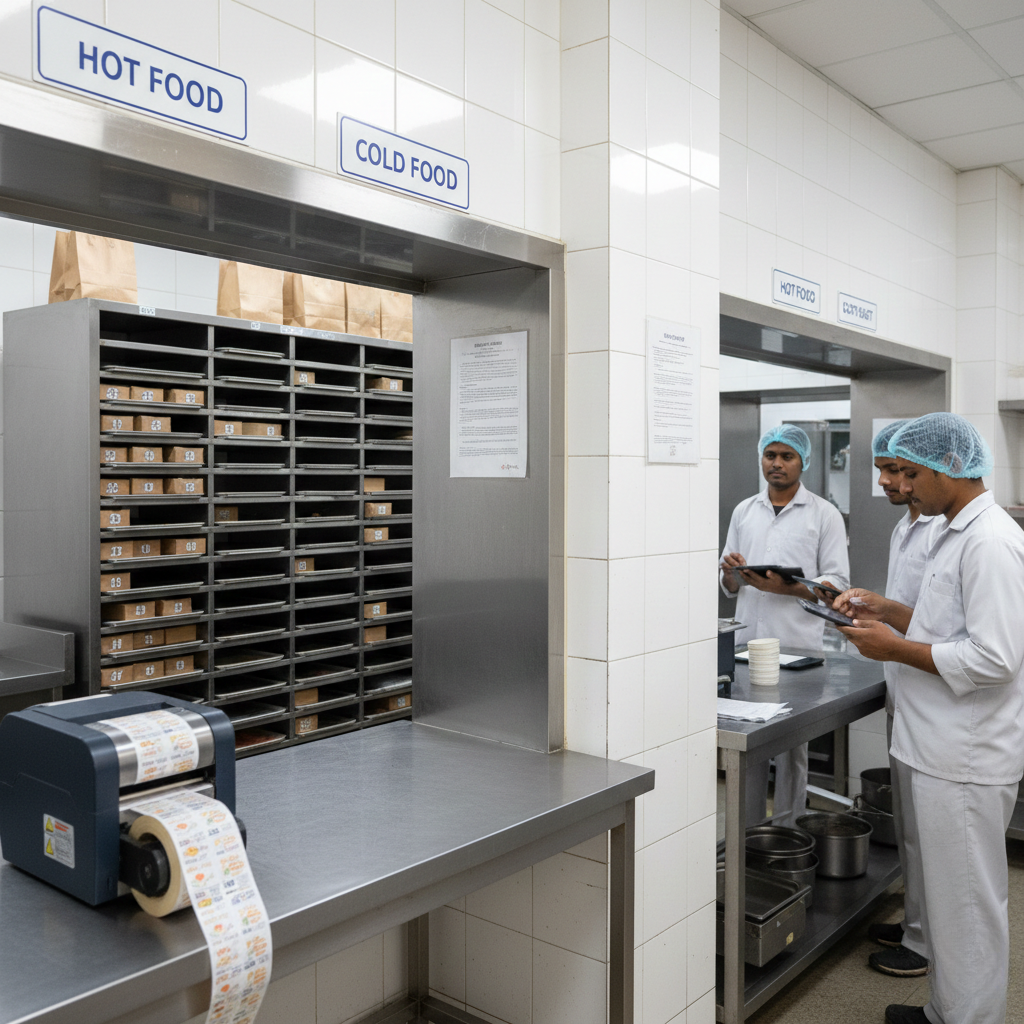
How Process Discipline Improves EBITDA is not a “management philosophy” topic. It is the difference between a kitchen that prints profit and a kitchen that looks busy but bleeds cash. Most cloud kitchens don’t lose money because demand is low. They lose money because daily execution is inconsistent while costs remain fixed. Process discipline is not bureaucracy. It is the operating rhythm that locks food cost, reduces refunds, stabilises dispatch, protects ratings, and makes margins predictable across teams, shifts, brands, and locations. This guide explains how process discipline improves EBITDA end-to-end from prep to packing to payout, and how to build discipline without slowing the kitchen down.
How Process Discipline Improves EBITDA: The Missing Layer Between Sales and Profit
Many cloud kitchen founders reach a confusing stage: orders are steady, marketing is running, staff is present, aggregator dashboards show activity, but profit feels fragile. One week looks decent and the next week becomes a firefight. This happens because EBITDA in delivery kitchens is not decided by “more orders.” It is decided by how consistently the kitchen converts orders into cash after all leakages.
Process discipline is the missing layer between revenue and profitability. Without discipline, costs drift through small daily failures: over-portioning, over-prep and expiry, remakes, missing add-ons, packing errors, late dispatch, rider escalations, refunds, and rating volatility. These failures don’t always look big on a single day. But they compound into weekly payout shock.
Discipline improves EBITDA because it reduces variation. When outcomes become repeatable, variable costs become controllable. When variable costs are controlled, EBITDA becomes predictable. Predictability is what allows you to scale without multiplying losses.
If you want the profitability foundation first, start with Cloud Kitchen Profitability Consultant in India and identify the leakage points via Common Operational Mistakes in Cloud Kitchens.
What Process Discipline Actually Means in a Cloud Kitchen
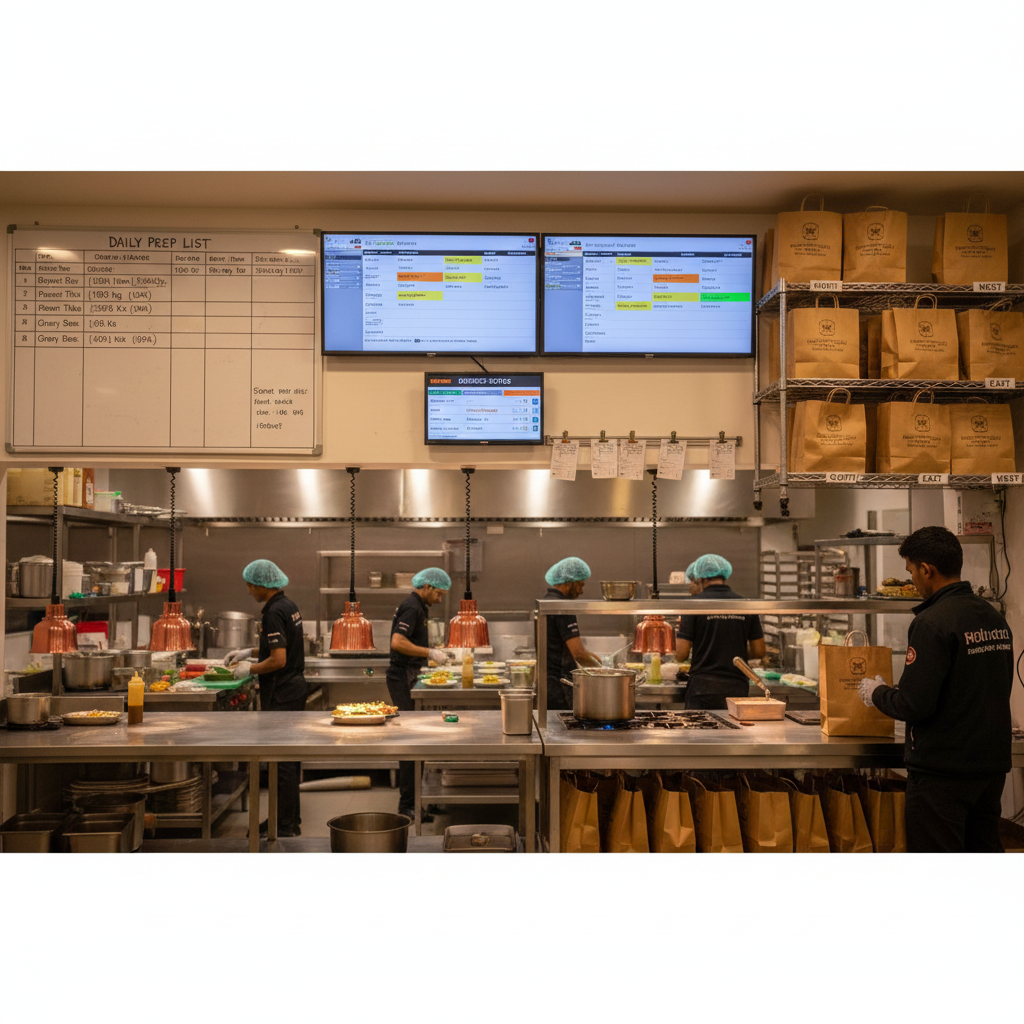
Process discipline is not “everyone follows rules.” Process discipline means the kitchen runs on defined execution standards even when the founder is not present, even during peak, even when a new staff member joins, and even when demand spikes unexpectedly.
In delivery kitchens, discipline has a very specific meaning: the same inputs create the same output. The same portion sizes, the same batch yields, the same holding times, the same packing sequence, the same dispatch checks, and the same escalation decisions. This is how you reduce uncertainty in a high-volume environment.
Most kitchens confuse discipline with strictness. Strictness is shouting. Discipline is clarity. When staff knows exactly what “right” looks like, execution becomes faster, calmer, and more consistent. That consistency is what protects EBITDA.
Why Process Discipline Improves EBITDA by Fixing the Cost Structure
EBITDA improves when operating costs stop drifting. Founders often focus on “big” costs: rent, salaries, commissions, and ads. But most margin loss happens in variable costs that compound daily: wastage from over-prep, re-cooking due to errors, packaging failures, refunds, rider delays, and complaint-driven replacement orders.
A kitchen without discipline runs on informal habits: “Do it like yesterday,” “Adjust as per feel,” “We’ll manage during peak,” “Ask the supervisor.” These habits create variation. Variation creates leakage because outcomes change by shift, by person, and by mood.
Discipline fixes cost structure by standardising decisions. Instead of staff estimating what to do, the kitchen follows a repeatable operating rhythm: prep planning targets, batch timing windows, measured portions, packing checklists, dispatch SLAs, and daily verification.
The result is simple: fewer mistakes, fewer remakes, lower wastage, fewer refunds, faster dispatch, more stable ratings, and more stable payouts. That stability is what EBITDA feels like in real operations.
Food Cost Control: Discipline Turns Costing into Reality, Not a Spreadsheet
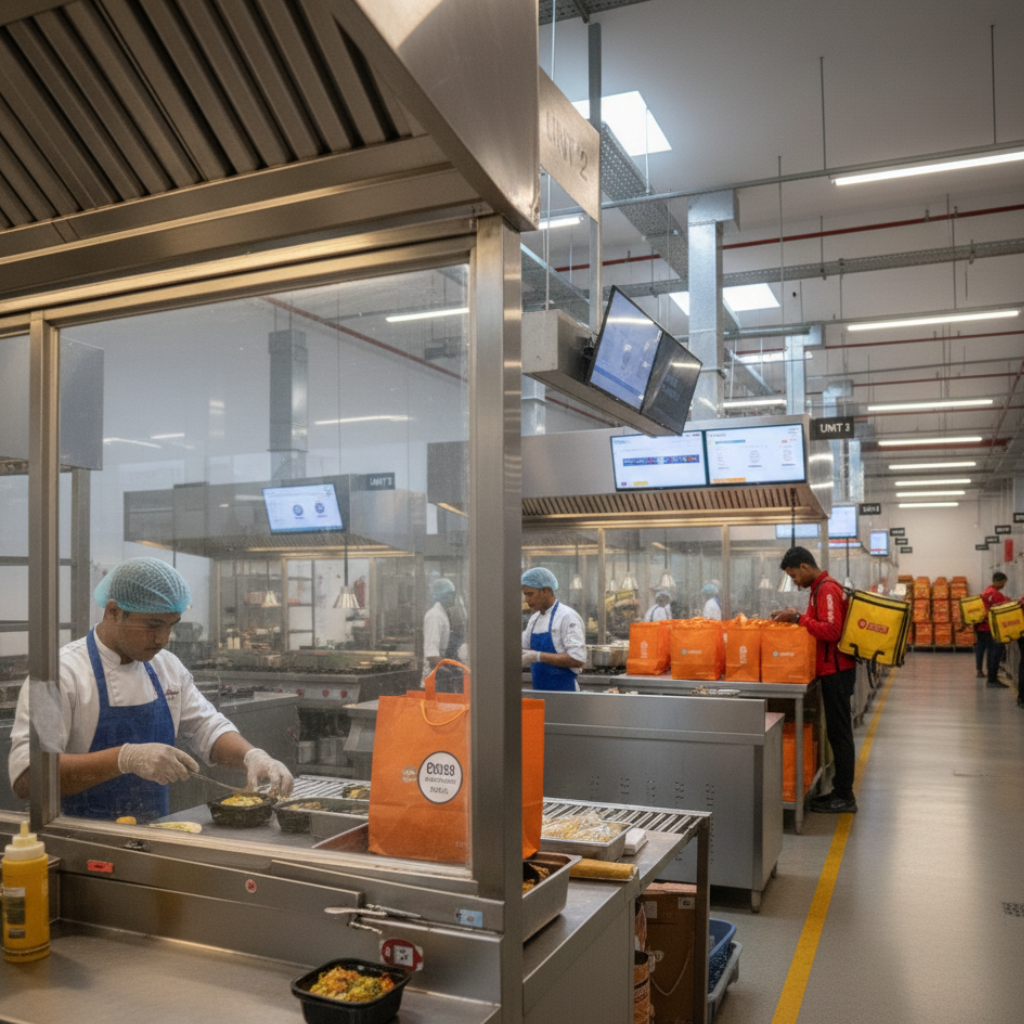
Food cost is the biggest driver of EBITDA in cloud kitchens. Most kitchens have costing sheets. Very few kitchens have disciplined execution that matches the sheet. The gap between “costing on paper” and “costing in reality” is where EBITDA disappears.
Process discipline improves food cost in five practical ways:
1) Portion discipline: Discipline means every component is measured consistently: gravy, protein, rice/noodles, toppings, garnish, and sauces. When portions are measured, food cost becomes predictable. When portions are eyeballed, food cost becomes emotional.
2) Batch yield discipline: If one batch yields 18 portions today and 15 tomorrow, that variance is direct EBITDA leakage. Discipline means batch recipes are weighed, yield is counted, and variance is reviewed.
3) Holding time discipline: A major driver of wastage is “we’ll use it tomorrow.” Discipline defines holding times, discard rules, and labelling. This protects freshness and prevents refunds.
4) Substitution discipline: Random substitutions destroy both taste consistency and costing accuracy. Discipline means substitutions are approved, priced, and documented. Otherwise every “small change” becomes a silent margin leak.
5) Daily verification: Discipline is not a one-time training. It is daily verification: ladle checks, yield checks, and end-of-day variance notes. What gets checked gets followed.
If you want the SOP-led link between food cost control and complaints, read How SOPs Reduce Food Cost & Complaints.
Staff Productivity: Discipline Converts Headcount into Throughput
Many kitchens believe productivity issues mean they need more staff. In reality, productivity issues often mean they need more discipline. Staff presence does not equal output. Output comes from role clarity, station readiness, and predictable handoffs.
Without discipline, staff multitasks randomly. Prep gets abandoned during peak. Packing becomes rushed. Orders become late. Founders or supervisors step in to “fix.” Everyone looks busy, but throughput per person stays low.
Discipline improves productivity by making work predictable:
Prep discipline:
what is prepped, how much, by what time, and how it is stored.
Cook discipline:
sequence, pan allocation, batch timing, reheat rules, and station ownership.
Pack discipline:
packing order, sealing standards, add-on checklist, and label rules.
Dispatch discipline:
verification steps, time SLAs, rider handover, and escalation playbooks.
The kitchen stops relying on “best people” and starts relying on the process. That is how you scale without adding chaos.
For role-based systems that improve throughput, use Role-Based Kitchen Operations Explained.
Aggregator Economics: Discipline Protects Your Payout, Not Just Your Kitchen
EBITDA in delivery kitchens is heavily impacted by payouts, and payouts are impacted by operational performance. Cancellations, wrong items, packaging failures, and late dispatch trigger refunds, penalties, and visibility drops. Many founders track commissions but ignore the hidden performance cost.
Process discipline reduces penalty exposure by eliminating repeat mistakes: verification checklists, sealing standards, label discipline, delivery-safe packaging usage, and time-bound dispatch flow. When the kitchen becomes predictable, the platform experience becomes predictable too.
If you want to understand how platforms crush margins when operations are weak, read Aggregator Commission Impact in India.
External reference links (for policy context): Swiggy Refund & Cancellation Policy and Zomato Online Ordering Terms.
Dispatch Discipline: The Most Underrated EBITDA Lever
Dispatch is where profit dies silently. A kitchen can cook great food and still lose money if dispatch is inconsistent. One wrong order triggers refund, complaint, rating drop, and future conversion loss. That is EBITDA destruction, not just “service issues.”
Dispatch discipline improves EBITDA through four mechanisms:
1) Time discipline: define a maximum acceptable time at each stage: ticket acceptance, cooking start, packing, handover. Time discipline reduces cancellations and late delivery complaints.
2) Accuracy discipline: mandate dual verification: packer check + dispatch check. This reduces wrong or missing items dramatically.
3) Packaging discipline: use the right container, seal method, and label rule per SKU. Packaging discipline reduces spillage, replacements, and negative ratings.
4) Escalation discipline: define what happens when a rider is delayed, a stockout occurs, or a substitution is needed. When escalation is disciplined, panic reduces and peak stays stable.
For a dispatch-ready workflow, implement Cloud Kitchen Dispatch SOP.
Scaling Myth: Without Discipline, More Orders Reduce EBITDA
Many founders assume: “Once we do more orders, we’ll become profitable.” That is only true if operations are already controlled. If your kitchen leaks money at 50 orders/day, it will leak faster at 150 orders/day. Volume amplifies your system. If the system is weak, volume amplifies weakness.
Without discipline, scaling increases: portion drift, wastage, rework, dispatch chaos, complaints, refunds, and cash burn. The kitchen grows revenue and still dies. With discipline, scaling becomes safe because outcomes are repeatable.
If growth is currently hurting your kitchen, read When Growth Is Hurting Your Cloud Kitchen Operations.
How to Build Process Discipline That Actually Improves EBITDA
The biggest mistake founders make is trying to enforce discipline through reminders. Reminders create temporary improvement. Systems create permanent improvement. Process discipline is built when “right execution” becomes easier than “random execution.”
Here is a practical implementation sequence that works in running kitchens:
Step 1: Define the EBITDA leakage list. Track 7 days of: refunds, remakes, delays, wastage, stockouts, and complaint categories. Discipline priorities should match the biggest leaks, not the loudest problems.
Step 2: Build the discipline stack in the right order. Start with the highest ROI areas: Recipe + portion SOPs → Prep planning SOPs → Packing SOPs → Dispatch SOPs → Receiving SOPs. This sequence stabilises cost and customer experience quickly.
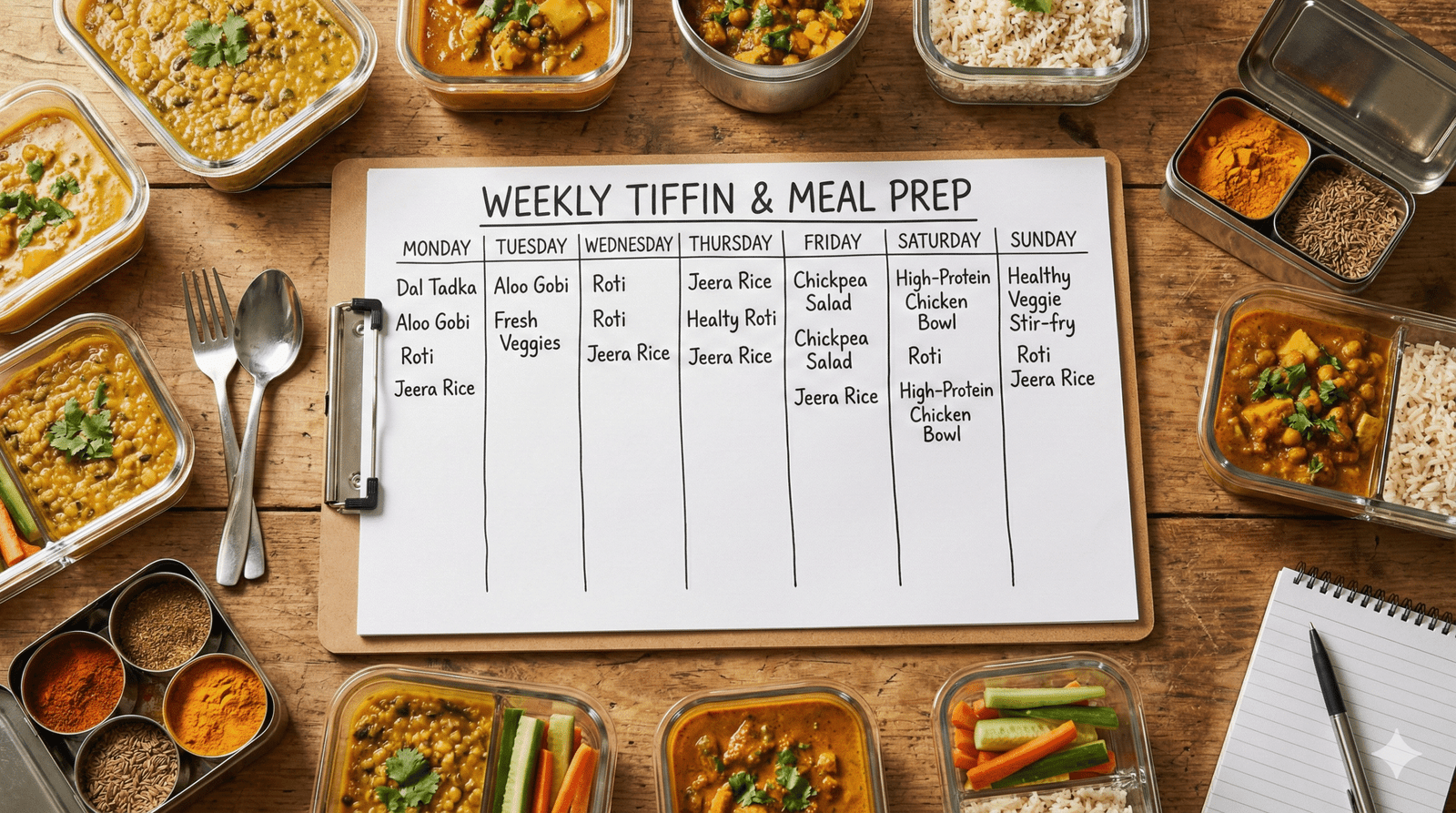
Step 3: Make standards visual and station-based. Discipline fails when SOPs live in Google Drive. Put standards at the station: prep table, cooking station, packing station, dispatch desk. If it is not visible during peak, it does not exist.
Step 4: Replace “training sessions” with “do + repeat.” Staff learns discipline through repetition. Run 3–5 supervised cycles per station. Correct immediately. Reinforce the standard. Discipline is muscle memory, not motivation.
Step 5: Add daily compliance checks. Add small checks that create big discipline: portion tool check, batch yield check, label + seal check, dispatch time check, and end-of-day variance note. What gets checked gets followed.
Step 6: Create an escalation ladder. Most chaos is not because staff is lazy. Chaos happens because staff doesn’t know what to do when something breaks. Create a ladder: station lead → shift supervisor → ops manager → founder (only exceptions). Define exceptions clearly so everything doesn’t become an exception.
Step 7: Use a simple dashboard to make discipline measurable. Track daily: refunds, remakes, dispatch time, food cost variance, stock variance, and complaints. Visibility converts discipline from “feel” to facts.
External hygiene + safety standards (useful while standardising SOPs): FSSAI Hygiene Requirements (Schedule 4 reference), ISO 22000 overview, and FAO/Codex General Principles of Food Hygiene.
Optional external reference (process discipline concept lens): If you want a broader execution discipline reference, explore Standardized Work (Lean lexicon) to understand how repeatability reduces variability in operations.
Final Takeaway: Discipline Doesn’t Create Revenue. It Protects EBITDA
Cloud kitchen profitability is not only a sales problem. It is an execution stability problem. Process discipline improves EBITDA because it reduces variation: portions become consistent, prep becomes predictable, packing becomes accurate, dispatch becomes on-time, refunds reduce, ratings stabilise, and payouts become consistent.
A kitchen without discipline is founder-stabilised. A kitchen with discipline is system-stabilised. And system-stabilised kitchens are the ones that scale across brands and locations without multiplying cash burn.
Operational frameworks from GrowKitchen, and operating partner brands like Fruut and GreenSalad help founders turn “busy kitchens” into “disciplined, EBITDA-positive kitchen networks.”
FAQs: How Process Discipline Improves EBITDA
Does process discipline matter if my kitchen is small?
Yes. Small kitchens have thinner margins. Discipline prevents small daily leaks from becoming monthly losses, especially through portion drift and refunds.
What is the fastest discipline lever to improve EBITDA?
Portion + packing/dispatch verification. These directly reduce food cost drift, wrong orders, refunds, and penalties.
Will discipline reduce speed during peak hours?
Initially, training may slow things slightly. But once adopted, discipline increases speed because staff stops guessing, roles become clear, and handoffs become predictable.
What if staff doesn’t follow the process?
Make standards visual, station-based, and verified daily. Compliance comes from checks and ownership, not from instructions.
- Cloud Kitchen Profitability Consultant in India
- Cloud Kitchen Profitability Consultant in India
- CKaaS Explained
- Common Operational Mistakes in Cloud Kitchens
- How SOPs Reduce Food Cost & Complaints
- Role-Based Kitchen Operations Explained
- Cloud Kitchen Dispatch SOP
- Aggregator Commission Impact in India
- When Growth Is Hurting Your Cloud Kitchen Operations