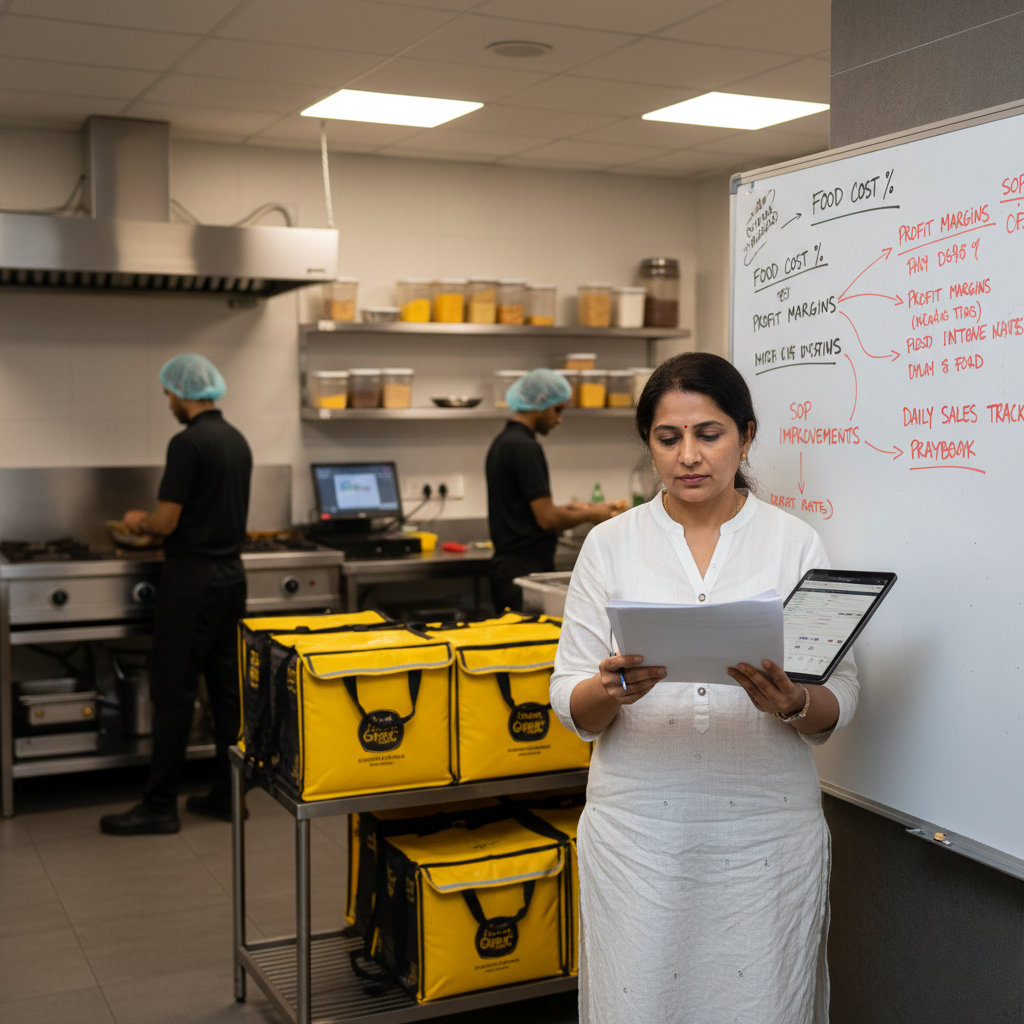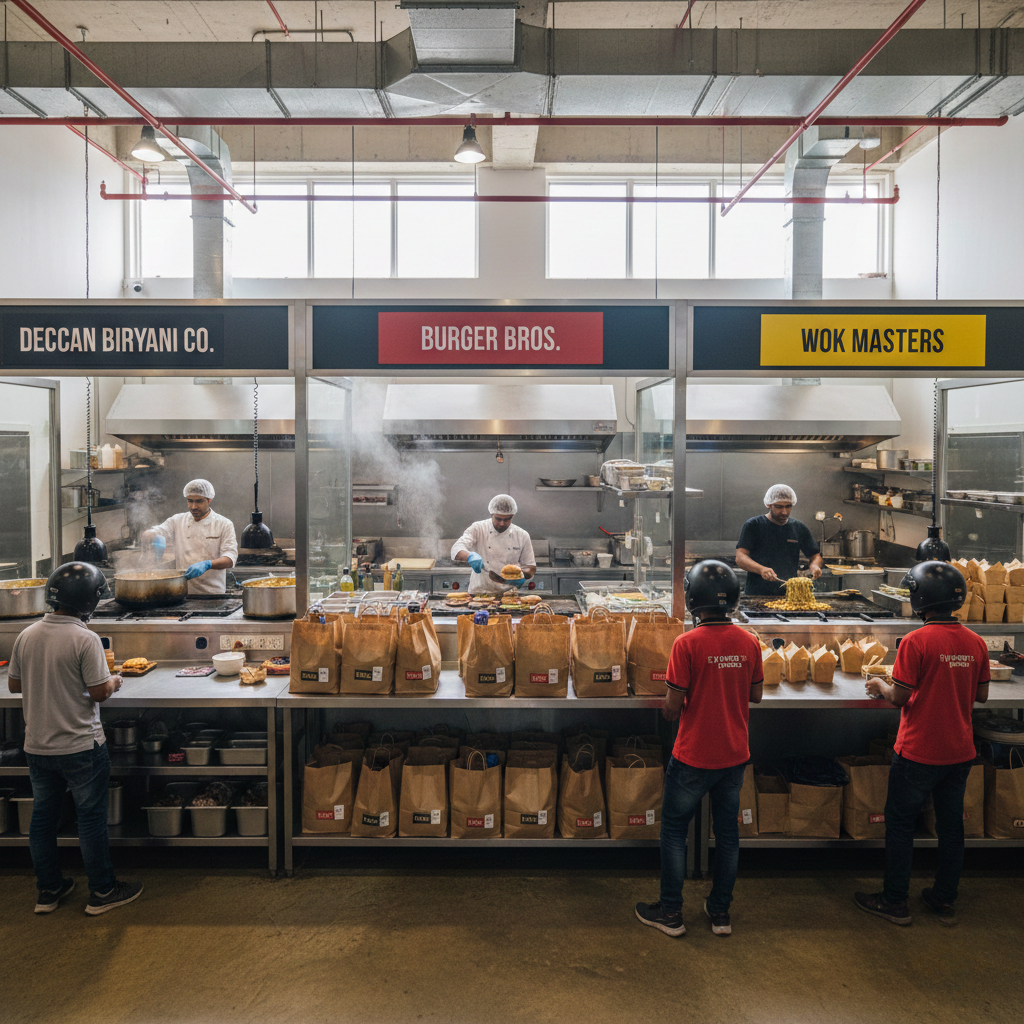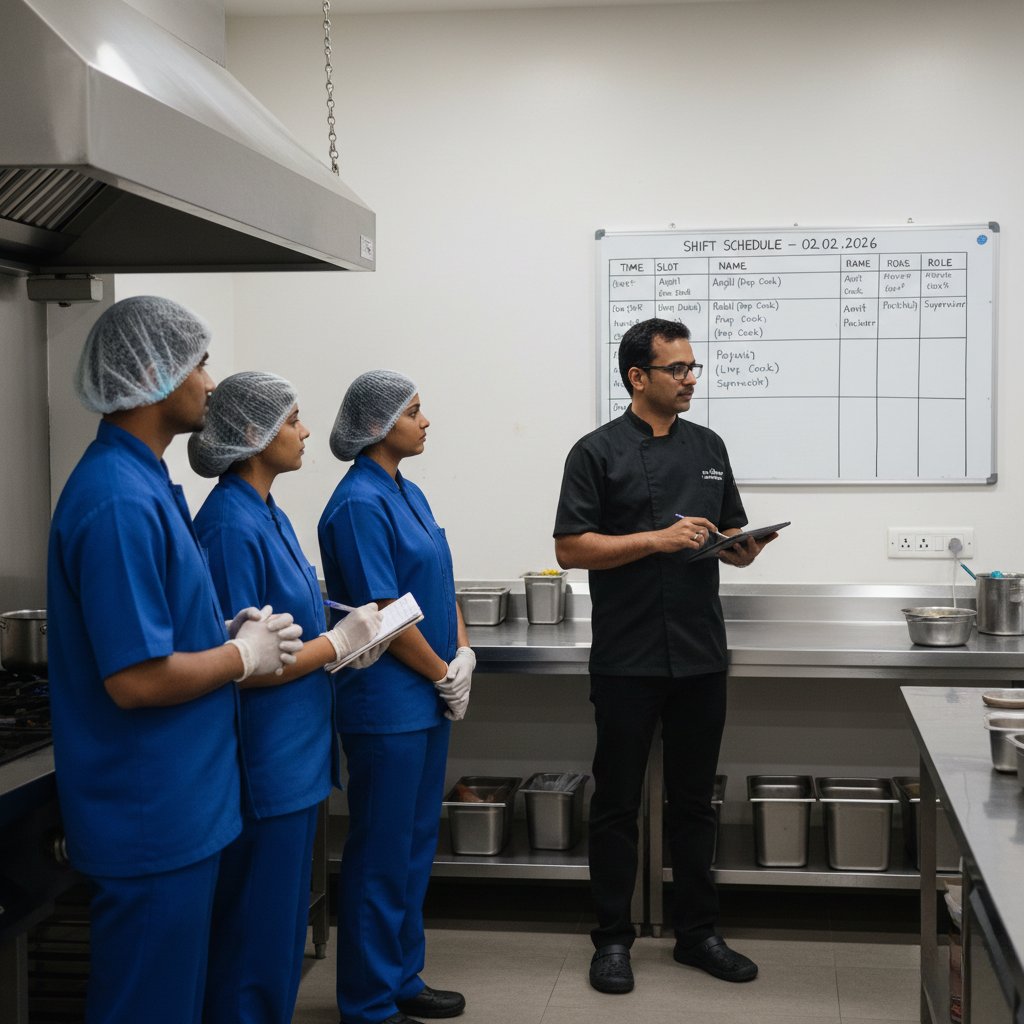
Daily Shift Planning for Cloud Kitchens is one of the most overlooked operational disciplines in India’s delivery-first food businesses. Many cloud kitchens focus on hiring the right staff but fail to plan how that staff is deployed every day. Poor shift planning leads to overstaffing in slow hours, understaffing during peaks, burnout, delays, and rising complaints. This guide explains daily shift planning for cloud kitchens, why most kitchens get shift planning wrong, and how structured shift design improves productivity, service speed, staff morale, and profitability.
Why Daily Shift Planning for Cloud Kitchens Determines Daily Performance
Cloud kitchens do not fail suddenly. They fail through daily inefficiencies. One of the biggest hidden inefficiencies is poor shift planning. Staff may be present, but not at the right time, in the right roles, or in the right numbers. This is why daily shift planning for cloud kitchens directly impacts speed, food cost, complaints, and staff retention.
To understand the operating environment, start with Cloud Kitchen Operation Consultant and Cloud Kitchen Business in India and Common Operational Mistakes in Cloud Kitchens.

What Daily Shift Planning for Cloud Kitchens Actually Means
Daily shift planning is not just assigning attendance. It is the process of aligning staff roles, timing, and workload with expected order volume.
Why Most Cloud Kitchens Struggle With Daily Shift Planning
Many kitchens use fixed shifts copied from restaurants. Delivery demand, however, is uneven and peak-driven. Lunch and dinner spikes require different staffing intensity. Flat shifts ignore this reality, leading to inefficiency.
This problem is amplified in Why Cloud Kitchens Fail in India.
Daily Shift Planning for Cloud Kitchens Starts With Demand Patterns
Shift planning begins with understanding demand. Order volume varies by time of day, day of week, weather, and promotions. Kitchens that study demand patterns plan smarter shifts with fewer people and less stress.
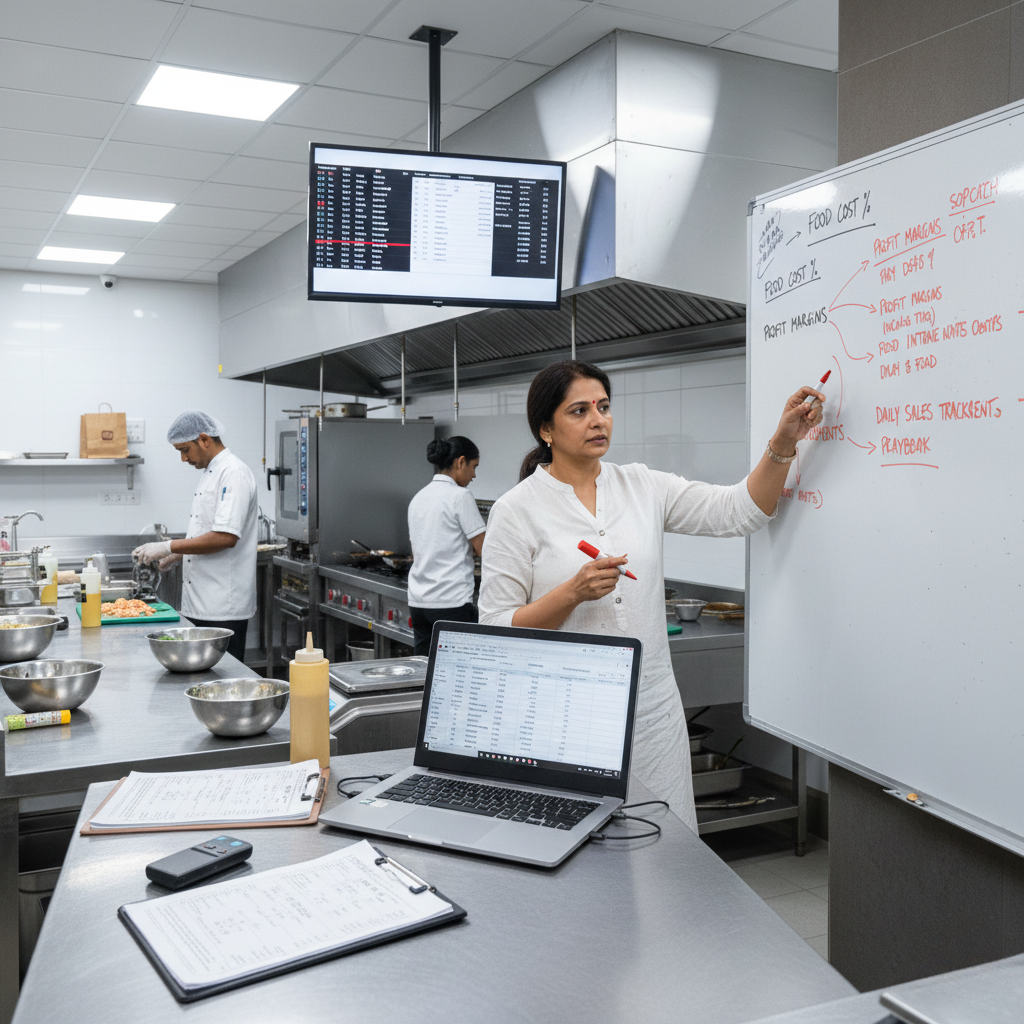
Role-Based Shift Planning for Cloud Kitchens
Shift planning must follow role clarity. Prep, cooking, packing, dispatch, inventory, and supervision have different workload curves. Planning shifts without role separation causes bottlenecks during peak hours.
Learn role clarity fundamentals in Role-Based Kitchen Operations Explained.
Daily Shift Planning for Prep Staff
Prep workload peaks before service. Prep staff should arrive earlier and finish earlier than service staff. When prep shifts overlap service hours, kitchens waste labour and still face shortages later.
Learn prep logic in Prep SOP vs Service SOP Explained.
Daily Shift Planning for Cooking Staff
Cooking staff must be aligned with peak order windows. Split shifts often work better than long continuous shifts. Without cooking shift planning, kitchens face fatigue-driven errors.
Shift Planning for Packing and Dispatch Roles
Packing and dispatch workload spikes sharply during peaks. Dedicated peak-hour shifts reduce refunds and complaints. Many kitchens under-allocate packing staff and over-allocate cooks.
Learn dispatch discipline in Cloud Kitchen Dispatch SOP.
Daily Shift Planning for Inventory Responsibilities
Inventory tasks should not be done during service rush. Receiving, counting, and reconciliation require calm periods. Shift planning must protect inventory tasks from service chaos.
Learn inventory discipline in Cloud Kitchen Inventory Management in India.
Supervisor Shifts in Daily Shift Planning for Cloud Kitchens
Supervisors should overlap both prep and service windows. Their presence during peaks prevents small issues from becoming service failures. Poor supervisor coverage increases founder dependency.
How Daily Shift Planning for Cloud Kitchens Controls Staff Cost
Staff cost is not just salary. Idle time, overtime, and burnout are hidden shift-planning costs. Smart shift planning reduces total manpower cost without cutting staff.
Learn margin fundamentals in Cloud Kitchen Profit Margin in India.
Daily Shift Planning for Multi-Brand Cloud Kitchens
Multi-brand kitchens experience uneven demand by brand. Shift planning must account for brand-wise order flow, not total orders alone. Poor planning here leads to brand-level delays and complaints.
Learn structured multi-brand operations in How to Build SOPs for Multi-Brand Cloud Kitchens.
Why Poor Daily Shift Planning Increases Staff Turnover
Unbalanced shifts create exhaustion. Repeated peak overload pushes staff to quit. This explains why poor shift planning accelerates attrition.
Learn the attrition impact in Why High Staff Turnover Kills Cloud Kitchens.
Daily Shift Planning for Cloud Kitchens While Scaling
As order volume grows, shift planning must become systematic. Kitchens that scale without shift frameworks experience chaos.
This principle aligns with Cloud Kitchen Scaling Strategy.
Daily Shift Planning for Cloud Kitchens: Final Takeaway
Cloud kitchens do not run on staff strength alone. They run on how intelligently that staff is deployed every day. Daily shift planning for cloud kitchens transforms chaos into control, reduces cost, and improves staff morale. Shift planning frameworks from GrowKitchen help founders design daily operations that perform reliably under pressure.
FAQs: Daily Shift Planning for Cloud Kitchens
Should cloud kitchens use split shifts?
Yes. Split shifts often match delivery demand better.
How often should shifts be reviewed?
Weekly or whenever order patterns change.
Does shift planning reduce staff cost?
Yes. By reducing idle time and overtime.
Who should plan daily shifts?
Supervisors or operations managers using SOPs.