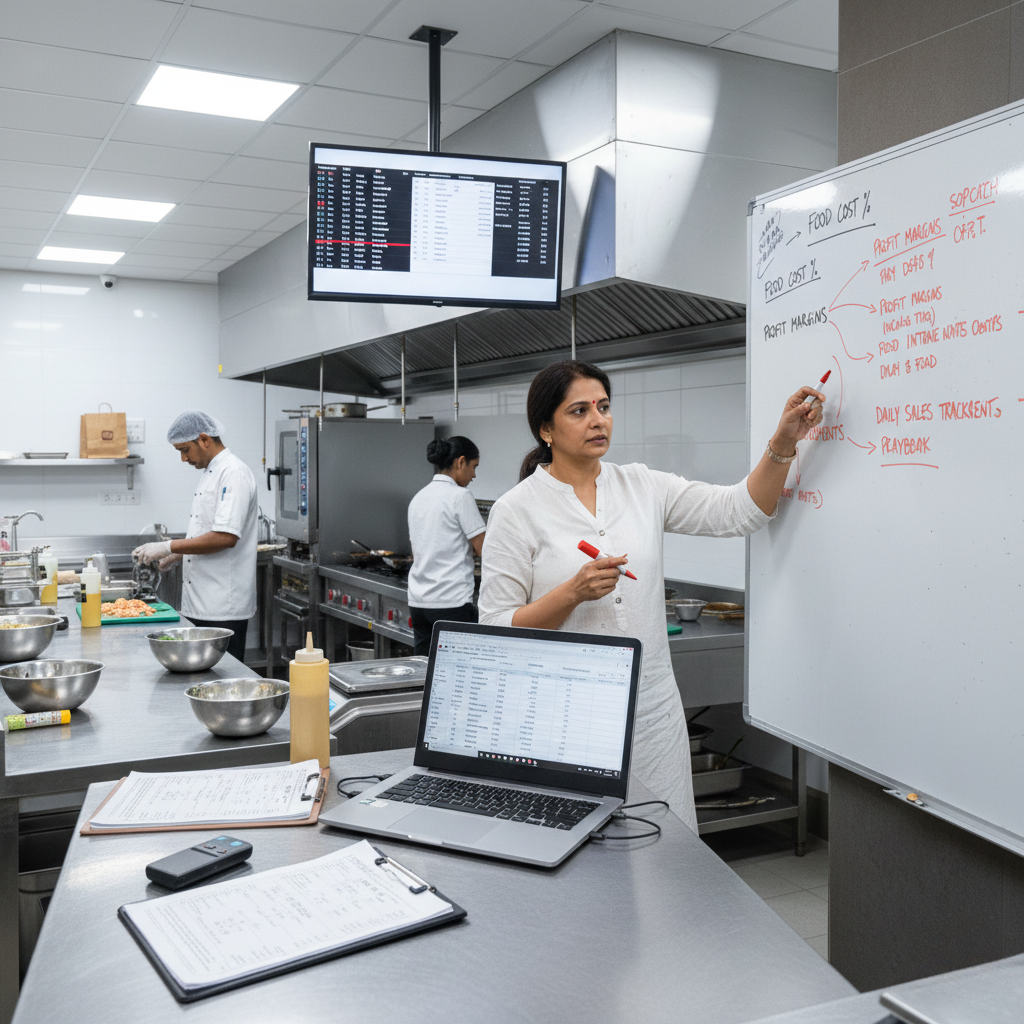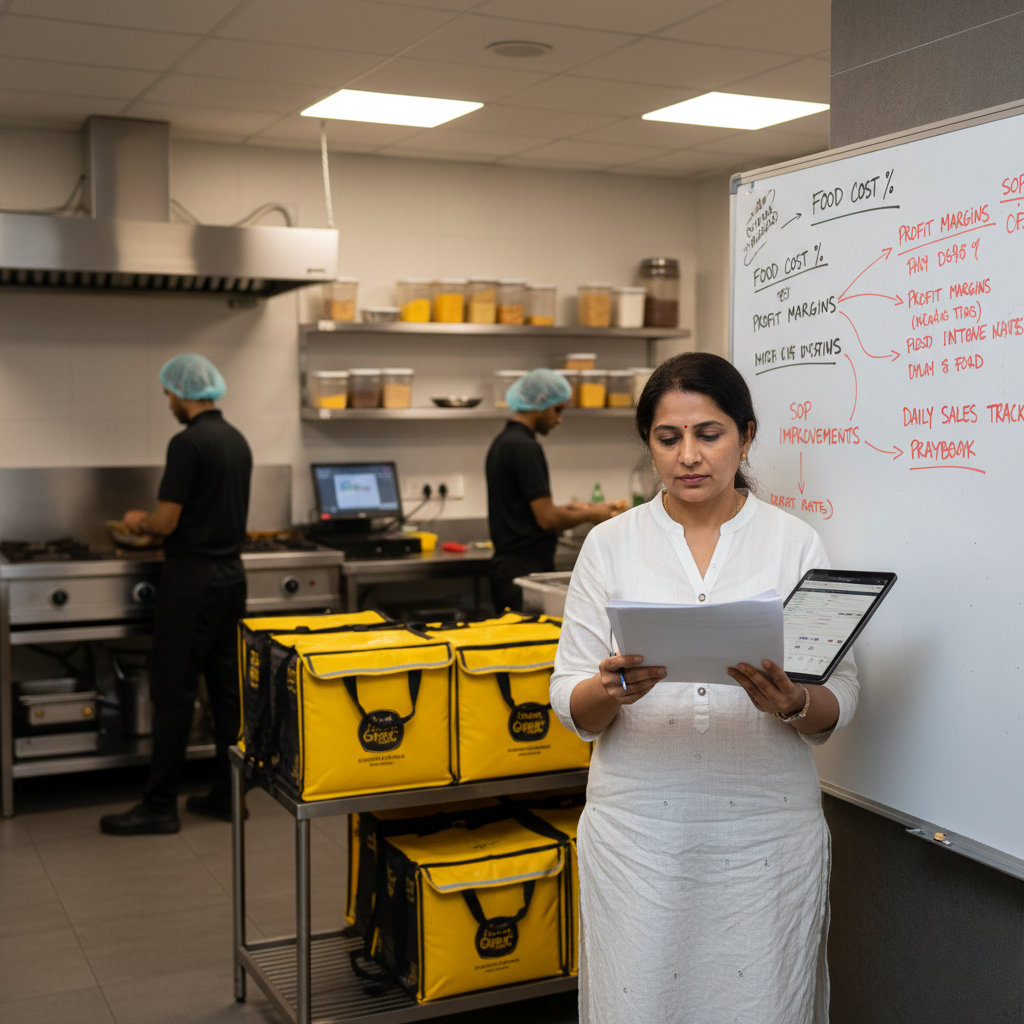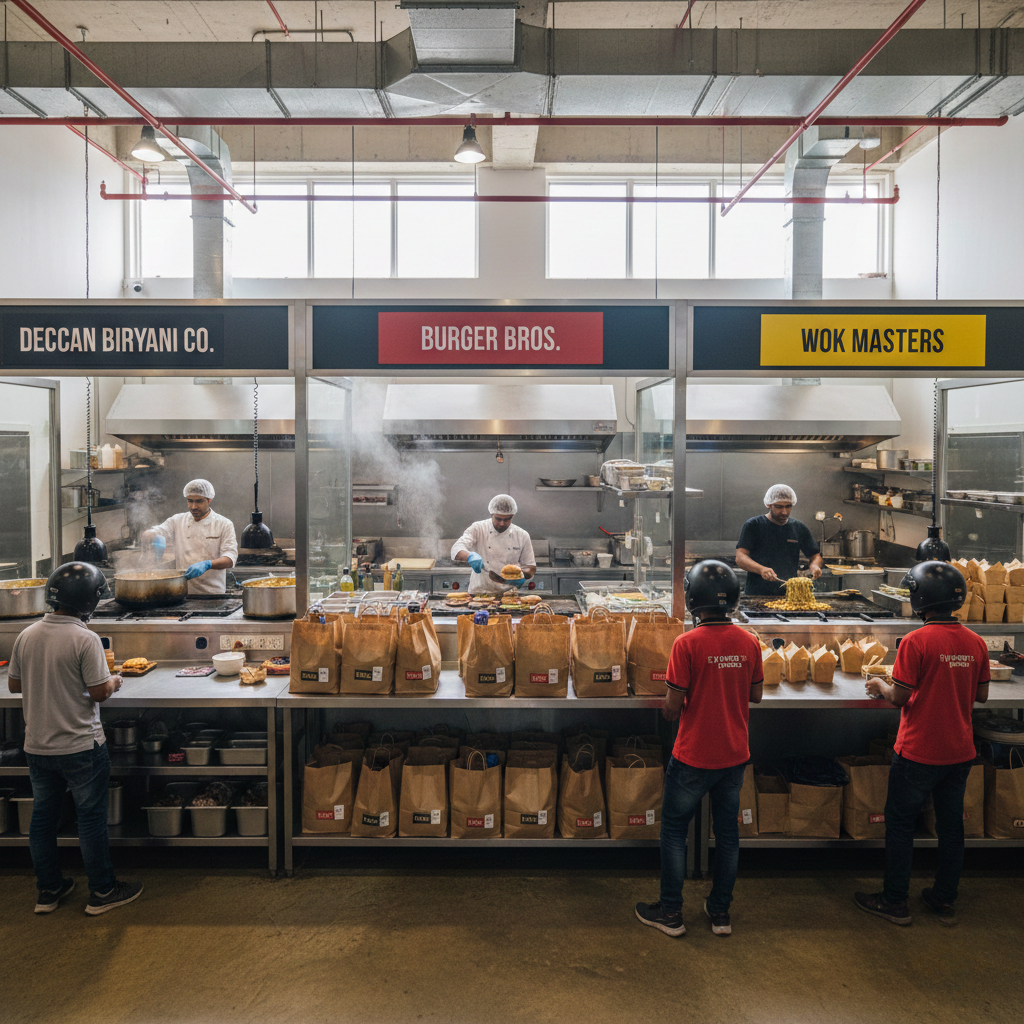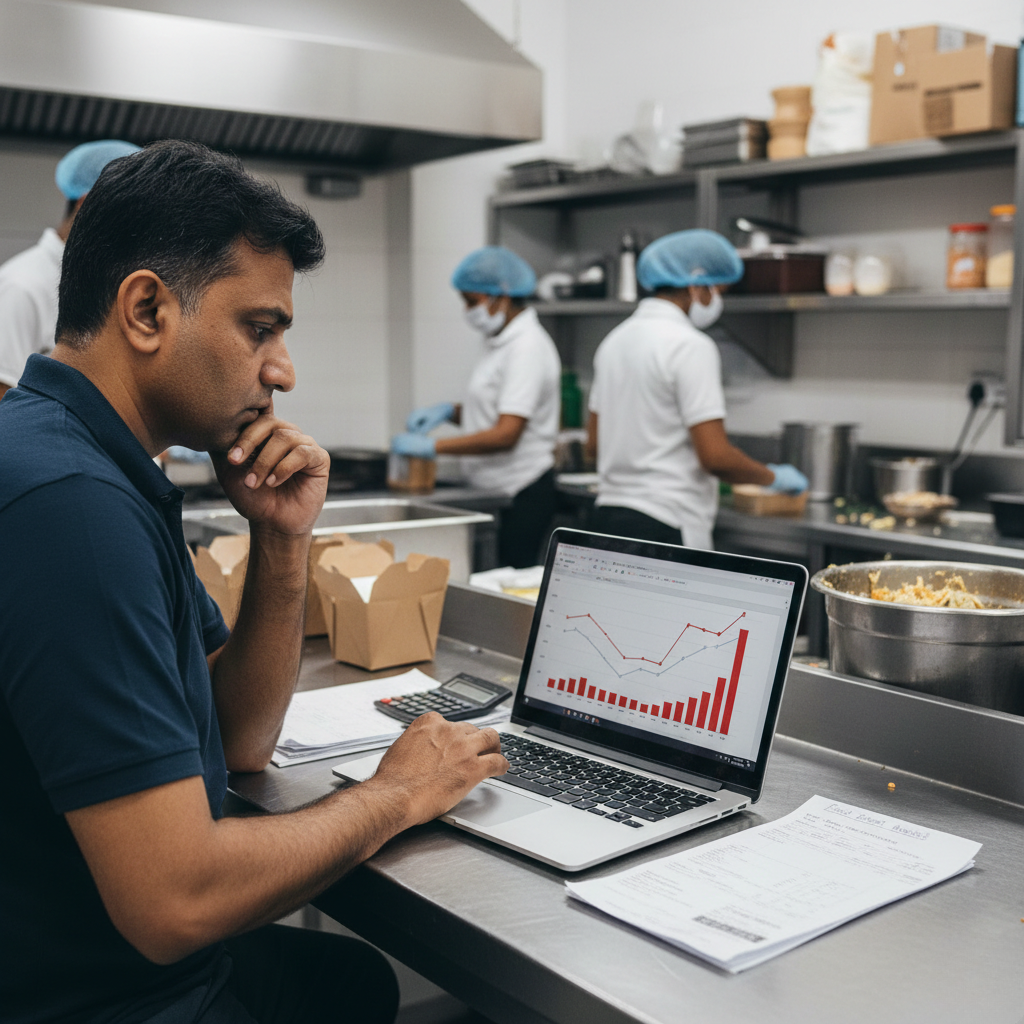
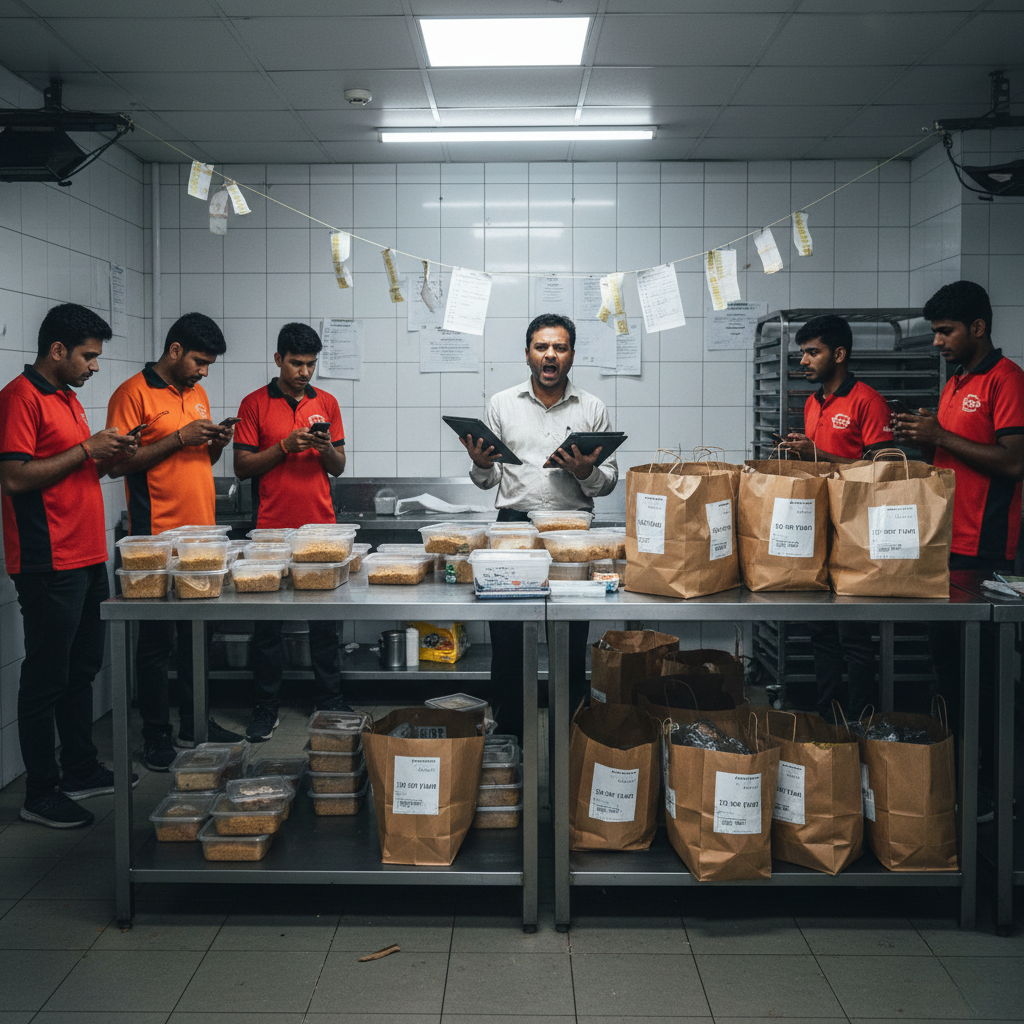
Cloud Kitchens Scale Without Systems-How to Fix a Loss-Making Cloud Kitchen in India is not about finding one magic solution. Most loss-making kitchens are not failing because of bad food, poor branding, or lack of demand. They fail because losses are hidden inside daily operations. This guide explains how cloud kitchens slip into losses, why founders struggle to identify the real problem, and how operational fixes—not discounts or marketing— bring kitchens back to profitability.
Why Most Loss-Making Cloud Kitchens Don’t Look Broken
One of the biggest challenges in fixing a loss-making cloud kitchen is that it rarely looks like it is failing. Orders come in. Staff stays busy. Aggregator dashboards show movement.
Founders assume losses are temporary, blaming high commissions, competition, or slow initial growth. In reality, most losses are structural.
If you are still understanding the fundamentals, start with Cloud Kitchen Business in India and Cloud Kitchen Operation Consultant.
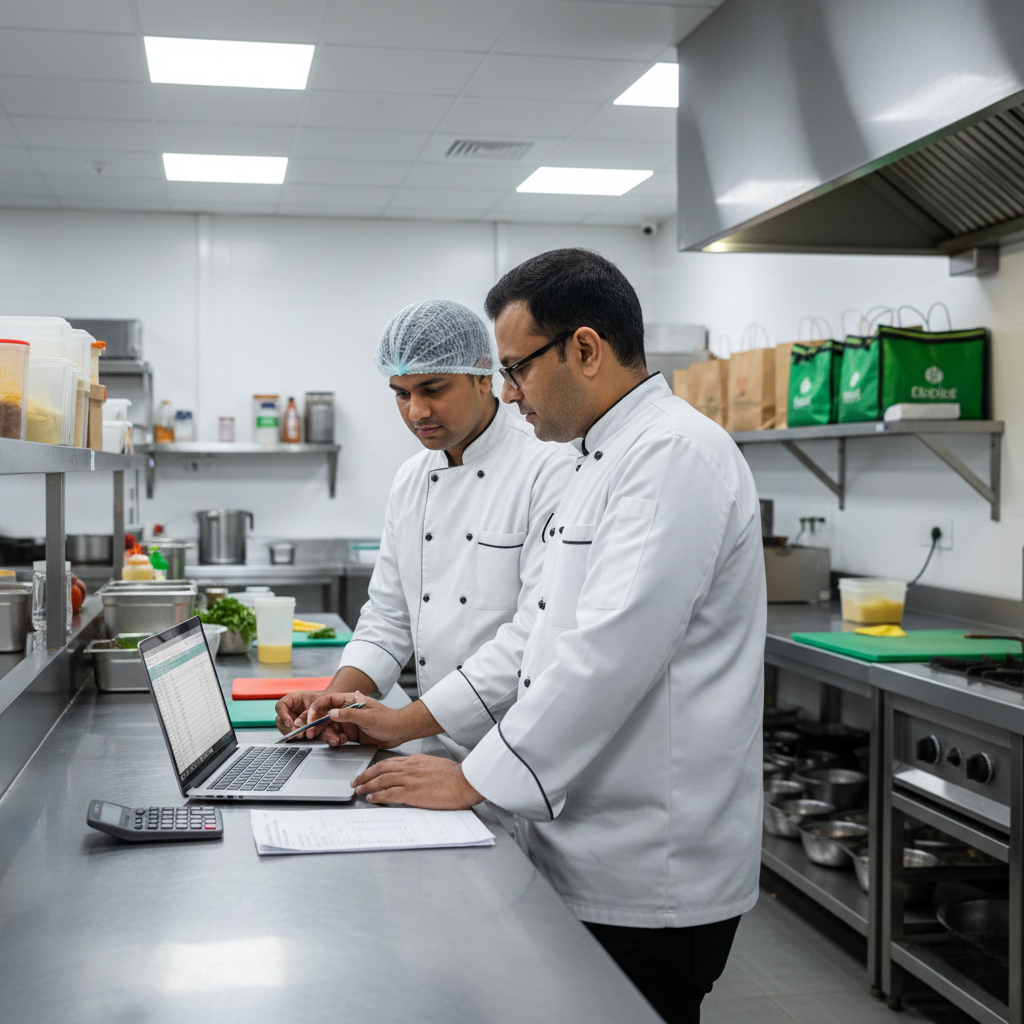
Why Increasing Sales Often Increases Losses
The most common reaction to losses is to push for higher sales. Founders add discounts, increase ads, or onboard more platforms.
Unfortunately, if unit economics are broken, higher sales only scale losses. Each new order quietly adds pressure on food cost, manpower, and operations.
Fix Unit Economics Before Anything Else
Every profitable kitchen starts with unit economics clarity. Without knowing contribution margin per order, founders operate blindly.
Food cost creep, packaging inflation, and hidden aggregator charges slowly erode margins.
Many kitchens realize too late that their best-selling items are actually loss leaders.
This issue is explored deeply in Cloud Kitchen Profit Margin in India.
Daily Operations Are Where Losses Hide
Loss-making kitchens often suffer from unstructured daily operations. Prep happens based on intuition. Portion sizes vary. Staff improvises during peak hours.
These small inconsistencies rarely feel dangerous, but together they destroy margins.
Kitchens without SOPs depend heavily on individuals, not systems.
This breakdown is common and explained in Why Cloud Kitchens Fail in India.

Inventory Mismanagement Silently Kills Profit
Inventory is the biggest silent loss area. Wastage, expiry, pilferage, and over-purchasing rarely appear clearly in reports.
Kitchens assume inventory loss is unavoidable. In reality, it is mostly unmanaged.
Without daily stock reconciliation, losses accumulate unnoticed.
Learn control systems in Cloud Kitchen Inventory Management in India.
Refunds and Ratings Reveal Operational Gaps
Dispatch errors increase refunds, replacements, and bad reviews. Most founders treat this as a customer issue.
In reality, it is an operational failure. Incorrect packing, missing items, and delayed handovers directly impact profitability.
Strong dispatch systems reduce losses, as outlined in Cloud Kitchen Dispatch SOP.
Manpower Costs Rise Faster Than Revenue
Loss-making kitchens often overstaff or underutilize staff. Scheduling is reactive, not data-driven.
Founders compensate by working longer hours, unknowingly becoming the bottleneck.
Without role clarity and accountability, productivity remains low.
Aggregator Economics Are Not the Enemy
Many kitchens blame Swiggy or Zomato for their losses. While commissions matter, they only expose weak internal control.
Poor pricing, unmanaged discounts, and ad dependency turn platforms into loss amplifiers.
Understand platform dynamics via GreenSaladin and structured approaches used by Green Salad and Fruut.
Systems Are the Only Sustainable Fix
Fixing losses requires visibility. Systems provide clarity.
SOPs, dashboards, inventory tracking, and performance reviews transform chaos into control.
These frameworks are part of Cloud Kitchen Operations Framework.
Final Thoughts: Losses Are Signals, Not Failures
A loss-making cloud kitchen is not a dead business. It is a business without systems.
Fixing losses requires slowing down, diagnosing operations, and building control.
Kitchens that survive respect operations as much as food.
Structured guidance from GrowKitchen helps founders recover profitability without blind expansion.
FAQs: Fixing a Loss-Making Cloud Kitchen
Why do cloud kitchens run at a loss?
Because unit economics, inventory, and operations are not controlled.
Should I shut down a loss-making kitchen?
Not immediately. Diagnose operations before taking that decision.
Can marketing fix losses?
No. Marketing without control increases losses.
What is the first fix founders should apply?
Unit economics visibility and daily operational discipline.