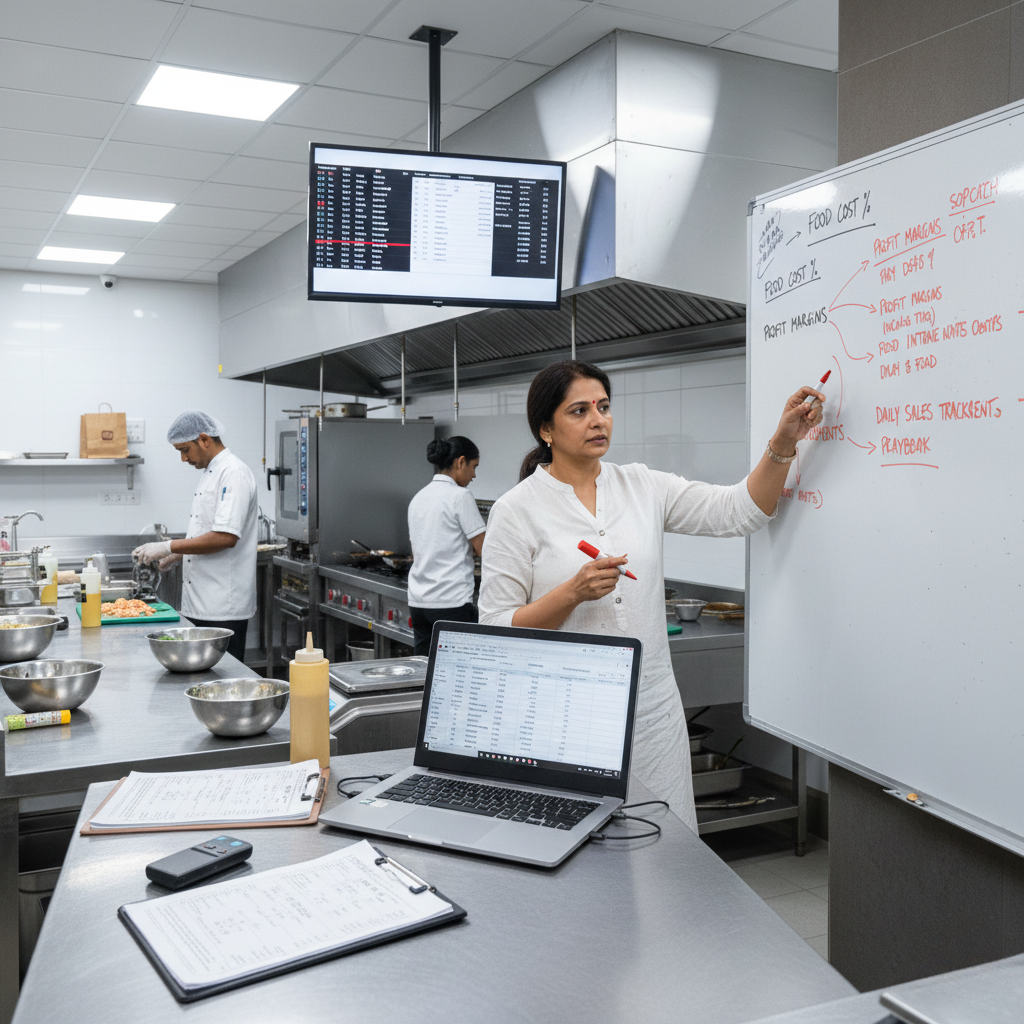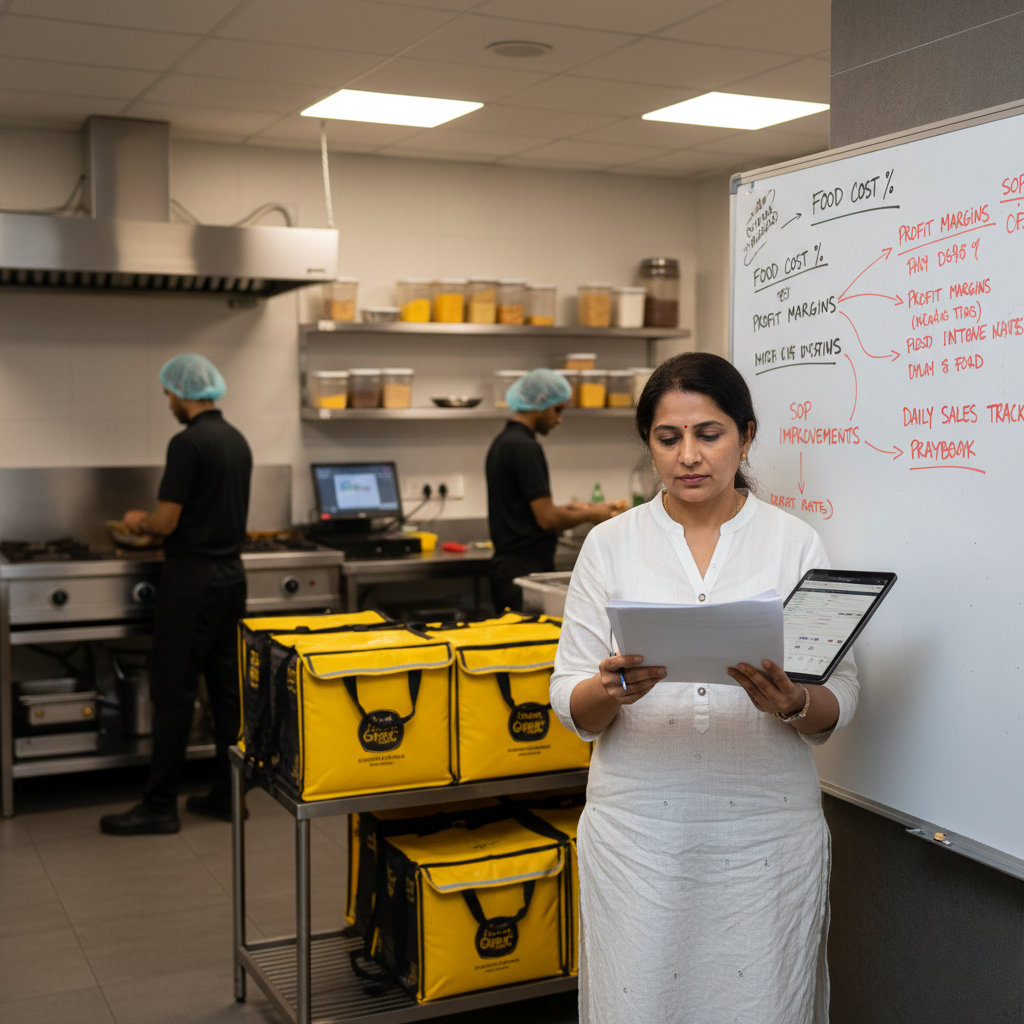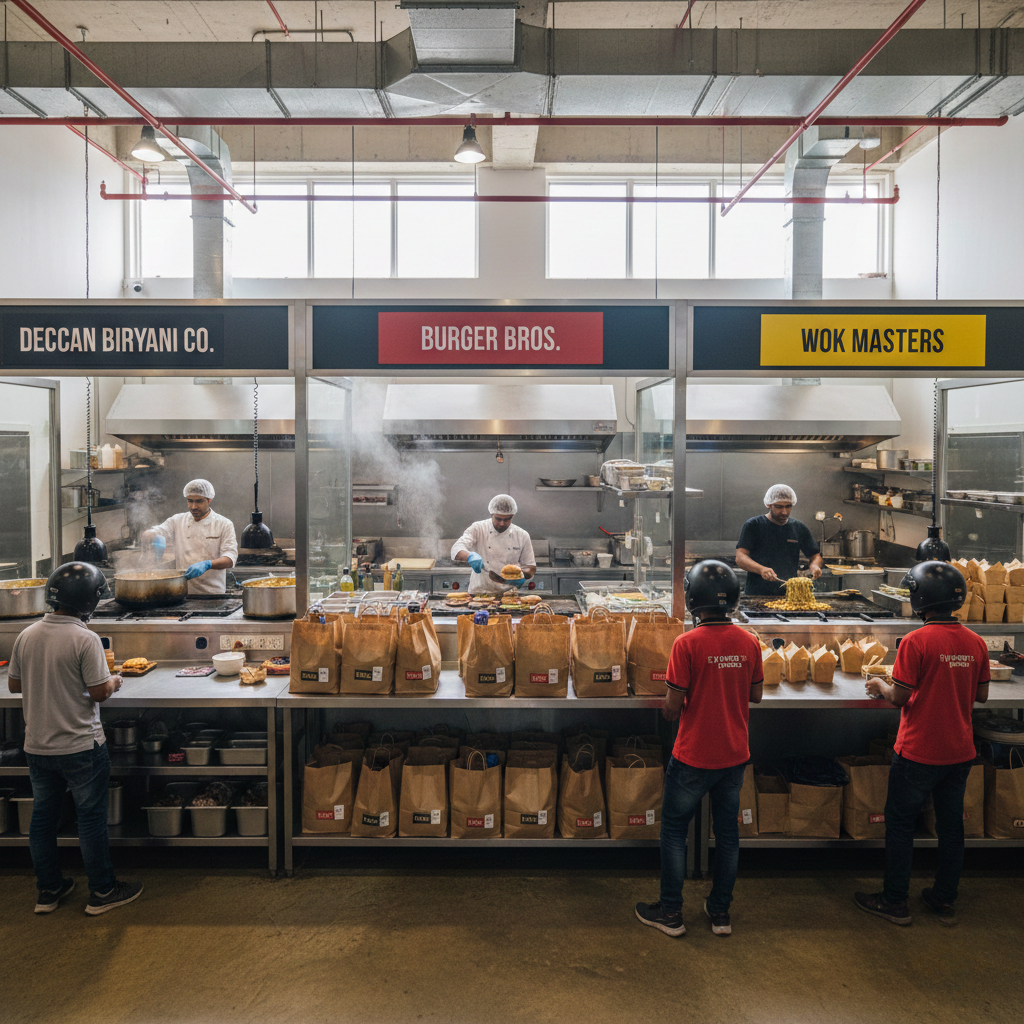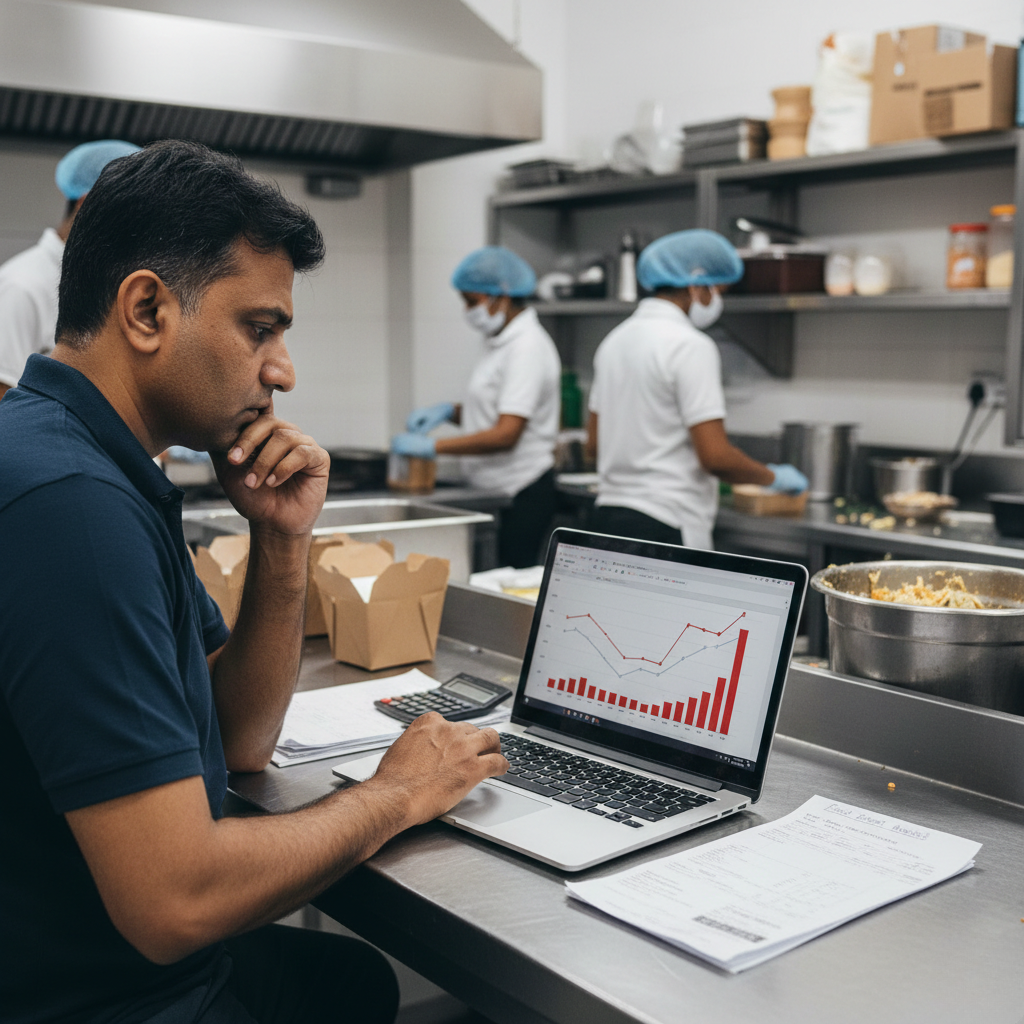
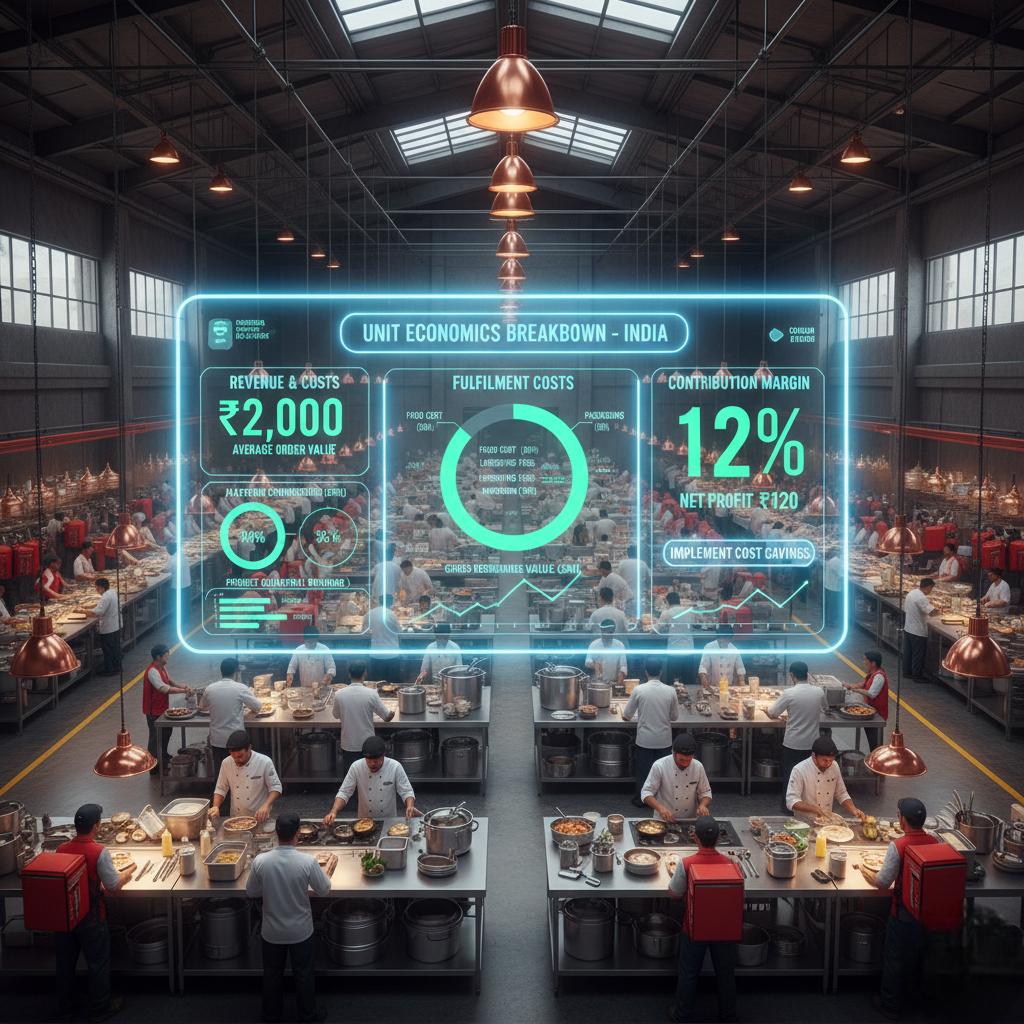
Cloud kitchen unit economics India decide whether your brand survives or silently bleeds. High order volume does not mean profitability-most cloud kitchens fail because founders track revenue, not contribution margin per order. This guide breaks down cloud kitchen unit economics India step by step: cost structure, per-order margin math, city-level variance, aggregator impact, common traps, and the KPIs you must track to build a profitable, scalable delivery-first food business.
Start Here Before Analysing Cloud Kitchen Unit Economics
This article is part of GrowKitchen’s profitability and operations series. If you are new to delivery-first models, start with: Cloud Kitchen as a Service and Cloud Kitchen Business in India. To understand fixed vs variable costs in detail, refer to: Cloud Kitchen Setup Cost in India.
Unit economics must also account for compliance and taxation under FSSAI and GST implications via the GST Network. Ignoring compliance costs creates false profitability.
What Are Cloud Kitchen Unit Economics?
Cloud kitchen unit economics measure how much money you actually make (or lose) on every single order after accounting for all variable costs. Unlike traditional restaurants, cloud kitchens operate on thin margins where commissions, packaging, and refunds can erase profits quickly.
Strong unit economics focus on contribution margin per order, not monthly revenue or total GMV. If contribution margin is negative, scale only multiplies losses.
Revenue Structure in Indian Cloud Kitchens
Revenue in cloud kitchens is driven by average order value (AOV) and order frequency. However, headline revenue is misleading because aggregators deduct commissions, taxes, and ad spends before payouts reach your bank account.
- Menu price (MRP): customer-facing price on Swiggy/Zomato
- Discounts: brand-funded or aggregator-led
- Net order value: actual revenue after discounts
- Payout value: revenue after commission and taxes
If you want to understand aggregator pressure in depth, read: How to Reduce Swiggy Commission.
Cost Structure That Impacts Unit Economics
Cloud kitchen costs are split into variable and semi-fixed layers. Unit economics focuses only on costs that move with each order.
- Food cost: raw materials, yield loss, wastage
- Packaging cost: containers, seals, bags, cutlery
- Aggregator commission: 18%–30% depending on city and category
- Ad spends: visibility campaigns and search boosts
- Refunds: missing items, cold food, late delivery
- Kitchen partner fee: in asset-light or managed kitchens
Fixed costs like rent and admin salaries matter for monthly P&L, but unit economics tells you whether scaling is safe.

Contribution Margin: The One Number That Matters
Contribution margin is calculated per order or per SKU:
A healthy Indian cloud kitchen typically targets a 20%–30% contribution margin before fixed costs. Anything lower leaves no buffer for refunds, ad spikes, or seasonal dips.
Learn how margins differ by cuisine: Cloud Kitchen Profit Margin in India.
Why SKU-Level Economics Decide Survival
Many brands are profitable on average but lose money on bestsellers. This happens when portion sizes, packaging, or discounts are not engineered per SKU.
- High AOV items may have higher food cost %
- Combos often hide packaging and refund risks
- Low-priced items suffer most from commission pressure
Always calculate contribution margin SKU-wise, not menu-wise.
City-Level Variance in Unit Economics
Unit economics change city to city due to differences in rider availability, rent benchmarks, staff efficiency, and customer expectations. A profitable SKU in Mumbai may bleed in Bangalore or Pune.
This is why unit economics must be tracked by city, by kitchen, and by SKU.
If you’re planning expansion, read: How to Scale Cloud Kitchens.
Common Unit Economics Mistakes Founders Make
- Tracking revenue instead of contribution margin
- Ignoring refund impact on net margins
- Over-discounting to chase volume
- Not adjusting menu pricing for commission changes
- Assuming scale will fix negative margins
These mistakes explain why many kitchens fail despite demand: Why Cloud Kitchens Fail in India.
KPIs to Track for Strong Unit Economics
- Contribution margin per order
- Food cost % by SKU
- Packaging cost per order
- Refund rate and refund value
- Ad spend as % of revenue
- Order-level profitability by city
For operational alignment, pair this with: Cloud Kitchen Operation Framework.
Final Thoughts: Cloud Kitchen Unit Economics in India
Cloud kitchen unit economics in India are unforgiving. Brands that win don’t chase vanity metrics-they engineer margins at the order level. By tracking SKU-level contribution margin, controlling refunds, and adapting city-wise cost structures, cloud kitchens can scale profitably.
If one order loses money, a thousand orders will lose faster. Fix unit economics first-then scale.
FAQs: Cloud Kitchen Unit Economics India
What is unit economics in a cloud kitchen?
Unit economics measure profit or loss per order after subtracting all variable costs such as food, packaging, commission, refunds, and partner fees.
What is a good contribution margin for cloud kitchens in India?
A healthy contribution margin ranges between 20%–30% before fixed costs.
Why do high-volume cloud kitchens still lose money?
Because volume magnifies negative unit economics caused by poor pricing, high refunds, heavy discounts, and commission pressure.
Should unit economics be tracked city-wise?
Yes. Costs and customer behavior vary widely across Indian cities, making city-wise unit economics essential for scaling decisions.
- Cloud Kitchen Business in India
- Cloud Kitchen Setup Cost in India
- Cloud Kitchen Profit Margin in India
- How to Reduce Swiggy Commission